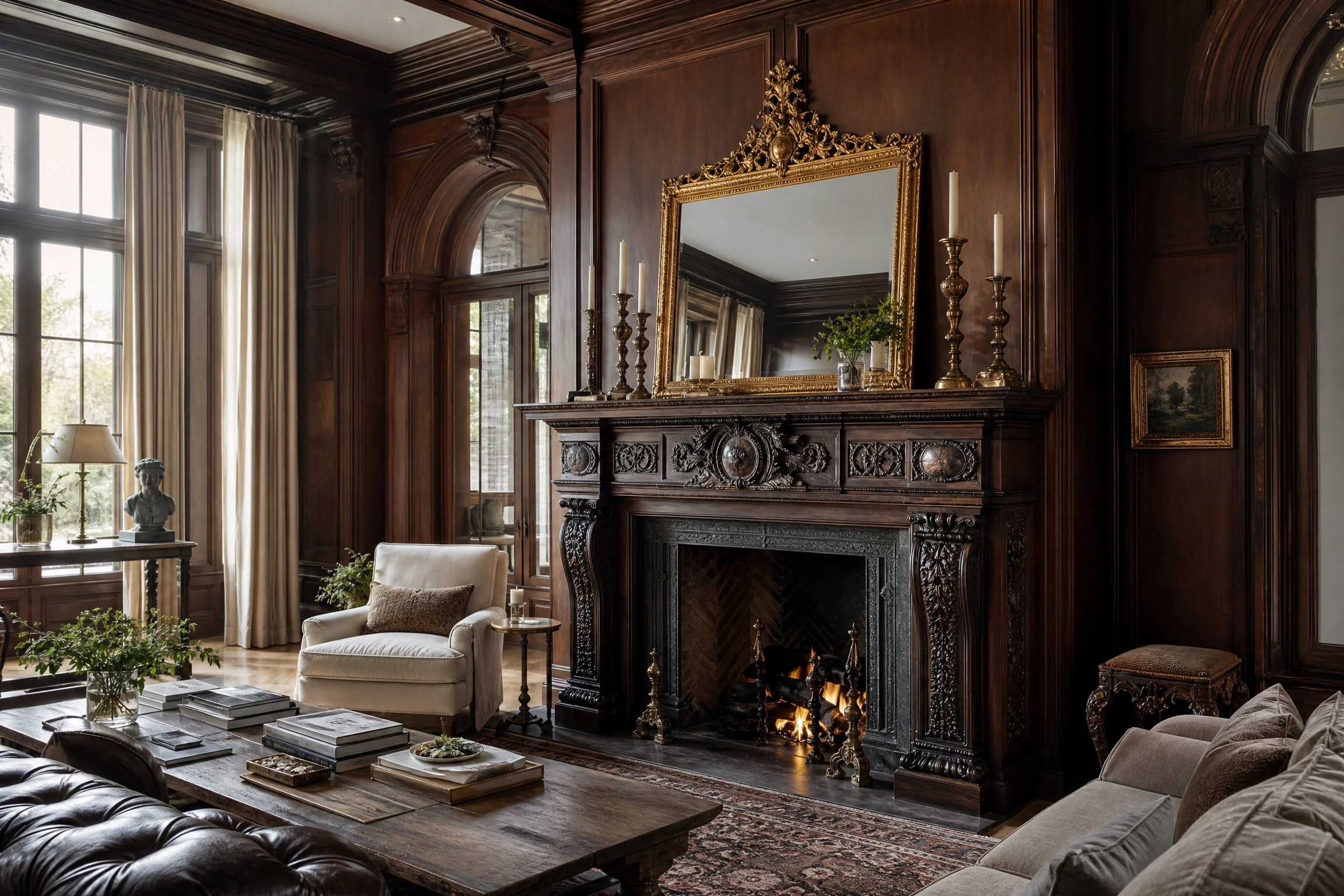
Stunning Antique Fireplace Mantel Ideas for Every Home
An antique fireplace mantel is far more than just a functional architectural element. It is a genuine piece of history that instantly anchors a room, bringing an incredible level of character, craftsmanship, and soul that modern construction simply cannot replicate. Whether you live in a historic Victorian home with its original fireplaces intact or you have recently purchased a salvaged French country surround to install in a new build, styling these massive wooden or stone pieces requires a delicate touch. I have noticed that people often struggle to find the right balance between honoring the historic integrity of the antique and updating it so it actually fits into their modern lifestyle. The danger lies in either burying the beautiful craftsmanship under too much clutter or stripping away all the authentic patina in an effort to make it look brand new.
The secret to successfully integrating an antique mantel is understanding that it should act as the undisputed focal point of the room. You must allow the intricate carvings, the aged wood grain, or the chipped plaster to dictate the surrounding decor rather than fighting against it. If your mantel is incredibly ornate, your styling should lean toward minimalism to prevent the space from looking chaotic. Conversely, a simple, rustic beam mantel offers the perfect blank canvas for layering eclectic vintage collections and large-scale artwork. The twenty-two ideas below are grouped by overarching design themes to help you navigate exactly how to restore, style, and celebrate your historic piece. From proper wood maintenance to foolproof styling formulas, these practical insights will ensure your antique fireplace becomes the absolute highlight of your home.
Restoring and Enhancing Original Materials
Embrace the Raw Wood Patina
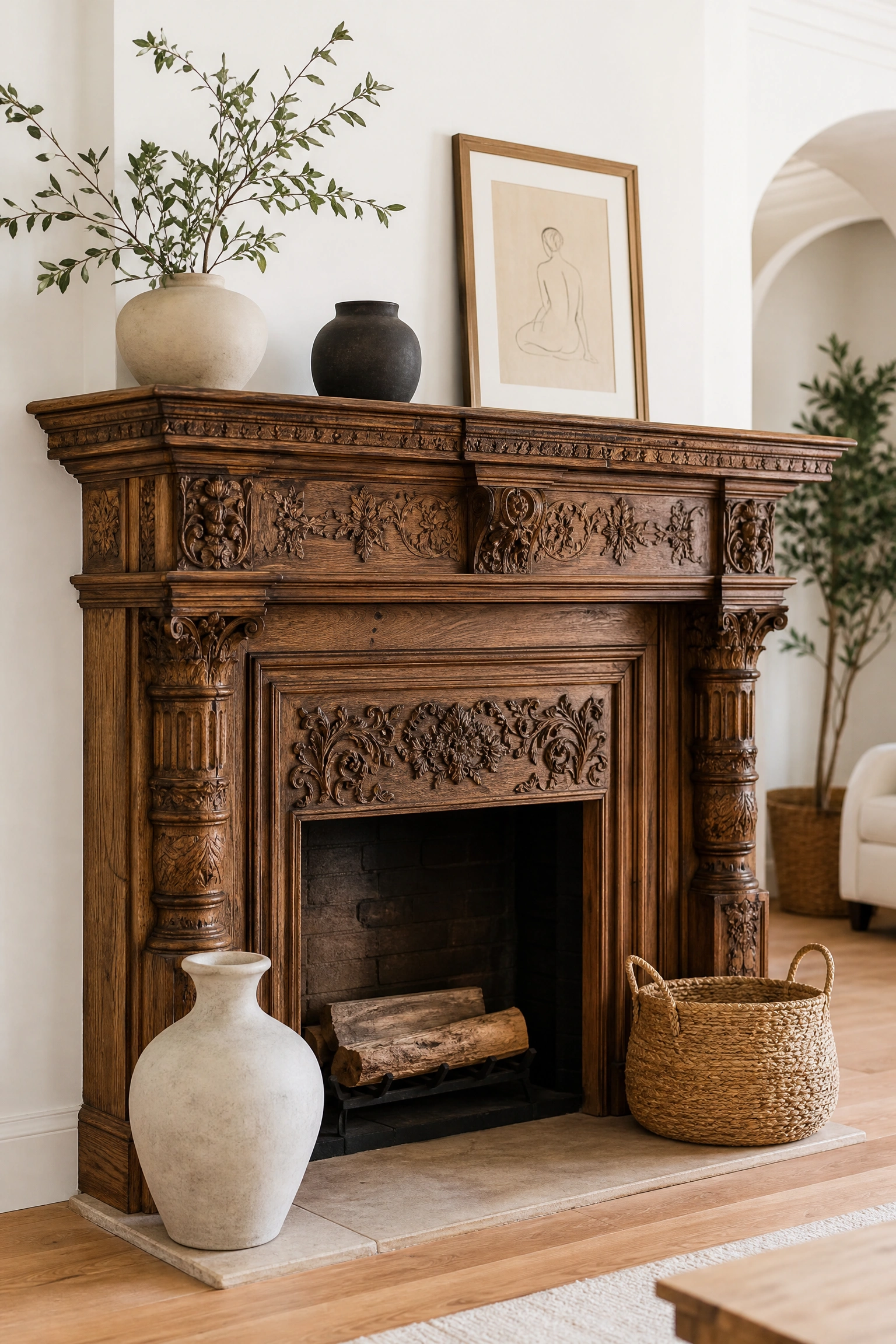
When dealing with an original oak or mahogany mantel that has survived for over a century, choosing to leave the raw, unpainted wood grain exposed is almost always the smartest design decision. The natural aging process creates a depth of color and a soft, worn patina that you simply cannot replicate with modern stains or glazes. I find that leaving the wood raw provides incredible organic warmth that beautifully contrasts against crisp, bright white walls in a modern home. If the wood looks slightly dull or dry from years of neglect, applying a simple beeswax polish will nourish the timber without altering the historic color. You should pair this raw, earthy mantel with highly textured, neutral accessories like matte ceramic vases or woven baskets to keep the focus entirely on the natural beauty of the antique wood.
Designer Advice: Always test any wood conditioner or wax on the underside of the mantel shelf first to ensure it does not permanently darken the antique finish.
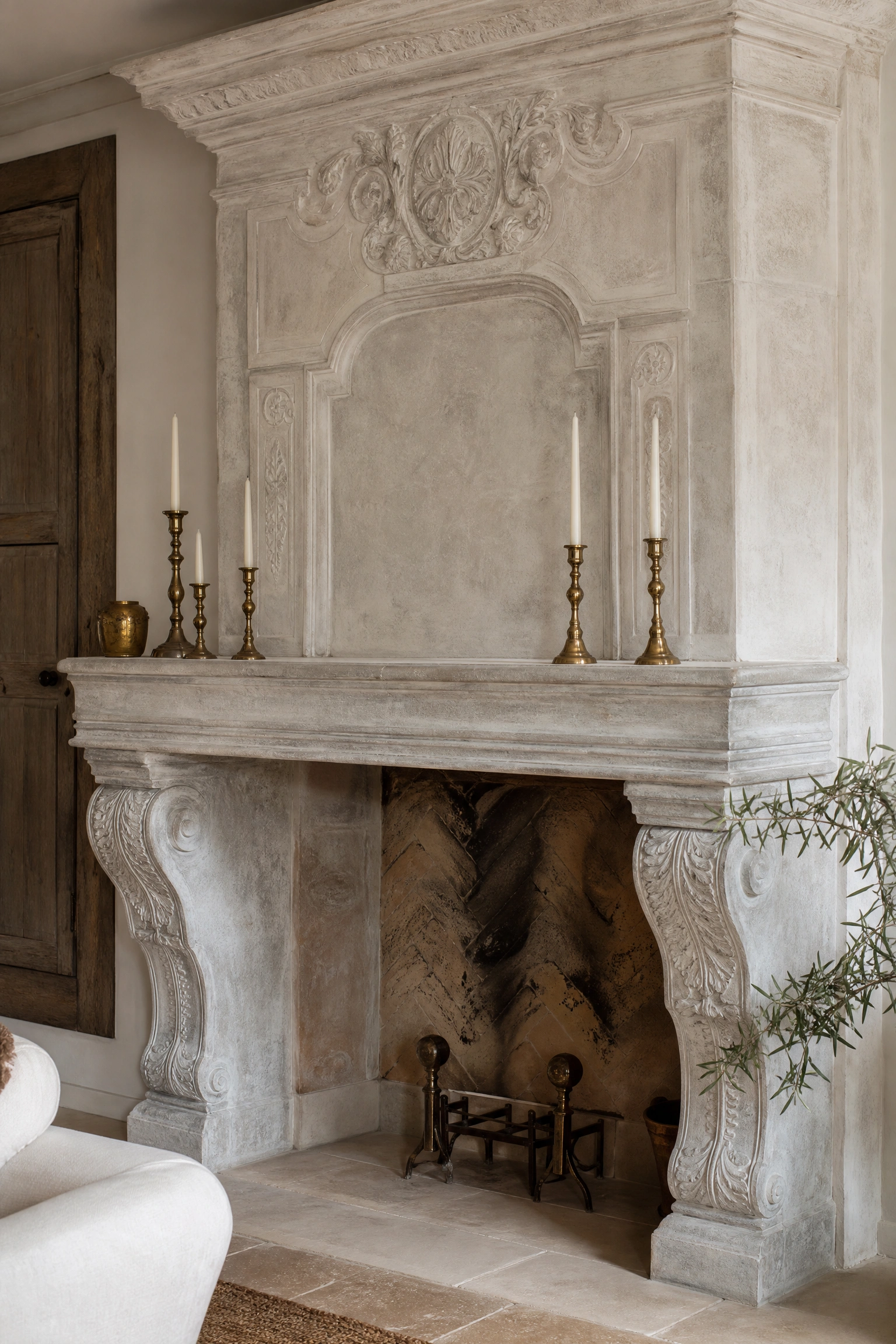
Careful Limewash for Heavy Stone
If you have inherited a massive, heavily carved antique stone or brick mantel that feels too oppressive for your current room, applying a subtle limewash is a fantastic compromise. Limewash softens the harsh, dark appearance of heavy masonry by adding a chalky, historical finish that highlights the intricate carvings rather than hiding them. This technique is vastly superior to using standard latex paint because limewash actually penetrates the porous stone, allowing the material to breathe while preventing the finish from peeling over time. You can pair this softened stone mantel with delicate, metallic accessories like brass candlesticks to add necessary brightness to the heavy architectural feature. This is a very budget-friendly DIY project that completely transforms the energy of a dark room while respecting the historic integrity of the stone.
Pro Move: Dilute your limewash mixture with extra water to create a highly translucent glaze that allows the natural variations of the stone to remain visible.
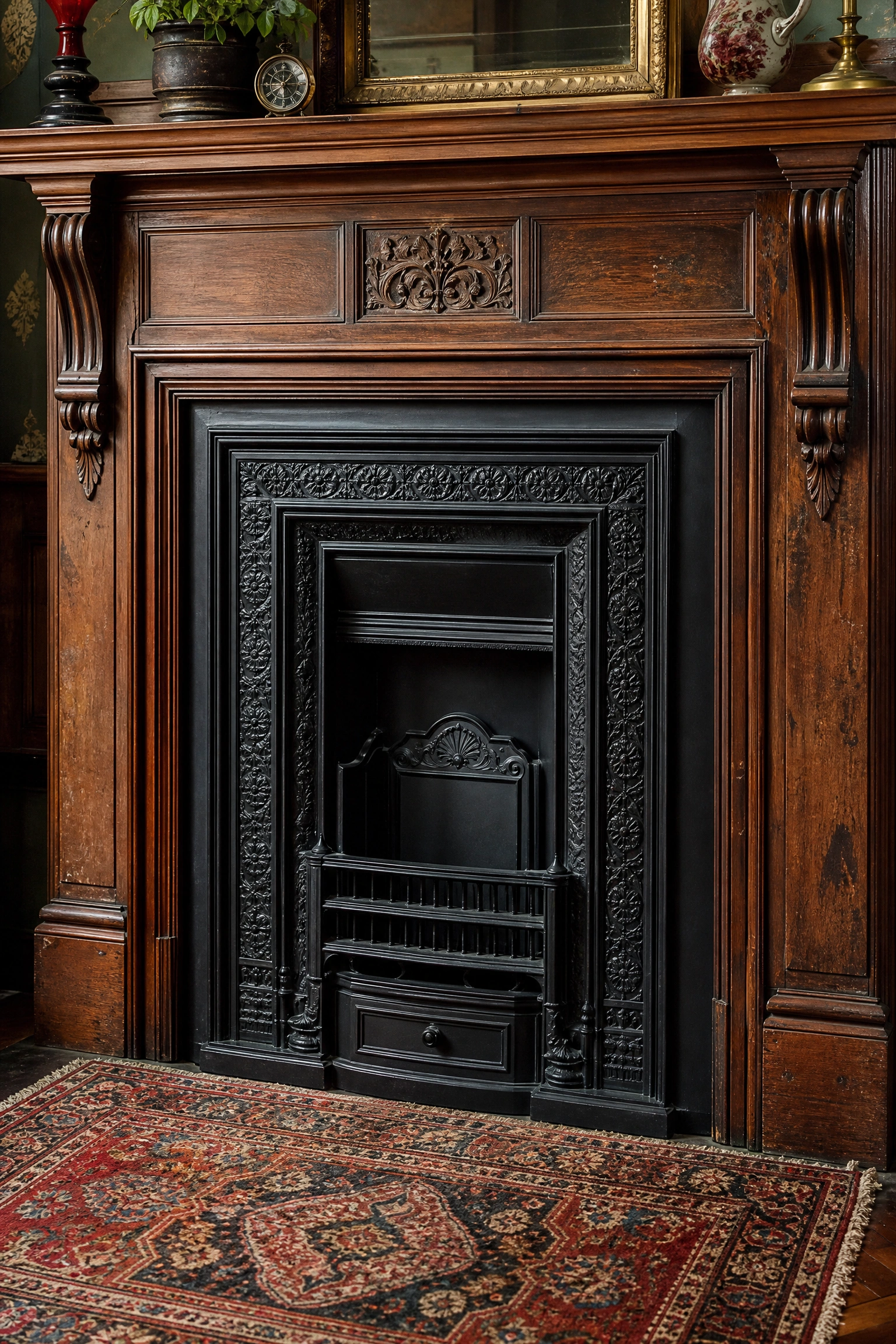
Restoring Original Victorian Cast Iron
Many antique wooden mantels are accompanied by beautiful cast iron fireplace surrounds that have sadly rusted or faded to a dull grey over the decades. Restoring this metalwork using a specialized black grate polish brings the entire fireplace back to its original, striking Victorian glory. The deep, rich black finish of the polished iron provides incredible contrast against a carved wooden mantel, anchoring the fireplace firmly to the floor. I highly recommend pairing this restored ironwork with a vintage Persian rug placed directly on the hearth to add a splash of color against the dark metal. This restoration requires some serious elbow grease and a wire brush, but the resulting high-end, historic aesthetic is absolutely worth the afternoon of hard work.
Reality Check: Never use standard black spray paint on a functional fireplace surround because the extreme heat will cause the paint to peel and release toxic fumes.
Exposing the Original Brick Hearth
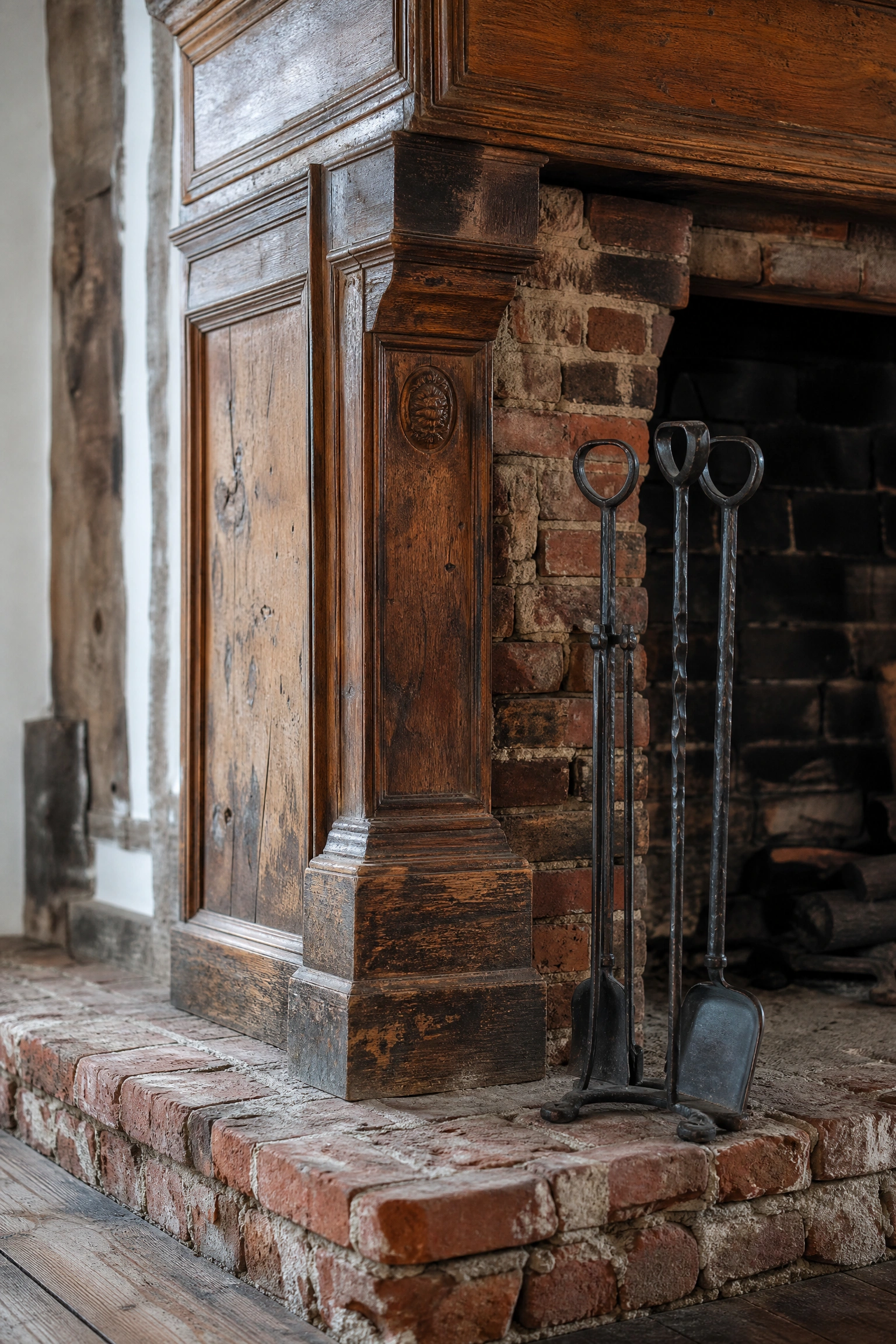
If your antique wooden mantel is currently sitting on top of outdated 1980s floor tiles, taking the time to carefully chip those away and expose the original brick hearth is a massive upgrade. The rugged, uneven texture of historic red brick provides the perfect rustic foundation that complements the age and character of a salvaged wooden mantel. When working with older homes, I always find that revealing these original architectural bones makes the entire room feel much more grounded and authentic. You should pair this exposed brick hearth with simple, forged iron fireplace tools to complete the historic, utilitarian aesthetic. While this demolition project can be incredibly dusty and physically demanding, it drastically increases the historic charm and value of your fireplace.
Quick Tip: Use a specialized masonry sealant on the exposed antique brick to prevent it from constantly shedding red dust onto your living room rug.
Leaving the Chipped Plaster Intact
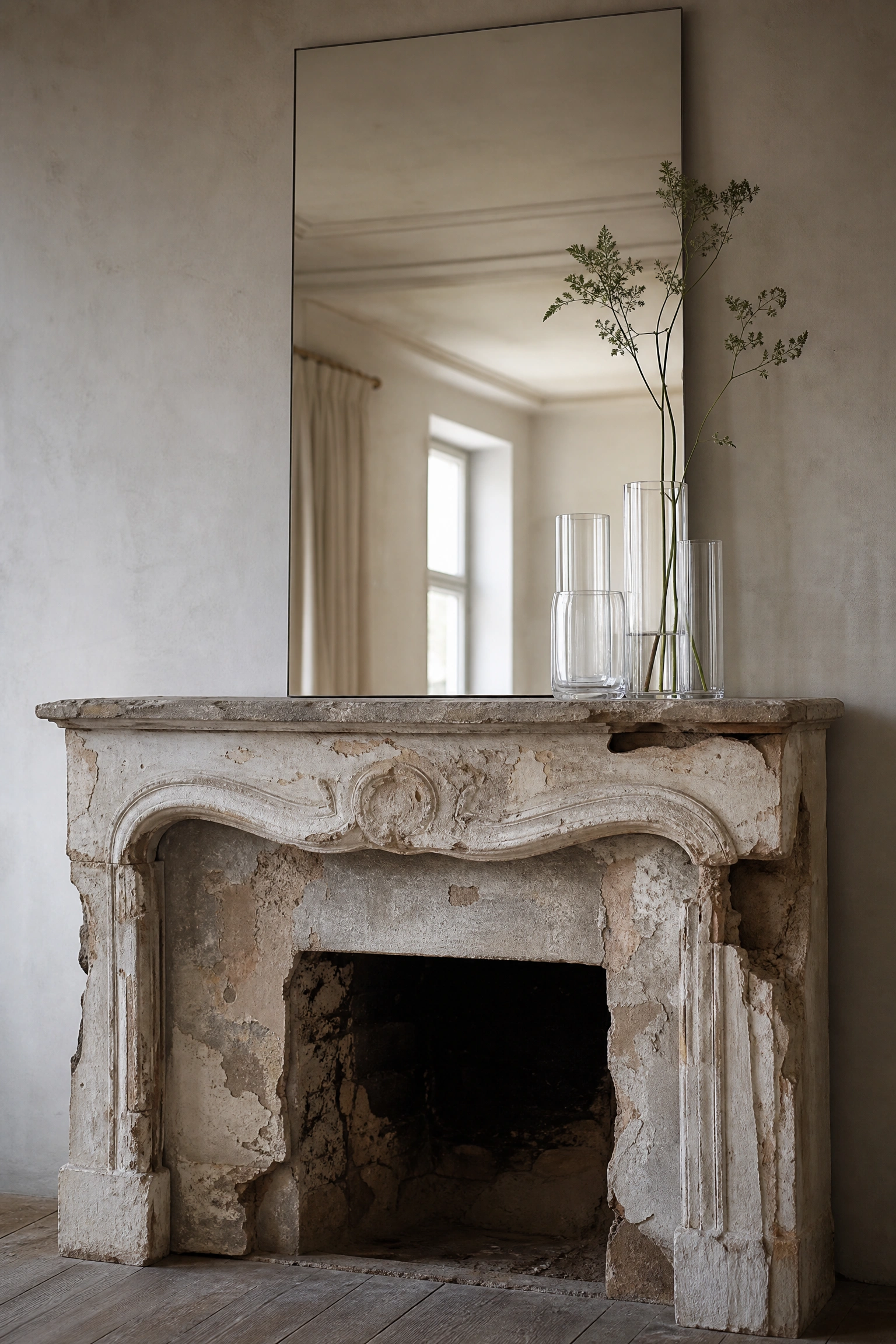
When installing a heavily distressed, salvaged French plaster mantel, intentionally leaving the chipped edges and missing corners intact provides an incredibly authentic, wabi-sabi aesthetic. Attempting to patch these historic imperfections with modern filler almost always looks sloppy and completely ruins the storied charm of the antique piece. You can lean into this highly romantic, ruined aesthetic by pairing the damaged mantel with pristine, modern accessories like a sleek, frameless mirror or a collection of modern glass vases. The stark contrast between the crumbling, historic plaster and the sharp, flawless glass creates a highly dynamic and sophisticated design moment. This approach costs absolutely nothing and saves you from the headache of trying to perfectly match century-old plaster textures.
Heads Up: If the plaster is actively flaking off, you must apply a clear, matte binding primer to stabilize the surface and prevent further deterioration.
Styling with Vintage Collections
The Antique Trumeau Mirror Anchor
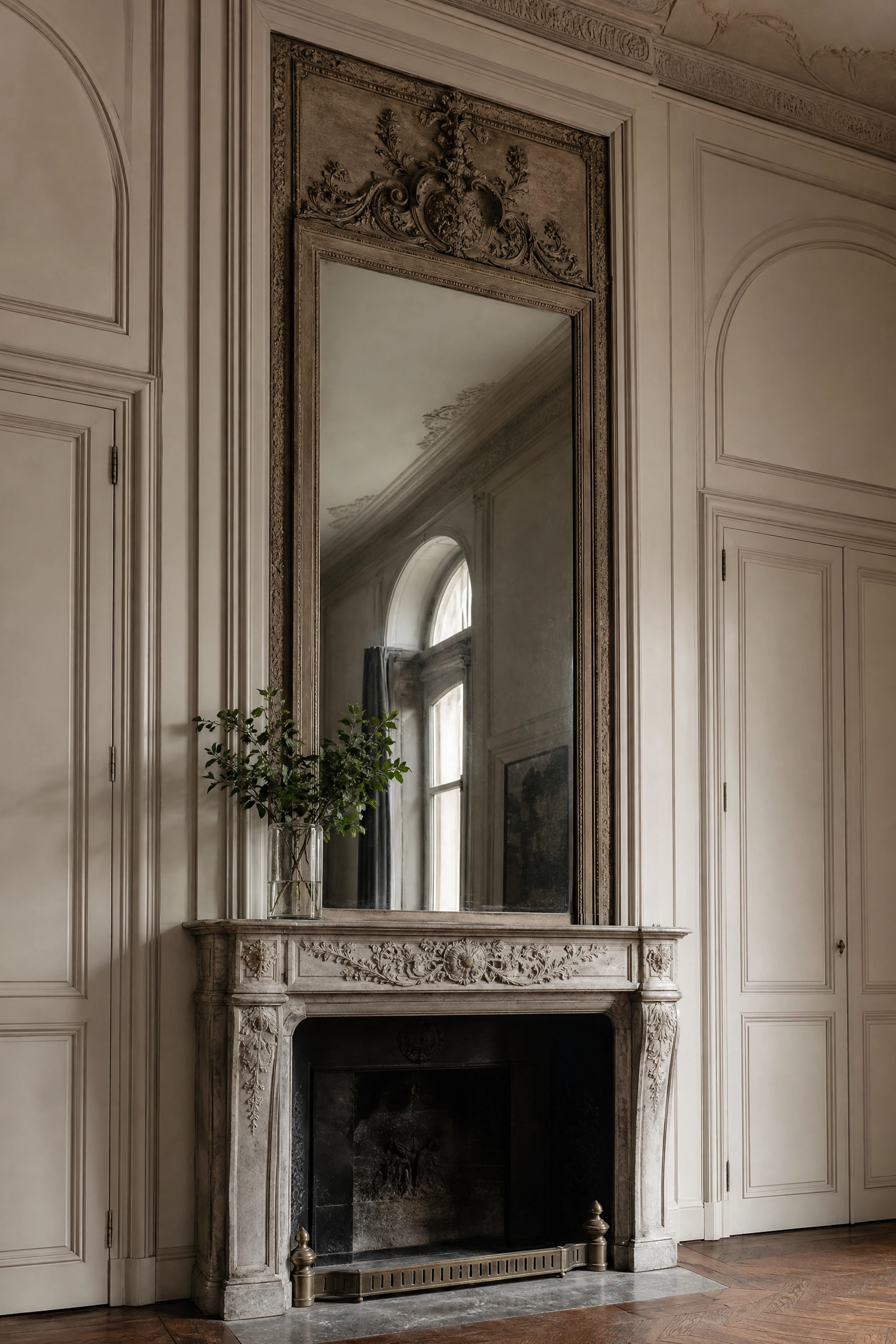
Anchoring your antique mantel with a massive, tall Trumeau mirror is the single most effective way to draw the eye upward and celebrate the high ceilings of a historic home. These tall French mirrors typically feature a carved wooden panel at the top, which perfectly echoes the intricate craftsmanship of the fireplace mantel sitting below them. I find this classical pairing works beautifully to bounce natural light around the room, making a dark, historic parlor feel instantly brighter and significantly more spacious. You should keep the rest of the mantel decor extremely minimal, perhaps just a single small vase of fresh greenery, so the carved mirror remains the undisputed focal point. While an authentic antique Trumeau mirror is a major investment, it is the ultimate finishing touch for a historic fireplace.
Designer Advice: Rest the heavy mirror directly on the mantel shelf and secure it to the wall behind with a heavy-duty safety strap to prevent catastrophic accidents.
Asymmetrical Brass Candlesticks
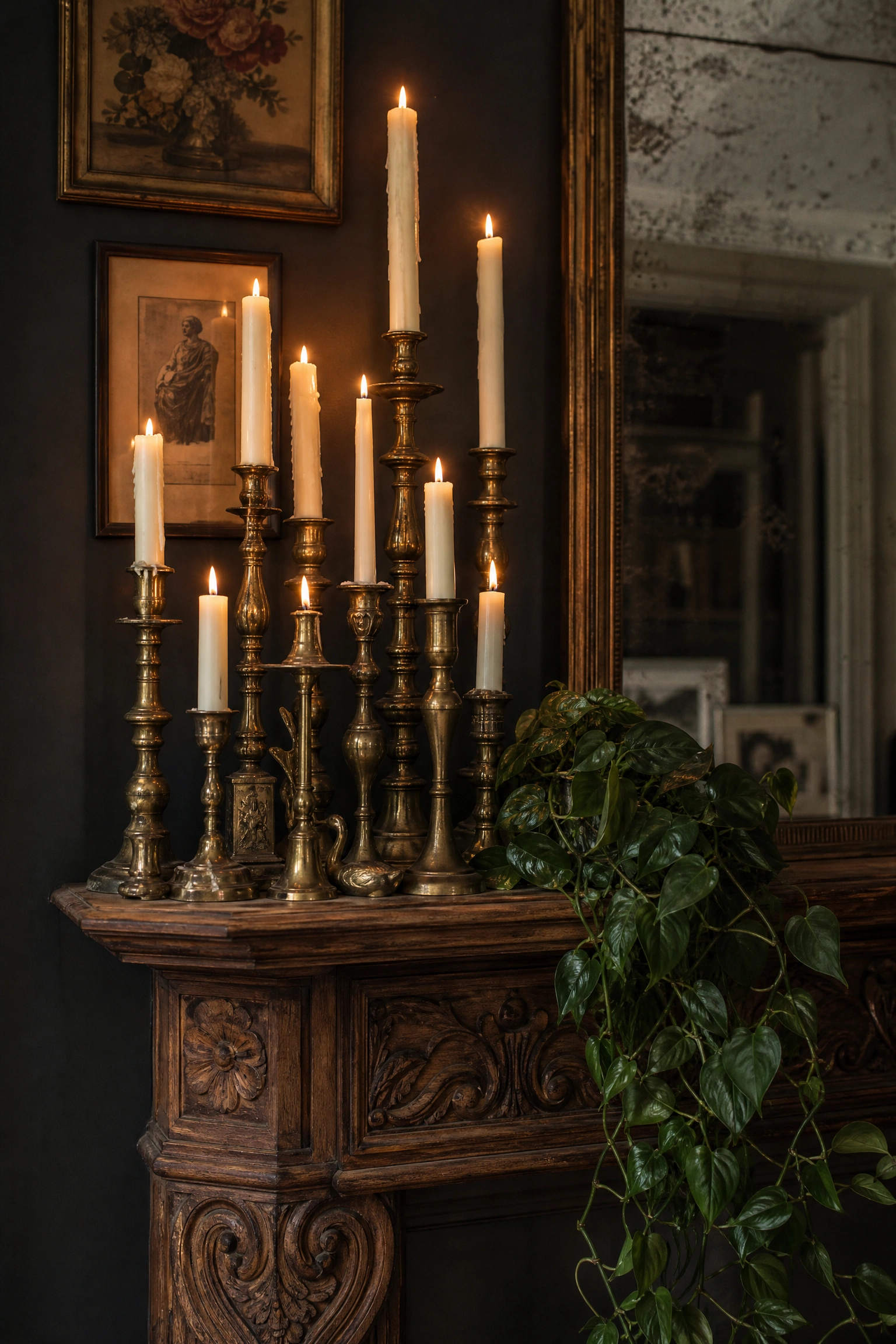
Grouping a large, mismatched collection of antique brass candlesticks on only one side of the mantel creates a highly romantic, slightly moody focal point. Rather than adhering to strict, formal symmetry, placing all the visual weight on the left or right side feels much more relaxed, eclectic, and currently on-trend. You can balance the heavy brass collection by placing a trailing houseplant or a stack of vintage books on the opposite end of the shelf. This is a fantastic, budget-friendly styling trick because you can easily source single, orphaned brass candlesticks from thrift stores for just a few dollars each. When you light the tapers during the evening, the varied heights of the brass holders create a stunning, flickering lightscape.
Pro Move: Use dripless beeswax taper candles in varying shades of ivory and cream to add a subtle layer of organic texture to the metallic display.
Layered Vintage Oil Paintings
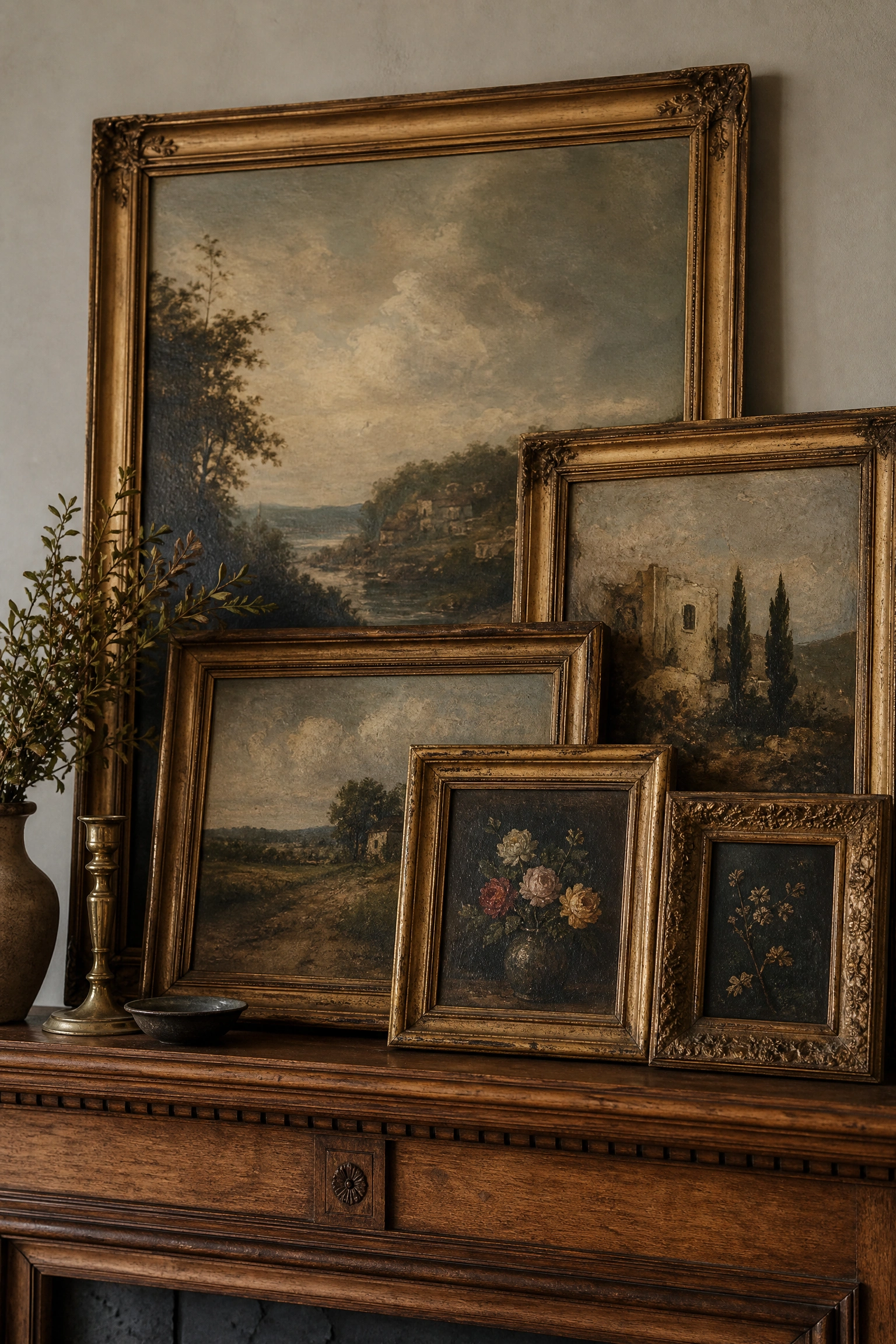
Leaning multiple vintage oil paintings in beautifully distressed gold frames against the wall creates a highly curated, collected-over-time aesthetic that perfectly suits an antique mantel. The key to this look is layering the artwork so the frames slightly overlap, which provides incredible depth and feels much more casual than formally hanging a single painting. In my experience, mixing different subjects like a moody landscape, a subtle portrait, and a small floral still life prevents the collection from looking too rigid or themed. You should pair this artistic display with a simple, solid wood mantel so the intricate gold frames and dark oil colors do not compete with heavy architectural carvings. This styling method allows you to easily rotate your art collection throughout the seasons without ever pulling out a hammer.
Reality Check: Ensure your layered paintings are different sizes and orientations to create a visually interesting composition rather than a blocky, uniform wall.
Displaying Ironstone Pottery
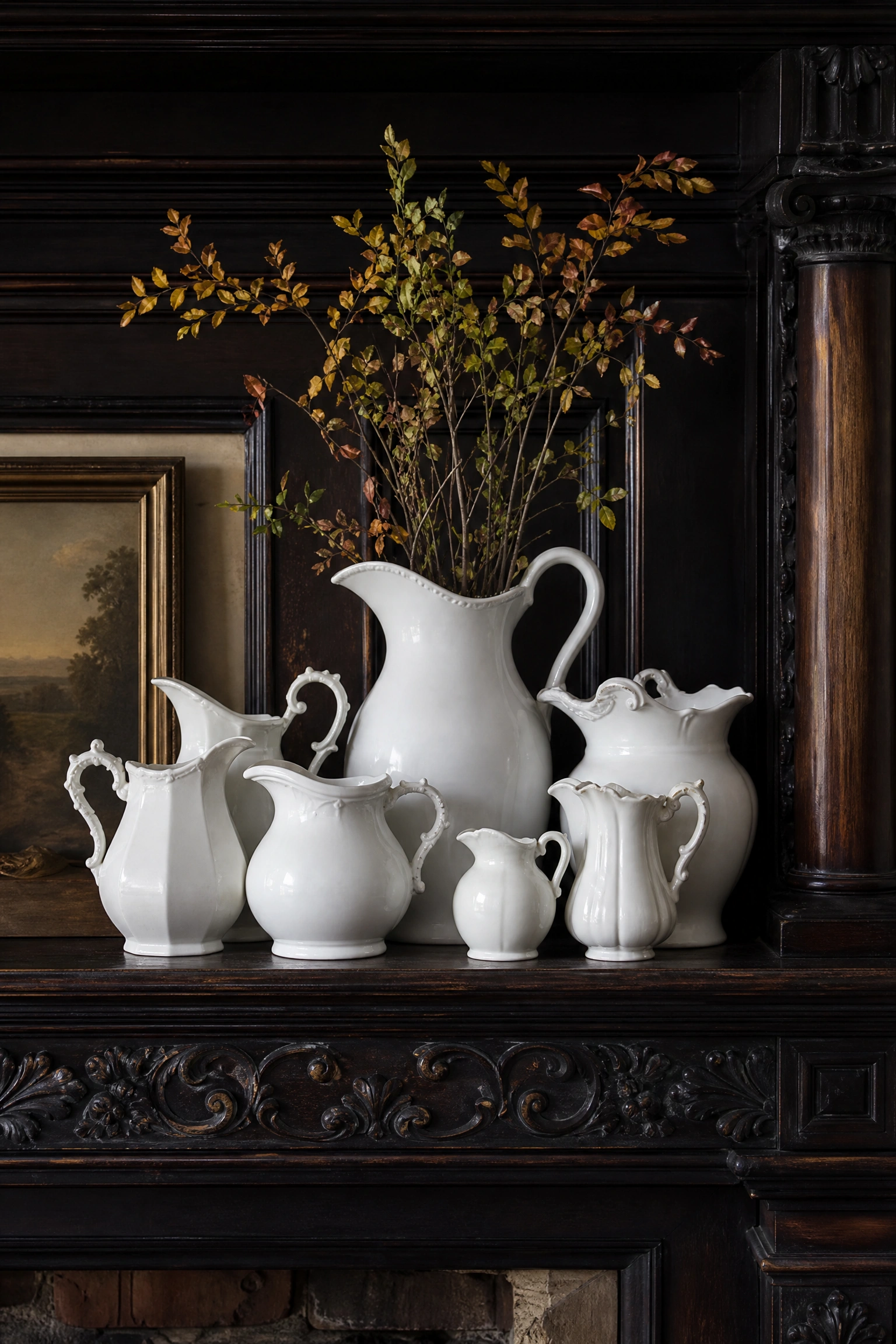
Arranging a collection of antique white ironstone pitchers and tureens across a dark, carved wooden mantel provides a striking, high-contrast display that feels incredibly fresh. The crisp, clean white glaze of the historic pottery pops beautifully against the dark patina of the aged wood, highlighting the silhouette of every single piece. I always recommend grouping the ironstone tightly together in the center of the mantel rather than spreading the pieces evenly across the shelf, which can look cluttered and disorganized. This is a wonderful way to display functional antiques that might otherwise be hidden away in a dining room cabinet. You can easily tuck small, hidden LED puck lights behind the pottery to make the white glaze glow during the evening hours.
Quick Tip: Fill the largest ironstone pitcher with a massive arrangement of seasonal branches to add necessary height and organic movement to the solid ceramic display.
Antique Clocks as Centerpieces
Placing a highly detailed antique mantle clock squarely in the center of the fireplace shelf is a completely traditional styling choice that still commands massive respect and attention. The intricate mechanical details and the gentle ticking of a historic clock bring a sense of life, history, and auditory charm to the room. You should pair this heavy, central anchor with perfectly symmetrical decor on either side, such as matching crystal vases or identical silver candelabras, to maintain a formal, parlor-like aesthetic. While a working antique clock requires regular winding and professional maintenance, it serves as a stunning conversation piece that perfectly matches the era of your fireplace. Keep the surrounding artwork simple so the ornate face of the clock remains the undisputed star.
Heads Up: Antique mechanical clocks are highly sensitive to extreme temperature changes, so you should never use this styling approach on a functional, wood-burning fireplace.

Vintage Book Stacks
Using stacks of antique books with faded cloth covers to elevate small decorative objects adds a huge amount of texture and historic charm to the mantel shelf. You can group books by color to create a cohesive aesthetic, or turn them around so the yellowed, deckled pages face outward for a highly neutral, heavily textured look. I find this approach works exceptionally well on smaller, simpler mantels where large artwork or massive mirrors might completely overwhelm the narrow wooden shelf. This is an incredibly budget-friendly styling method that allows you to vary the heights of your displays, bringing necessary visual rhythm to the arrangement. Topping the book stacks with small, quirky items like a vintage magnifying glass or a tiny brass bird adds wonderful personality.
Designer Advice: Remove the modern, glossy dust jackets from any books you use to expose the beautiful, matte fabric bindings hidden underneath.

Modernizing the Antique Look
High-Gloss Black Paint
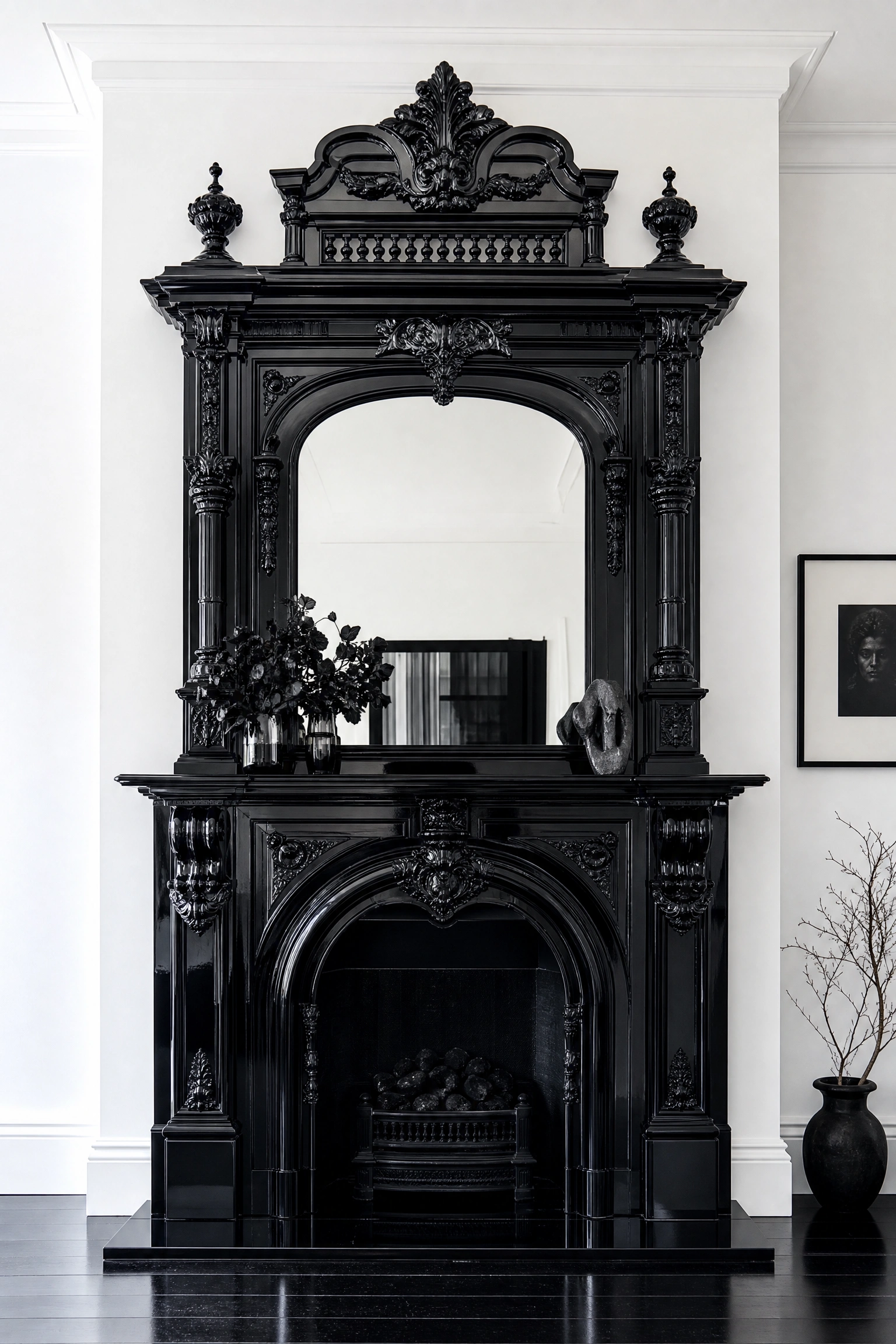
Painting a highly ornate, antique Victorian mantel in a sleek, high-gloss black finish instantly modernizes the historic piece and turns it into a dramatic, architectural showstopper. The thick, shiny enamel completely smooths out the fussy details of the woodwork, allowing the historic carvings to read as modern texture rather than old-fashioned trim. You must pair this glossy, dark mantel with stark white walls and minimalist, contemporary furniture to maximize the sharp, edgy contrast. While painting over antique wood is controversial, this is a fantastic solution for mantels that have already been ruined by multiple layers of cheap, peeling latex paint. The high-gloss finish beautifully reflects the flickering flames of the fire, creating a stunning visual effect at night.
Pro Move: High-gloss paint highlights every single dent and scratch, so you must spend hours sanding and patching the wood perfectly smooth before picking up a brush.
The Frame TV Disguise
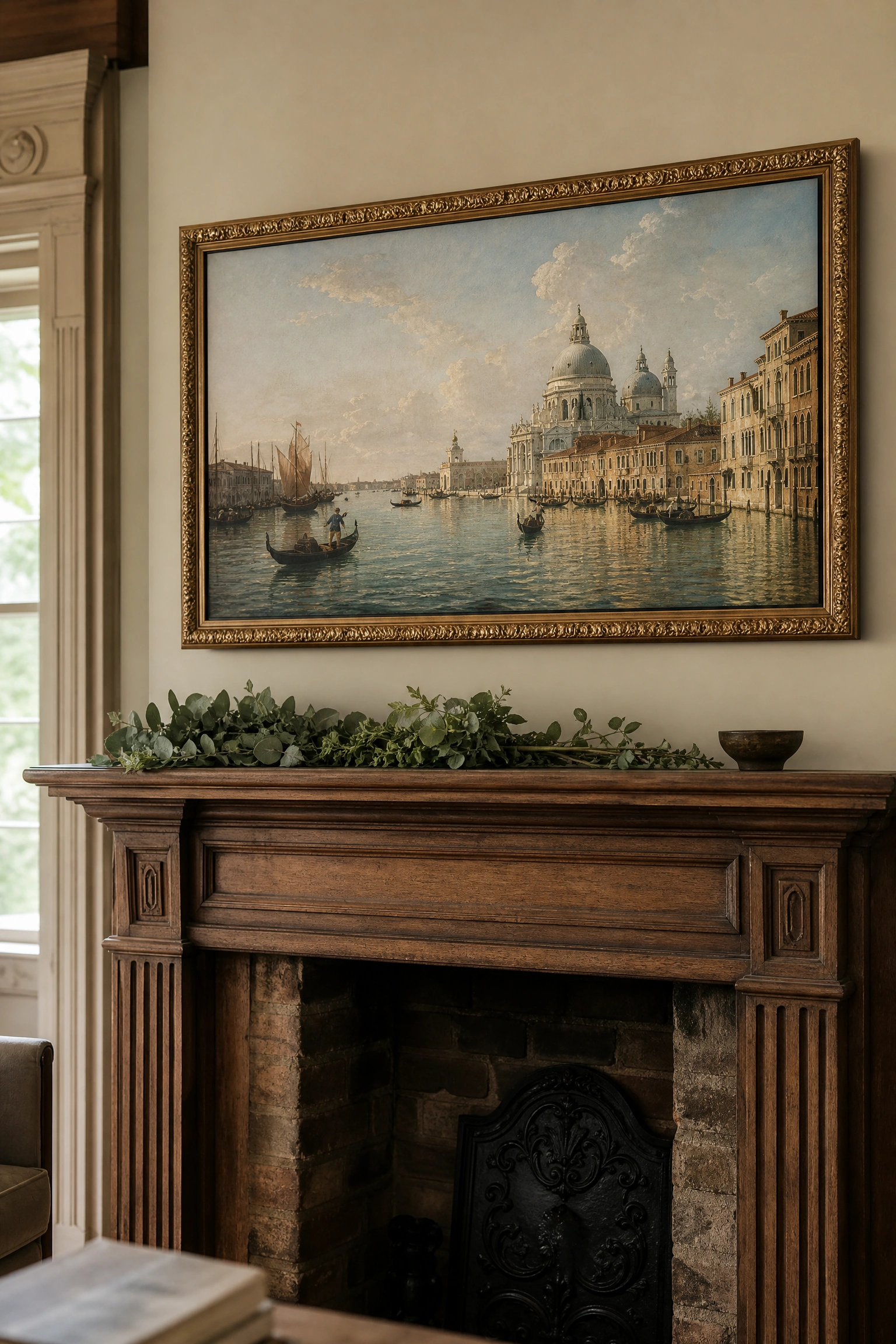
Hanging a modern Frame TV directly above an antique mantel is the ultimate way to blend historic architecture with necessary modern technology. When the television is turned off, it displays a piece of classic art that perfectly complements the antique woodwork, completely hiding the fact that you have a massive screen in the center of the room. I highly recommend purchasing an aftermarket, ornate gold bezel for the television so it genuinely looks like a framed oil painting resting above the fireplace. This completely solves the age-old design problem of having a beautiful antique fireplace compete with a giant, ugly black plastic rectangle. You should keep the mantel decor below the television very low and simple so nothing blocks the bottom of the screen.
Reality Check: You must hire an electrician to run the television cords behind the drywall, as a dangling black wire will completely ruin the historic illusion.
Pairing with Modern Abstract Art
Hanging a massive, highly colorful abstract canvas directly above a carved, traditional antique mantel creates an incredible juxtaposition that feels extremely high-end and expertly curated. The messy, sweeping brushstrokes of the modern art heavily contrast the rigid, symmetrical carvings of the historic woodwork, preventing the room from feeling like a stuffy museum exhibit. You can pair this bold focal point with a simple, natural wood mantel finish to ground the bright colors of the painting. This styling trick immediately tells guests that the antique fireplace is an intentional design choice rather than an outdated feature you forgot to renovate. You should frame the abstract art in a simple, thin float frame to keep the focus strictly on the clash of styles.
Quick Tip: Ensure the width of your abstract canvas is roughly two-thirds the total width of the mantel shelf for perfect visual balance.

Sleek Marble Hearth Update
Replacing the cracked, outdated tiles around the base of an antique wooden mantel with a single, massive slab of honed Carrara marble instantly elevates the entire fireplace. The clean, modern lines of the solid stone slab provide a sleek, quiet foundation that allows the intricate details of the antique wood to truly stand out. In my experience, pairing a highly detailed, historic wooden surround with a completely unadorned, minimalist hearth creates a beautifully balanced, transitional aesthetic. This is an investment-level upgrade that requires professional stone fabricators, but it drastically increases the value and functionality of the fireplace. The cool, grey veining in the marble beautifully complements both natural wood finishes and painted mantels.
Heads Up: Always choose a honed or leathered finish for the marble hearth rather than a polished one, as the matte texture hides soot and ash much better.

Minimalist Ceramic Vases
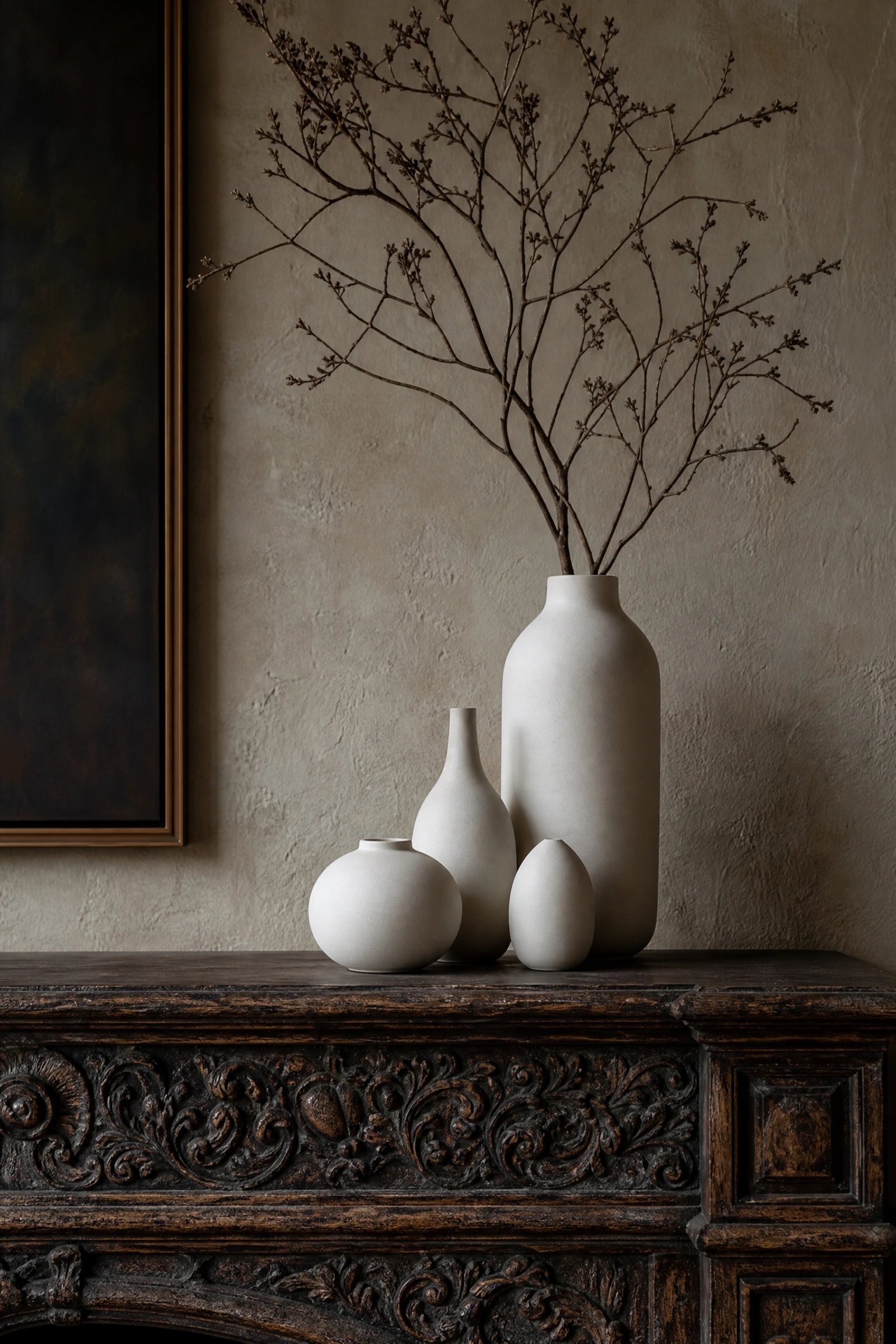
Decorating a heavy, heavily carved antique mantel with a sparse collection of smooth, minimalist matte white ceramic vases creates a highly satisfying textural contrast. The complete lack of detail on the modern vases allows the eye to rest, which is absolutely crucial when the fireplace woodwork is incredibly busy and ornate. You should group the vases tightly on one side of the mantel, leaving the rest of the historic wood shelf completely bare and exposed to celebrate the architecture. This is a very affordable styling approach that heavily updates the antique piece without requiring any paint or permanent alterations. Adding a few structural, dried branches to the tallest vase provides necessary height without adding chaotic color.
Designer Advice: Vary the shapes of the ceramic vases, combining tall cylinders with round, squat bowls to create a visually interesting, sculptural display.
Floating Glass Shelving
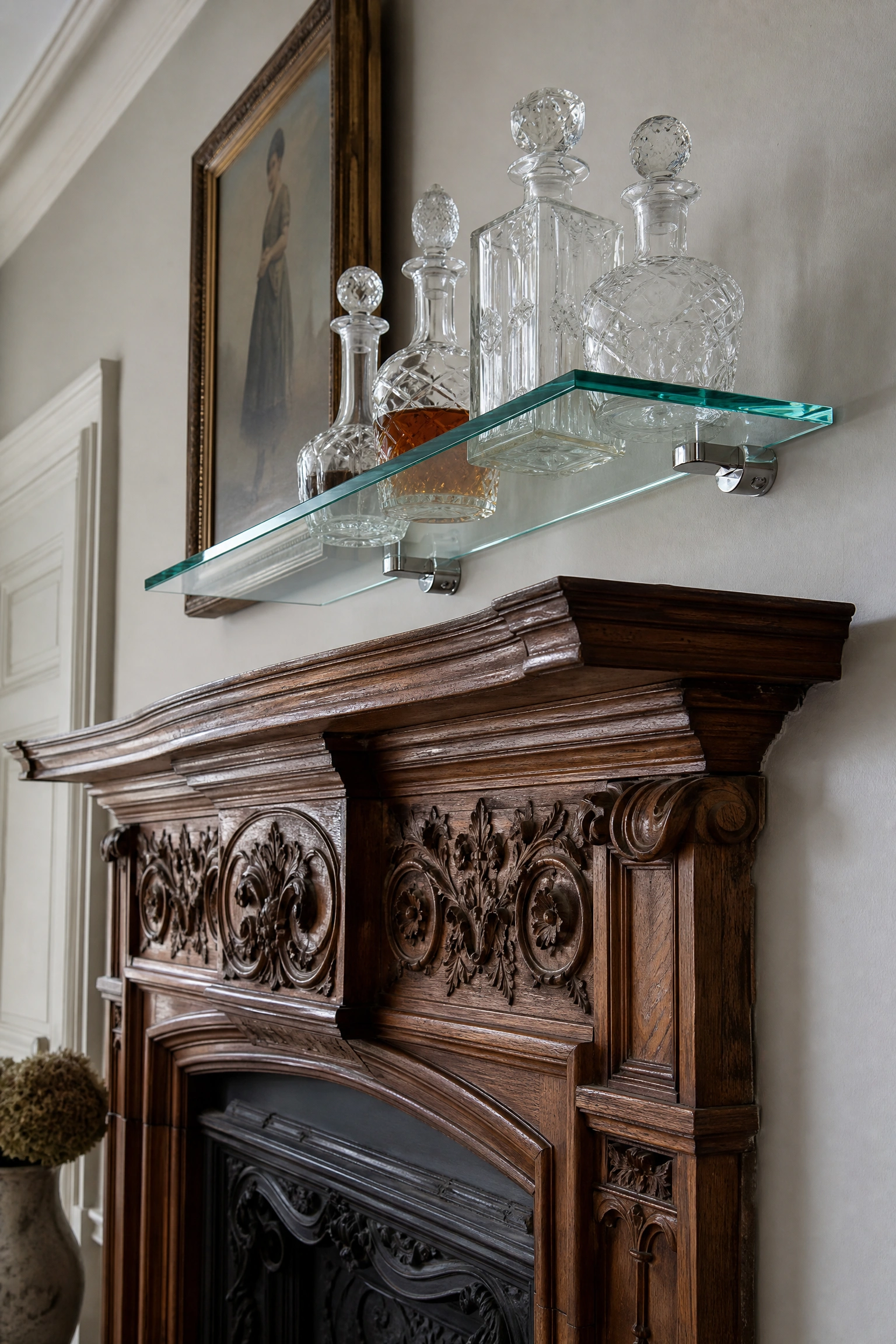
Installing a thick, floating piece of tempered glass directly above an antique mantel shelf provides extra display space without visually covering up the historic woodwork. This modern intervention works perfectly in small rooms where you need to display objects but cannot afford to make the heavy antique fireplace feel any bulkier. You can pair this invisible glass shelf with small, delicate items like crystal decanters or a collection of small framed photos. This sits in the mid-range budget category and provides a fascinating clash of eras, mixing century-old carved wood with sleek, transparent modern engineering. The glass completely disappears, allowing the eye to focus entirely on the architectural details of the original mantel below.
Pro Move: Use highly polished chrome or brushed brass standoff brackets to mount the glass, adding a deliberate, modern metallic accent to the installation.
Repurposed Faux Mantel Installations
The Bedroom Headboard Alternative
Installing a salvaged, highly decorative antique mantel on the wall directly behind your bed serves as an incredibly unique and architectural alternative to a traditional headboard. The wooden shelf provides the perfect narrow space to rest small reading lamps, framed photos, or a glass of water, while the fireplace opening beautifully frames the pillows on the bed. I find this approach works exceptionally well in older homes or studio apartments that lack architectural interest, instantly creating a massive focal point. You should pair this repurposed mantel with simple, neutral linen bedding so the heavy woodwork remains the star of the room. Securing the heavy antique piece directly to the wall studs is absolutely critical to ensure it is safe to sleep underneath.
Reality Check: You must measure the width of your mattress carefully, as the opening of the antique mantel needs to be wider than the bed to look proportional.

Creating a Faux Firebox with Books
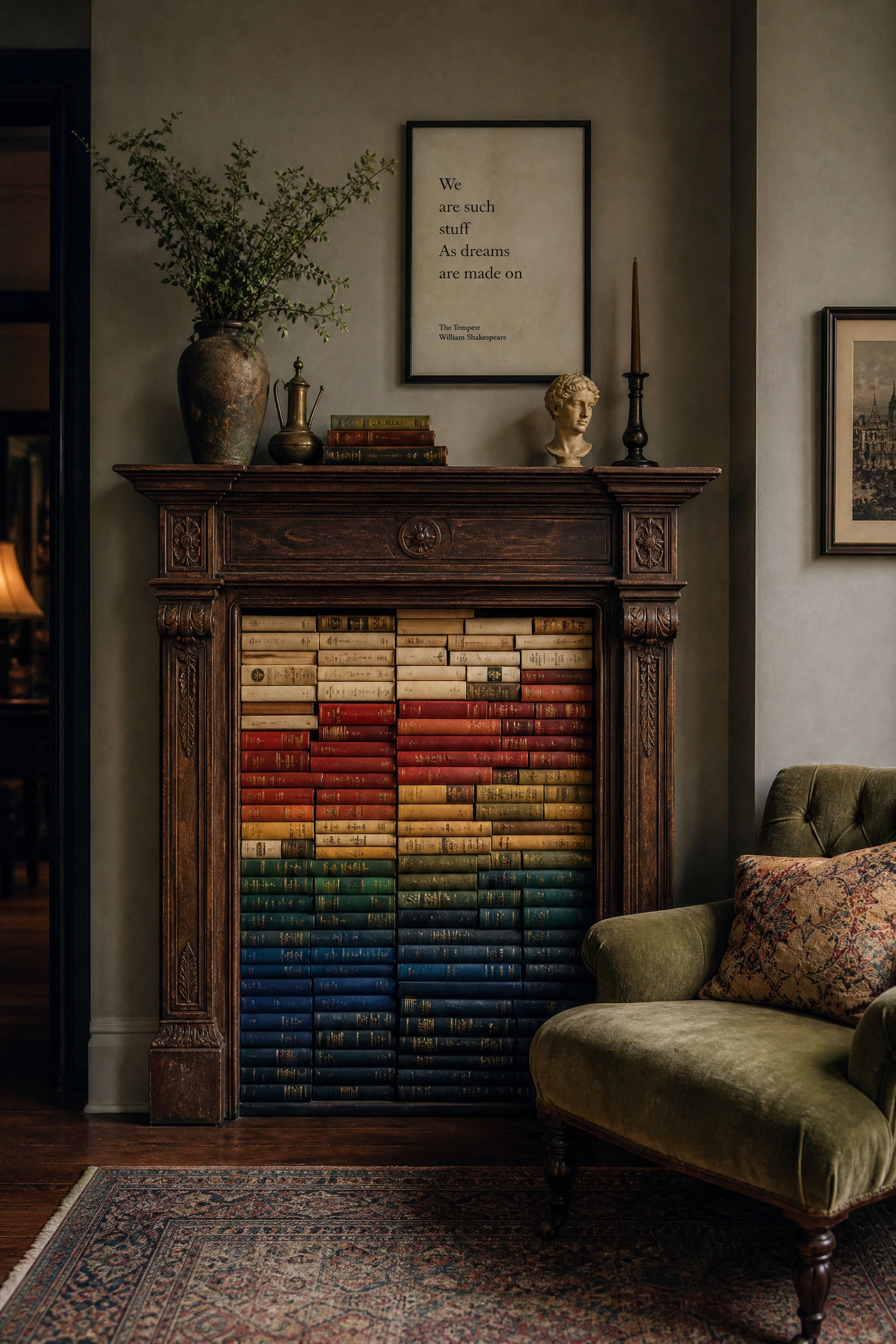
If you have installed a salvaged antique mantel on a flat wall with no actual fireplace behind it, filling the empty firebox area with tightly stacked books creates a cozy, highly intellectual aesthetic. Stacking the books all the way to the top of the wooden opening completely hides the blank drywall and provides a fantastic sense of depth and texture. You can arrange the spines by color for a modern look, or turn the pages outward for a highly textured, neutral block of paper. This is a brilliant, budget-friendly way to make a faux mantel feel intentional and heavily stylized rather than looking like an empty, forgotten architectural piece. Placing a small reading chair right next to the display completes the library-inspired atmosphere.
Quick Tip: Visit local thrift stores on clearance days to buy massive quantities of hardcover books in bulk for just a few dollars to fill the large opening.
The Entryway Console Table
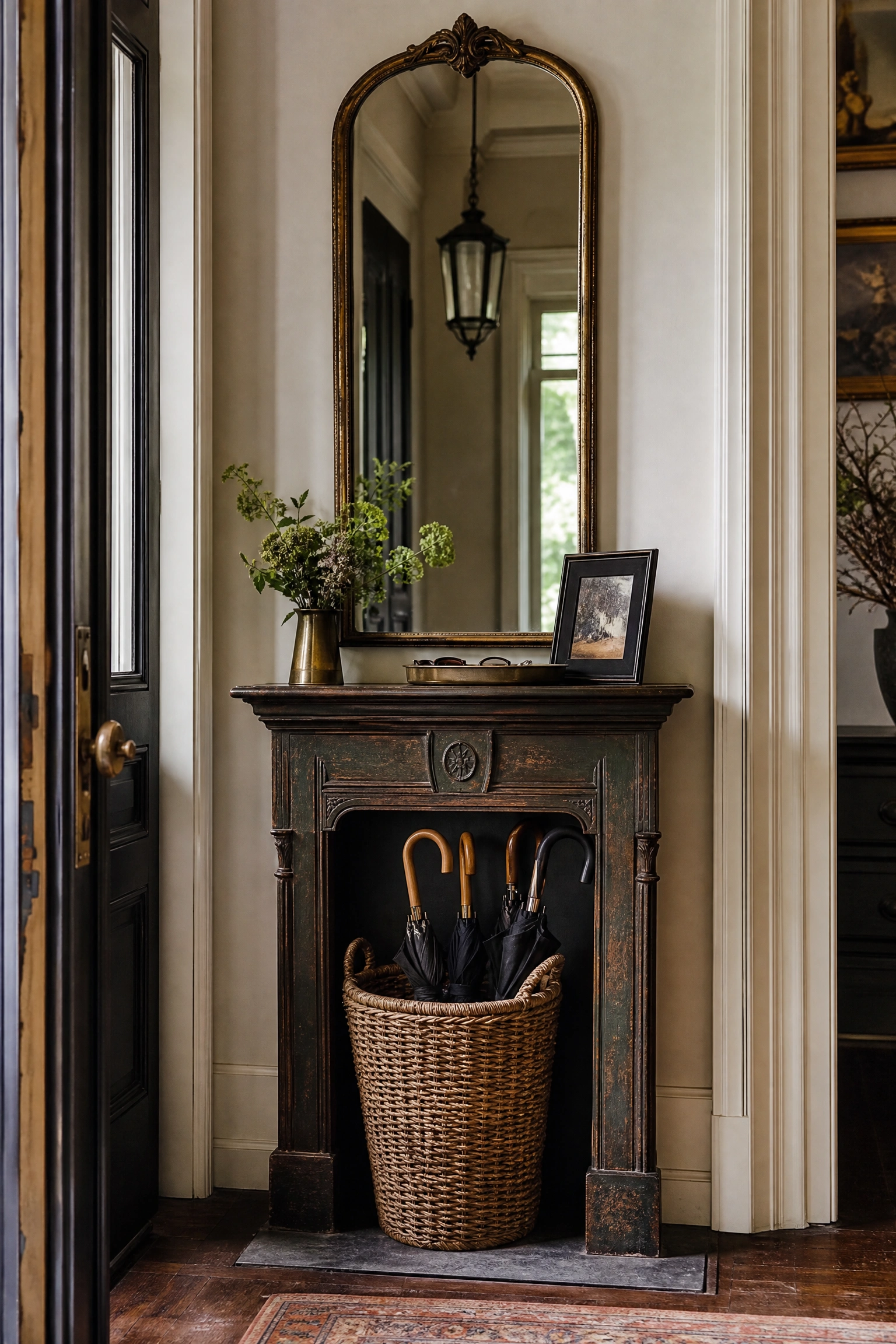
Securing a tall, slender antique mantel to the wall in a front entryway provides the exact same functionality as a console table but delivers vastly more architectural drama. The shallow depth of a historic mantel shelf makes it the perfect solution for narrow hallways where a traditional table would completely block the walking path. I always recommend placing a large, woven basket inside the empty firebox area to catch shoes and umbrellas, making the installation highly functional for daily life. You can top the shelf with a beautiful catchall tray for keys and a tall mirror to bounce light around the cramped foyer. This unexpected placement immediately sets a historic, collected tone for the rest of your home the second guests walk through the door.
Heads Up: Ensure the mantel is tall enough that you do not have to hunch over awkwardly to drop your keys onto the shelf when you enter the house.
Tiling the Faux Surround
Applying heavily patterned, vintage-style cement tiles to the drywall directly inside the opening of a faux mantel creates the beautiful illusion of a functioning, historic fireplace. The vibrant colors and geometric patterns of the tile provide a stunning contrast against a plain wooden surround, tricking the eye into believing the fireplace is completely real and original to the home. You should pair this decorative tile installation with a pile of real birch logs sitting on the floor to further sell the illusion of a working hearth. This is a mid-range DIY project that allows you to introduce bold colors and patterns into a room without fully committing to a massive accent wall. The tile completely anchors the faux mantel to the floor, making it feel permanent.
Designer Advice: Install the tiles using a highly durable construction adhesive rather than traditional thin-set mortar since you are applying them directly to flat drywall.

The Dining Room Bar Setup
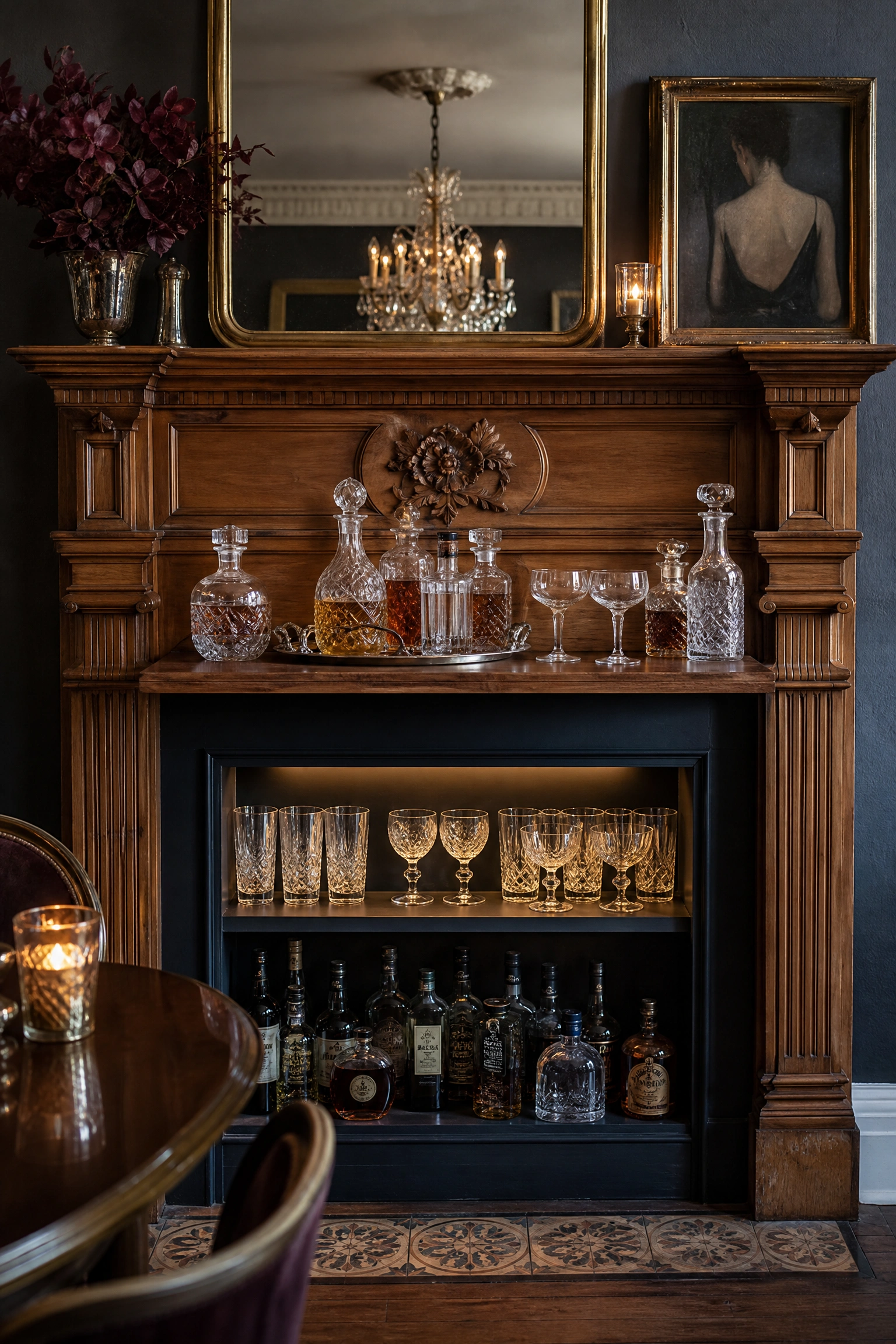
Transforming a salvaged antique mantel into a dedicated liquor bar in the dining room is a highly creative way to repurpose a historic architectural element. You can line the wooden shelf with beautiful crystal decanters, vintage coupe glasses, and a silver tray of cocktail tools, creating a glamorous, speakeasy vibe. I find that painting the wall space directly inside the mantel opening a dark, moody color provides a fantastic backdrop that makes the glassware sparkle brilliantly. This setup serves as an incredible conversation starter during dinner parties and frees up valuable space inside your kitchen cabinets. Placing a small, mirrored tray directly on the mantel shelf protects the antique wood from accidental spills and sticky cocktail rings.
Pro Move: Install a small, battery-operated picture light directly above the mantel to illuminate your bar display beautifully without needing an electrician.
Conclusion
An antique fireplace mantel is a rare architectural treasure that deserves to be the focal point of your room. As we have explored, the key to styling these historic pieces is understanding how to balance their heavy, ornate craftsmanship with thoughtful, deliberate decor. Whether you choose to lean into the history with vintage oil paintings and brass candlesticks, or you decide to modernize a dark room with a sleek frame TV and high-gloss paint, your approach should always respect the original materials. Always remember to prioritize the preservation of the antique wood or stone, using the correct cleaning methods and avoiding permanent damage whenever possible. By applying these practical styling formulas and restoration techniques, you can ensure your antique mantel remains a stunning, functional centerpiece for generations to come.
Frequently Asked Questions
Should I paint an original antique wooden mantel?
It depends entirely on the condition of the wood. If the original oak or mahogany has a beautiful, rich grain and is in good shape, painting it destroys the historical value. However, if the mantel is made of cheap wood, is heavily damaged, or has already been painted poorly several times, painting it a fresh, dark color is a great way to save it.
How do you style a mantel without it looking cluttered?
The easiest way to avoid clutter is to stick to the ‘anchor and layer’ formula. Place one large piece, like a mirror or painting, in the center. Then, add just two or three carefully selected smaller items, like candlesticks or a vase, on the sides. Leave plenty of negative space on the shelf so the eye can rest.
Can you install an antique mantel if you don’t have a fireplace?
Yes, absolutely. Salvaged mantels make incredible faux fireplaces. You simply secure the mantel directly to a flat wall in your living room or bedroom. You can leave the opening blank, fill it with stacked books, or tile the drywall inside to create a highly convincing illusion.
What is the best way to clean an antique wood mantel?
Avoid harsh chemical cleaners or modern silicone-based dusting sprays, which leave a cloudy buildup over time. Instead, use a soft, damp microfiber cloth to remove dust. For deeper cleaning and nourishment, apply a high-quality beeswax polish once a year to keep the wood from drying out and cracking.
How high should art be hung above a fireplace mantel?
Artwork should typically be hung four to six inches above the top of the mantel shelf. Hanging it any higher creates an awkward, floating gap that disconnects the art from the fireplace. Alternatively, you can simply lean the art directly on the shelf for a relaxed, layered look.
What do you put on a mantel if there is a TV above it?
If you have a television mounted above the mantel, keep the decor underneath extremely low and simple so it does not block the screen. A garland of low greenery, a long, shallow decorative bowl, or a few small, squat candles are perfect choices that add style without causing obstructions.


