Contemporary Dining Room Ideas
Contemporary dining room design has undergone a massive transformation in recent years. Historically, ‘contemporary’ was often synonymous with cold, sterile spaces filled with aggressive glass tables, uncomfortable metal chairs, and stark white walls. Today, however, the aesthetic has completely shifted toward creating warm, inviting, and highly functional environments. The modern contemporary dining room is defined by rich, earthy color palettes, incredibly tactile organic textures, and furniture that actually prioritizes physical comfort over rigid, futuristic geometry. I have found that the most successful contemporary spaces beautifully balance sharp, minimalist architectural lines with soft, sculptural furniture silhouettes to create a room that feels both cutting-edge and deeply welcoming for daily family meals.
The secret to nailing this sophisticated look is understanding that the dining table must act as the absolute ‘hero piece’ of the room, supported by dramatic lighting and curated, intentional decor. You must move away from buying perfectly matched, generic furniture sets and instead focus on mixing varied materials like heavy stone, warm wood, and plush velvet. The twenty-four ideas below are grouped into four distinct categories to help you build a comprehensive design strategy: The Architectural Table, Elevated Modern Seating, Dramatic Contemporary Lighting, and Curated Finishing Touches. By following these highly practical, designer-approved methods, you can easily transform your dining room from a formal, dusty, unused space into a stunning, multifunctional hub that anchors your entire home.
The Architectural Table
Sculptural Fluted Pedestal Bases
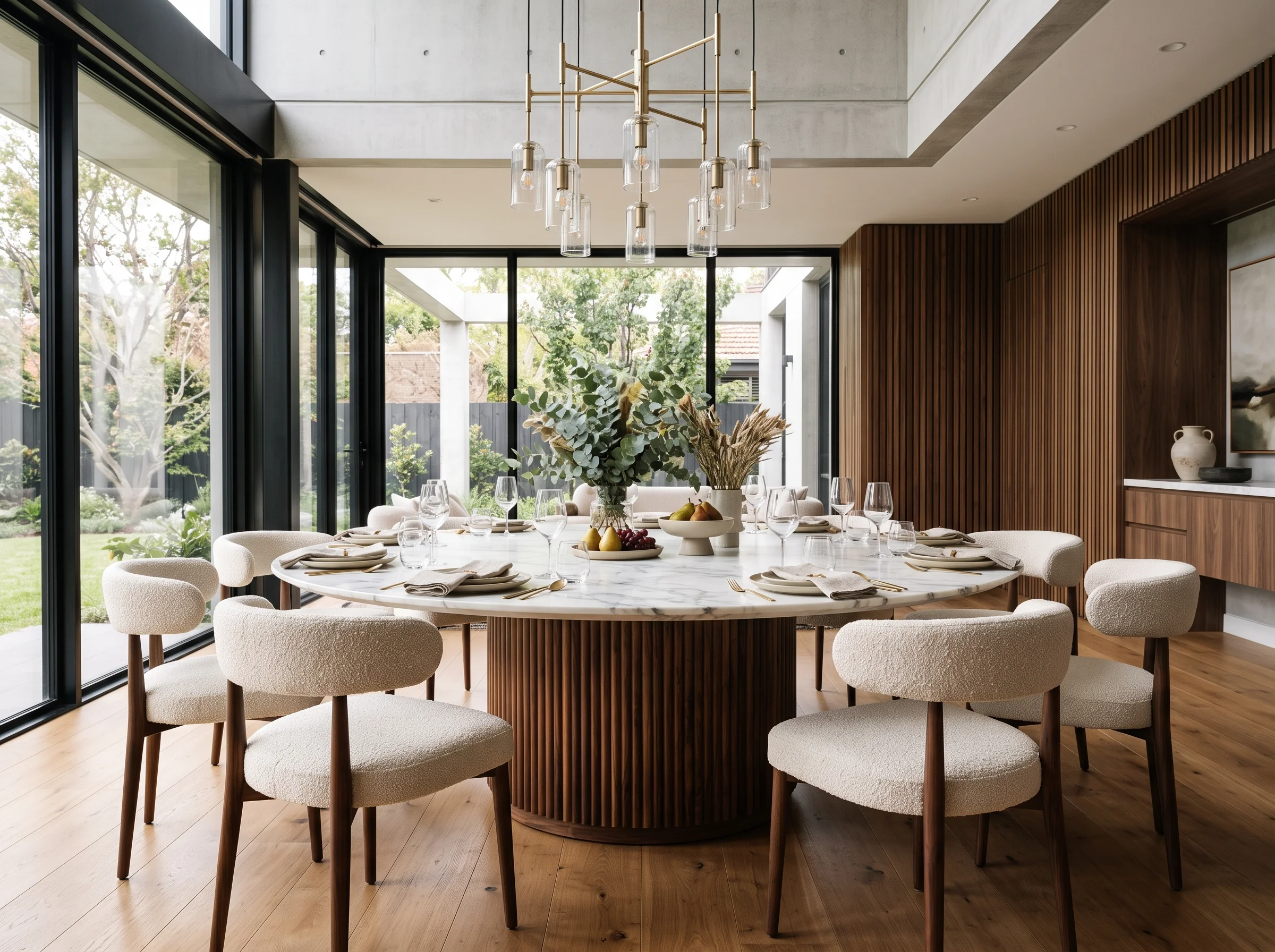
Replacing a standard four-legged dining table with a massive, round table featuring a fluted or ribbed wooden pedestal base is the fastest way to modernize a dining room. The deep, repetitive vertical grooves of a fluted base provide incredible architectural rhythm and fascinating shadows that completely break up the boring, flat surfaces of standard furniture. Because a pedestal base sits entirely in the center of the table, it offers significantly more legroom, allowing you to comfortably squeeze in an extra chair when hosting a large dinner party. I always suggest pairing this heavy wooden base with a sleek, perfectly smooth marble tabletop to create a highly satisfying textural contrast. This statement piece immediately becomes the undisputed anchor of the entire room.
Designer Advice: Always measure the exact width of the pedestal base, as a base that is too wide will actually prevent your dining chairs from sliding fully underneath the table.
Raw Live-Edge Wood Slabs
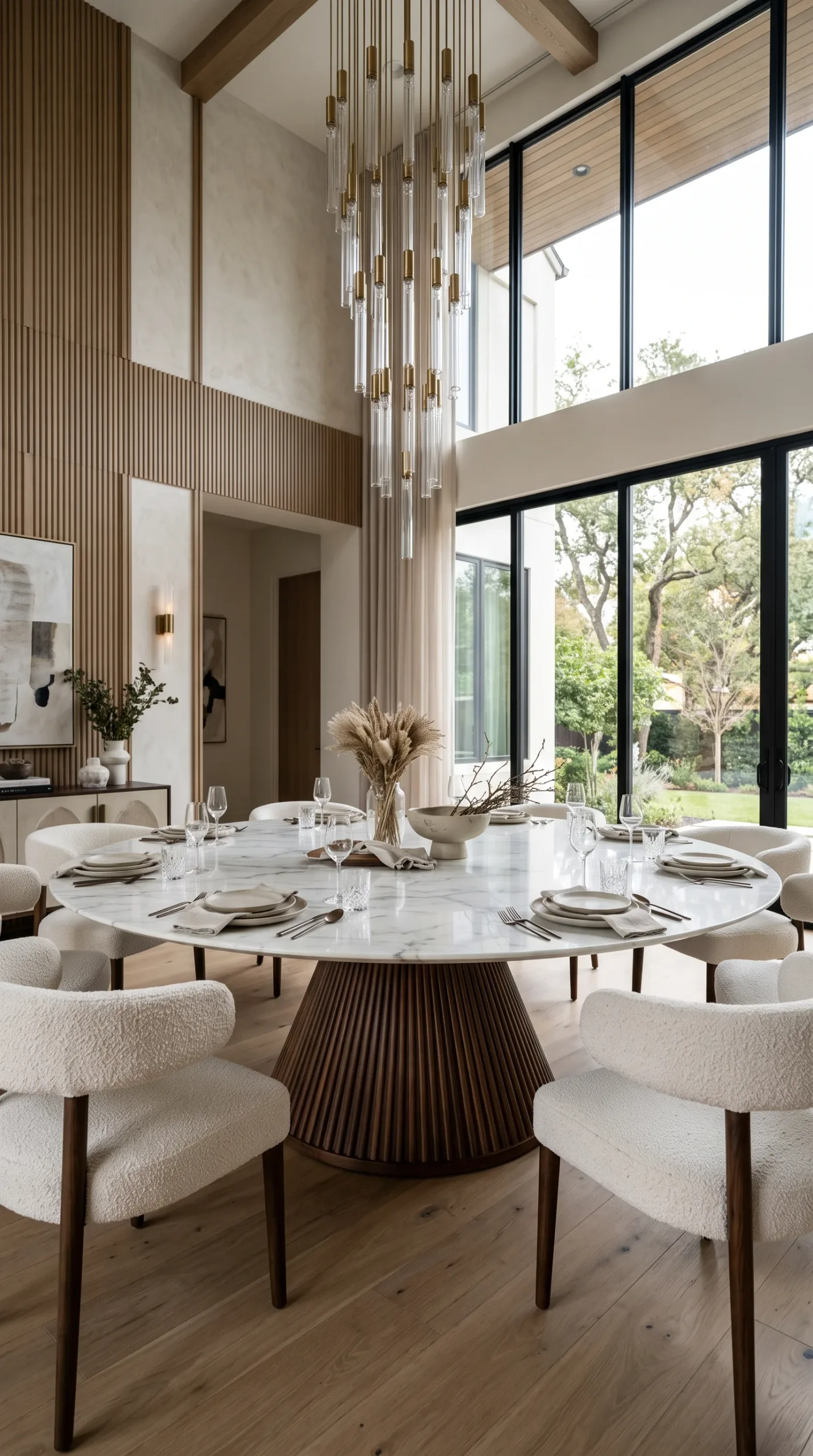
Bringing a massive, raw live-edge wood slab table into a contemporary dining room introduces a vital punch of organic, asymmetrical beauty into an otherwise rigid space. Contemporary design relies heavily on straight lines and perfect geometry, which can quickly feel highly sterile if not balanced by the chaotic, imperfect lines found in nature. You should ground the heavy, natural wood slab by pairing it with ultra-modern, sleek matte black metal legs to ensure the piece feels like a contemporary art installation rather than a piece of rustic cabin furniture. I find that this specific combination acts as the perfect bridge between cold modernism and warm, inviting biophilic design. The unique wood grain guarantees that your dining table is completely one-of-a-kind.
Pro Move: Apply a clear, dead-flat matte polyurethane sealant to the raw bark edge of the table to prevent the natural wood from shedding messy debris onto your floors.
Dark Smoked Glass Tops
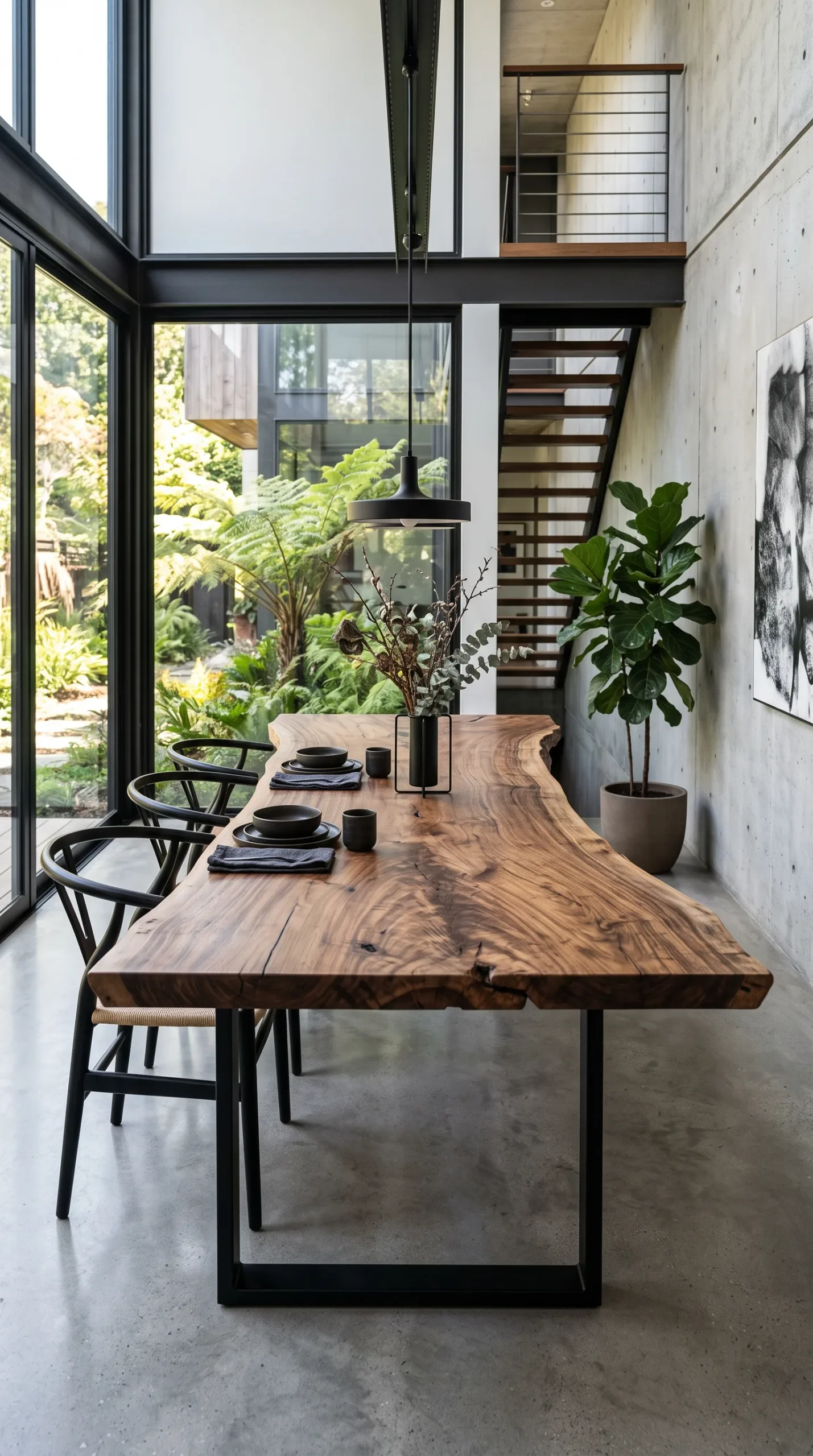
If you love the airy, floating aesthetic of a glass dining table but hate the cold, dated 1990s look of clear glass, switching to a dark smoked or bronze glass top is the perfect contemporary solution. Smoked glass provides the exact same visual lightness as clear glass, keeping the room feeling incredibly open and spacious, but it introduces a moody, highly sophisticated 1970s glamour. You can pair this dark glass with a heavy, brushed brass geometric base to create a stunning, masculine centerpiece that feels incredibly luxurious and tailored. This material choice is fantastic for small apartments where a massive solid wood table would visually dominate and shrink the cramped floor plan.
Reality Check: Smoked glass requires constant, daily cleaning with a microfiber cloth, as every single fingerprint, water ring, and dust particle is instantly visible against the dark surface.
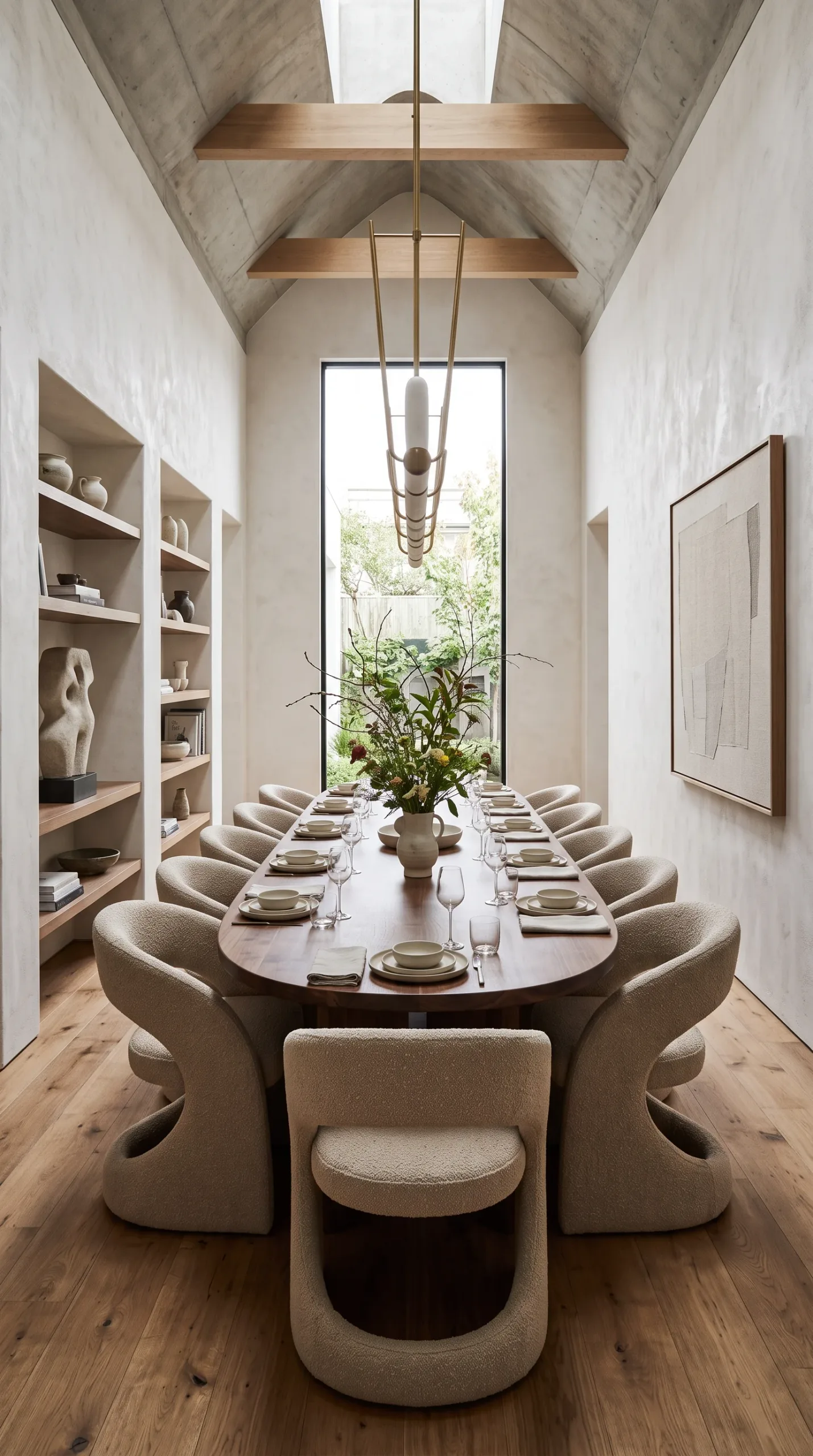
Oversized Oval Silhouettes
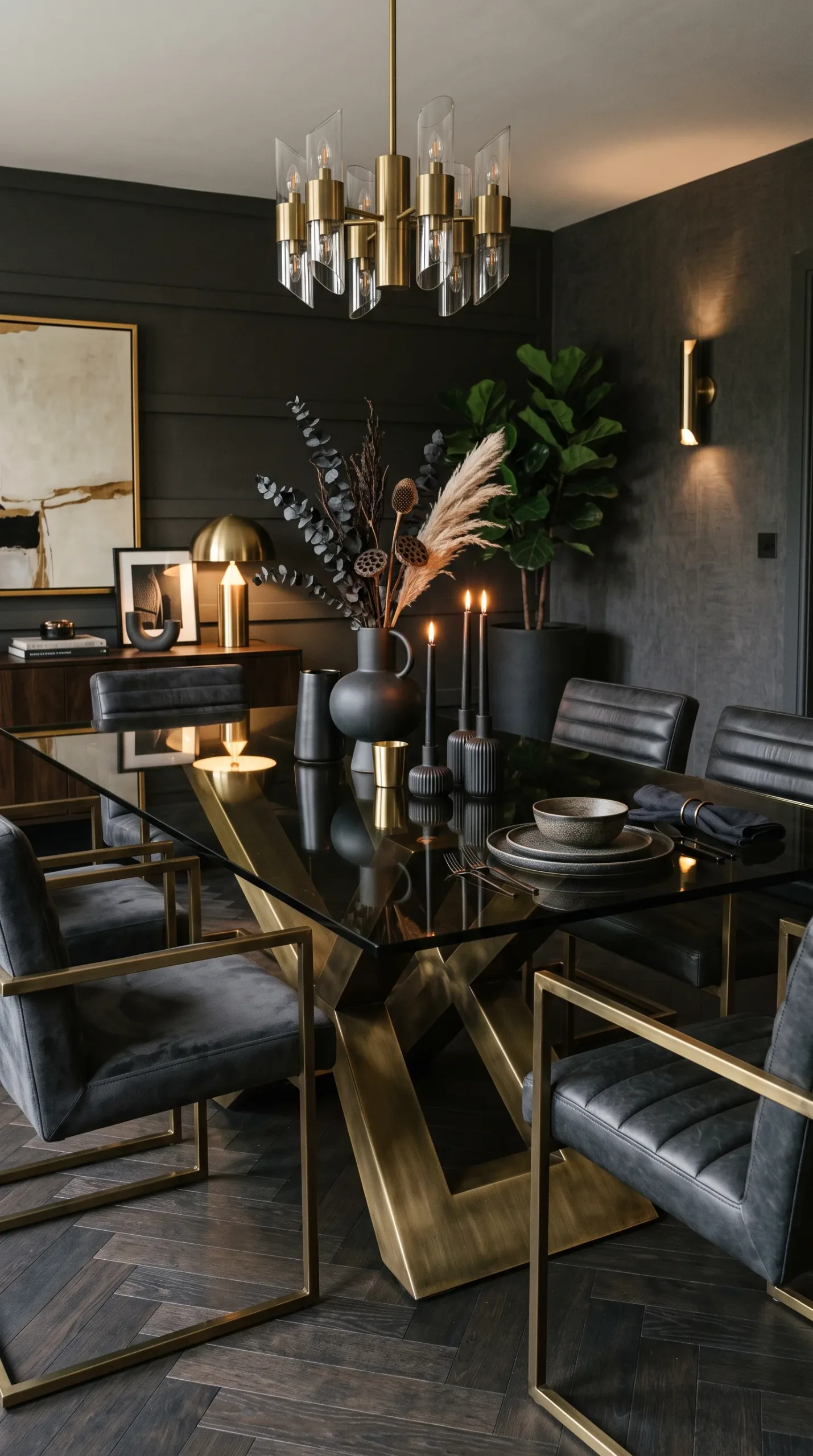
Moving away from traditional sharp rectangular tables and embracing a massive, oversized oval silhouette softens the entire architecture of a contemporary dining room. The continuous, sweeping curve of an oval table eliminates sharp corners, creating a highly fluid, organic traffic flow that makes navigating around the room much easier and safer for children. I love using oval tables in long, narrow dining rooms because they perfectly fill the rectangular footprint while tricking the eye into believing the space is wider than it actually is. You should pair this smooth, curved table with equally curvy, rounded dining chairs to maintain a cohesive, highly sculptural aesthetic throughout the seating arrangement. It is the perfect marriage of form and function.
Quick Tip: Oval tables require highly specific, oval-shaped area rugs underneath them; placing an oval table on a standard rectangular rug often looks incredibly disjointed and geometrically awkward.
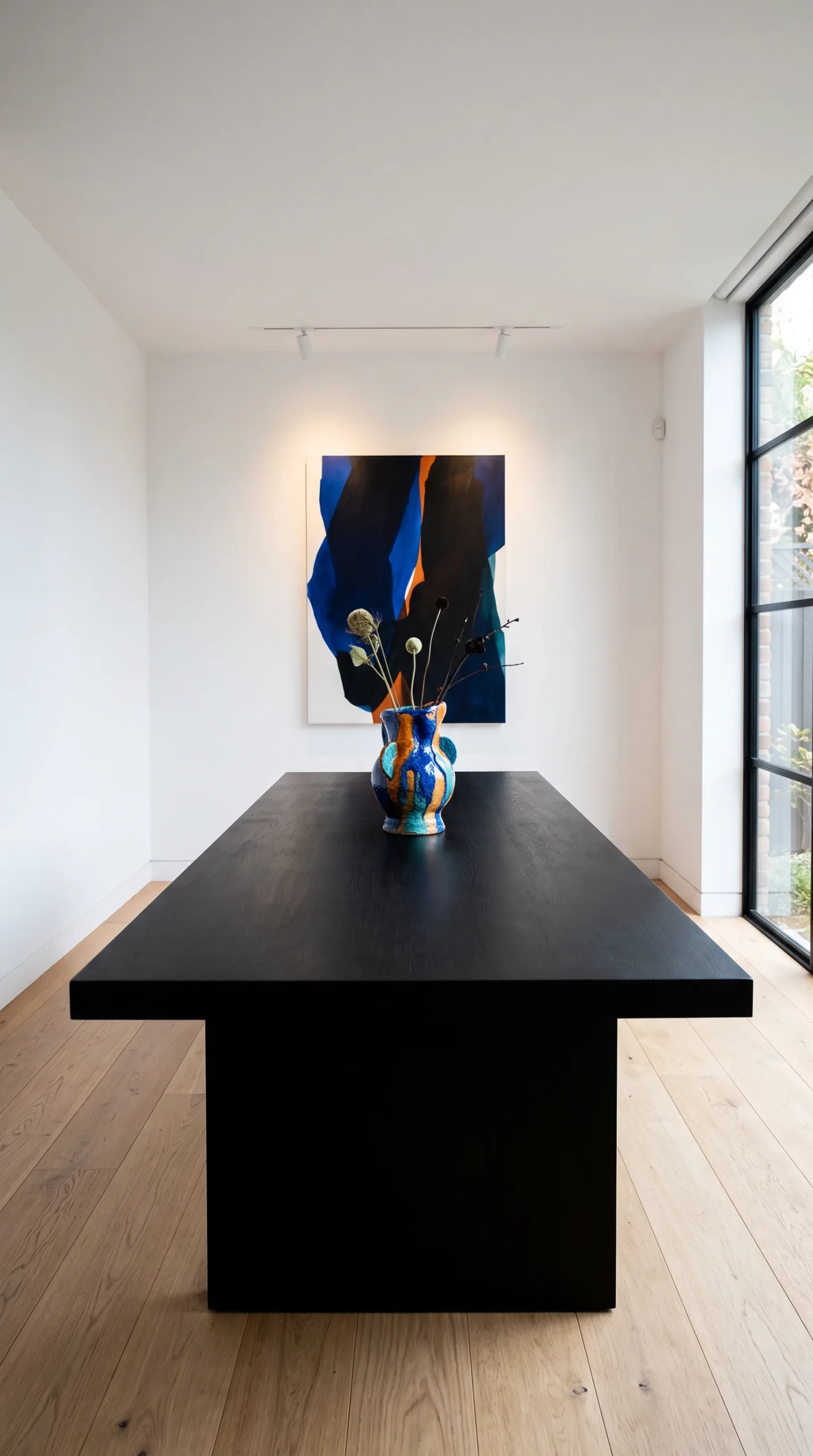
Matte Black Minimalist Tables
Anchoring your dining room with a completely solid, matte black minimalist wood table is the ultimate power move for achieving a stark, highly dramatic contemporary aesthetic. A completely black table absorbs all the ambient light in the room, acting as a massive visual void that heavily contrasts against crisp white walls and light oak hardwood floors. You must keep the styling of this table incredibly sparse, using only a single, brightly colored ceramic centerpiece to ensure the sharp, minimalist lines of the furniture remain completely unobstructed. This bold approach works perfectly for homeowners who want their dining room to feel like a high-end, exclusive art gallery rather than a traditional family eating space.
Heads Up: Matte black wood finishes highlight tiny scratches and dust instantly; always use felt placemats to protect the surface when sliding heavy ceramic dinner plates around.
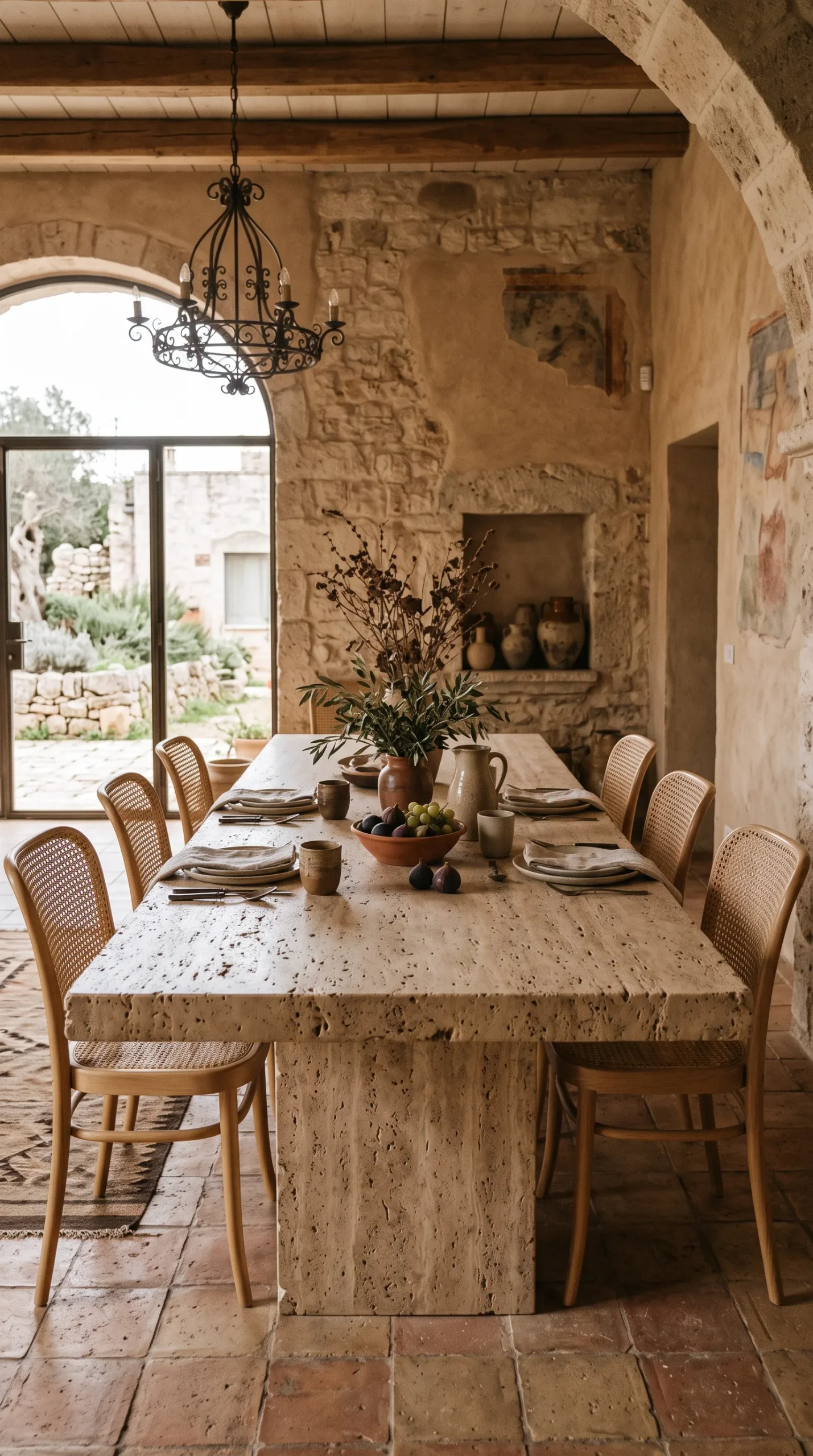
Thick Travertine Stone Slabs
Investing in a massive dining table made entirely of thick, unfilled travertine stone introduces an incredible amount of ancient, Mediterranean-inspired luxury into a modern room. The porous, sponge-like texture and warm beige tones of the travertine stone provide essential physical warmth and a stunning tactile surface that polished marble completely lacks. You should pair this heavy, monolithic stone table with lightweight, woven cane chairs to perfectly balance the massive visual weight of the rock with airy, open wooden frames. I find that the earthy, muted colors of travertine complement absolutely any contemporary color palette, making it a highly versatile, lifelong investment piece. It screams quiet, understated luxury.
Designer Advice: Travertine is an incredibly porous limestone that absorbs red wine and oils instantly; you must have the table professionally sealed with a heavy-duty stone impregnator annually.
Elevated Modern Seating
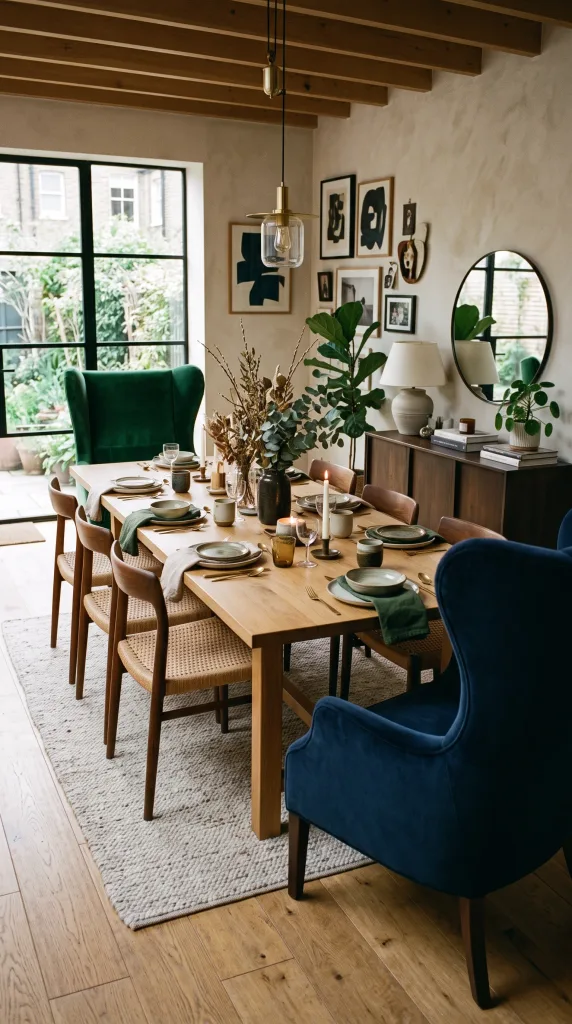
Mixing Chair Silhouettes
Abandoning the outdated concept of buying a perfectly matched six-piece dining set and intentionally mixing different chair silhouettes creates a highly curated, collected-over-time contemporary vibe. You can place four sleek, armless wooden chairs along the sides of the table and anchor the ends with two massive, fully upholstered velvet wingback chairs. This strategic mixing provides incredible visual tension and breaks up the boring uniformity of a standard dining room, making the space feel deeply personal and highly intentional. I always suggest keeping the color palette of the mismatched chairs identical, such as using all black wood or all cream fabrics, to ensure the varied shapes look cohesive rather than chaotic.
Pro Move: Ensure the seat heights of all the mismatched chairs are exactly the same distance from the floor so your guests are sitting perfectly eye-to-eye during dinner.
Curved Boucle Upholstery
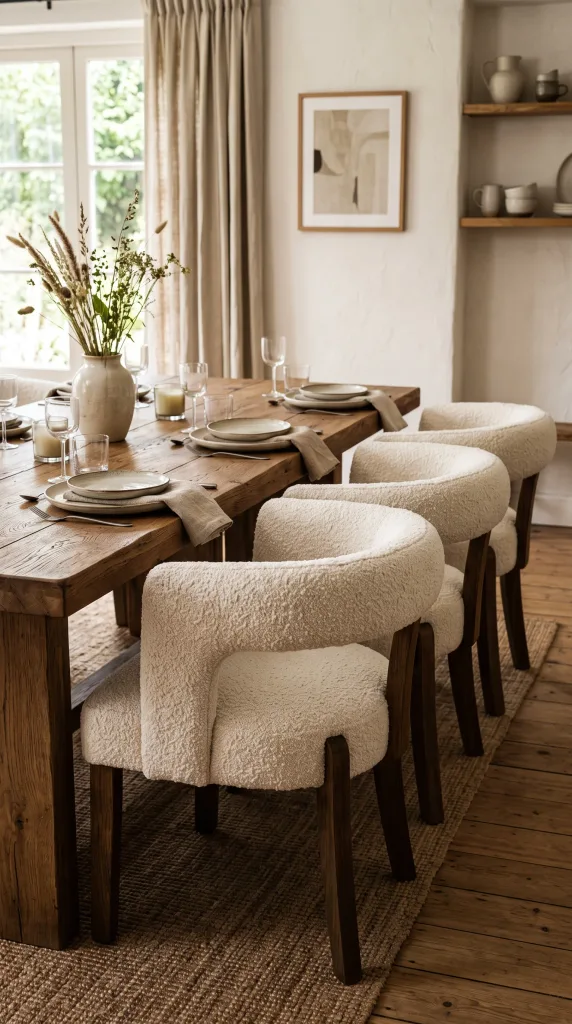
Introducing fully upholstered dining chairs featuring a curved, hugging backrest covered in thick cream boucle fabric is the best way to prioritize physical comfort in a contemporary space. The nubby, sheep-like texture of the boucle aggressively softens the hard, rigid lines of a standard wooden or stone dining table, introducing a massive amount of inviting tactile warmth. You should choose chairs with a horseshoe-shaped backrest that wraps entirely around the sitter, encouraging guests to linger and chat comfortably for hours after the meal has ended. I find that this specific combination of modern curved silhouettes and incredibly cozy fabric perfectly summarizes the current shift toward warm, livable contemporary design.
Reality Check: Boucle fabric acts like a magnet for pet hair and spilled food; you must regularly vacuum these chairs with a specialized upholstery brush attachment to keep them pristine.
Sleek Matte Metal Frames
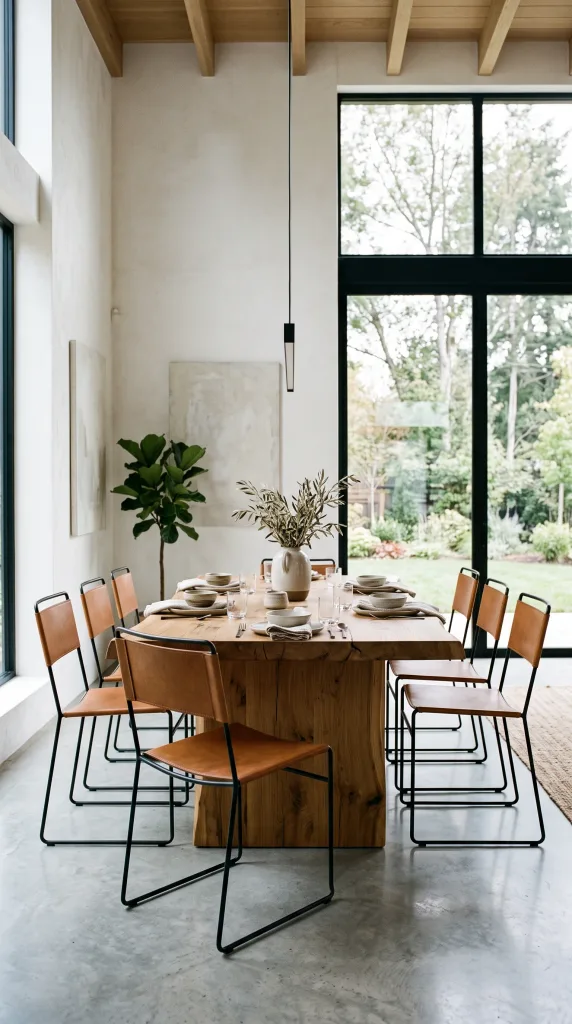
Pairing a heavy, solid wood dining table with incredibly thin, matte black metal-framed chairs creates a stunning visual contrast between massive organic weight and delicate industrial engineering. The ultra-thin metal legs practically disappear into the background, allowing the beautiful wood grain of your dining table to remain the absolute focal point of the room. You can choose metal chairs with seats upholstered in rich, warm caramel leather to ensure the industrial frames do not feel too cold or sterile for a residential home. This minimalist seating approach is highly effective in cramped dining rooms, as the open, airy frames do not visually block the sightlines across the space.
Quick Tip: Always double-check that the thin metal legs have heavy-duty plastic floor glides attached, as sharp metal edges will deeply scratch your hardwood floors instantly.
The Fully Upholstered Bench
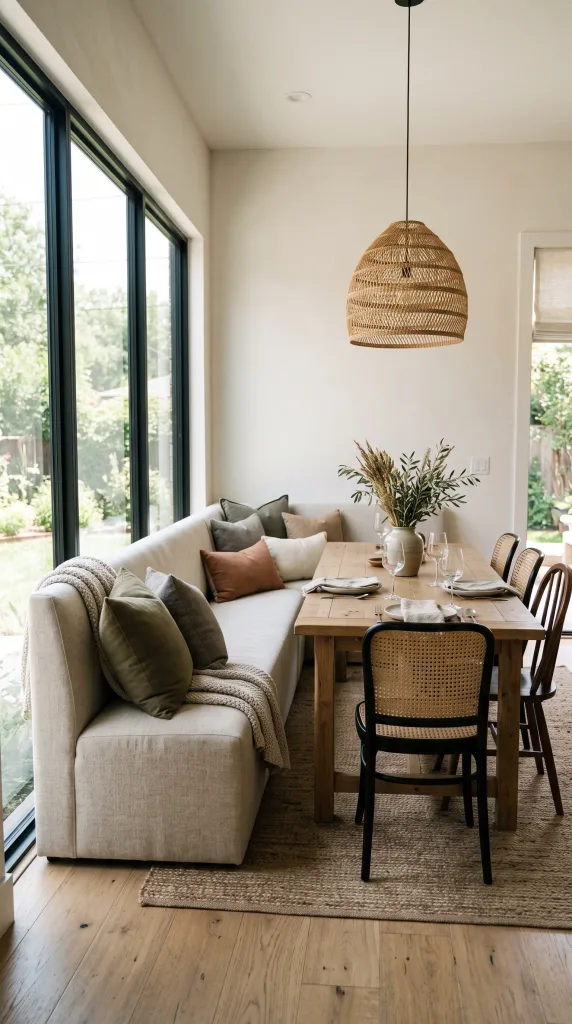
Swapping out three individual dining chairs on one side of your table for a massive, fully upholstered dining bench creates a highly relaxed, modern banquet aesthetic. A long bench visually anchors one side of the table with a solid block of color and texture, making the room feel incredibly cozy and far less formal than traditional individual seating. I highly recommend pushing the bench directly against a wall or a large window, turning that side of the dining table into a highly comfortable lounge area that is perfect for morning coffee. This approach also allows you to easily squeeze in extra small children during crowded holiday dinners without needing extra chairs.
Heads Up: Bench seating makes it incredibly difficult for the person sitting in the very middle to gracefully exit the table during dinner without disturbing everyone else.
Woven Leather Strap Chairs
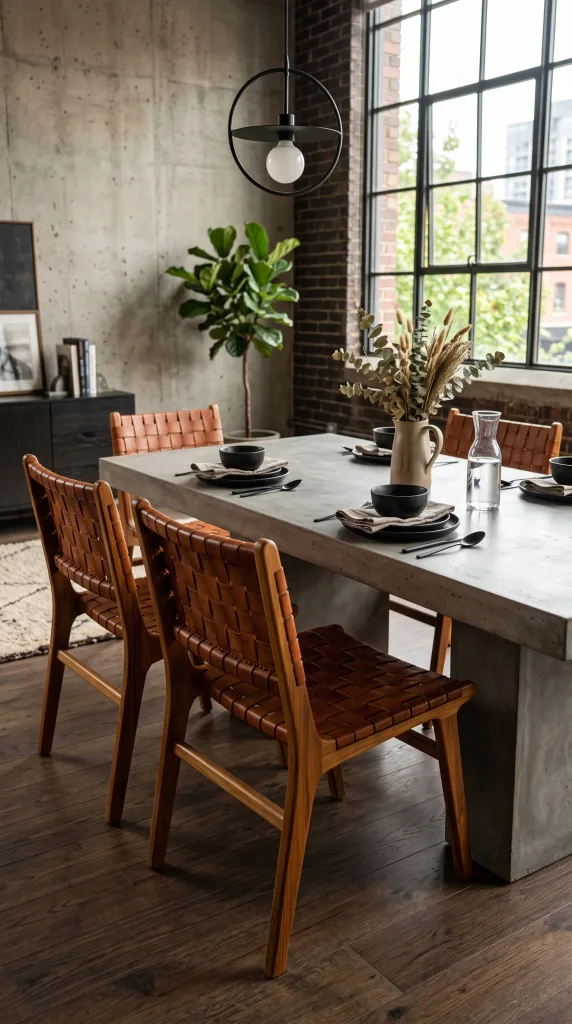
Incorporating dining chairs constructed from warm teak wood frames and thick, woven leather straps introduces an incredible amount of sophisticated, masculine texture into a contemporary room. The basket-weave pattern of the leather straps provides necessary architectural detail and a highly tactile surface that ages beautifully, developing a stunning vintage patina over years of daily use. You should pair these heavily textured wooden chairs with a perfectly smooth, minimalist concrete or glass dining table to maximize the contrast between the organic leather and the manufactured tabletop. This seating choice brings a subtle, mid-century modern influence into a contemporary space without looking like a retro theme room.
Designer Advice: Leather straps naturally stretch over time with heavy use; look for chairs that feature hidden adjustable buckles underneath the seat to pull the leather taut again.
Transparent Acrylic Ghost Chairs
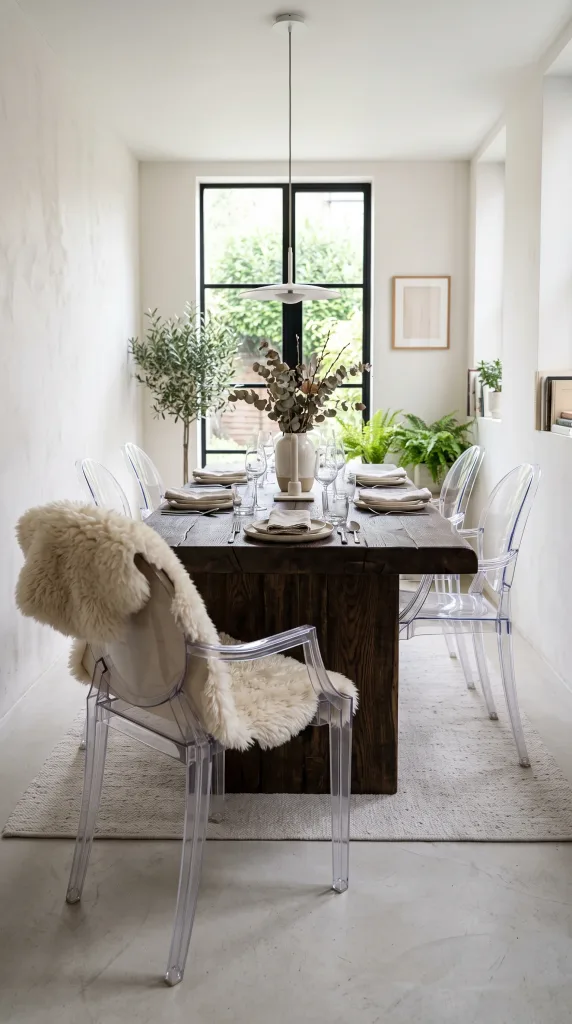
Surrounding a massive, visually heavy dining table with completely transparent acrylic ghost chairs is a brilliant contemporary strategy for making a small dining room feel significantly larger. Because the clear plastic chairs take up literally zero visual weight, the eye travels directly through them, keeping the room feeling incredibly open, airy, and thoroughly modern. You can drape a small, highly textured faux sheepskin throw over the back of the clear plastic chairs to introduce necessary physical warmth and make the rigid seats much more comfortable. I love using this approach when you have a stunning, highly patterned area rug that you do not want obscured by bulky wooden chair legs.
Pro Move: Keep a bottle of specialized acrylic cleaner and a microfiber cloth nearby, as clear ghost chairs loudly display every single fingerprint and dust particle.
Dramatic Contemporary Lighting
Oversized Linear Chandeliers
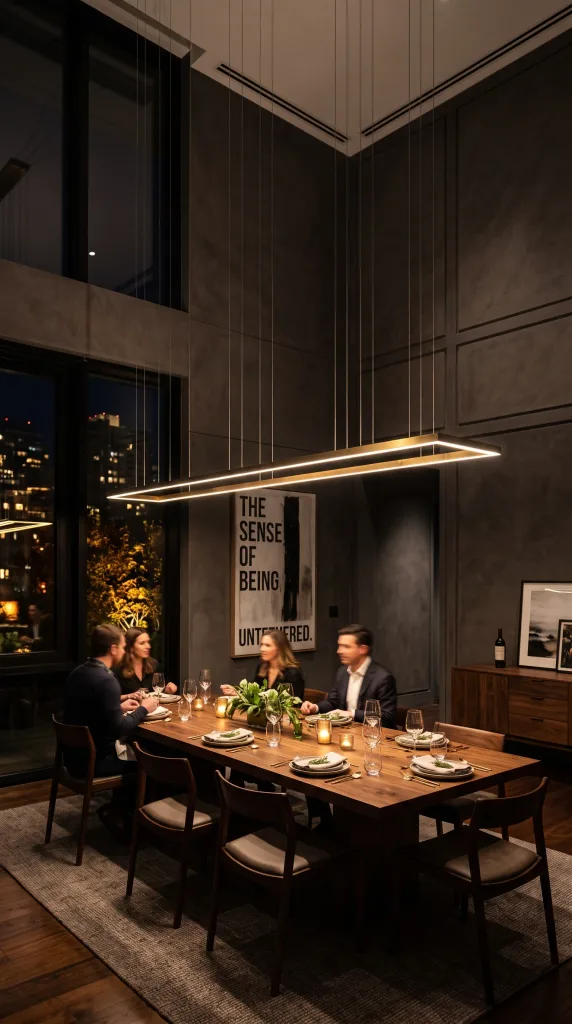
Hanging a massive, ultra-thin linear LED chandelier directly above a long rectangular dining table creates a highly dramatic, perfectly proportional lighting moment. Traditional round chandeliers often leave the far ends of a long dining table completely in the dark, whereas a massive linear fixture evenly washes the entire surface of the table in a warm, flattering glow. You should choose a fixture with a matte black or brushed brass finish to act as a sleek, floating architectural line that visually mirrors the shape of the table below. This highly minimalist approach provides incredible functional light while maintaining a clean, unobstructed view across the room.
Reality Check: The linear chandelier must be hung perfectly level using a laser tool; even a quarter-inch tilt is aggressively noticeable on a fixture that is five feet long.
Asymmetrical Glass Globe Clusters
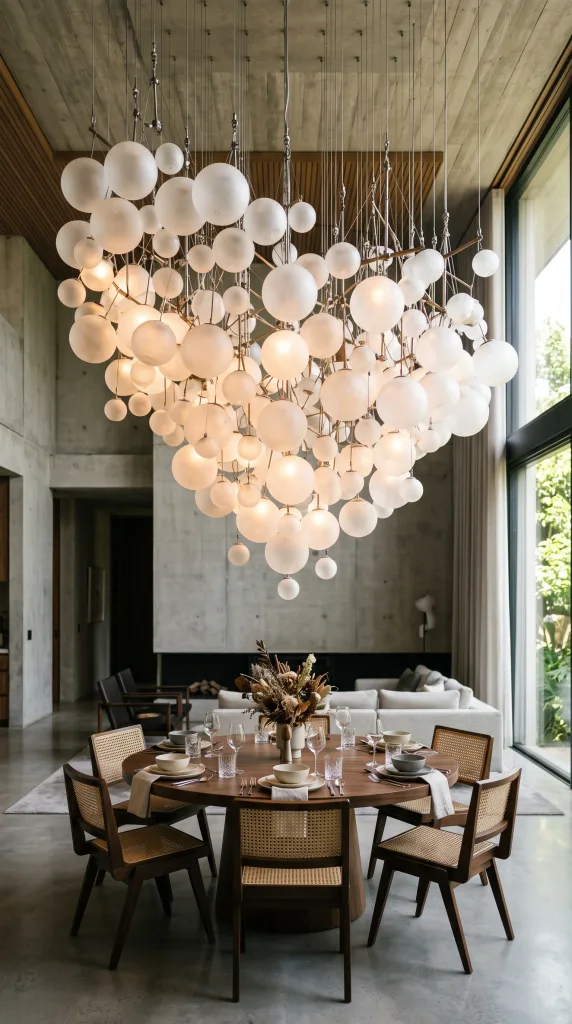
Replacing a boring, single-bulb pendant light with a chaotic, asymmetrical cluster of frosted glass globes introduces a stunning piece of modern sculptural art to the ceiling. The varied sizes and scattered placement of the glowing globes completely break up the rigid, straight lines of contemporary furniture, adding a highly organic, cloud-like softness to the upper half of the room. I find that pairing this chaotic lighting fixture with a perfectly symmetrical, round dining table creates a beautiful tension between strict geometry and free-flowing art. The frosted glass heavily diffuses the bright LED bulbs, ensuring your dinner guests are never blinded by harsh, direct glare.
Quick Tip: Ensure the lowest glass globe in the asymmetrical cluster hangs exactly thirty-six inches above the tabletop so it does not block eye contact across the table.
Paper Lanterns and Japandi Influence
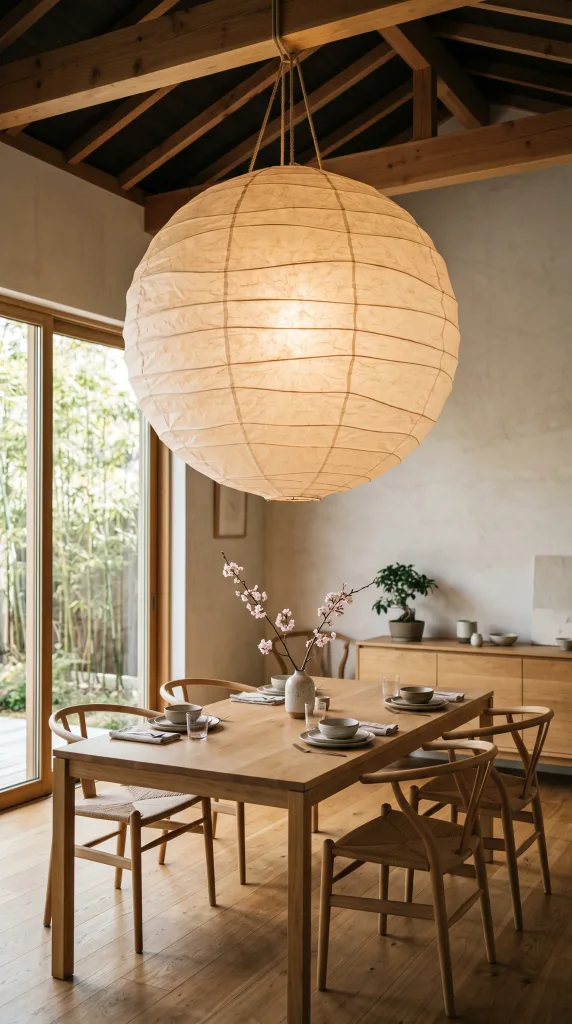
Hanging a massive, oversized Japanese-style paper lantern above the dining table is a highly affordable way to introduce incredible volume and soft, diffused light into a contemporary room. The delicate, wrinkled texture of the paper provides a massive focal point that feels incredibly light and airy, perfectly suiting a room designed around warm woods and minimalist Japandi aesthetics. You should choose a lantern that is surprisingly oversized, perhaps three feet wide, to ensure it acts as a bold contemporary statement piece rather than a cheap college dorm accessory. This completely transforms the harsh glare of a bare bulb into a soft, romantic glow.
Heads Up: Paper lanterns are incredibly fragile and impossible to clean thoroughly; you must replace them entirely if they ever get splashed with dark red wine or greasy food.
Off-Center Lighting Placements
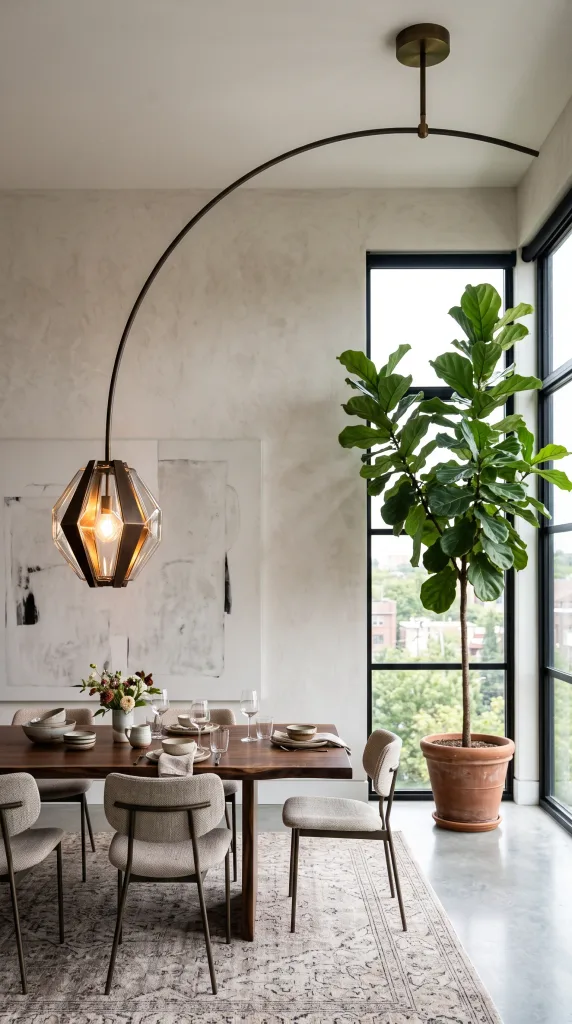
Intentionally hanging a stunning, sculptural pendant light completely off-center from the dining table is a bold, highly avant-garde design move that breaks all traditional rules. By shifting the lighting fixture to one side and balancing it visually with a tall indoor tree or a massive piece of art on the other side, you create a highly dynamic, asymmetric composition that feels incredibly modern. I highly recommend using a fixture that features a long, sweeping arched arm extending from the wall or ceiling to make the off-center placement look completely intentional and highly engineered. This rebellious approach forces the eye to constantly move around the room.
Designer Advice: Only attempt an asymmetrical lighting layout if you have massive amounts of ambient room lighting, otherwise, half of your dining table will be pitch black during dinner.
Warm Dimming Smart Bulbs
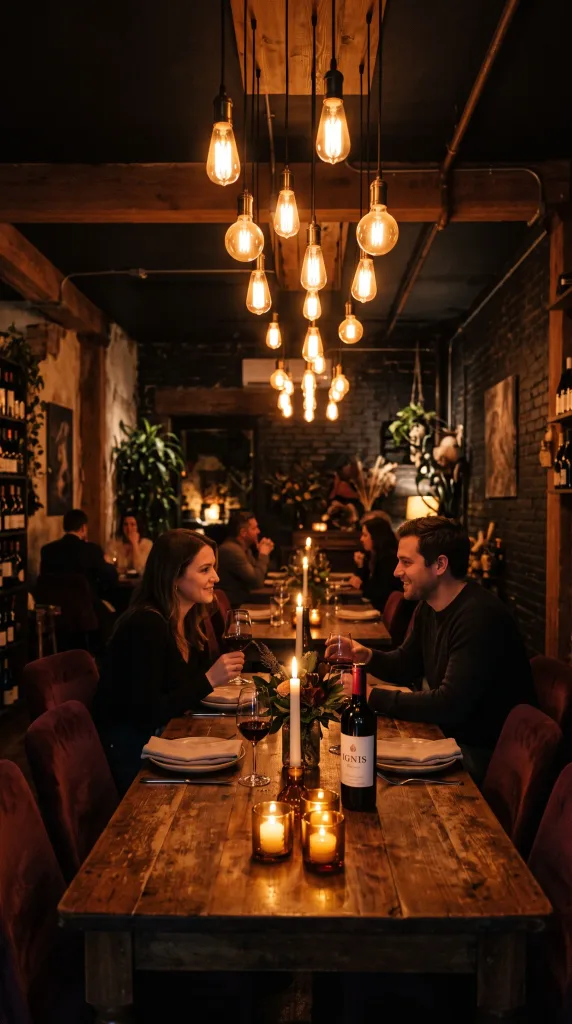
Upgrading all of your dining room lighting fixtures with high-end, warm-dimming smart LED bulbs is the absolute most critical technological upgrade for a contemporary space. Unlike standard LEDs that simply turn dim and gray, warm-dimming bulbs physically shift their color temperature from a crisp 3000K daylight down to a deep, fiery 1800K orange as you lower the brightness. You can use an app on your phone to instantly change the bright, functional homework lighting into a moody, romantic, candle-lit restaurant atmosphere with a single tap. This invisible technology ensures your beautiful contemporary furniture always looks its absolute best, regardless of the occasion.
Pro Move: Program three distinct lighting scenes in your smart home app: one for bright morning coffee, one for standard family dinners, and one for moody, late-night cocktails.
Wall-Mounted Articulating Sconces
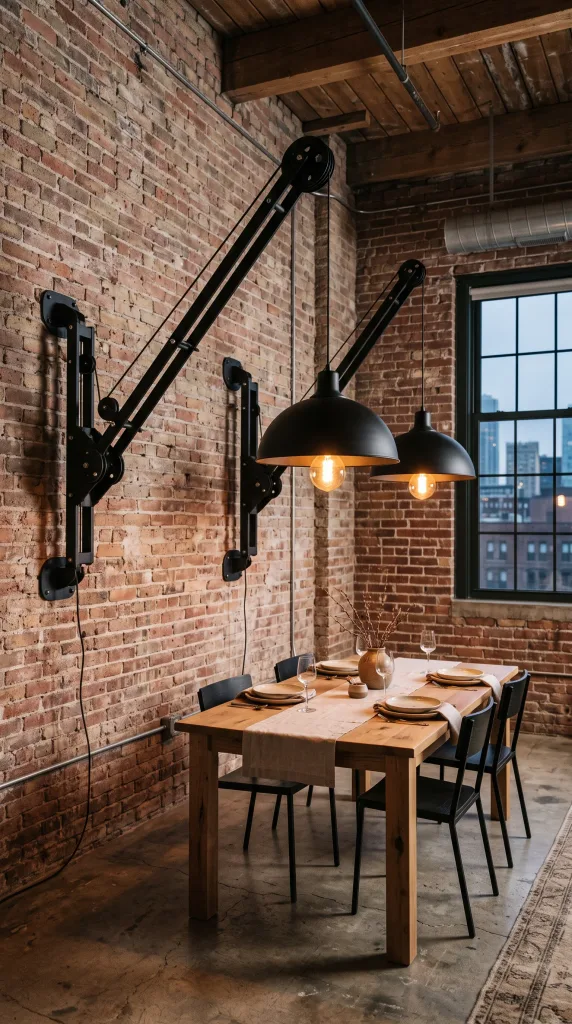
If you cannot hang a chandelier from the ceiling due to structural limitations, installing massive, articulating wall sconces with long swinging arms is a brilliant contemporary alternative. These massive, spider-like metal arms swing far out from the wall to hover directly above the dining table, providing excellent task lighting while adding a highly engineered, industrial-chic architectural element to the room. You should pair these matte black swinging sconces with a simple wooden table and raw brick walls to complete the modern loft aesthetic. When dinner is over, you simply push the long metal arms flat against the wall, instantly opening up the visual space.
Reality Check: These massive metal arms act as giant levers; you must secure the heavy sconce base directly into a wooden wall stud, as drywall anchors will instantly rip out.
Curated Finishing Touches
Oversized Abstract Canvas Art
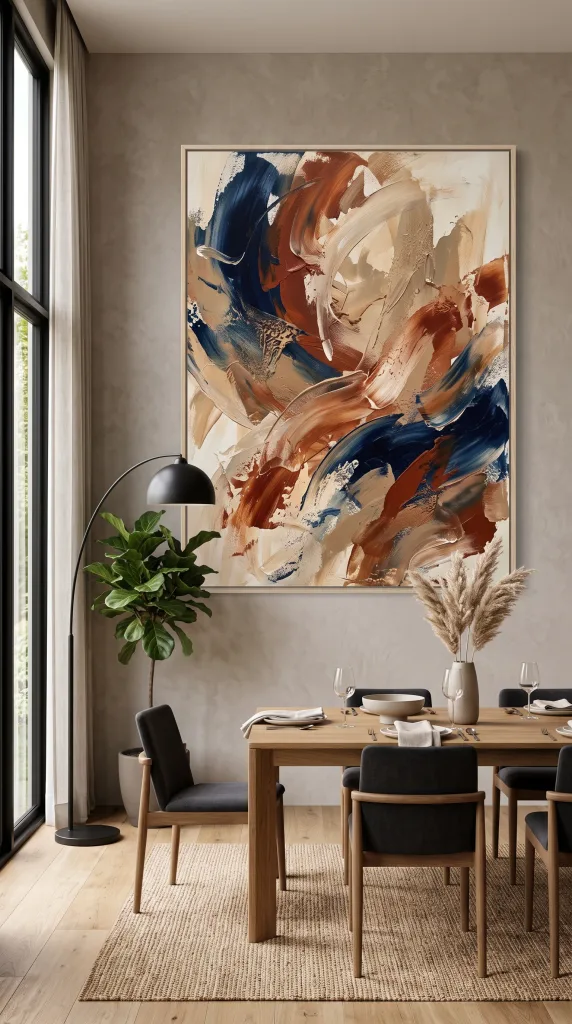
Hanging a single, massive piece of abstract canvas art on the main dining room wall completely replaces the need for dozens of small, cluttered family photos or cheap mirrors. A large-scale abstract painting featuring sweeping strokes of deep navy, rust, and beige acts as a striking, contemporary focal point that visually expands the proportions of the room. You must hang the canvas so the exact center of the artwork sits directly at eye level when a person is sitting down at the dining table, ensuring the art is properly engaged during dinner. I love framing these massive canvases in a thin, light ash wood float frame to give them a highly polished, gallery-quality finish.
Quick Tip: Ensure the width of the canvas is exactly two-thirds the width of the dining table it hangs near to maintain perfect visual balance and architectural proportion.
The Floating Wood Credenza
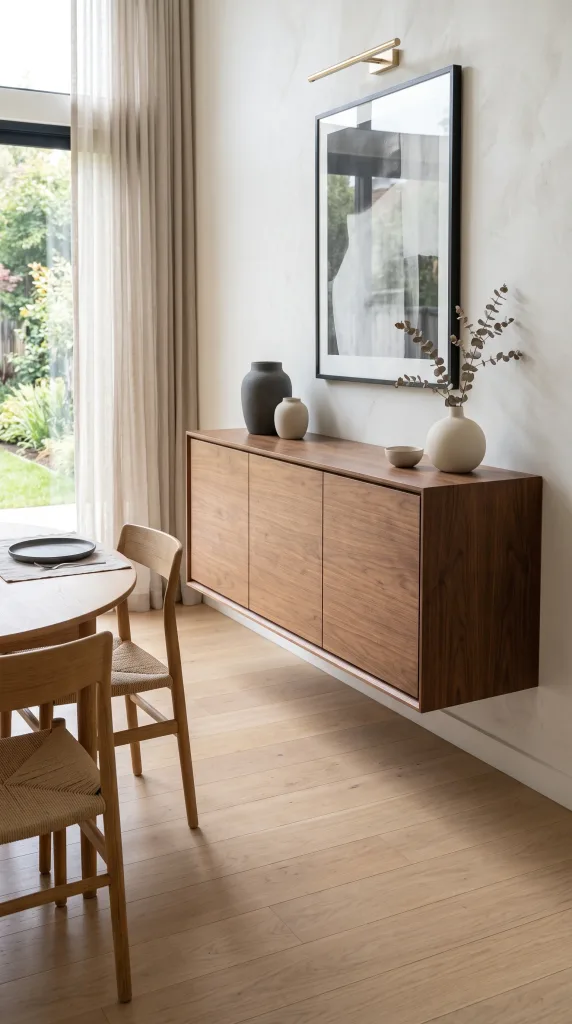
Installing a sleek, minimalist wooden credenza that is mounted directly to the wall so it hovers a foot above the floor is the ultimate contemporary storage solution. This floating architecture eliminates bulky wooden legs, keeping the floor completely clear and creating a highly effective optical illusion that the dining room is significantly wider than it actually is. You can use the flat top surface of the hovering credenza to display a curated collection of matte ceramic vases, while hiding all of your ugly table linens and extra silverware behind sleek, handle-less push-to-open doors. This highly tailored, custom-built approach makes standard freestanding cabinets look incredibly heavy and severely outdated.
Heads Up: Floating credenzas filled with heavy ceramic dishes weigh hundreds of pounds; professional installation onto reinforced wall studs is absolutely mandatory to prevent structural collapse.
Monochromatic Color Drenching
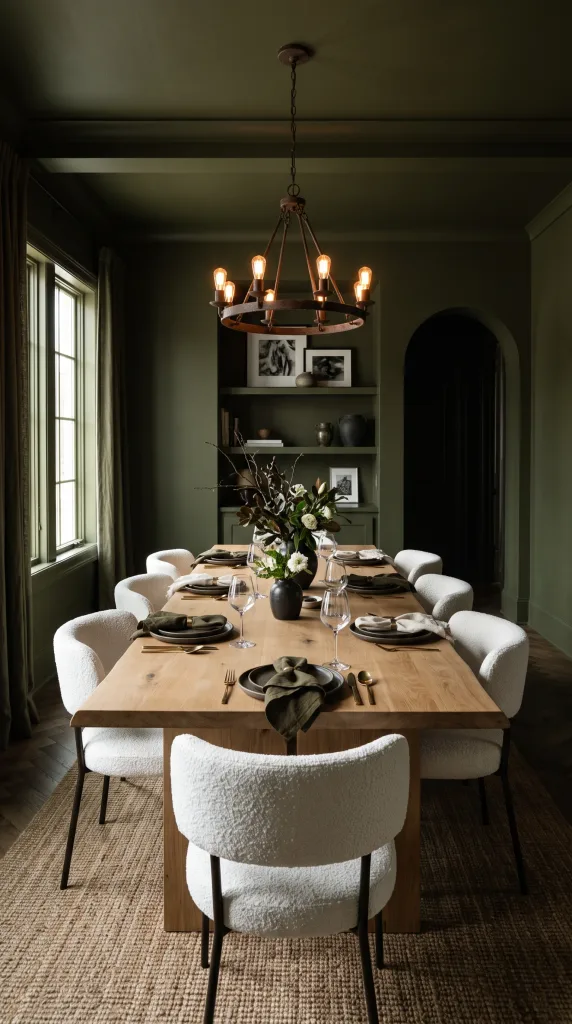
Painting the walls, the baseboards, the window trim, and the ceiling of your dining room in the exact same deep, moody color, such as dark olive green or charcoal grey, creates an incredibly immersive contemporary cocoon. This bold ‘color drenching’ technique completely blurs the harsh architectural lines of the room, making a small, boxy dining area feel infinitely larger, deeper, and highly dramatic. You should heavily contrast these dark, moody walls by introducing a massive, light oak dining table and stark white boucle chairs to ensure the room does not feel like a dark cave. This single gallon of paint completely transforms the basic architecture of the room.
Designer Advice: Use a highly durable, wipeable satin or eggshell paint finish for the walls and trim to protect the dark monochromatic look from inevitable scuffs and chair scratches.
Large-Scale Floor Greenery
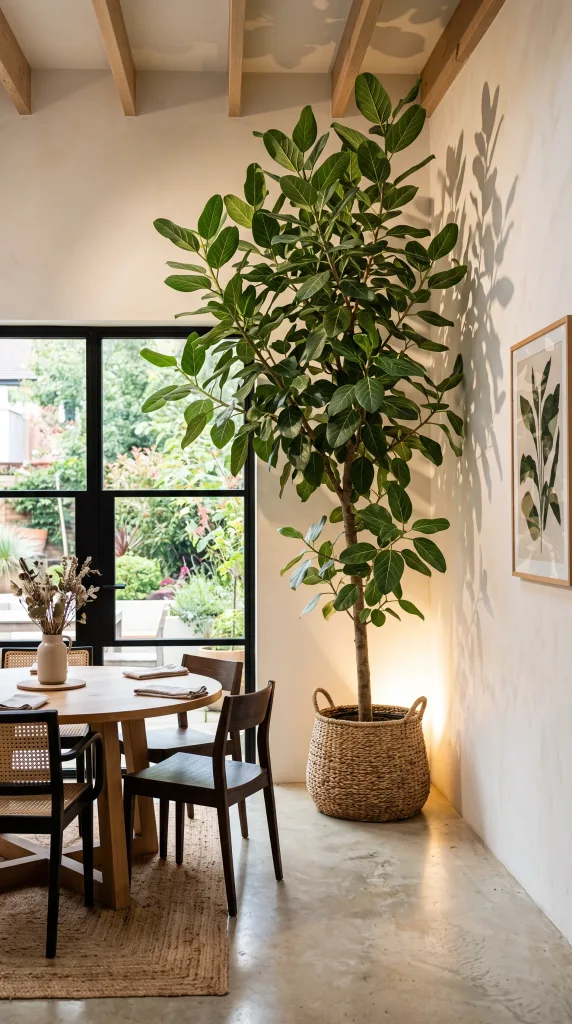
Introducing a massive, tall indoor tree like a Ficus Audrey or a large Olive tree into the corner of the dining room instantly softens the rigid, straight lines of contemporary furniture. The organic, sweeping branches and vibrant green leaves provide a massive burst of life and vital biophilic texture that prevents the highly engineered room from feeling like a sterile corporate boardroom. I always suggest placing the large nursery pot inside a highly textured, woven seagrass basket to add an extra layer of earthy, grounding warmth to the floor. This single, massive plant provides far more visual impact than a dozen tiny, cluttered succulents on a windowsill.
Pro Move: Place a small, hidden LED uplight on the floor directly behind the potted tree to cast beautiful, dramatic leafy shadows against the dining room wall at night.
Washable Vintage-Style Rugs
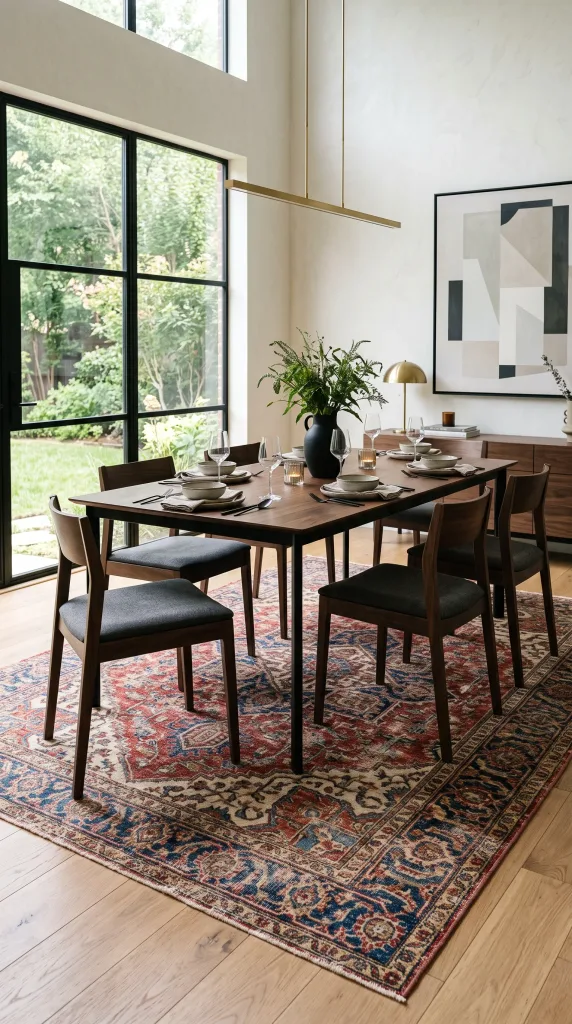
Anchoring the dining table with a highly patterned, vintage-style area rug that is completely machine washable is the smartest functional upgrade for a modern dining room. The faded, intricate patterns of a vintage-style rug introduce incredible historical depth and color into a contemporary room, heavily contrasting against the sleek, modern lines of the table. Because dining rooms are high-spill zones, opting for a modern, specialized washable rug means you never have to panic when a guest accidentally knocks over a full glass of red wine. You just throw the entire rug into the washing machine and it looks brand new. It is the perfect marriage of high-end aesthetics and stress-free modern technology.
Reality Check: Washable rugs are incredibly thin; you absolutely must purchase a thick, cushioned non-slip pad to go underneath it so the rug does not feel like a hard towel.
Minimalist Centerpiece Styling
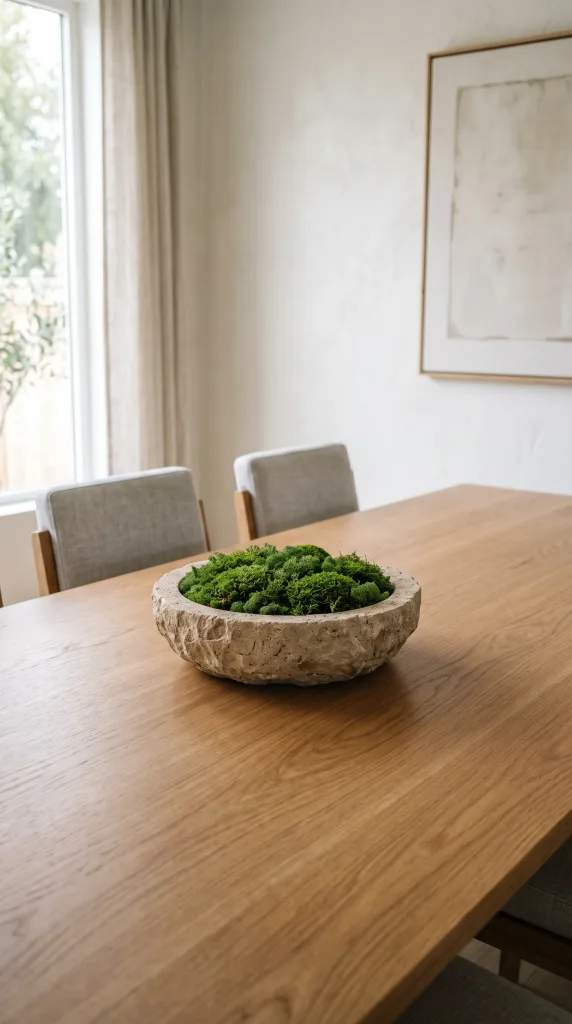
Ditching the traditional, massive floral centerpiece that completely blocks conversation and replacing it with a highly minimalist, low-profile arrangement is essential for contemporary dining rooms. You should style the center of the table using a single, heavy travertine stone bowl filled simply with fresh green moss or three asymmetric, matte black ceramic vases of varying heights. This highly restrained styling approach leaves plenty of empty, negative space on the beautiful wood or stone tabletop, allowing the high-quality materials of the furniture to actually be seen and appreciated. I find that this minimalist styling looks incredibly intentional, highly curated, and makes the room feel completely ready for a high-end magazine photoshoot.
Quick Tip: Keep your minimalist centerpiece strictly under twelve inches tall so your dinner guests can maintain uninterrupted, comfortable eye contact across the entire table.
Conclusion
Designing a truly stunning contemporary dining room requires you to step away from predictable, perfectly matched furniture sets and embrace a much more curated, highly textural approach. As these twenty-four ideas demonstrate, the most successful modern spaces find a delicate balance between sharp architectural lines and deeply inviting, organic warmth. By anchoring the room with a massive, sculptural dining table and surrounding it with highly comfortable, mixed-material seating, you immediately elevate the daily dining experience. Remember that contemporary design relies heavily on negative space and intentional restraint; every single lighting fixture, abstract canvas, and potted plant must serve a specific architectural purpose. By focusing heavily on tactile materials like boucle, raw wood, and heavy stone, you can easily build a dining room that feels incredibly sophisticated, perfectly engineered, and undeniably welcoming.
Frequently Asked Questions
What is the difference between modern and contemporary dining rooms?
Modern design strictly refers to a specific historical time period (typically mid-century, from the 1930s to the 1960s) characterized by wood, leather, and streamlined silhouettes. Contemporary design refers to whatever is currently trending right now, which today involves mixing curved, organic shapes, warm earthy colors, and highly tactile fabrics.
What size rug should go under a contemporary dining table?
Your area rug must be massive. It should extend at least twenty-four to thirty inches beyond all sides of the dining table. This ensures that when guests push their chairs back to stand up, the back legs of the chairs do not fall off the edge of the rug, which causes annoying snags and uneven seating.
How high should I hang my contemporary chandelier?
As a strict rule, the bottom of your chandelier or pendant light should hang exactly thirty to thirty-six inches above the top surface of the dining table. Hanging it any higher disconnects the light from the table, ruining the intimate, cohesive focal point.
Are glass dining tables still in style for contemporary rooms?
Yes, but the style has shifted. Clear glass tables with chrome legs can look very dated and cold (like the 1990s). The contemporary approach uses dark smoked or bronze glass paired with matte black or warm brass sculptural bases to create a moody, highly sophisticated aesthetic.
How do I make a contemporary dining room feel cozy instead of cold?
You must aggressively introduce texture and warm lighting. Swap harsh white light bulbs for warm 2700K bulbs. Introduce plush fabrics like velvet or boucle on your chairs, and use heavy, lined linen curtains on the windows. Contrast in texture replaces the need for clutter.
Can I mix different wood tones in my dining room?
Absolutely. Mixing wood tones is a hallmark of good contemporary design, as it makes the room look collected over time rather than bought from a single catalog. Just ensure the woods share a similar undertone (warm or cool) and use a large rug to visually break up the different wooden legs.


