Blue and Brown Kitchen Looks That Actually Work
Most kitchens feel pulled in one direction: all-warm or all-cool, and neither quite lands. Blue and brown together fix that, because one color grounds the space while the other lifts it, and when you get the balance right, the result is a kitchen that feels designed rather than just decorated. Here is exactly how to do it, element by element.
1. Navy Lower Cabinets With Warm Walnut Uppers
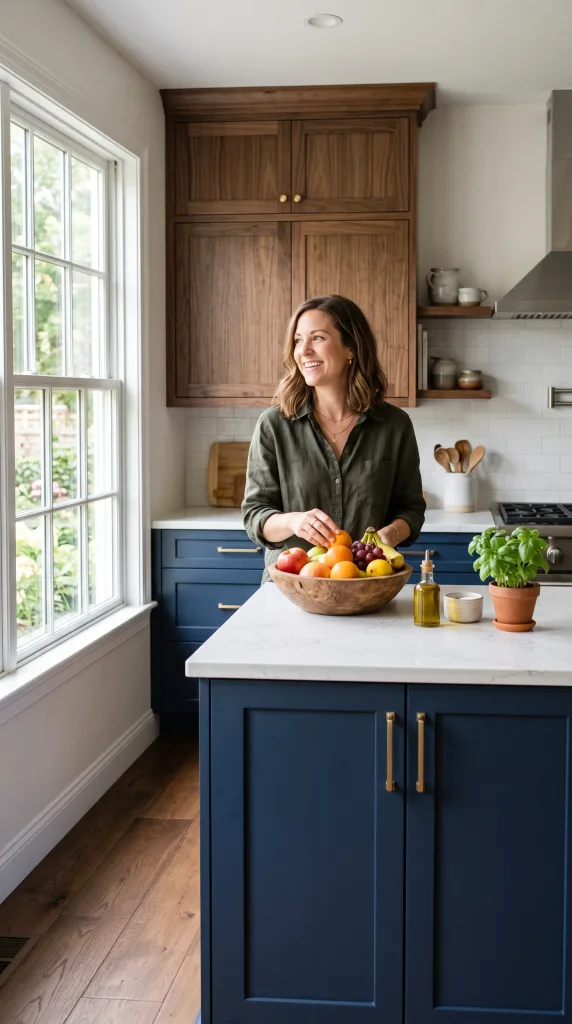
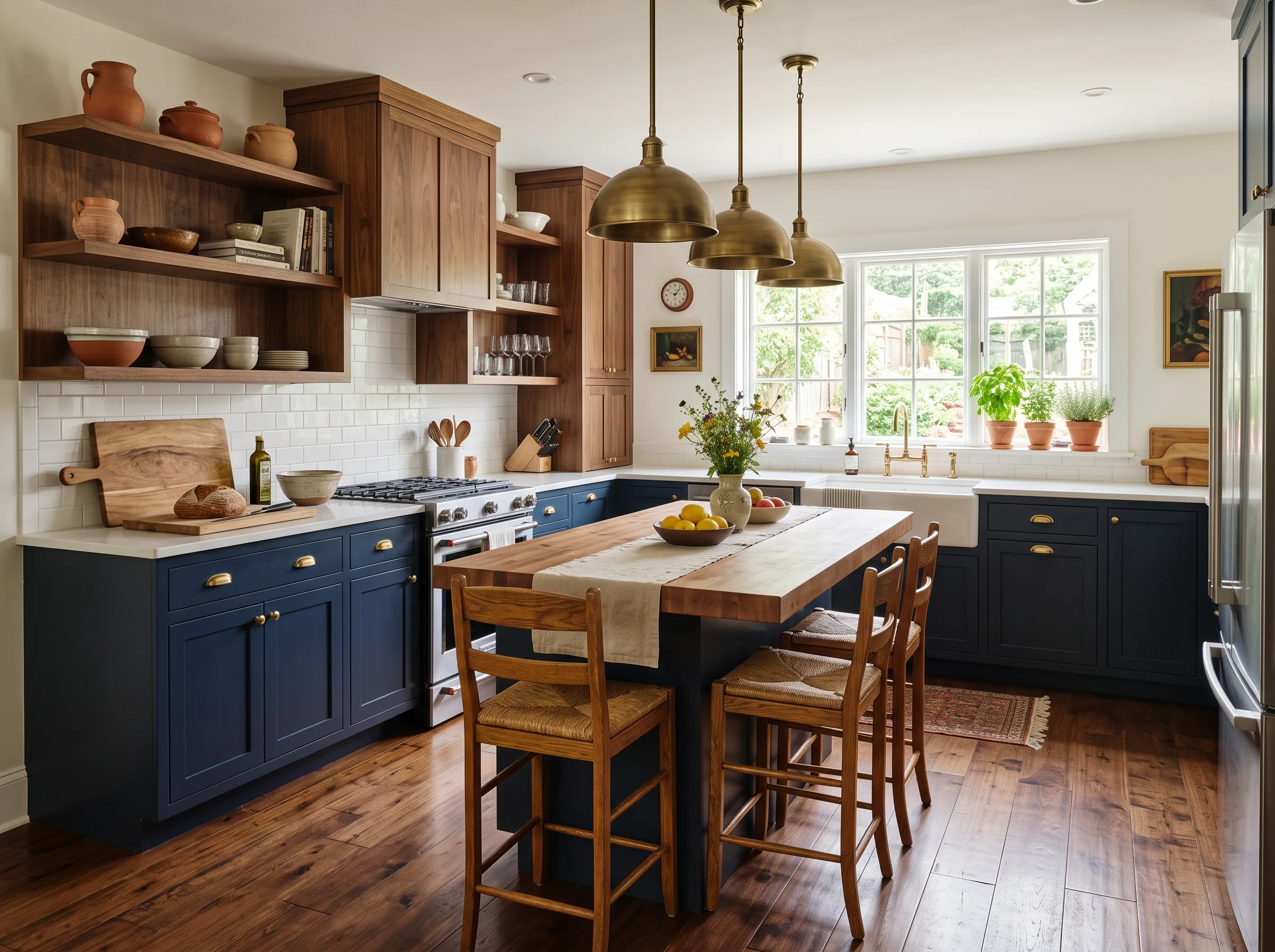
Two-tone cabinetry is one of the smartest moves in a blue-brown kitchen because it lets each color do its job: navy below anchors the room visually and handles wear without showing it, while walnut-toned upper cabinets keep the upper half of the room warm and open. In practice, this pairing works best when the walnut finish is matte rather than glossy, since a shiny upper cabinet can make the space feel busy instead of balanced.
Pro Move: Keep the wall color neutral, a soft white or warm greige, so the two-tone cabinets read as one intentional statement rather than competing halves.
2. Slate Blue Shaker Cabinets Throughout

If you want a full-cabinet color without committing to the weight of navy, slate blue is the answer. It reads as blue in cool light and almost grey-green in warm afternoon light, which means it adapts to your kitchen rather than dominating it. Pair it with brown elements in the countertop or flooring, and the whole room feels calm and collected without being bland.
Designer Advice: Slate blue works particularly well in smaller kitchens because its mid-tone value does not absorb light the way darker blues do.
3. White Uppers With Rich Espresso Lowers and a Blue Island
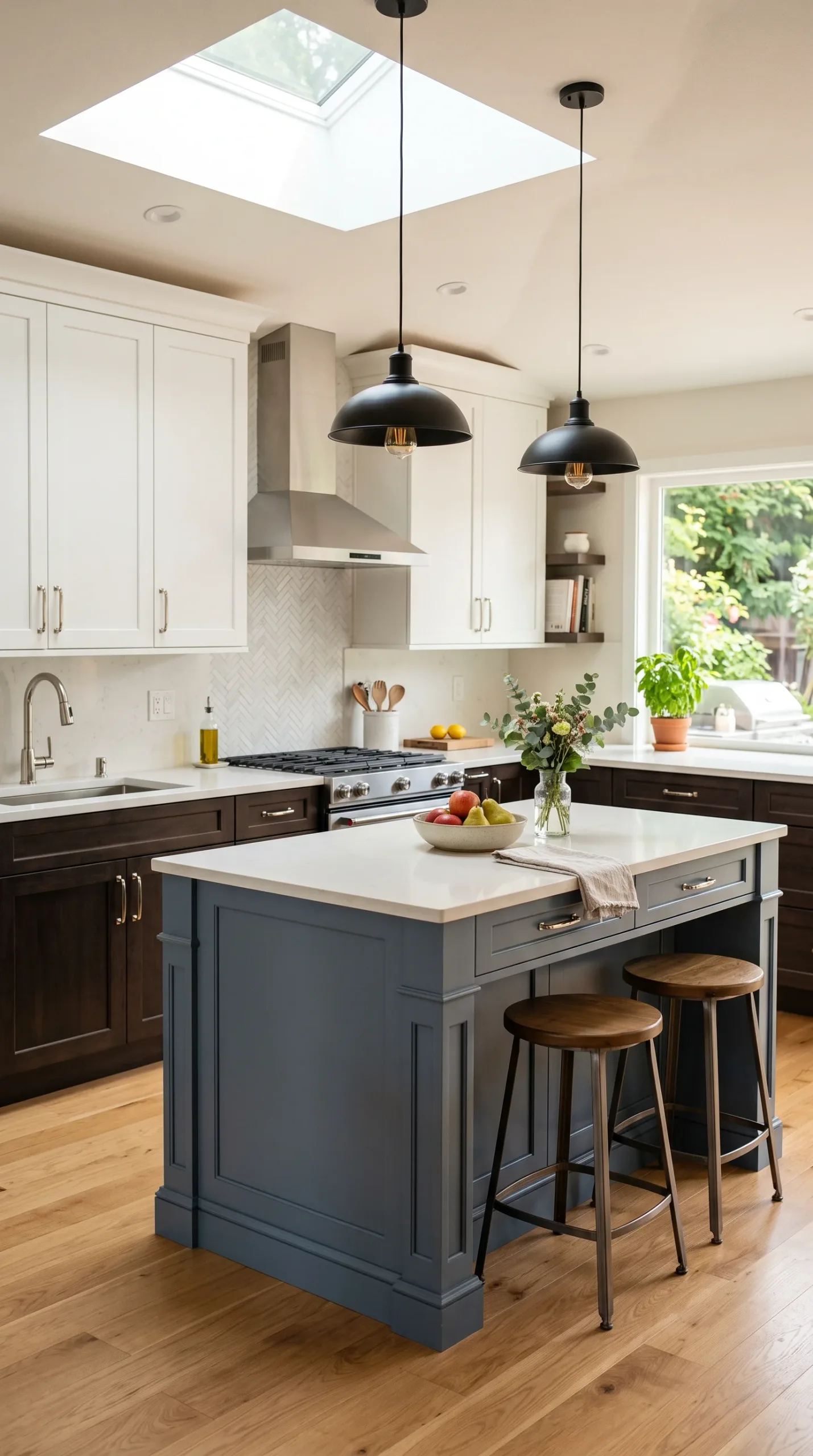
This three-element approach sounds complicated but is actually one of the most forgiving layouts in the blue-brown family. The white uppers keep the room bright, the espresso lowers add grounded warmth, and the blue island becomes the focal point that ties the two together. Interior designers often call this approach a color bridge, and it works because the island sits between the two cabinet zones both physically and visually.
Reality Check: This only works if your island blue shares undertones with the espresso, so test samples in your actual kitchen light before committing.
| Cabinet Style | Blue That Works Best | Brown Pairing | Hardware Finish |
| Shaker | Slate blue / dusty blue | Walnut wood accents | Brushed brass |
| Flat panel / modern | Navy or indigo | Dark espresso laminate | Matte black |
| Beadboard / cottage | Powder blue / sky blue | Warm oak or pine | Antique bronze |
| Inset / traditional | Steel blue / Prussian blue | Rich mahogany | Polished nickel |
4. Butcher Block Countertops With Blue Cabinets
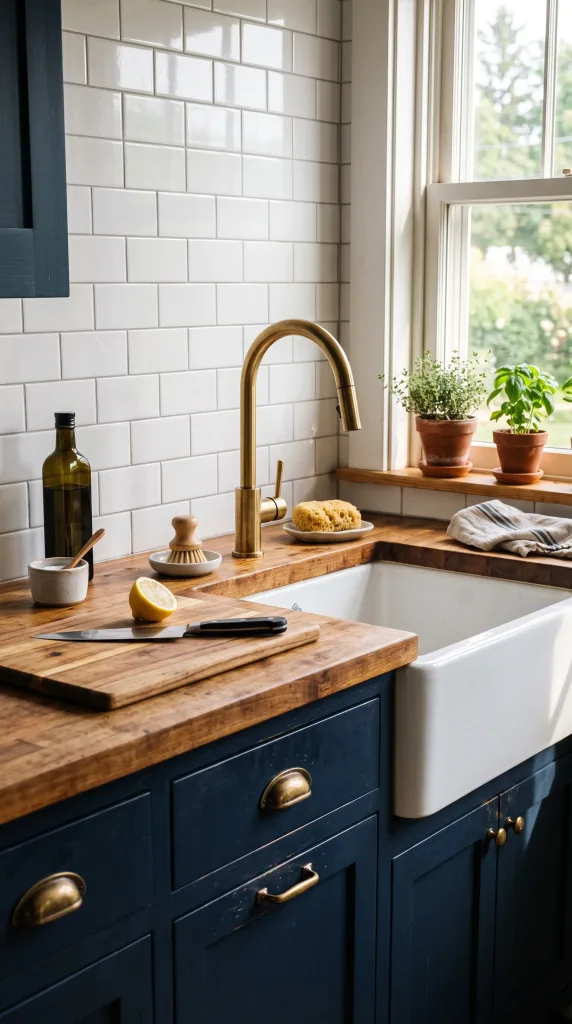
Butcher block is one of the easiest ways to bring brown into a blue kitchen without a renovation. The natural wood grain adds organic warmth that balances blue’s cool undertones, and unlike stone countertops, butcher block gets more character over time rather than showing wear. It is an investment-level look that starts at mid-range pricing, especially if you go with edge-grain maple or acacia rather than end-grain walnut.
Heads Up: Butcher block needs oiling every few months and is not ideal around the sink unless you seal it carefully, so use stone or quartz in the wet zone and reserve butcher block for dry prep areas.
5. Brown-Veined Quartzite Countertops on Blue Cabinets
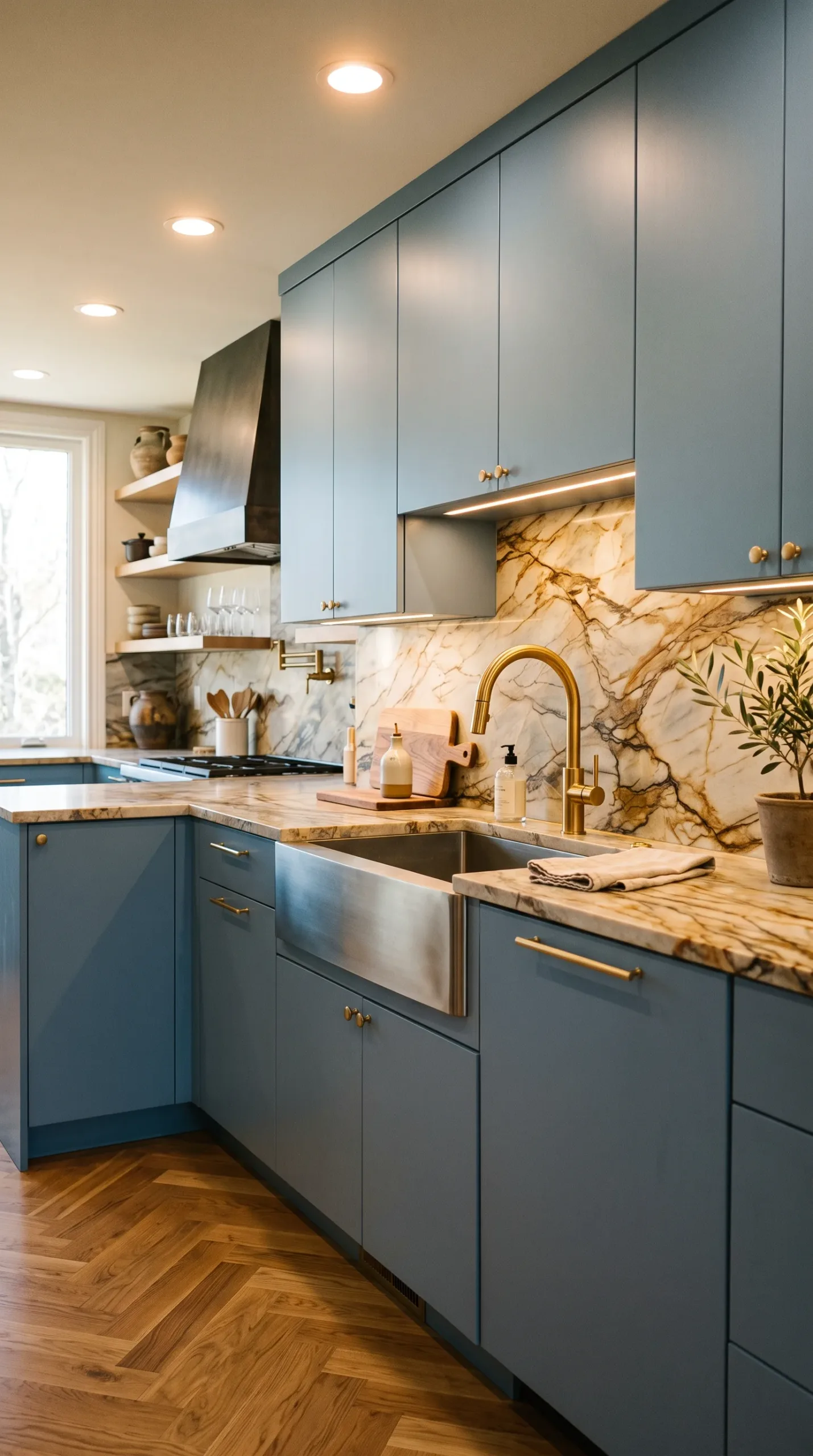
Quartzite with warm brown and amber veining, think Taj Mahal or Calacatta Macchia Vecchia, is one of the few stone options that naturally bridges blue and brown without needing any help from accessories. The stone does the color work for you, pulling warm tones from the cabinetry and reflecting them across the room. This is an investment choice, usually starting around $80 to $120 per square foot installed, but it is one of the few countertop decisions that makes the whole design feel cohesive from day one.
Pro Move: Ask your stone yard for a slab preview in your kitchen space before ordering, because veining varies dramatically between slabs of the same stone.
6. Concrete Countertops for an Industrial Blue-Brown Kitchen
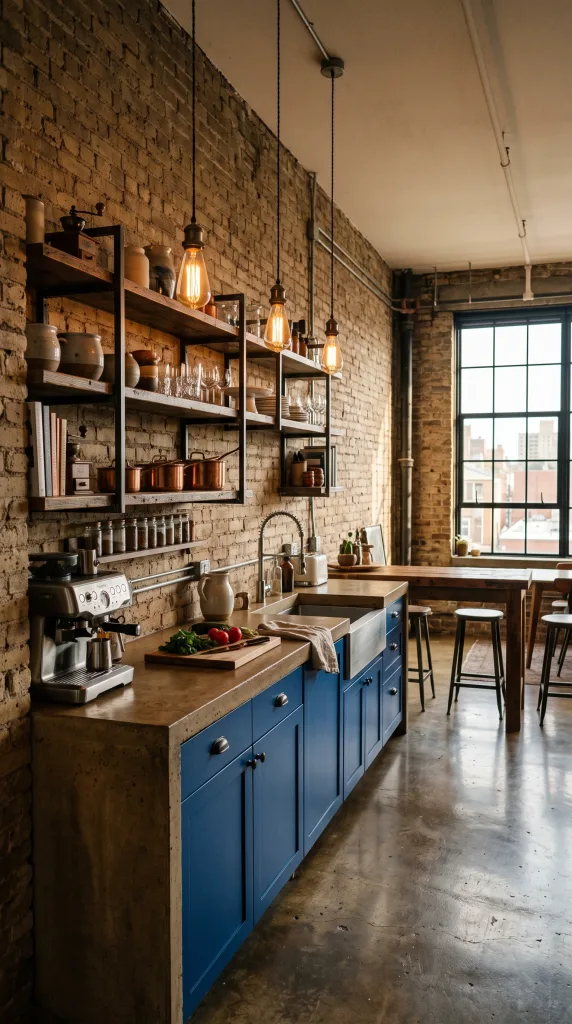
Poured concrete countertops have a natural warm grey-brown tone that pairs beautifully with deeper blues like cobalt, slate, or denim. The texture of concrete also adds tactile interest that helps prevent the combination from feeling flat. In practice, this works best in kitchens with open shelving and industrial elements like exposed pipes or Edison bulb lighting, where the rawness of the concrete feels intentional.
Reality Check: Concrete is porous and needs sealing twice a year, and it will develop hairline cracks over time. Most designers consider that part of the charm, but if you want perfection, go with a concrete-look quartz instead.
7. Zellige Tile in Brown and Blue

Zellige tiles, the handmade Moroccan clay tiles known for their slightly uneven surface and rich glaze variation, are one of the few materials that genuinely contain both blue and brown in a single piece. A Zellige tile in a blue-brown glaze catches light differently throughout the day, shifting from cool morning tones to warmer evening hues. This is a high-impact backsplash move that works in both bohemian kitchens and more refined transitional spaces.
Designer Advice: Zellige is fragile during installation and more expensive than standard ceramic, so budget for a 15% overage in materials and hire a tile installer who has worked with handmade tiles before.
8. Warm Brown Subway Tile Behind Blue Cabinets
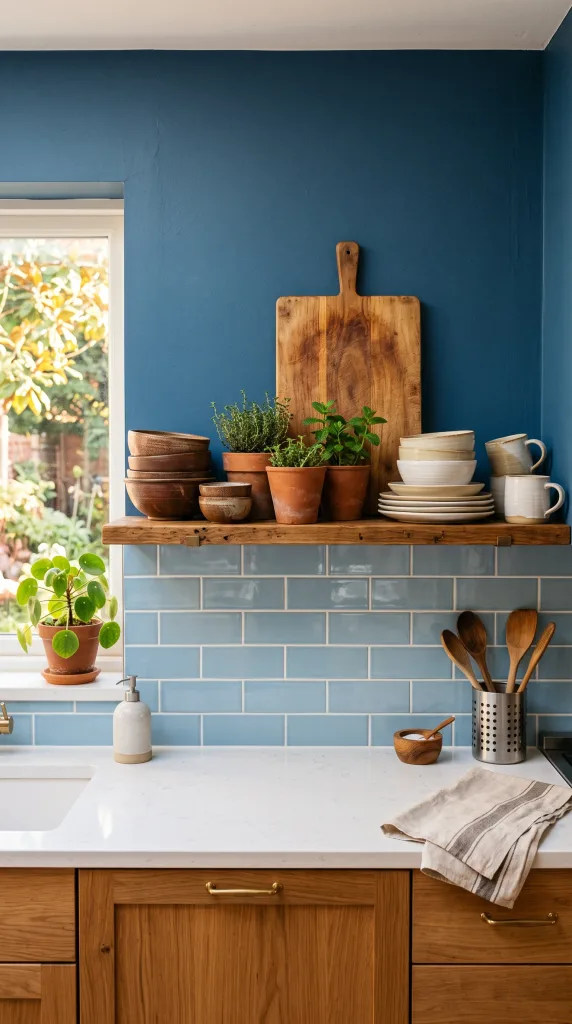
Standard subway tile in a warm terracotta-brown or chocolate glaze is an underused pairing with blue cabinetry. Most people default to white subway tile, which works, but a brown subway tile adds the warmth that blue kitchens often need without requiring any additional brown elements elsewhere. In a smaller kitchen especially, a brown tile backsplash can feel like a second anchor point that gives the blue somewhere to lean.
Quick Tip: Look for tiles with a slight variation in glaze tone across the batch, since perfectly uniform brown tiles can look flat. Handmade or slightly irregular tiles read as far more luxurious.
9. Blue Mosaic Tile Against Brown Stone Countertops
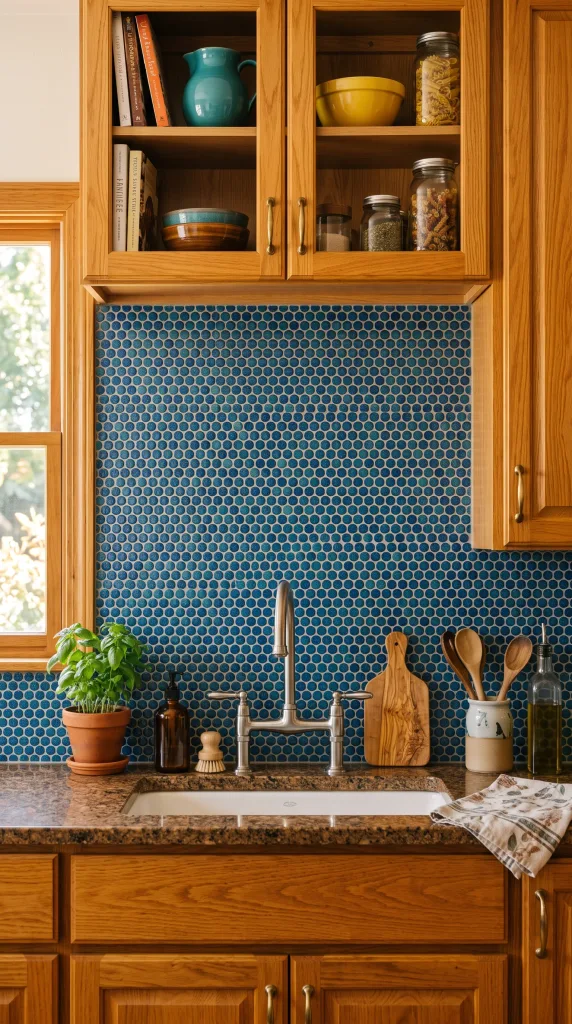
Flipping the usual logic, a blue mosaic or penny tile backsplash against rich brown countertops creates a kitchen that feels more eclectic and collected than matchy-matchy. This works particularly well in older homes or spaces with character where a too-perfect design would feel out of place. The mosaic pattern adds visual texture that draws the eye upward, making the kitchen feel taller and more detailed.
Heads Up: Mosaic tile grout lines attract grease and grime behind a stove, so seal the grout thoroughly and choose a mid-tone grout color that won’t show every splatter.
The best blue and brown kitchens don’t match everything. They balance it.
10. A Brown Wood Island in a Blue Kitchen
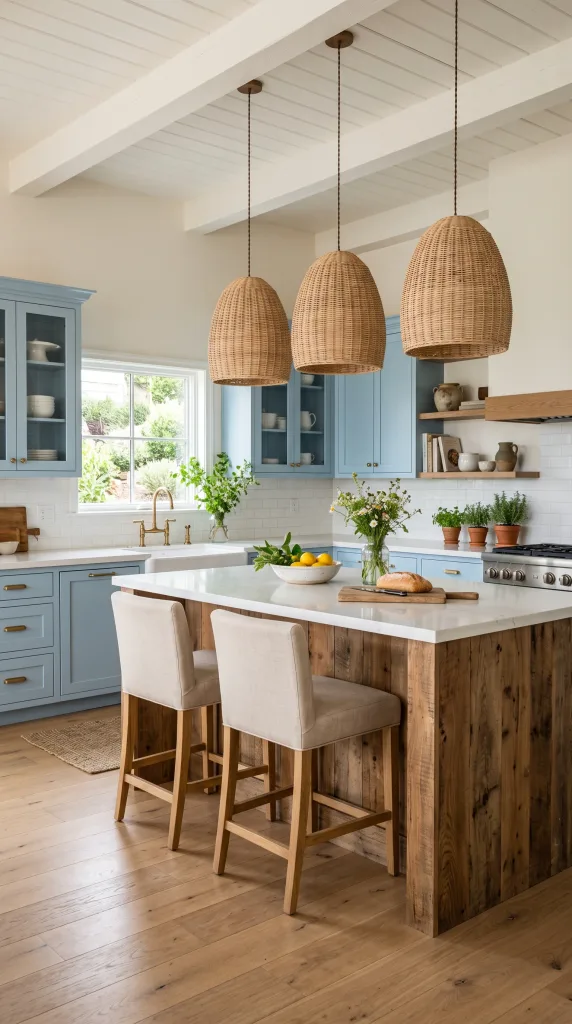
A natural wood island is one of the most practical ways to introduce brown into a predominantly blue kitchen. It acts as a visual anchor, a warm centre point that stops the room from feeling cold. In open-plan layouts where the kitchen flows into a living space, a wood island also creates a natural transition between the two zones. Reclaimed oak, butcher block, or a warm-stained pine all work well here, and none of them require a massive budget.
Pro Move: Add a wood-toned shelf or panel to just the island base, even if your countertop is stone, to bring warmth into the room without committing to a full butcher block surface.
11. A Blue Island in a Mostly Brown or Neutral Kitchen
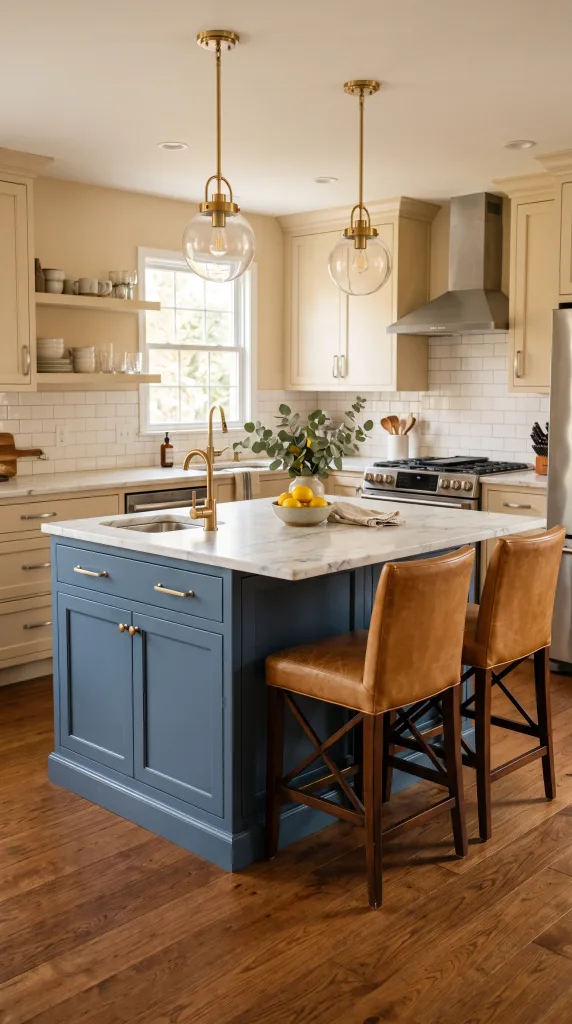
If your existing kitchen is primarily brown, beige, or warm wood tones, a painted blue island is the most efficient way to introduce the color combination without touching your main cabinetry. A navy, slate, or even a muted teal island reads as a deliberate design choice rather than a half-finished renovation, especially when paired with brass or bronze hardware. This is also a good approach for renters who can paint an island and repaint it before moving out.
Quick Tip: Use a furniture-grade paint and primer in one, sanded and topcoated with a water-based polyurethane, so the finish holds up against daily contact without chipping.
12. Brown Hardwood Floors Under Blue Cabinets
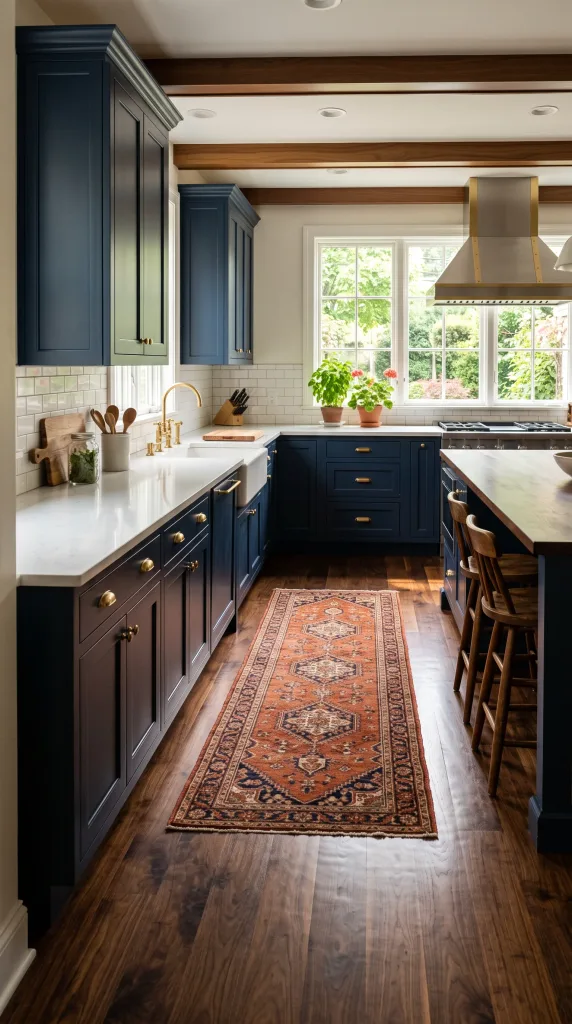
This is the most classic expression of the blue-brown kitchen, and it works because the floor carries the brown tone throughout the entire space rather than confining it to one element. Medium to dark hardwood, white oak, walnut, or even a warm-stained maple, reads beautifully against blue cabinetry at any shade. The key is keeping the floor tone consistent with the other brown elements in the room so the palette feels considered rather than accidental.
Designer Advice: Avoid very red-toned floors like cherry or mahogany with blue cabinets. The red undertones clash with blue’s cool base. Stick to neutral or golden-warm browns.
13. Brown Terracotta Floor Tiles With Blue Lower Cabinets
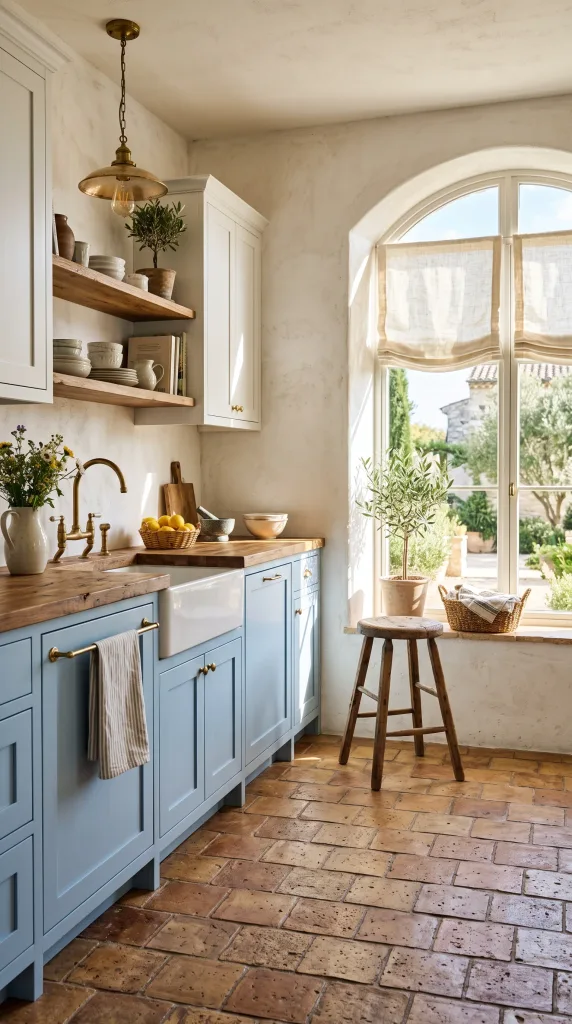
Terracotta floors are having a serious moment right now, and they pair surprisingly well with blue cabinets, particularly in kitchens leaning toward a Mediterranean, Californian, or Spanish Colonial aesthetic. The warm terracotta grounds the room and adds a handmade quality that prevents the space from feeling too polished. Pair it with a simple white or cream upper cabinet and blue lowers, and the floor ties the whole room together effortlessly.
Reality Check: Terracotta is porous and needs to be sealed before and after grouting, and annually after that. Unsealed terracotta stains easily, especially near a stove or sink.
14. Wide-Plank Whitewashed Oak Floors for a Lighter Blue-Brown Balance
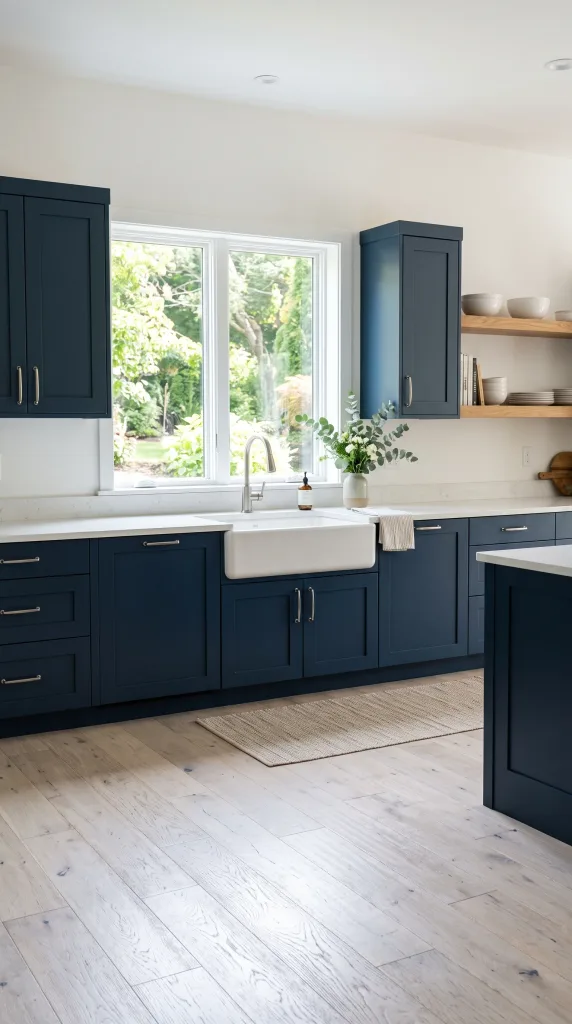
If your blue cabinets are deep or dramatic, a whitewashed or wire-brushed oak floor keeps the room from feeling too heavy. The whitewash process lightens the wood while still showing the grain, so you get the warmth of wood without the visual weight of a dark floor. This works especially well in smaller kitchens where every bit of reflected light matters.
Pro Move: Wide planks (five inches or wider) make a small kitchen feel significantly larger. Choose a floating floor with a click-lock system if you want to install it yourself over an existing subfloor.
| Floor Type | Best Blue Cabinet Shade | Light Level Needed | Budget Level |
| Dark walnut hardwood | Navy or slate blue | High natural light | Investment |
| Terracotta tile | Powder or sky blue | Any | Mid-range |
| Whitewashed oak | Deep navy or indigo | Low or medium light | Mid-range |
| Concrete / polished | Steel blue or cobalt | Any | Investment |
| Warm honey pine | Pale or dusty blue | Any | Budget-friendly |
15. Brass Hardware on Blue Cabinets With Brown Wood Accents
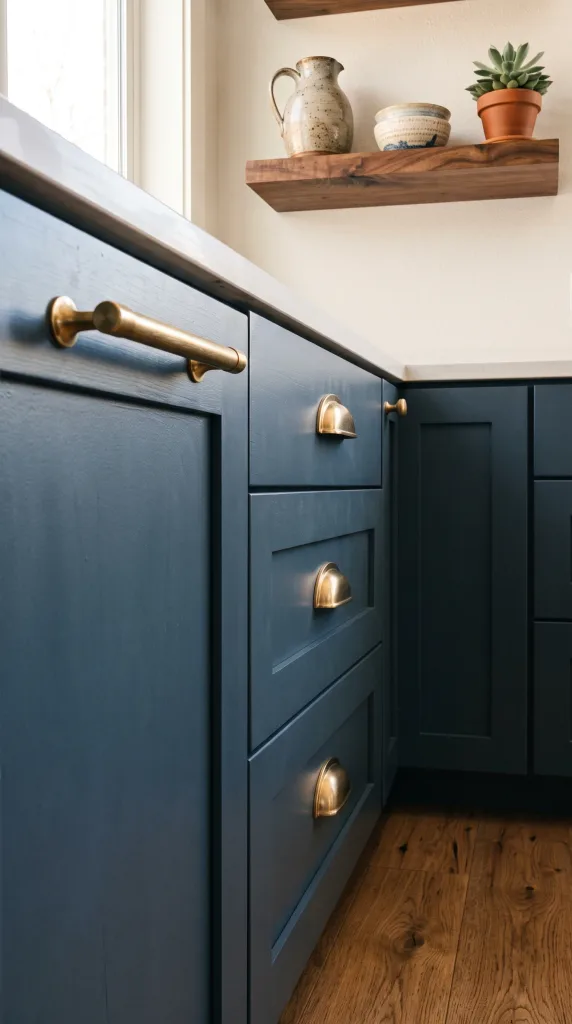
Brass hardware is the single most effective way to bridge blue and brown in a kitchen because its warm golden tone pulls from the brown side of the palette while feeling intentionally luxe against blue cabinetry. In rooms where the blue is cool and the brown is warm, brass acts as a mediator, and the effect is a kitchen that feels designed rather than assembled. Even budget-friendly brushed brass pulls from IKEA or Amazon can make a significant visual difference here.
Quick Tip: Brushed brass ages more gracefully than polished brass and requires no maintenance, so it is almost always the better choice for a kitchen, where handles are touched constantly.
16. Matte Black Hardware for a More Graphic Blue-Brown Kitchen
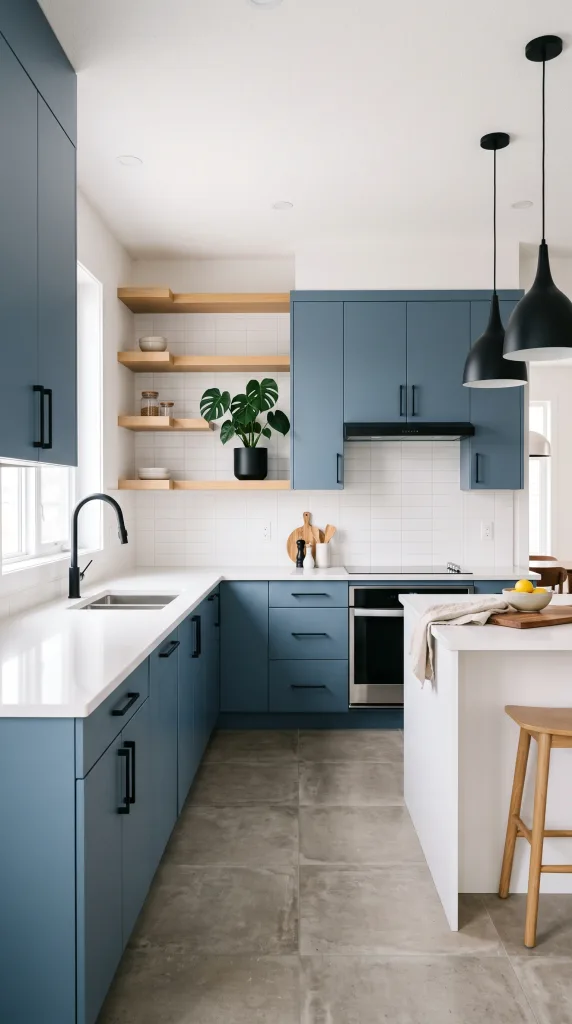
If your instinct is toward a more modern or Japandi-influenced aesthetic, matte black hardware on blue cabinets with brown wood elements creates a graphic, high-contrast look that feels intentional and current. The black acts as a grounding line that separates the blue and brown without competing with either. In practice this works best when the brown tones are on the warmer or lighter end, think oak or honey-toned wood, so the black does not make the space feel heavy.
Designer Advice: Keep matte black consistent across all hardware, faucet, pulls, and light fixtures. Mixing matte black with brushed nickel or brass in the same kitchen often reads as an oversight rather than a design decision.
17. Rattan or Woven Pendant Lights Over a Blue Island
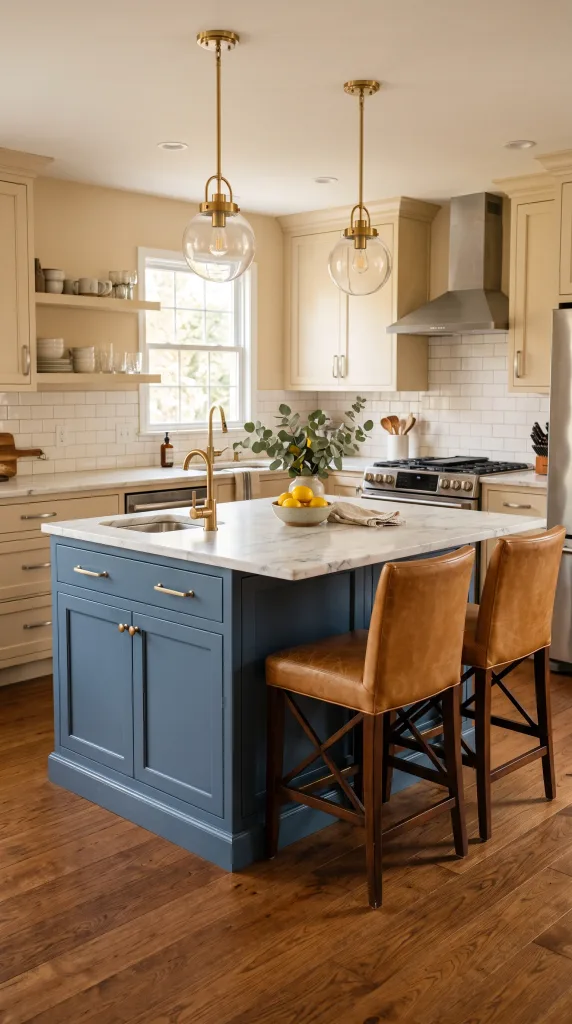
Rattan pendants are one of the smartest lighting choices in a blue-brown kitchen because the material itself is brown, introducing the warm tone at eye level without requiring any additional decor. A cluster of rattan or woven pendant lights over a blue island creates an organic, layered feel that is particularly popular in coastal, bohemian, and Japandi-influenced spaces. They also soften the kitchen’s overall mood, which is useful when you have a lot of painted surfaces competing for attention.
Heads Up: Rattan pendants cast warm, diffused light rather than task-level brightness, so pair them with under-cabinet lighting or recessed ceiling lights if your kitchen needs strong working illumination.
18. Aged Bronze or Antique Brass Fixtures for a Warmer Glow
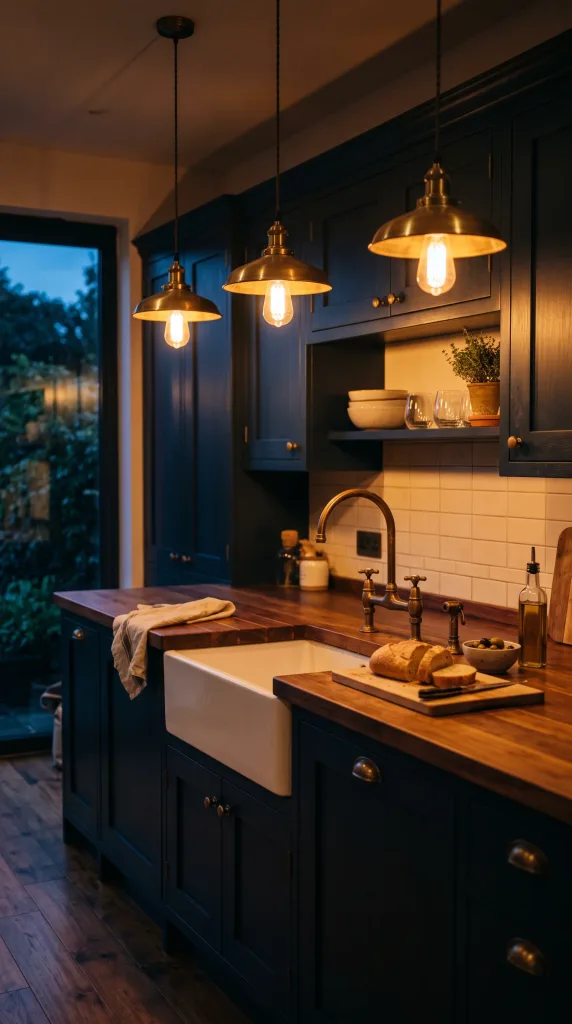
The color temperature of your light fixtures affects how both the blue and the brown read in the room. Aged bronze or antique brass fixtures emit a slightly amber-toned light that warms up blue cabinets and makes brown wood tones look richer and more saturated. This is one of the few cases where the fixture’s bulb color and the fixture’s finish both matter, so swap any cool white LED bulbs for warm white (2700K) as a starting point.
Pro Move: Install dimmer switches on pendant and overhead fixtures. The ability to lower the light level in the evening changes how a blue-brown kitchen feels entirely, shifting it from functional to genuinely atmospheric.
19. Open Wood Shelving on a Blue Wall

Floating wood shelves on a painted blue wall are one of the most cost-effective ways to introduce both colors in a kitchen that might not have the budget for a cabinet repaint or new flooring. A single run of warm oak or walnut floating shelves against a blue-painted wall section above a counter adds layered visual interest while keeping the kitchen feeling open. In practice, lighter shelves work better on darker blue walls, and medium-toned shelves work on lighter blues.
Quick Tip: Style the shelves with a combination of brown wood bowls, terracotta pots, and white ceramics. Mixing textures at this level prevents the shelf from looking like a showroom display.
20. Woven Brown Barstools at a Blue Island
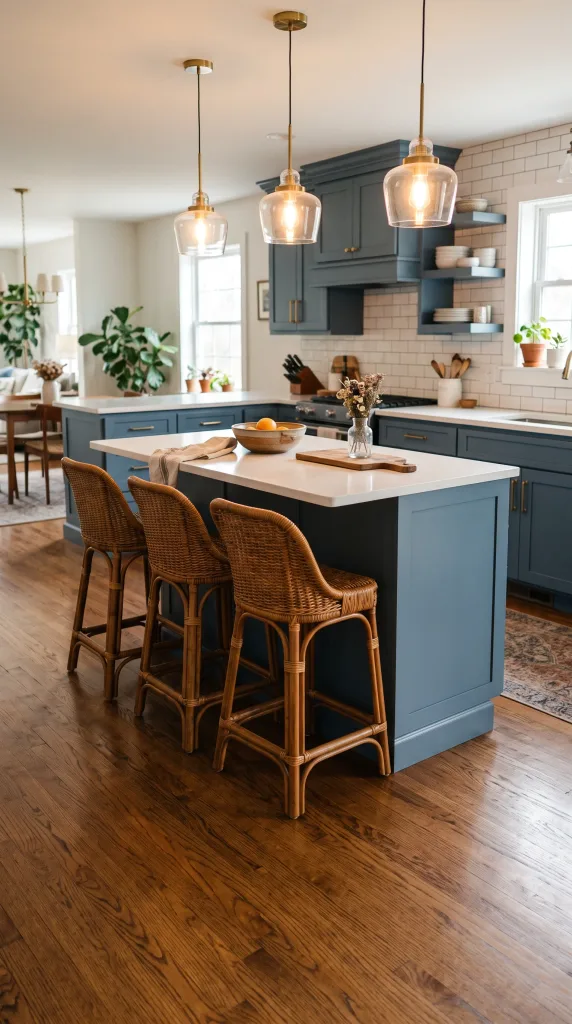
Woven rattan, seagrass, or leather-wrapped barstools in warm brown tones are one of the quickest no-commitment ways to activate the blue-brown palette at a blue island. The stools add warmth and texture at eye level, and they can be swapped out without touching anything structural. This works in virtually every kitchen style from coastal farmhouse to contemporary because the natural materials feel neutral enough to never look out of place.
Designer Advice: Look for stools with a slight back, even a low curved back, rather than completely backless options. They are more comfortable for everyday use and the back panel adds more visual weight at island level, which helps balance tall blue cabinetry.
21. Brown Leather Drawer Pulls as a Soft Alternative to Metal Hardware
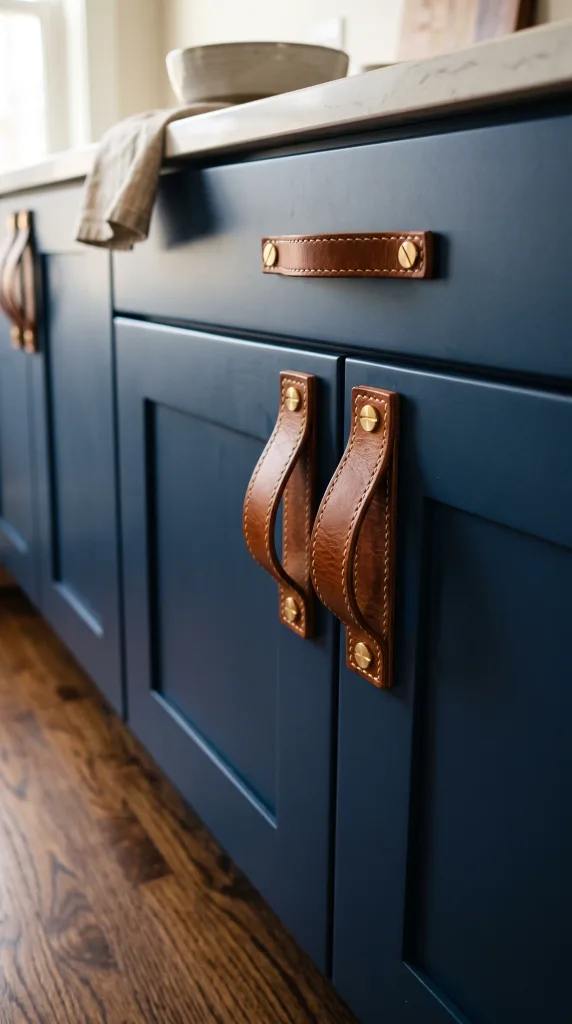
Leather drawer pulls in a cognac or saddle brown are a relatively niche but genuinely beautiful hardware choice in a blue kitchen. They read as warm and artisanal, and because leather is soft and slightly flexible, they feel noticeably different to open. In kitchens where every surface is painted or tiled, leather pulls introduce a tactile contrast that makes the space feel more considered. They are also surprisingly affordable, often less than metal hardware of equivalent style.
Heads Up: Leather pulls are not ideal near the stove or sink where they are exposed to grease and steam. Use them on pantry doors, lower storage drawers, or cabinet sections away from heat and moisture.
22. Blue and Brown Patterned Tile in a Kitchen Nook or Breakfast Corner
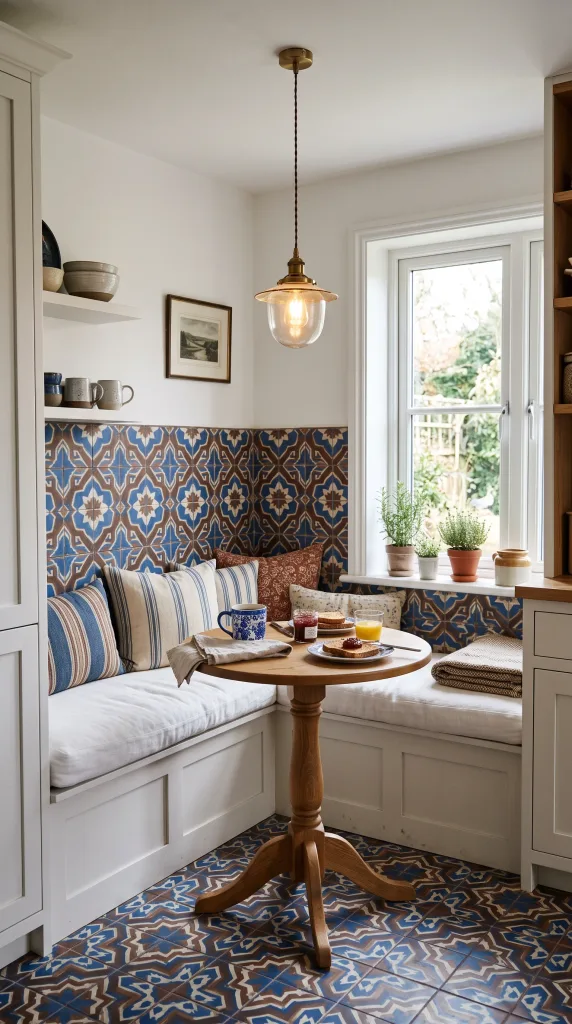
If full-room commitment feels like too much, a breakfast nook or alcove is the perfect contained space to go all-in on a blue and brown patterned tile. Encaustic cement tiles in geometric or floral blue-and-brown patterns have roots in Spanish, Portuguese, and North African design traditions, and they bring an artisan quality to the space that no flat-painted surface can replicate. Because the nook is separate from the main kitchen flow, you can be bolder here without the risk of visual overload.
Pro Move: Seal encaustic cement tiles before and after grouting and annually after that. Unsealed, they absorb oil and liquid instantly and can stain permanently.
23. Brown Wooden Range Hood in a Blue Kitchen
A custom wood range hood, clad in the same walnut, oak, or stained pine as your other brown elements, is a statement piece that ties a blue kitchen together from top to bottom. Because the range hood is at the vertical centre of the kitchen’s focal wall, it works as a design anchor that gives your eye somewhere to land. In Shaker, farmhouse, and transitional kitchens especially, a wooden hood above blue cabinetry reads as a fully resolved design rather than a work in progress.
Designer Advice: The wood cladding is applied over an existing metal liner, so this is a cosmetic finish, not a structural project. A skilled carpenter can usually add wood cladding to an existing hood in a day.
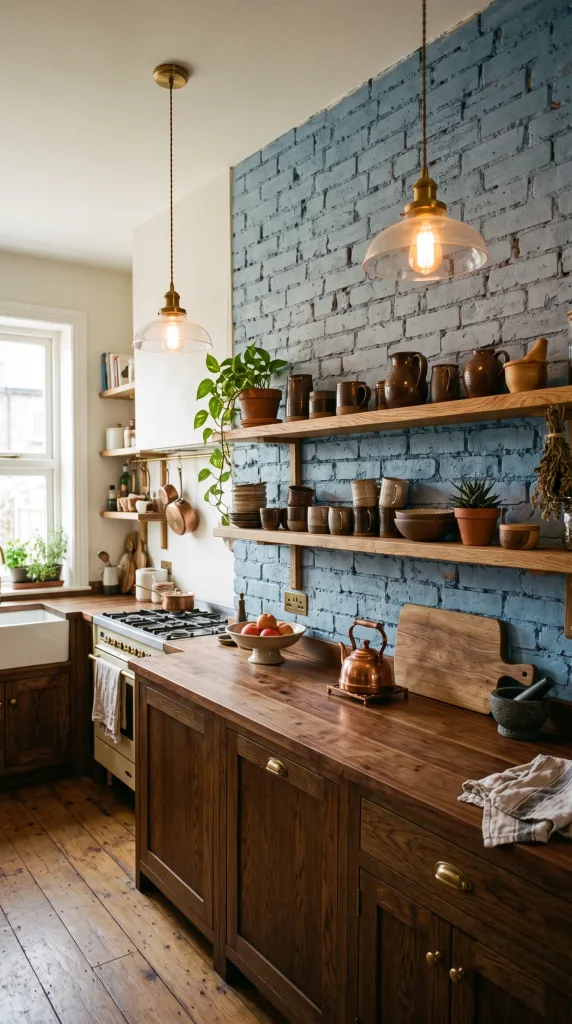
24. Blue Painted Brick or Limewash Wall in a Brown-Dominant Kitchen

If your kitchen already skews warm and brown, a single blue limewash or chalk-painted brick wall adds the color you need without any cabinetry work. Limewash paint gives brick a chalky, aged, slightly faded quality that reads as much softer than flat wall paint. The texture of the brick through the limewash adds visual depth that a smooth painted wall never quite achieves, and the color reads differently across the day as light changes.
Quick Tip: Test limewash paint on a small section before committing to the whole wall. The color dries significantly lighter than it applies, and the final tone depends heavily on your brick’s absorption rate.
25. Brown Cutting Boards, Canisters, and Ceramics as the Entry Point
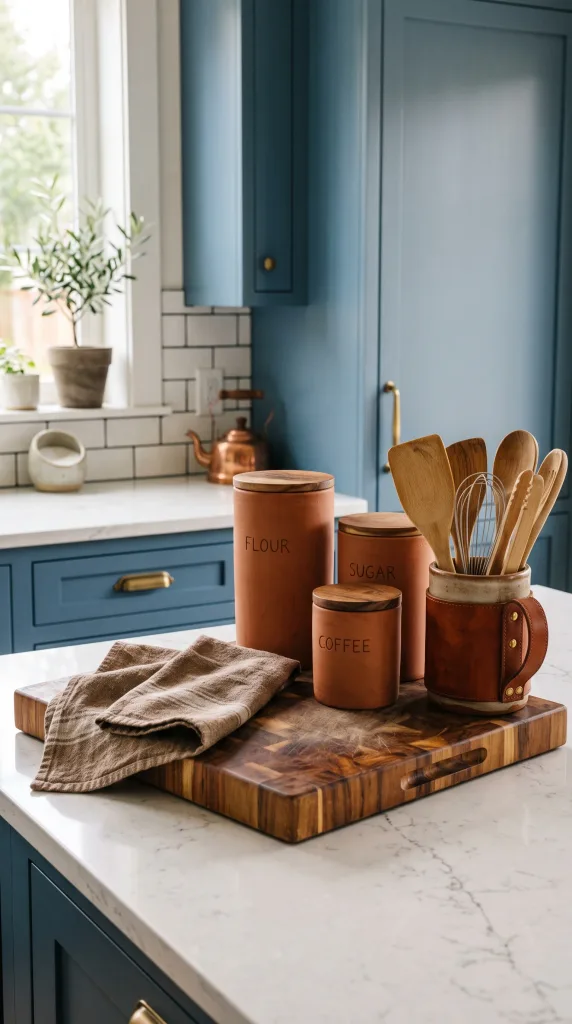
Not every blue-brown kitchen starts with a renovation. If your cabinets are already blue, or if you are renting, the most immediate way to activate the palette is through brown wood accessories: a large end-grain cutting board, terracotta canisters, leather-handled utensil holders, and brown linen dish towels. These are low-cost, removable, and surprisingly impactful because they add warmth right at counter level where your eye naturally lands in a kitchen.
Reality Check: Accessory styling works best as a complement to at least one structural brown element, whether that is flooring, a wood countertop, or open shelving. On its own, it can read as an afterthought rather than a cohesive design.
26. Blue Painted Ceiling in a Kitchen With Warm Brown Wood Tones
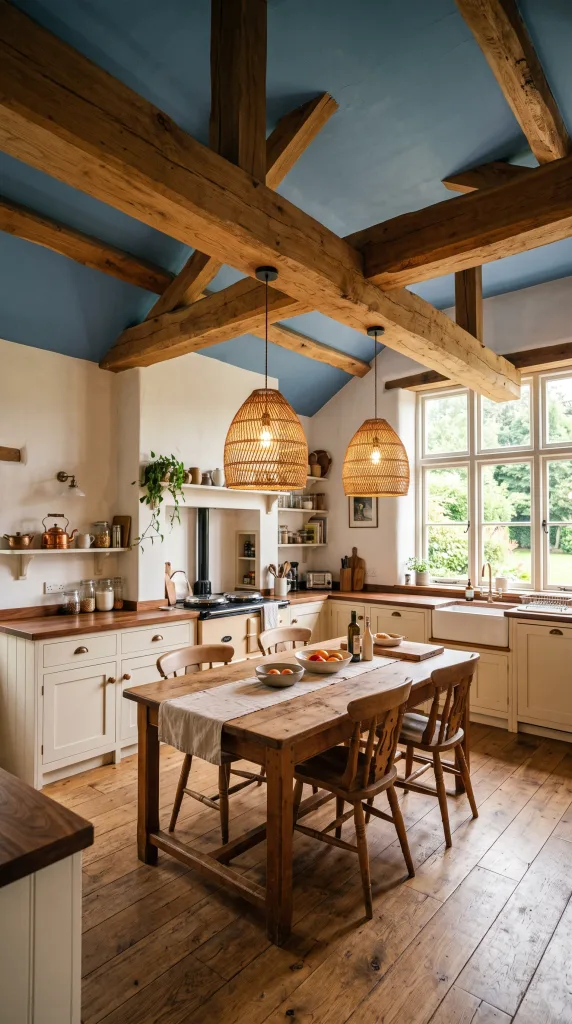
A blue ceiling in a kitchen with warm brown wood tones, exposed beams, walnut countertops, or oak flooring, is a historically rooted design move that is gaining serious traction again. For centuries, blue ceilings were used in farmhouses and colonial spaces because blue paint was believed to deter insects, but the effect today is purely aesthetic: it visually lowers a high ceiling, adds drama without touching the walls, and frames the room in a way that makes the brown tones below look richer. This works best with a soft, slightly dusty blue rather than a bright or saturated tone.
Designer Advice: Use eggshell rather than flat paint on a kitchen ceiling since it is easier to wipe down and the slight sheen makes the color appear more intentional in different light conditions.
| Design Element | Budget Option | Investment Option |
| Brown in cabinets | Paint existing cabinets walnut stain tone | Custom inset walnut cabinets |
| Blue in cabinets | Chalk paint on cabinet fronts | Spray-finish shaker reface |
| Brown flooring | Peel-and-stick wood-look vinyl | Solid hardwood or walnut |
| Blue backsplash | Peel-and-stick blue subway tile | Handmade Zellige tile |
| Brown hardware | Brushed brass from IKEA | Unlacquered solid brass |
| Wood accents | IKEA open shelving in bamboo | Custom floating walnut shelves |