Dining Room Window Treatments That Actually Solve Real Problems
Most dining room window advice tells you what looks good. It rarely tells you what works for your actual situation: the glare at dinner time, the neighbours who can see straight in, the awkward bay window you have no idea how to dress. These ideas are built around the problems you are actually dealing with, not just the aesthetics.
1. Your Windows Face Directly Onto the Street
Woven wood shades in bamboo or jute give you privacy at eye level without sealing out the light, and the natural weave filters views from outside while keeping the room warm and open. Hang them inside the frame for a clean look, or mount them high and wide to make the window feel more substantial.
**Pro Move:** Pair woven wood shades with a simple linen panel on each side for layered privacy that still looks relaxed rather than fortified.
Privacy Treatment Comparison
| Treatment | Privacy Level | Light Retained | Best For |
| Woven Wood Shades | Medium-High | Filtered, warm | Street-facing, casual rooms |
| Sheer + Blackout Layer | High (when closed) | Full control | Formal dining rooms |
| Frosted Window Film | High | Full | Ground floor, no curtain look |
| Plantation Shutters | Adjustable | Adjustable | Any style, long-term investment |
2. You Get Blinding Afternoon Glare Right at Dinnertime

Solar shades with a 3 to 5 percent openness factor block the harshest UV and direct glare while still letting you see your garden or view. In practice, a 5 percent openness reads as almost transparent from inside during daylight, but cuts the brightness enough to stop squinting over your plate.
**Reality Check:** Solar shades work best on west-facing windows. If your glare comes from a skylight above, you will need a different solution entirely.
3. You Have Floor-to-Ceiling Glass or a Sliding Door

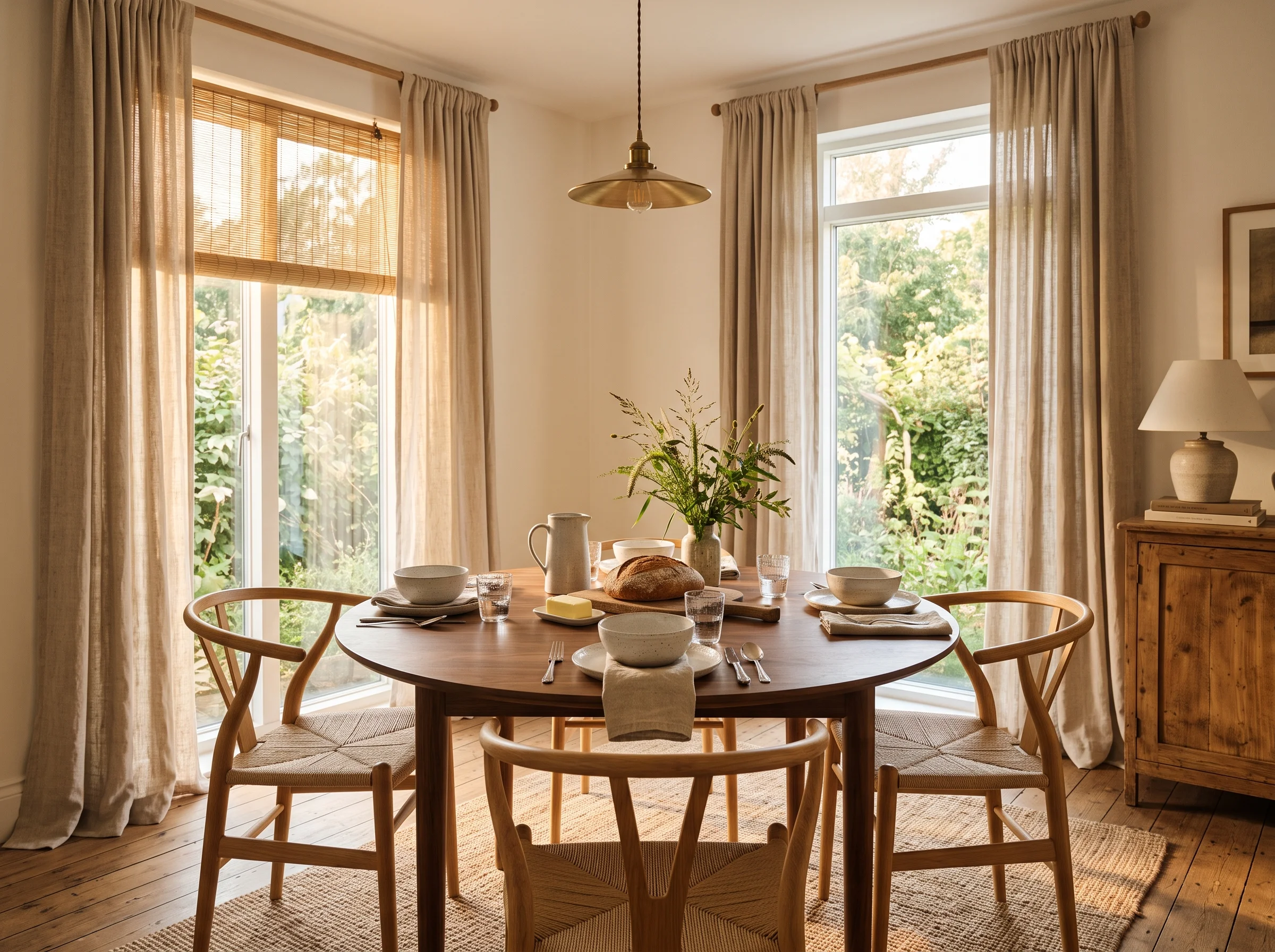
Floor-to-ceiling linen drapes hung from a ceiling-mounted rod are the single most effective way to handle large glass panels. They add visual warmth to what can otherwise feel like a cold, commercial space. Stick with unlined linen in a natural or warm white tone so the light stays soft and you do not lose the airy quality the large glass gives you.
**Designer Advice:** Mount the rod no more than 3 to 4 inches from the ceiling and use panels that puddle slightly. This makes the ceiling feel taller, which is especially useful when large glazing can make proportions feel off.
4. Your Dining Room Is Also Your Home Office or Flex Space
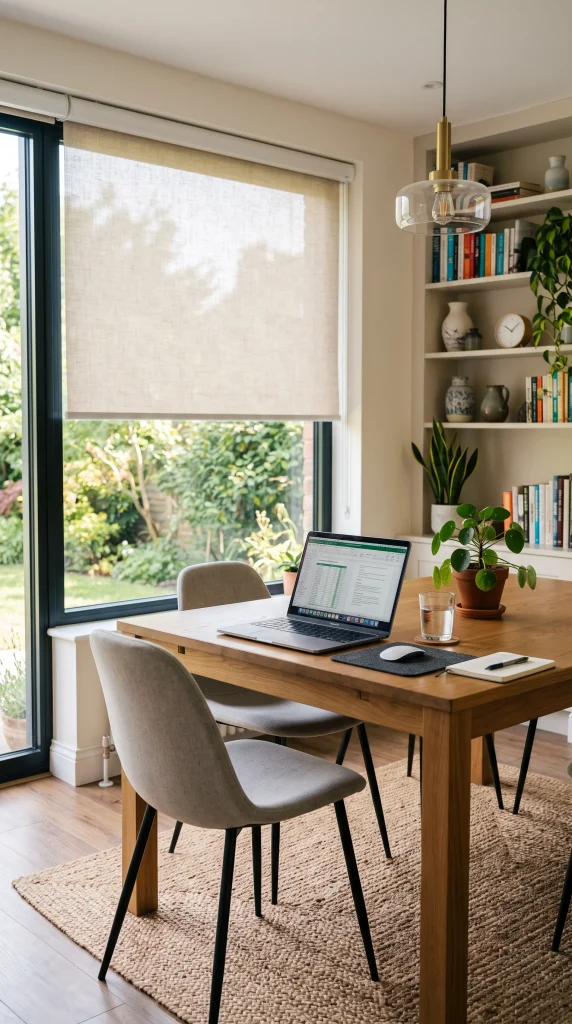
Motorised roller shades are the practical answer when one room is doing two jobs. You can adjust them without leaving your desk, set them on a schedule for morning light, and switch from open to fully private with a phone tap. Look for models in a light-filtering linen weave so they work well for both video calls and evening meals.
**Quick Tip:** Budget around $150 to $300 per window for motorised roller shades with a hub; brands like Blinds.com and SelectBlinds offer solid mid-range options that work with most smart home systems.
5. You Have a Bay Window and No Idea What to Do With It

The cleanest approach for a dining room bay window is a continuous curtain rod that follows the angle of the bay, with a single pair of floor-length drapes framing the outer edges only. Do not try to curtain every section. This treats the bay as one large architectural feature rather than three awkward separate windows, and keeps the visual weight even.
**Heads Up:** Avoid Roman shades inside a bay if the sections are narrow. Anything less than 24 inches wide looks cramped when the shade is raised and bunched at the top.
6. Your Room Is Small and You Cannot Afford to Lose Any Light
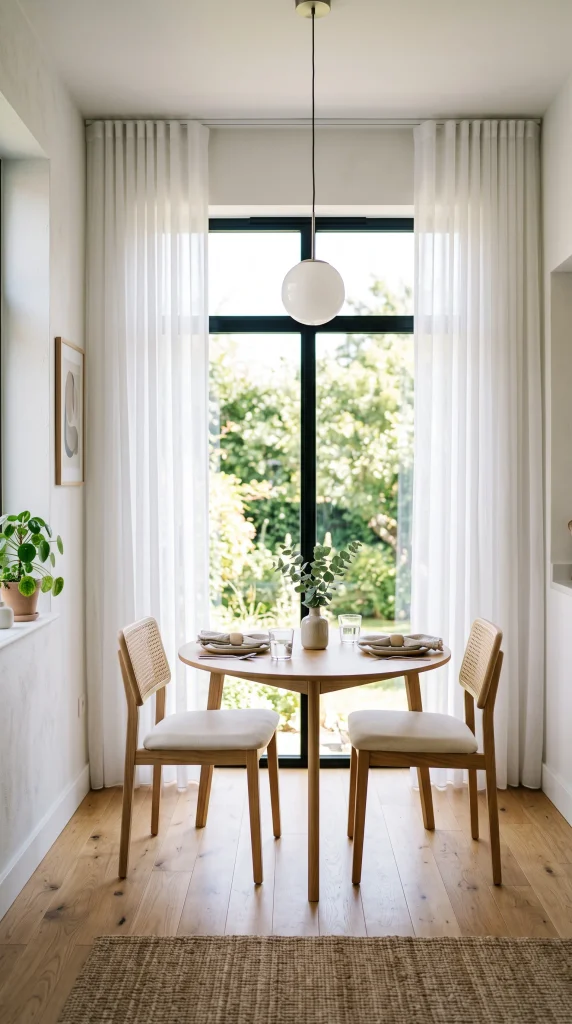
Sheer white or ivory ripple-fold curtains on a ceiling-mounted track are the best option for a small dining room where every bit of natural light matters. The ripple-fold heading creates soft, even folds that hang beautifully without adding bulk, and ceiling mounting draws the eye upward so the room reads as taller and more open than it is.
**Pro Move:** Use a track that extends 8 to 10 inches past the window frame on each side so the curtains stack completely off the glass when open, blocking zero light.
7. You Want a Formal Look but Your Budget Is Limited

Pinch pleat curtains in a mid-weight cotton or cotton-linen blend punch well above their price point and look genuinely expensive when hung correctly. The key is always hanging them high, within 4 inches of the ceiling if possible, and making sure each panel is at least two times the width of the window for proper fullness.
**Reality Check:** Ready-made pinch pleat panels from IKEA (the ANNAKAJSA or SILVERLONN range) can look genuinely high-end when hung high and wide; the difference is installation, not price.
Window Treatment Budget Tiers at a Glance
| Budget Tier | Best Options | Approx. Cost Per Window | Where to Shop |
| Under $50 | Sheer panels, cafe curtains, tension rods | $15-$50 | IKEA, Target, Amazon |
| $50-$150 | Roman shades, roller blinds, wood blinds | $50-$150 | Blinds.com, SelectBlinds, Home Depot |
| $150-$400 | Woven wood shades, motorised blinds, pinch pleat panels | $150-$400 | The Shade Store, Pottery Barn, West Elm |
| $400+ | Custom drapery, plantation shutters, motorised solar shades | $400+ | Local workroom, Hunter Douglas, Smith+Noble |
8. You Are Renting and Cannot Make Permanent Changes

Tension rods and no-drill curtain clips are the renter’s best friend, but cafe curtains are the most visually polished option in this category. A set of linen or cotton cafe curtains covering only the lower half of the window gives you real privacy at table height while leaving the top half completely open for light.
**Quick Tip:** Bungalow Rose and Linen Way on Amazon both offer inexpensive cafe curtain sets in natural linen tones that look far more intentional than typical budget options.
9. You Have a View Worth Keeping

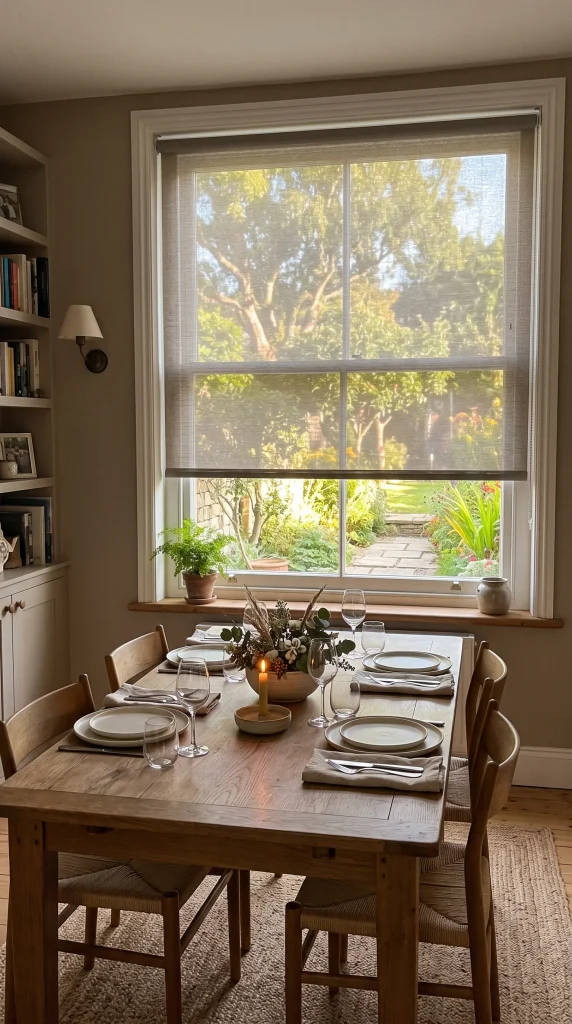
If you have a garden, courtyard, or any outdoor view worth looking at during meals, the treatment should frame it rather than compete with it. Slim roller shades in a neutral tone that disappear when raised, or simple flat panel curtains that stack completely to the side, keep the window clear when you want it and covered when you need it.
**Designer Advice:** Choose a shade colour that matches or is slightly lighter than your wall colour. This makes the shade functionally invisible when raised, keeping the focus entirely on the view.
10. Your Dining Room Has an Open Plan Layout
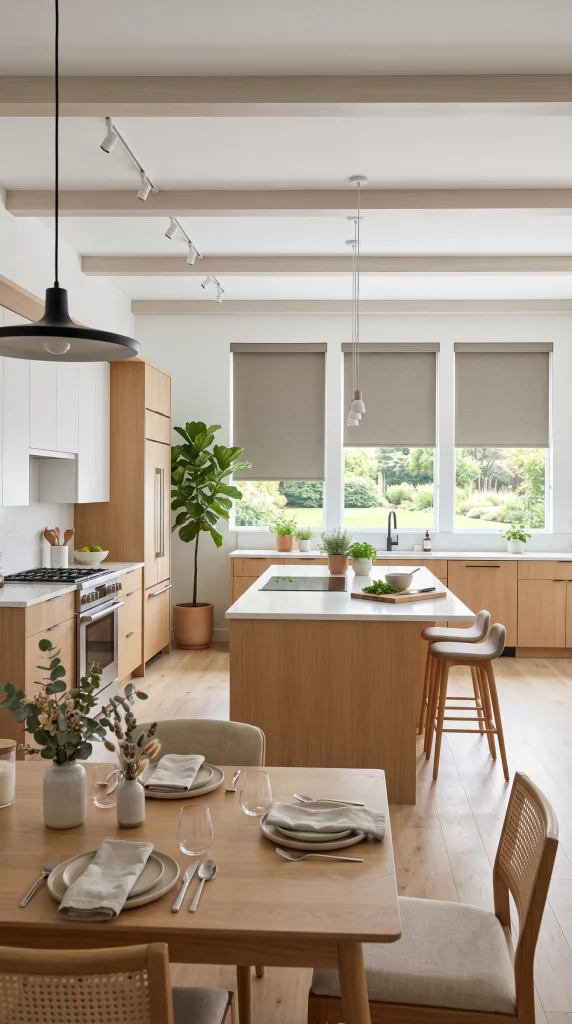
When the dining area flows into a kitchen or living room, the window treatment needs to work for the whole visual zone, not just one room. Consistent roller shades in a neutral fabric across all windows in the open plan is the most professional-looking solution, creating visual cohesion that ties the zones together without feeling matchy.
**Heads Up:** Mixing curtain styles across an open plan, drapes in the dining area and blinds in the kitchen, creates visual fragmentation that makes the whole space feel smaller and busier.
11. You Want Something That Works for Both Everyday Meals and Dinner Parties
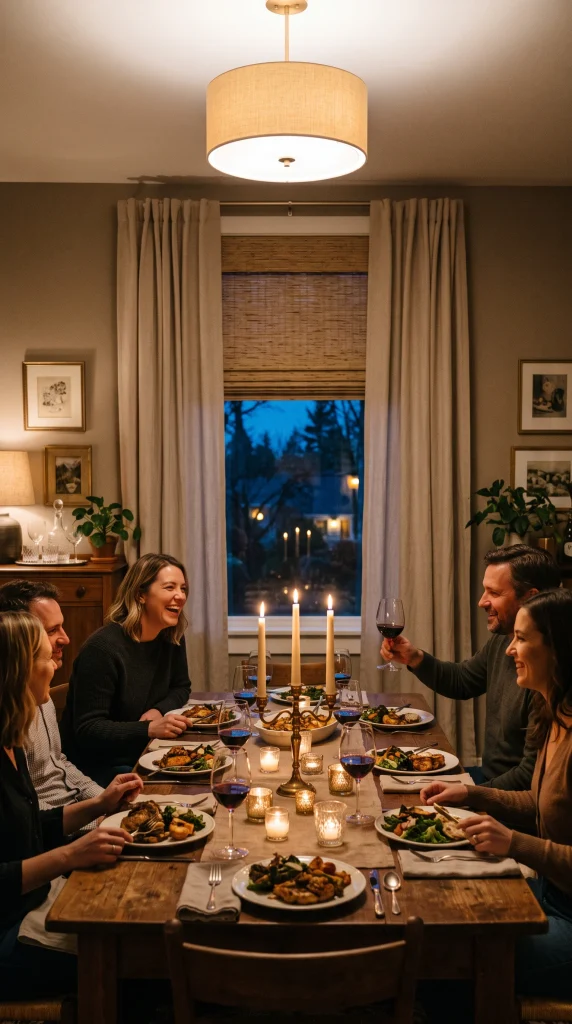
Layered treatments, a roller shade or woven wood shade paired with soft linen side panels, are the most versatile option for a dining room that does double duty. During the day, roll the shade up and push the panels back for a bright, casual feel; at night, lower the shade and close the panels for an intimate dinner atmosphere.
**Pro Move:** Stick to a two-tone palette: a textured shade in a warm neutral (oat, sand, warm white) with panels in a slightly deeper tone of the same family for depth without visual noise.
12. Your Dining Room Has Dark Walls or Heavy Furniture
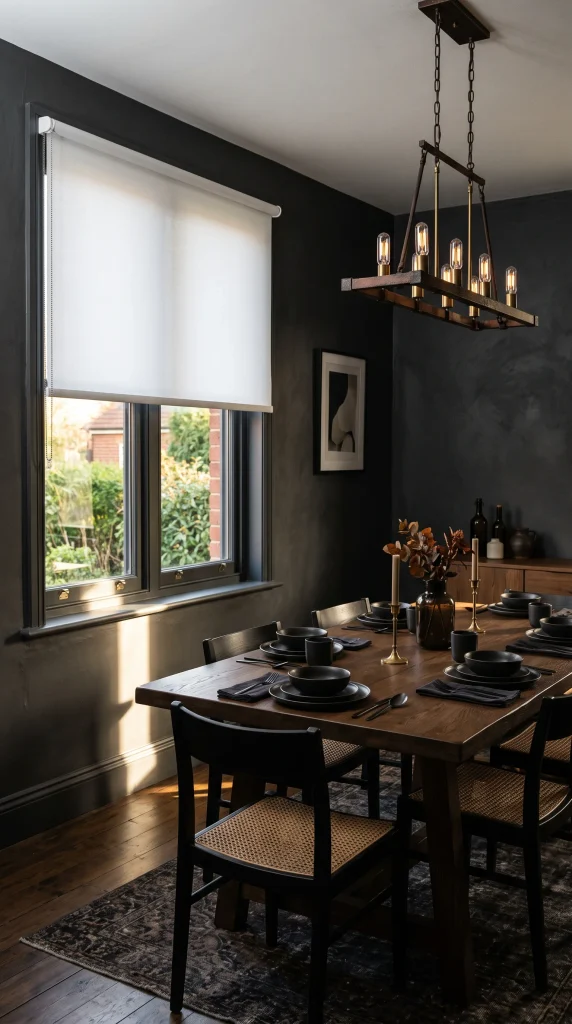
When the room already has a lot of visual weight from dark paint, a chunky table, or bold wallpaper, the window treatment should be as quiet as possible. Flat white or ivory roller shades in a light-diffusing fabric keep the windows from adding more visual mass, and the clean horizontal line when raised stays out of the room’s way.
**Reality Check:** This is one situation where more decorative curtains can genuinely make a room feel suffocating. Restraint at the window lets everything else breathe.
13. You Want a Farmhouse or Rustic Feel

Natural linen panels with a subtle texture, hung on a black iron rod with ring clips, are the workhorse of farmhouse-style dining rooms. They look lived-in and warm without trying too hard. Go for a slubby, undyed linen in a raw natural tone rather than a bright white, which reads as too crisp and new for the aesthetic.
**Quick Tip:** Wash linen panels before hanging to get that slightly relaxed, soft drape that is the whole point of the farmhouse curtain look.
14. You Want a Modern or Minimalist Look
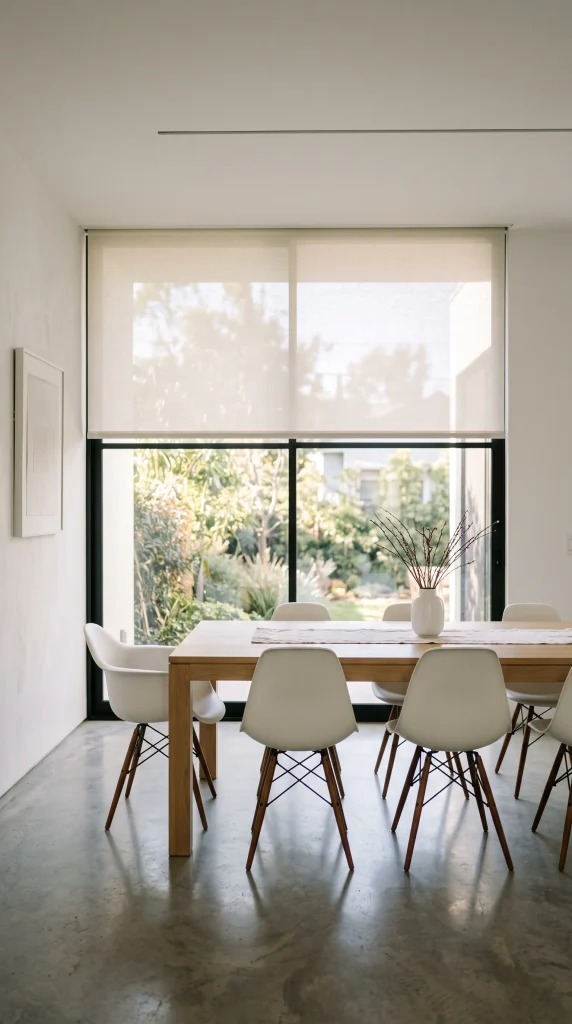
In a minimal dining room, the treatment should read as part of the architecture rather than a decoration. Recessed motorised shades, where the roller sits inside a pocket cut into the ceiling or wall, disappear completely when raised and leave the window as a clean rectangle of light with no visible hardware.
**Designer Advice:** If a recessed pocket is not possible, a slim double roller bracket in a matte white or warm grey painted to match the wall achieves a similar invisible effect at a fraction of the cost.
15. Your Windows Are an Awkward Size or Oddly Placed
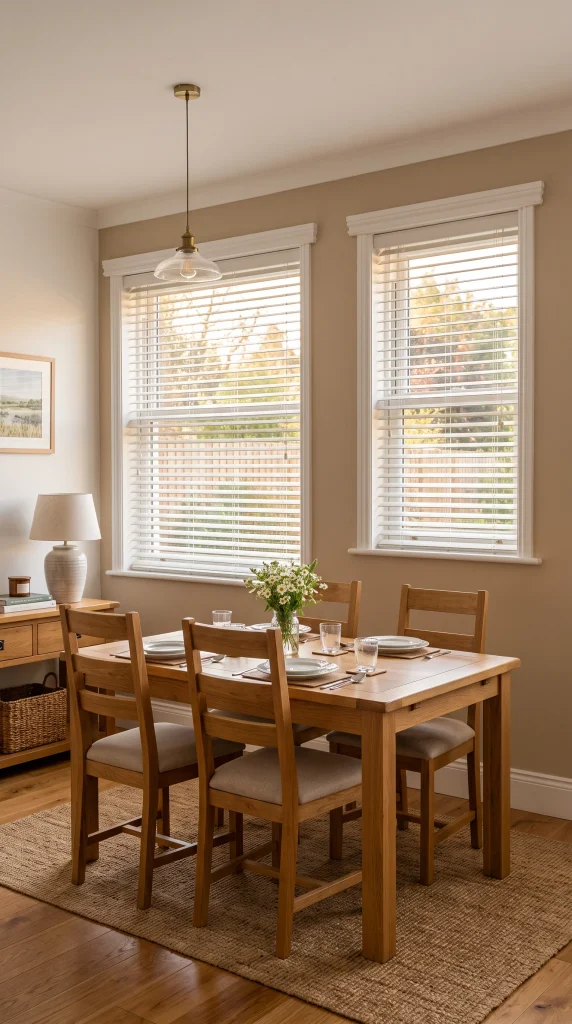
Faux wood horizontal blinds in a 2-inch slat width are the most practical solution for non-standard windows because they cut to size easily, work on any proportion, and are far more moisture and humidity resistant than real wood. In a dining room they give you precise light control without requiring any special installation.
**Heads Up:** Order faux wood blinds with a valance (the decorative top panel that covers the mounting hardware). Without it, the top of the blind looks unfinished and distinctly budget.
16. You Have Young Children or High Foot Traffic

Cordless cellular shades are the practical gold standard for family dining rooms: no cords to pull on, no fabric panels to catch on chairs or little hands, and the honeycomb cell structure provides real insulation that helps with noise and temperature. They clean easily with a damp cloth, which matters when meals happen three times a day.
**Pro Move:** Choose top-down bottom-up cordless cellular shades so you can lower from the top for privacy while keeping the lower half open for light, ideal when neighbour sightlines are only at table height.
17. You Want to Add Pattern Without Repainting or Redecorating
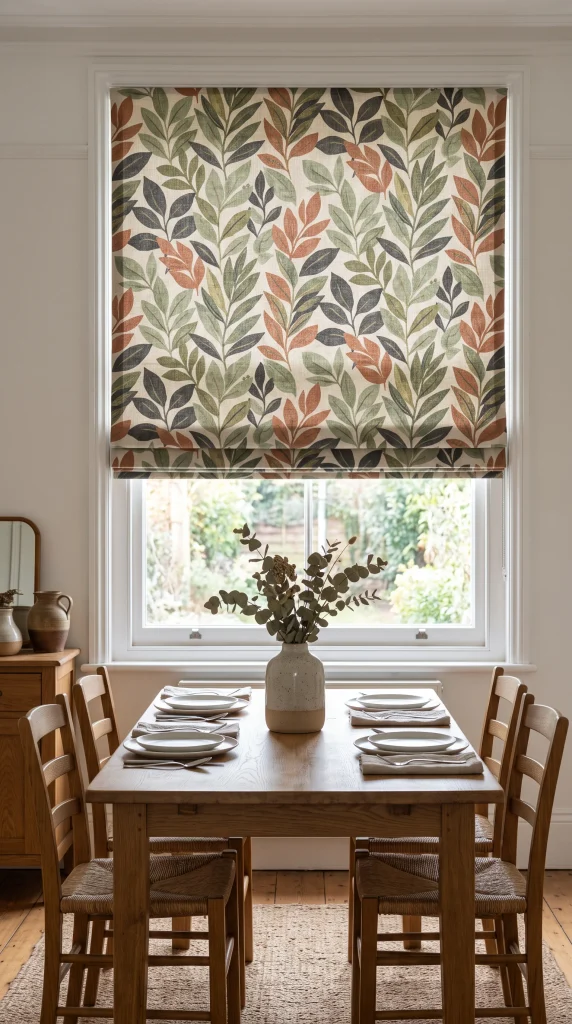
A printed Roman shade is one of the most effective ways to bring pattern into a dining room without committing to wallpaper or a new rug. A bold botanical, a classic ikat, or a subtle stripe on a Roman shade works particularly well because the folded fabric shows the pattern at rest without being overwhelming when the shade is raised.
**Reality Check:** Scale matters enormously here. A small pattern on a large Roman shade will look busy and indistinct from across the room; choose a larger repeat (at least 4 to 6 inches) so the design reads properly.
18. You Are Going for a Japandi or Wabi-Sabi Aesthetic

Simple flat linen panels in an undyed or stone-washed natural tone, hung on a bare wood rod with minimal hardware, are the ideal Japandi dining room window treatment. The philosophy is to let the material speak: loose weave, raw hems, soft asymmetry. Avoid anything pressed, crisp, or overly styled.
**Designer Advice:** Source unlined linen by the metre from Bemz, Rough Linen, or a fabric wholesaler and have a local seamstress make simple flat panels. This approach gives you much better fabric quality than most off-the-shelf linen curtains at a comparable price.
19. Your Dining Room Is Also a Sun Room or Has Lots of South-Facing Light

UV-blocking sheer curtains, sometimes labelled as solar sheers or sun sheer panels, are the right tool here. They protect upholstery, flooring, and artwork from fading while keeping the room feeling bright and light-filled. Unlike regular sheers, they include a UV-filtering weave that blocks 75 to 99 percent of harmful rays.
**Quick Tip:** Check the OEKO-TEX label on any solar sheer fabric. It confirms the treatment used to add UV-blocking properties is non-toxic, which matters in a room where you eat.
20. You Want the Room to Feel More Formal and Grown-Up
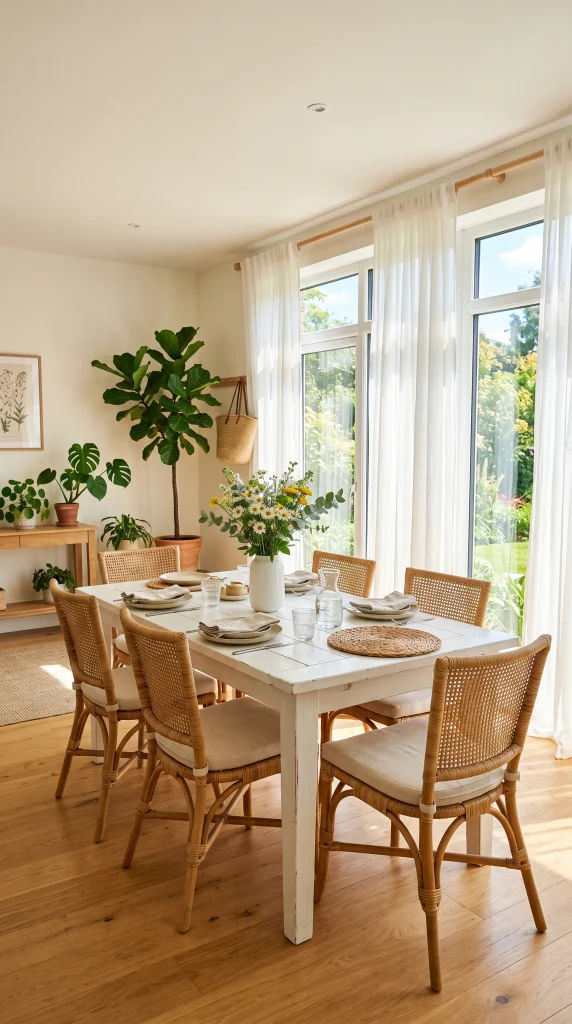
Velvet drapes in a deep, muted tone (forest green, navy, warm bordeaux, or charcoal) add instant weight and formality to a dining room that currently feels too casual. The key is to keep them floor-length with a slight break or puddle, hung from rings on a brushed brass or unlacquered brass rod.
**Heads Up:** Velvet is high-maintenance: it shows dust, cannot be machine washed, and attracts pet hair, so it suits rooms that get occasional use better than a family dining room used daily.
21. You Have a Corner Window or Two Windows That Meet at a Corner
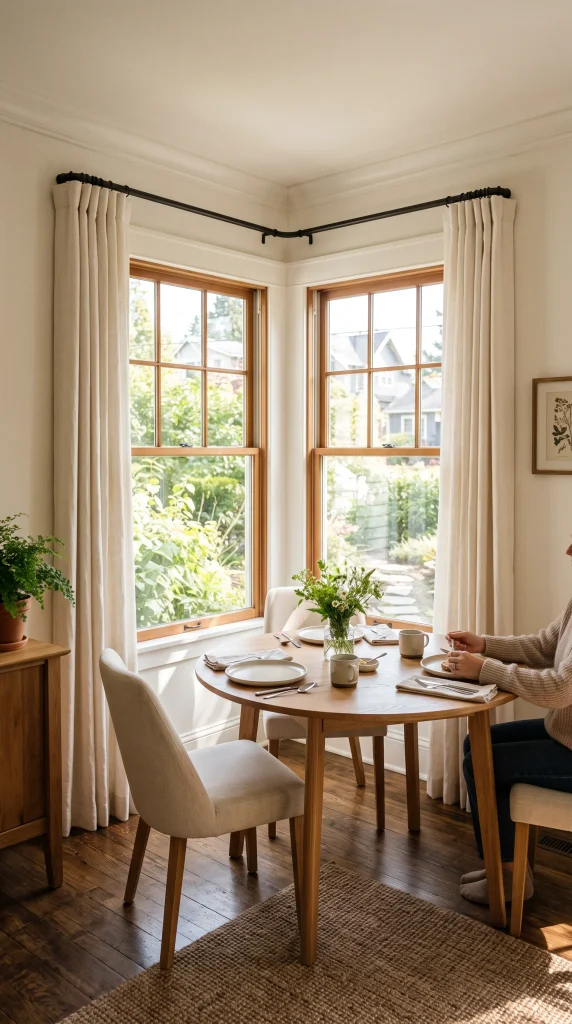
Corner windows are best treated as one continuous visual element rather than two separate ones. Run a single long curtain rod that wraps around the corner using a specially made corner bracket, with panels that stack at the two outer edges. This avoids the awkward centre panel bunched into the corner where the walls meet.
**Pro Move:** Source a return rod or corner curtain rod bracket from specialist curtain hardware suppliers like Kirsch or Kenney. These are not always stocked in general home stores.
22. You Want Something Eco-Friendly and Sustainable

Bamboo roller shades and jute Roman shades made from FSC-certified or naturally harvested materials are genuinely sustainable options that also look good in a dining room. They biodegrade at end of life, are produced with lower chemical processing than polyester blinds, and work beautifully in warm, earthy interiors.
**Reality Check:** Natural fibre shades can warp slightly in high humidity over time, so if your dining room is connected to a kitchen that generates a lot of steam, look for bamboo shades with a moisture-resistant backing.
23. You Want to Make a High Ceiling Feel More Intimate

In a dining room with very high ceilings, the scale of an untreated tall window can feel cold and institutional. Hanging curtain rods at the standard 8-foot height rather than at the actual ceiling line, combined with extra-length panels that still reach the floor, visually lowers the ceiling and makes the eating area feel more enveloping and cosy.
**Designer Advice:** This is a deliberate design decision that goes against the usual hang-as-high-as-possible rule. It works specifically because it creates a human-scale zone within a very tall room.
24. You Are Working With a Traditional or Colonial-Style Home

Plantation shutters are the most architecturally appropriate window treatment for a traditional dining room and the one option that actually adds resale value to a property. In practice, they are painted the same colour as the trim work (usually bright white or warm off-white) so they read as part of the architecture rather than a decorative addition.
**Heads Up:** Budget $300 to $600 per window for professionally installed plantation shutters. They are an investment, but unlike curtains or blinds, they never need replacing and can outlast the house.
25. You Want to Try Something Different That Most People Have Not Thought Of

Interior shutters painted in a colour (deep sage, warm terracotta, dusty blue) rather than the standard white are a genuinely unexpected choice that adds architectural character and personality without requiring wallpaper or a bold paint colour. This is a detail regularly spotted in well-designed European homes and increasingly popular in design-forward interiors.
**Quick Tip:** Use the same paint brand and finish as your cabinetry or trim for coloured shutters so the tone sits correctly within the room’s existing colour temperature rather than clashing.