Autumn Bedroom Looks That Actually Make You Want to Stay in Bed
There’s something about the shift into autumn that makes you want to rethink your bedroom from the inside out. The days get shorter, the air gets cooler, and suddenly a white-on-white minimalist setup just does not feel right anymore. You want warmth. You want weight in the fabrics. You want to walk into your room at the end of a long day and feel like the space is holding you, not just housing you. That pull toward coziness is not just emotional, it’s actually one of the most rewarding creative moments in home decorating, because autumn gives you a whole palette to play with that most other seasons simply do not.
The ideas in this article cover a wide range of styles, budgets, and room sizes. Some of them will work as quick weekend updates, others are more considered, longer-term changes that really shift the way a room feels. You do not need to do all of them, honestly, picking even three or four and doing them well will make a noticeable difference. Whether you’re drawn to deep earthy tones, natural textures, moody lighting, or clever little seasonal touches, there’s something here for every kind of bedroom and every kind of autumn lover.
Color-Led Bedroom Updates for Autumn
1. Build Around a Burnt Orange Accent Wall
One of the most impactful and budget-conscious changes you can make heading into autumn is painting a single accent wall in a warm, spiced tone like burnt orange, terracotta, or deep paprika. In practice, this works best on the wall directly behind the bed, it frames the headboard naturally and creates a focal point that draws the eye as soon as you enter the room. Pair the accent wall with off-white or warm linen bedding rather than stark white, which can feel too cold against these tones. Brass or aged copper hardware on nightstands and picture frames will pick up the warmth in the wall color beautifully. For lighting, a warm-toned Edison bulb or amber glass pendant on either side of the bed will prevent the room from feeling washed out at night and bring the whole look together in the evenings. One thing that works really well here is keeping the rest of the room relatively neutral, the wall does the heavy lifting, and everything else just supports it. Worth noting, however, that terracotta tones can make a small bedroom feel even smaller, so this approach is best suited to rooms that already have decent natural light.
Pro Move: Sample at least two or three shades on the wall in different lighting conditions before committing, what looks like warm terracotta in the store can read almost brown in a north-facing room.

2. Try a Deep Forest Green and Caramel Combination
Deep forest green is having a real moment in interior design right now, and autumn is the perfect time to bring it into the bedroom because it references the outside world without copying it directly. The most effective way to use it without repainting everything is through a velvet upholstered headboard in forest green paired with caramel or cognac leather accents, think a leather-wrapped tray on the nightstand or a cognac throw folded at the foot of the bed. The contrast between the cool depth of forest green and the warmth of caramel tones creates a visual balance that professional designers often describe as grounded and rich. Use warm brass light fixtures or gold-toned picture frames to bridge the two colors and add a layer of reflected warmth. In practice, this palette tends to look best in rooms with wood flooring, the timber tones anchor the caramel and stop the green from reading too cool. This is a mid-range investment depending on whether you’re buying a new headboard or just layering in accessories, but even a forest green throw blanket and a couple of caramel-toned candles will get you most of the way there.
Quick Tip: If you’re renting and cannot paint, a large canvas print or a framed green botanical illustration gives you the color anchor without touching the walls.

3. Work a Moody Plum and Dusty Rose Palette
For bedrooms that lean more romantic and less rustic, a plum and dusty rose palette offers a softer take on autumn’s colour story. This pairing references the season’s transition into late autumn without going full dark academia. Start with dusty rose linen bedding as your base, it’s easier to find than you’d think and photographs beautifully. Layer a plum-toned chunky knit throw at the foot of the bed and add a few cushions in mauve and deep berry to build the tonal range. The key to making this work is ensuring your lighting is warm rather than white, a cool LED bulb will kill this palette immediately by making the dusty rose look washed out and the plum look flat. Opt for warm-toned bulbs around 2700K, ideally through fabric-shaded lamps that soften the light further. Dark-stained or walnut wood furniture pieces complement this palette well because they stop it from feeling too sweet or pastel-heavy. This is an affordable autumn update since it relies mostly on textile swaps rather than large furniture investments, and the colour combination is current enough to feel intentional without being trendy in a way that dates quickly.
Designer Advice: Layer two or three different fabric textures in the same plum and rose tones, matte linen, glossy velvet, and matte knit, so the palette reads rich rather than flat.

4. Go Neutral with Warmth Using Oat, Sand, and Cinnamon
Not everyone wants to go dark and moody for autumn, and that’s completely valid. A warm neutral palette built from oat, sand, and cinnamon tones is genuinely one of the most liveable seasonal updates you can make, it’s calm, it photographs well, and it doesn’t scream seasonal in a way that feels out of place come December. The key to making warm neutrals feel autumnal rather than just beige is in the layering. Use an oat-coloured fitted sheet as your base, a textured sand-toned duvet, and then a cinnamon or nutmeg-coloured chunky knit throw folded across the lower third of the bed. Jute and seagrass accessories, a basket for extra blankets, a woven tray on the nightstand, bring in natural texture that feels completely of the season. For wall decor, consider a large-format print of a botanical or landscape in amber and ochre tones that reinforces the palette without being too literal. One honest note: warm neutrals work best when you commit to the full palette rather than mixing in cooler greys or whites from earlier in the year, otherwise the look can feel undecided rather than cohesive.
Reality Check: Warm neutrals can disappear in a room with insufficient lighting, add a floor lamp or an extra bedside lamp to stop the space from reading flat during autumn evenings.

Texture-Led Ideas for Autumn Cosiness
5. Layer a Chunky Knit Blanket Over Your Duvet
Layering is one of those techniques that looks effortless in styled bedroom photos but actually requires a little thought to pull off in real life. The key is choosing a chunky knit blanket that is about half the width of your bed so it can be folded and draped across the lower third of the duvet rather than spread edge to edge. This creates visual weight and interest at the foot of the bed, which is where the eye naturally travels when you walk into a room. In terms of colour, your knit doesn’t need to match the bedding exactly, in fact, a slight contrast works better. If your bedding is oat or cream, go for a rust or cinnamon-toned knit. If your bedding is deeper, try an ivory or camel. Wool and wool-blend knits are the most visually appealing because the natural fibres catch light differently to synthetic alternatives, giving you a richer, more three-dimensional texture. From a practical standpoint, wool can be high-maintenance to wash, so a cotton-acrylic blend is a reasonable compromise if you want the aesthetic without the hand-wash anxiety. This is one of the most affordable autumn bedroom updates you can make and genuinely has an immediate, tangible impact on how the room feels.
Quick Tip: Fold the blanket in thirds lengthways before placing it across the bed, this gives you a clean, structured drape rather than a bunched-up look.

6. Swap Summer Curtains for Velvet or Linen Drapes
Curtains are one of the most underrated ways to shift the entire atmosphere of a bedroom, and it’s remarkable how many people overlook them when decorating seasonally. Lightweight summer sheers or linen blends feel appropriate in July but tend to read as thin and cold by October. Switching to velvet drapes, even budget-friendly velvet from high-street retailers, immediately adds visual weight, warmth, and a sense of enclosure that makes the room feel far more like a proper autumn retreat. If velvet feels too heavy or formal for your taste, heavier linen in a warm oat or rust tone works beautifully and still makes a noticeable textural shift from sheer summer fabrics. From a design perspective, hanging your curtain rod as high as possible and choosing floor-to-ceiling lengths creates the impression of height and generosity in the room, which works especially well in smaller spaces. In terms of colour, deep jewel tones like burgundy, forest green, or navy are all currently popular among interior designers for autumn bedrooms and are widely available at affordable price points. One practical note: velvet attracts dust and pet hair more readily than other fabrics, so factor that in if this is a high-traffic or pet-friendly room.
Designer Advice: Iron velvet curtains inside out on a low heat setting to remove packing creases, steaming or pressing on the right side can crush the pile permanently.

7. Add a Faux Fur or Sheepskin Rug Beside the Bed
Stepping onto a warm, soft surface when you get out of bed in the morning is one of those small daily experiences that has a disproportionately large effect on how you feel about a room. In autumn and winter, a faux fur or sheepskin rug placed directly beside the bed on the side you exit from is a genuinely worthwhile addition, both practically and aesthetically. Sheepskin rugs in natural ivory or warm oat tones are a classic choice that works across almost every bedroom colour palette, while faux fur options in caramel, taupe, or charcoal give you more design flexibility at a lower price point. Real sheepskin is a mid-to-high investment item but lasts many years and improves with use, developing a softer, more broken-in texture over time. Faux fur alternatives are considerably cheaper and machine washable, which makes them more practical for families or pet owners. From a design standpoint, a small rug positioned just beside the bed works better than a large rug centred under the bed frame for this purpose, it’s more intentional, more tactile, and does not compete with other floor coverings you might already have.
Heads Up: Avoid placing a faux fur rug directly under a bed with metal legs, the fibres can snag on rough edges over time and start to look worn much faster.

8. Introduce Woven Rattan and Natural Wood Pieces
Natural materials like rattan, seagrass, jute, and solid wood have a grounding quality that feels particularly appropriate for autumn because they reference the season’s connection to the earth and harvest. In a bedroom, the most effective way to bring these materials in without a full furniture overhaul is through smaller pieces, a rattan bedside tray, a seagrass basket for storing throw blankets, a wooden candle holder cluster on the dresser, or a small jute lampshade over an existing lamp base. If you are ready for a slightly larger investment, a rattan pendant light above the bed is one of the most visually striking changes you can make to a bedroom for under a hundred pounds or dollars, the warm light that filters through the woven texture creates a beautiful, dappled glow that completely changes the atmosphere of the room. Wabi-sabi and Japandi interior aesthetics, both of which have been widely featured in design publications over the past couple of years, lean heavily on these natural materials and offer a useful reference point if you want your room to feel intentional rather than random. The honest caveat here is that rattan and natural fibre pieces require more careful maintenance in damp climates, as they can warp or develop mould if exposed to persistent moisture.
Pro Move: Group three different natural material textures together, wood, rattan, and woven jute, to create a cluster of objects on a surface that feels curated without looking precious.

Lighting Adjustments That Change Everything
9. Switch to Warm Amber Bulbs Throughout the Room
Lighting colour temperature has a more profound effect on how a bedroom feels than most people realise, and it is one of the fastest, cheapest changes you can make heading into autumn. The standard colour temperature guide used by lighting designers places warm white at around 2700K to 3000K, this is the range that produces a golden, amber glow similar to candlelight or early evening sunlight. If your bedroom currently uses daylight or cool white bulbs (5000K and above), switching to warm amber alternatives will immediately make the room feel warmer, softer, and far more autumn-appropriate without changing a single piece of furniture or fabric. Smart bulbs that allow you to adjust colour temperature are a good investment for bedrooms because you can use a cooler setting during daytime hours when you need clarity and switch to warm amber mode in the evenings. In practice, even a single warm-toned table lamp on your nightstand can shift the atmosphere of an entire room more than a full set of new bedding. This is genuinely one of the most budget-friendly updates on this list, a set of warm LED bulbs costs only a few pounds or dollars, and it has a near-instant, visible impact.
Quick Tip: Replace your overhead main light bulb first, it affects the most area. Then add warm-toned table lamps to layer the light sources and eliminate harsh shadows.

10. Create a Candle Cluster on a Tray for Ambiance
Candles are the single most immediate way to add autumn atmosphere to a bedroom, and grouping them on a tray is the detail that separates a thoughtful, designed space from one that just has a few candles scattered around. Choose a wooden, slate, or aged brass tray as your base and group an odd number of candles, typically three or five, in varying heights so the cluster has visual rhythm. Scents matter here: autumn-specific candles tend to use notes like cedarwood, clove, amber, sandalwood, and pumpkin spice, all of which reinforce the seasonal mood in a way that’s almost immediate. From a design perspective, the tray approach works because it gives the candles a contained, intentional home on the dresser or nightstand rather than making them look like an afterthought. If safety is a concern, particularly in bedrooms where people fall asleep with lights on, flameless LED candles have improved dramatically in quality over the past few years and now flicker convincingly enough to read as real from across the room. Real candles are still the gold standard for atmosphere, but they should always be placed on stable, heat-resistant surfaces and should never be left unattended in a room where someone might fall asleep.
Reality Check: Keep scented candles away from the bed directly, since strong fragrance directly above where you sleep can disrupt sleep quality for some people.

11. Hang Fairy Lights Along a Headboard or Shelf
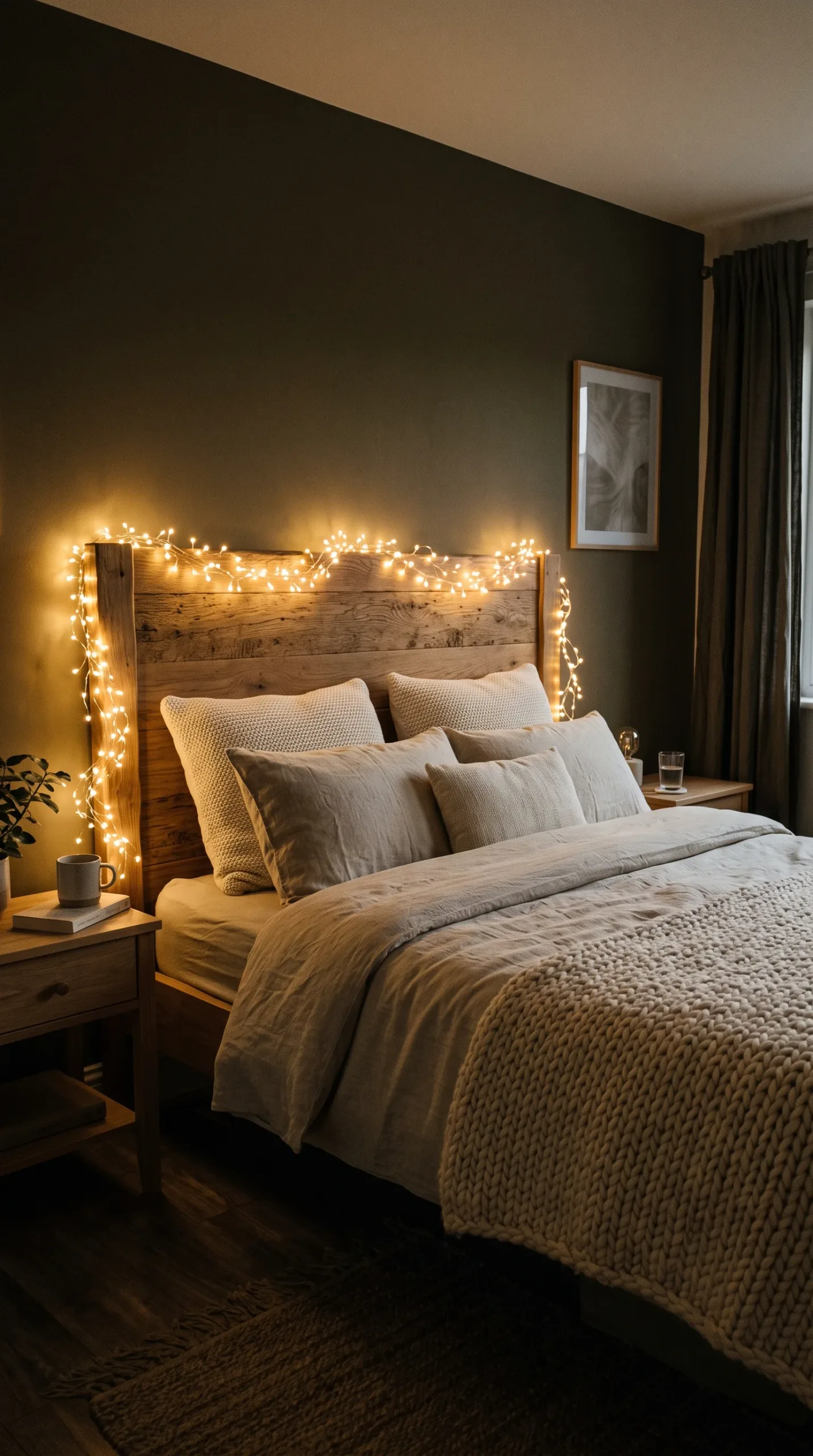
Fairy lights have a slightly unfair reputation for looking cheap or student-room-ish, but that perception tends to come from the way they are used rather than the lights themselves. Hung properly, a set of warm white micro-LED fairy lights along a headboard, draped over a bedroom shelf, or wound through a dried branch arrangement creates a genuinely warm, atmospheric glow that works beautifully for autumn evenings. The distinction between lights that look designed and lights that look accidental is usually in the wire, opt for copper wire fairy lights, which are near-invisible, rather than plastic-coated white or green wire versions. For a bedroom, the best placement is either behind the headboard to create a soft glow around it without the source being directly visible, or along the top of a floating shelf where the light spills down onto displayed objects below. Dimmable versions are worth the slight extra cost since full brightness can be a bit harsh for a bedtime environment. This is firmly in the affordable category and is a particularly good option for renters who cannot make structural lighting changes.
Designer Advice: Avoid blinking or multicoloured settings entirely for a bedroom, always use a steady warm white or amber glow for a look that reads sophisticated rather than festive.
12. Style a Floor Lamp in a Warm Corner
Adding a floor lamp to a neglected bedroom corner is one of those changes that seems minor on paper but genuinely alters how the room is used. A warm corner filled with a floor lamp, a comfortable reading chair, and a small side table becomes a secondary zone within the bedroom, somewhere to sit with a book on autumn evenings that is separate from the bed itself. In terms of lamp style, arc floor lamps with a warm fabric shade are particularly popular right now and suit both contemporary and mid-century modern bedroom aesthetics well. The shade material matters: natural linen or cotton shades diffuse light more warmly and organically than plastic or synthetic shades, which tend to create a harsher pool of light. Position the lamp slightly behind and to the side of a reading chair rather than directly over it, which creates a more flattering, layered light source. If your bedroom genuinely does not have space for a chair, a floor lamp in the corner of the room behind a potted plant or beside a tall set of drawers still adds warmth and depth to the room’s light scheme without requiring additional seating.
Heads Up: Choose a floor lamp with a weighted base if you have pets or small children, the narrow-foot designs look elegant but tip more easily than they should.

Seasonal Accent Details Worth Adding
13. Hang a Dried Botanical Wreath Above the Bed
Wreaths are almost always treated as door decorations, which means hanging one inside the bedroom feels genuinely original and unexpected. A dried botanical wreath above the bed, made from eucalyptus, dried wheat, preserved leaves, pinecones, and seedheads, reads as artful rather than themed, and it works in virtually any bedroom style from cottagecore to Scandinavian minimalism. The key difference between a wreath that looks intentional and one that looks like a holiday decoration is the material selection: dried botanicals in muted, natural tones feel permanent and designed, while shiny plastic foliage or overtly themed decorations read as seasonal in a way that quickly starts to feel awkward. From a practical standpoint, dried botanical wreaths are low maintenance, they do not need watering, they do not drop, and they can last for many months before needing to be replaced. They are also widely available from florists, craft markets, and online retailers at a range of price points. Hang yours with a wide, simple ribbon in a complementary tone, a deep rust velvet ribbon works particularly well for autumn, and ensure the wreath is large enough to feel proportional to the wall space above the bed.
Pro Move: Make your own dried wreath by binding together eucalyptus, dried lavender, and preserved seed pods on a wire base, it costs considerably less than buying one and feels more personal.

14. Display Mini Pumpkins on the Nightstand or Shelf
Mini pumpkins are one of the most versatile and affordable seasonal accessories you can bring into a bedroom, and they work far better than their association with Halloween decoration might suggest. The trick is treating them as you would any other natural object, grouped in odd numbers, mixed in with candles, small books, or a vase, and positioned on a nightstand or shelf as part of a composed vignette rather than just placed randomly on a surface. Real mini pumpkins in their natural shades of cream, sage green, orange, and striped varieties are particularly lovely because their colour range is wide enough to complement almost any autumn palette. They typically last several weeks indoors before starting to deteriorate, which makes them a true seasonal accessory. For a longer-lasting alternative, craft stores now stock very convincing ceramic and resin versions in matte finishes that read as almost real from a normal viewing distance. From a design standpoint, grouping three real pumpkins of slightly different sizes and varieties alongside a candle and a small plant on a nightstand creates a styled surface moment that feels genuinely seasonal without looking like a Halloween shop display.
Quick Tip: Add a small drop of clove or cinnamon essential oil to the base of a real pumpkin to boost the autumn scent in the room without adding another candle.

15. Bring in Pressed Leaf or Botanical Framed Art
Seasonal wall art is an affordable and reversible way to shift a bedroom’s atmosphere for autumn without making any permanent changes. Pressed leaf art in particular has been popular among interior design bloggers and Scandinavian-influenced designers for several years because it manages to feel both seasonal and genuinely beautiful as a standalone art piece. You can make your own with leaves collected from the garden or local park, pressed flat between the pages of a heavy book for two to three weeks, and then mounted in simple black, wood, or white frames. Alternatively, botanical print art in amber, ochre, rust, and deep green tones is widely available as digital downloads from marketplaces, meaning you pay only for the printing. A gallery wall of three to five frames in matching or complementary styles, all containing autumn botanical prints or pressed leaves, creates a strong feature above a dresser or on a blank side wall. From a design perspective, keeping all frames in the same finish creates cohesion, while intentionally varying the print styles within the frames adds personality. This is one of the most budget-friendly ideas on the list, especially if you go the DIY route.
Designer Advice: Stick to frames in one finish, all black, all natural wood, or all brushed brass, even if the art inside varies, so the gallery wall feels collected rather than mismatched.

16. Style a Cosy Reading Nook in a Bedroom Corner
If your bedroom has even a moderately generous corner, turning it into a dedicated reading nook for autumn is one of the most satisfying space-making decisions you can make. The formula is simple: a comfortable armchair or oversized floor cushion, a small side table at the right height, a warm floor lamp positioned beside and slightly behind the seating, and a basket of throw blankets within easy reach. The chair doesn’t need to be a designer piece, a second-hand armchair reupholstered in a textured autumn-toned fabric can look far better than an off-the-shelf option at the same price. A small sheepskin or faux fur draped over the back of the chair adds immediate texture and warmth. For the side table, a simple wooden drum stool or a rattan side table keeps the look natural and cohesive. Position the nook near a window if possible so you get natural light for daytime reading without needing to rely on the lamp until the evening. Honest caveat: this only works if your bedroom genuinely has the floor space, so measure carefully before buying a chair, a corner nook that is too cramped to sit in comfortably becomes visual clutter rather than a functional feature.
Reality Check: If your bedroom is too small for a full armchair, a large floor cushion or pouf with a folded blanket creates a similar cosy corner feeling at a fraction of the footprint.

17. Use a Wicker or Wooden Tray to Style Your Nightstand
A styled nightstand is one of those details that has an outsized visual effect on the overall impression of a bedroom, it’s often the first thing you notice in a well-designed space and the last thing you update when a room needs help. A wicker, seagrass, or wooden tray placed on the nightstand surface creates a contained styling zone that feels intentional and stops the surface from looking cluttered even when it holds several objects. For autumn, fill the tray with a small candle in a seasonal scent, a mini pumpkin or a pinecone, a narrow bud vase with dried botanicals, and perhaps a small crystal or stone. Keep the objects to an odd number, three or five, since even numbers tend to feel static rather than visually interesting. From a practical standpoint, the tray also makes it easier to pick up multiple items at once if you need to clean the surface, which is a genuinely useful function that styling articles often overlook. Budget-wise, wicker and seagrass trays are among the most affordable home accessories available and are widely stocked by budget home retailers as well as higher-end boutique shops.
Pro Move: Use two different heights within the tray, a tall candle and low pumpkin, for example, so the grouping has visual movement rather than reading as a flat collection of objects.

18. Add a Pinecone or Acorn Decorative Bowl
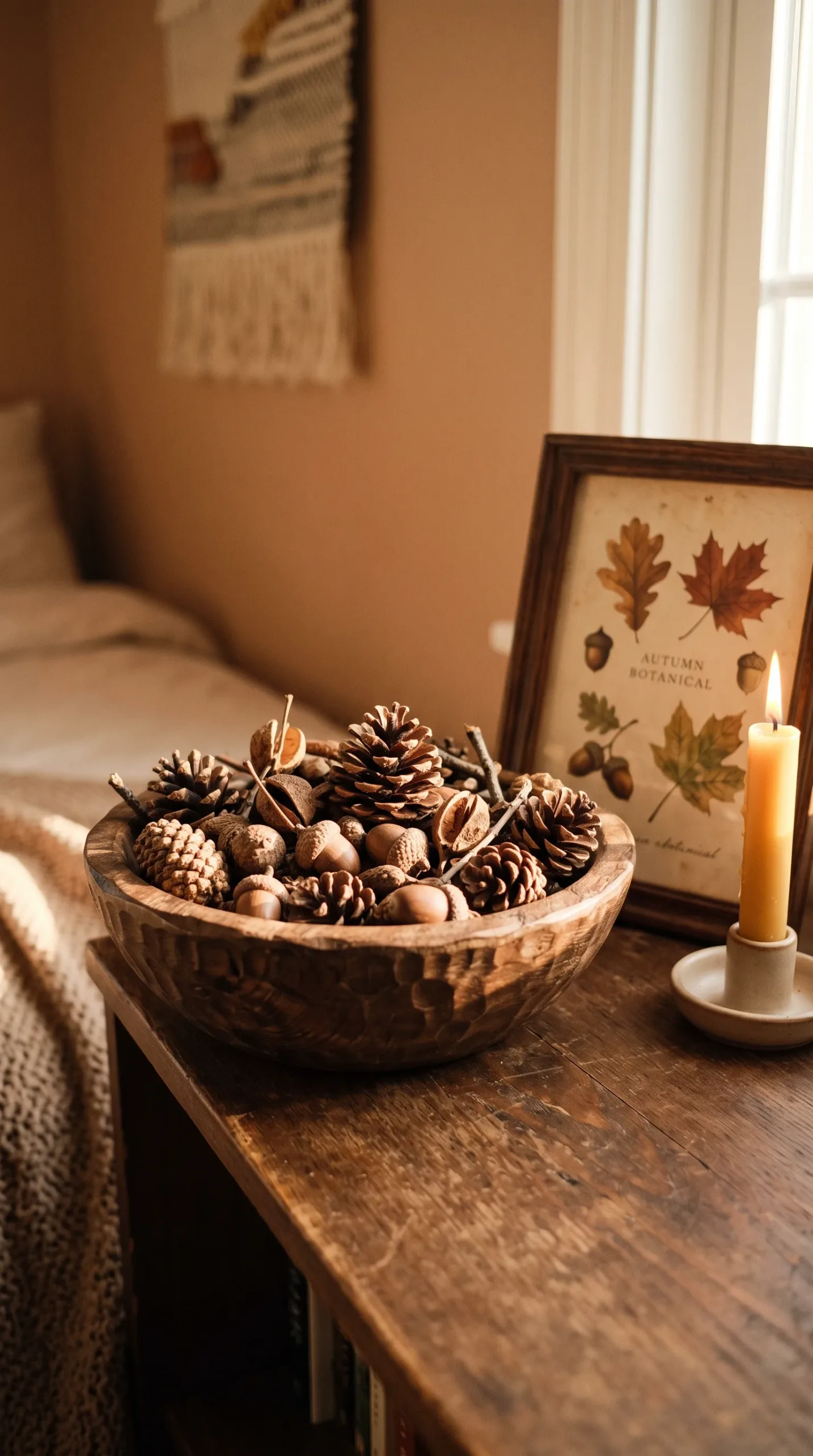
A bowl filled with pinecones, acorns, or dried seed pods is genuinely one of the simplest and most cost-effective autumn bedroom accents you can add, particularly if you live near any parkland or woodland where these materials can be collected for free. The bowl itself matters as much as what goes in it: choose a natural material like carved wood, turned clay, woven rattan, or hammered brass rather than plastic or ceramic in a colour that competes with your palette. A cluster of pinecones in a wooden bowl on a dresser or bedroom shelf looks completely natural and seasonal without screaming autumn in an overt, themed way. For an extra layer of sensory atmosphere, lightly spray the pinecones with a diluted clove or cinnamon essential oil solution before placing them in the bowl, the scent is very subtle but reinforces the seasonal mood. Acorns, walnut shells, dried seed heads, and small stones can all be combined with the pinecones to add textural variety and visual interest to the display. This is genuinely free or close to it if you collect the materials yourself, which makes it one of the most accessible ideas in this entire list regardless of budget.
Heads Up: If you collect pinecones from outdoors, bake them at a low oven temperature for about an hour first to ensure any insects or eggs are eliminated before you bring them inside.
19. Introduce a Macrame or Woven Wall Hanging
Macrame and woven wall hangings have maintained a steady presence in interior design for several years now, and for good reason, they add texture, warmth, and visual interest to a wall in a way that art prints simply cannot replicate. For an autumn bedroom, a macrame wall hanging in natural cotton rope with warm undertones, think undyed cream, warm oat, or a rust-dyed piece, works beautifully above a bed, dresser, or beside a window. The knot patterns in macrame create interesting shadow play during the day when light moves across the wall, adding a layer of depth to the room without any additional decor. Woven wall hangings made from wool or tapestry in earthy tones and geometric or organic patterns are also an excellent autumn option and tend to feel slightly more grounded and less bohemian than traditional macrame if that suits your style better. From a practical standpoint, these pieces are lightweight and easy to hang using a single nail or hook, which makes them a good choice for renters. Price ranges vary widely, handmade artisan pieces from markets or Etsy sellers tend to be more individual and higher quality than mass-produced alternatives, though the cost difference can be significant.
Designer Advice: Keep the rest of the wall clear when you hang a large macrame or woven piece, it works best as a solo statement rather than as part of a gallery wall arrangement.

20. Place a Potted Plant in a Warm-Toned Planter
Plants bring life and freshness to a bedroom in a way that no artificial decor can fully replicate, and pairing them with a warm-toned ceramic or terracotta planter is one of the simplest ways to add an autumn accent to any room. The planter is doing as much design work as the plant itself here, a concrete planter reads quite cool and contemporary, while an unglazed terracotta or earthy matte ceramic planter reads warm and seasonal. For autumn bedrooms, plants with darker, richer foliage work particularly well: deep burgundy nerve plants, dark-leaved rubber plants, maidenhair ferns in moody green, or even a simple trailing pothos in a warm-toned pot. Snake plants and ZZ plants are both popular recommendations from interior designers for low-light bedrooms because they thrive without much direct sunlight, which matters a lot in autumn when the days are shorter and windows provide less natural light overall. A plant placed on a nightstand, windowsill, or the corner of a dresser adds a small but genuinely impactful organic element to the room that connects it to the natural world outside. One limitation worth acknowledging is that some plants are toxic to pets, so if you share your bedroom with a cat or dog, check the specific species before buying.
Quick Tip: Group a small plant in a terracotta pot with a lit candle and a single autumn leaf or pinecone for an instantly styled, season-appropriate surface moment.

Bedding and Furniture Shifts for the Season
21. Switch to Flannel or Satin-Weave Bedding
Bedding is one of the most immediately felt seasonal changes you can make, and in autumn, shifting from lightweight percale or cooling sheets to a heavier flannel or satin-weave fabric is both practical and aesthetically pleasing. Flannel bedding, which is brushed on one or both sides to raise the fibre nap, has a soft, slightly fuzzy texture that traps warmth and feels genuinely different from standard cotton as soon as you slide into bed on a cold autumn evening. For colour choices, flannel is available in a wide range of autumn-appropriate tones and patterns, plaid or tartan in burgundy, green, and navy is a classic option that never really goes out of style for the season, while solid oat, camel, or rust flannel reads as more refined and works across a wider range of bedroom aesthetics. Satin-weave cotton (not to be confused with polyester satin) gives you a slightly silkier feel that is warmer than standard percale but without the casual, cabin-y feel of flannel, it’s a good middle ground for people who want warmth without the texture shift. From a budget perspective, flannel bedding is typically very affordable and widely available, making it one of the easiest seasonal swaps on this entire list.
Reality Check: Flannel bedding does not work well in very warm climates or for hot sleepers, it traps heat effectively, which is the point in a cold bedroom but can be uncomfortable if you run warm.

22. Upgrade to an Upholstered Headboard in a Warm Tone
If you’ve been sleeping against a bare wall or a basic wooden headboard and you’ve been thinking about upgrading for a while, autumn is the right time to do it, and choosing an upholstered headboard in a warm-toned fabric will instantly shift the entire feel of the room. Upholstered headboards in performance velvet, textured boucle, or woven fabric in colours like warm camel, rust, deep olive, or even a soft terracotta add visual weight and a sense of warmth to the bed that wooden or metal alternatives simply cannot. From a design standpoint, a headboard acts as the primary visual anchor of a bedroom, the piece the eye goes to first when you enter. Choosing something substantial and warm-toned for autumn means the whole room benefits from that single decision. Boucle fabric in particular has been widely featured in interiors publications over the past year as one of the key textures of the moment, and it works beautifully in autumn colour palettes because its looped, textured surface catches light warmly. This is a higher-investment item than most of the other ideas in this article, but it is genuinely a long-term piece that will still look relevant and attractive well beyond this autumn season.
Designer Advice: If budget is tight, a DIY headboard made from a plywood base covered in foam and your chosen fabric can be made for a fraction of the cost of a retail version and looks nearly identical.

23. Add a Wooden Bench or Ottoman at the Foot of the Bed
A bench or ottoman at the foot of the bed is one of those furniture pieces that looks designed and intentional in a way that immediately lifts a bedroom’s overall aesthetic, and in autumn, choosing one in a warm material makes it even more effective. A slatted or turned-leg wooden bench in a warm walnut or dark oak finish works particularly well because it adds visual weight and grounded warmth to the foot of the bed, which is often the part of the room that feels unfinished. An upholstered bench in a textured fabric, boucle, velvet, or herringbone tweed, is another excellent option and serves the additional practical purpose of giving you somewhere to sit while putting on shoes or laying out the next day’s clothes. From a proportion standpoint, the bench should be roughly two thirds the width of the bed frame, a bench that is too narrow looks lost, while one that matches the full width can overwhelm the space. Budget-wise, benches range from very affordable flat-pack timber options to investment-level custom upholstered pieces, so there is really something at every price point. In smaller bedrooms, a folding wooden stool or a compact wicker ottoman can fulfil a similar visual function without taking up as much permanent floor space.
Heads Up: Measure the distance between the foot of the bed and the nearest wall before buying a bench, you need at least 60 centimetres of clearance to walk around comfortably.

24. Lean a Large Mirror Against a Warm-Toned Wall
A large leaning mirror is one of the most effective and versatile pieces you can add to a bedroom at any time of year, but it works especially well in autumn because it reflects warm lamplight back into the room, effectively doubling the visual warmth of your lighting setup. The leaning format, propped against a wall rather than wall-mounted, has been a consistently popular interior design choice for several years because it looks considered without being precious, and it can be moved and repositioned easily without leaving holes in the wall. For autumn, choose a mirror with a frame in warm brass, aged gold, rattan, or dark wood, all of these materials complement autumn colour palettes well and add their own textural interest even when the mirror is not reflecting anything particularly interesting. Positioning the mirror where it will catch and bounce back the light from a floor lamp or bedside lamp will have a noticeably warming effect on the room’s overall atmosphere after dark. In terms of scale, a leaning mirror should ideally be at least 120 to 150 centimetres tall to look properly proportional against a standard bedroom wall, smaller mirrors in this format can look slightly unresolved. This ranges from budget-friendly to mid-investment depending on the frame quality and mirror size you choose.
Pro Move: Position a leaning mirror opposite your warmest light source so it bounces golden lamplight across the room, the effect is significantly more atmospheric than you’d expect for such a simple adjustment.

Wrapping It Up
Decorating your bedroom for autumn doesn’t require a full overhaul, a large budget, or a weekend’s worth of rearranging. The ideas in this article range from genuinely free, collecting pinecones, pressing leaves, to more considered investments like a new headboard or velvet drapes, and everything in between. The most effective autumn bedrooms tend to be the ones where a few ideas have been done really well rather than twenty ideas done halfway. Pick the ones that feel most natural to your existing space and your personal style, and resist the urge to add everything at once. Autumn decorating is really just about amplifying what’s already there, warmth, texture, weight, and a sense of being properly settled in a room that knows what season it is. Start with the lighting and the layered bedding if you’re not sure where to begin, since those two changes alone will make a more immediate and dramatic difference than almost anything else on this list. The rest can follow as the season does.
Frequently Asked Questions
What are the best autumn colours for a bedroom?
The most popular and versatile autumn bedroom colour palette is built from earthy, warm tones: burnt orange, terracotta, rust, mustard yellow, deep forest green, burgundy, caramel, and warm neutrals like oat and sand. You don’t need to use all of these, picking two or three and building around them with neutrals tends to create a more cohesive and liveable result than trying to use the full seasonal spectrum at once.
How do I make my bedroom feel cosy without spending a lot of money?
Some of the most impactful autumn bedroom changes are genuinely low-cost or free. Switching to warm amber light bulbs, adding a chunky knit throw over your existing duvet, collecting pinecones and displaying them in a bowl, and pressing leaves for simple framed art all cost very little but create a noticeable shift in the room’s atmosphere. Candles, even budget ones in seasonal scents, also make an immediate difference at very low cost.
What fabrics work best for autumn bedroom bedding?
Flannel, velvet, boucle, and heavier linen are all excellent fabric choices for autumn bedrooms because they have more visual and physical weight than the lightweight materials that work better in summer. Flannel is the most affordable and practical option for most people. Velvet adds the most visual impact. Boucle is currently very on-trend and works well in a headboard or throw pillow rather than full bedding. Cotton-blend knits for throw blankets offer the best combination of texture, warmth, and easy care.
How do I decorate an autumn bedroom in a small space?
Small bedrooms can actually benefit from autumn decorating because warm tones and rich textures make a compact room feel more intentional and considered rather than just small. Focus on a single accent colour, layer your existing bedding rather than buying entirely new pieces, use wall-based decor like a dried wreath or framed botanical prints to avoid taking up floor space, and invest in warm lighting to create depth without visual clutter. Avoid going too dark on the walls in a small room with limited natural light, as it can shrink the space visually.
When should I start decorating my bedroom for autumn?
Most interior designers and styling bloggers start transitioning to autumn decor from early to mid-September onward, which aligns with the seasonal shift in most of the northern hemisphere. That said, there is no rule, if you want to put a chunky knit throw on the bed in August because it makes you happy, the only person stopping you is you. The autumn bedroom palette typically transitions naturally into winter decor rather than needing a sharp seasonal change, so many of these ideas will continue to look appropriate all the way through to January.
What autumn scents work well in a bedroom?
Cedarwood, sandalwood, clove, amber, vanilla, cinnamon, and patchouli are all widely used in autumn-season candles and diffuser blends for bedrooms. For sleeping environments specifically, softer, warmer scents like sandalwood, amber, and vanilla tend to work better than sharp spice-forward notes like straight cinnamon or clove, which can be slightly stimulating for some people at night. If you use a diffuser rather than candles, you have more control over the intensity, which is useful in a bedroom where fragrance can accumulate quickly in a small, enclosed space overnight.