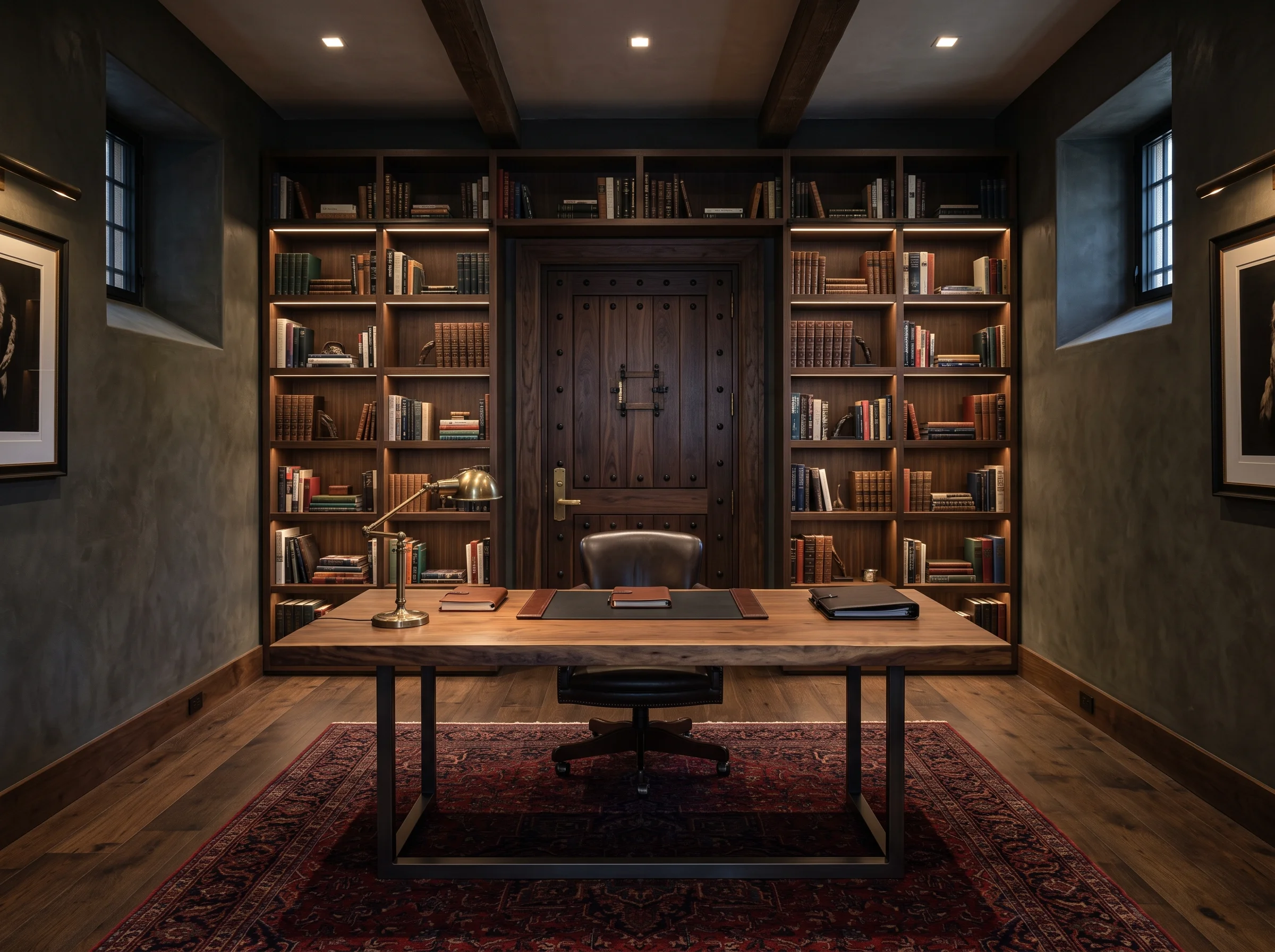
The Architecture of Deep Work: 24 Closed-Door Home Office Ideas
The open-concept floor plan is a complete and utter disaster for human productivity. Attempting to execute highly complex, deeply focused cognitive work while sitting at a kitchen island surrounded by barking dogs, loud televisions, and boiling pasta water is a psychological nightmare. To achieve true deep work, you absolutely must establish a fierce, uncompromising physical boundary between your professional life and your personal home. You need a closed-door home office. However, designing a private office is not simply about shoving a desk into a spare bedroom; it is a highly rigorous exercise in acoustic management, visual psychology, and architectural discipline.
To help you build the ultimate productivity sanctuary, we have completely abandoned the standard, boring listicle format. Instead, this article is structured as twelve aggressive, head-to-head architectural battles. Every single design decision in a home office comes with a massive structural trade-off. We have pitted twenty-four brilliant home office ideas directly against each other (Idea A versus Idea B) so you can clearly see the brutal realities of your choices. By navigating these twelve fierce battles, you will engineer a closed-door office that violently protects your focus and commands massive professional respect.
BATTLE 1: The Acoustic Boundary
The physical door is the most critical component of the entire office. It must violently reject exterior noise.
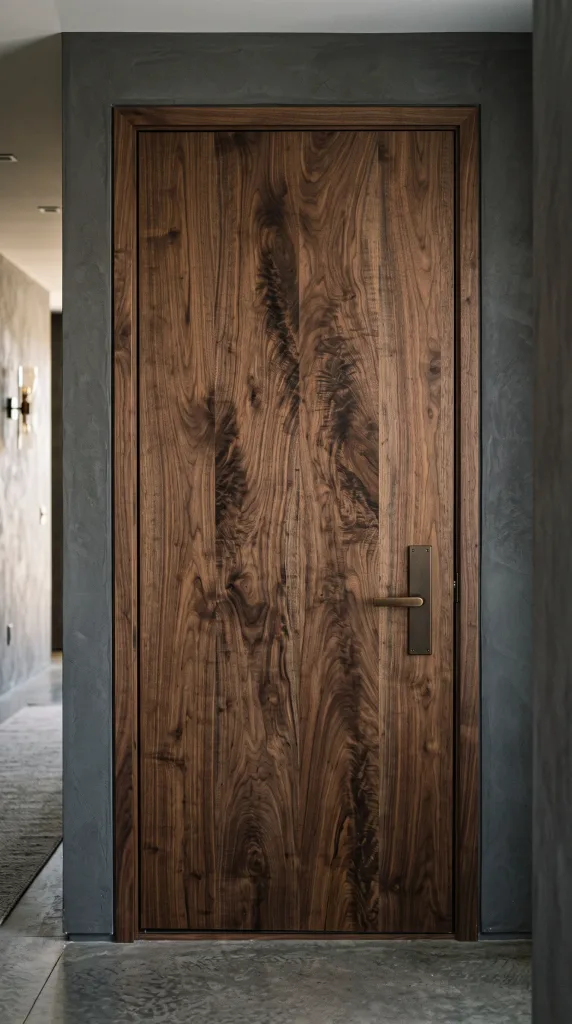
Idea 1: The Solid Core Walnut Slab
If your home is incredibly chaotic, you must completely abandon hollow-core doors. A hollow door is essentially two pieces of cheap cardboard filled with air; it stops zero sound. You must install a massive, wildly heavy, solid-core slab of natural walnut. The sheer physical density and massive weight of the solid wood block violently deaden high-frequency noises, completely trapping the screaming children and barking dogs outside.
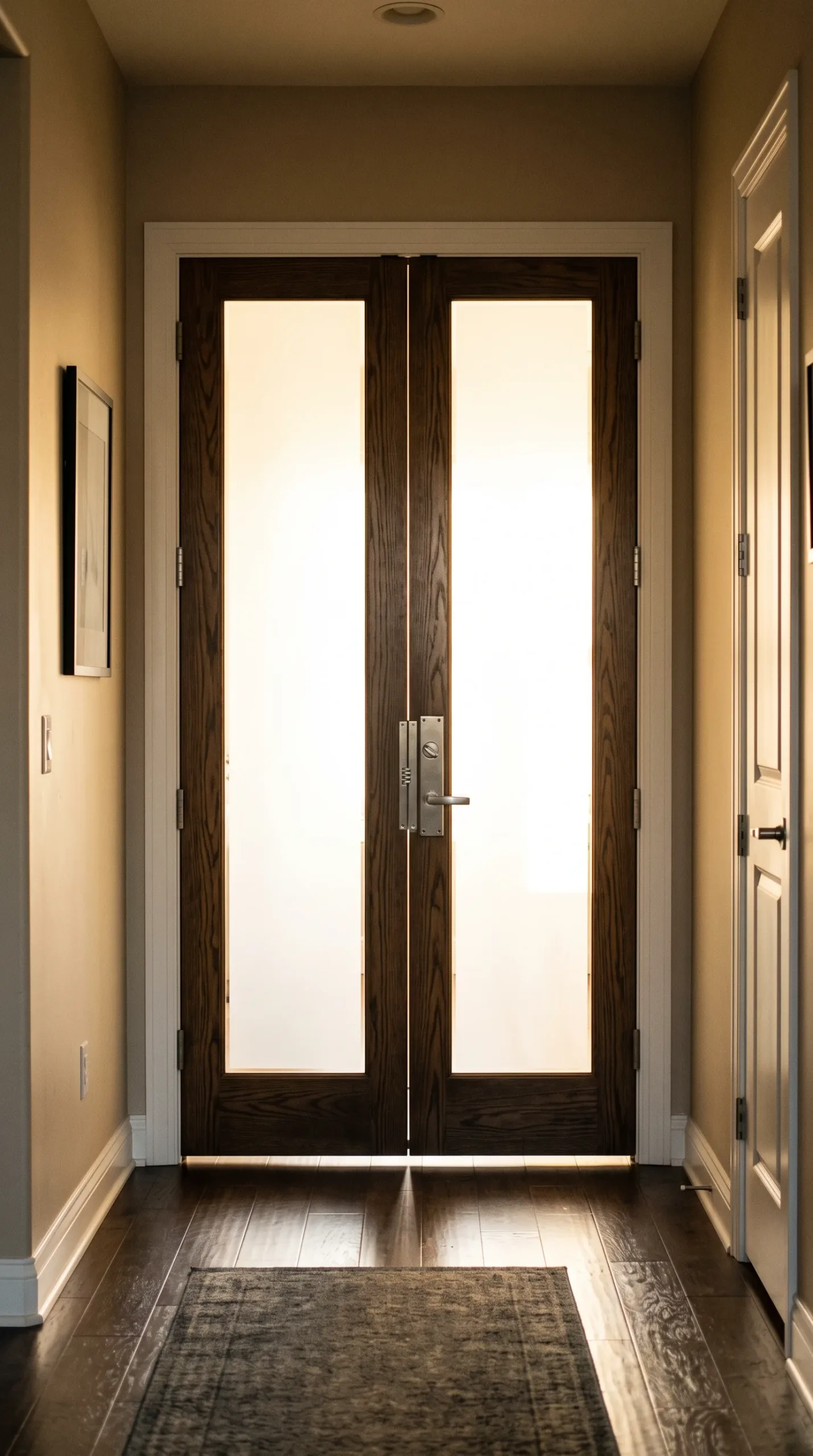
Idea 2: Frosted Acoustic Glass French Doors
If a solid wooden door makes your tiny office feel like a terrifying, claustrophobic prison cell, you must utilize glass. However, standard single-pane glass leaks sound like a sieve. You must explicitly order heavy-duty, double-paned acoustic glass French doors with a frosted finish. The heavy acoustic glass violently rejects exterior noise, while the frosted treatment completely hides your messy desk from guests while still allowing massive amounts of bright ambient light to flood into the dark hallway.
The Verdict: Solid Core Walnut violently wins for pure acoustic isolation. Glass wins for architectural lighting. If you require absolute silence for podcasting, buy the solid wood block.
BATTLE 2: The Floor Plan Orientation
Where you place the desk completely dictates your psychological authority in the room.
Idea 3: The Freestanding Command Position
In the highly aggressive world of corporate design, facing the wall is an act of total submission. To violently establish professional authority, you must float a massive, heavy freestanding desk directly in the dead center of the room, completely facing the closed door. This ‘command position’ ensures nobody can ever sneak up behind you, giving you total psychological dominance over the architectural space.
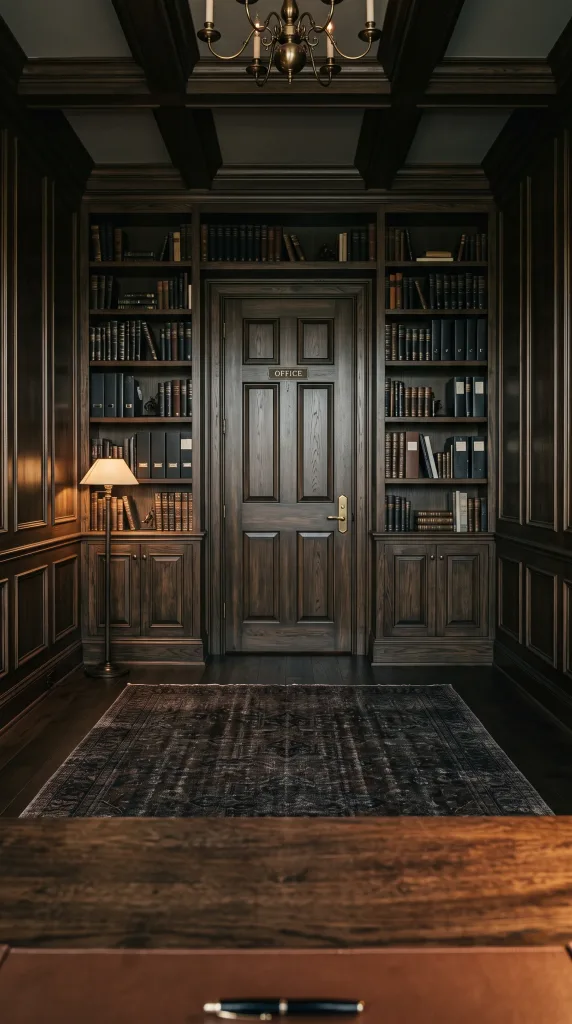
Idea 4: The Wall-To-Wall Built-In Credenza
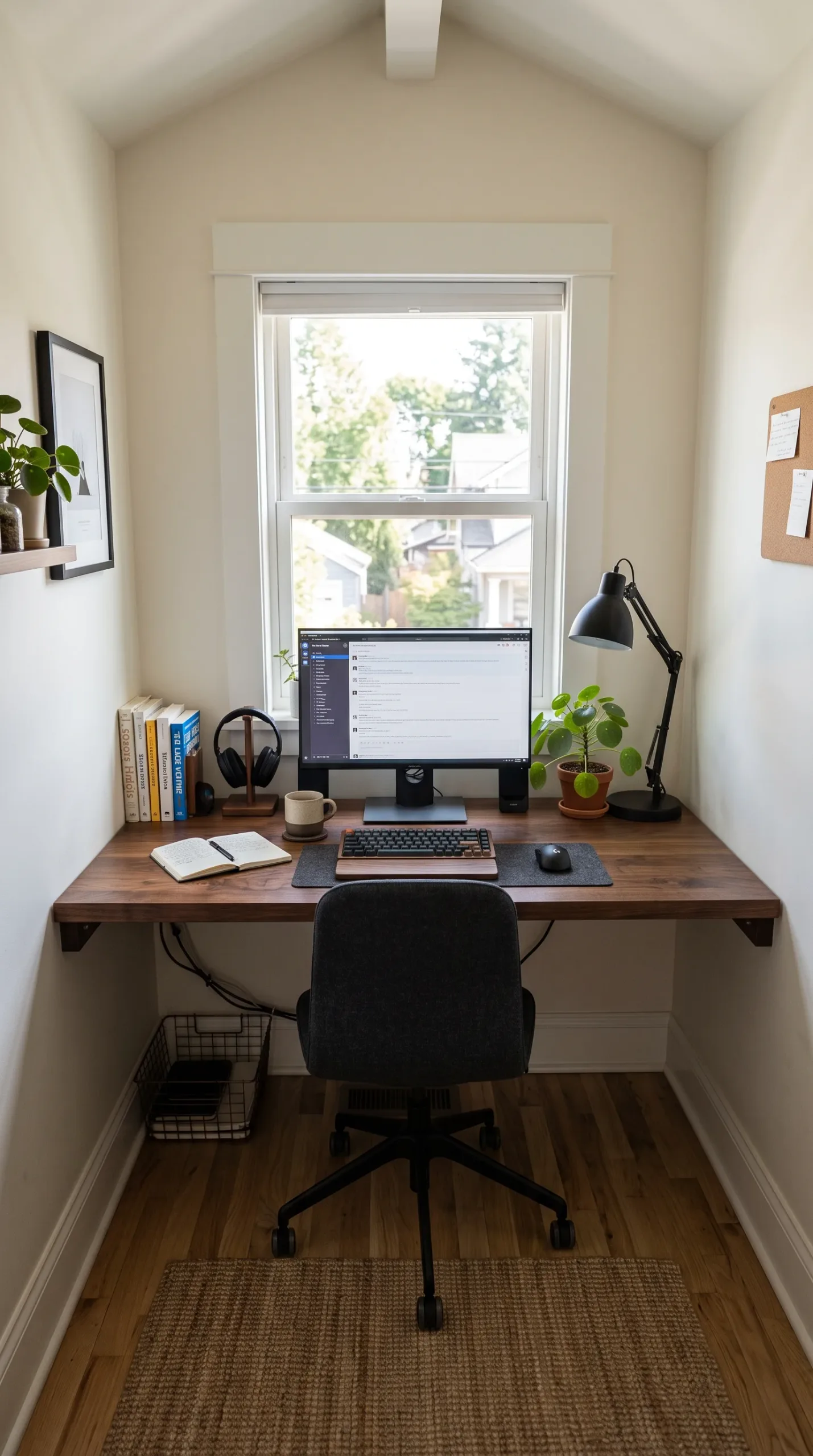
If your closed-door office is terrifyingly small (like a converted ten-foot spare bedroom), a floating desk will violently destroy all usable floor space. You must hire a skilled carpenter to build a massive, continuous wooden credenza desk physically bolted to the wall, stretching completely from one side of the room to the other. This seamless architectural built-in aggressively maximizes the square footage, providing massive surface area for multiple monitors without crowding the tight room.
Command Position Rules:
- You absolutely must hide your computer wires; seeing a chaotic rat’s nest of black cables hanging off the back of a floating desk looks wildly unprofessional.
- Install a hidden brass floor outlet directly under the center desk to legally and safely run power without tripping over extension cords.
- Ensure you have exactly thirty-six inches of clearance behind the desk to physically roll your chair backward without hitting the wall.
BATTLE 3: The Video Call Background
In the modern era, the wall directly behind your desk is a heavily curated marketing billboard.
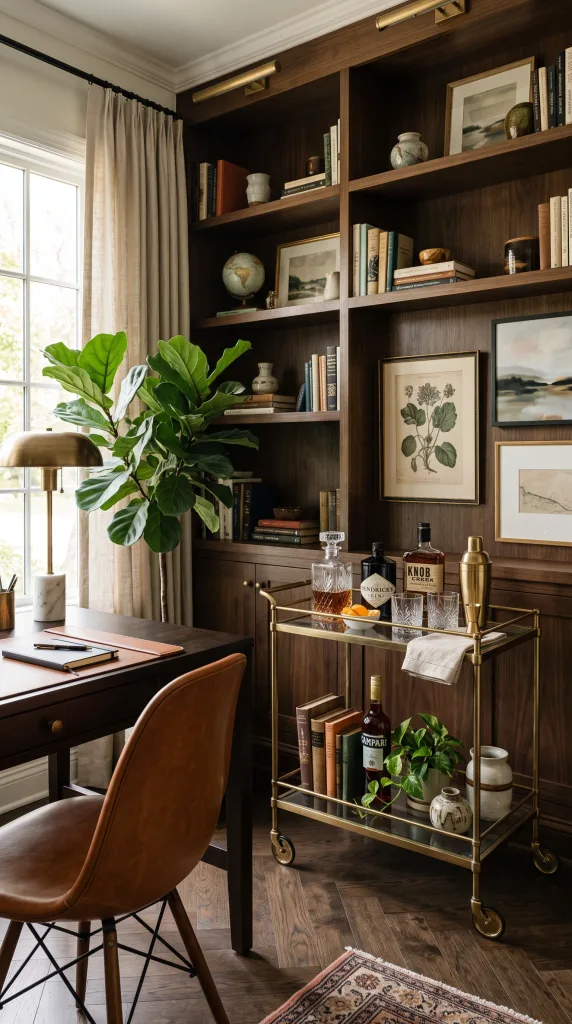
Idea 5: The Floor-to-Ceiling Library
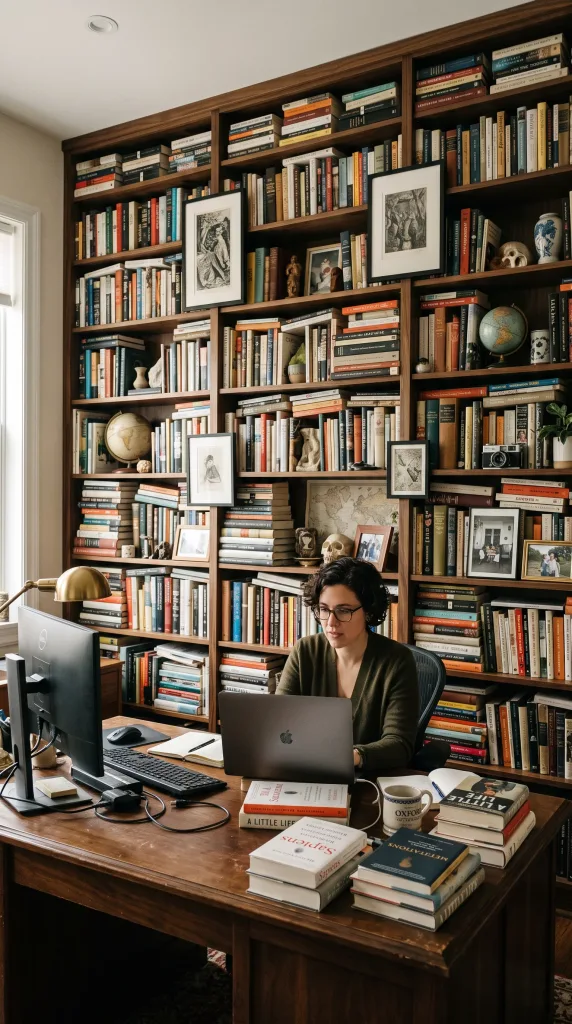
To project massive intellectual authority during a high-stakes video call, completely cover the wall behind your desk in floor-to-ceiling built-in wooden bookshelves. Fill the shelves heavily with thick, hardcover books, vintage pottery, and curated art. This chaotic, highly textured background violently communicates deep intelligence and highly tailored bespoke luxury, acting as the ultimate professional set design.
Idea 6: The Monolithic Plaster Wall
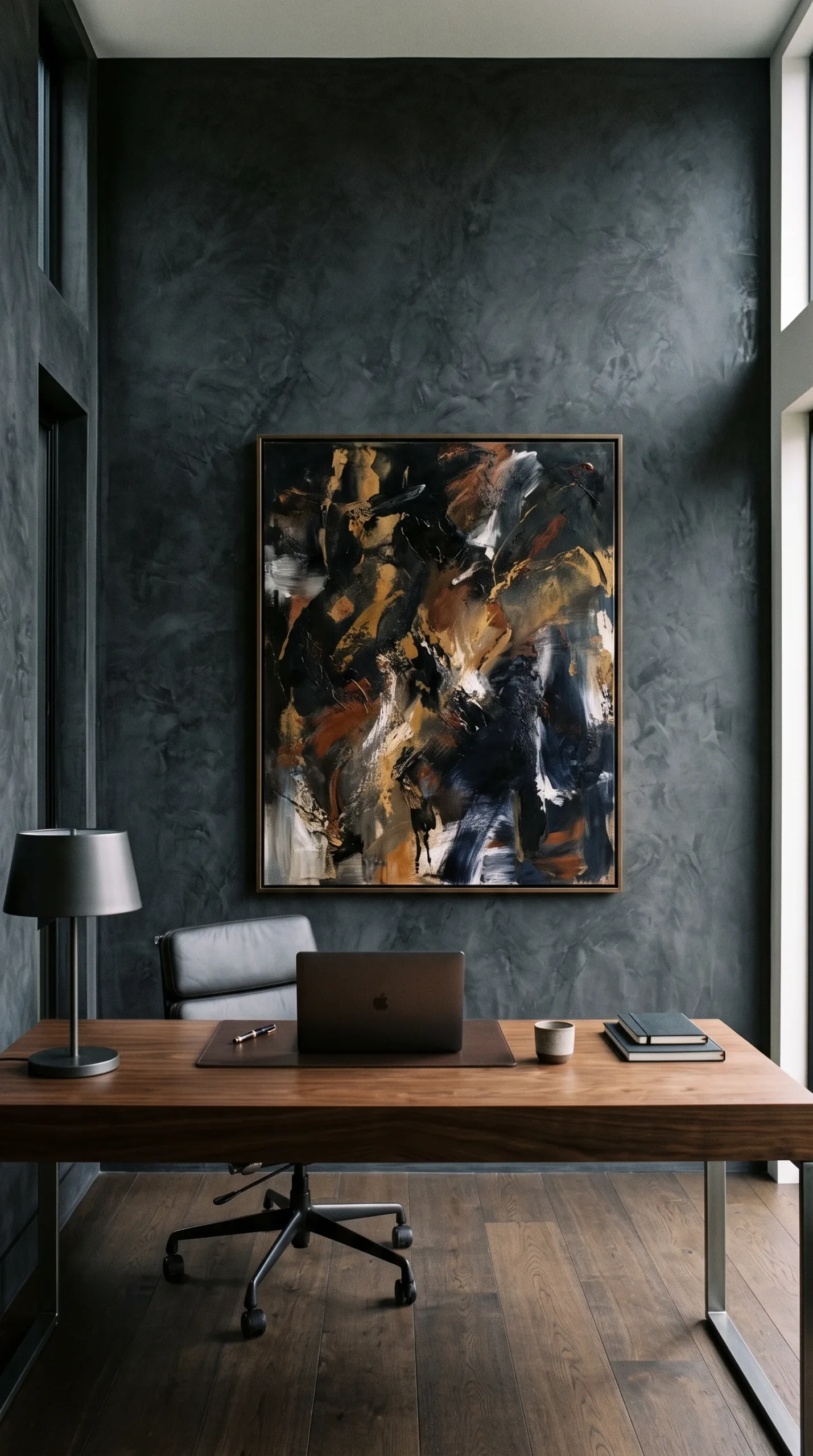
If you find massive bookshelves highly distracting, you must aggressively swing the opposite direction. Meticulously hand-trowel the wall behind your desk in a dark, moody Venetian plaster and leave it completely blank, except for one singular, wildly expensive piece of modern art. This fierce, minimalist restraint violently forces the viewer to focus entirely on your face during a video call, establishing a highly intense, deeply focused, unyielding aesthetic.
Lighting Warning: If you build a massive dark library behind you, the webcam will violently struggle to balance the exposure, making your face look like a terrifying dark shadow. You absolutely must heavily light the bookshelves with hidden LED strips to separate yourself from the dark background.
BATTLE 4: The Lighting Strategy
Bad lighting violently destroys the human eye over an eight-hour shift. You must aggressively engineer your photons.
Idea 7: The 5000K Daylight Flood
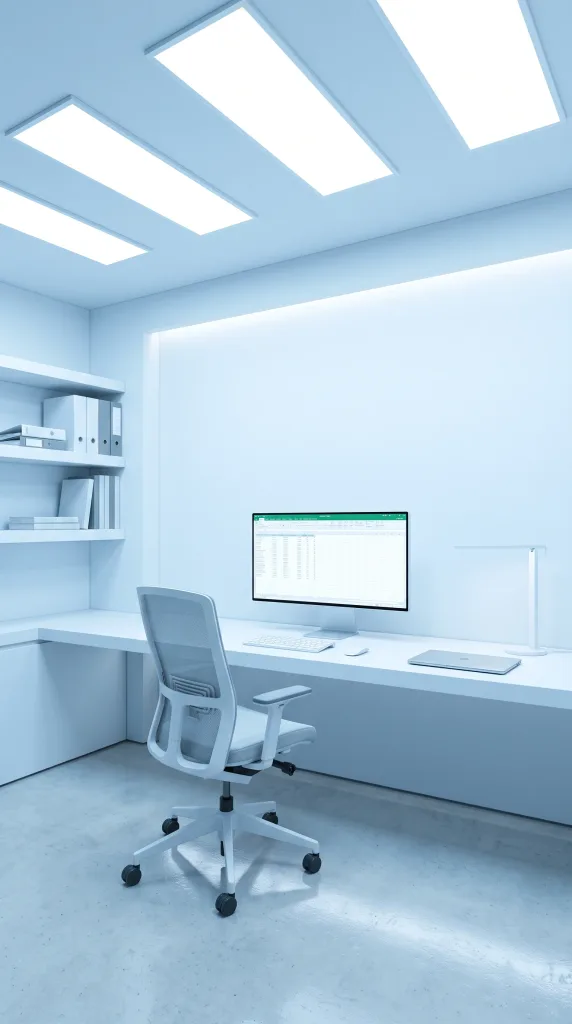
If you are a graphic designer or architect executing highly color-critical work, warm moody lighting is a disaster. You must aggressively install bright, highly accurate 5000K ‘Daylight’ LED panels flush into the ceiling. This harsh, incredibly crisp, blue-tinted light violently mimics the midday sun, aggressively shutting down your melatonin production and forcing your brain into a state of hyper-alert, terrifyingly intense productivity.
Idea 8: The 2700K Moody Task Sconce
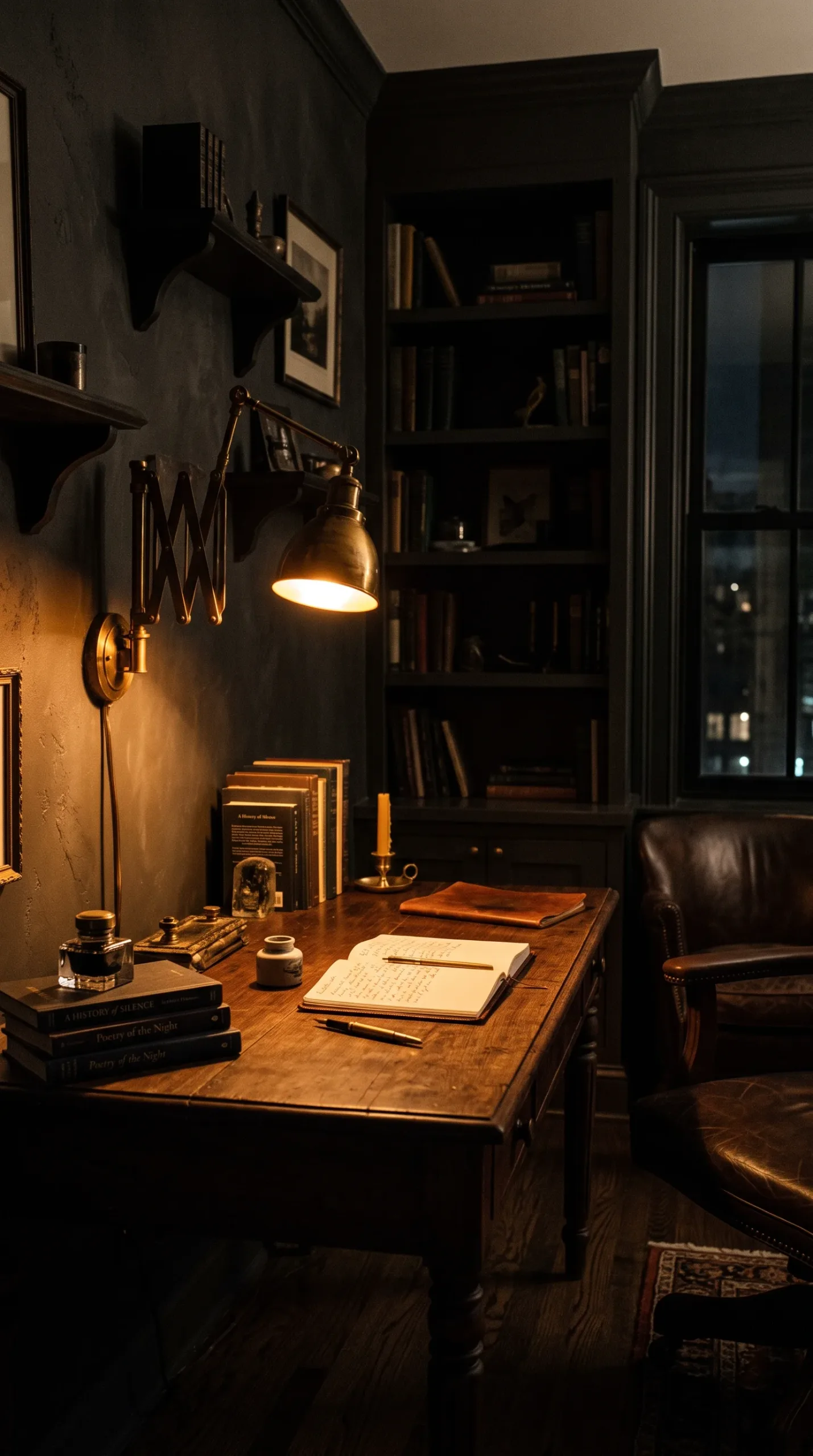
If you are a writer or software engineer who stares at a glowing screen all day, harsh overhead lighting will violently trigger a massive migraine. You must aggressively turn off the overhead lights completely and rely strictly on heavy brass articulating wall sconces emitting a deeply warm 2700K amber glow. This highly focused, romantic task light heavily reduces eye strain and creates a deeply comforting, warmly isolated cocoon.
Lighting Q&A: Glare Control
Question: How do I stop the desk lamp from violently glaring on my computer monitor? Answer: You must aggressively utilize ‘bias lighting.’ Mount a cheap, warm LED strip physically behind your computer monitor, glowing backward onto the wall. This violently reduces the harsh contrast between the bright screen and the dark room, instantly saving your retinas.
BATTLE 5: Extreme Acoustic Deadening
A closed door stops noise from entering, but you must also stop your own voice from violently echoing inside the room.
Idea 9: Massive Upholstered Wall Panels
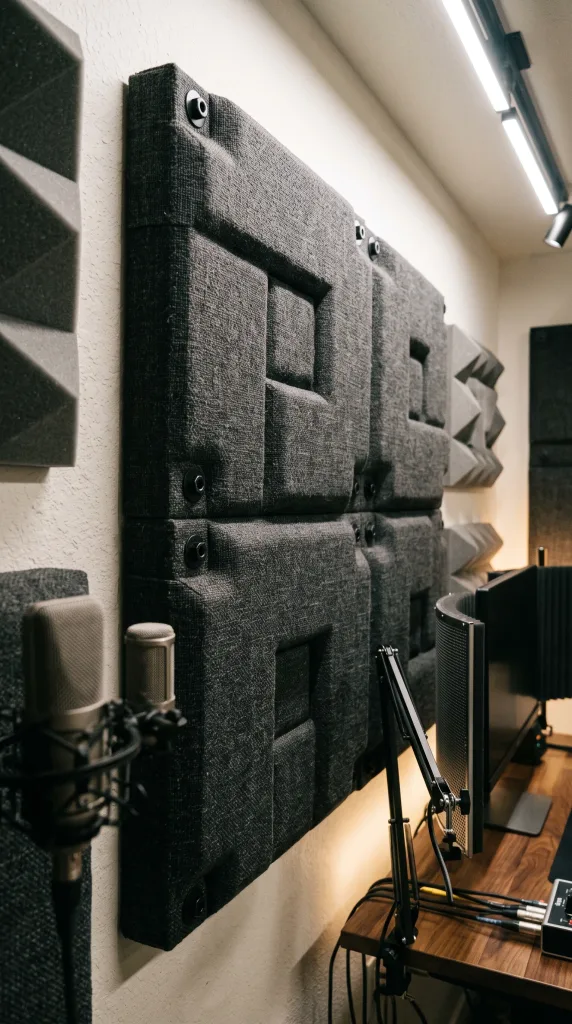
If your home office features stark hardwood floors and empty drywall, your voice will violently bounce around the room like a terrifying squash court during a video call. You must hire an upholsterer to build massive, heavy fabric panels stuffed entirely with thick acoustic foam. Bolting these massive soft panels directly to the walls violently absorbs high-frequency soundwaves, making your microphone sound like a fiercely expensive recording studio.
Idea 10: Thick Double-Layered Velvet Drapes
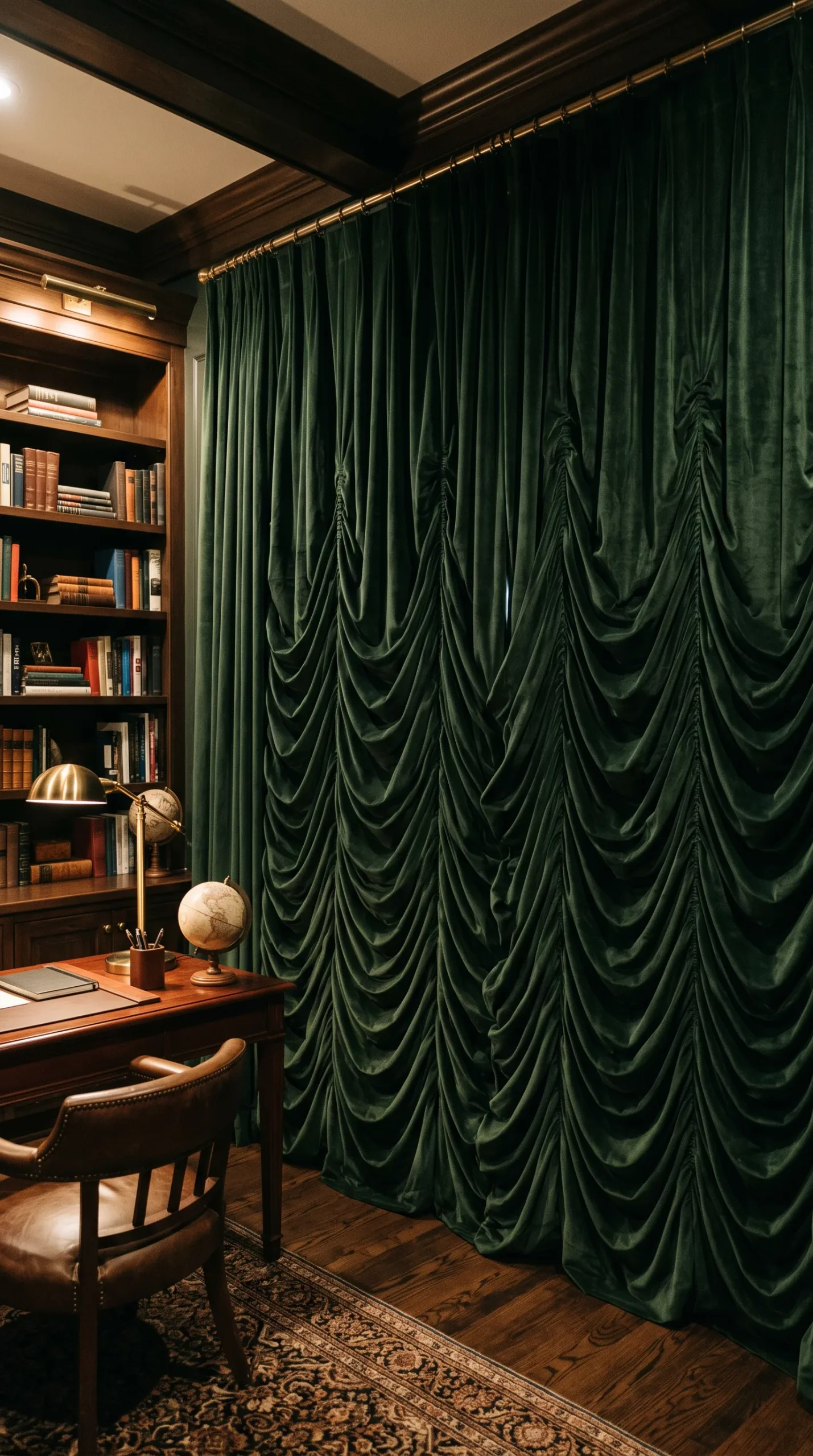
If custom acoustic panels are too expensive, you must heavily rely on massive textiles. Install incredibly heavy, floor-to-ceiling, double-lined velvet drapes across the entire window wall. Even when pulled completely shut, the massive, thick folds of the heavy velvet violently catch and kill the chaotic soundwaves in the room, deeply silencing the terrifying echoes while injecting massive theatrical luxury.
Acoustic Treatment Cost Matrix
| Treatment Type | Echo Reduction | Visual Aesthetic |
| Custom Foam Wall Panels | Maximum Deadening | Highly Architectural/Modern |
| Heavy Velvet Drapes | Moderate Deadening | Deeply Romantic/Historic |
| Thick Wool Persian Rug | Floor Bounce Control | Highly Traditional/Grounded |
BATTLE 6: The Hidden Office Concept
If you cannot dedicate an entire room to an office, you must fiercely engineer a highly hidden ‘closed-door’ solution.
Idea 11: The Pocket-Door Cloffice
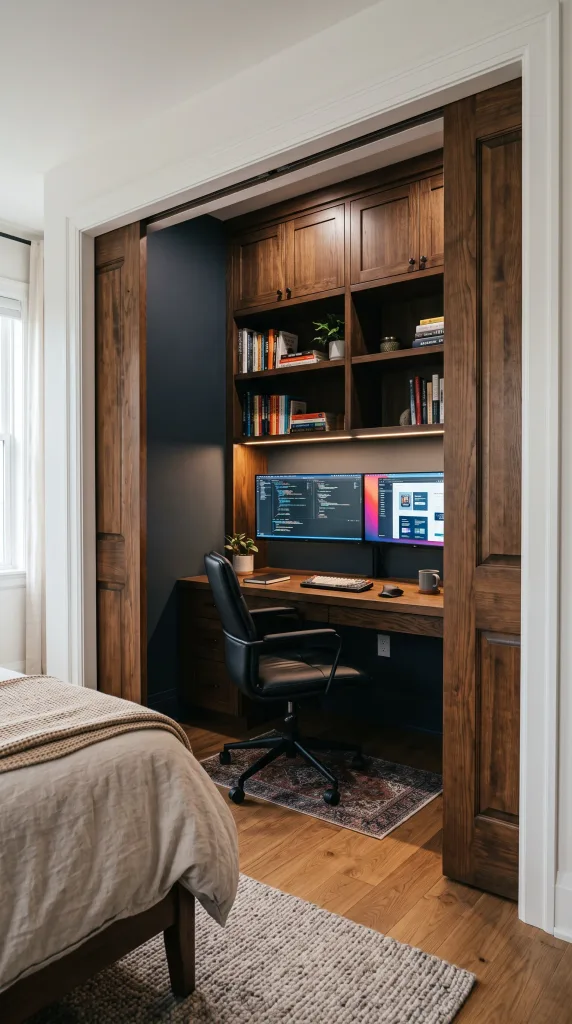
If you are forcing an office into a massive bedroom closet, standard swinging doors will violently block the hallway. You must aggressively rip open the drywall and install heavy-duty pocket doors that physically slide completely into the walls. This fiercely brilliant architectural move allows you to instantly hide your messy desk and computer monitors behind a solid wooden boundary without sacrificing a single inch of usable floor space.
Idea 12: The Monolithic Armoire Cabinet
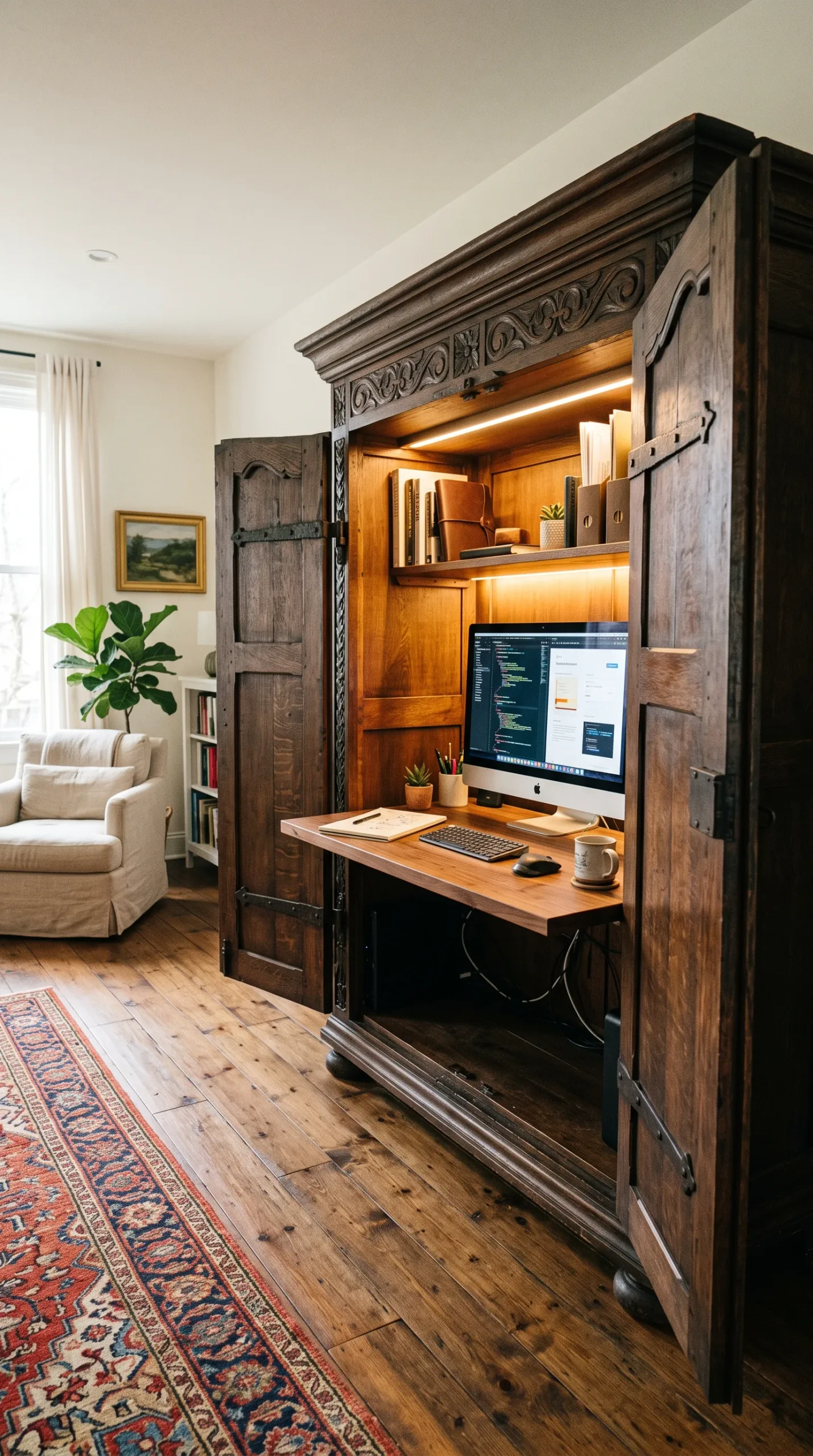
If you are trapped in a small living room with absolutely no closets, you must utilize heavy furniture. Buy a massive, heavily built, wildly expensive wooden armoire. When the heavy wooden doors are violently pulled open, they reveal a fully functioning desk, computer, and hidden printer. The absolute second you finish working, you aggressively slam the heavy wooden doors shut, instantly erasing the office and returning the room to a completely relaxing living space.
Hidden Office Execution Rules:
- You absolutely must drill massive ventilation holes in the back of the armoire; a running computer inside a closed wooden box will violently overheat and melt the hardware.
- Install an automatic shut-off switch on the closet doors so the bright desk lamp violently turns off the exact second the doors are closed, preventing a massive fire hazard.
BATTLE 7: The Wall Color Psychology
The paint color surrounding you violently dictates your daily emotional state.
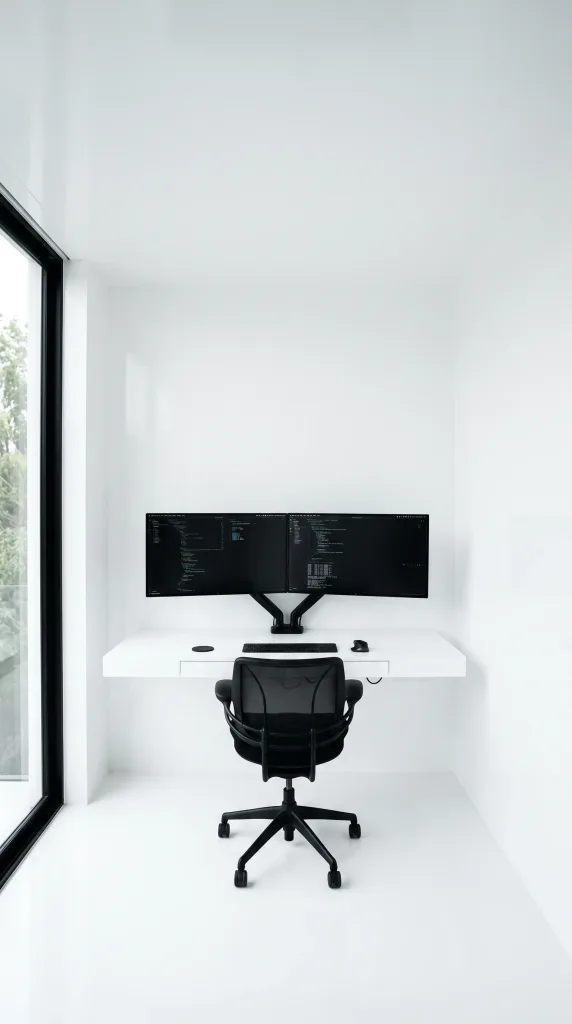
Idea 13: Stark Brilliant White
If your highly chaotic job requires looking at massively complex spreadsheets and colorful data all day, a dark painted wall will violently fatigue your brain. You must rigorously paint the entire office in a completely stark, highly reflective brilliant white. The massive white void acts as a fierce visual palate cleanser, completely removing all architectural distractions and allowing your brain to hyper-focus strictly on the data.
Idea 14: Deep Saturated Navy Blue
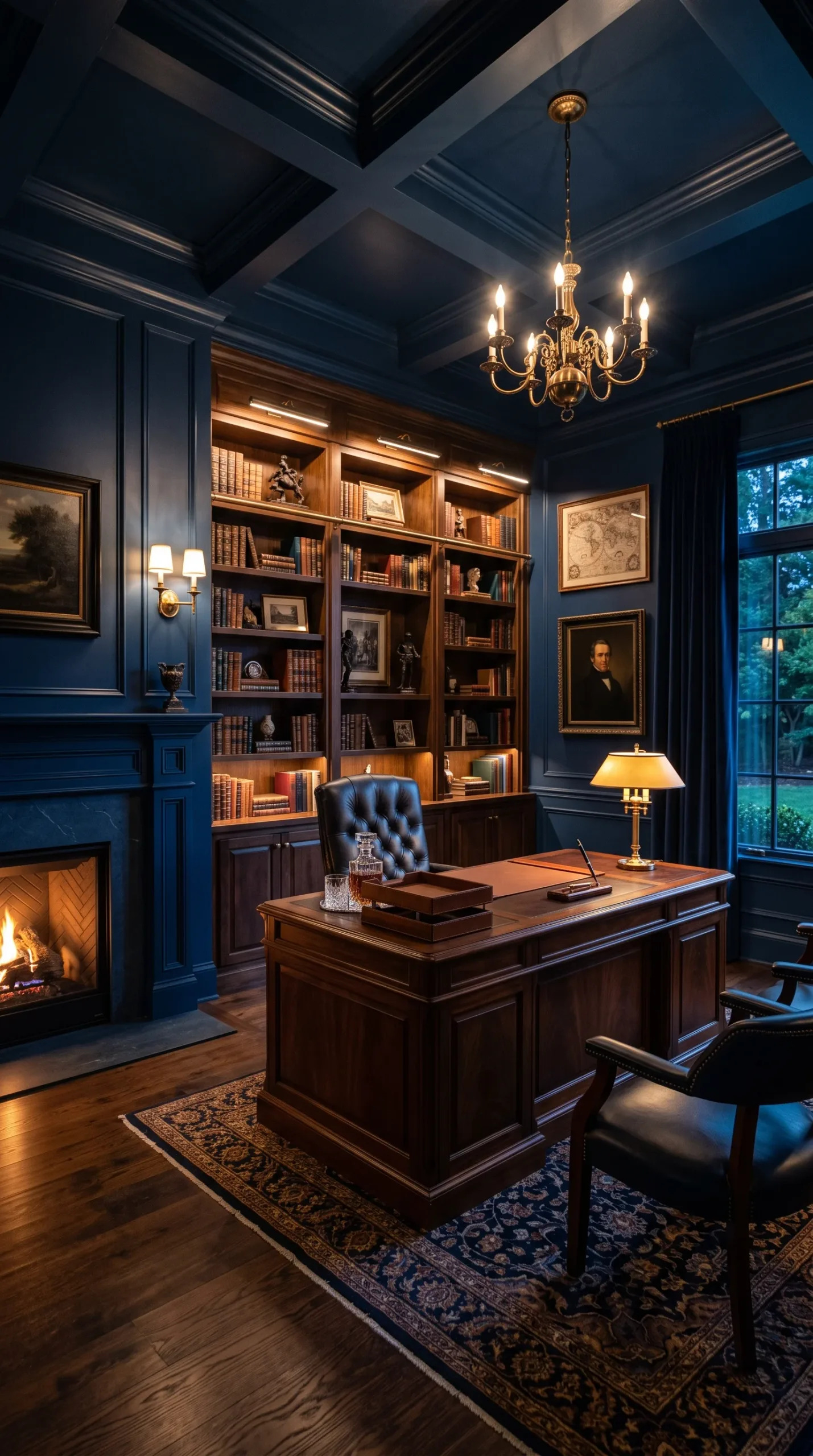
If you are a creative executive who needs to project massive authority, white walls look cheap and terrifyingly sterile. You must violently drench the entire room—baseboards, walls, and ceiling—in a deeply saturated, dark navy blue or heavy hunter green. The incredibly dark, moody cocoon violently lowers your blood pressure, highly elevates the perceived luxury of the room, and flawlessly highlights warm wooden furniture.
The Verdict: If you crave absolute clinical focus, Brilliant White violently wins. If you crave deep, immersive psychological comfort and high-end luxury, Dark Navy destroys white.
BATTLE 8: The Desk Chair
The object you physically sit on for eight hours is the most highly critical ergonomic investment you will ever make.
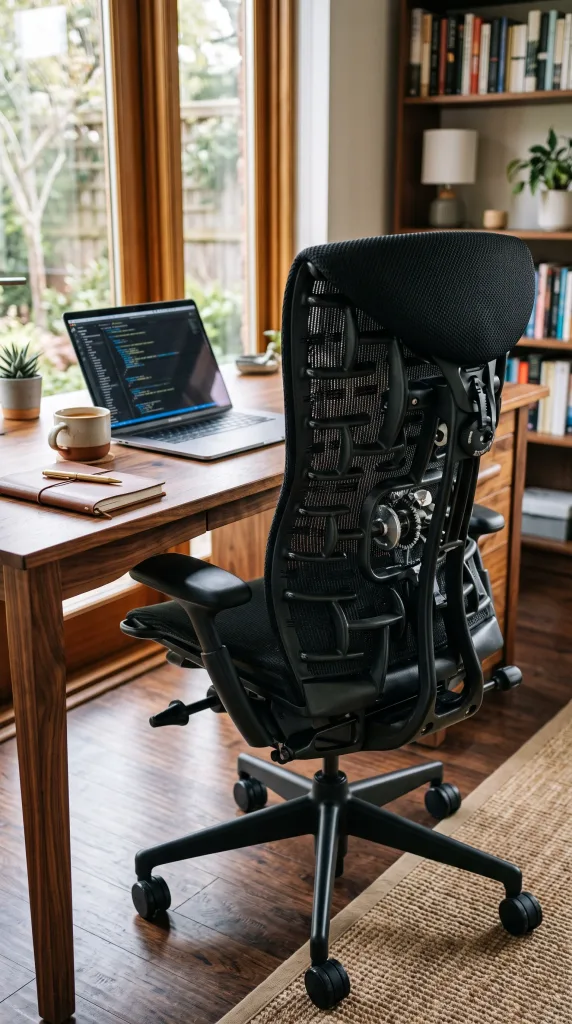
Idea 15: The High-Tech Ergonomic Mesh
If you suffer from terrifying lower back pain, a beautiful chair is a completely useless object. You must aggressively invest over a thousand dollars in a highly engineered, fiercely mechanical mesh ergonomic chair (like a Herman Miller Aeron). The intensely breathable mesh and highly adjustable lumbar gears violently force your spine into perfect, rigid medical alignment, allowing you to execute twelve-hour coding sessions without physical decay.
Idea 16: The Vintage Leather Wingback
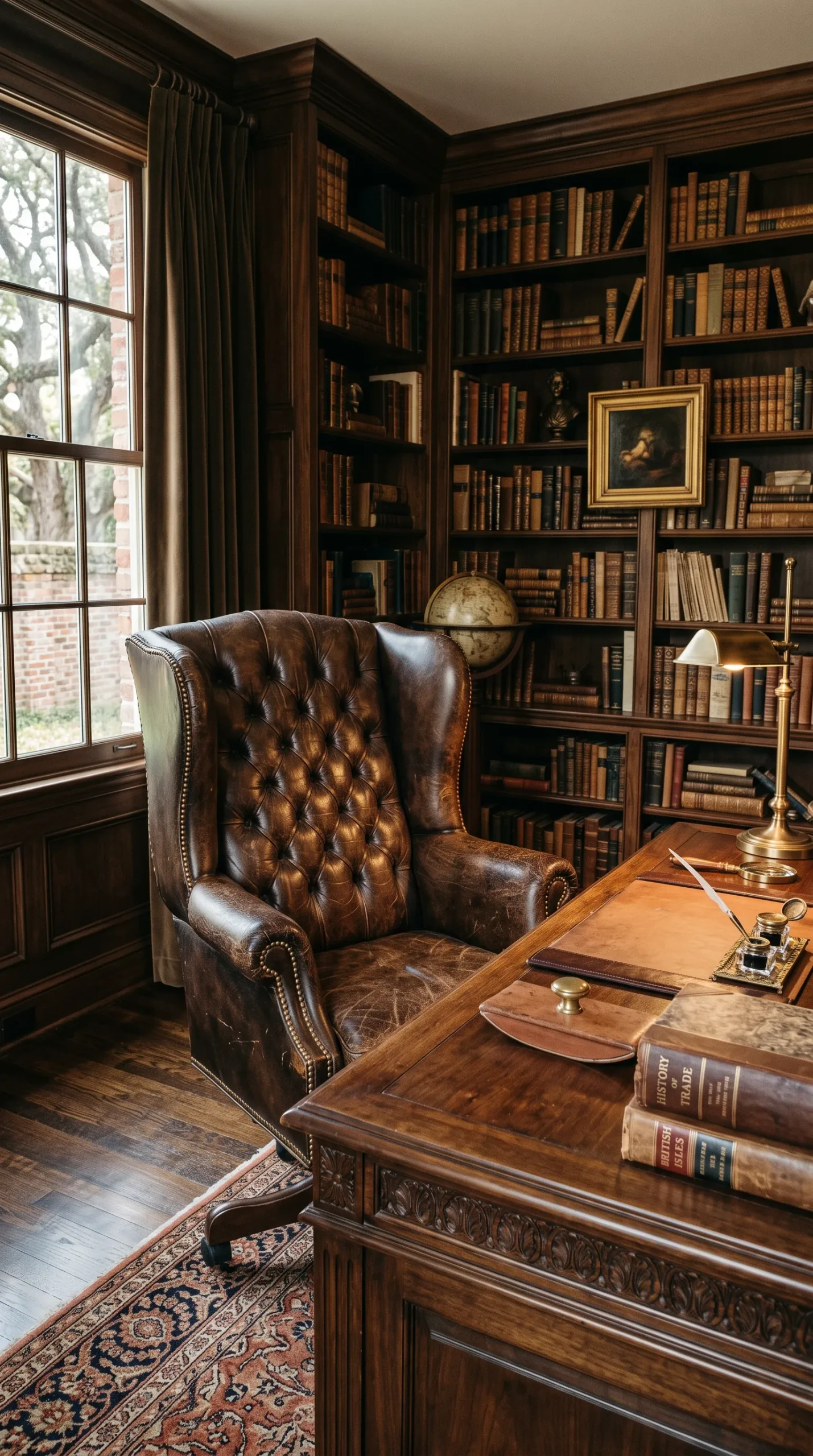
If you primarily read documents and take phone calls, a hyper-modern plastic mesh chair violently ruins the historic luxury of your dark wooden office. You must heavily ground the room with a massive, highly tufted, deeply worn vintage leather wingback executive chair. The massive heavy leather arms and fiercely historic silhouette command ultimate respect and provide a deeply enveloping, wildly comfortable seating experience.
Medical Reality: A massive leather executive chair violently lacks lower lumbar support. If you sit hunched over a keyboard in a massive leather recliner, you will violently destroy your L4 discs. Leather chairs are strictly for leaning backward and talking.
BATTLE 9: The Flooring Boundary
The floor of the home office must handle the violent friction of rolling chairs.
Idea 17: Hardwood with a Hand-Knotted Persian Rug
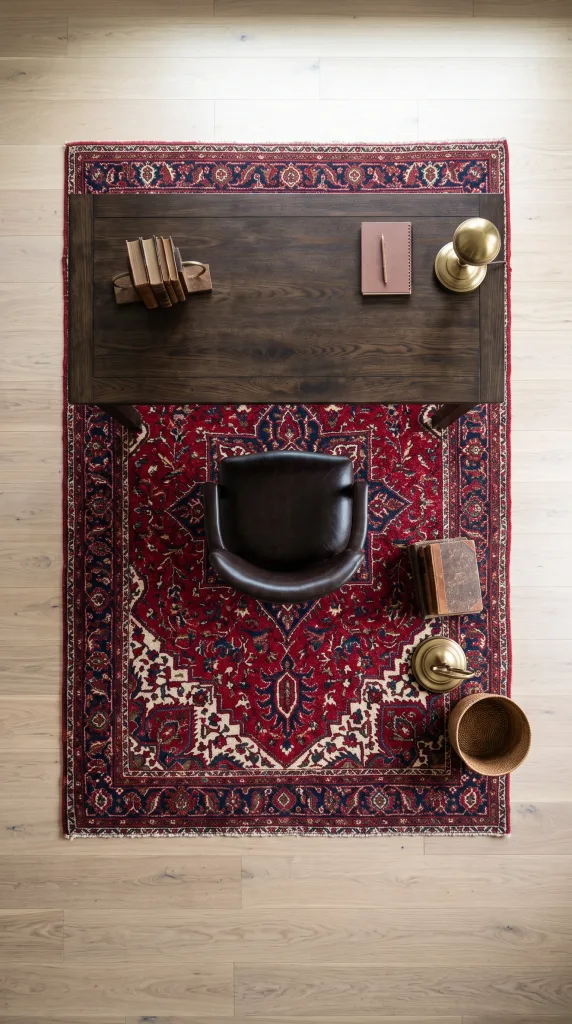
For the absolute pinnacle of sophisticated architectural luxury, the office must feature wide-plank white oak hardwood heavily grounded by a massively expensive, wildly chaotic vintage Persian rug. The intensely complex, deep red and navy patterns of the rug aggressively hide coffee stains and dirt, while the heavy wool violently deadens the sound of your shoes hitting the floor.
Idea 18: Wall-to-Wall Commercial Loop Carpet
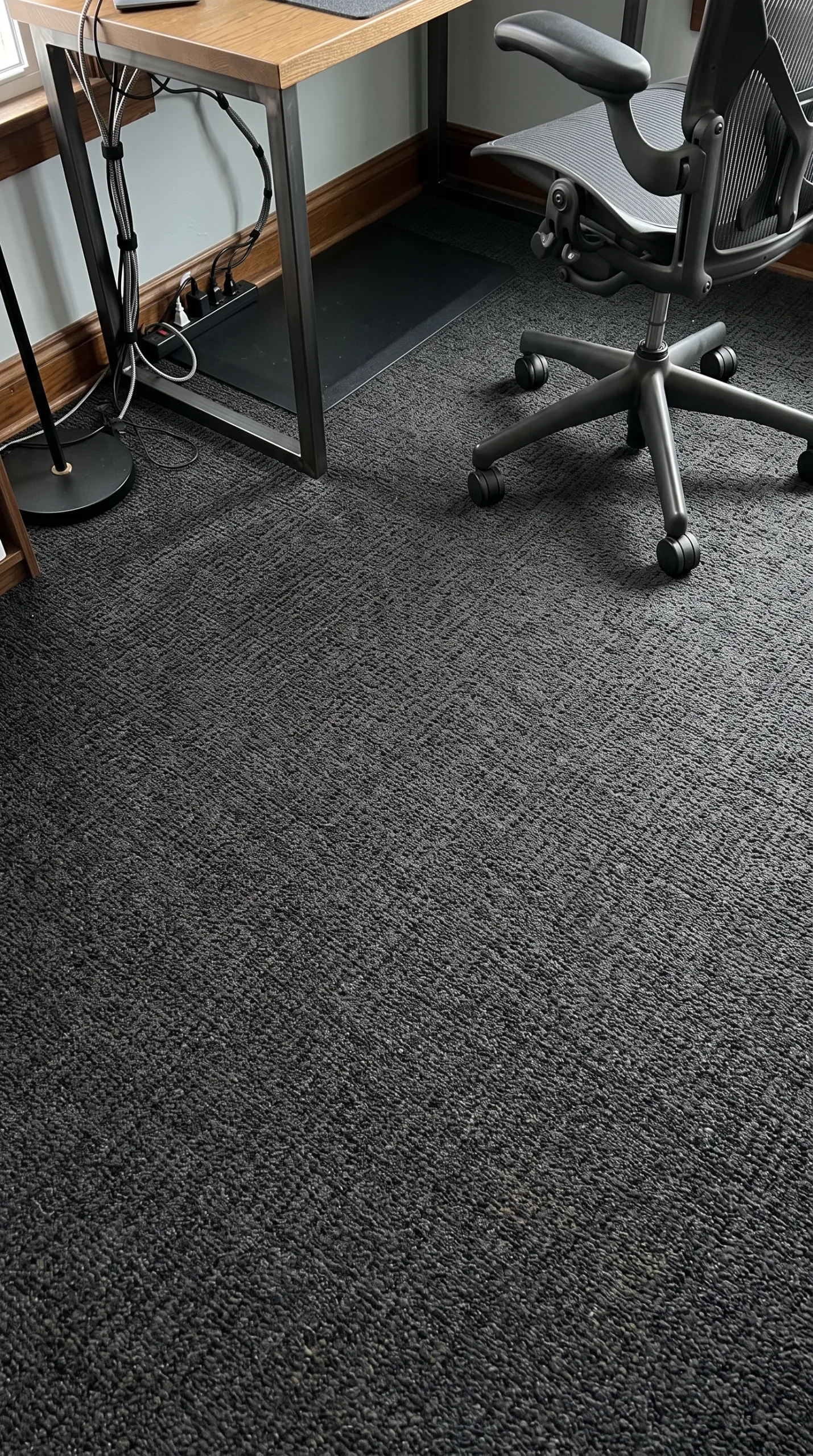
If you aggressively roll your desk chair all over the room, the tiny plastic wheels will violently shred an expensive Persian rug and deeply gouge soft hardwood. You must explicitly install wall-to-wall, low-pile, high-density commercial loop carpet. It is wildly indestructible, heavily deadens all acoustic echoes in the room, and allows a heavy office chair to glide flawlessly and violently across the entire room.
Flooring Q&A: Chair Mats
Question: Can I just put a plastic mat over my rug? Answer: You absolutely must never do this. A cheap, highly reflective, cracking plastic chair mat violently destroys the luxury aesthetic of the entire room, making your expensive office look exactly like a terrifying corporate cubicle from 1995.
BATTLE 10: The Monitor Setup
The digital glass you stare at heavily dominates the visual real estate of the office.
Idea 19: The Massive Curved Ultrawide
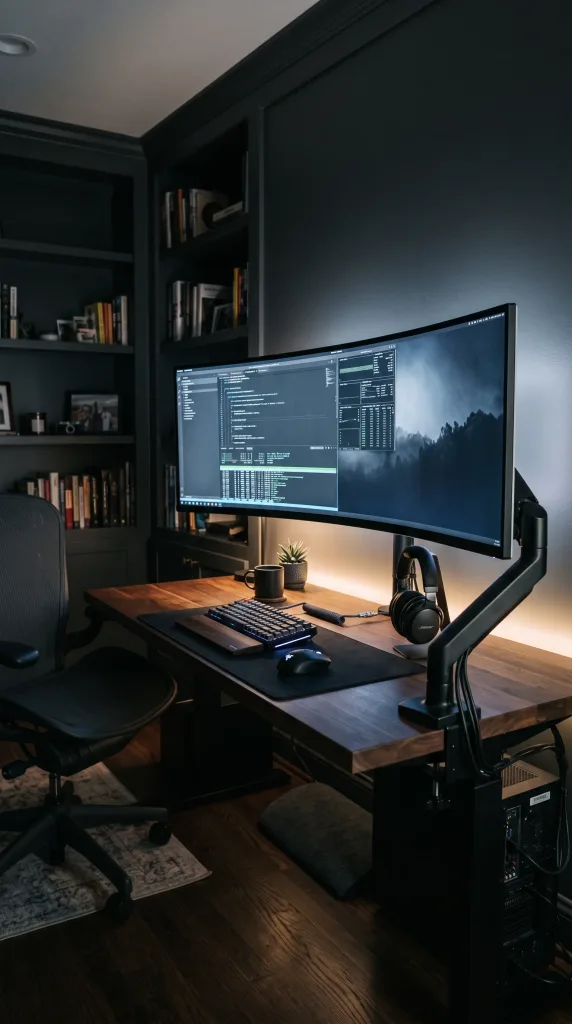
If you are a financial trader or video editor, two cheap monitors with a massive, terrifying plastic bezel split directly down the middle violently interrupt your workflow. You must completely abandon dual monitors and violently mount a single, massively expensive, forty-nine-inch curved ultrawide monitor directly to a heavy-duty steel monitor arm. The single, unbroken, highly immersive sheet of glowing glass aggressively dominates your peripheral vision.
Idea 20: The Hidden Motorized Screen Drop
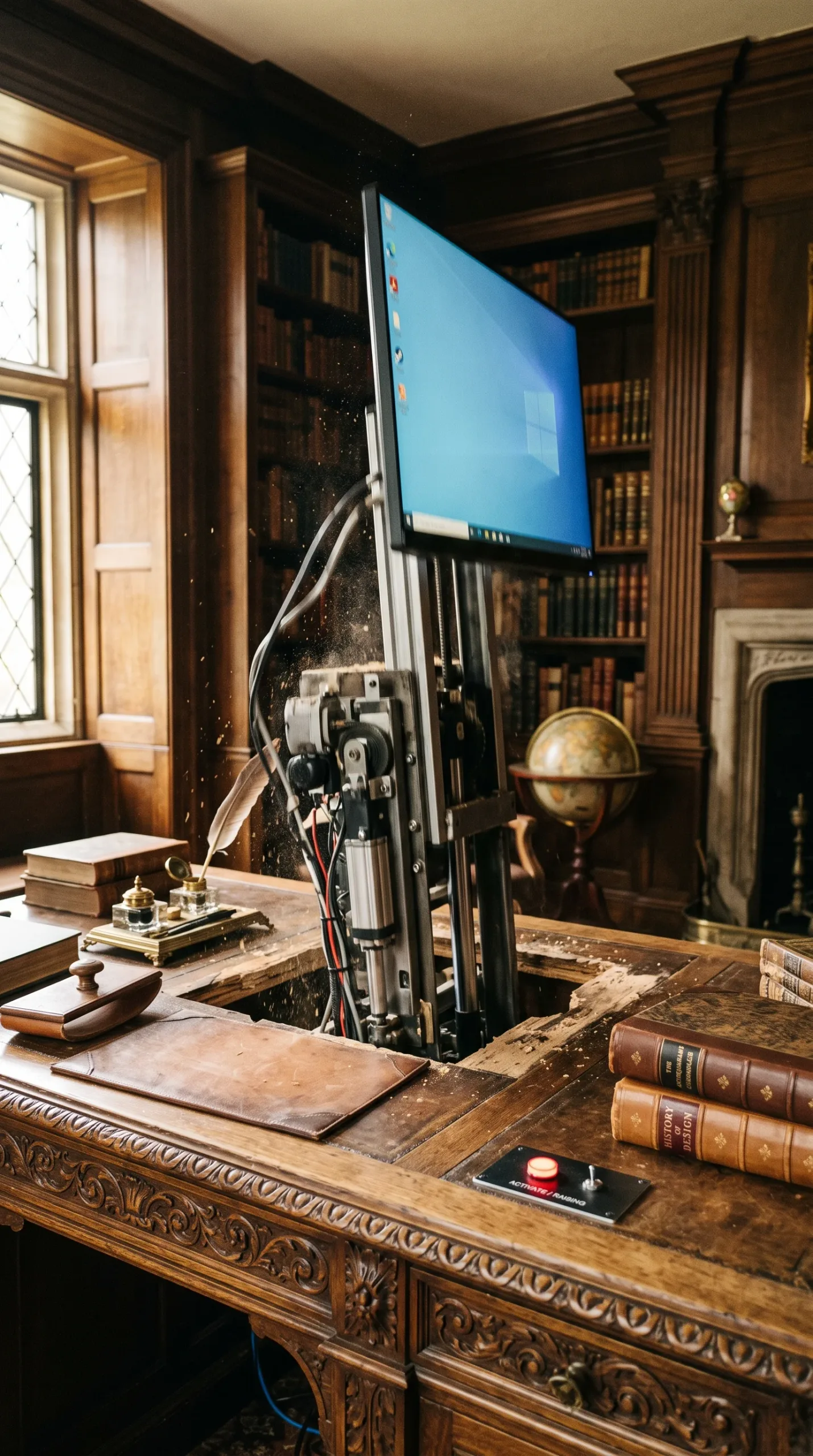
If you are a highly traditional interior design purist, a massive black plastic monitor violently ruins the historic aesthetic of your beautiful antique wooden desk. You must hire a custom furniture builder to aggressively hide the monitor completely inside the thick desk. With the push of a hidden button, a heavy motorized lift violently raises the monitor out of the wood when working, and perfectly hides it away the exact second you finish.
Mounting Rules:
- You absolutely must buy a heavy-duty, gas-spring steel monitor arm; a cheap plastic arm will violently snap under the massive weight of an ultrawide screen.
- Drill a two-inch hole directly through the heavy wooden desk to aggressively hide all the HDMI and power cables completely out of sight.
BATTLE 11: The Hardware Accents
The metallic touchpoints in the office establish the absolute luxury level.
Idea 21: Raw Unlacquered Brass
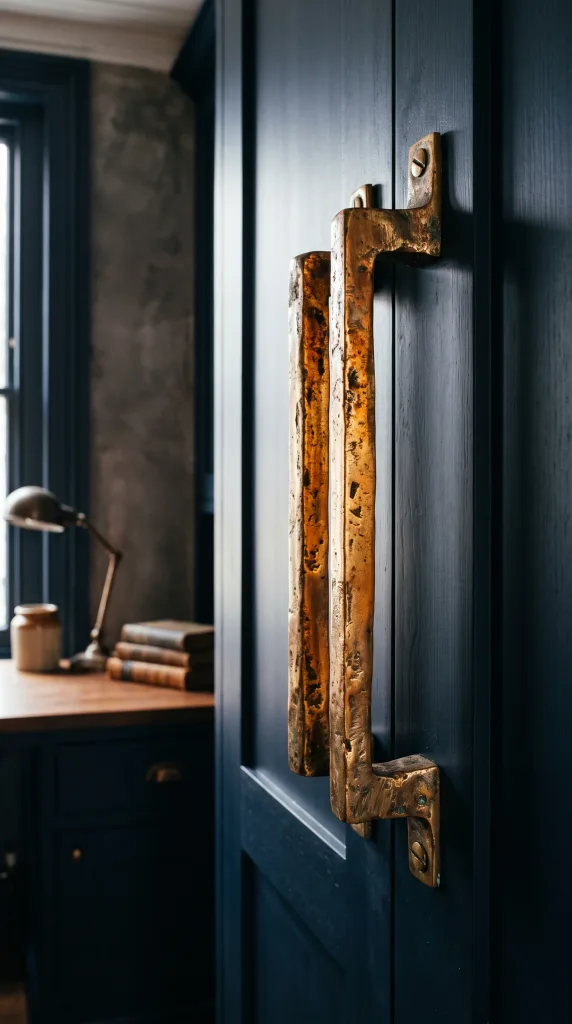
If your office features deeply painted dark navy walls, you must aggressively punch through the dark shadows using massive, heavy, raw unlacquered brass cabinet pulls and door hinges. The fiercely warm, golden-orange metal violently pops against the dark paint. Because the brass is raw, the acid from your hands will violently oxidize the metal over time, creating a wildly expensive, deeply historic brown patina.
Idea 22: Matte Black Brutalist Steel
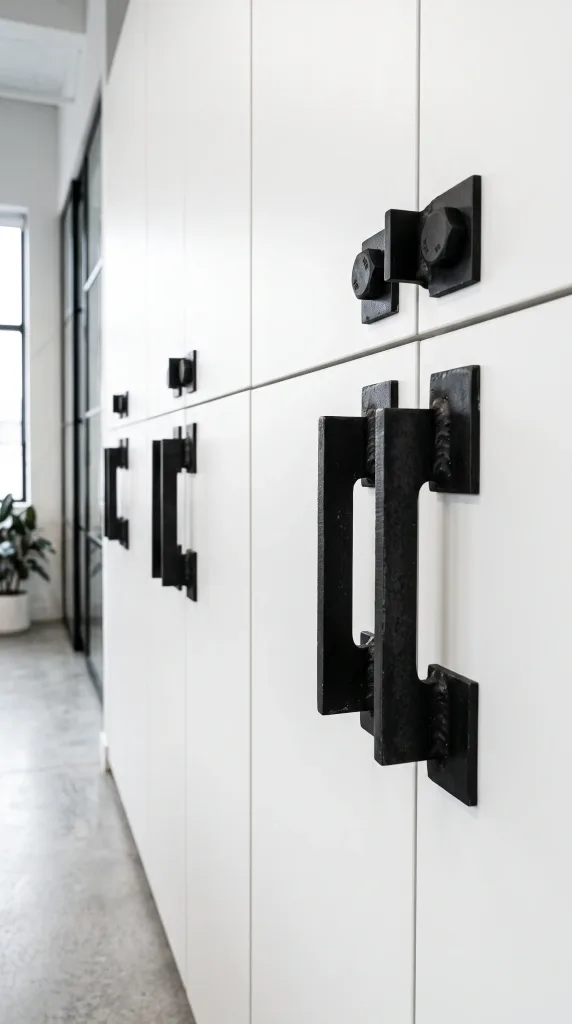
If your office is entirely stark white and modern, shiny golden brass looks incredibly tacky. You must fiercely ground the white cabinetry by aggressively installing heavy, thick, wildly brutalist matte black steel hardware. The stark, light-absorbing black metal violently contrasts with the bright white paint, proving a highly disciplined, intensely modern architectural rigor.
The Verdict: Brass violently wins for dark, historic, moody offices. Matte black steel flawlessly dominates bright, stark, hyper-modern minimalist spaces.
BATTLE 12: The Beverage Station
To stay fiercely focused, you must stop leaving the office to walk to the chaotic kitchen.
Idea 23: The Built-In Espresso Niche
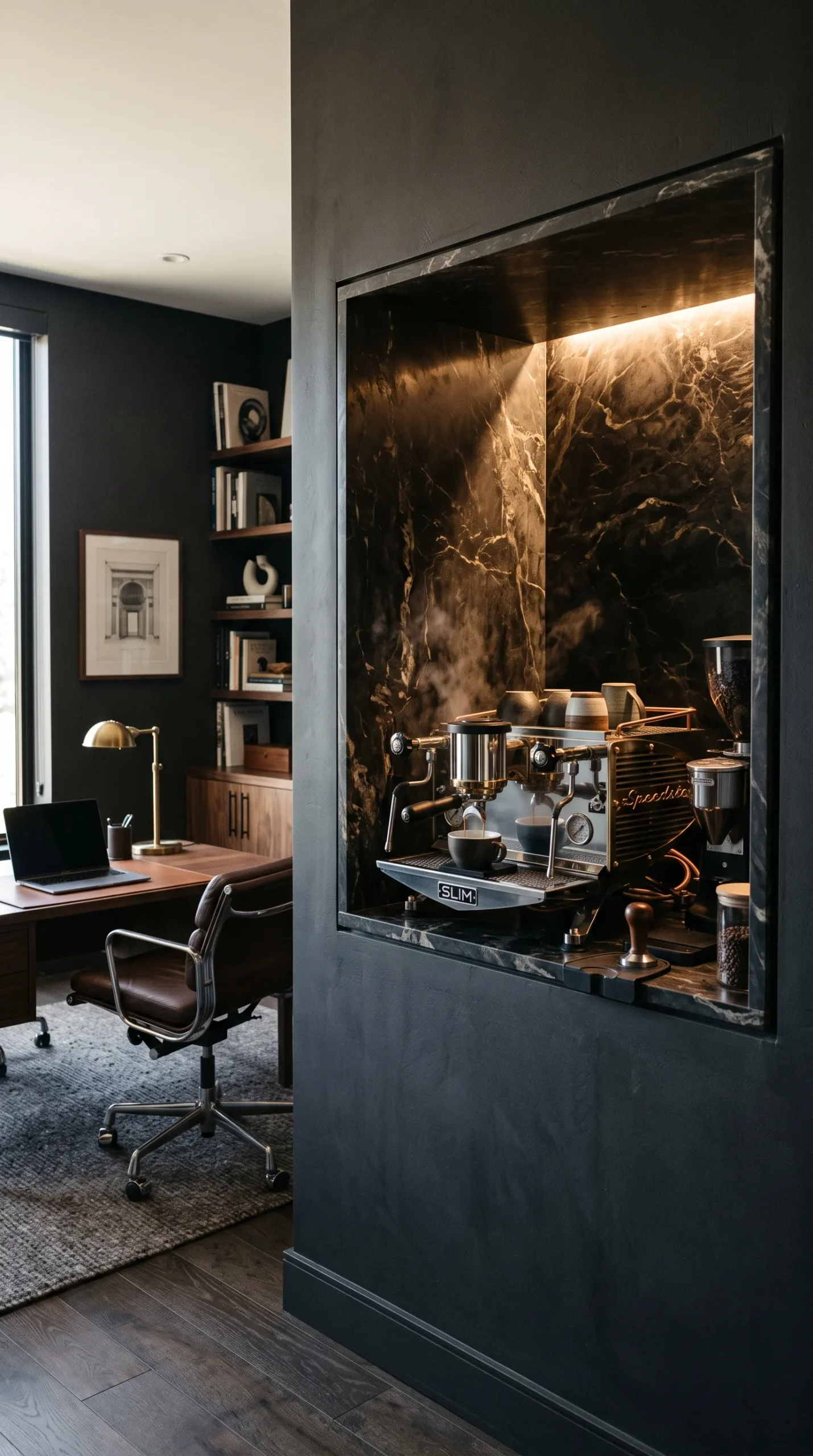
If you have a massive budget, you must strictly carve a vertical architectural niche directly into the drywall of your office. Line the heavy alcove with dark marble, install a tiny hidden sink, and hardwire a wildly expensive, fiercely mechanical Italian espresso machine directly into the plumbing. This aggressive architectural feature prevents you from ever entering the terrifying kitchen, fiercely protecting your focused workflow.
Idea 24: The Rolling Vintage Bar Cart
If you absolutely cannot cut into the drywall, you must heavily utilize mobile furniture. Purchase a heavily constructed, deeply historic brass and glass rolling bar cart. Equip the cart with an expensive electric kettle, heavily curated pour-over coffee gear, and crystal glasses. The incredibly beautiful, highly tailored cart provides massive caffeinated utility without requiring a single destructive drop of plumbing.
Plumbing Warning: If you hardwire an espresso machine into an office that sits directly above a finished living room, you absolutely must install a waterproof, heavy-duty floor pan connected to a drain. If the machine leaks, it will violently destroy the ceiling of the room below.
Conclusion
A closed-door home office is the ultimate, heavily fortified architectural bunker designed strictly to protect your professional focus. It is not a place for compromise; it is a place for violent, highly calculated architectural choices. By brutally evaluating these twelve design battles, you realize that every single element—from the acoustic density of a solid walnut door to the exact Kelvin temperature of your desk sconce—massively alters your cognitive output. Whether you aggressively dominate the room from a freestanding command desk or fiercely hide your massive computer screens inside historic furniture, you must engineer the space with unyielding discipline. When you aggressively banish the chaotic open-concept floor plan and retreat behind a heavy, closed door, you unlock an unprecedented, terrifying level of deep, unbroken productivity.
Frequently Asked Questions
Why is a hollow core door so bad for a home office?
A hollow core door is violently useless for acoustics because it completely lacks physical mass. Sound waves aggressively punch straight through the thin wood veneer and empty air. You must install a massively heavy, violently dense solid core door to physically block the chaotic soundwaves.
What is the ‘Command Position’ for a desk?
The command position is a highly aggressive, fiercely psychological design rule where you place your massive desk so that you are physically facing the closed door, with a solid wall directly behind your back. It violently prevents anyone from sneaking up on you, establishing deep subconscious safety and total authoritative dominance over the room.
Does painting an office dark make it feel too small?
No, this is a massive design myth. Violently drenching an office in deeply saturated dark navy or heavy charcoal paint aggressively blurs the harsh corners of the room, often making it feel like an infinite, wildly expansive, incredibly moody cocoon, rather than a tiny, terrifying white box.
How do I stop my office from echoing terribly during Zoom calls?
You must completely and utterly destroy the flat, hard surfaces in the room. You must aggressively layer the room in massive, thick fabrics: install heavy velvet drapes, throw a massively thick Persian rug on the floor, or bolt custom fabric-wrapped acoustic panels directly to the bare drywall to violently absorb the high-frequency bounces.
Should I use warm or cool lighting in my office?
It violently depends on your job. If you require hyper-alert, terrifying clinical focus and perfect color accuracy, you must use crisp 5000K daylight panels. If you stare at text all day and want to prevent massive retinal fatigue, you must strictly use heavily romantic, deeply warm 2700K amber task lamps.
Is it okay to put a home office inside a bedroom closet?
Yes, a ‘cloffice’ is a fiercely brilliant architectural hack, but you absolutely must aggressively manage the heat. A high-powered computer running inside a tiny closed wooden box will violently overheat. You must drill massive ventilation holes and heavily ensure you have brilliant, safe LED task lighting.


