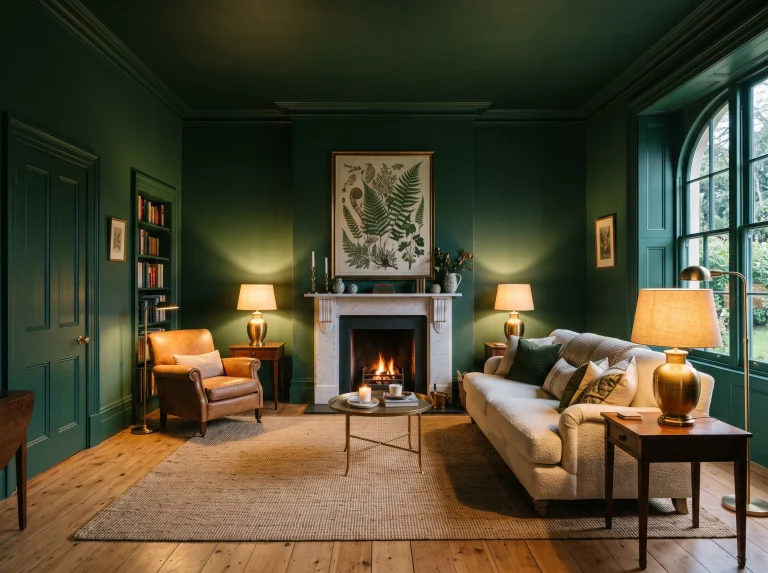
Bedroom Accent Lighting Looks That Actually Change How a Room Feels
There is a version of your bedroom that exists right now in your head, one that feels cozy and intentional, warm in the right places and quietly dramatic in others. The gap between that version and what you actually have is, more often than not, a lighting problem. Most bedrooms are dramatically under-lit in all the interesting ways and over-lit in the one way that matters least, which is that harsh overhead fixture that flattens everything it touches. The good news is that fixing this does not require a renovation. It requires thinking about light the way an interior designer would, as something you layer, direct, and dim rather than something you simply switch on.
Accent lighting is the layer that most people skip because it feels like a luxury or an afterthought. In practice, it is the layer that does the most emotional work in a bedroom. It is what makes the headboard wall feel intentional, what gives a dresser or bookshelf presence, and what lets a room shift from bright and functional in the morning to soft and genuinely relaxing by night. The ideas below cover a wide range of budgets, styles, and room sizes, and each one is specific enough to actually act on. No vague suggestions here, just real approaches that work in real rooms.
1. LED Strip Lights Behind the Headboard
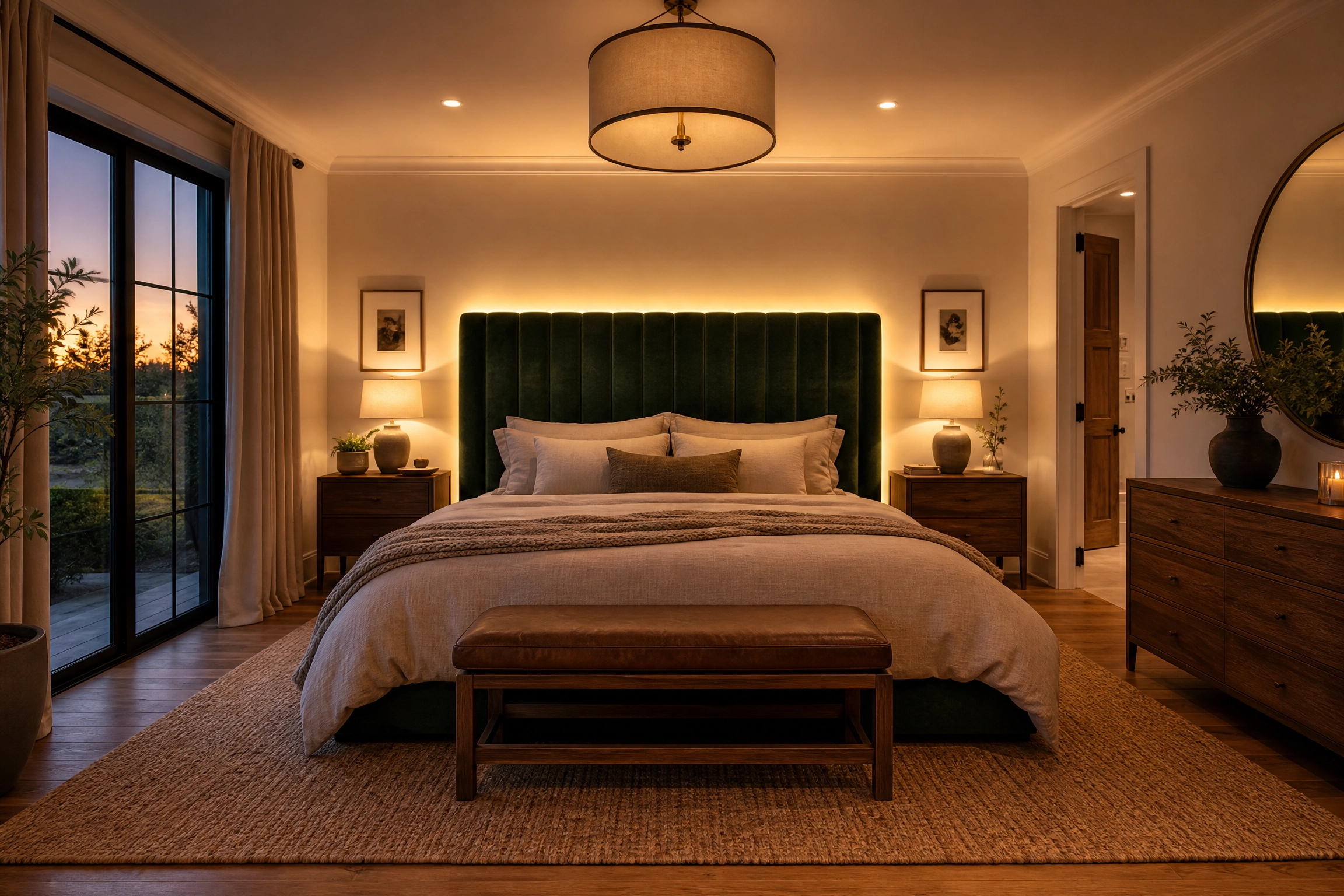
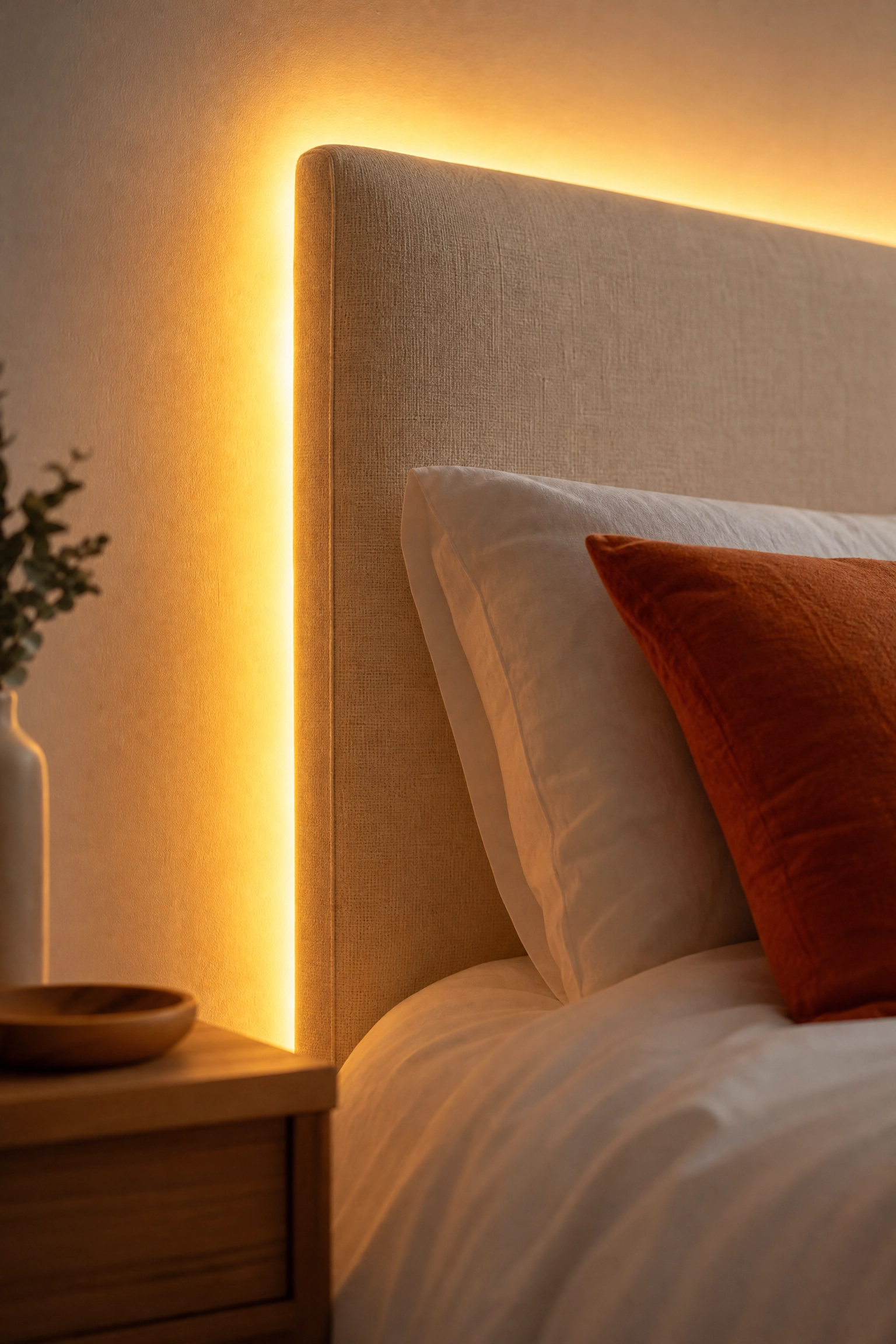
One of the most-requested looks in interior design right now is the backlit headboard, and once you understand why it works so well, you will stop being surprised by how popular it has become. The idea is simple: you run an LED strip along the back edge of the headboard or along the wall directly behind it, and the result is a soft halo of light that makes the bed feel like the centerpiece it is supposed to be. Choose a warm white strip in the 2700K to 3000K color temperature range for a glow that feels cozy rather than clinical, and opt for a dimmable RGBW strip if you want the flexibility to shift tones in the evening. The effect works best with upholstered headboards that have some depth between the fabric and the wall, because the light bounces off the wall surface and softens naturally. Pair this with linen bedding in warm neutrals like oat, sand, or dusty blush to let the glow read as intentional rather than accidental. This is a relatively affordable DIY project, with quality LED strips running anywhere from $20 to $60 depending on length and brand.
Quick Tip: Use a smart plug or a simple dimmer controller so you can adjust the intensity from bed without getting up.
2. Wall Sconces Flanking the Bed
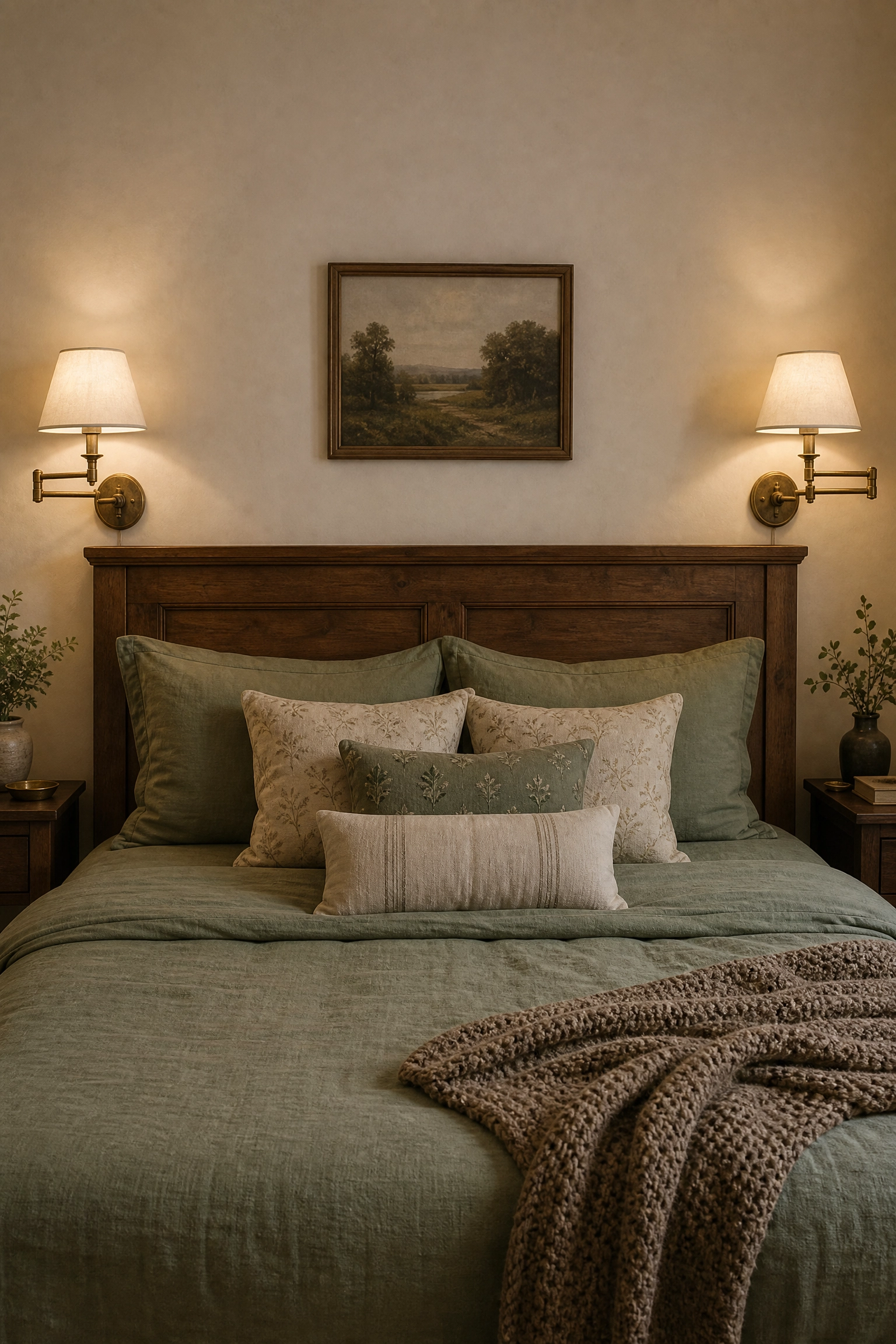
Swing-arm or fixed wall sconces mounted on either side of the bed are one of those ideas that looks like a design upgrade but is actually a practical one too. They free up your nightstand surface, eliminate the cord clutter of traditional table lamps, and place reading light exactly where you need it, close to eye level and directed downward onto the page rather than washing the ceiling. In terms of style, brass or aged bronze sconces with a fabric shade work beautifully in traditional and transitional bedrooms, while matte black or brushed nickel with an exposed Edison bulb suits industrial and modern spaces. Mount them roughly 24 to 30 inches above the mattress surface for the most natural reading angle. This is a mid-range investment, typically $80 to $250 per sconce depending on brand and finish, but the architectural integration it creates is worth it. One honest note: hardwired sconces require an electrician unless your walls already have outlets at the right height, so factor that into your budget planning.
Designer Advice: Choose sconces with adjustable arms so each person on their side of the bed can angle the light exactly how they need it.
3. Recessed Puck Lights Inside Shelving Units
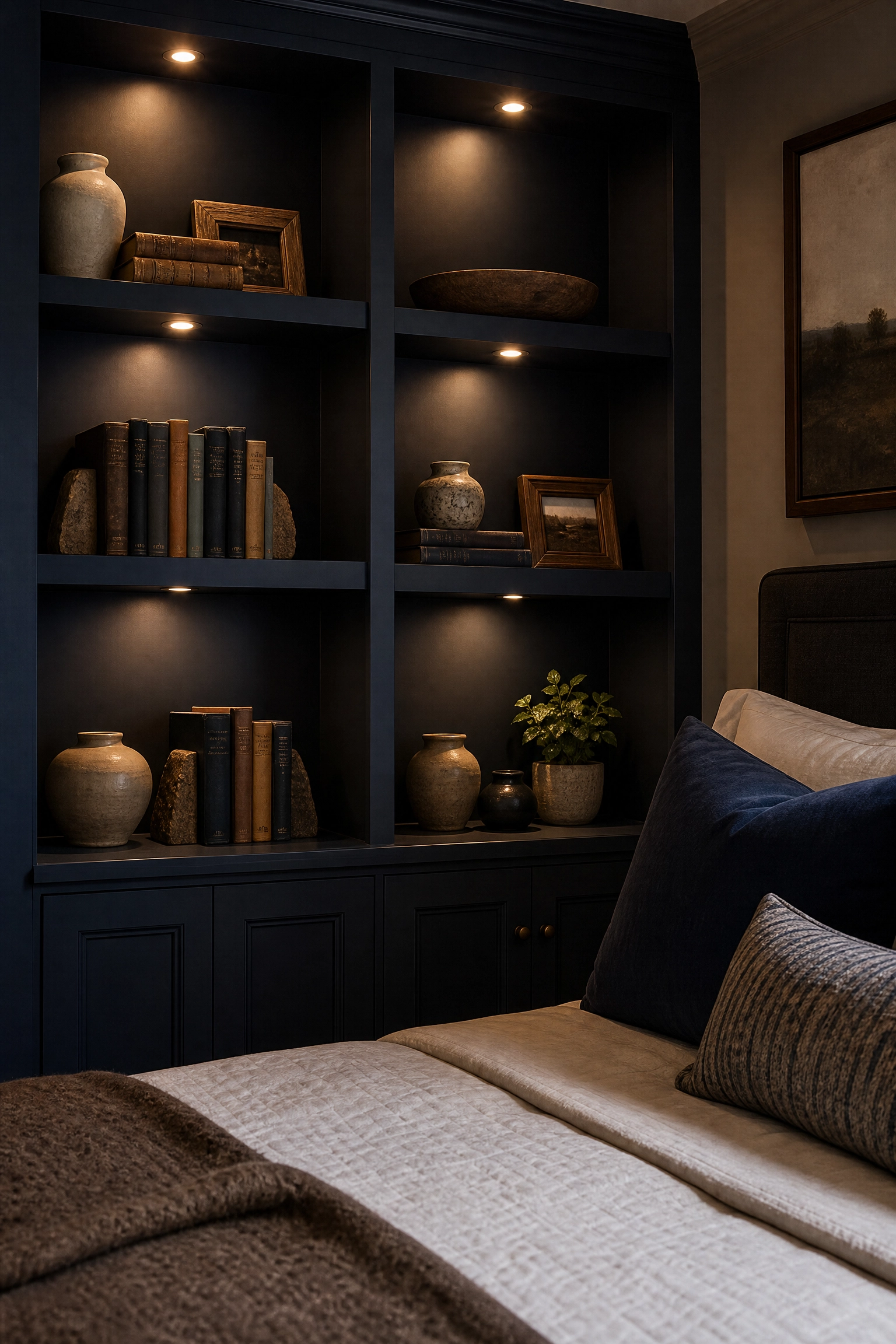
Built-in shelving in a bedroom rarely gets the credit it deserves, and part of the reason is that most people light it wrong, or do not light it at all. Small recessed puck lights installed at the top interior edge of each shelf bay cast a focused downward wash that makes your books, framed photos, and decorative objects read as a curated collection rather than a pile of stuff. This technique is particularly effective when the shelf unit is painted in a deep tone like charcoal, navy, or forest green, because the contrast between the lit objects and the shadowed background creates a dramatic layered effect. LED puck lights are inexpensive and widely available, with options ranging from $15 to $40 for a pack of six, and many are battery-powered which means zero wiring required. The key detail that most people miss is placement: the light needs to be recessed far enough back that the source itself is hidden from eye level, because a visible bulb kills the effect. Style the shelves with objects that vary in height and texture, mixing matte ceramics, wooden frames, and woven baskets, so the light has interesting surfaces to land on.
Pro Move: Paint the inside back panel of the shelf unit in a darker shade than the front face to dramatically increase the sense of depth when the puck lights are on.
4. A Statement Pendant Light Over a Reading Corner
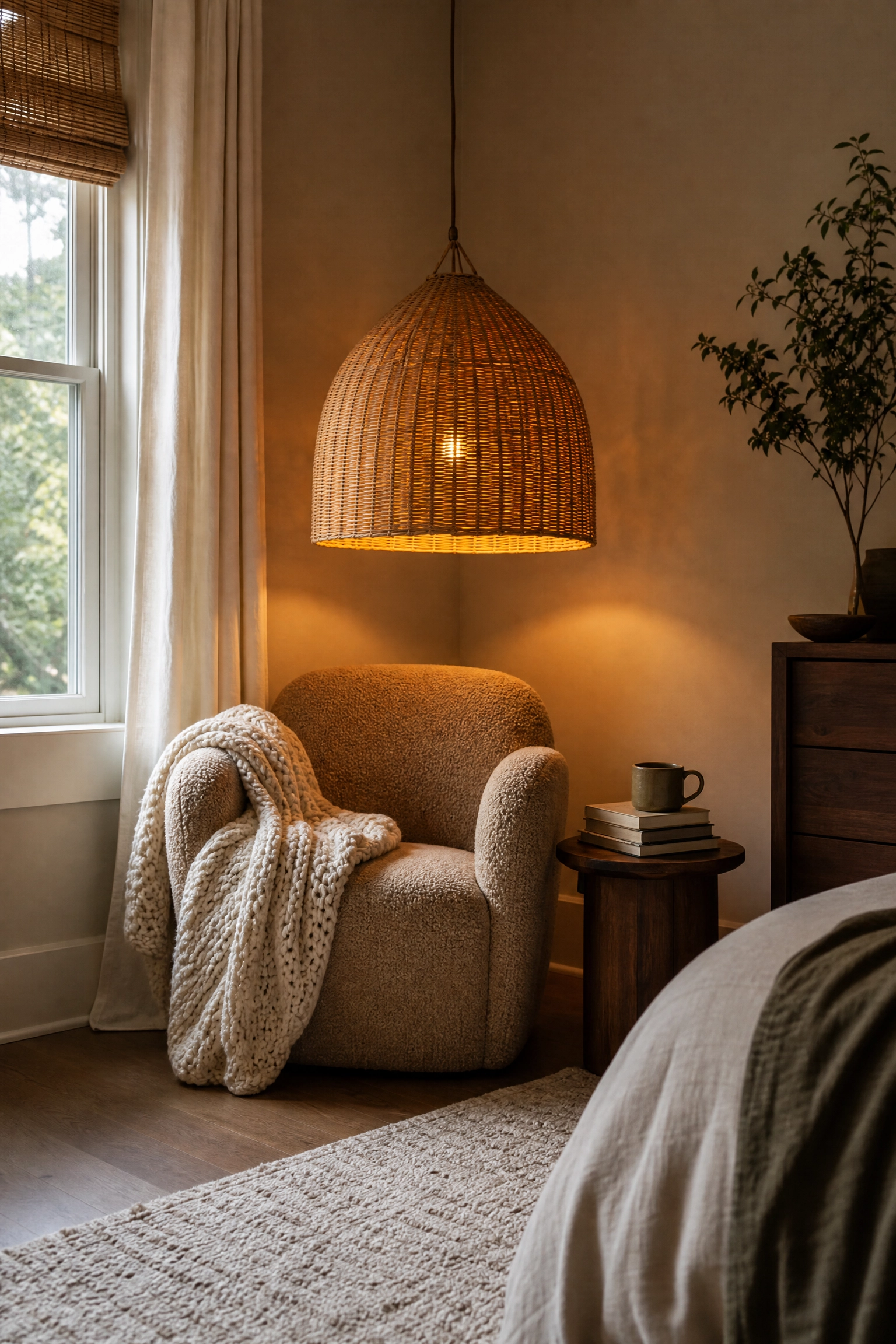
If your bedroom has enough square footage to accommodate a reading chair or a small armchair in a corner, that corner is crying out for a pendant light. A single pendant hung low over the chair, ideally between 12 and 16 inches above seated eye level, creates an instant reading nook that feels separate from the rest of the bedroom, like a little room within the room. This is a great place to go a bit bolder with the fixture design since it is a contained, purposeful moment. Rattan pendants with a warm amber glow suit boho and organic modern bedrooms; dark ceramic or plaster pendants with a matte finish suit more minimal or Japandi-influenced spaces; and a sculptural blown-glass pendant suits eclectic or mid-century modern rooms. Pair the chair with a small side table, a chunky knit throw, and a stack of books to complete the composition. Budget-wise, a quality pendant can range from $60 on the affordable end to $400 or more for designer pieces, so there is a wide range to work with depending on what matters to you.
Reality Check: Make sure your ceiling has a junction box in the right location before committing to a pendant; if not, a hardwired plug-in pendant is a good workaround that requires no electrical work.
5. Cove Lighting Along the Ceiling Perimeter
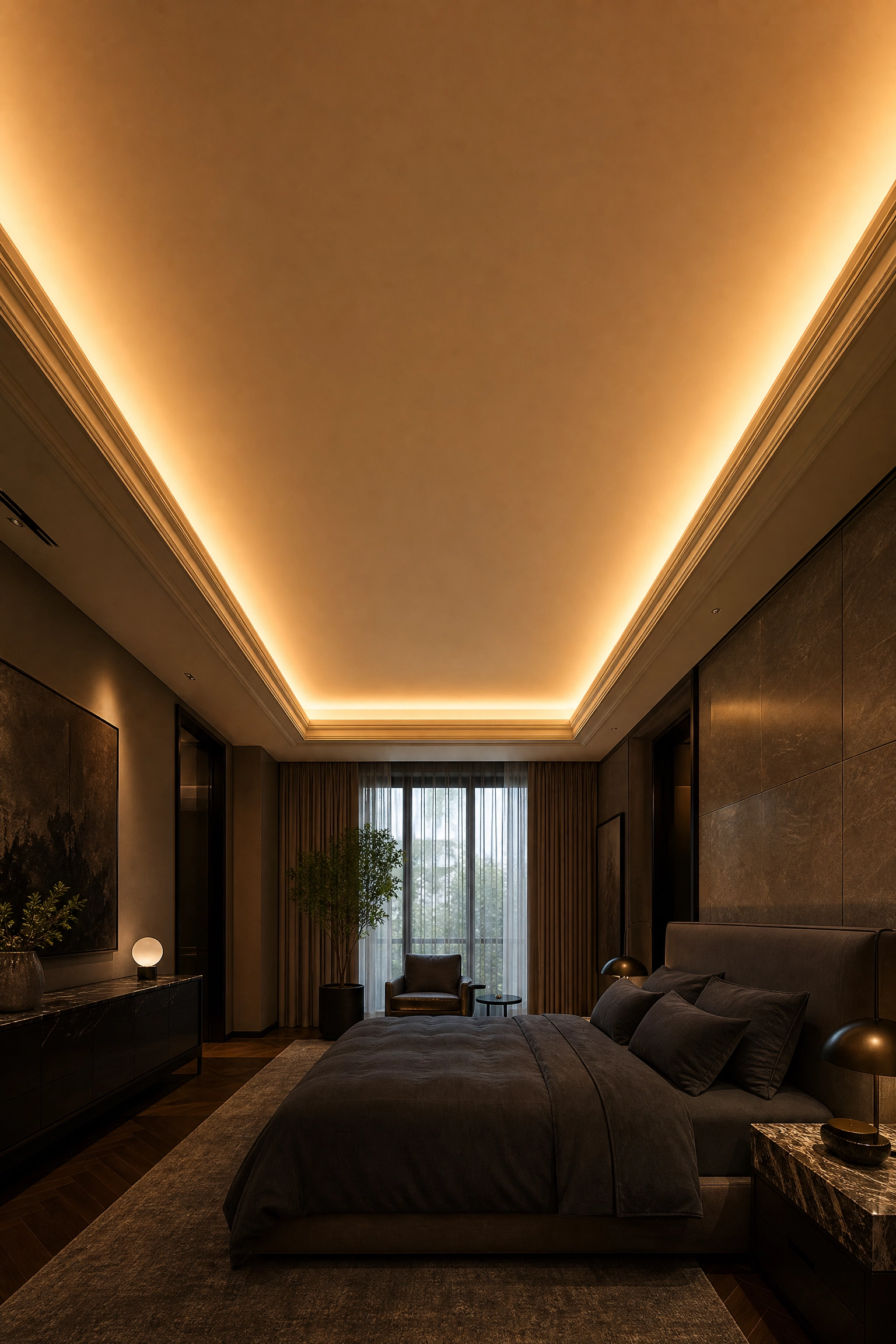
Cove lighting is a technique where LED strip lights are hidden inside a recessed ledge or a simple crown molding profile that runs along the upper edge of the wall, so the light washes up onto the ceiling rather than shining directly into the room. The result is a soft, even ambient glow that feels completely sourceless, which is exactly why it shows up in high-end hotels and designer bedrooms so often. It requires a bit more planning and installation effort than most other options on this list, since you either need an existing cove detail in your ceiling or you need to build a simple crown molding box to house the strips, but the effect is genuinely hard to replicate any other way. Use a warm white strip at 2700K to keep the ceiling tone from going cold, and always put it on a dimmer so you can bring it all the way down to almost nothing for late-night winding down. This approach works especially well in bedrooms with higher ceilings, since lower rooms can feel slightly compressed when the ceiling is lit. Budget-wise, this is a mid-to-upper investment depending on whether you DIY the ledge or hire someone to build it.
Designer Advice: Run the LED strip on the back inner face of the cove ledge so the source is fully hidden. Any visible strip breaks the illusion completely.
6. Neon Sign as Decorative Accent Light
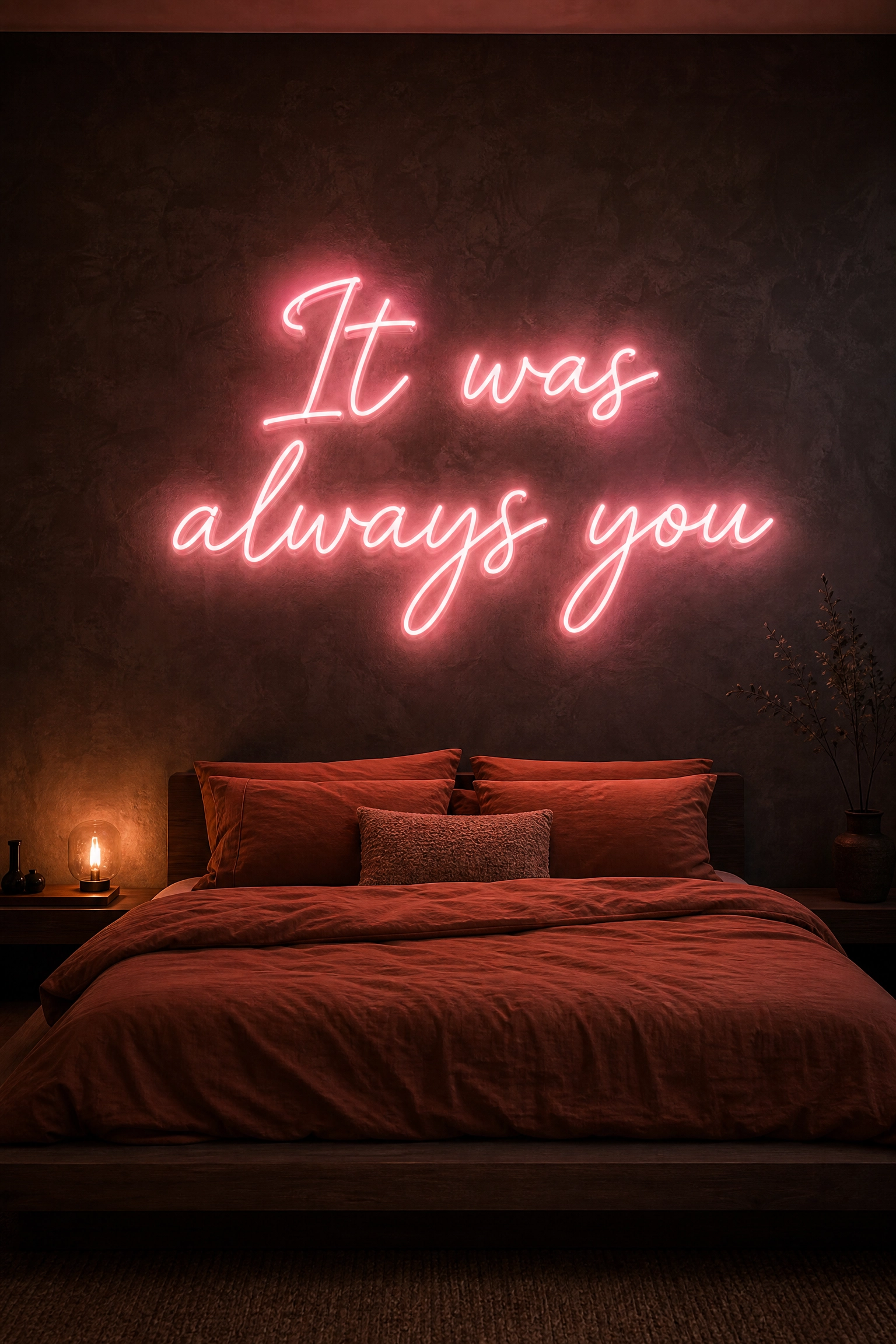
Neon lighting has moved decisively out of bars and into bedrooms, and when it is done right it reads less like a novelty and more like a piece of wall art that also happens to glow. Custom neon signs in words, shapes, or abstract curves give a bedroom a personality that no wall print can quite match, and the light they emit is surprisingly warm and flattering in photographs and in person. The most popular colors for bedroom use are warm white, soft blush pink, and muted amber, all of which cast a gentle ambient glow rather than a harsh, garish light. Mount the sign against a dark or textured wall, like exposed brick, dark-painted plaster, or a limewash finish, so the contrast between the glowing element and the matte background is as strong as possible. LED neon flex has largely replaced traditional glass neon for home use, making these signs lighter, safer, and more affordable, typically ranging from $50 to $200 for custom pieces from online makers. One honest note: this look skews young and casual, so it suits apartments, teen rooms, and maximalist spaces better than it does formal or traditionally styled bedrooms.
Heads Up: Measure your wall carefully before ordering, because a sign that is too small for the space reads as an afterthought, not a statement.
7. Fairy Lights Draped Over a Canopy or Bed Frame
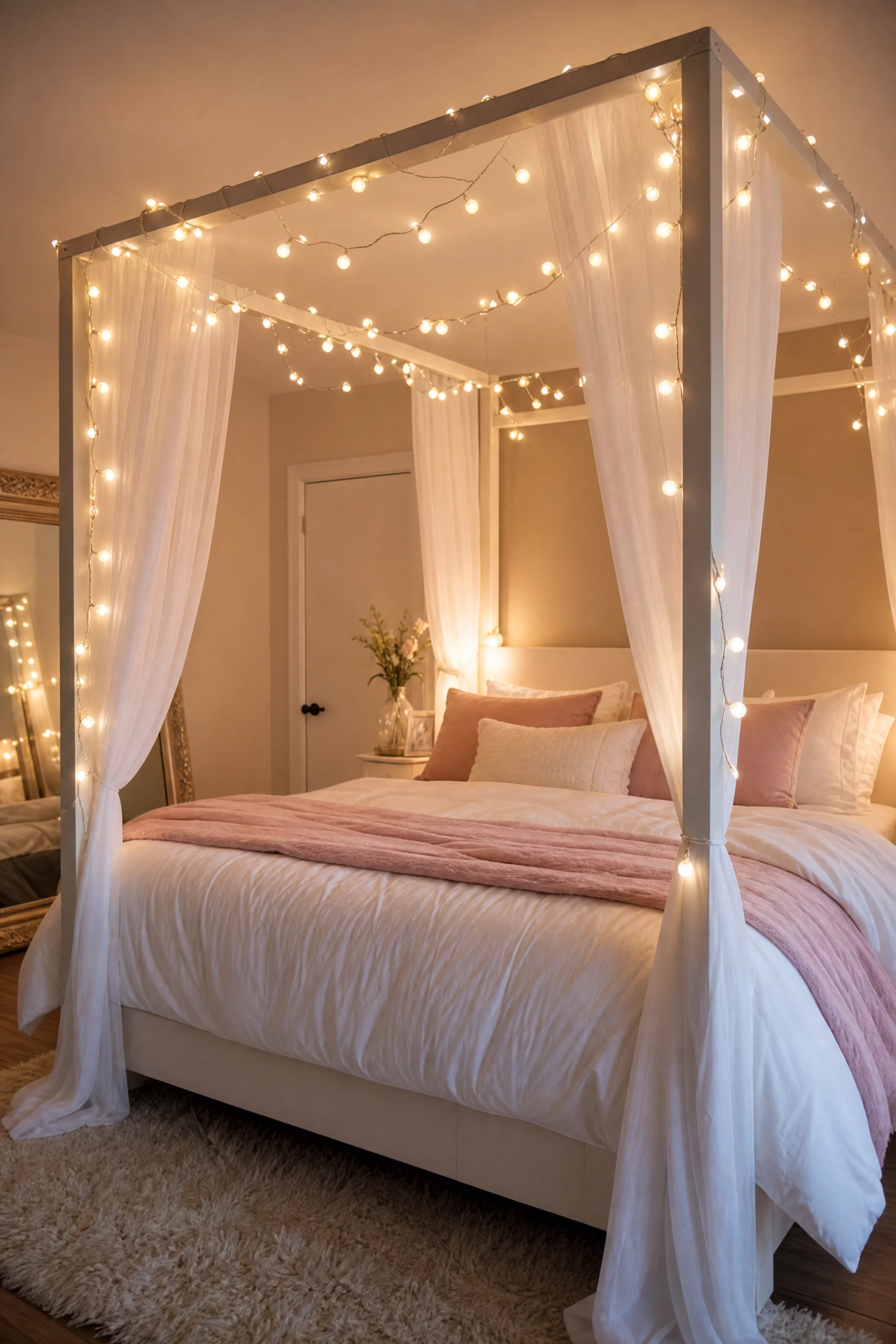
Fairy lights in a bedroom tend to get dismissed as a college-dorm idea, but the difference between a dorm take and a genuinely beautiful execution comes down to two things: the quality of the bulbs and the intentionality of the drape. Copper-wire warm white fairy lights with globe bulbs, rather than cheap blue-toned LED strings, cast a glow that is almost indistinguishable from candlelight in the right setting. Drape them over a four-poster or canopy frame in loose, organic loops rather than tight even spacing, and let some strands fall lower than others for an organic, layered look. This effect works especially well in boho, romantic, or cottagecore-style bedrooms where softness and texture are already central to the aesthetic. Battery-operated options with a remote give you full dimming control without any visible cords, which is worth paying a little extra for. A set of quality copper fairy lights typically runs $15 to $40, making this one of the most affordable ideas on this list while still looking genuinely intentional when done carefully.
Quick Tip: Anchor the strings to the frame with small clear command hooks rather than tape, which yellows over time and leaves residue.
8. Uplighting Behind Large Bedroom Plants
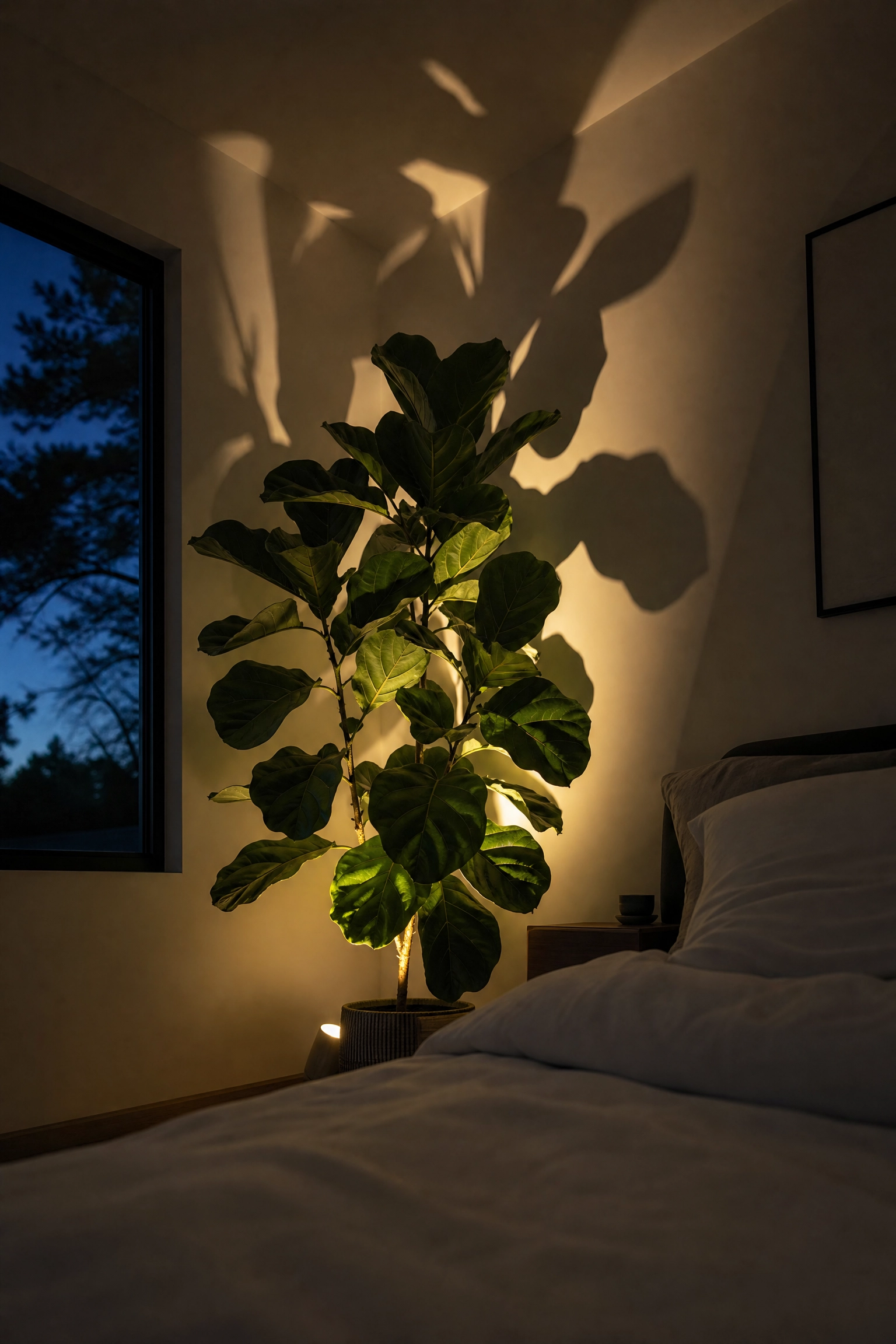
Plants in a bedroom are common enough, but plants with uplighting behind or beneath them is a detail that separates a well-styled room from a photographed one. A small LED spotlight or an adjustable floor can directed upward into the foliage of a large fiddle-leaf fig, monstera, or snake plant creates dramatic shadows on the wall behind it, making the plant read as an architectural feature rather than a decorative accessory. This technique was practically invented in hotel lobbies and gallery spaces, but it translates beautifully into residential bedrooms, especially in corners that would otherwise go dark and unused. Use a warm white spotlight at a low wattage to avoid creating a harsh, clinical effect, and angle the beam so it catches the underside of the leaves rather than pointing straight up the trunk. Small uplighters start at around $20 to $40 and are widely available. The plant needs to be large enough to cast meaningful shadows, so this is not an idea for a small succulent collection but rather for floor plants that already have presence on their own.
Pro Move: Position the uplight slightly off-center from the plant’s base rather than directly underneath it, so the shadows fall at an interesting angle rather than straight up.
9. Illuminated Floating Shelves
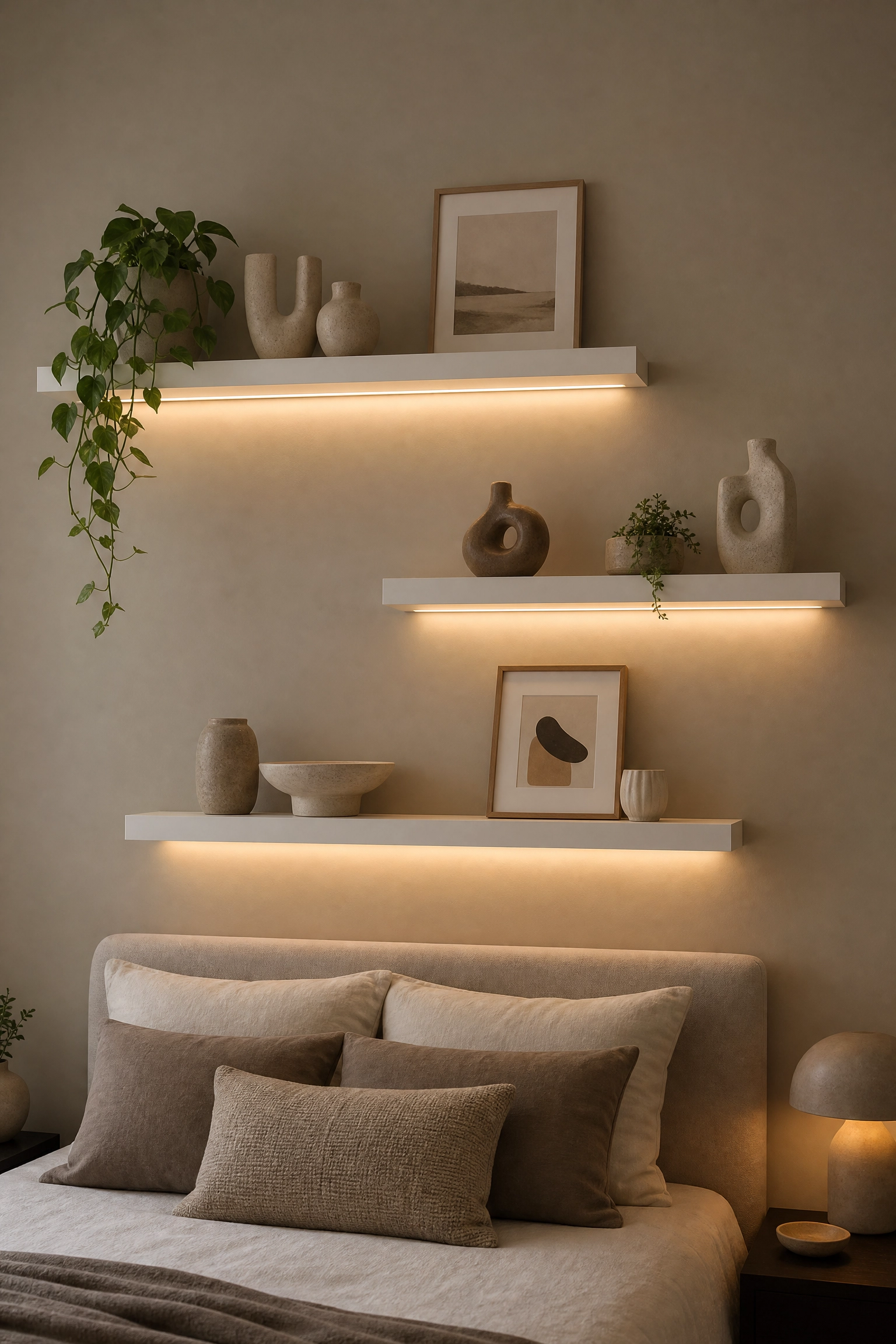
Floating shelves with built-in LED channels underneath or along their back edges are one of those product developments that genuinely changed what is possible in a bedroom without an electrician. The light runs along the underside of the shelf and washes down onto the surface below, which means objects placed on the shelf itself glow from above while the shelf casts a soft pool of light onto the wall or dresser beneath it. This layering of surfaces is what makes the effect interesting, because it creates depth and dimension in a wall zone that would otherwise be flat. Choose shelves in a finish that contrasts with your wall color so the floating effect reads clearly, and keep the objects displayed on them simple and sculptural, because the light will draw attention to every piece. Matte ceramics, wooden objects, and small framed prints in simple frames all work well. These shelves range from budget options around $30 to $80 all the way up to custom millwork depending on your ambition.
Designer Advice: Connect the shelf lights to a smart switch so they can be part of a bedtime routine scene that dims automatically at a set time.
10. Picture Lights Over Artwork
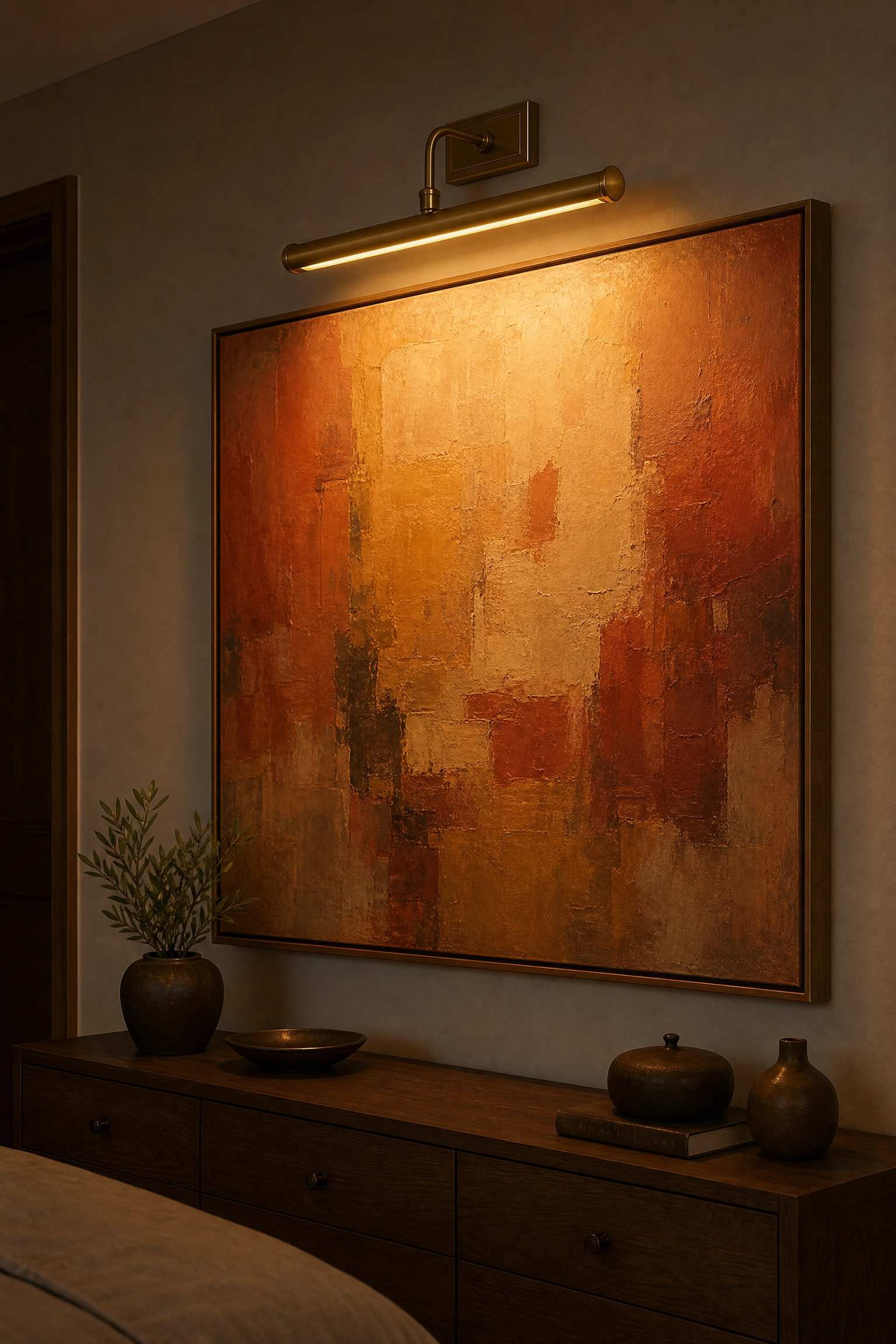
A picture light mounted directly above a framed piece of art in a bedroom does something subtle but important: it tells the eye where to look. In most bedrooms the walls are just walls, flat surfaces that hold things without any particular emphasis. Adding a picture light above a significant piece, whether it is a large abstract print, an oil painting, or a framed textile, gives that wall a focal point that reads as deliberate and curated. Traditional plug-in picture lights with a brass or antique bronze finish suit classic and transitional bedrooms, while slim LED bar lights in matte black or brushed nickel suit more modern spaces. The light source should be positioned so it illuminates the full width of the artwork without casting a harsh shadow from the top edge of the frame, which usually means mounting it 2 to 4 inches above the frame and angling it at roughly 30 degrees. Budget-wise, quality picture lights start at around $40 to $60 for plug-in options and go up significantly for hardwired or designer pieces.
Reality Check: Make sure the artwork itself is worth highlighting before investing in a picture light. A mediocre print with dedicated lighting just draws more attention to the fact that it is mediocre.
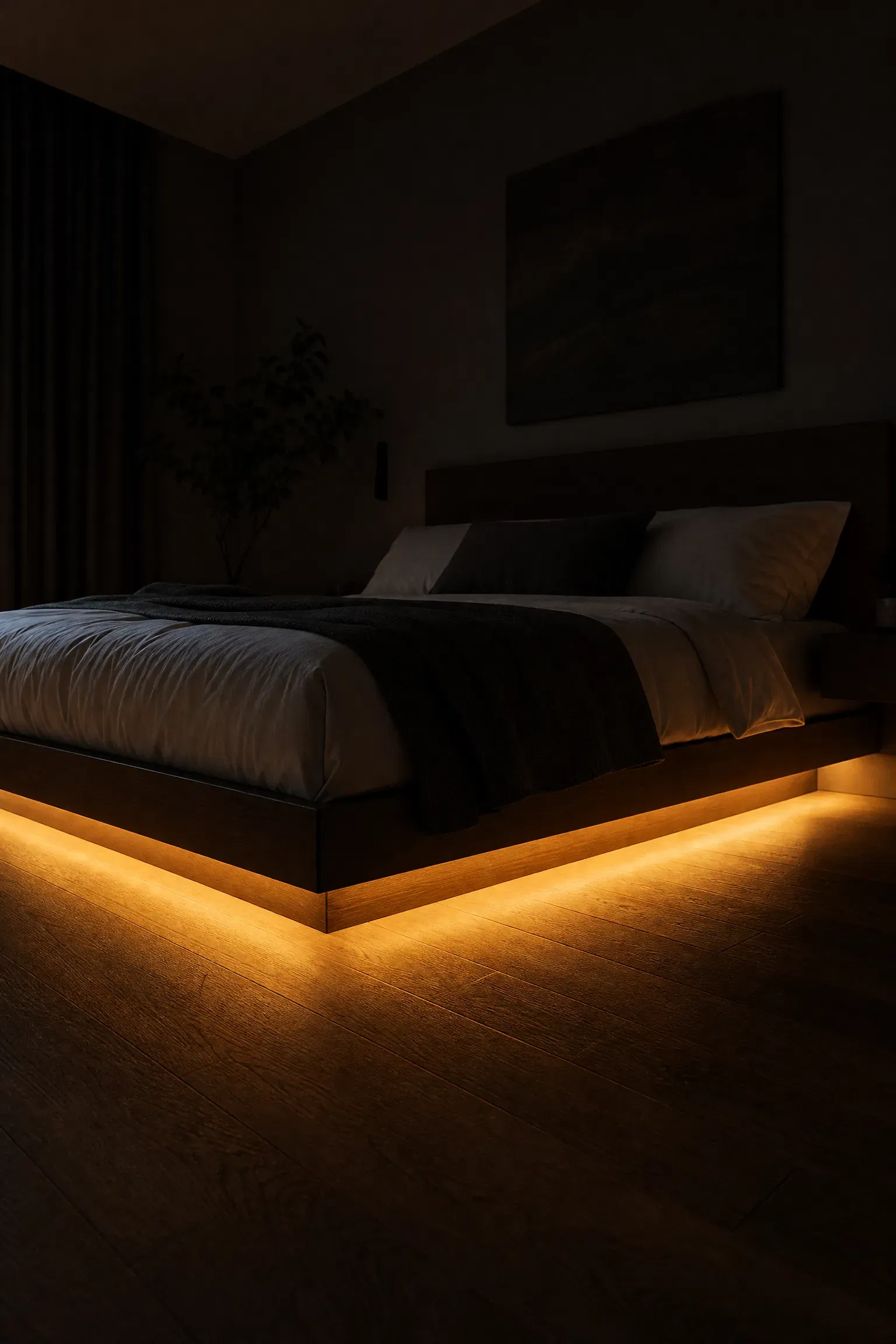
11. Under-Bed LED Glow
Under-bed lighting is one of the most discussed accent lighting trends in bedroom design, partly because it looks genuinely striking in photographs and partly because it also serves a real practical function as a night light for navigating a dark room. The key to making this look intentional rather than cheap is choosing the right color temperature and keeping the light diffuse rather than harsh. Warm white or soft amber LED strips affixed to the underside of the bed frame create a ground-level glow that makes the bed appear to float, which is a detail that photographs exceptionally well and reads just as well in person. This is not a look for every style, it suits modern, minimal, and contemporary bedrooms far better than it does traditional or romantic ones, but in the right room it is a genuinely compelling detail. Keep the strips hidden above the lowest visible edge of the frame so the source itself is never visible from a standing position. Affordable LED strip kits for this application typically run $20 to $50.
Heads Up: Avoid RGB color modes for under-bed lighting unless your bedroom aesthetic is deliberately bold or maximalist. Colored light in this position tends to look more nightclub than bedroom.
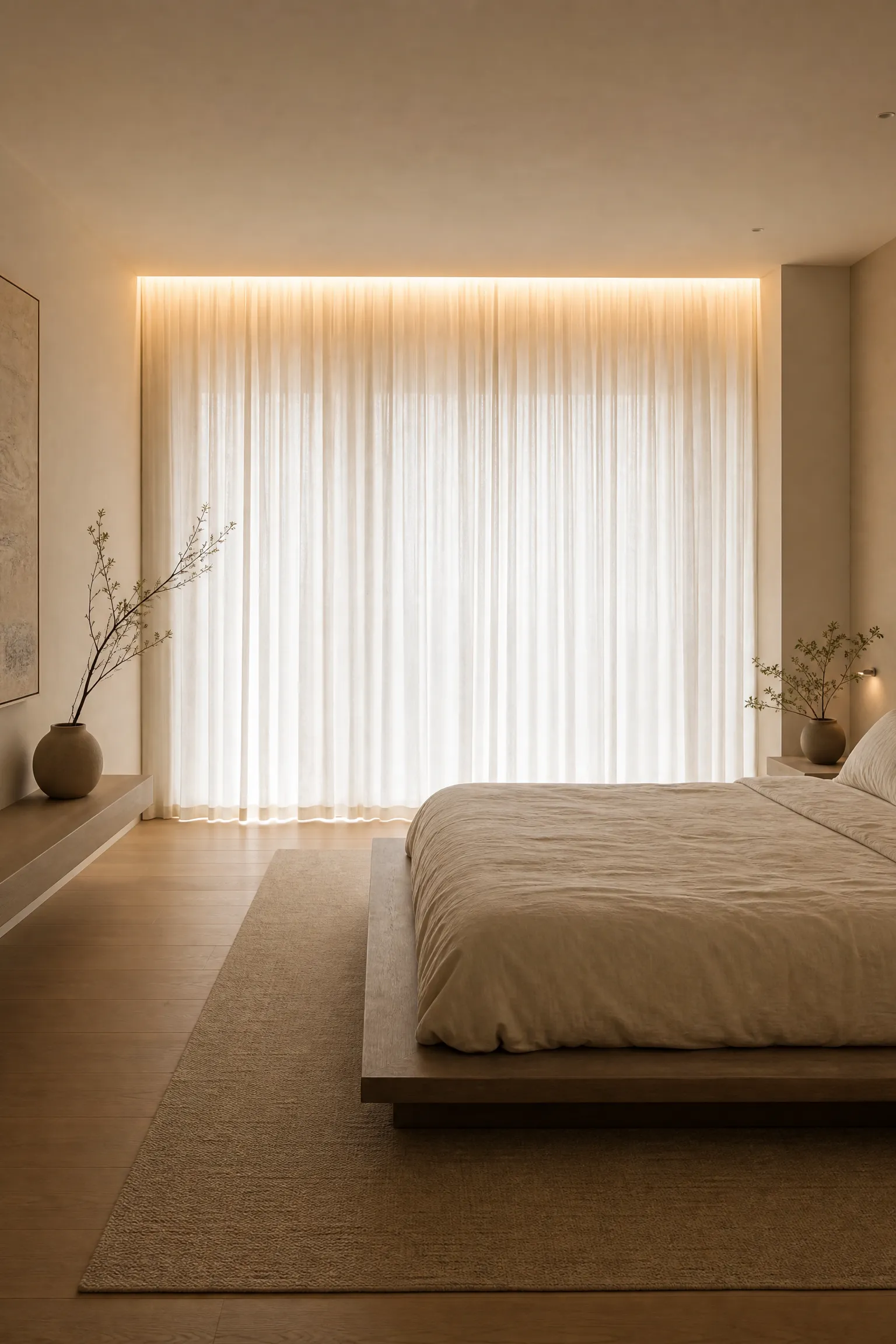
12. Backlit Curtain Wall
Placing a LED strip light behind or inside a floor-to-ceiling curtain panel creates a soft, diffused backlight that makes the curtain itself glow rather than just hang. This technique is especially effective in rooms without a view or in front of plain walls, because the backlit curtain becomes a visual feature in its own right. Sheer or semi-sheer fabrics in white, cream, or soft grey work best because they diffuse the light evenly without hotspots. The light source can be a simple LED strip tucked into the curtain rod channel or mounted on the wall behind the panel, set far enough back that the strip itself is completely hidden. This creates the impression of soft natural daylight even in the evening, which has a genuinely calming effect that makes sense in a bedroom. Use a warm white strip to keep the tone soft and avoid the blue-tinted glow that cooler LEDs produce. This is a relatively affordable option, with the strips and curtains potentially running less than $100 combined if you shop selectively.
Quick Tip: Choose curtains with a tight enough weave that the LED strip itself does not appear as a visible bright line through the fabric, which breaks the soft, glowing effect you are after.
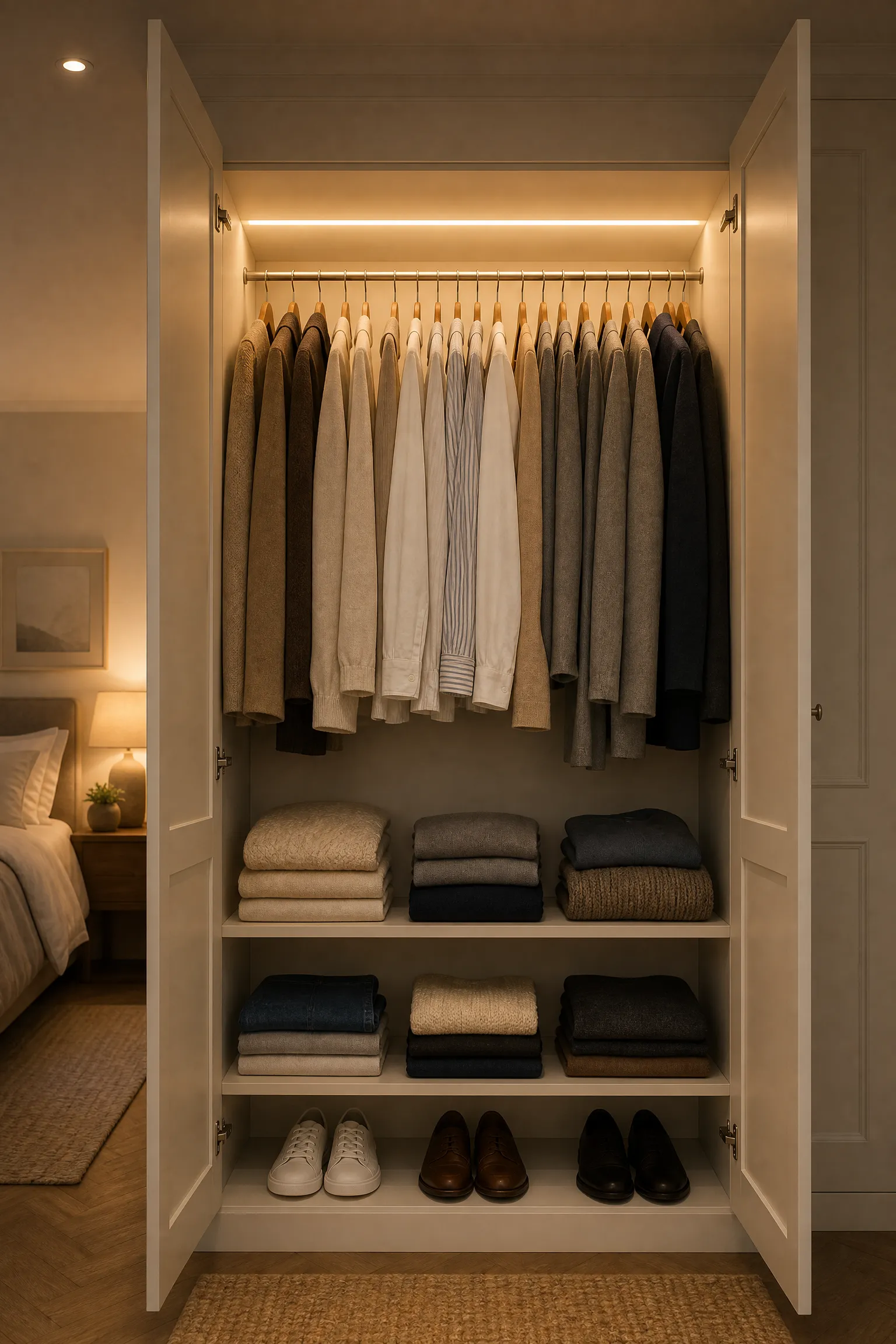
13. Wardrobe Interior Lighting
A walk-in wardrobe or a standard fitted wardrobe with interior lighting is a detail that most people think of as purely functional but that actually contributes meaningfully to the overall feel of the bedroom space. When the wardrobe doors are open, the interior glow visible from the bed adds a layer of warmth and depth to the room that a dark interior simply cannot. LED strip lights or small puck lights mounted along the top or sides of the interior cavity illuminate your clothing and accessories evenly, making it far easier to get dressed in low morning light without waking a partner. More importantly for the aesthetic, choose a warm white tone at 2700K to 3000K so the light reads as warm and residential rather than cold and retail. If your wardrobe has glass-fronted sections, the effect of interior lighting visible through the glass panels is particularly good, creating a display-cabinet look that suits mid-century modern and contemporary bedrooms especially well.
Pro Move: Add a door-sensor switch so the wardrobe lights turn on automatically when you open the doors and off when you close them, exactly like a refrigerator.
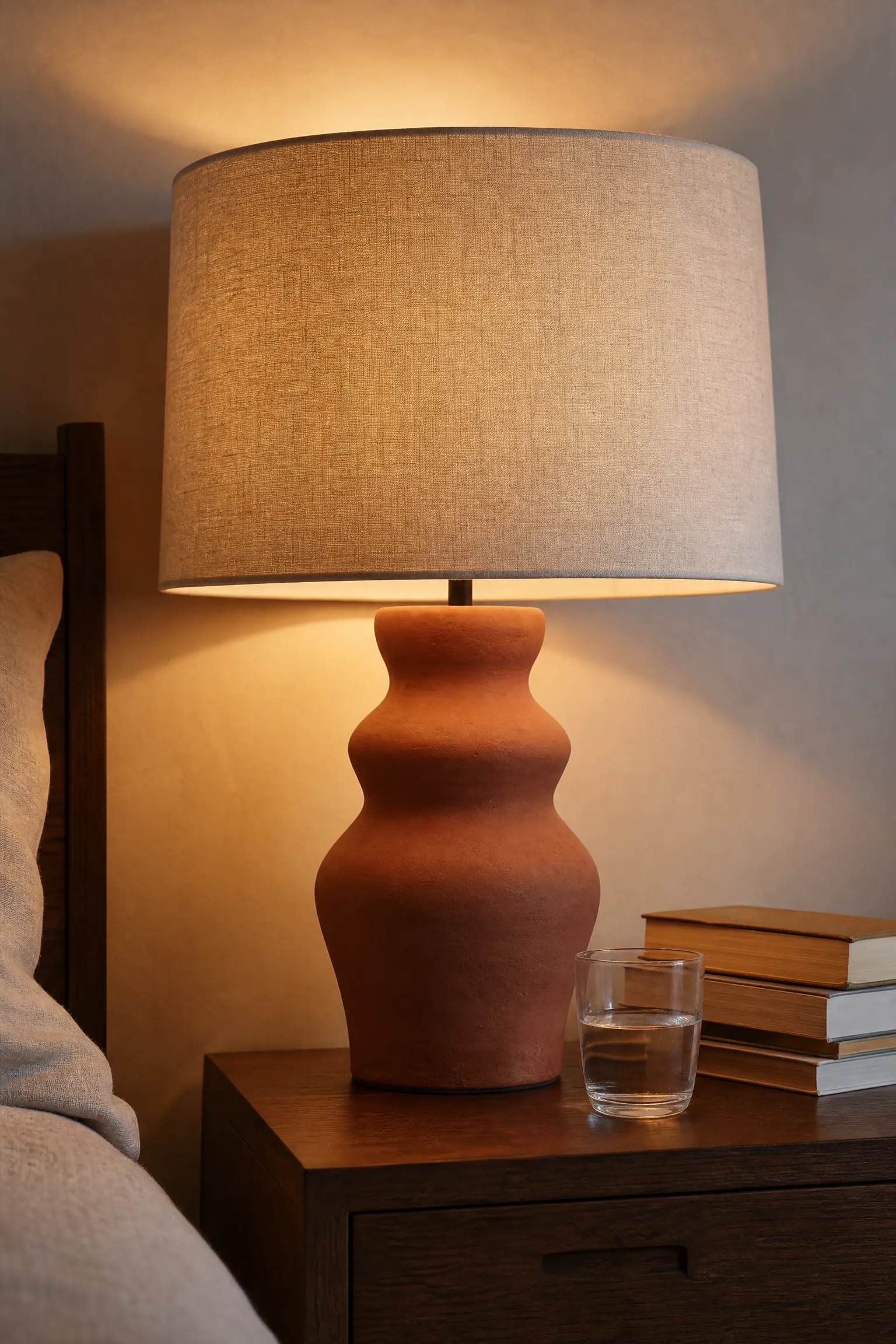
14. A Decorative Table Lamp With an Oversized Shade
Table lamps are the most straightforward form of bedroom accent lighting, but the difference between a lamp that just provides light and one that actually contributes to the room comes down almost entirely to scale and material. An oversized shade, one that is wider than seems strictly necessary, diffuses light over a larger area and creates a softer, more flattering glow than a narrow shade that concentrates light in a tight column. Look for shades in natural linen, pleated silk, or woven rattan, all of which filter light beautifully and add texture to the bedside zone in the daytime when the lamp is off. The base material matters too: ceramic glazed bases in earthy tones like terracotta, sage, and warm white suit organic modern and Mediterranean-influenced bedrooms, while sculpted plaster or concrete bases suit more minimal and Japandi spaces. Pair the lamp with a 40 to 60-watt equivalent warm LED bulb for the kind of glow that makes everyone look good. Budget range is wide here, from $40 for a simple well-proportioned lamp to $400 or more for designer ceramic pieces.
Designer Advice: If you are buying a pair for either side of the bed, resist matching them exactly. Two lamps in the same scale but different styles often look more considered than a perfectly matched set.
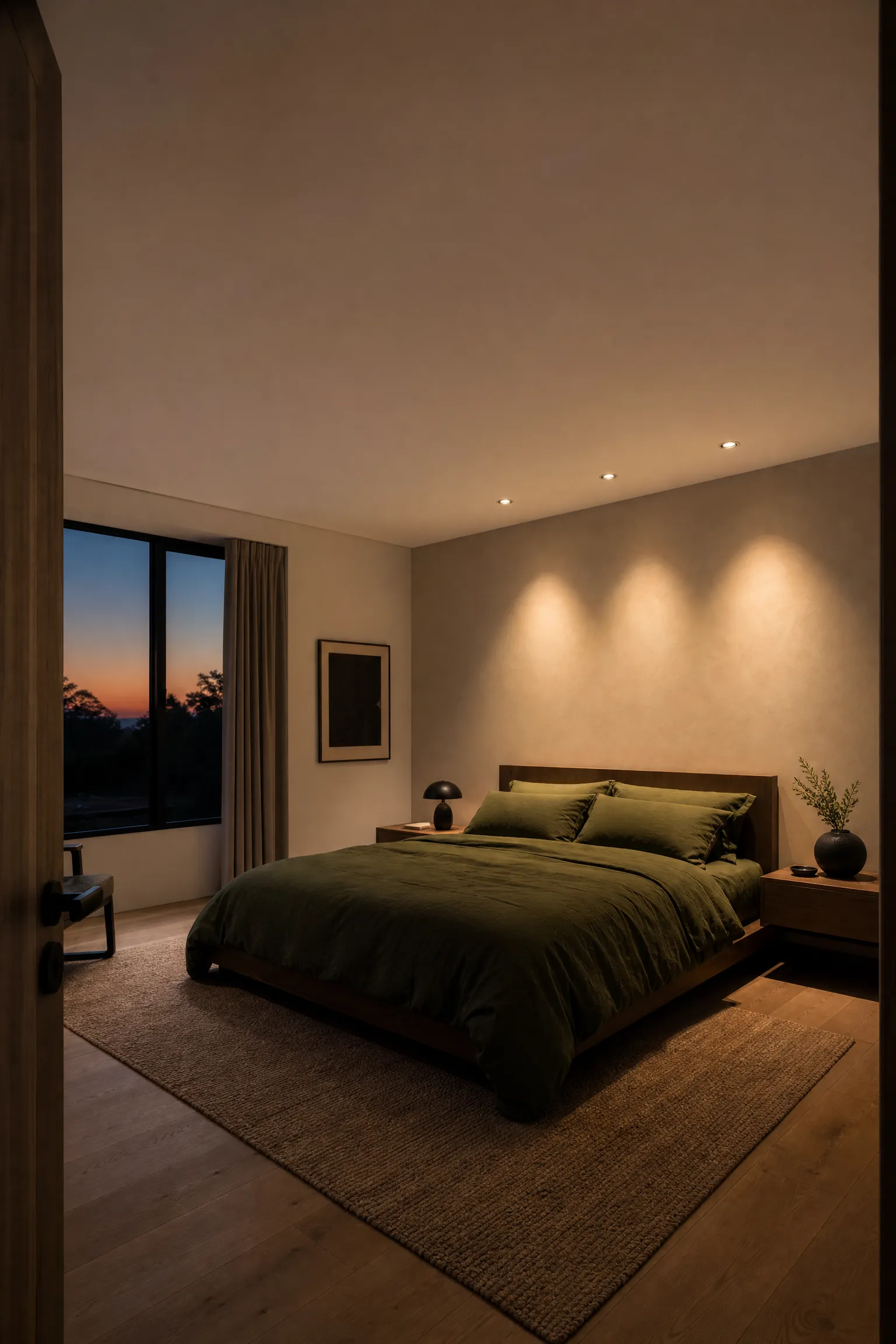
15. Recessed Ceiling Spotlights on a Dimmer
Recessed spotlights are often treated as purely ambient lighting, but when they are well-positioned and put on a dimmer they function beautifully as accent lighting too. The key is aim: a recessed spotlight pointed directly downward produces a flat, evenly lit room, but one angled at 25 to 30 degrees toward a specific wall, headboard, or piece of furniture produces a wash of directed light that creates shadow and depth. In practice, this means positioning fixtures so they highlight the headboard wall, graze the texture of a feature wall, or pool light on a specific piece of furniture. This technique is widely used in high-end hotel bedrooms because it looks effortless once installed, with no visible cords, no fixtures on the nightstand, and no clutter. It does require some planning and ideally a skilled electrician for installation, making it a more significant investment, but for a bedroom renovation this is one of the most versatile lighting decisions you can make since the fixtures can serve ambient, accent, and task functions depending on their position and dimmer setting.
Reality Check: Standard recessed lights with fixed trim rings cannot be re-aimed after installation, so plan the position of each fixture carefully before the ceiling is finished.
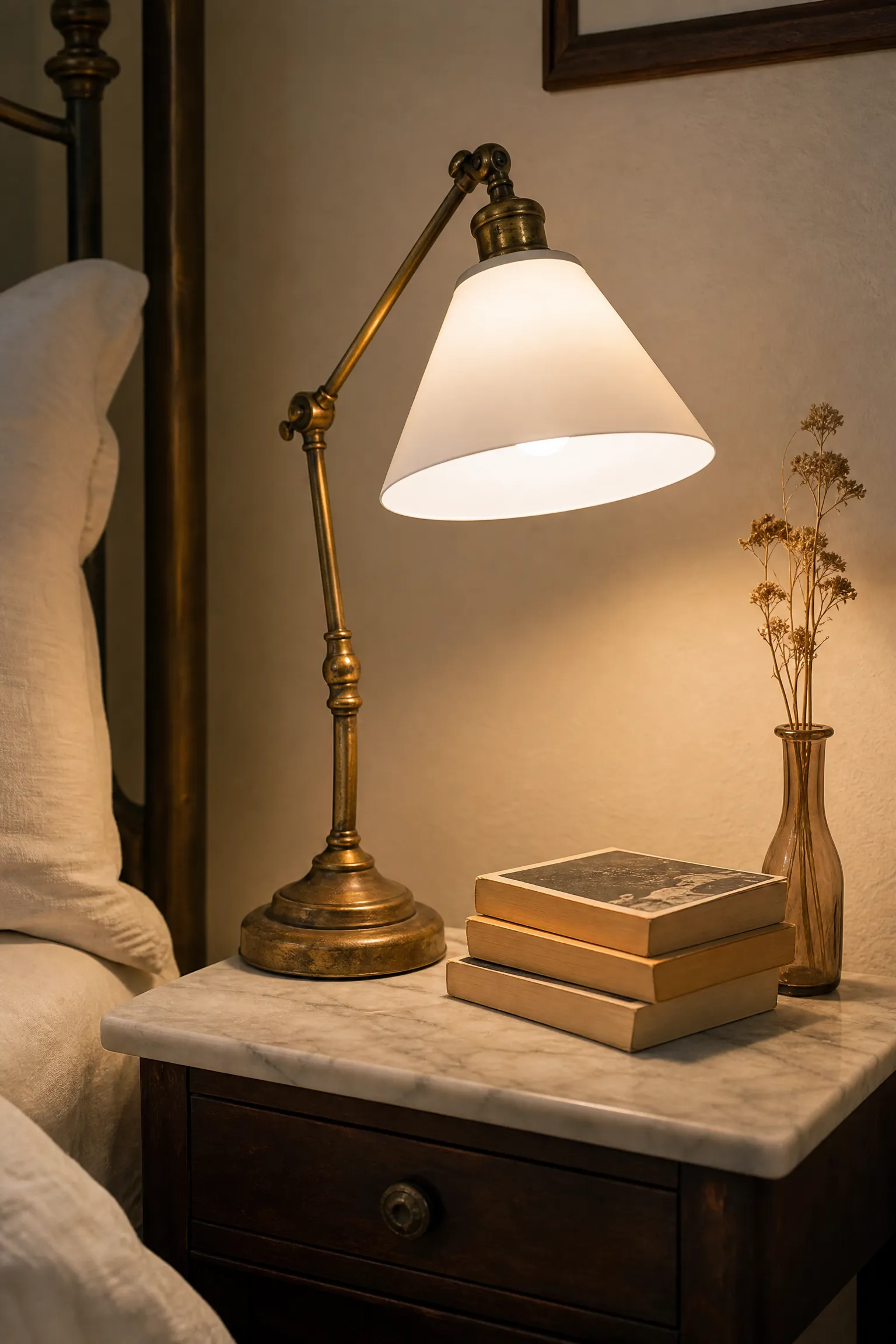
16. A Vintage or Antique Bedside Lamp
There is something a vintage or antique lamp does for a bedroom that a new lamp simply cannot replicate, and it has to do with the visual weight of age. An older lamp, whether it is a ceramic base from a flea market find, a brass student lamp from an estate sale, or a refurbished mid-century piece, carries a sense of history and character that immediately makes a room feel layered and lived-in rather than freshly assembled. From a practical standpoint, older brass fixtures take on a warm, slightly irregular patina that reflects light in a way that matte modern finishes do not, and the result is a richer, more dimensional glow at the bedside. Pair a vintage lamp with a new shade, since original shades are often yellowed or damaged, and choose a replacement in natural linen or cotton for a look that bridges old and new. Flea markets, antique shops, and estate sale apps like Chairish or Facebook Marketplace are the best sources, and good finds are regularly available for $20 to $100.
Heads Up: Always have a vintage lamp re-wired by an electrician before using it, especially if the cord is original. Old insulation degrades and presents a genuine fire risk.
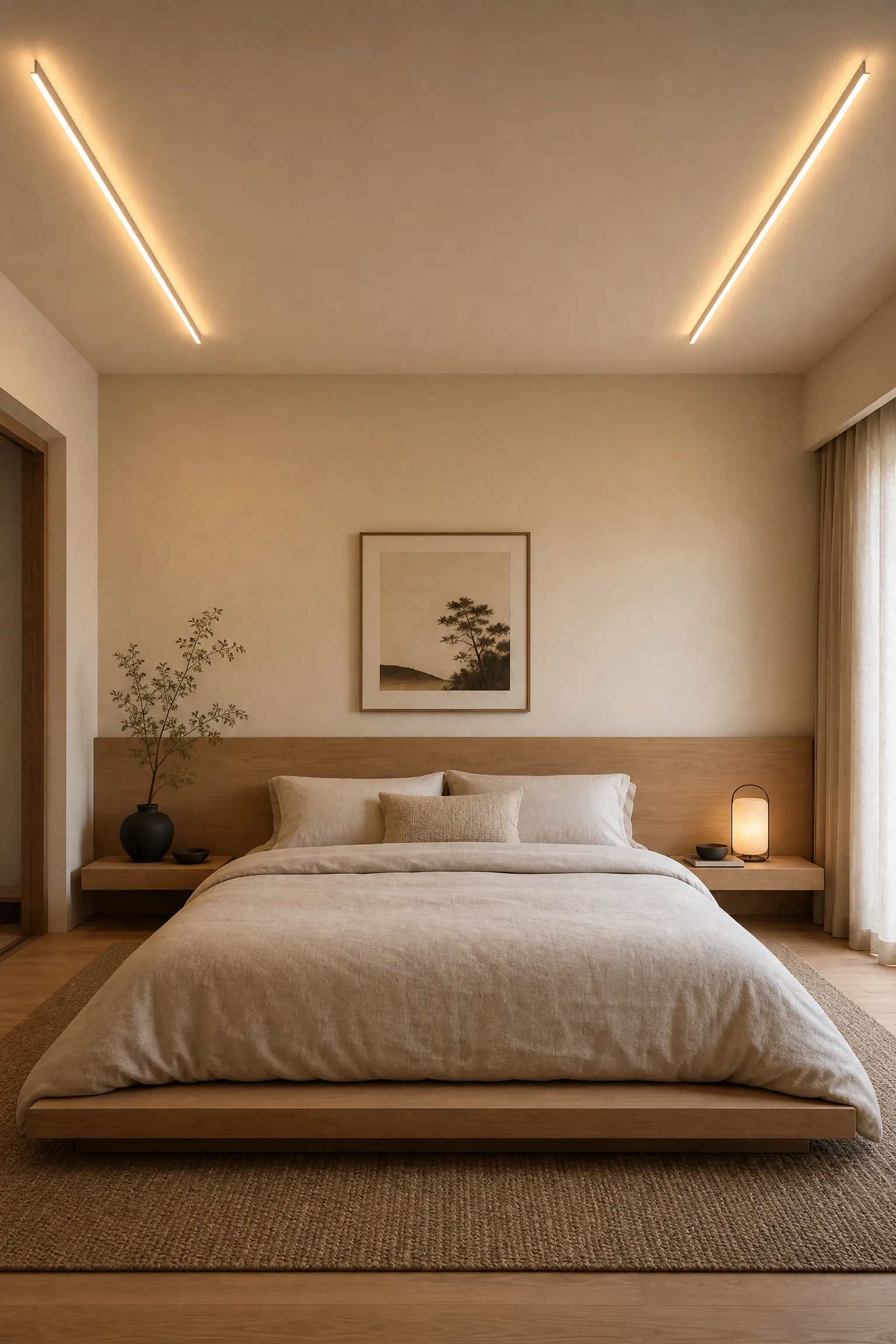
17. Horizontal LED Light Bars on the Ceiling
A ceiling-mounted horizontal LED bar, often called an LED panel or linear fixture, used intentionally as a design feature rather than a default overhead light is an idea that is well-established in Scandinavian and Japanese interior design and increasingly common in contemporary bedrooms elsewhere. Rather than a single centered fixture, a pair of parallel linear LED bars mounted symmetrically on the ceiling and pointed slightly inward gives the room a modern, architectural quality while keeping the light directable and dimmable. The key is to choose fixtures with a warm, diffused light output and to mount them off-center so they graze the ceiling surface and create a slight shadow effect rather than flooding the room with flat light. This suits minimalist, contemporary, and Japandi bedrooms particularly well. Budget-wise, quality LED linear fixtures for residential use range from $80 to $300 per piece, and the effect is significantly more polished than a standard ceiling fan light kit.
Quick Tip: Look for fixtures with a color rendering index (CRI) of 90 or above so colors in your bedroom read as true and accurate under the light.
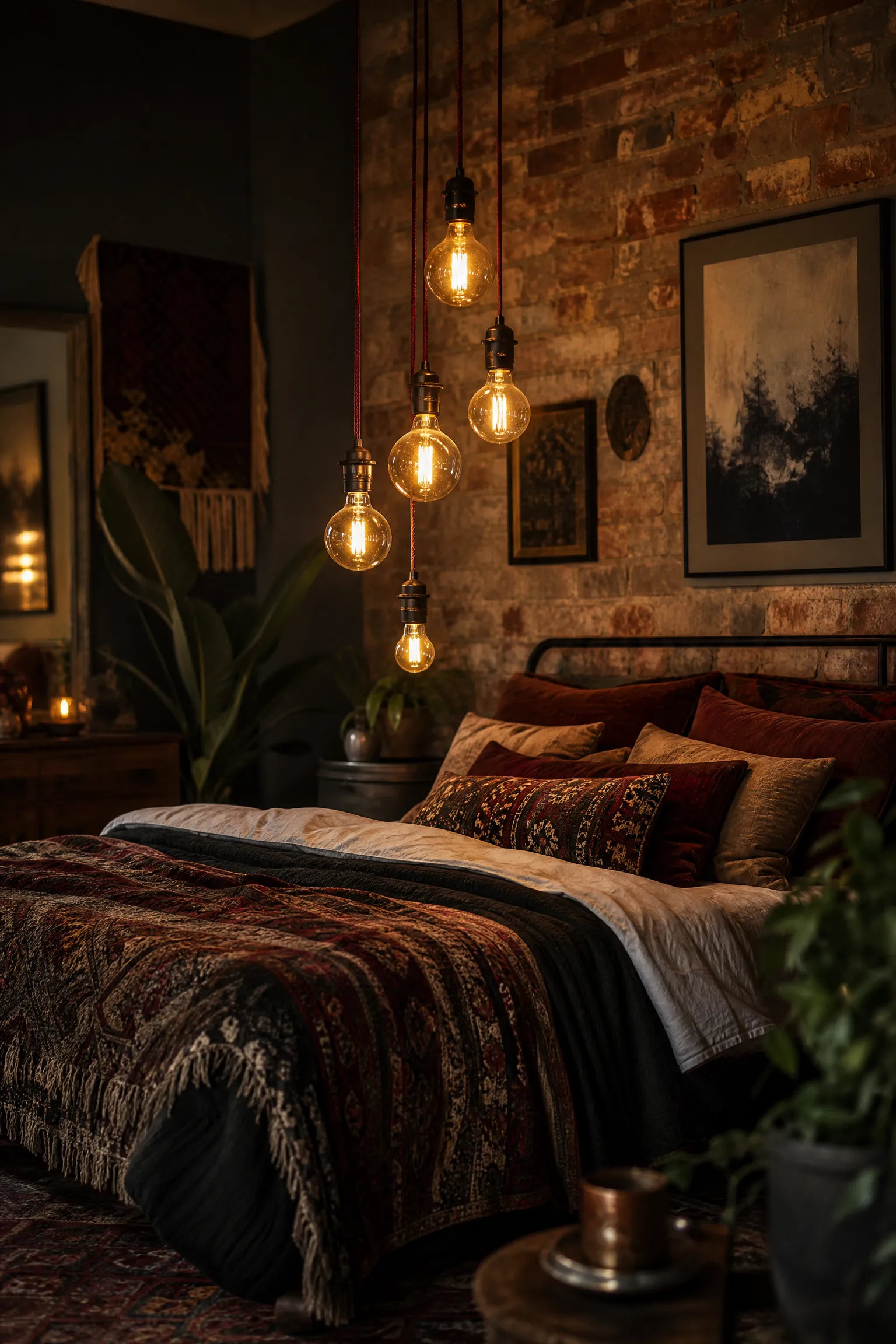
18. Candle-Style Edison Bulb Clusters
A cluster of pendant lights using vintage-style Edison bulbs hung at varying lengths from the ceiling above the bed is a look that has been popular in industrial and eclectic interiors for years, and it remains one of the most atmospheric approaches to bedroom lighting when executed with restraint. The key word is restraint: three to five pendants in a loose asymmetric cluster reads as artistic and intentional, while seven or more starts to feel overwhelming and slightly restaurant-like. Use Edison bulbs in the ST64 or globe G125 shape for the most visually interesting filament display, and choose pendants with minimal shade so the bulb itself is the feature. Cloth-covered cords in black, burgundy, or natural linen add texture and color to what would otherwise be a purely industrial look, making the cluster feel warmer. This look suits exposed-brick rooms, apartments with high ceilings, and eclectic or bohemian bedrooms. Installation typically requires a ceiling medallion with a multi-cord canopy and some basic wiring, putting it in the DIY-possible but electrician-recommended category.
Pro Move: Use smart bulbs in the cluster so you can dim them simultaneously from one app or voice command rather than managing each pendant separately.
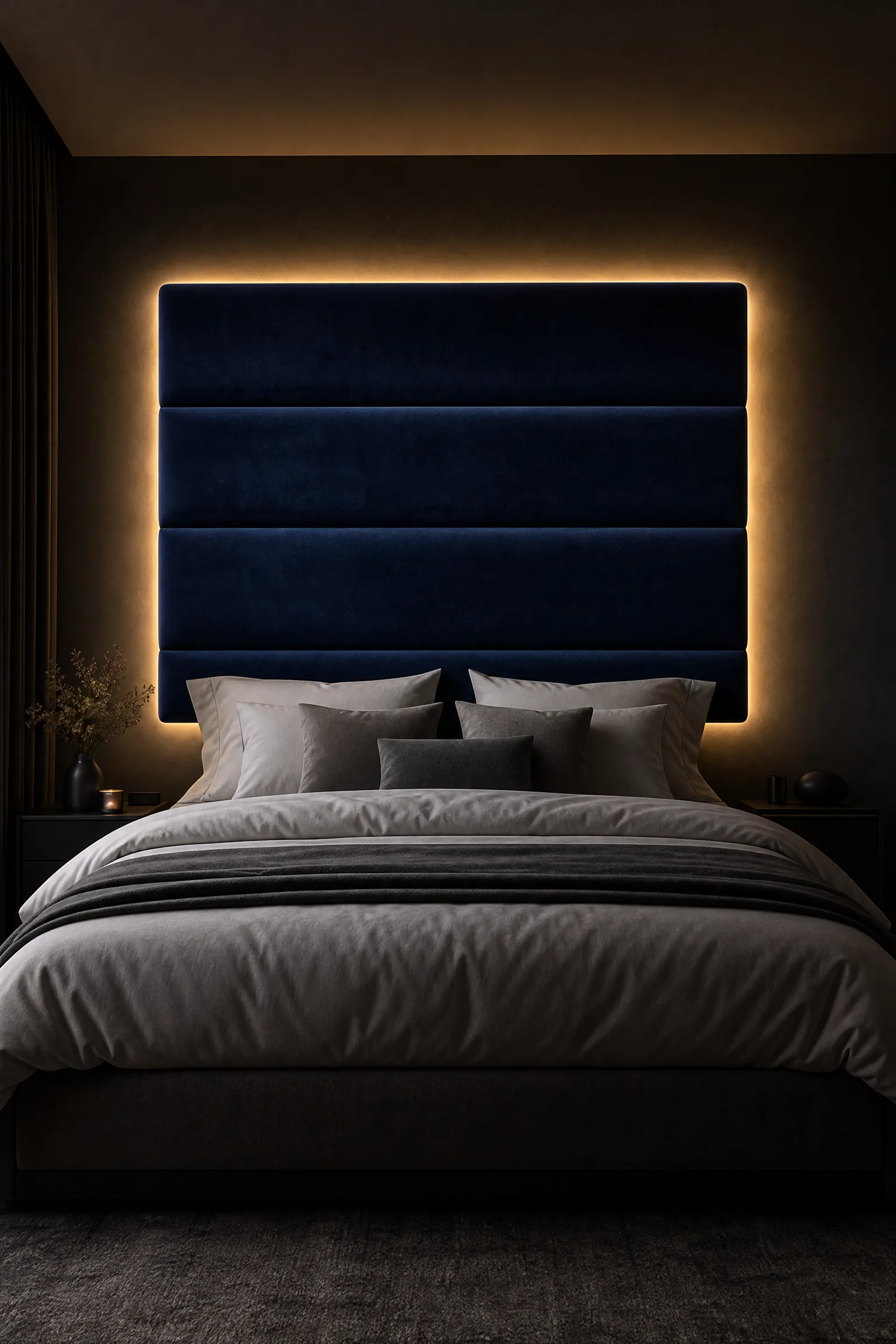
19. Backlit Floating Headboard Panel
A floating headboard panel, essentially a large upholstered or wood panel mounted on the wall behind the bed with a gap between the panel and the wall, creates the perfect housing for a hidden LED strip that backlights the entire panel from behind. Unlike simple headboard backlighting where the strip is attached to an existing headboard frame, this approach is purpose-built for the effect. The panel can be custom-made or sourced from modular bedroom furniture brands, and the backlight turns what might otherwise be a plain upholstered rectangle into a glowing architectural element that anchors the entire room. For the upholstery, velvet in deep jewel tones like forest green, midnight blue, or charcoal does particularly well in this application because the plush surface catches and diffuses the edge-glow from the sides of the panel. This is a mid-to-upper-budget project, generally $300 to $1,500 depending on size and whether you DIY or commission it, but the visual result is genuinely hotel-quality.
Designer Advice: Leave at least 3 to 4 inches of space between the back of the panel and the wall so the light has room to spread and soften before it hits the surface.
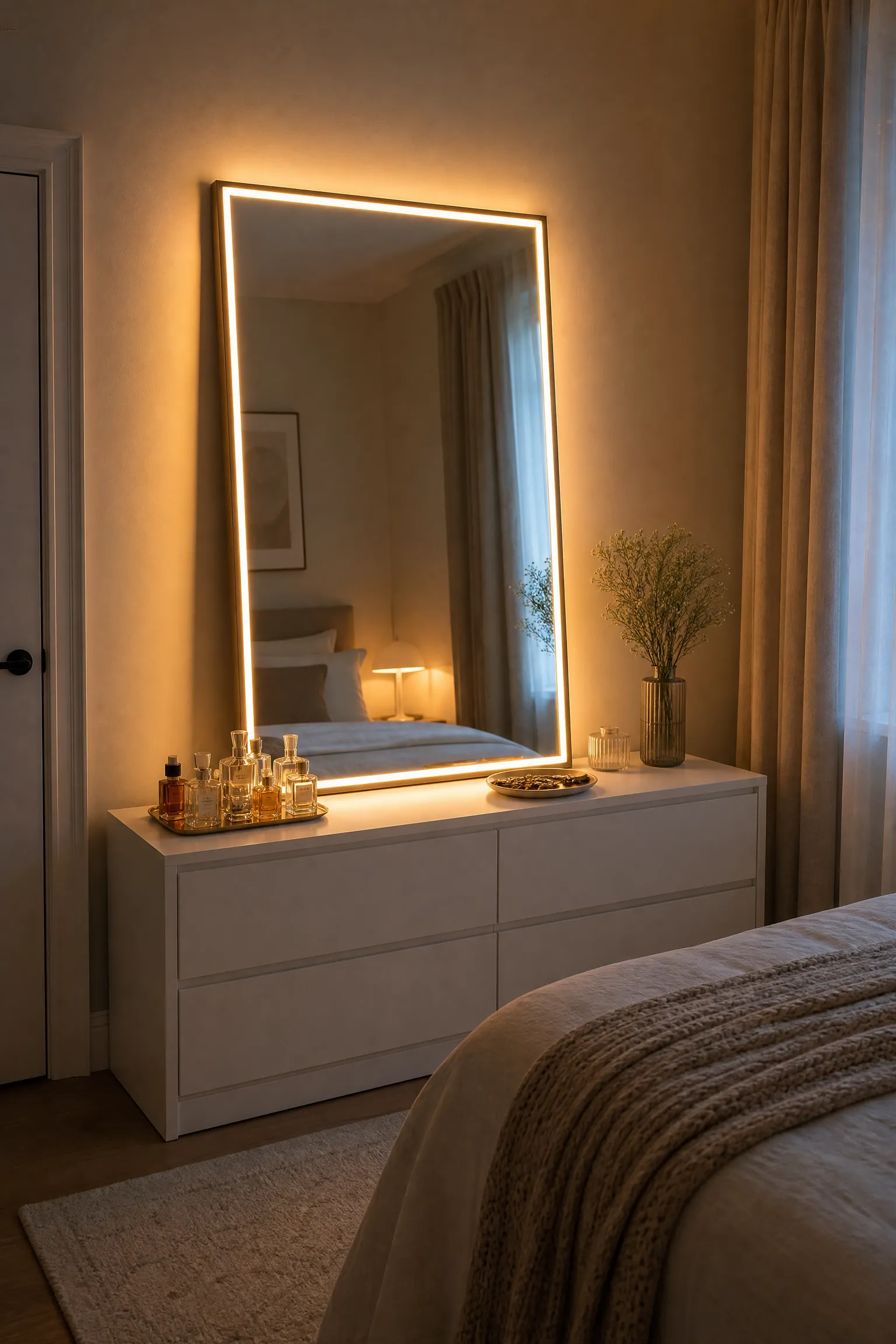
20. Landscape Mirror With Built-In LED Frame
A large mirror with an integrated LED frame or a backlit edge is a bedroom accent lighting idea that doubles as functional dressing-room infrastructure. Positioned above a dresser or leaning against a wall in a bedroom corner, a lit mirror provides flattering even illumination for getting dressed or applying makeup while also adding a strong visual anchor to the wall it occupies. The best versions of this idea use a warm white LED temperature around 3000K, which closely mimics natural daylight and renders skin tones accurately without the harsh cool light that makes makeup application unreliable. Hollywood-style mirrors with individual globe bulbs are the bolder, more theatrical choice, while slim edge-lit mirrors in a frameless or thin-framed design suit minimal and contemporary bedrooms better. Budget-wise, quality lit mirrors range from $80 for basic LED-framed options to $500 or more for Hollywood-style designer pieces.
Reality Check: Be honest with yourself about where the mirror actually lives in the room. A lit mirror in a dark corner with no natural light nearby is a genuinely useful tool. A lit mirror on a wall already flooded with daylight is mostly decorative.
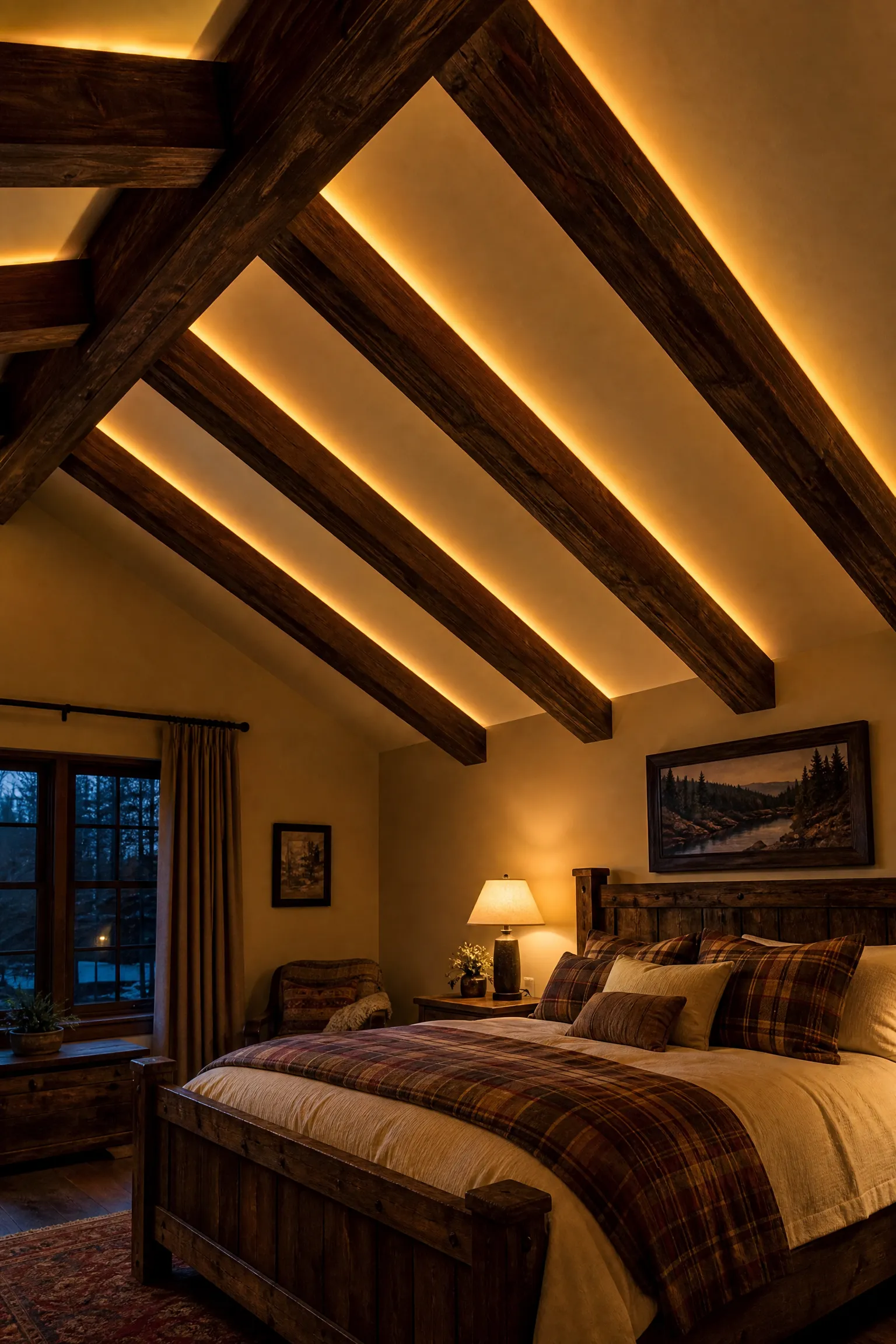
21. Rope Lights Tucked Along a Ceiling Beam
If your bedroom has exposed ceiling beams, whether genuine structural timber or decorative faux beams, running a slim rope light or LED strip along the inner top edge of each beam is a lighting detail that looks more expensive and considered than it actually is. The light tucks along the underside groove of the beam and washes downward, creating a warm, layered ceiling plane that gives the room a distinctly lodge-like or Scandinavian farmhouse quality. Warm amber rope lights work particularly well here, as they reinforce the natural material of the wood rather than contradicting it. For faux beams, this technique also has the added benefit of adding visual weight and convincing realism to what might otherwise read as obviously fake. The lighting itself is a very affordable addition, with rope lights or LED strips for this application costing as little as $20 to $60 for a full ceiling run. The effect scales beautifully in larger rooms with cathedral ceilings.
Quick Tip: Use a warm amber or candlelight-temperature LED strip rather than a standard warm white for beam lighting, as the slightly richer tone reads as more natural against raw timber.
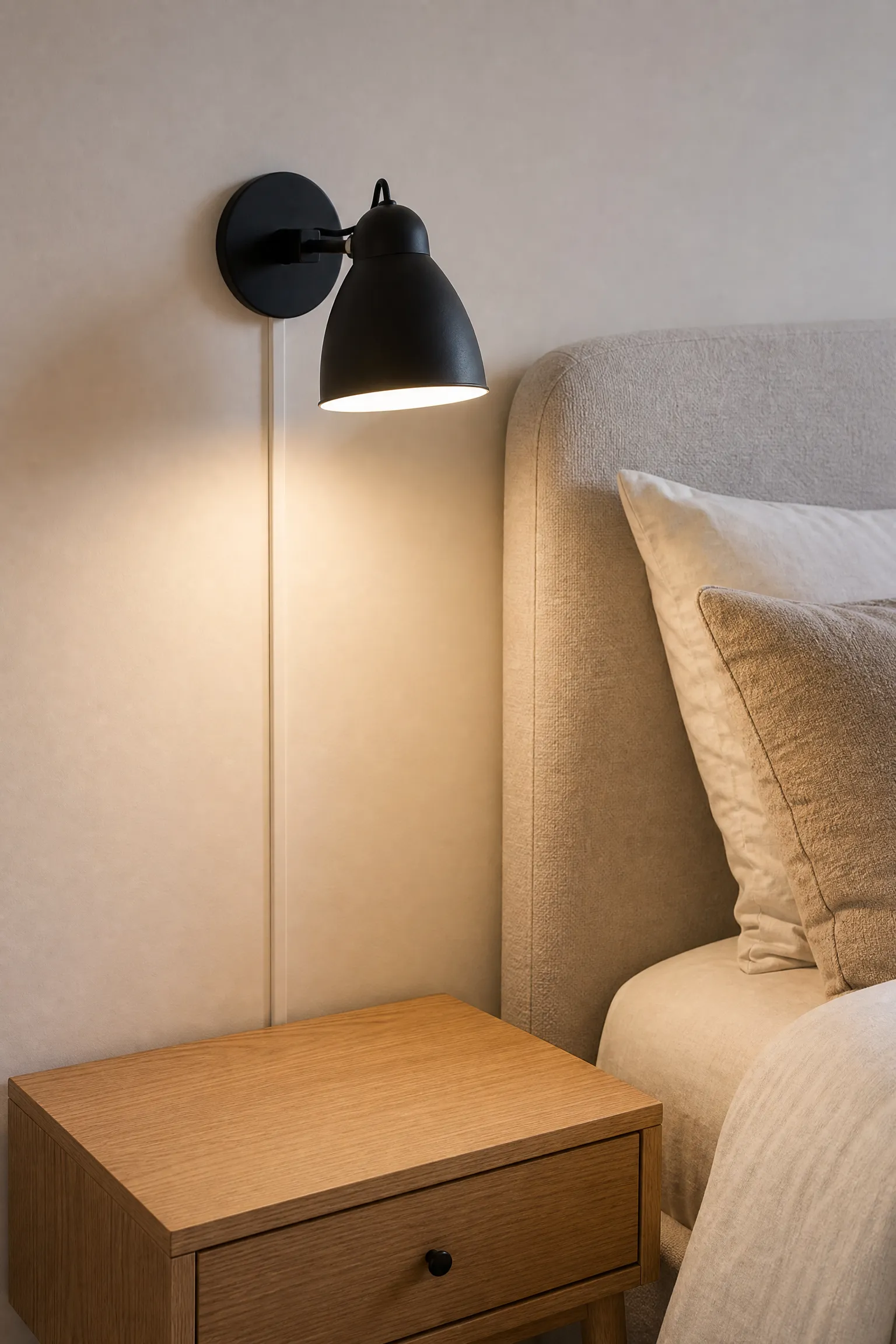
22. Plug-In Wall Sconce Without Hardwiring
The assumption that you need an electrician to add wall-mounted bedside lighting is one that stops a lot of people from ever trying it, but plug-in wall sconces have improved dramatically in recent years and are now widely available in designs sophisticated enough to read as intentional rather than improvised. The cord management is the key: most plug-in sconces come with a cord that needs to be routed neatly down the wall and along the baseboard to the nearest outlet. Running the cord inside a slim cord cover painted to match the wall color makes it nearly invisible, and the result looks virtually identical to a hardwired installation. For bedrooms with limited nightstand space or where you want to keep the bedside area clean and minimal, this is one of the most practical ideas on this list, at a total cost often below $150 for a pair including the cord covers.
Pro Move: Look for plug-in sconces with an integrated on/off switch on the cord rather than on the fixture itself, so you can control the light without reaching for the wall.
23. Color-Changing Smart Bulbs in Existing Fixtures
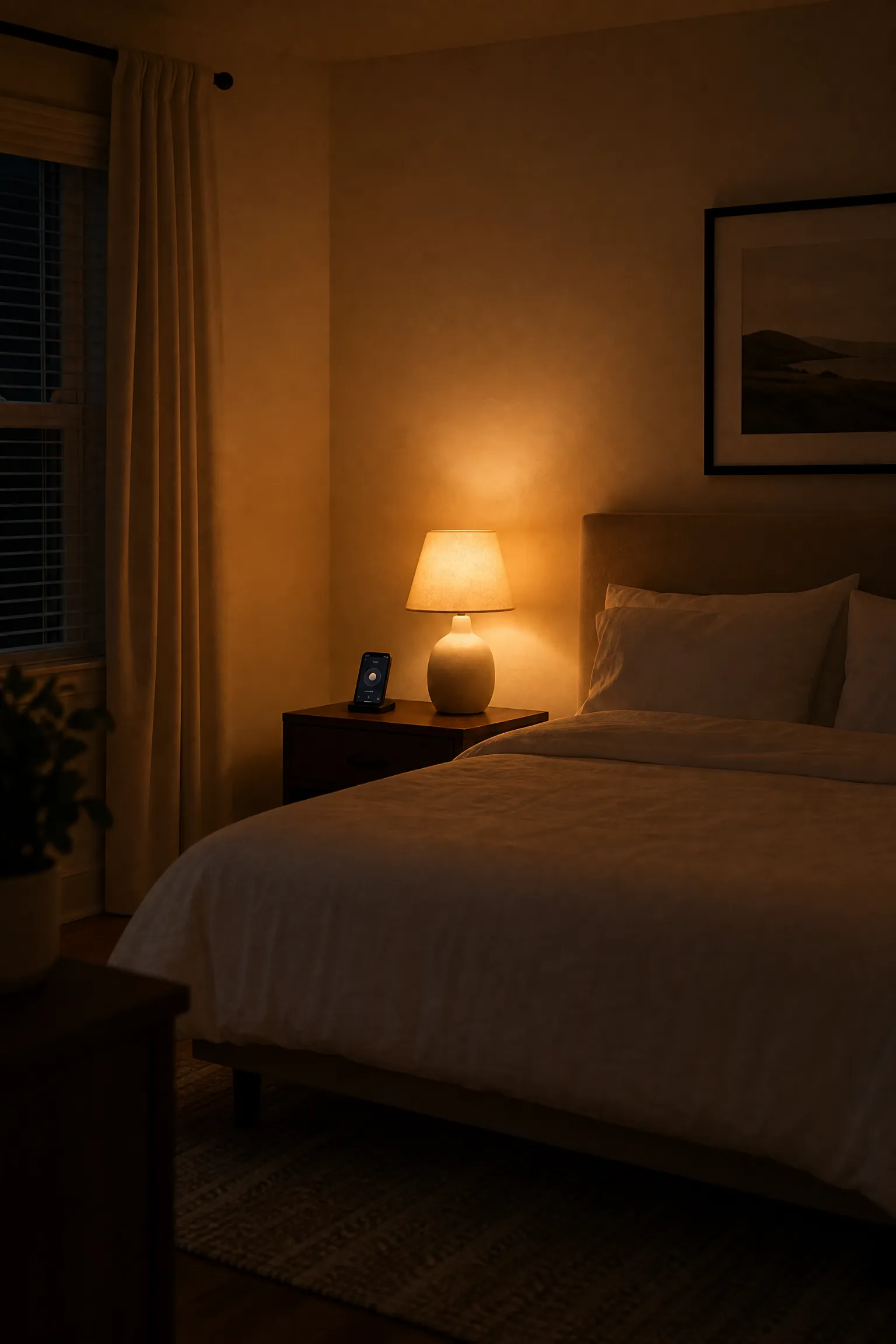
This is the most accessible idea on this list, and possibly the most underestimated one. Replacing a standard bulb in an existing bedside lamp or overhead fixture with a color-changing smart bulb costs as little as $12 to $25 per bulb and immediately gives you more control over the mood and color temperature of that light source than any fixed fixture can offer. In the morning, a smart bulb set to a cool, bright daylight temperature helps the body wake up and feel alert. In the evening, the same bulb shifted to a deep warm amber at low intensity mimics candlelight and supports the body’s natural wind-down process. Brands like Philips Hue, LIFX, and several Amazon-branded alternatives all offer tunable white and full-color options with app control, voice assistant compatibility, and scheduling features that make the light responsive to your routine rather than the other way around. This is not a structural or decorative change, it is a behavioral one, and the impact on how the bedroom feels throughout the day is genuine and significant.
Designer Advice: Create two saved scenes in your smart bulb app: one called ‘morning’ at 4000K full brightness and one called ‘wind down’ at 1800K and 20 percent intensity, and use them consistently for a week. The difference in how you feel at both ends of the day is noticeable.
Conclusion
Bedroom accent lighting is not a finishing touch you add after everything else is done. It is one of the foundational decisions that determines how the room feels to be in, not just how it looks in a photograph. The ideas above range from a $15 pack of puck lights to a custom backlit headboard panel at several hundred dollars, which means there is a meaningful starting point at almost every budget. The most important thing is to begin with intention rather than convenience. Think about which surfaces, objects, or zones you actually want to draw attention to, and which parts of the room are better left in shadow. A well-lit bedroom is not a bright bedroom. It is a layered one, with light at different heights, different intensities, and different purposes working together to create a space that shifts and adapts alongside the way you actually use it. Pick one or two ideas from this list, try them in your room, and let the result tell you what to add next.
Frequently Asked Questions
What is the best color temperature for bedroom accent lighting?
For most bedrooms, a warm white in the 2700K to 3000K range is the safest and most universally flattering choice. It mimics the quality of traditional incandescent light and feels genuinely warm and cozy without going so amber that colors in the room read inaccurately. If you have smart bulbs or a color-tunable strip, you can push even warmer to around 1800K to 2200K for late-evening use, which more closely mimics candlelight.
Do I need an electrician to add accent lighting to a bedroom?
Not necessarily. Many of the best accent lighting options, including LED strip lights, plug-in sconces, puck lights, fairy lights, and smart bulbs, require no hardwiring at all. You do need an electrician for recessed spotlights, cove lighting built into the ceiling, and hardwired wall sconces, but there are workarounds for most of these that are either plug-in or battery-powered.
How many light sources should a bedroom have?
Interior designers commonly work with the ‘rule of three’ as a minimum, meaning at least one ambient source, one task source, and one accent source. For a bedroom that feels genuinely layered and atmospheric, four to six light sources at different heights and positions tends to be the sweet spot. The goal is variety in both position and intensity, not just overall brightness.
Can accent lighting actually affect sleep quality?
Yes, and the research on this is fairly consistent. Exposure to blue-toned or high-brightness light in the hour or two before sleep suppresses melatonin production and delays the onset of tiredness. Warm, low-intensity accent lighting, particularly in the amber and candlelight range, has the opposite effect and supports the body’s natural wind-down process. This is one of the strongest practical arguments for investing in dimmable, tunable bedroom lighting.
What is the most affordable way to start adding accent lighting to a bedroom?
Smart bulbs and LED strip lights are the most accessible starting points. A single color-changing smart bulb in a bedside lamp costs $12 to $25 and immediately gives you dramatically more control over the ambiance. An LED strip behind the headboard can be done for $20 to $60 and produces one of the most visually impactful results on this list. Either of these is a good first step before committing to anything more structural.
Does bedroom accent lighting work in small rooms?
Yes, and in some ways small rooms benefit more from thoughtful accent lighting than large ones do. In a small bedroom, a single well-placed backlit headboard, a pair of compact plug-in sconces, or a string of warm fairy lights can create so much warmth and depth that the limited square footage barely registers. The key in small spaces is to keep the light sources close to the walls and furniture rather than in the center of the room, which draws the eye outward and makes the space feel larger than it is.