Formal Living Rooms That People Actually Want to Sit In
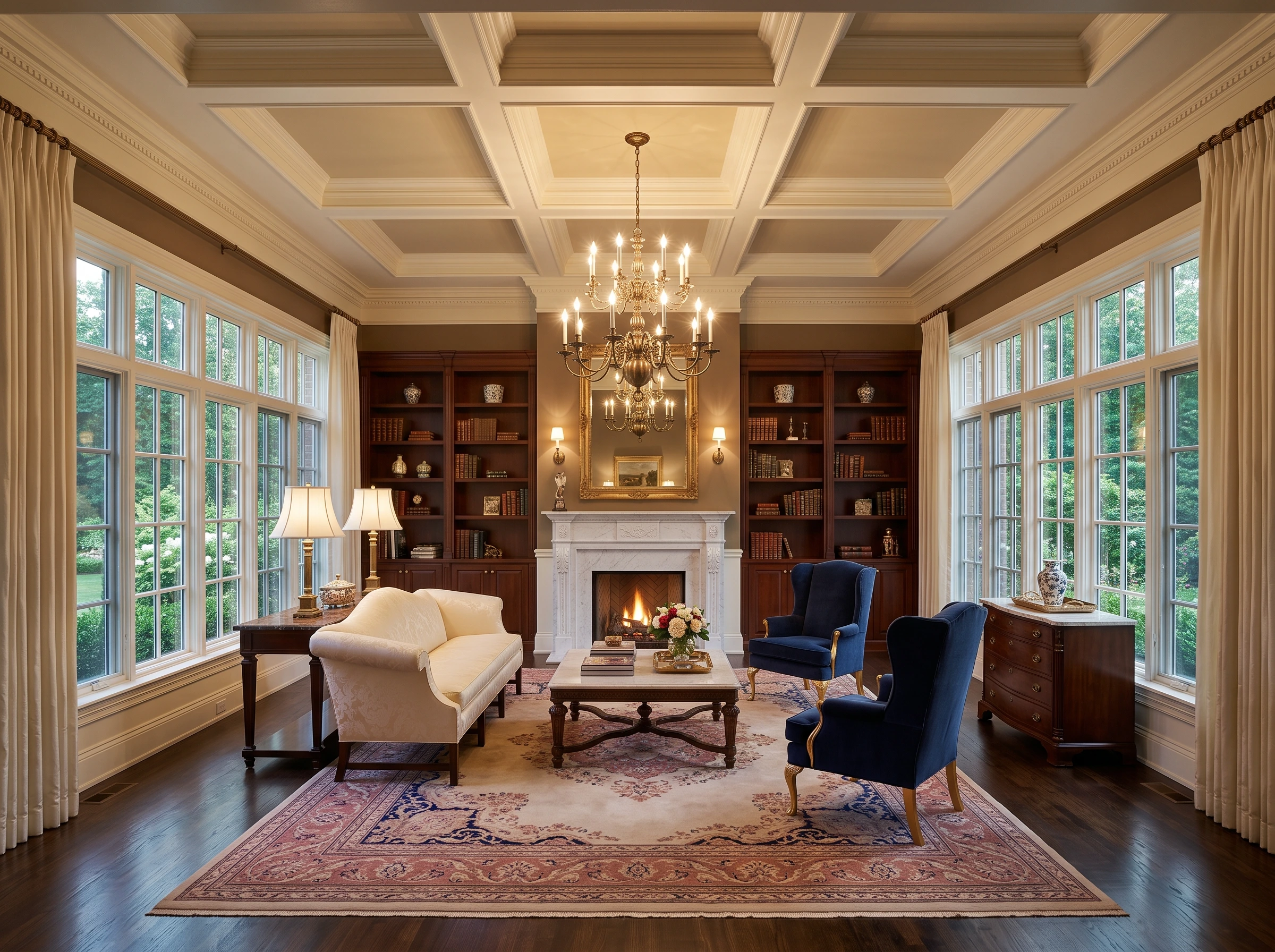
The formal living room has a reputation problem: too many of them look polished in photographs and feel cold in person, like a room preserved for visitors who never quite arrive. The best formal living rooms solve this without sacrificing the refinement that makes them worth having. They are structured and considered without being stiff, and they invite you in rather than making you feel like you should have called ahead.
1. Install Crown Molding to Establish Architectural Authority
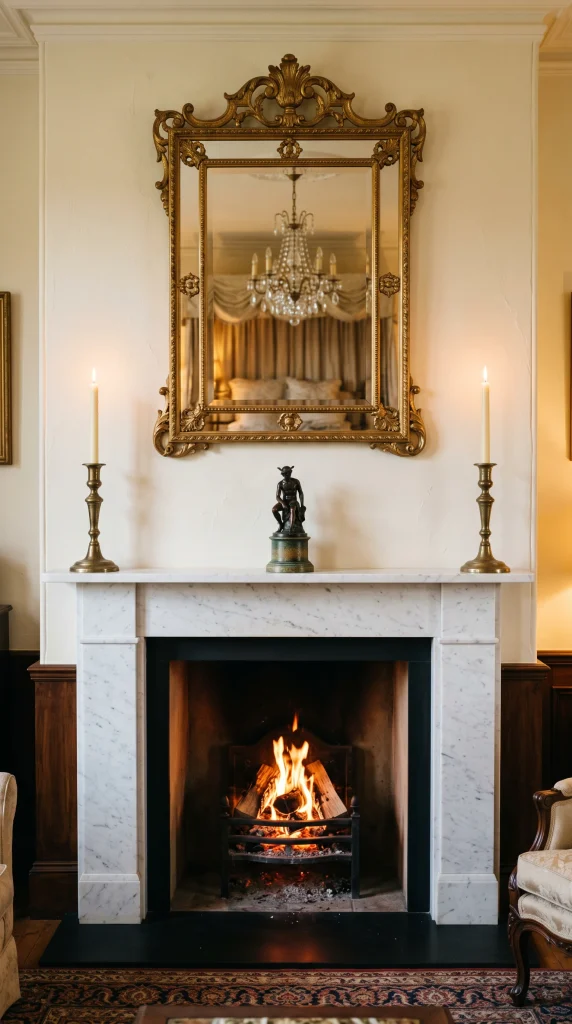
Crown molding is the single most effective way to give a living room a formal architectural identity without structural work, because it defines the boundary between wall and ceiling with a precision that immediately reads as considered and deliberate. A classical ovolo or ogee profile in white or warm cream against painted walls signals the kind of craftsmanship that formal rooms are built around, and it raises the perceived ceiling height even in rooms where the actual ceiling is average.
Pro Move: If your room already has basic crown molding, add a second, slightly smaller profile 4 to 6 inches below it on the wall to create a layered cornice effect. This stacked molding detail is found in Georgian and Federal-style interiors and immediately reads as more architecturally significant than a single profile alone.
2. Make the Fireplace the Structural Focal Point
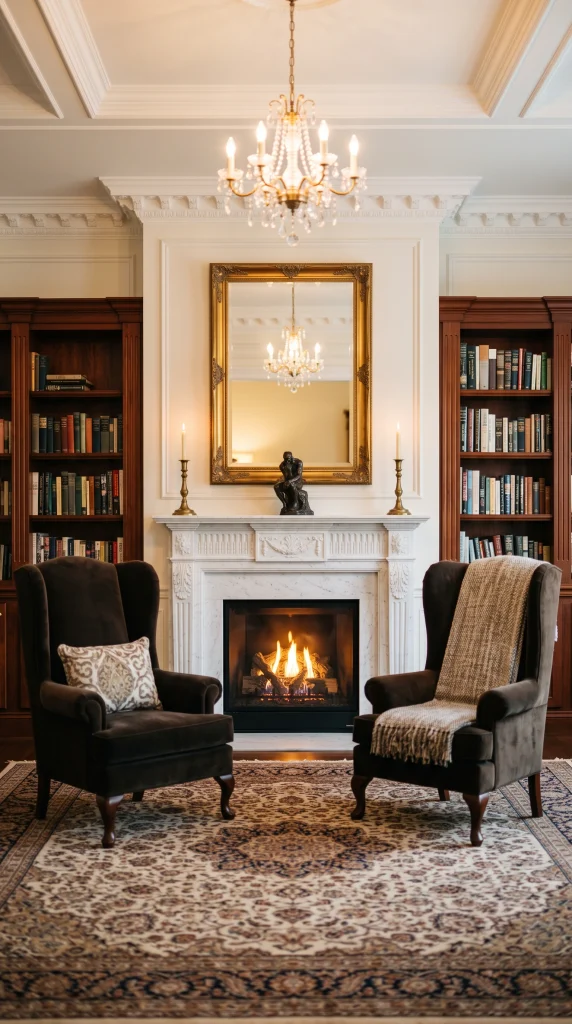
A formal living room needs a dominant focal point that commands attention from the moment you enter, and the fireplace, when treated as a piece of architecture rather than a functional appliance, is the most natural choice. The surround material, whether marble, limestone, carved wood, or painted plaster, the proportions of the mantelpiece, and the height of the overmantel all contribute to the fireplace reading as a designed element rather than a box in the wall.
Designer Advice: Arrange all seating to face or reference the fireplace as the primary axis of the room. Even if the sofa faces forward, the armchairs should angle toward the firebox. A room where seating turns its back on the fireplace loses the formal logic that the fireplace presence creates.
3. Build Symmetry Into the Main Seating Wall

Symmetry is the grammar of formal design, and arranging the main seating wall, the wall the fireplace or focal feature sits on, with matching pairs on either side, two sconces at equal heights, matching built-in cabinets, a pair of armchairs at equal distance from the center, creates a visual order that the eye reads immediately as formal and intentional. The symmetry does not need to be absolute: an asymmetric arrangement of objects on the mantelpiece or one slightly different plant on each side keeps the room from reading as sterile.
Quick Tip: Breaking perfect symmetry in exactly one deliberate place, a single painting hung off-center, a slightly different lamp shade on one side, gives the room a human quality that prevents it from reading as a showroom. One intentional imperfection in a symmetrical arrangement reads as confidence; two start to look like mistakes.
| Symmetrical Element | How to Execute | Where to Break It | Effect Created |
| Matching sofa and loveseat | Same fabric, facing each other | Different cushion arrangement each side | Classic conversation grouping |
| Paired armchairs | Identical upholstery and legs | Different throw on each arm | Balanced without being rigid |
| Flanking built-in cabinets | Equal height and width each side | Vary objects displayed on shelves | Architectural without being cold |
| Twin table lamps | Same base, same shade | Slight height difference on tables | Formal yet collected |
4. Choose a Sofa With a Tailored, High-Back Silhouette

The sofa in a formal living room is the piece that sets the tone for everything else, and a high-back sofa with tight back cushions, clean arms, and a structured silhouette, whether a classic Chesterfield, a camelback, or a modern tuxedo profile, signals formality through its posture alone. The fabric matters as much as the form: velvet, silk, damask, brocade, or a tightly woven wool blend are the correct formal upholstery materials, where loose weaves and casual textures like chunky linen or jersey read as too relaxed for the register.
Reality Check: A high-back formal sofa does not have to mean an uncomfortable one. Seat depth is the key variable: a seat depth of 20 to 22 inches rather than the deep 26-inch casual sofa depth keeps posture upright without being punishing, and that upright posture is part of what makes a seating arrangement read as formal.
5. Use a Pair of Wingback or Club Chairs as the Anchor Pair
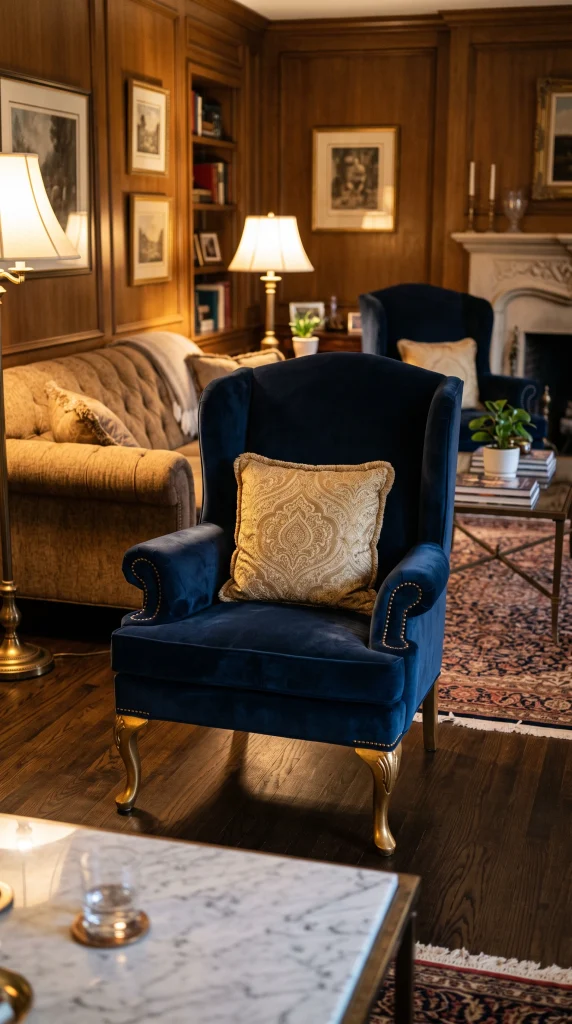
Wingback chairs and club chairs are the archetypal seating of the formal living room, with a design heritage rooted in Georgian drawing rooms and Edwardian parlors that gives them an inherent formal authority no sectional sofa or casual armchair can replicate. A pair of matching wingback chairs placed symmetrically at 45-degree angles to the sofa, facing each other across the conversation grouping, establishes the seating structure that a formal room requires and makes the room feel complete even before a single accessory is placed.
Pro Move: Upholster the wingback chairs in a fabric that is related but distinct from the sofa, such as a tonal stripe or a small-scale pattern in the same color family as the sofa solid. This deliberate near-match reads as more sophisticated than an exact match and more considered than a completely contrasting choice.
6. Select a Neutral or Muted Palette With One Confident Color

The color palette of a formal living room should be predominantly neutral, cream, warm white, soft taupe, pale grey, or ivory, with one confident color introduced through upholstery, curtains, or an accent wall. The neutral base provides the visual calm and architectural quality that formal rooms require, while the one confident color, a deep navy, a rich burgundy, a muted sage green, or a dusty rose, gives the room personality without overwhelming the considered restraint of the neutral foundation.
Heads Up: Avoid too many competing colors in a formal room. Every additional color beyond the neutral base and one confident choice reduces the sense of refinement and starts to pull the room toward an eclectic or casual register. Formal color restraint is a feature, not a limitation.
7. Hang Floor-to-Ceiling Curtains in a Silk or Heavyweight Linen

Nothing signals the formal intention of a living room more immediately than ceiling-height curtains in a substantial fabric, and silk, heavyweight linen, or a silk-linen blend with a natural drape and slight sheen is the material that does this best. The curtains should hang from a rod positioned 4 to 6 inches below the ceiling cornice, extend 6 to 8 inches past the window frame on each side, and pool very slightly on the floor. This treatment makes any window look more architectural and any room feel more significant.
Designer Advice: In a formal room, avoid grommeted or clip-ring curtain headers. A pencil pleat, pinch pleat, or goblet pleat heading creates the structured, gathered fabric fullness that belongs in a formal register; grommets and clip rings belong in contemporary or casual spaces.
8. Install Wainscoting or Panelled Walls for Architectural Depth
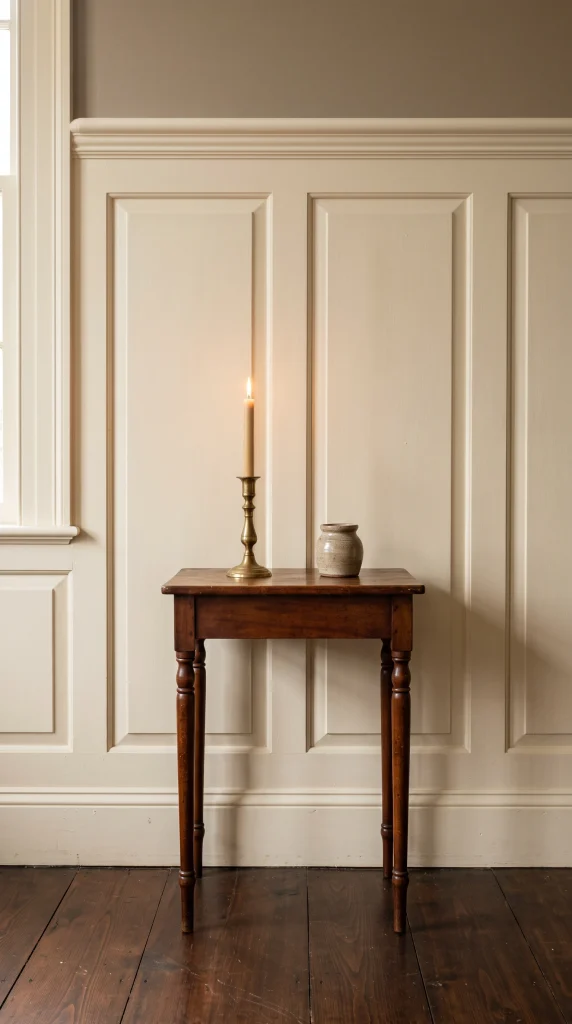
Wainscoting, raised panel walls, or full-height panelling transforms a plain flat wall into an architectural surface that signals quality craftsmanship and historical design references. Applied to the lower half of the wall in a traditional chair-rail format, wainscoting adds visual weight at the base of the room that grounds the furniture and makes the whole space feel more substantial. Full-height panelling, painted the same tone as the walls above for a seamless effect, is even more dramatic and is the wall treatment most associated with Georgian and Federal formal rooms.
Quick Tip: MDF board-and-batten or applied panel moulding achieves a convincing panelled wall effect at a fraction of the cost of traditional raised panel millwork. Paint it the same tone as the surrounding wall for a subtle, architectural result that reads as built-in rather than applied.
9. Choose a Statement Chandelier Scaled Correctly to the Room

A chandelier in a formal living room is not a light fixture: it is a statement about the character of the room, and its scale relative to the space is the most critical decision. The standard rule is that the chandelier diameter in inches should equal the sum of the room’s length and width in feet. A 15 by 18 foot formal living room needs a chandelier approximately 33 inches in diameter. Undersized, a chandelier in a formal room looks like a gesture toward formality rather than a commitment to it; oversized, it overwhelms the furniture below.
Heads Up: In a formal living room the chandelier should hang at approximately 7 feet from the floor in rooms with standard 8-foot ceilings, or slightly higher in rooms with taller ceilings. Never position a chandelier so low that a standing person feels it crowding them, even if the table-setting rule would suggest that height.
10. Add Built-In Bookshelves on Either Side of the Fireplace
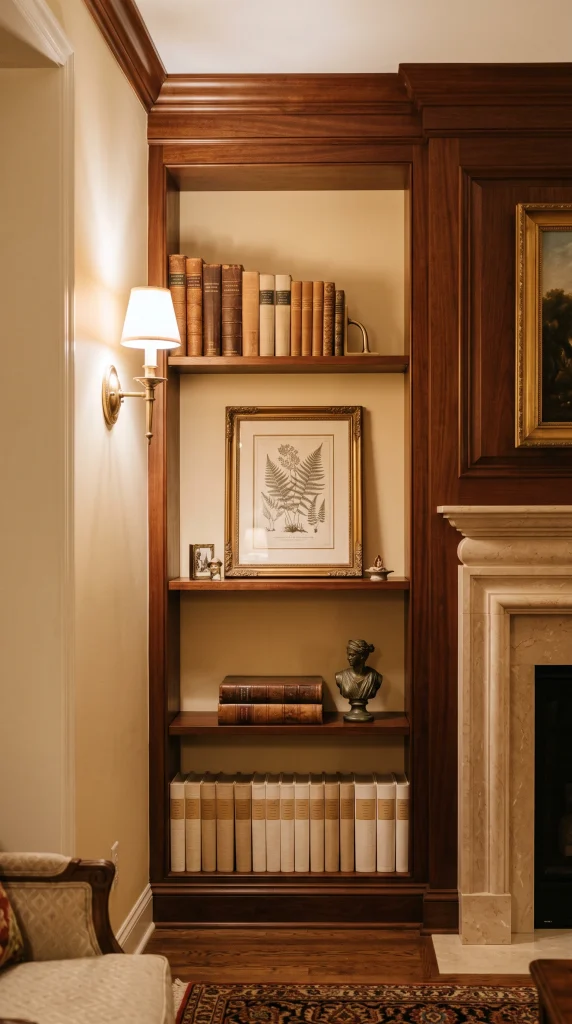
Built-in bookshelves flanking the fireplace are one of the most powerful and most versatile moves in a formal living room: they add architectural symmetry, provide display and storage, make the fireplace read as a designed fireplace wall rather than a standalone appliance, and give the room a sense of permanence and investment that freestanding furniture alone cannot achieve. Painted the same color as the walls for a seamless, architectural quality, or in a contrasting dark shade for a more dramatic library effect, they transform the focal wall from decorative to genuinely designed.
Reality Check: Built-in shelving does not have to be actual built-in millwork. Deep floating shelves with strong brackets, aligned to the same height and depth on each side of the fireplace, achieve a very similar effect at a fraction of the cost and can be removed if you move.
11. Use a Coffered or Decorated Ceiling for Overhead Distinction

A coffered ceiling, a grid of recessed panels created by intersecting beams, is the most architecturally ambitious element of a formal living room and the one that most clearly distinguishes a designed room from a decorated one. Even a simplified version using applied moulding strips to create a coffered grid effect on a flat ceiling, painted in the same tone as the ceiling or in a contrasting warm white, adds overhead visual interest that most living rooms never attempt and that formally trained eyes notice and admire immediately.
Pro Move: Paint the recessed panels of a coffered ceiling in a tone one shade deeper than the surrounding beams and ceiling. This tonal difference creates depth and shadow without requiring actual structural depth, and it makes the coffered pattern visible and elegant rather than flat and graphic.
| Ceiling Treatment | Approximate Cost Level | DIY Feasibility | Formality Effect |
| Applied moulding grid on flat ceiling | Low to mid | Achievable for intermediate DIYer | Strong, architectural, traditional |
| Faux coffered with box beams | Mid | Achievable with basic carpentry | Classic, substantial, refined |
| Structural coffered ceiling | High | Requires contractor | Maximum architectural authority |
| Painted ceiling medallion only | Very low | Fully DIY | Subtle, decorative, period appropriate |
12. Float the Furniture Away From the Walls

One of the most common mistakes in a formal living room is pushing all the furniture against the walls, which creates a layout that looks like a waiting room and prevents the intimate conversation grouping that a formal entertaining space requires. Floating the sofa at least 18 to 24 inches away from the wall, with a console table behind it if needed to fill the gap, and positioning armchairs and side tables within the seating grouping rather than at the room’s perimeter creates a self-contained conversation zone that reads as architecturally intentional and genuinely welcoming.
Designer Advice: In a room with a fireplace, the front edge of the main sofa should be no more than 8 feet from the fireplace opening for the grouping to feel connected to the focal point. Any farther and the sofa appears to have wandered away from the feature it should be referencing.
13. Place an Antique or Heirloom Piece at the Center of the Room’s Story
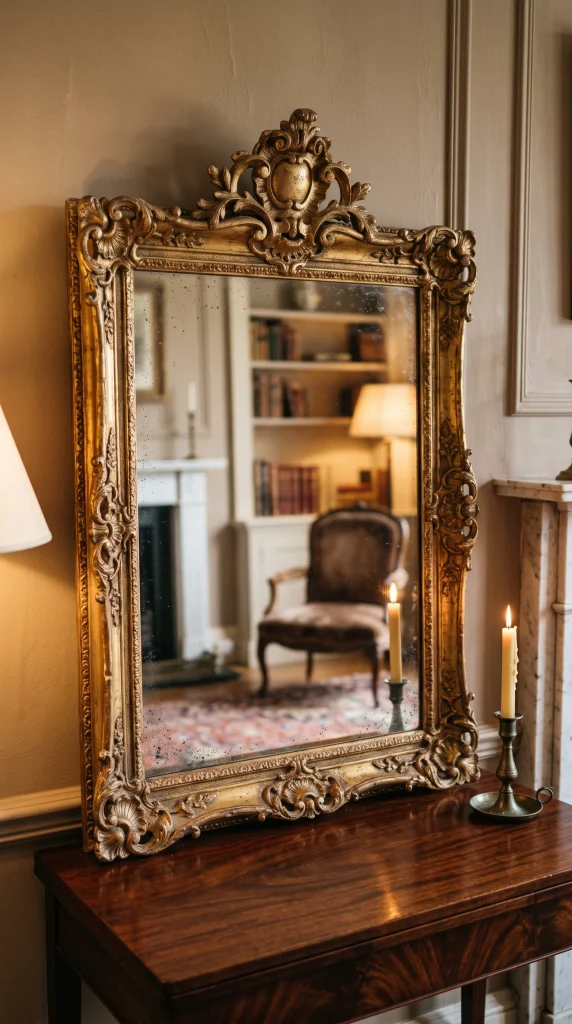
The formal living room that most successfully avoids the showroom feeling is almost always the one with at least one genuine antique or heirloom piece at its center, because authentic age and history introduce a quality of character that no new furniture can replicate. A vintage Chesterfield sofa in a worn leather, an 18th-century giltwood mirror, a pair of antique brass candlesticks, or even a single heirloom side table with visible patina gives the room a sense of having been accumulated over time rather than assembled in an afternoon.
Quick Tip: You do not need to buy expensive antiques to achieve this. A single piece with genuine age and character, even something modest like an old barometer, a vintage silver tray, or a leather-bound book collection, is enough to shift the room from assembled to collected.
14. Choose an Ornate or Architectural Coffee Table
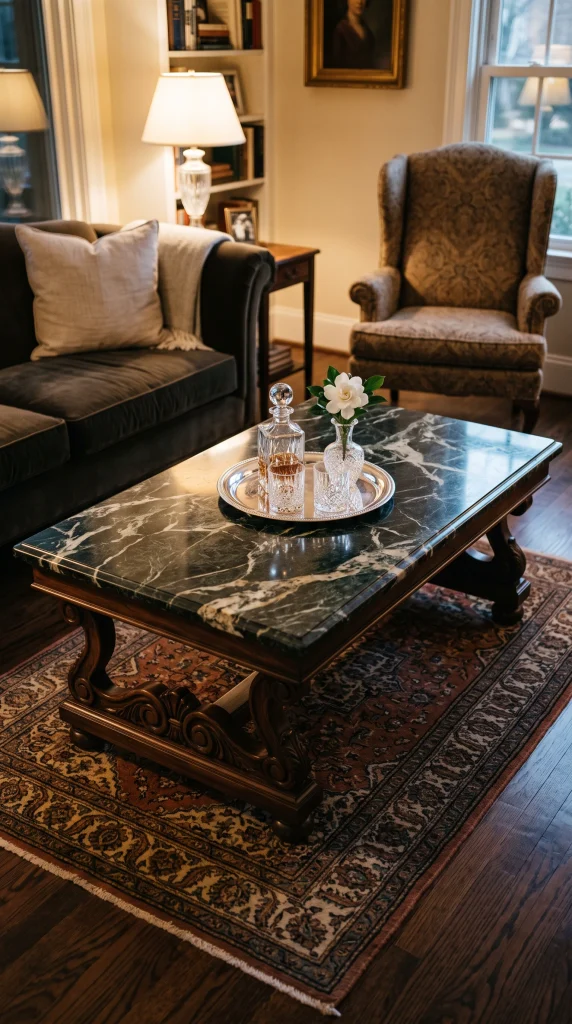
In a formal living room the coffee table is a piece of furniture that needs to function as a sculptural object as well as a surface, and the most effective choices are those with an architectural quality: a table with carved legs, a marble top with a refined metal base, a lacquered surface on a classical plinth, or a glass top on a giltwood or wrought iron base. The coffee table should be substantial enough to anchor the seating grouping visually, which usually means a table at least 48 inches long in a room where the sofa is 84 inches or longer.
Pro Move: Style the formal coffee table with a restrained arrangement: a single tray holding three objects maximum, a low arrangement of fresh or dried botanicals, and one or two books with beautiful covers. Less is always more on a formal coffee table; it should look curated, not decorated.
15. Introduce Silk or Velvet Accent Cushions

The cushions in a formal living room should participate in the register of refinement that the room establishes, which means silk, velvet, brocade, damask, or finely woven jacquard fabrics in relatively restrained colors and patterns. Oversized, casual cushions in chunky knits or printed cotton belong in a family room, not a formal one. In a formal space, a smaller number of firmer, well-made cushions in luxurious fabrics, arranged with precision rather than casually, signals the room’s intention without requiring anything to be removed from practical use.
Reality Check: Formal cushions should have an inner pad that fills the cover completely without bunching or going flat. A deflated or overfull cushion in an expensive silk cover reads as expensive-gone-wrong. Fill size matched exactly to the cover size is a small detail that makes a significant visual difference.
16. Frame the Windows With Swag or Valance Treatments

A traditional swag and tail valance or a formal box pleat valance above the curtain panels elevates a window treatment from functional to architectural and is one of the defining features of a traditionally formal living room. The valance frames the window from above, adds height and ornamental interest to the top of the curtain, and connects the window treatment to the formal register of the room in a way that simple ceiling-hung curtain panels, however beautiful, cannot fully achieve on their own.
Heads Up: Swag valances require significantly more fabric and more precise cutting and hanging than simple curtain panels. Professional installation is strongly recommended for any formal swag treatment; a swag that is poorly cut or hung reads as worse than no treatment at all.
17. Use a Large-Scale Patterned Area Rug as the Room’s Foundation
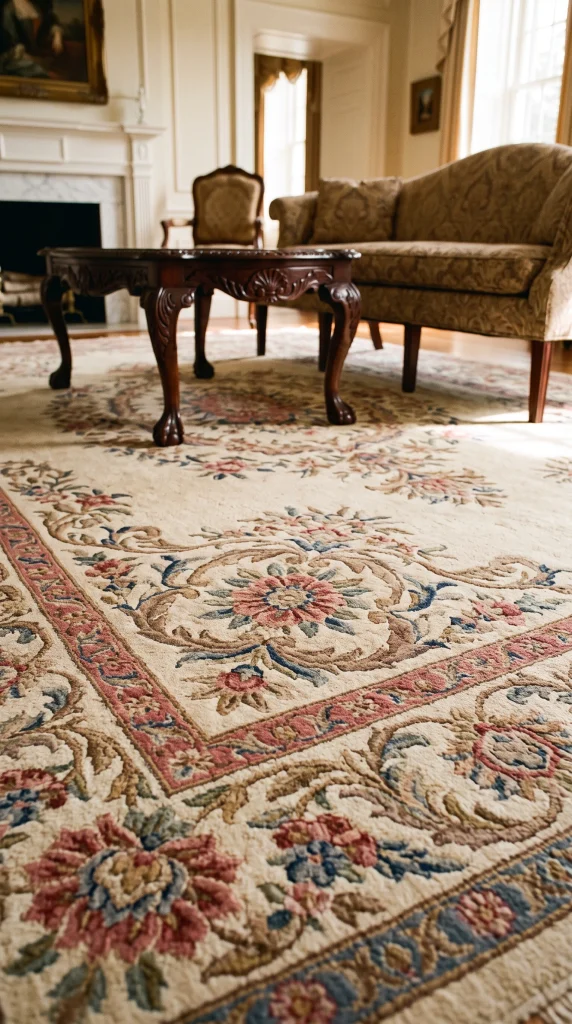
The area rug in a formal living room is the element that defines the boundaries of the seating grouping, introduces pattern and color in a controlled way, and contributes the textural foundation that prevents the hard surfaces of a formal room from feeling cold. An Aubusson, Persian, Savonnerie, or geometric neoclassical rug in the dominant colors of the room, large enough that all main furniture legs sit on it, gives the formal living room the layered surface richness that its architecture and furniture demand.
Quick Tip: In a formal living room with neutral walls and upholstery, the rug is often the right place to introduce the room’s one confident color through pattern. A rug with a deep burgundy, rich blue, or warm sage motif against a cream ground provides the color the room needs without committing any single wall or upholstered piece to that tone.
18. Display Large-Scale Fine Art or a Curated Gallery

Art in a formal living room is not decoration: it is the room’s most personal and most culturally significant element, and it should be treated accordingly. A single large-scale canvas or oil painting centered above the fireplace mantel, hung so the center of the work is at approximately 57 to 60 inches from the floor, commands the room with a confidence that a gallery of smaller works cannot match. In the absence of a fireplace, a large work on the main wall opposite the entrance is the formal room’s equivalent focal point.
Designer Advice: In a formal room, art should have genuine visual weight appropriate to the space. A small print in a large frame on a large wall reads as apologetic. Go larger than feels comfortable and hang it lower than feels right: art hung too high is the most common hanging mistake in formal rooms.
19. Layer Lighting With Sconces, Lamps, and a Dimmed Chandelier

A formal living room illuminated only by its chandelier at full brightness looks like a corporate lobby after hours. The correct approach is to treat the chandelier as an architectural element and dim it to 30 to 40 percent as the ambient layer, then add warm table lamps on side tables and console surfaces at 60 to 70 percent as the primary functional light, and wall sconces as accent light that reinforces the symmetry of the room’s architecture. This three-layer approach creates the warm, intimate atmosphere that a formal room requires for actual evening entertaining.
Pro Move: Install all lighting in the formal living room on separate dimmer circuits so each layer can be adjusted independently. The ability to set the chandelier low, the lamps warm, and the sconces off or on a flicker setting gives you full control over the room’s atmosphere for any occasion.
20. Add a Grand Piano or Statement Musical Instrument

A grand piano in a formal living room is the ultimate formal statement piece, and even a medium-sized baby grand positioned in a corner or bay window makes the room’s purpose and character unmistakably clear. Where a grand piano is not practical, a smaller upright or a beautifully crafted cello on a stand, a framed antique string instrument, or even a set of sheet music displayed on a music stand contributes the cultural and artistic dimension that formal living rooms in the European tradition have always incorporated.
Reality Check: A grand piano requires significant floor space, approximately 5 by 5 feet for a baby grand, and its lid should open toward the main seating area so the sound projects into the room rather than into a wall. If the piano will genuinely be played, consider the acoustics of the room; hard surfaces enhance sound while heavy textiles absorb it.
21. Use an Architectural Mirror Above the Mantel

A large mirror above the fireplace mantelpiece is among the oldest and most effective formal living room conventions, and it works for reasons that have nothing to do with trend: it reflects the light from the chandelier and sconces, creates the impression of greater depth and space, gives the room a second axis of visual interest above eye level, and frames the fireplace as a complete architectural composition from floor to ceiling rather than an element that terminates at the mantelshelf. The frame should be substantial, ornate for traditional rooms, geometric for contemporary formal spaces, and scaled to fill the space above the mantel without leaving uncomfortable gaps at the sides.
Quick Tip: The mirror frame should be at least half the width of the mantelpiece it sits above and should extend to within a few inches of the crown molding above. A mirror that stops well short of the cornice leaves a dead zone of wall that fragments the vertical composition.
22. Incorporate a Game Table or Writing Desk for Functional Elegance
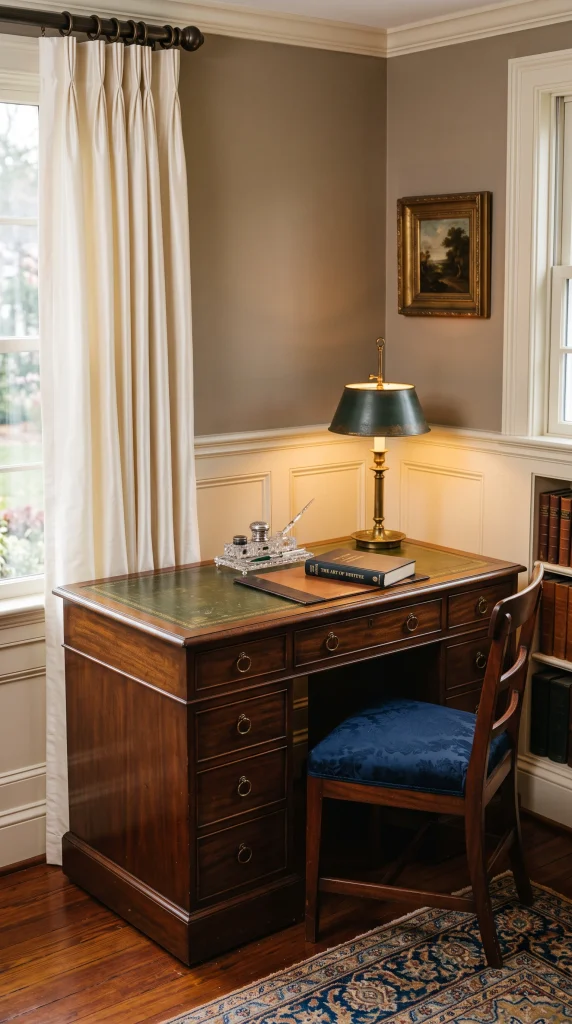
The formal living rooms of the 18th and 19th centuries almost always included a game table, card table, or writing desk as a secondary activity center within the main room, and reintroducing this idea in a contemporary formal living room immediately makes the space feel genuinely useful rather than merely decorative. A small antique card table with two chairs in a corner, or a writing desk positioned at the window with a lamp and a leather blotter, gives the room a functional purpose beyond conversation and makes it a space people actually occupy.
Designer Advice: Position the game or writing table so it is visible from the main seating group but slightly removed from it, establishing its own activity zone within the larger room. A table that is too close to the sofa will always feel like it is in the way; one at the room’s perimeter with its own lamp and chair feels like a destination.
23. Select Hardware and Metalwork in a Single Consistent Finish
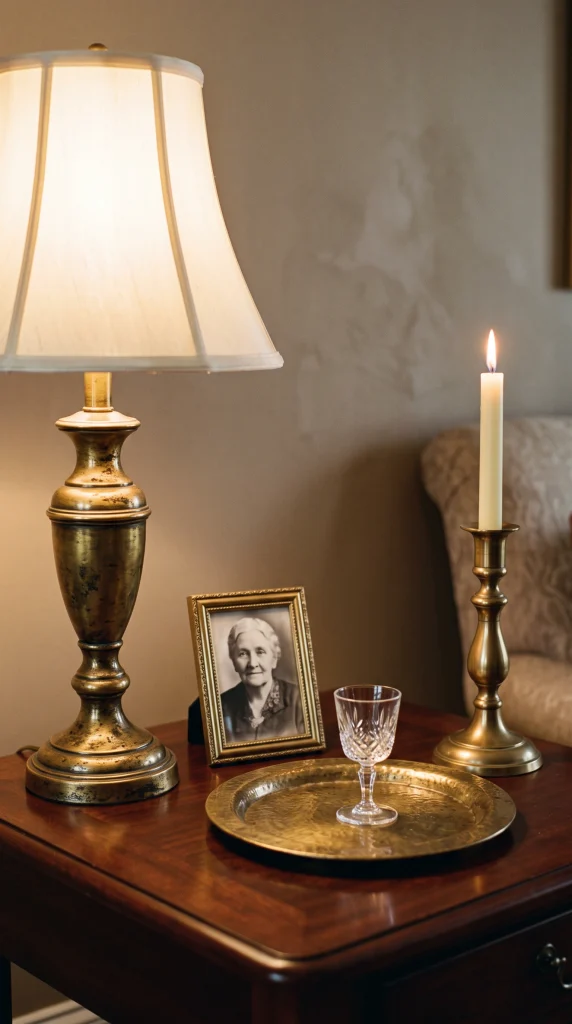
In a formal living room, the metal finishes across all hardware, lamp bases, picture frames, curtain rods, door handles, and decorative objects should be coordinated rather than mixed, because a consistent metalwork palette is one of the subtle signals of a room that has been professionally considered rather than assembled from disparate purchases. Polished brass, antique bronze, nickel, or matte gold each create a different formal register, and choosing one and applying it consistently across the room creates a through-line of material coherence that elevates everything it touches.
Heads Up: This does not mean every metal object must be identical. Two shades of the same family, polished brass alongside brushed brass for example, read as intentional layering. Two entirely different families, chrome and antique bronze, read as inconsistency regardless of how beautiful each piece is individually.
24. Add a Console or Sofa Table Behind the Floating Sofa
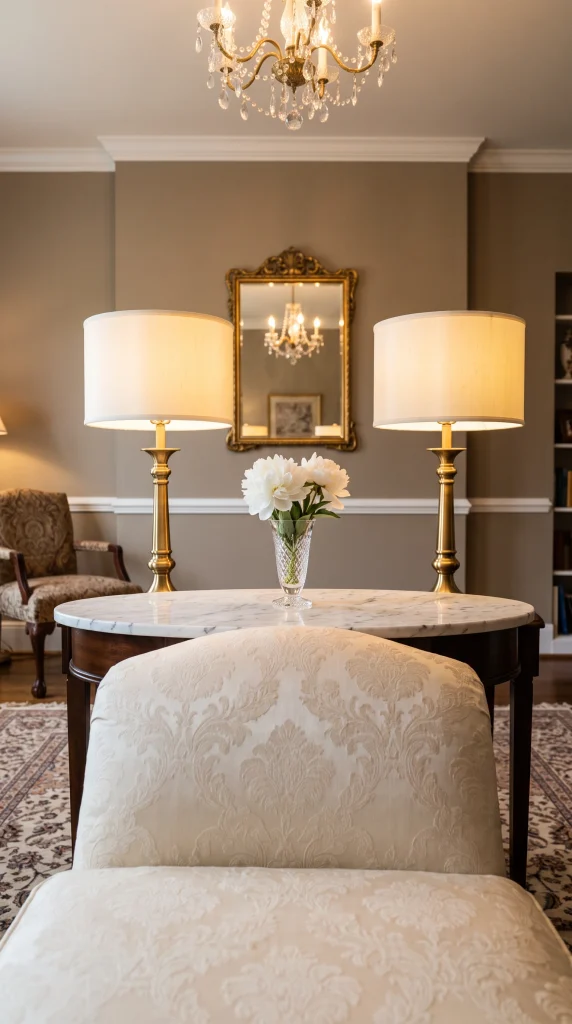
A console table placed directly behind a sofa that is floated away from the wall serves both functional and visual purposes: it fills the gap between the sofa back and the wall, creates a narrow display surface at a height where objects are visible from across the room, and gives lamps a position behind the seating group where their light fills the space above the sofa rather than competing with it from the sides. In a formal room, a console with carved legs, a marble or lacquered top, or a demilune shape adds a piece of furniture with genuine formal character.
Quick Tip: The console table should be the same height as the sofa back, typically 28 to 30 inches, or slightly taller, never shorter, so the surface reads as part of the sofa composition rather than disappearing below it when viewed from across the room.
25. Bring In Fresh Flowers or Architectural Botanicals
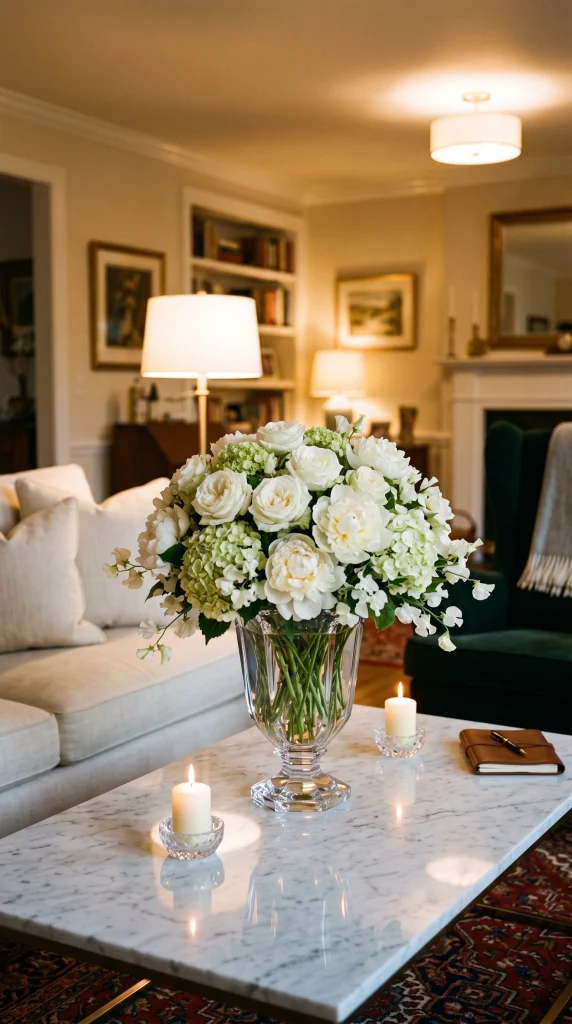
Fresh flowers in a formal living room are not a styling choice: they are a statement about the occupants’ relationship to the space, signaling that the room is genuinely inhabited, cared for, and used. A large arrangement in a formal urn or a simple, abundant bunch in a crystal or ceramic vase on the mantelpiece or coffee table introduces living color, organic form, and natural fragrance that no amount of carefully chosen objects can replicate. Formal flowers should be substantial: a small posy in a thin vase looks lost in a formally scaled room.
Pro Move: For rooms that are used less frequently, high-quality dried or preserved botanical arrangements in formal vessels, pampas in an urn, dried roses in a crystal vase, preserved eucalyptus in a classical pot, provide the same visual richness as fresh flowers without requiring constant replacement.
26. Use Upholstered Ottomans as Versatile Formal Seating
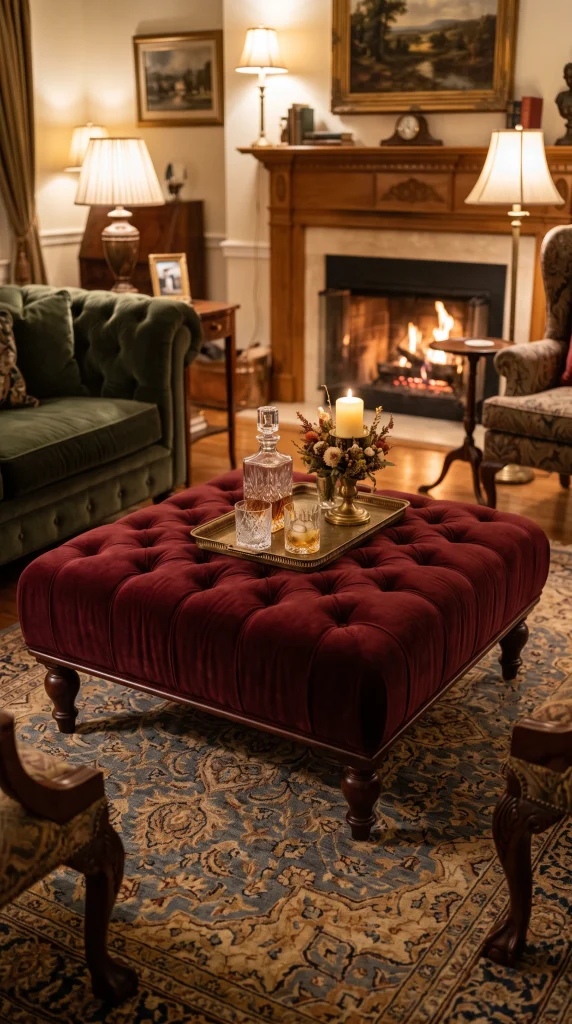
An upholstered ottoman, whether tufted, nailhead-trimmed, or simply covered in a formal fabric with a firm interior, is the most versatile piece in a formal living room: it can serve as additional seating, a surface for a tray of drinks, a footrest during informal moments, or a visual grounding element at the center of the seating arrangement in place of or alongside a coffee table. Its ability to shift function gives the formal room the flexibility that prevents it from feeling rigid and ceremonial.
Reality Check: A tufted ottoman in a velvet or leather covering at the center of a formal seating arrangement serves as a coffee table substitute only when a firm tray is placed on top of it. An ottoman without a tray holds nothing and offers no stable surface; always pair the ottoman-as-table approach with a tray substantial enough to hold drinks and objects securely.
27. Choose Wallpaper With a Classic Pattern for an Accent Wall
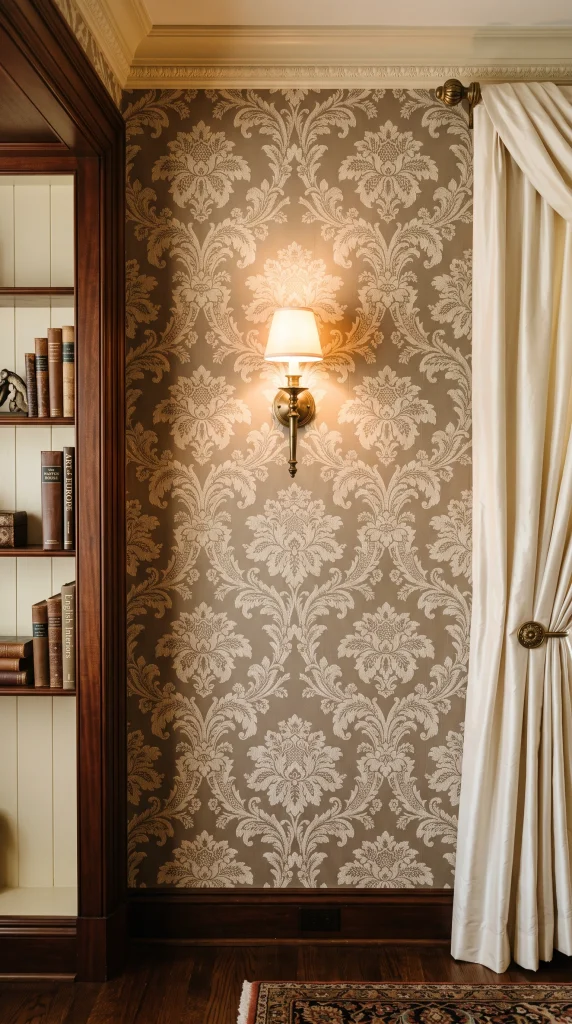
A wallpapered accent wall in a formal living room, whether behind the sofa, between the built-in bookshelves, or in the alcoves flanking the fireplace, introduces pattern, texture, and visual richness in a contained and controlled way that paint alone cannot achieve. Damask, toile, flock, chinoiserie, or a formal stripe in the room’s color palette carries the room’s formal intention deep into its surfaces and gives it the layered, collected quality that characterizes the best formal interiors.
Designer Advice: In a formal room with strong architectural bones, choose a wallpaper with a pattern scale large enough to read across the room. Small repeat patterns disappear on large walls and look busy on smaller ones. Match the scale of the pattern to the scale of the wall: a large room deserves a large pattern, a smaller room needs a smaller, more delicate repeat.
28. Style Every Surface With Restraint and Intentional Negative Space
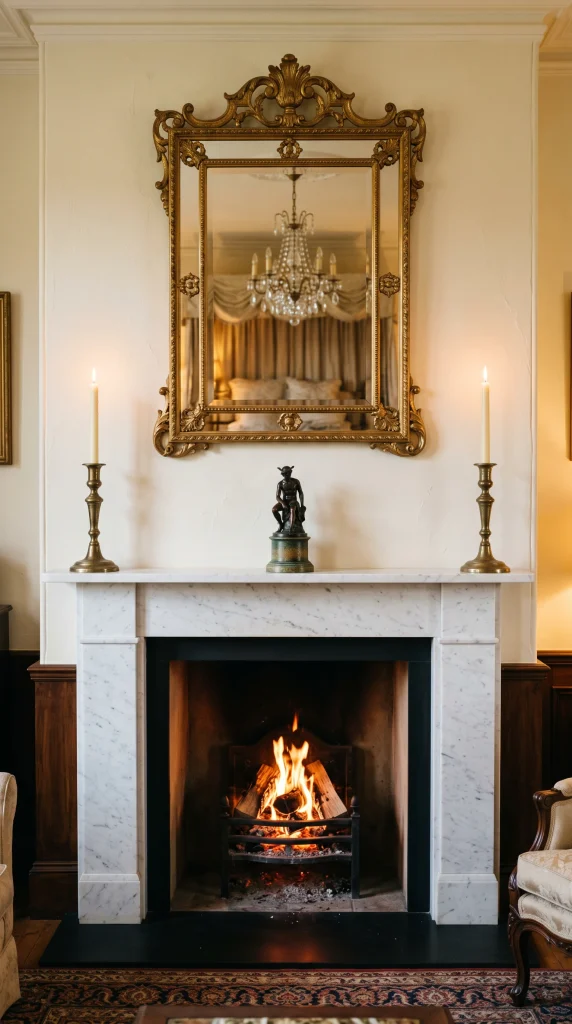
The difference between a formal living room that feels genuinely refined and one that feels like a display case almost always comes down to surface styling: how many objects are on each surface and how much negative space exists between them. Formal rooms demand restraint because the architecture and the furniture are doing significant visual work on their own, and adding too many objects to every surface cancels that work out. Every surface in a formal living room should have fewer objects than feel strictly necessary, with deliberate empty space around each one that lets it breathe and be seen.
Pro Move: Edit your surfaces by removing one third more than you think you need to remove and then living with the result for two weeks. Almost every time, the edited version is more beautiful than the original arrangement, and the empty space that initially feels sparse quickly starts to read as confident and considered.


