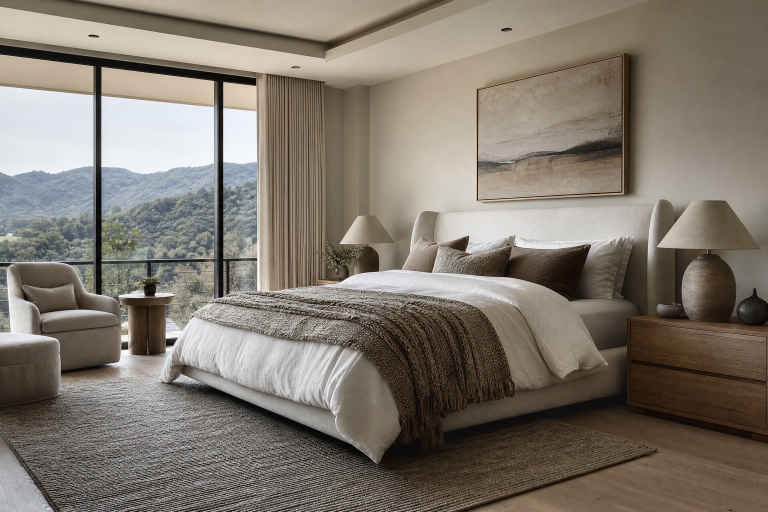
Earthy Living Room Ideas That Feel Rich, Not Beige
An earthy living room is not a room that forgot to have a personality. Done well, it is one of the most layered, textured, and genuinely comfortable spaces in home design, built from materials and colors that feel like they belong to the natural world and bring that groundedness into the room. The difference between an earthy room that feels expensive and one that feels flat almost always comes down to how the layers are built.
Terracotta Floor Tiles as the Earthy Foundation
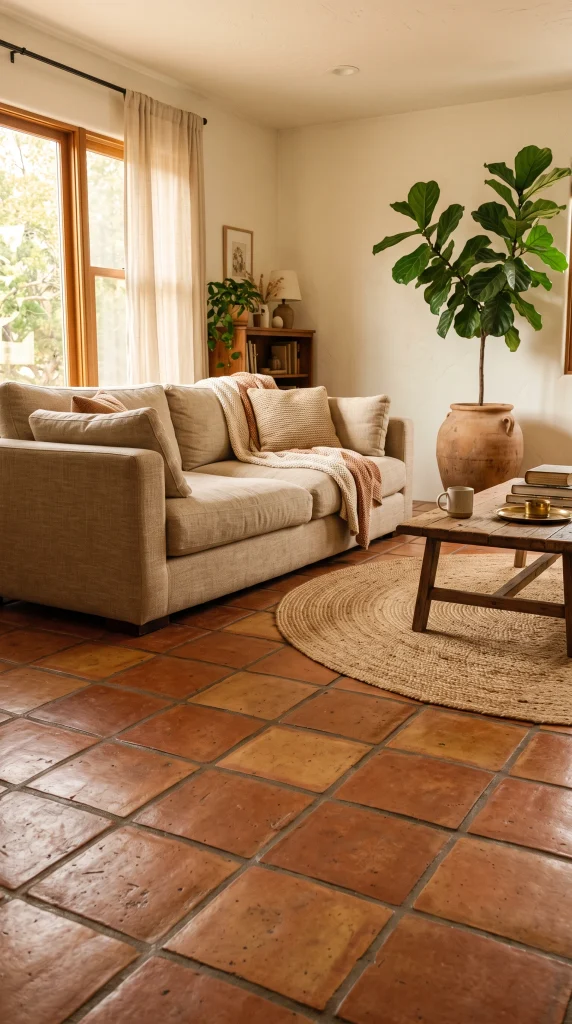
Terracotta floor tiles are one of the most powerful single decisions in an earthy living room because they set the entire color temperature of the space from the ground up, casting a warm, sun-baked glow that influences every other material placed above them. Unglazed or lightly sealed terracotta tiles with slight variation in tone, from the natural firing process, are far more beautiful than uniformly colored alternatives because the imperfection reads as genuine rather than printed.
Pro Move: Seal terracotta tiles with a breathable, matte penetrating sealer rather than a surface gloss finish, since matte-sealed terracotta retains the natural clay quality that makes it earthy while a glossy finish makes it look like ceramic imitation.
Limewash Walls for an Organic, Textured Base
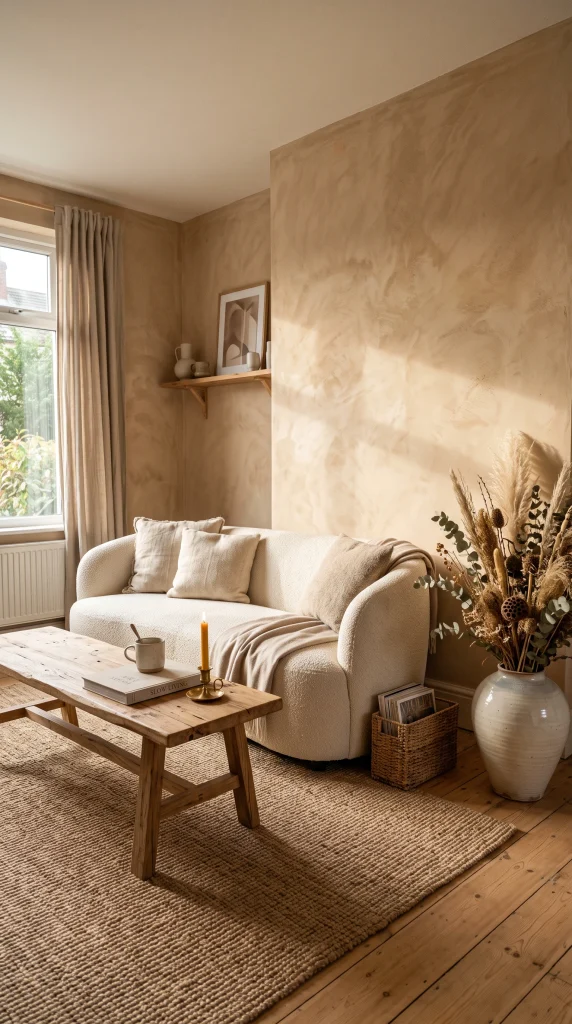
Limewash paint applied to living room walls creates an uneven, softly variegated surface that shifts in color as the light changes throughout the day, from pale and chalky in bright afternoon sun to deeper and richer in the warm light of evening lamps. This quality, where the wall itself appears to breathe and respond to light, is the defining characteristic of earthy interiors that no flat emulsion paint can replicate, no matter how carefully the color is chosen.
Designer Advice: Apply limewash in two to three thin coats with a wide natural bristle brush rather than a roller, working in circular strokes and leaving some areas slightly thinner than others. The variation in coverage is the point, not a mistake to correct.
Warm Terracotta Paint on a Feature Wall
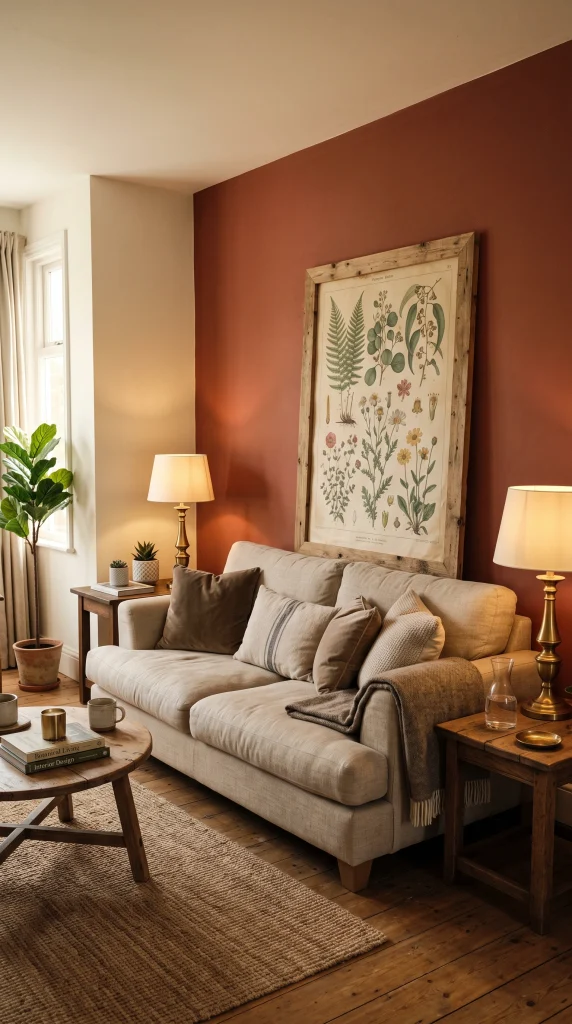
A single terracotta-painted feature wall in a living room, particularly behind the sofa or fireplace, anchors the room in an earthy palette without requiring the commitment of four terracotta walls, which can quickly feel like a cave rather than a living room. The warm clay undertone of terracotta interacts with natural light in a way that makes the room feel warmer and more enveloping in the morning and evening, while the other walls, in a lighter cream or warm white, keep the space feeling bright and open.
Heads Up: Avoid glossy or eggshell finishes on a terracotta feature wall. A matte or flat finish absorbs light and reads as authentic clay rather than colored paint on plaster, which is the effect the earthy aesthetic requires.
| Earthy Wall Treatment | Mood It Creates | Best Paired With | Avoid |
| Limewash in warm white or clay | Organic, ancient, calm | Linen, raw timber, ceramics | Glossy furniture or chrome hardware |
| Terracotta feature wall (matte) | Warm, Mediterranean, enveloping | Cream walls, natural wood, greenery | Cool greys or stark white accents |
| Sage green all-over paint | Earthy, botanical, restful | Warm timber, cream upholstery, rattan | Bright or neon accessories |
| Natural clay plaster | Textured, handcrafted, immersive | Stone, linen, undyed cotton | High-gloss or lacquered pieces |
| Warm ochre or mustard | Sunny, grounding, bold | Dark walnut, cream, aged brass | Cool blues or stark whites |
Natural Clay Plaster for a Handcrafted Wall Finish
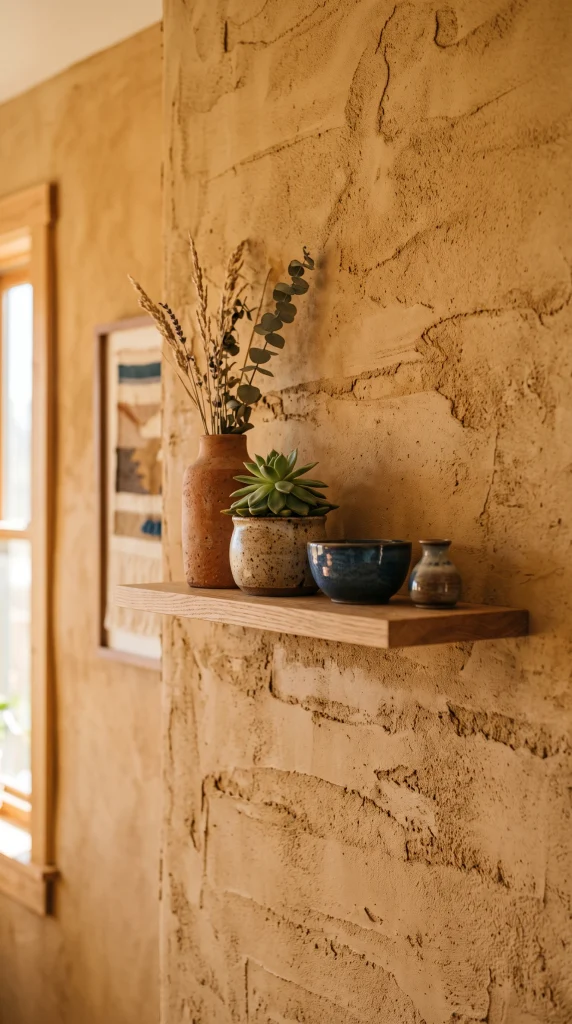
Clay plaster applied directly to living room walls introduces a textured, matte finish that absorbs sound, regulates humidity slightly, and creates a surface that looks genuinely handcrafted because it is, with each trowel stroke leaving a subtle impression that gives the wall a quality no paint can fake. The natural clay pigmentation means the color stays consistent from floor to ceiling without the slight tonal variation that painted walls can develop over time in changing light.
Reality Check: Clay plaster is significantly more expensive than limewash paint but delivers a surface quality that is categorically different. If budget is a concern, use clay plaster on one key wall only and limewash the rest for a cohesive finish at a lower total cost.
Wide-Plank Raw Oak Flooring
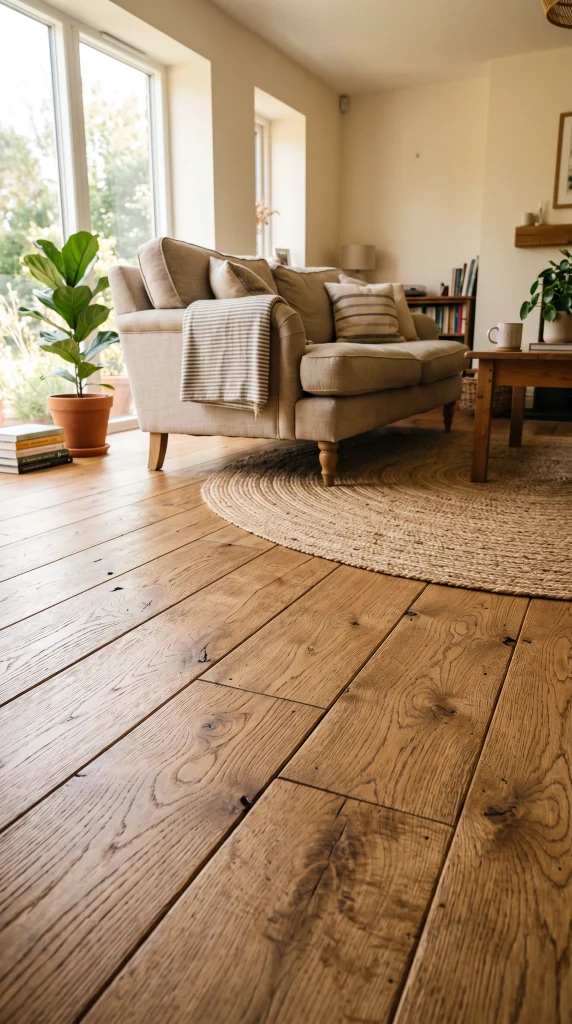
Wide-plank raw or lightly oiled oak flooring is the single material most associated with beautifully executed earthy living rooms because the grain, knots, and natural color variation of wide boards connect the room to the material’s origin in a way that narrow, uniform flooring never does. Lightly oiled finishes that allow the wood to breathe and age naturally over time are far more in keeping with the earthy aesthetic than polyurethane varnish, which creates a plastic-like surface over the timber.
Pro Move: The wider the plank the better in an earthy living room. Boards of 180mm or wider reduce the number of visible joints per square meter and make the floor feel more like solid timber rather than a collection of separate strips.
A Stone or Travertine Fireplace Surround
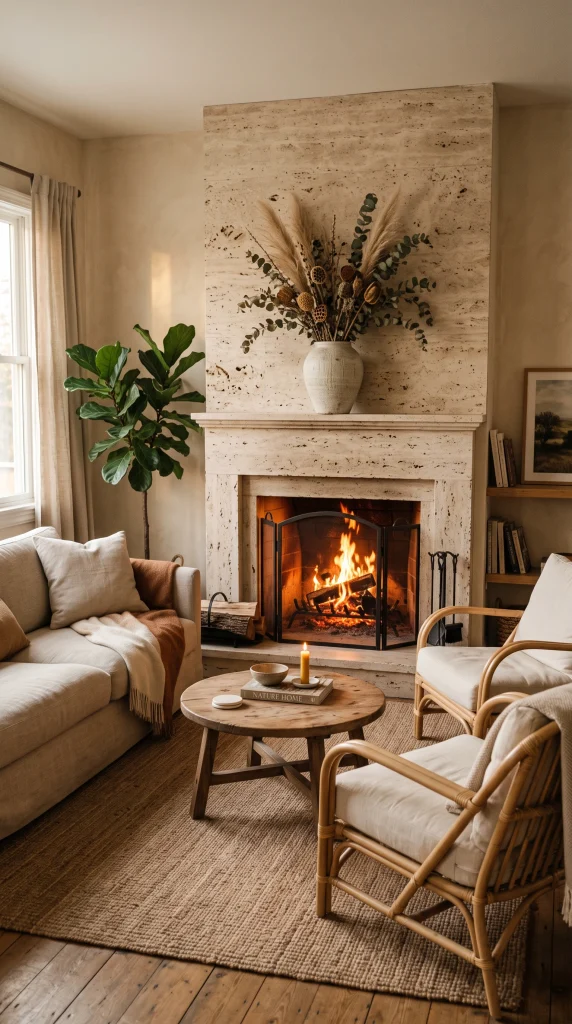
A natural stone or travertine fireplace surround is the most architecturally permanent earthy element you can introduce to a living room, and it immediately gives the space a sense of age, materiality, and weight that no painted or tiled surround can match. Travertine in its natural unfilled state, with the small pits and voids left visible rather than grouted over, looks particularly earthy and honest because it shows the geological character of the material rather than hiding it.
Designer Advice: A honed rather than polished finish on travertine or limestone reads as authentically earthy. A polished surface reflects light in a way that suits a more formal or glamorous interior but works against the grounded, natural quality that earthy design depends on.
A Linen Sofa in Oat or Warm Sand
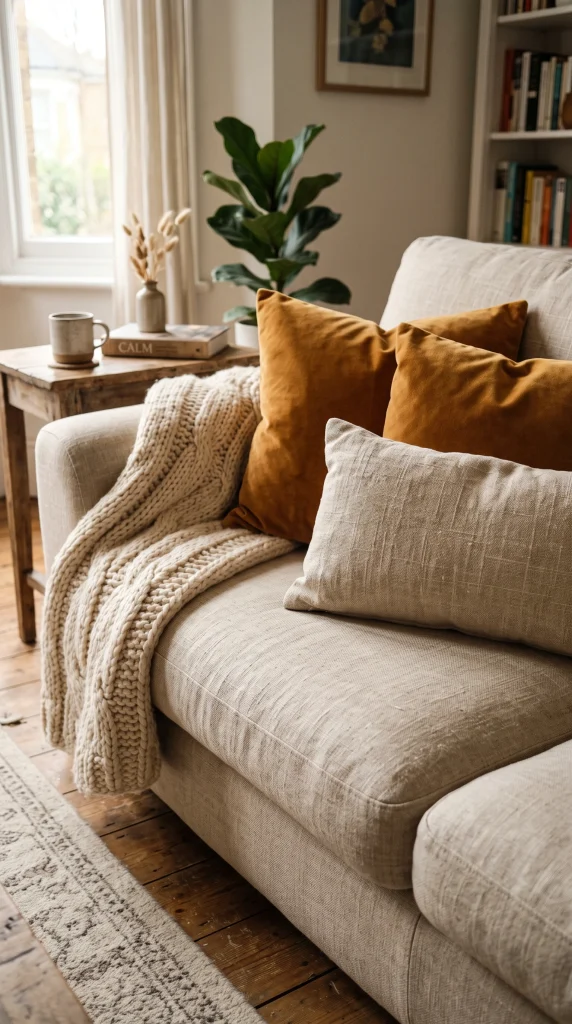
A linen sofa in oatmeal, warm sand, or undyed natural linen is the most reliable anchor piece for an earthy living room because linen is one of the few upholstery fabrics that genuinely improves in character with use, developing a softness and slight relaxed quality that reads as lived-in rather than worn out. The visible texture of linen’s weave also adds a tactile layer to the sofa that velvet or cotton cannot replicate, and it connects the furniture to the natural world in a way that synthetic fabrics always fail to do.
Quick Tip: Choose a linen sofa with a removable slipcover rather than a fixed upholstered version if you have children or pets, since linen machine-washes well and a slipcover keeps the sofa looking fresh without the cost of reupholstering.
| Earthy Upholstery Fabric | Character | Best Color | Care Level |
| Natural linen | Textured, breathable, improves with age | Oat, sand, undyed natural | Medium (machine washable slipcovers) |
| Bouclé | Looped, cozy, organic texture | Cream, warm white, warm grey | Low (spot clean, occasional professional) |
| Wool | Warm, durable, naturally stain-resistant | Stone, mushroom, charcoal | Low (hand wash or professional) |
| Cotton canvas | Casual, sturdy, relaxed quality | Warm white, natural, khaki | High (fully machine washable) |
| Leather (natural or vegetable-tanned) | Develops patina, tactile, grounding | Cognac, saddle, tan, tobacco | Low (occasional conditioning) |
Bouclé Armchairs for Tactile Warmth
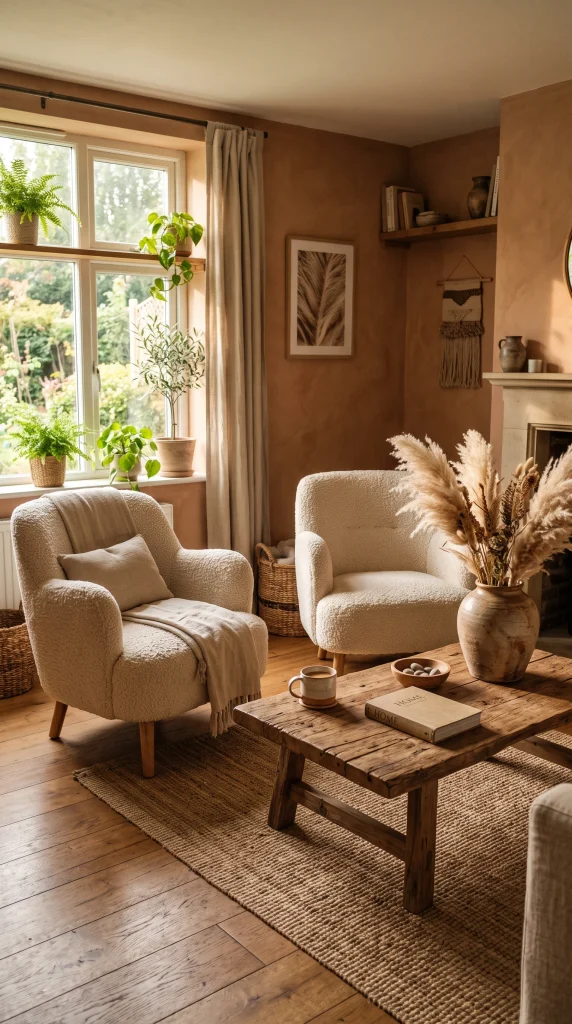
Bouclé fabric, with its distinctive looped and knotted texture, is one of the most widely used materials in earthy living rooms right now because it adds a visual and tactile warmth that invites touch rather than just appealing to the eye. A pair of bouclé armchairs in cream or warm off-white flanking a sofa or fireplace brings both texture and a softly organic quality to the seating group that harder or smoother fabrics cannot achieve.
Heads Up: Bouclé is prone to snagging on sharp surfaces and pet claws, so it works best in households where that is not a daily concern. In higher-traffic family rooms, wool or canvas upholstery delivers a similar earthy quality with more resilience.
A Rattan or Wicker Armchair as a Texture Layer
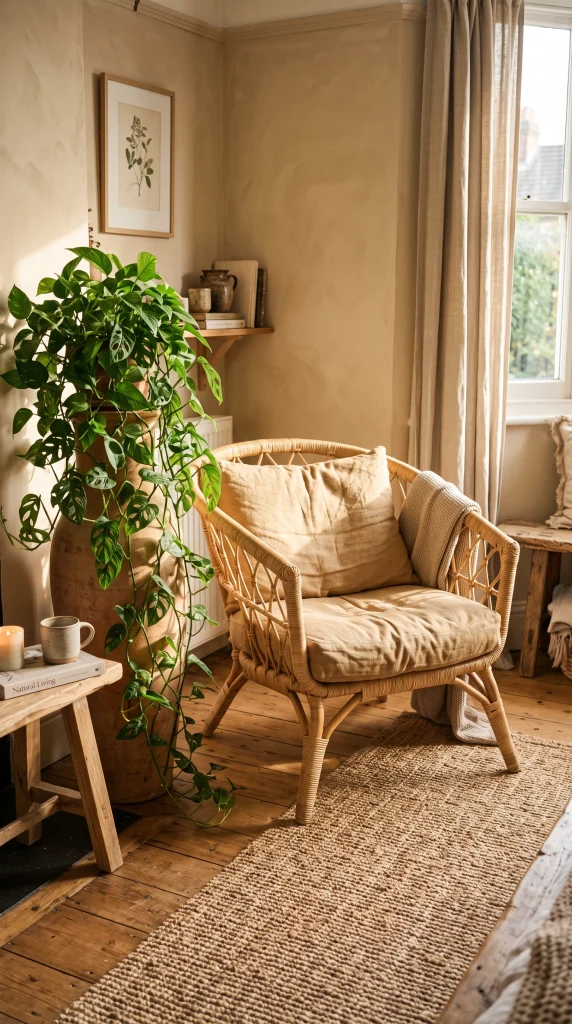
A rattan or wicker armchair, particularly in a natural unbleached finish rather than painted white or black, introduces a material to the living room that is visually light, warm in tone, and textured in a way that adds dimension to a seating arrangement without adding visual weight. The woven pattern of rattan catches light differently from every angle and creates movement across the surface that a solid upholstered chair simply does not possess.
Designer Advice: Pair a rattan chair with a loose linen cushion in a warm earthy tone rather than a tight fitted cover, since the casual quality of a loose cushion suits the relaxed, organic character of rattan far better than anything that looks tailored or formal.
Layered Jute and Wool Rugs
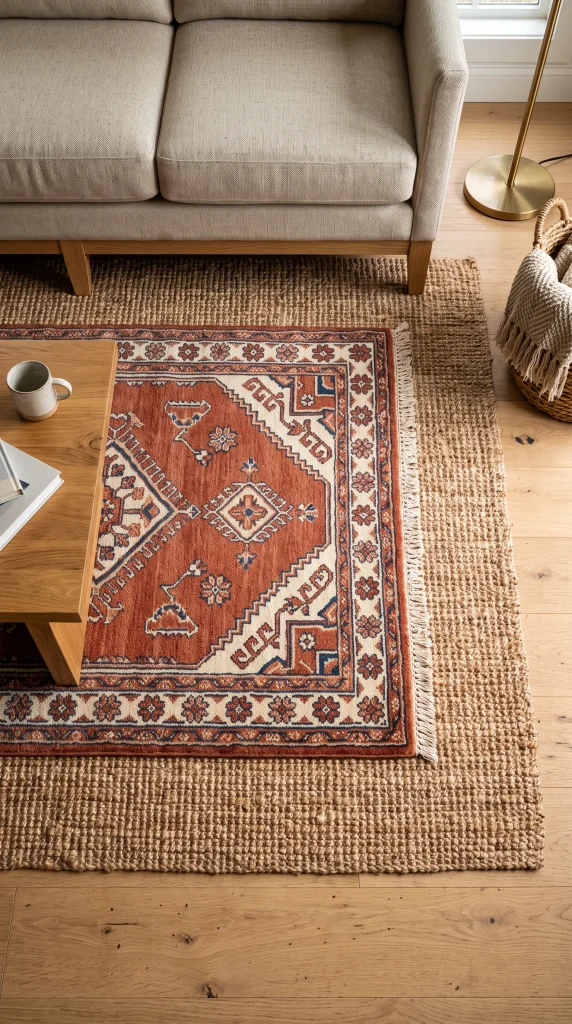
Layering a smaller wool rug in a warm earthy tone over a larger natural jute base rug is one of the most effective techniques for adding depth, warmth, and genuine material interest to an earthy living room floor without the cost of a single large premium rug. The jute layer provides texture and a natural golden tone close to the floor, while the wool layer on top adds color and softness exactly where feet land most often, around the sofa and coffee table.
Pro Move: The jute base rug should extend at least 30cm beyond the edges of the wool rug on every side so both layers are clearly visible and the layering reads as intentional rather than as one rug that does not quite fit.
Raw Timber Coffee Table With Visible Grain
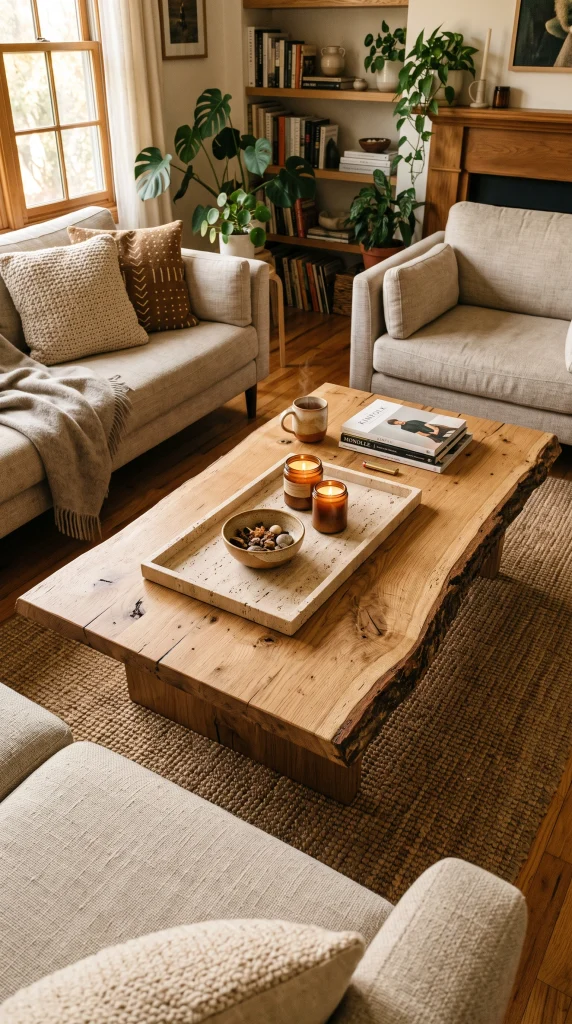
A raw or lightly finished timber coffee table with clearly visible grain, knots, and natural variation, whether reclaimed oak, solid walnut, or a live-edge slab, is the piece that most clearly communicates an earthy design intent at the center of the seating group. The natural imperfections of the wood, the knots, the color variation, the grain direction, are precisely what makes a timber coffee table earthy rather than just brown, and they give the table a character that mass-produced or veneered pieces can never replicate.
Quick Tip: A live-edge coffee table where one or more edges follow the natural outline of the original tree slab is the most visually striking earthy timber choice, and it works best in rooms with relatively simple surrounding furniture so the table’s character is given space to register.
Sage Green Velvet Sofa as a Botanical Anchor
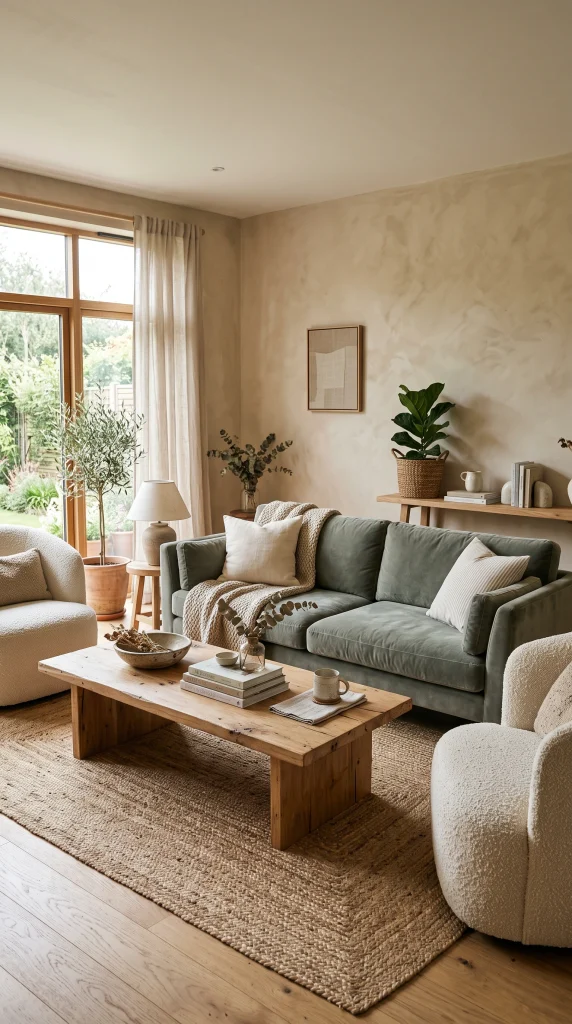
A sage green velvet sofa in the center of an otherwise earthy neutral living room brings a botanical quality to the room that connects the color palette to the outdoor world without requiring actual plants to do the work. Sage green sits close enough to the earthy family, sharing the muted, grey-green quality of natural foliage rather than the bright green of artificial color, that it reads as natural rather than as a competing color statement.
Reality Check: Velvet sage green only reads as earthy when the tone is genuinely muted and grey-based. A bright or yellow-based green velvet sofa tips away from earthy and toward bohemian or maximalist, which is a different aesthetic entirely.
| Earthy Accent Colors | What They Add | Where to Use | Avoid Combining With |
| Sage green | Botanical, calming, connects to nature | Sofa, armchair, cushions, paint | Bright orange or neon tones |
| Burnt orange | Warmth, energy, adobe quality | Cushions, throws, ceramics, one armchair | Cool grey or stark white |
| Warm ochre/mustard | Sunshine, depth, grounding | Cushions, artwork, one upholstered piece | Bright blue or purple |
| Warm chocolate brown | Richness, depth, permanence | Leather armchair, timber, rug | Dusty pink or lavender |
| Dusty terracotta | Clay, ancient, Mediterranean | Ceramics, cushions, paint, throw | Cool metallic finishes |
Warm Ochre and Mustard Cushions and Throws
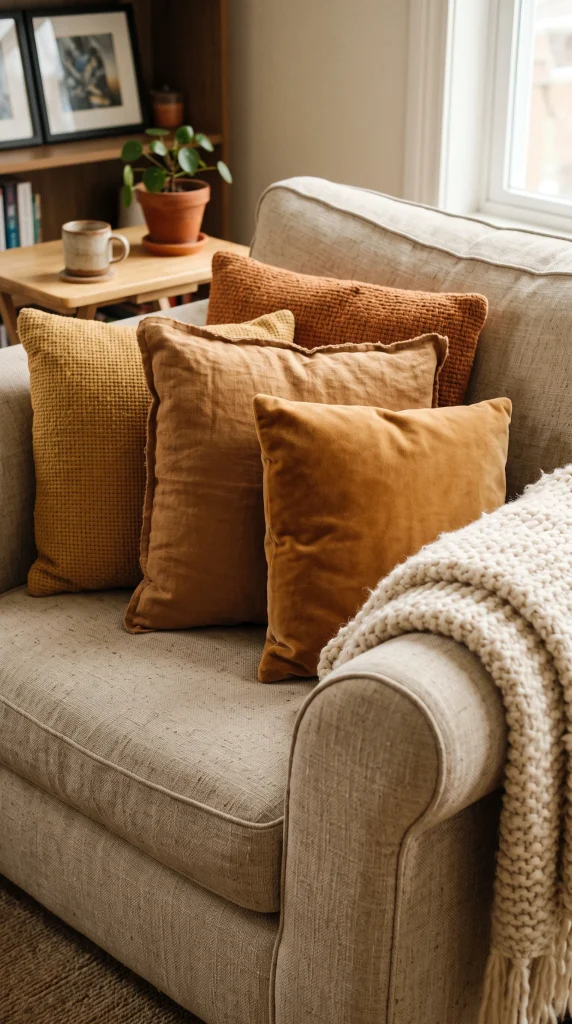
Warm ochre, mustard, and golden-toned cushions and throws are the most affordable and most reversible way to introduce an earthy color accent into a living room that is otherwise operating in neutrals, and they work with almost every other earthy tone, from sage green to terracotta to warm brown. A mix of two or three cushions in related earthy tones, varied in texture rather than in color, gives the sofa a layered, collected quality that a single matched set never achieves.
Designer Advice: The most effective earthy cushion arrangement uses three different textures within a two-color range. For example, a linen cushion, a woven cotton cushion, and a velvet cushion all in variations of ochre and warm caramel will look far more considered than three identical cushions in the same fabric and shade.
Indoor Trees and Statement Plants
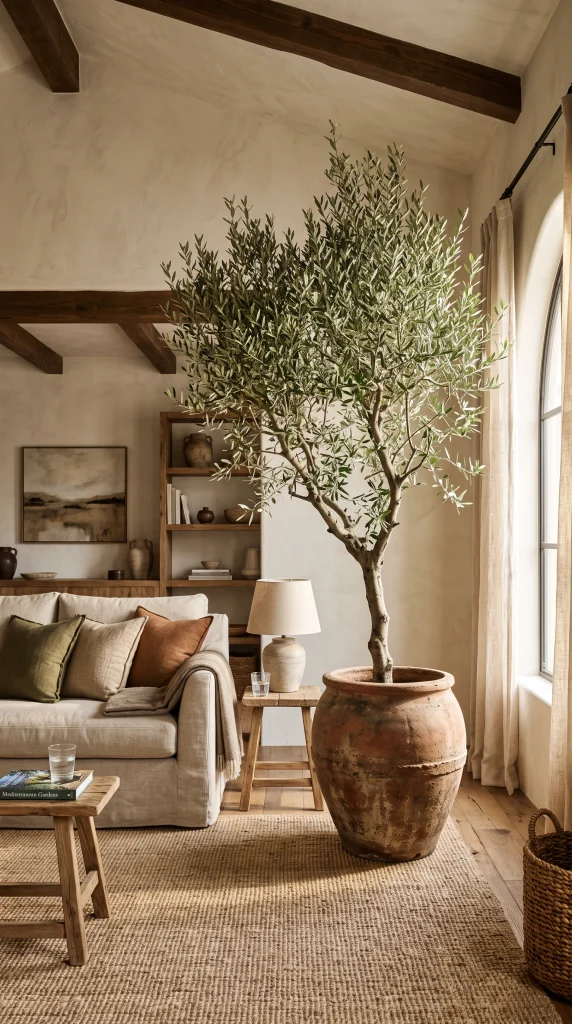
A large indoor tree, whether a fiddle-leaf fig, an olive tree, a rubber plant, or a tall bird of paradise, is the single living element that does more for an earthy living room than any piece of furniture or paint color, bringing genuine organic scale, movement, and the literal presence of the natural world into the space. The key is scale: one large plant in a generous ceramic or terracotta pot makes a stronger earthy statement than a collection of small plants scattered across the room.
Pro Move: A mature olive tree in a wide, rough terracotta pot positioned beside or behind a sofa creates one of the most visually compelling and unmistakably earthy moments available in a living room, and it works across modern, rustic, Mediterranean, and Japandi aesthetics.
Ceramic and Clay Accessories Throughout
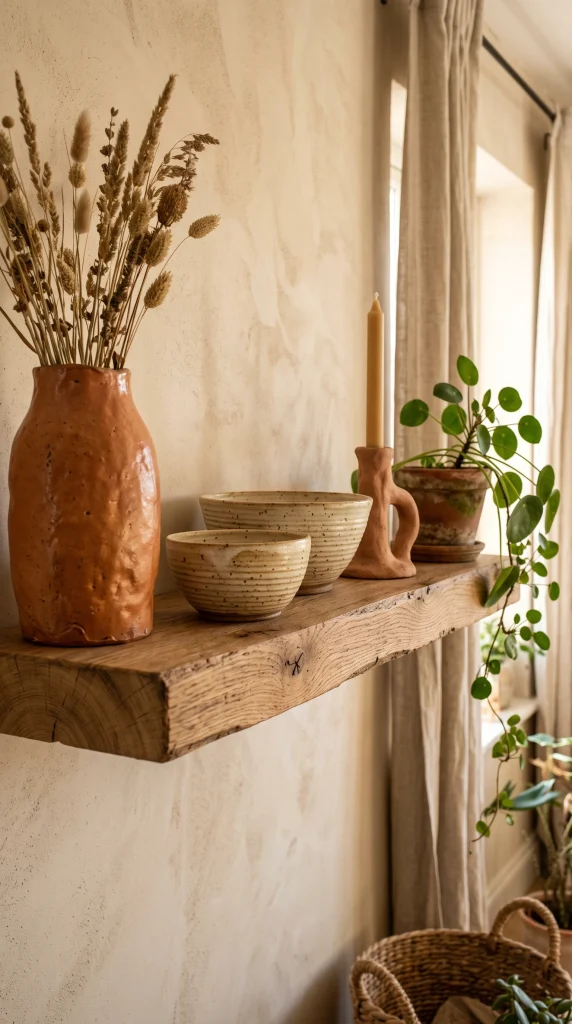
Handmade ceramics and clay pieces, whether a large floor vase, a set of irregular bowls on a shelf, a pair of sculptural candleholders, or a textured jug used as a vase, are the accessory layer that most clearly signals an earthy design sensibility because they carry the literal marks of the human hand and the natural material in their surface. Machine-made ceramics with perfect uniformity do not deliver this quality even when they are made from the same clay, because the imperfection is what communicates authenticity.
Quick Tip: Look for ceramics made using traditional techniques where the glaze pools slightly at the base, where the rim is not perfectly uniform, and where slight color variation across the surface is visible. These are the qualities that make ceramics feel earthy rather than merely decorative.
Woven Wall Hangings and Fiber Art
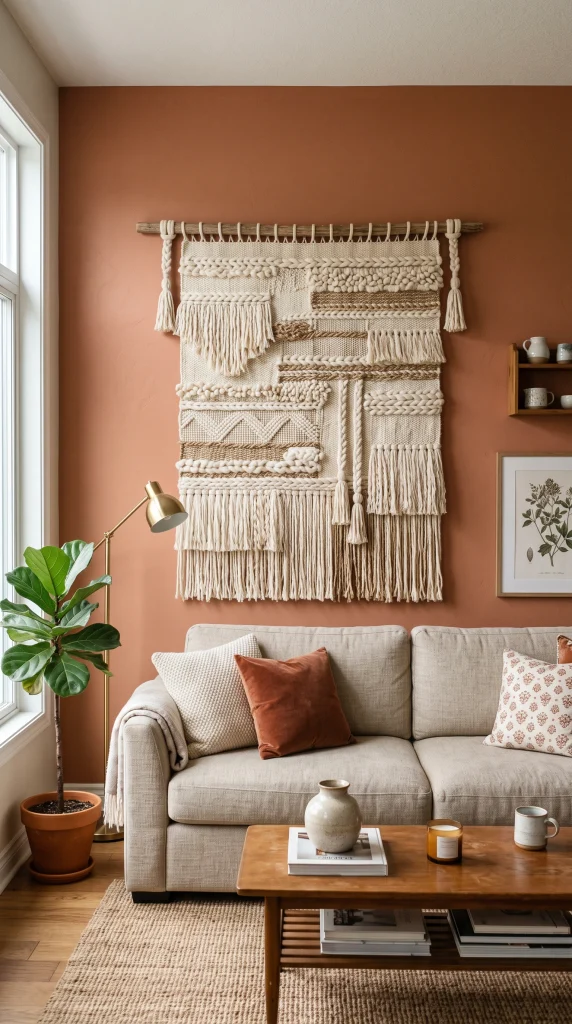
A large woven wall hanging or fiber art piece above the sofa or fireplace brings a material and textural warmth to the wall that no framed artwork can replicate, since the three-dimensional quality of woven wool, cotton, or jute creates shadows and depth that shift as the light moves. Natural, undyed fibers in their original cream, oatmeal, and warm grey tones are the most versatile earthy choice, connecting the wall art to the same material language as the linen upholstery and jute rug below.
Designer Advice: A woven wall hanging should be large enough to fill the wall space properly, ideally at least 60 percent of the sofa width, since a small hanging on a large wall looks like a decorating decision that ran out of confidence before it finished.
Unlacquered Brass Fixtures and Hardware
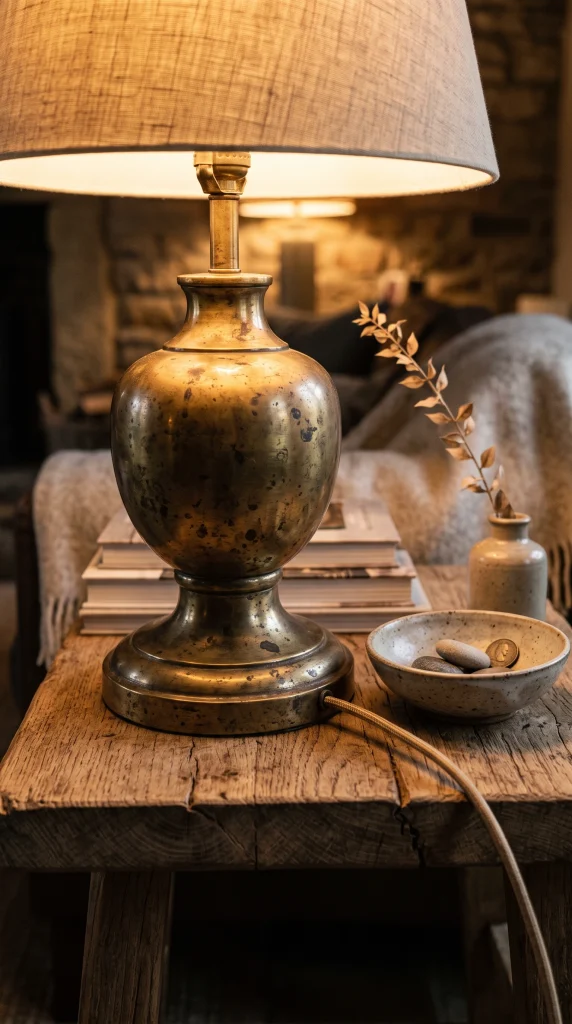
Unlacquered brass, which is brass left without the protective coating that keeps it shiny indefinitely, develops a warm patina over time that gradually deepens and varies across the surface in a way that connects directly to the earthy design philosophy of materials that improve with age and use. Table lamp bases, curtain rods, cabinet handles, and light switch plates in unlacquered brass all contribute to an earthy room in a way that polished, lacquered, or brushed gold finishes, however attractive, do not quite achieve.
Heads Up: Unlacquered brass requires periodic cleaning with a soft cloth and occasional brass polish to manage the patina rate, since in humid rooms it can develop unevenly. If low maintenance is a priority, brushed brass is a very close visual alternative with more consistent aging.
Warm-Toned Layered Lighting
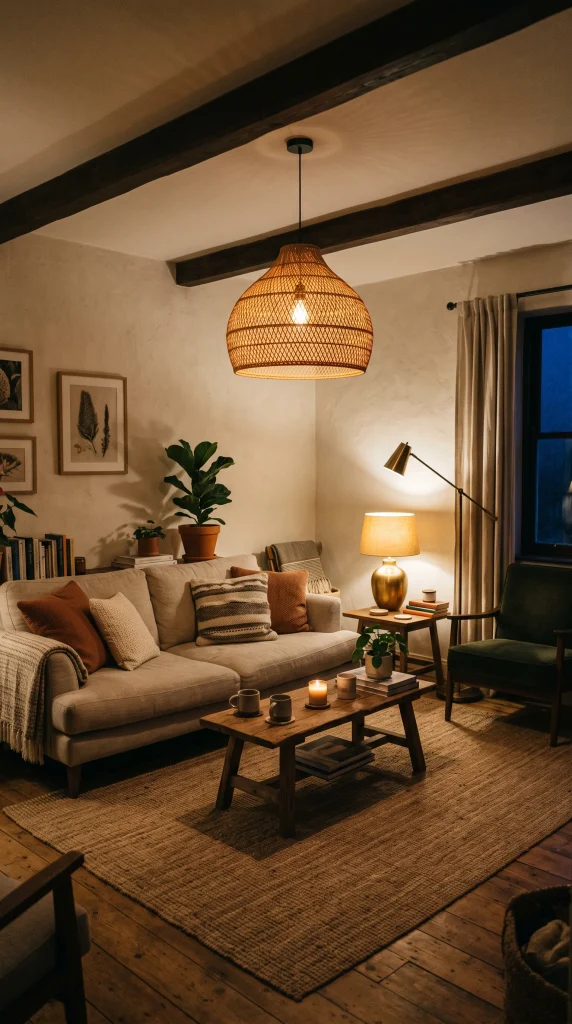
An earthy living room depends on its lighting more than most other interior styles because the natural materials and warm colors that define the aesthetic respond dramatically to the color temperature of artificial light, with warm-toned bulbs at 2700K bringing out the amber and clay qualities of terracotta, timber, and linen while cooler daylight bulbs flatten those same tones and make them look dull and lifeless. Three layers of lighting, an ambient floor lamp, a table lamp at sofa level, and a focused accent light on a shelf or artwork, are the minimum needed to give an earthy room its proper atmospheric quality after dark.
Pro Move: A large woven rattan or jute pendant shade over the seating area provides both warm ambient light and a material moment overhead that connects the lighting fixture to the same earthy vocabulary as the rug and accessories below.
Exposed Timber Ceiling Beams
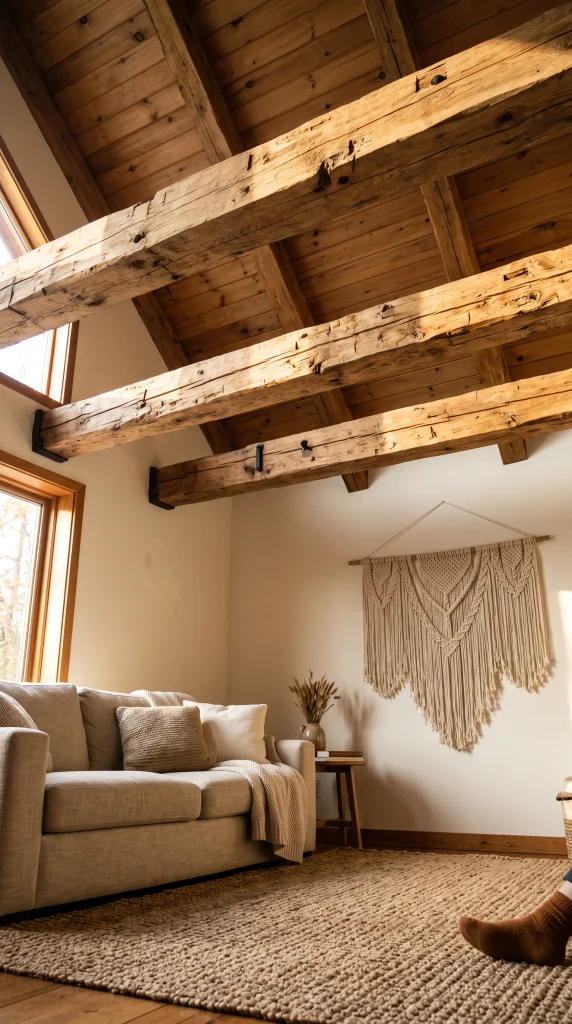
Exposed timber ceiling beams, whether original to the building or added as a feature, bring an architectural earthiness to a living room that no amount of furniture or accessories can fully replicate because they add the natural material at the highest point of the room, enveloping the space in timber from above in a way that feels ancient and sheltering. Even in modern or contemporary living rooms, a set of raw or lightly oiled timber beams crossing the ceiling creates a connection to vernacular architecture that grounds the room in place and material.
Reality Check: Faux timber beams in lightweight polyurethane or foam are widely available and significantly cheaper than structural timber, but the hollow sound they produce when knocked and their plastic edges close up work against the authentic earthy quality that real or reclaimed timber delivers. If budget allows, use reclaimed timber rather than faux alternatives.
An Earthy Colour-Drenched Alcove
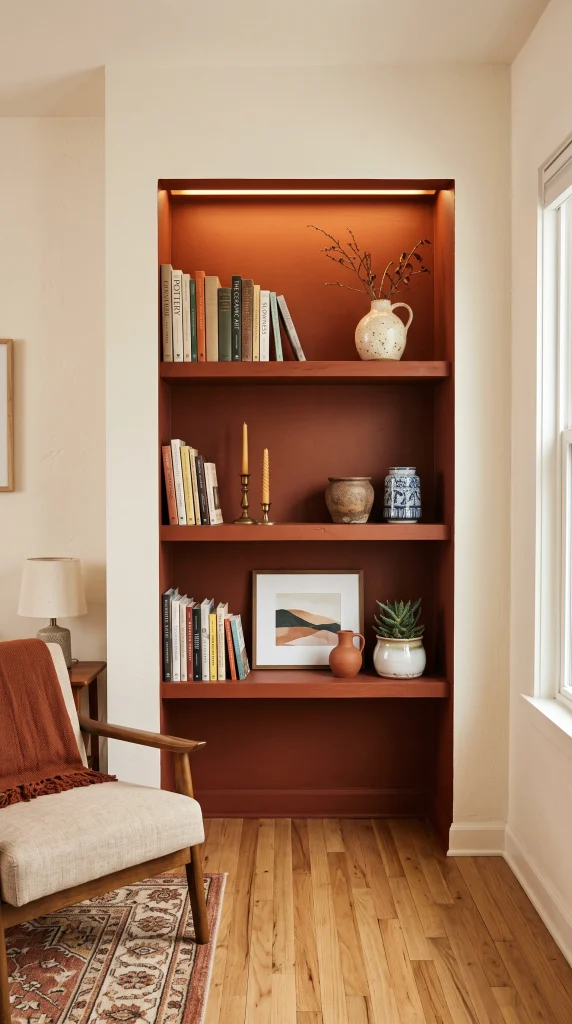
Color drenching a living room alcove in a deep earthy tone, rich terracotta, dark forest green, or warm chocolate brown, while keeping the surrounding walls in a lighter neutral, creates a focused moment of earthy intensity that makes the alcove feel like a deliberate destination within the room. The contrast between the drenched alcove and the lighter walls draws the eye and creates depth without committing the whole room to a dark scheme.
Designer Advice: A color-drenched alcove works best when the shelving or furniture inside it is painted the same shade as the walls and ceiling of the recess, since color drenching the entire alcove interior including the shelves is what creates the immersive quality rather than painting only the back wall.
Warm Linen Curtains in Full-Length Panels
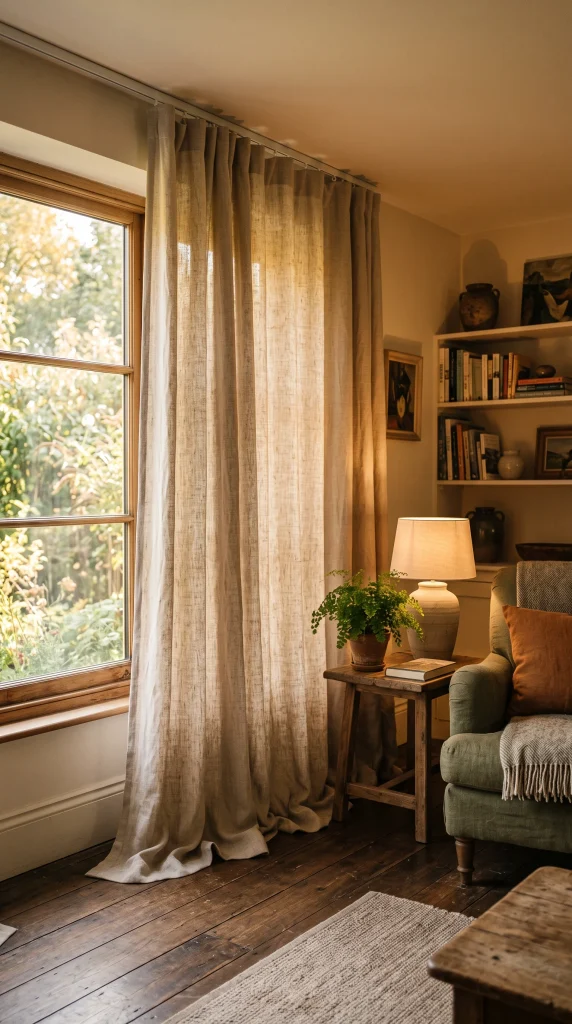
Full-length linen curtains in a warm natural, oatmeal, or undyed tone hung from ceiling height are one of the most transformative single additions to an earthy living room because they add softness and movement at the scale of the window and connect the window treatment to the same linen material story as the sofa and cushions. The slight transparency of natural linen in daylight creates a warm, filtered light quality in the room that is one of the most beautiful effects available in earthy interior design.
Quick Tip: Use linen curtains that are intentionally slightly longer than the window height and let them pool slightly on the floor, since the relaxed puddle of fabric reads as deliberately effortless rather than imprecisely measured.
A Sheepskin or Natural Wool Throw
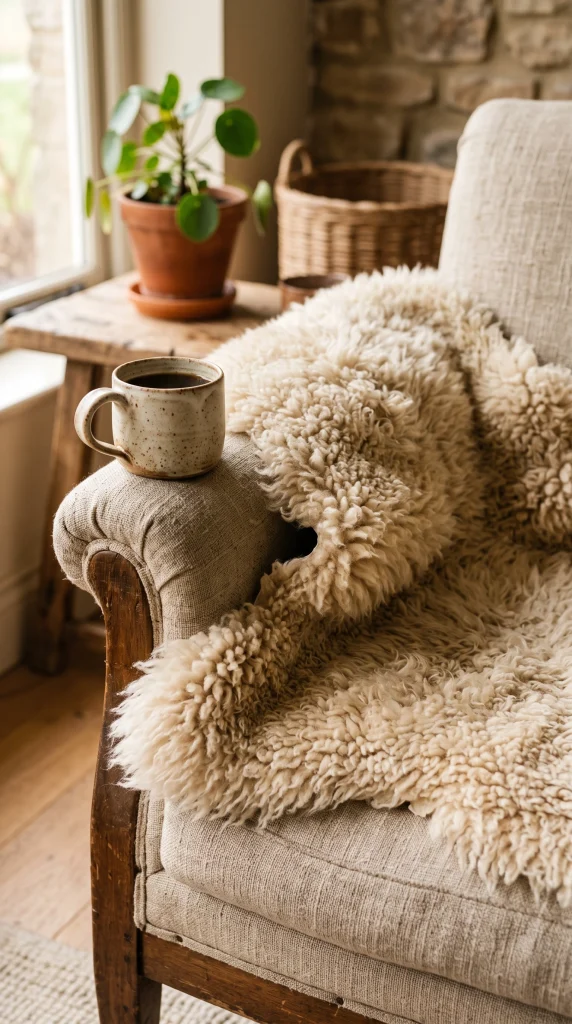
A sheepskin or chunky natural wool throw draped over a sofa arm or armchair is the tactile element that completes the cozy, organic quality of an earthy living room more immediately than almost any other single accessory, because its dense, natural texture invites touch and signals physical comfort rather than just visual appeal. Natural cream, warm oatmeal, or undyed wool tones in a thick hand-knit or woven throw read as genuinely natural in a way that acrylic alternatives immediately fail to replicate.
Heads Up: A real sheepskin throw in a muted, natural tone is categorically different from a faux fur version in the same color. The natural variation in the fleece, the slight lanolin quality, and the weight of real sheepskin all contribute to an earthy authenticity that synthetic alternatives cannot match regardless of how they look in photographs.
Reclaimed Timber Shelving
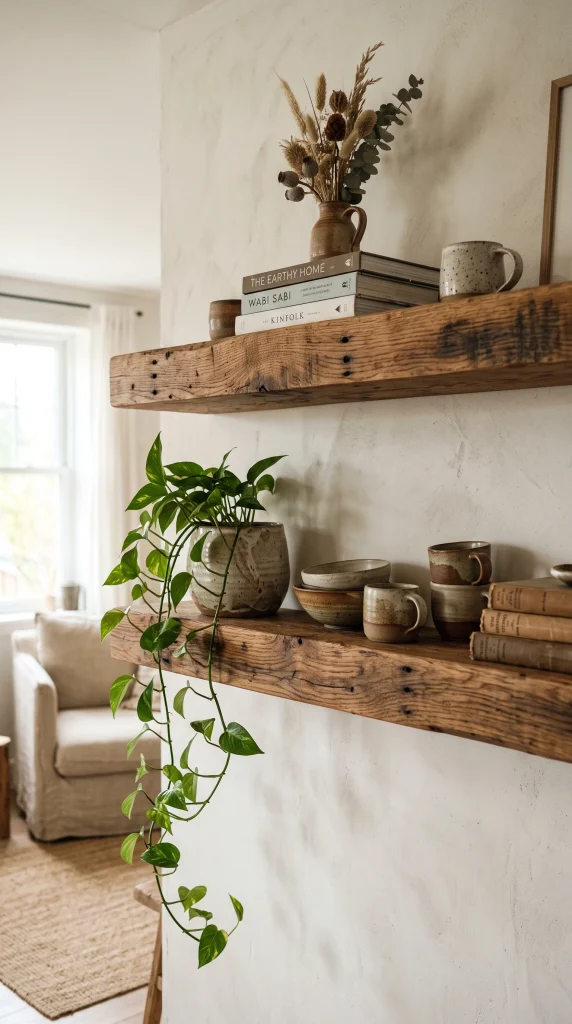
Reclaimed timber shelving, whether floating planks of old oak, salvaged scaffold boards, or antique pitch pine, brings a depth of character to an earthy living room that new timber cannot achieve because the marks of the wood’s previous life, nail holes, saw marks, paint traces, slight warping, are precisely what give it an authenticity that connects the room to a longer history than the current interior. Styled with ceramics, books, and plants, reclaimed shelves create the layered, collected quality that earthy interiors at their best always possess.
Pro Move: Source reclaimed timber from architectural salvage yards rather than timber merchants selling pre-treated reclaimed-look boards, since salvage yard timber has genuine age marks and variation that treated boards imitate but do not replicate.
Earthy Abstract Art With Natural Pigments
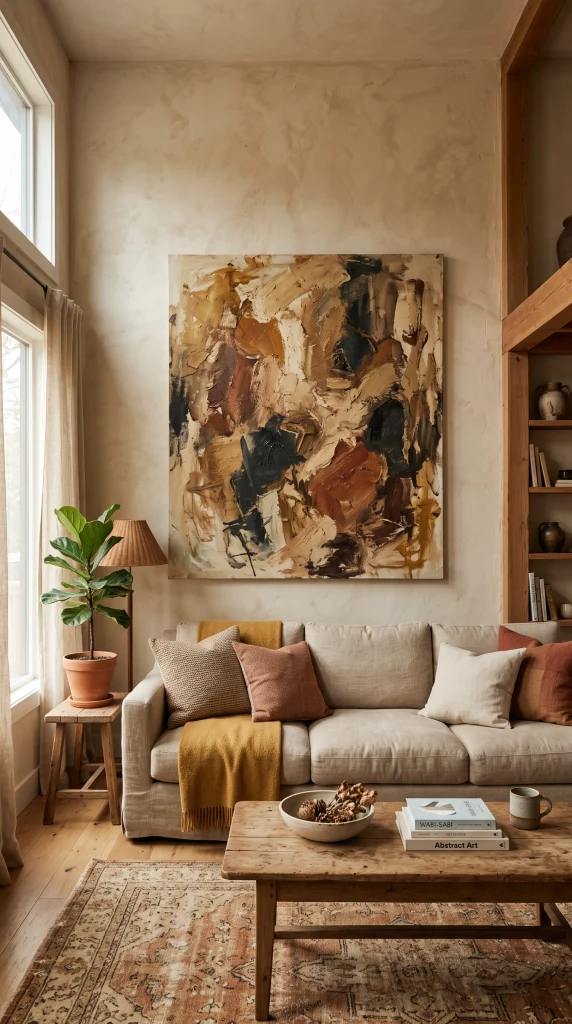
Abstract artwork made with natural pigments, including ochre, burnt sienna, raw umber, charcoal, and natural clay, connects the art layer of a living room to the same color family as the walls, textiles, and objects around it in a way that photography or digitally printed art rarely achieves. Large-scale abstract canvases in earthy tones, particularly those with visible brushwork, palette knife marks, or textured impasto surfaces, bring a handmade quality to the wall that reinforces the overall material honesty of the earthy aesthetic.
Designer Advice: Abstract art in earthy tones should be hung without a frame or in a simple raw timber or thin black frame to avoid the formality that a decorative frame introduces. The art itself carries enough visual weight in an earthy living room without additional framing emphasis.
A Stone or Concrete Coffee Table
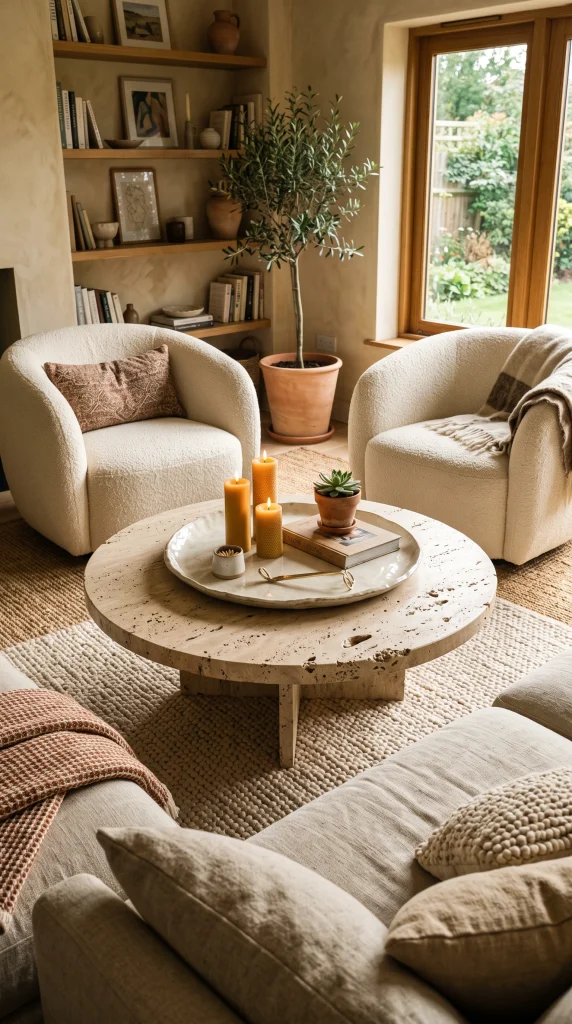
A coffee table in natural stone, honed concrete, or raw travertine brings a geological weight and permanence to the center of an earthy living room that timber and rattan cannot provide, adding a material contrast that makes the softer textures around it, linen upholstery, wool throws, woven cushions, feel even more tactile by comparison. A round or oval stone table with no visible joints or seams reads as the most naturally organic, while a rectangular slab of honed marble or travertine reads as more architectural and considered.
Quick Tip: Travertine coffee tables in the naturally pitted, unfilled finish are currently one of the strongest earthy design choices available and pair beautifully with linen, rattan, and raw timber without requiring any styling to look considered.
Dried Botanicals and Natural Arrangements
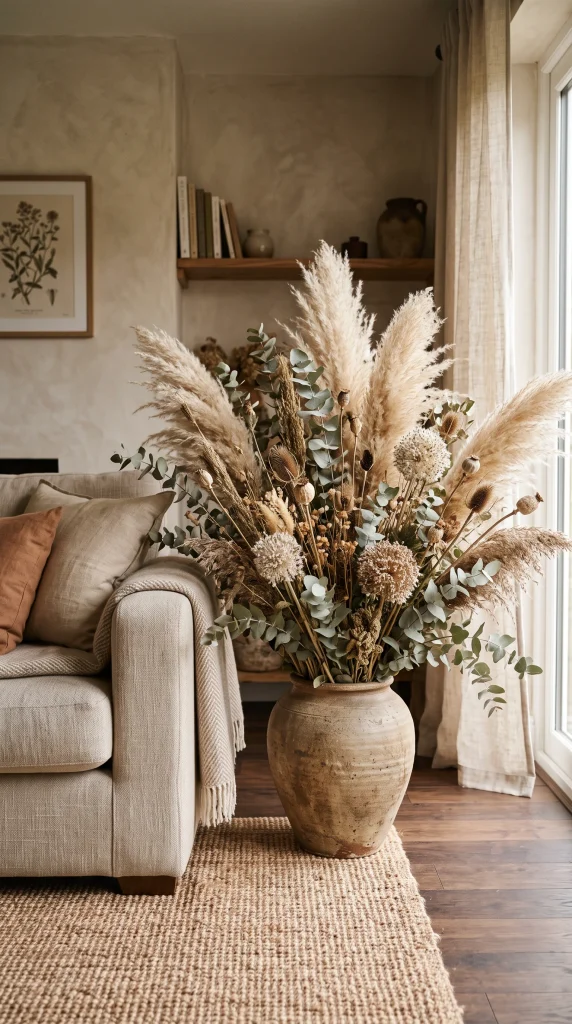
Dried botanical arrangements, including pampas grass, dried seed heads, eucalyptus branches, and preserved moss, add an earthy dimension to a living room that fresh flowers cannot quite replicate because the dried forms have a muted, natural color quality and a sculptural presence that connects to the wild and organic rather than the cultivated and decorative. A large dried arrangement in a wide-mouthed ceramic vase on the floor beside a sofa or in a fireplace alcove makes one of the most visually distinctive and low-maintenance earthy statements available.
Reality Check: Dried botanicals look best when displayed generously rather than sparingly. A small bunch in a narrow vase reads as an afterthought, while a full, abundant arrangement that overflows its container reads as deliberate and confident earthy styling.
Warm Ambient Candlelight
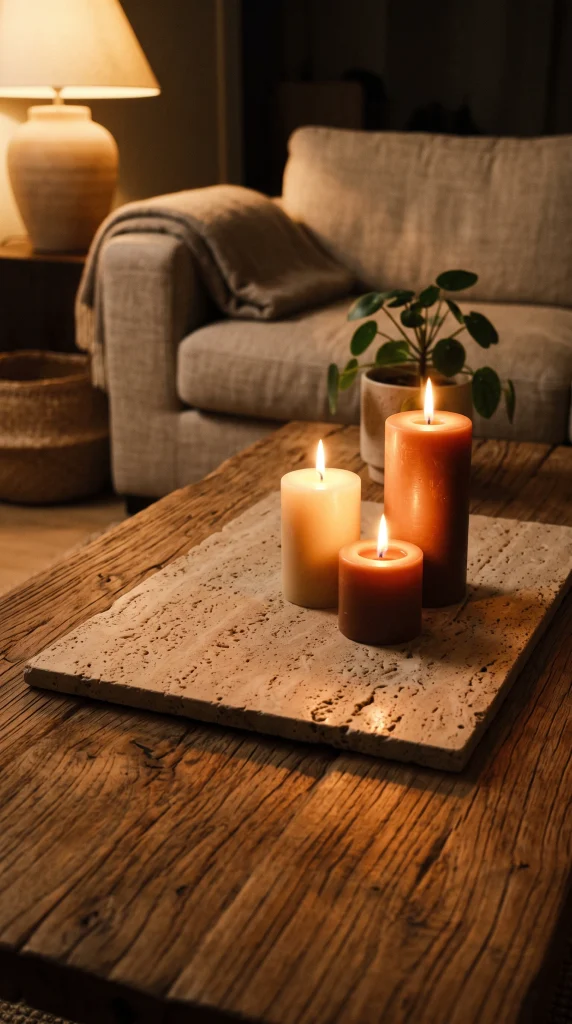
Candles, particularly in terracotta, cream, or warm ochre tones grouped on a tray on the coffee table or mantelpiece, add a warm flickering light quality to an earthy living room after dark that no electric light source can fully replicate. The soft, moving glow of multiple candles makes the earthy tones of terracotta, timber, and linen appear deeper and richer, and the natural beeswax or soy materials of quality candles add a subtle, warm scent that completes the sensory experience of a genuinely earthy room.
Pro Move: Group candles of three different heights in the same earthy tone family on a large flat travertine or timber tray on the coffee table. The grouping creates a deliberate styled moment and the tray provides a clean boundary that keeps the arrangement looking considered rather than scattered.
An Earthy Living Room With Wabi-Sabi Philosophy
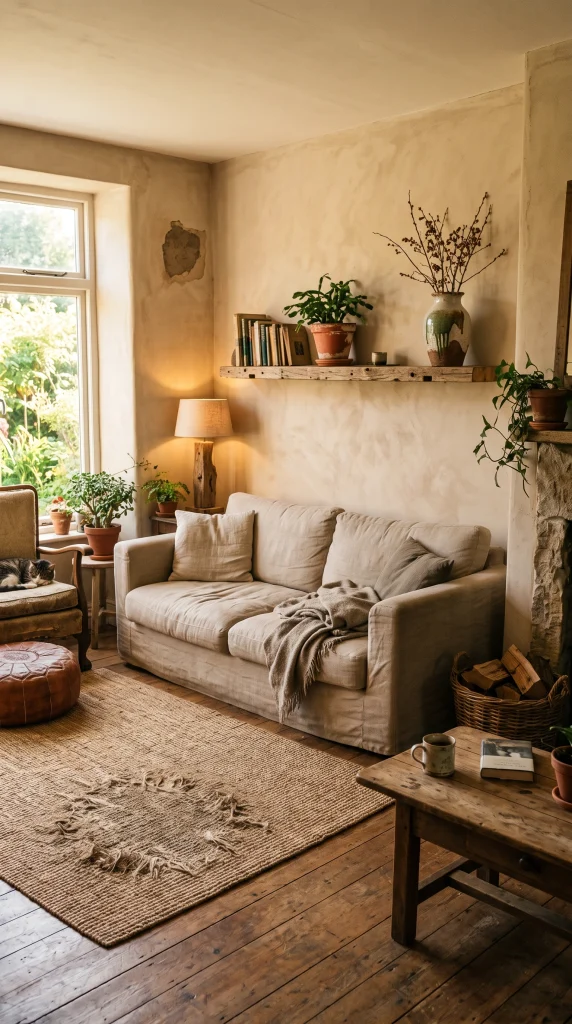
The Japanese aesthetic of wabi-sabi, which finds beauty in imperfection, impermanence, and natural incompleteness, is perhaps the most philosophically aligned framework for an earthy living room because it gives permission for the cracks in the plaster, the uneven glaze on the ceramic, the worn patch on the linen, and the knot in the timber to be seen as qualities rather than flaws. A wabi-sabi approach to an earthy living room means resisting the temptation to replace anything that shows character with age and instead treating those marks as the room’s most honest and valuable details.
Designer Advice: The earthy living rooms that genuinely feel expensive and considered are almost always the ones where imperfection is embraced rather than corrected. A perfectly uniform, pristine room using earthy colors and materials will always feel slightly like a showroom. The marks of real use and natural material variation are what make it feel like a home.