Duck Egg Blue Living Room Ideas That Work in Real Rooms
Duck egg blue is one of those colours that photographs beautifully and then, in some rooms, looks slightly wrong on the actual walls. The colour is not the problem. The problem is almost always the placement, the supporting palette, or the light condition. Get those three things right and duck egg blue is genuinely one of the most versatile and livable colours in a living room.
Each of these 26 ideas tells you exactly where the duck egg blue sits in the room and how everything else is built around it so the result feels as good in person as it does on the mood board.
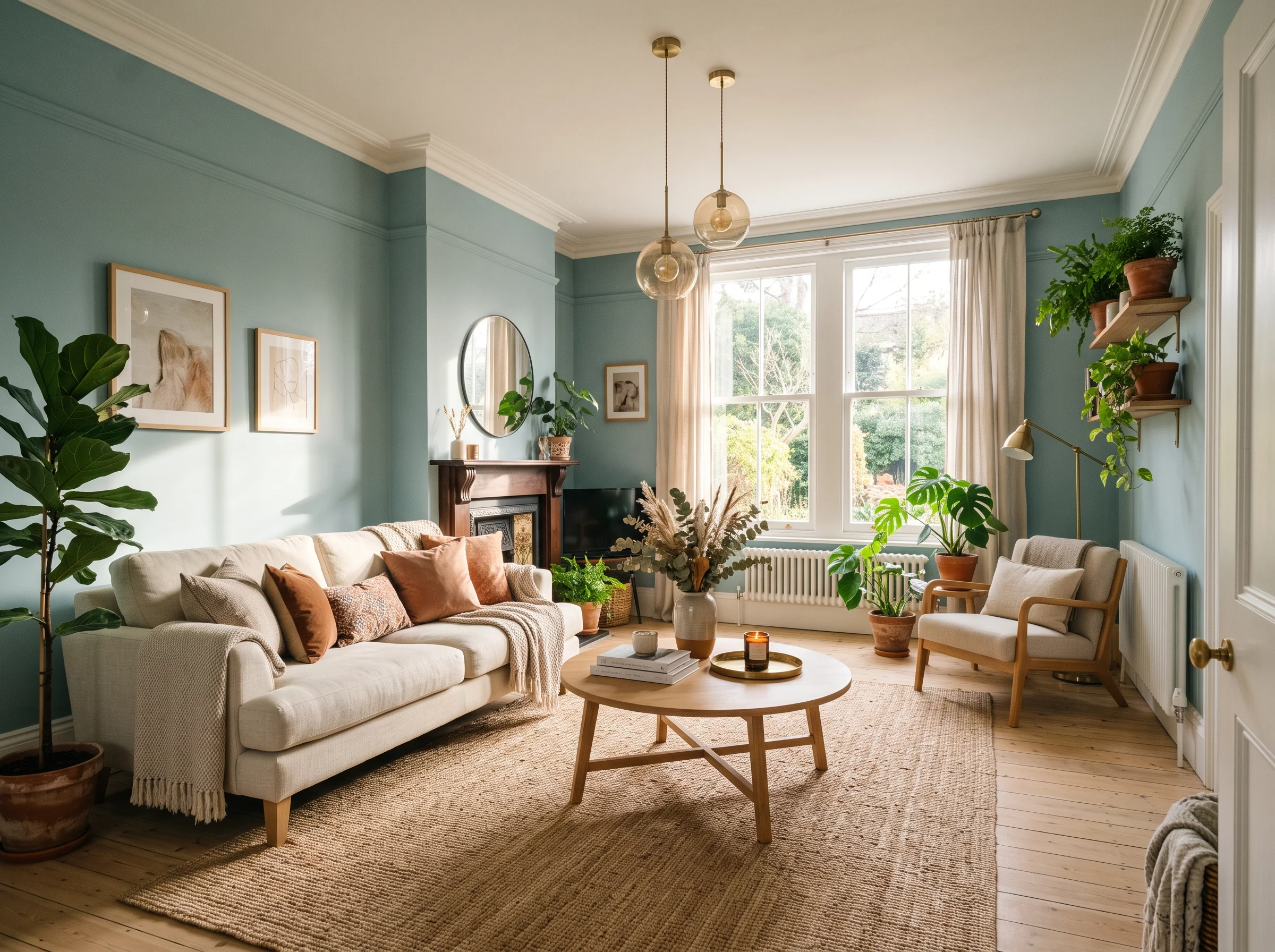
1. Duck Egg Blue on All Four Walls with Warm White Trim and Natural Wood
Painting all four walls in duck egg blue and keeping the ceiling, skirting, and coving in warm white creates a room that feels genuinely enveloping and calm without reading as dark or cold. Natural oak or pine furniture, a cream linen sofa, a jute rug, and warm brass lamp bases complete the palette. The warm white trim and natural wood prevent the blue from pulling cool, which is the most common reason duck egg blue rooms feel slightly off.
Reality Check: Duck egg blue on four walls works best in rooms with south or west-facing natural light, where the warmth in the light counteracts any cool tendency in the colour. In a north-facing room, choose a duck egg with a stronger green or grey undertone rather than a clear blue one, and add more warm wood and brass to compensate for the cooler light quality.
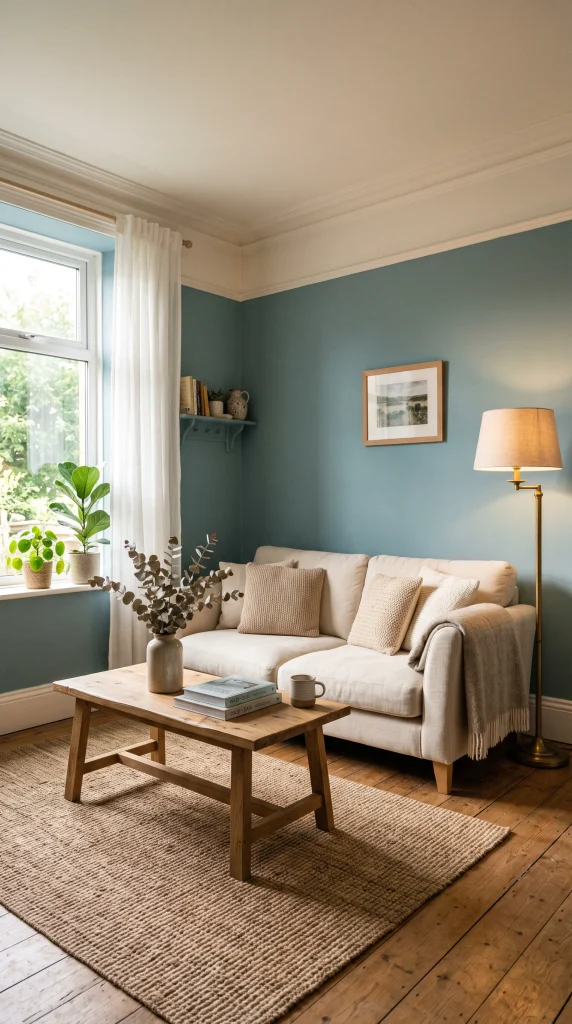
2. Duck Egg Blue Feature Wall Behind the Sofa with Cream Walls on Three Sides
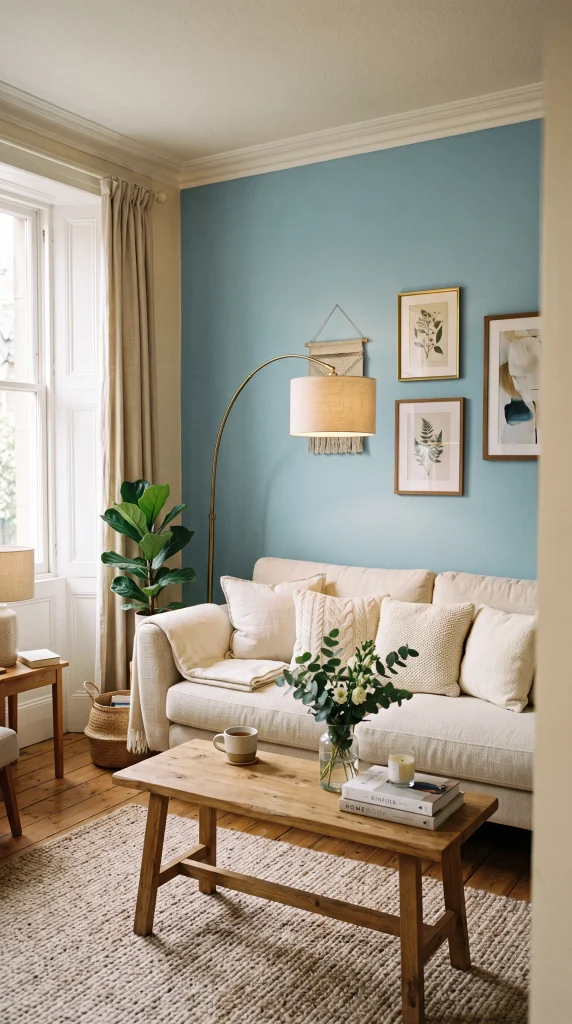
A single duck egg blue feature wall behind the sofa, with warm cream or off-white on the remaining three walls, gives the room a clear focal point and lets the colour do its work without committing the whole space. Against warm cream walls, the duck egg reads as a deliberate, considered accent rather than a dominating presence, and it makes the sofa, whatever its colour, look like it belongs there.
Quick Tip: The feature wall should be the wall the sofa sits against, not the wall you look at from the sofa. Sitting in front of your own feature wall means you never see it during daily use. The wall your guests face across the room is the right wall, and the duck egg blue gives them something beautiful to look at throughout every conversation.
3. Duck Egg Blue Sofa Against Warm White Walls
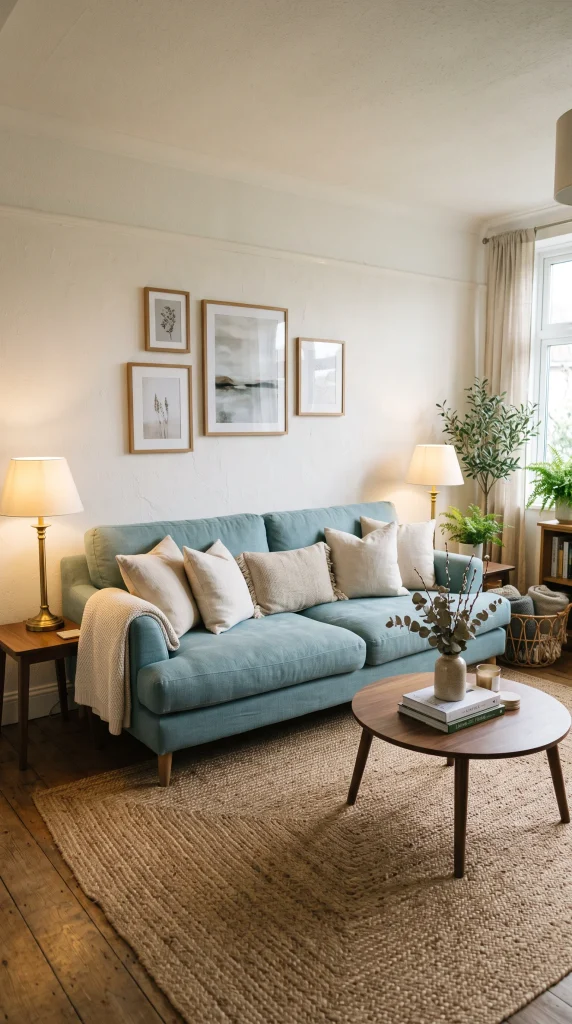
A duck egg blue velvet or linen sofa placed against warm white or warm cream walls, with a natural wood coffee table, cream and warm white cushions, a jute or sisal rug, and copper or warm brass lamp bases creates a living room where the sofa reads as a deliberately chosen colour statement rather than a wall colour decision. This approach gives the room personality without any structural commitment.
Designer Advice: Cushions on a duck egg sofa should be in a lighter or more neutral tone than the sofa itself, not in a contrasting bold colour. Cream, warm ivory, a soft blush, and a pale natural linen all sit within the same tonal world as duck egg and make the sofa look curated. Contrasting bold cushions on a duck egg sofa pull the eye away from the colour and make it feel like a staging choice rather than a design decision.
| Duck Egg Blue Placement | Best Supporting Palette | Room Effect | Works Best In |
| All four walls | Warm white trim, natural wood, cream sofa | Calm, enveloping, restful | South or west-facing rooms |
| Feature wall only | Warm cream on 3 walls, natural wood | Focal point, colour accent | Any orientation |
| Sofa only | Warm white walls, jute rug, brass lamps | Personality without commitment | Any room size |
| Accessories only | Neutral walls, natural materials | Subtle colour threading | Minimal or transitional rooms |
| Wallpaper on one wall | Cream or off-white elsewhere | Pattern and colour together | Period or eclectic rooms |
4. Duck Egg Blue with Copper Accents and Natural Linen
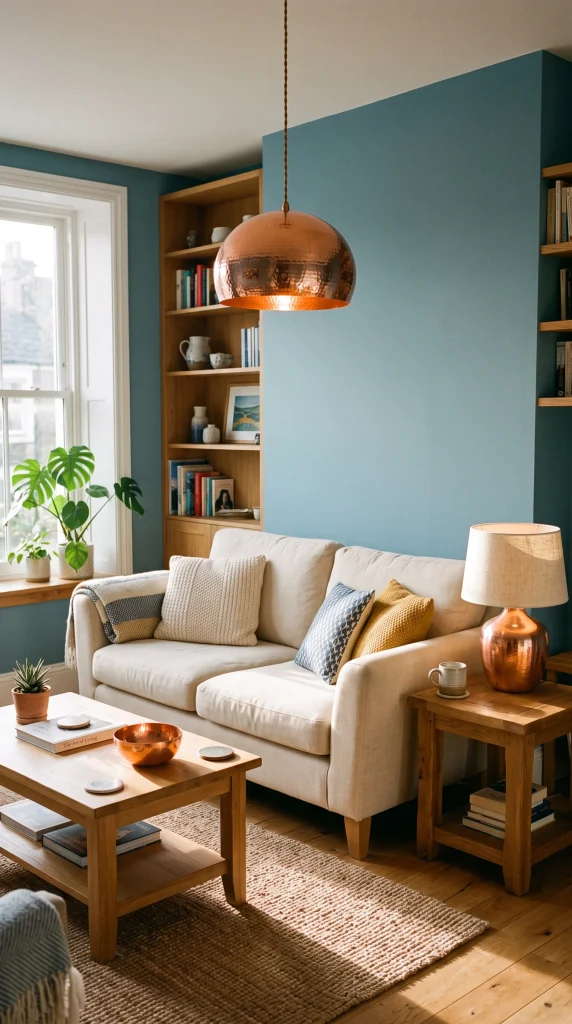
Duck egg blue walls or a duck egg sofa paired with copper and brushed bronze accessories, including copper pendant lights, copper-based table lamps, and copper vases and decorative objects, creates a colour combination that is simultaneously fresh and warm. The orange-copper sits on the opposite side of the colour wheel from the blue-green of duck egg and provides a natural complementary warmth that prevents the pale blue from reading as cold.
Pro Move: Copper in this scheme works best when it appears in at least three separate places in the room, rather than one showpiece. A copper pendant, a copper lamp base on the side table, and a small copper bowl on the coffee table create a thread of the accent colour that ties the room together. One copper object in a duck egg room looks placed; three looks designed.
5. Duck Egg Blue and Warm Grey for a Sophisticated Urban Room
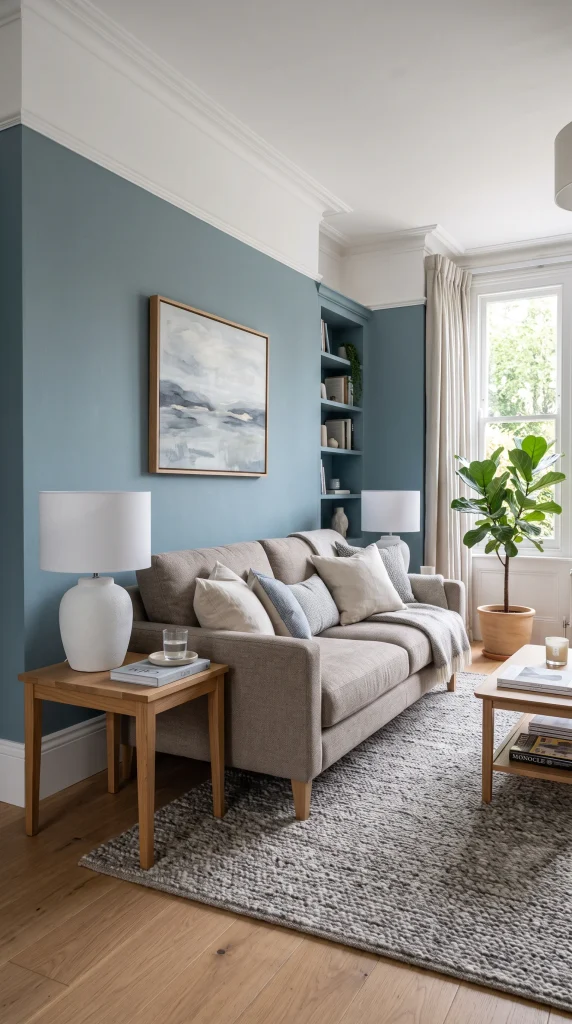
Duck egg blue on the walls paired with warm grey upholstery on the sofa, grey-toned natural rugs, and white trim creates a room that is calm, grown-up, and genuinely sophisticated without feeling cold. The grey absorbs the warmth that the duck egg lacks and the two colours share just enough of the same tonal family to feel naturally related. This combination is particularly effective in apartments and urban living rooms where the architecture is clean and contemporary.
Heads Up: The grey must be a warm grey, one with a beige or brown undertone, not a cool blue-grey. Cool grey next to duck egg blue creates a room where both colours reinforce each other’s coolness and the result reads as cold and clinical. Warm grey, greige, and stone tones sit in the warm half of the spectrum and balance the blue perfectly.
6. Duck Egg Blue Walls with Cream Sofa and Mustard Yellow Accents
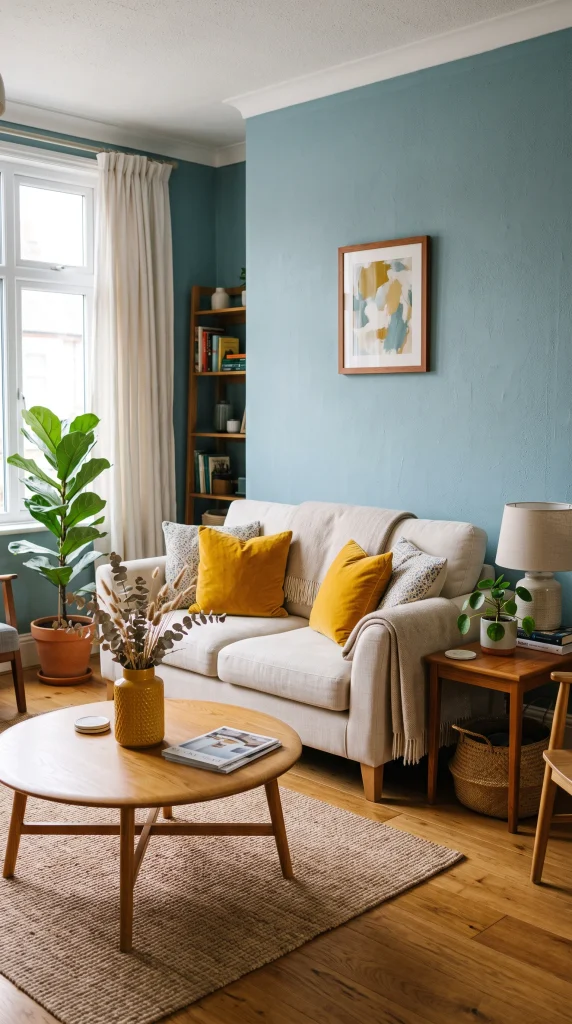
Duck egg blue on the walls, a cream or warm ivory linen sofa, and mustard yellow introduced through two cushions, a ceramic vase, and a piece of abstract art creates a living room that feels genuinely cheerful and individual without being loud. Mustard yellow and duck egg share an earthy quality in their respective muted versions that makes them feel like a natural pairing rather than a deliberate contrast.
Quick Tip: Keep the mustard yellow to roughly ten percent of the room’s visual surface. Two cushions, one vase, and one artwork is exactly the right level of exposure. Any more and the yellow starts to compete with the duck egg rather than warming it. Any less and the yellow reads as a single stray object rather than an accent colour.
7. Duck Egg Blue and Cream in a Country or Cottage Living Room
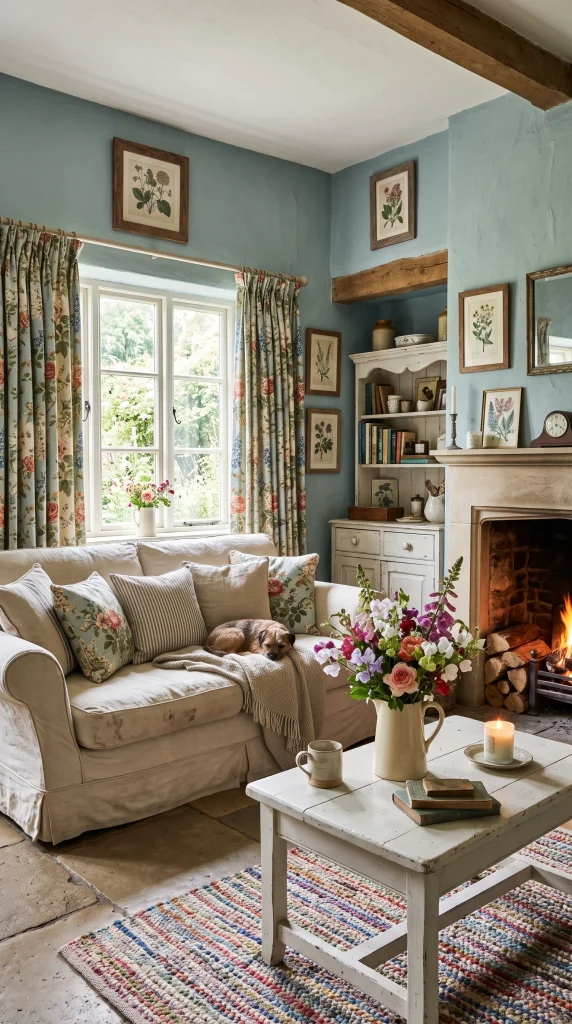
In a country or cottage-style living room, duck egg blue on the walls paired with cream linen slipcovers on the sofa, a floral or botanical printed cushion fabric that includes the duck egg tone, painted white wooden furniture, a stone or flagstone floor with a hand-woven rug, and fresh flowers in cream and white creates a living room that reads as genuinely timeless and unfussy. This is the combination duck egg blue has been associated with for decades and it remains one of the most reliably beautiful in British interior design.
Designer Advice: In a country-style duck egg room, the curtains should be in a printed fabric that includes the duck egg tone alongside cream and at least one warm accent colour such as coral, dusty rose, or soft terracotta. The curtain fabric is the element that ties the room together and prevents the duck egg walls and cream sofa from reading as too plain and unfinished.
8. Duck Egg Blue Walls with Dark Wood Furniture for a Traditional Room
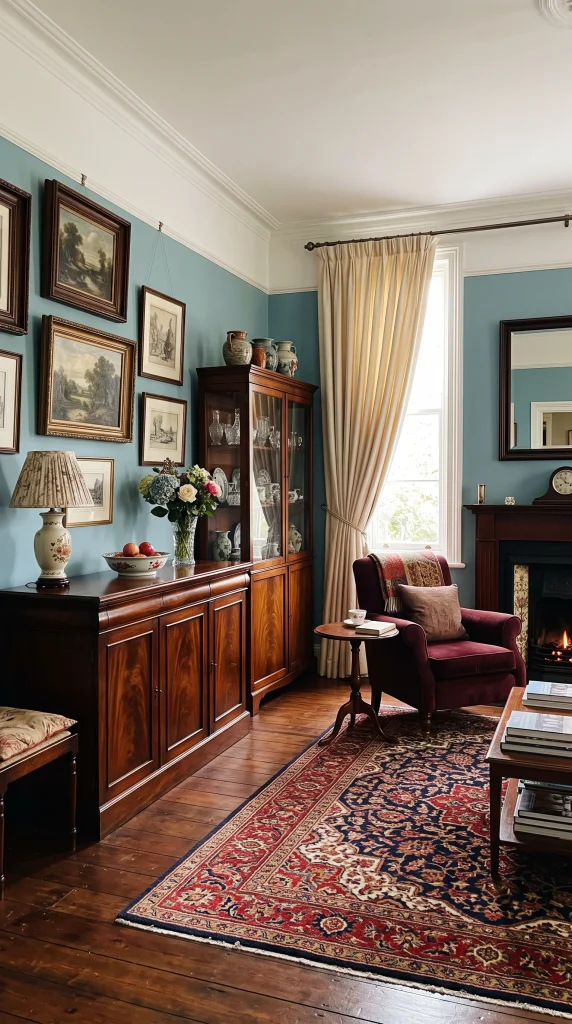
Duck egg blue walls paired with dark mahogany or walnut furniture, a deep red-brown Persian rug, cream bedding-weight curtains, and traditional dark wood picture frames create a traditionally styled living room where the pale blue walls make the dark furniture glow with warmth and depth. The contrast between the soft, pale wall colour and the deep wood tone is one of the most enduringly beautiful combinations in British country house interior design.
Reality Check: This combination is unambiguously traditional in character. It does not read as contemporary regardless of how the accessories are styled. If the goal is a modern or minimal room, this specific placement of duck egg blue against dark wood and Persian rugs will not achieve it. It is a beautiful choice for people who love the traditional aesthetic and are confident in that direction.
9. Duck Egg Blue Wallpaper with a Botanical Pattern on the Feature Wall
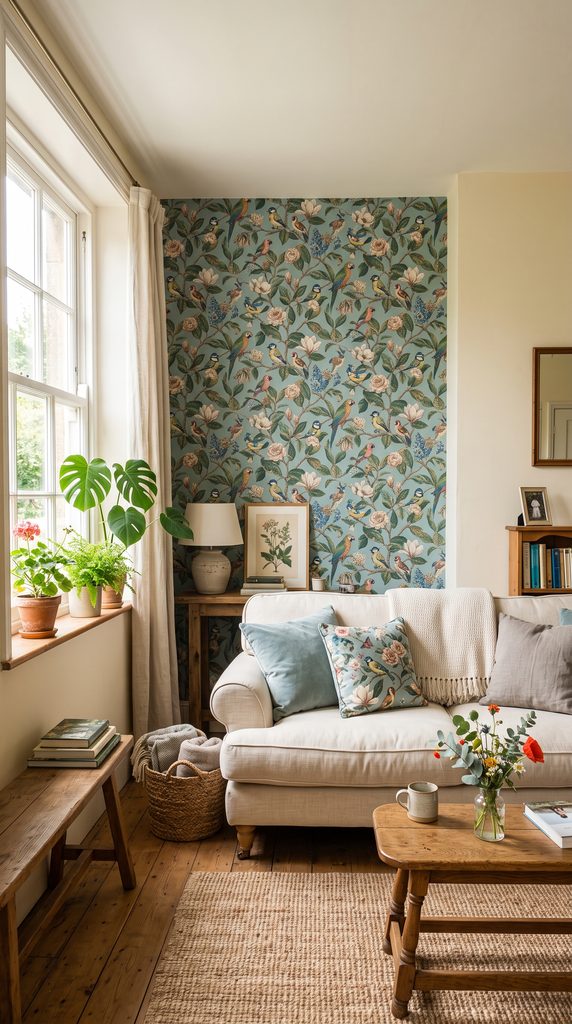
A duck egg blue botanical or bird print wallpaper applied to the feature wall behind the sofa, with cream or off-white paint on the remaining three walls, brings pattern, colour, and character to a living room in one move. The botanical motif suits duck egg particularly well because the combination of the pale blue-green background and organic plant forms references the outdoor world in a way that makes the room feel genuinely restful and connected to nature.
Pro Move: Pull one colour from the wallpaper pattern, other than the duck egg background, and use it as the accent colour throughout the room. If the botanical print has terracotta in the flower tones, introduce that terracotta in a cushion, a vase, and a small artwork elsewhere in the room. This technique makes the wallpaper feel designed into the room rather than applied to it.
10. Duck Egg Blue Accessories Only Against a Neutral Room
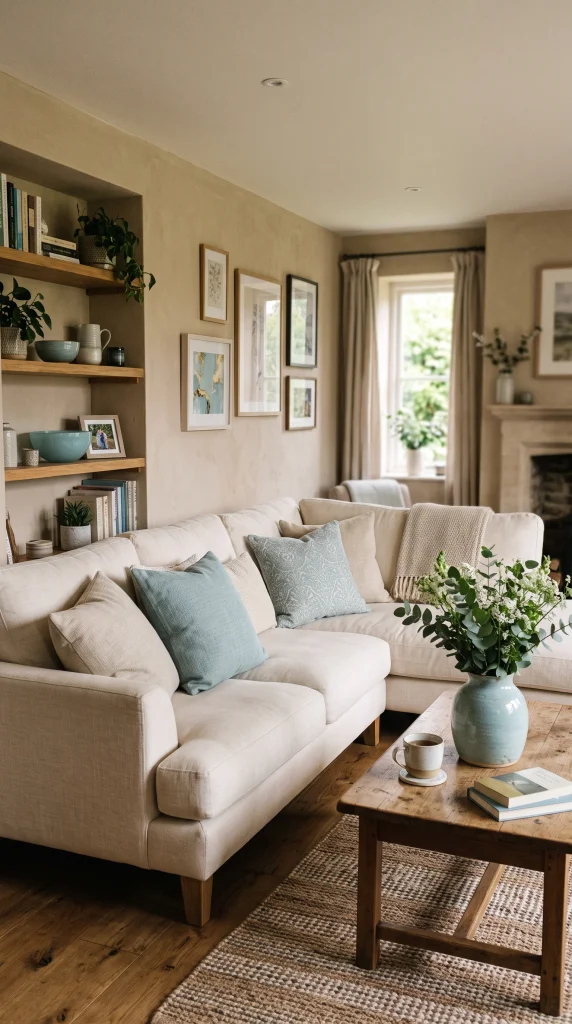
In a living room where the walls, sofa, and rug are all in warm neutrals, introducing duck egg blue exclusively through accessories, cushions, throws, a ceramic vase or lamp base, a glass bowl, and a piece of artwork, gives the colour a presence without any commitment to repainting or reupholstering. This is the lowest-commitment and most reversible version of a duck egg blue living room and it works particularly well in rooms where the existing neutral palette is well-established.
Heads Up: For accessories-only duck egg blue to read as a colour scheme rather than a collection of random blue objects, the accessories must appear in at least five to six separate places across the room. Two blue cushions in a neutral room read as a purchase; five blue accessories distributed across cushions, a lamp, a vase, a throw, and a piece of art read as an intentional colour story.
| Duck Egg Shade | Undertone | Best Light | Avoid Pairing With |
| Clear duck egg (blue-dominant) | Clear blue-green | Warm, south-facing | Cool whites, silver metals |
| Duck egg with grey undertone | Blue-grey | Any orientation | Warm yellows, orange-reds |
| Duck egg with green undertone | Blue-green, sage | Any orientation | Cool whites, stark blue |
| Pale duck egg (almost pastel) | Very light blue-green | Any orientation | Heavy or dark furniture only |
| Deep duck egg (closer to teal) | Saturated blue-green | Good natural light needed | Very cool greys, cold lighting |
11. Duck Egg Blue and Soft Blush Pink for a Romantic Living Room
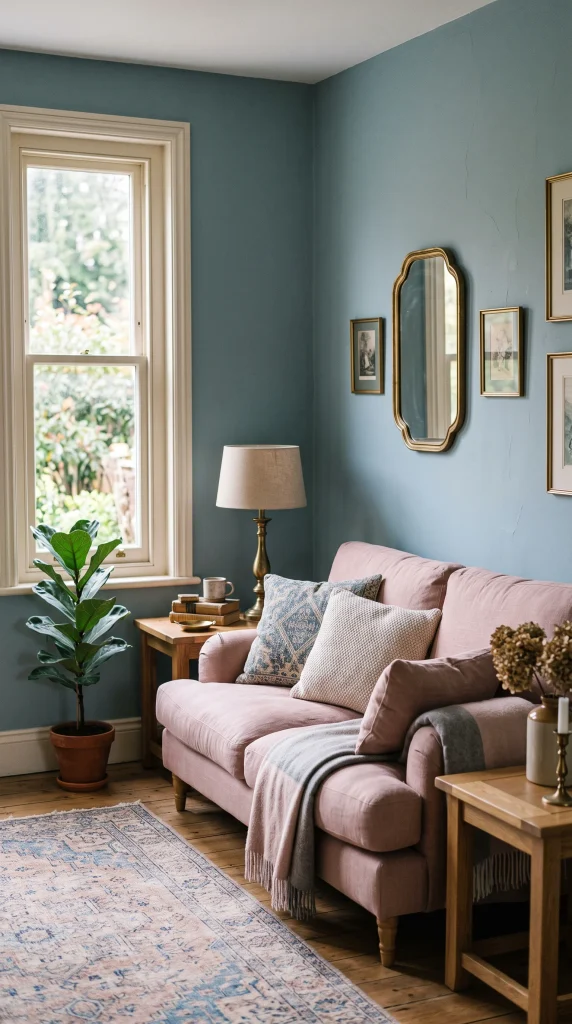
Duck egg blue walls with soft blush pink or dusty rose in the sofa upholstery or large cushions, warm white trim and ceiling, natural oak furniture, and aged brass or rose gold accessories creates a living room that is romantic without being sweet. The grey undertone in both duck egg and dusty blush pink means the two colours share a similar subdued quality that makes them feel tonally related rather than in contrast.
Designer Advice: The blush in this pairing should be a dusty, muted blush with a grey undertone, not a bright candy pink or a warm coral. Farrow and Ball Peignoir and Paint and Paper Library Powder I are the benchmarks for the correct shade. The muddied, sophisticated blush is what makes this combination feel grown-up rather than pastel-pretty.
12. Duck Egg Blue and White for a Coastal or Scandi-Inspired Room
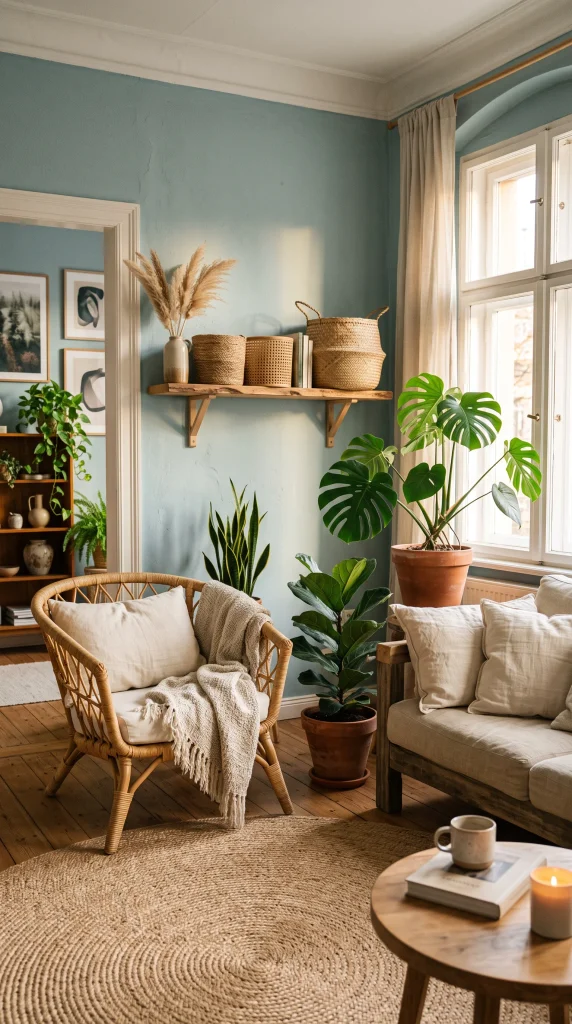
Duck egg blue on the walls with crisp warm white throughout, including the sofa, curtains, rug, and accessories, creates the clearest and most light-filled version of a duck egg blue living room. Natural textures in rattan, sea grass, driftwood, and unbleached linen prevent the white from reading as clinical and give the room the organic warmth that keeps a blue-and-white scheme from looking like a beach house catalogue.
Quick Tip: The white in a duck egg and white room must be warm white, not pure brilliant white. Brilliant white alongside duck egg creates a high-contrast combination that reads as cold and graphic. Warm white, which has a very slight cream or yellow undertone, sits more gently alongside the blue-green and maintains the soft, restful quality that makes duck egg such a good living room colour.
13. Duck Egg Blue with Natural Rattan and Warm Woven Textures
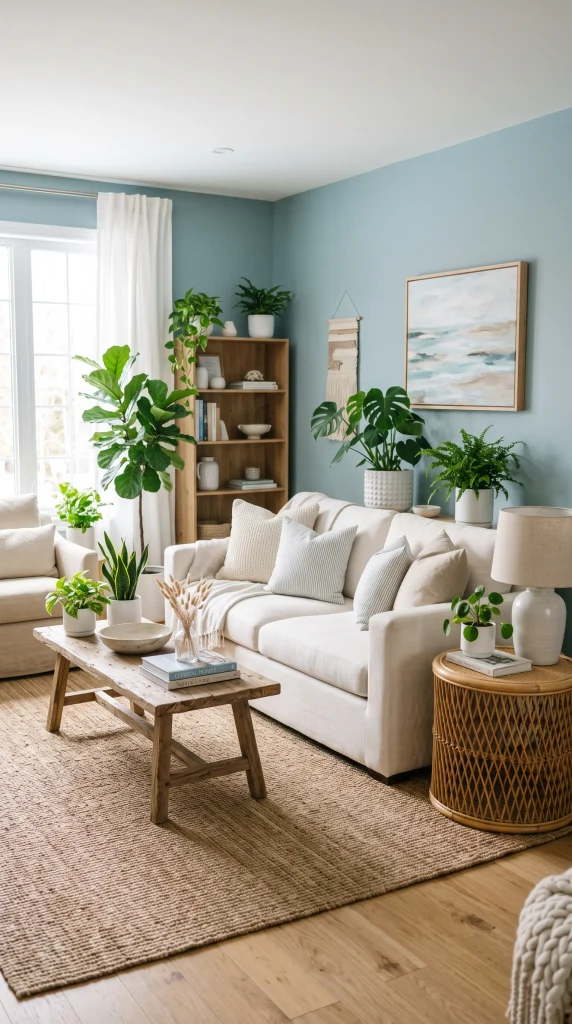
Duck egg blue walls paired with rattan or cane furniture, a natural seagrass or jute rug, linen cushions in cream and oatmeal, woven storage baskets, and trailing indoor plants in terracotta pots creates a biophilic living room where the duck egg reads as the colour of sky through foliage. The organic, handmade quality of natural materials softens the blue and prevents it from reading as a decorating choice rather than a natural part of the room’s character.
Reality Check: Rattan and duck egg blue is a very specific aesthetic that reads as coastal, bohemian, or Scandi depending on how it is executed. If the living room’s existing architecture is contemporary, formal, or industrial, rattan and duck egg will fight the space rather than suit it. This combination belongs in rooms with natural light, lower ceilings, and a relaxed, informal feel.
14. Duck Egg Blue Panelling on the Lower Half of the Wall
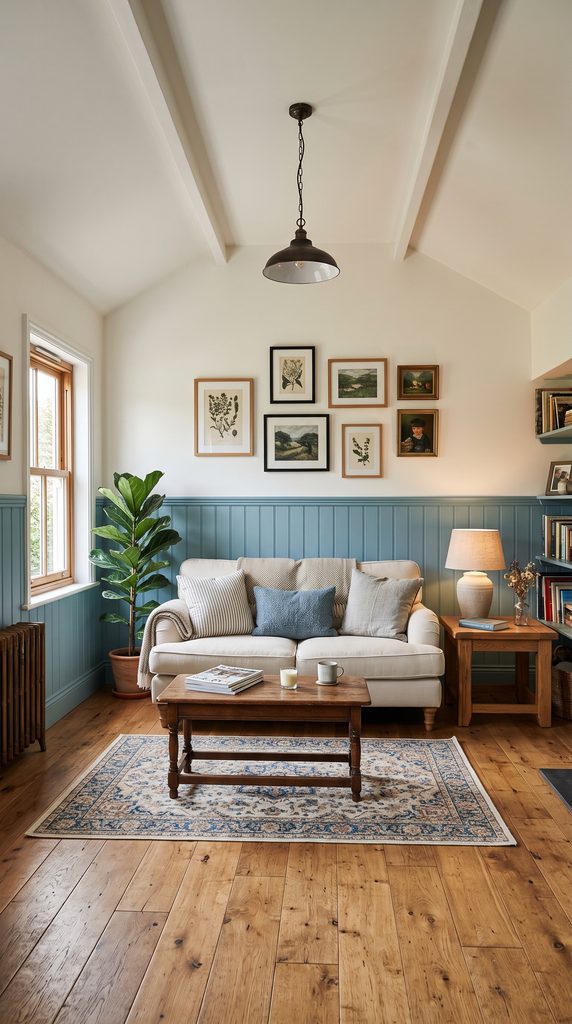
Painting the lower half of the living room wall in duck egg blue to create a two-tone panelling effect, with warm white on the upper half and ceiling, mimics the look of painted wainscoting and gives the room architectural detail without any actual carpentry. The duck egg sits at a height that catches the eye when seated, which is the viewing position for a living room, making it more impactful than a full-wall treatment in a room where you spend most time sitting.
Pro Move: Use a chair rail or picture rail line as the dividing point between the duck egg lower half and the white upper half. The division should sit at between 90 centimetres and 1.1 metres from the floor. Below that height, the split reads as too low and the duck egg looks like a baseboard treatment. Above that, the room loses the proportional elegance of the two-tone effect.
15. Duck Egg Blue Living Room with a Statement Terracotta Rug
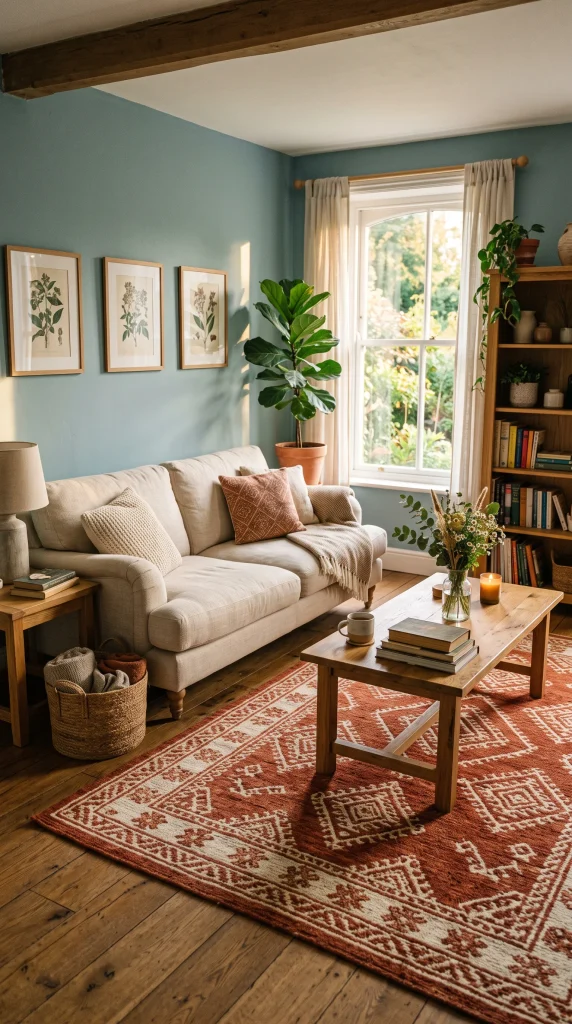
Duck egg blue walls, a cream or oatmeal linen sofa, and a large statement rug in warm terracotta, ochre, and cream tones creates a colour pairing that feels genuinely earthy and unexpected. Terracotta sits in the warm orange-red family, which is the complement of blue-green, so the two colours provide natural contrast while the muted, dusty versions of both prevent the combination from reading as loud or jarring.
Heads Up: The terracotta rug should have enough cream or oatmeal in its pattern to bridge between the warm floor tone and the cooler walls. A rug that is solid deep terracotta with no neutral tones can create a stark contrast against duck egg blue that reads as a colour clash rather than a considered combination. Look for rugs with a woven or printed pattern that includes at least thirty percent warm neutral alongside the terracotta.
16. Duck Egg Blue with Navy Blue Accents for a Layered Tonal Scheme
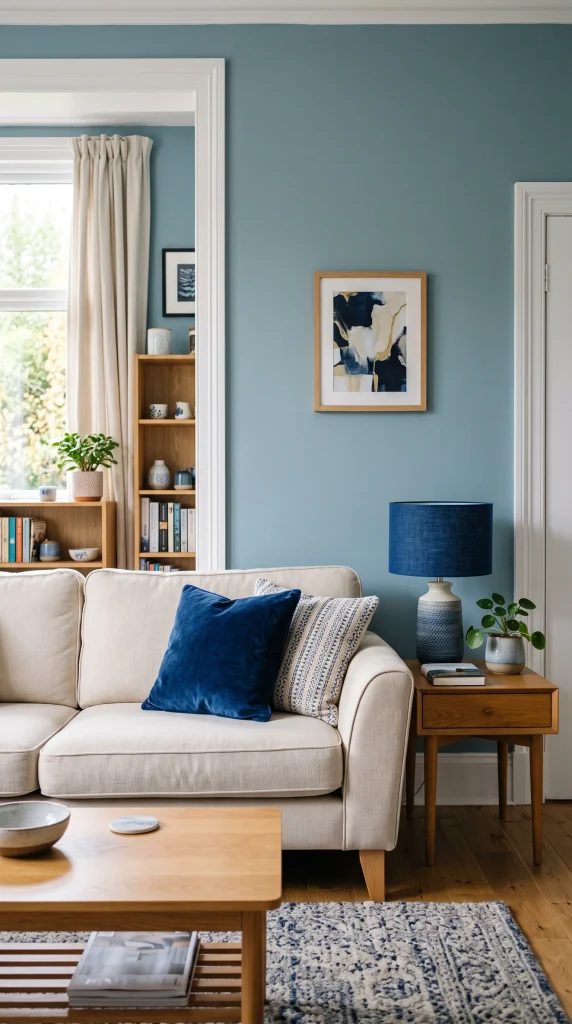
Duck egg blue on the walls with navy blue introduced through a velvet cushion, a piece of artwork, and a navy lampshade creates a tonal blue scheme that has depth and variation without introducing a contrasting colour. The relationship between the pale duck egg walls and the deeper navy accents reads as sophisticated and cohesive, and the white trim and natural wood furniture provide the warmth that prevents the all-blue scheme from feeling cold.
Designer Advice: Navy accents in a duck egg room work because both colours belong to the same blue-green family and the contrast between them is tonal rather than chromatic. This is the same principle that makes a tonal beige room work: it is the value difference within one colour family that creates depth, not the introduction of a contrasting hue.
17. Duck Egg Blue in a Small Living Room to Make Space Feel Larger
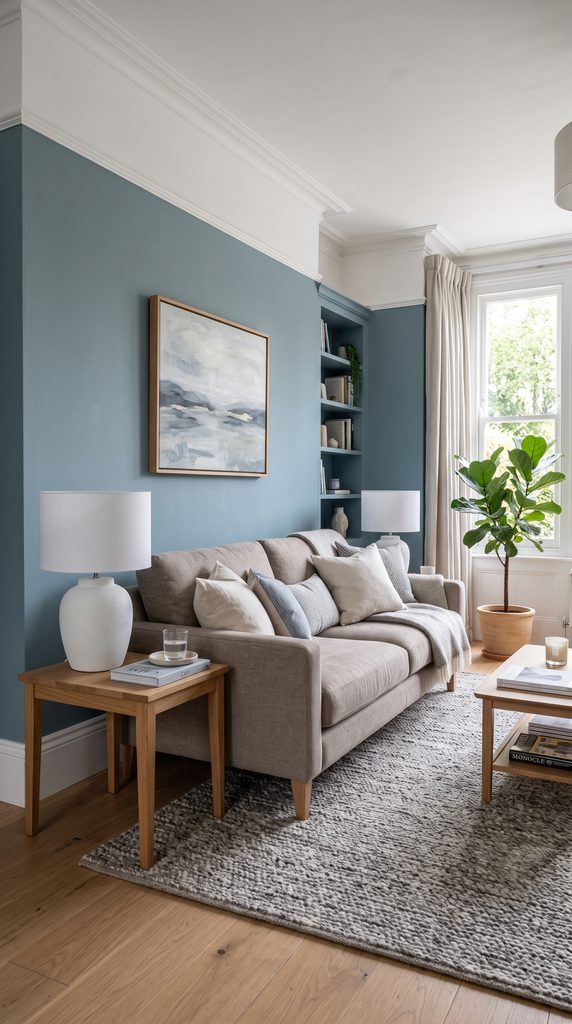
In a small living room, duck egg blue on all four walls, a glass or mirrored coffee table to reduce visual weight at floor level, floor-to-ceiling curtains in a slightly lighter duck egg or warm cream to increase the sense of height, and a single large mirror on the wall opposite the window to double the natural light creates a room that feels genuinely larger and more open than the floor area suggests. The pale, slightly cool tone of duck egg reflects more light than deeper colours and creates the perception of more space.
Quick Tip: In a small duck egg room, furniture with visible legs reads as lighter and less space-consuming than skirted or solid-based pieces. A sofa on tapered legs, a glass coffee table, and a side table with a slender profile all contribute to the sense that the floor is largely open and the room is larger than it is.
18. Duck Egg Blue with Sage Green for an All-Nature Palette
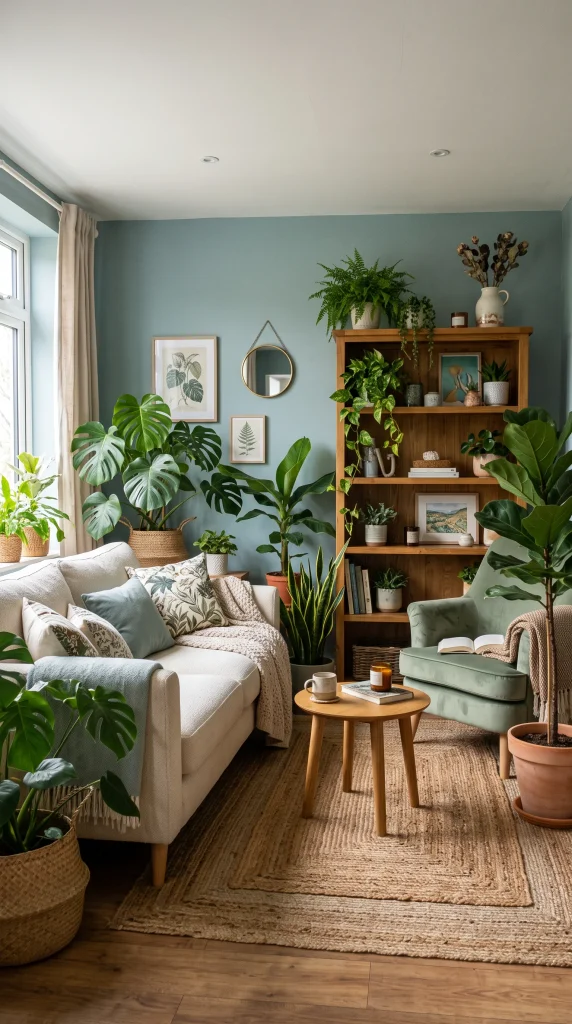
Duck egg blue walls paired with sage green in an accent chair, plant pots, and a trailing throw, warm cream on the sofa, natural wood furniture and shelving, and an abundance of indoor plants creates a living room that feels like an indoor garden: genuinely calm, organic, and deeply connected to nature. Duck egg and sage share the same cool-meets-warm quality in their respective muted versions and sit naturally together without requiring any colour bridging.
Pro Move: In a duck egg and sage green room, the plants are not decorative accessories, they are structural design elements that reinforce both colours and give the room its defining character. A room with three or more large plants alongside duck egg walls and sage accents reads as a fully realised biophilic interior. The same room with one small plant reads as a blue living room with a plant in the corner.
| Accent Colour | Relationship to Duck Egg | Effect | How to Introduce It |
| Copper or bronze | Complementary (opposite on wheel) | Warmth, richness, anti-cold | Lamps, pendants, vases, trays |
| Mustard yellow | Warm complement, earthy | Cheerful, individual, grounded | Cushions, artwork, ceramics |
| Warm terracotta | Warm complement, earthy | Mediterranean, layered warmth | Rug, plant pots, ceramics |
| Soft blush pink | Analogous, shared grey undertone | Romantic, sophisticated | Sofa fabric, large cushions |
| Navy blue | Tonal, same colour family | Depth, sophistication, cohesion | Cushions, lampshade, artwork |
| Sage green | Analogous, shared natural quality | Biophilic, calm, organic | Accent chair, throw, plant pots |
| Warm grey | Tonal neutral, shares grey undertone | Urban, sophisticated, grounded | Sofa upholstery, rug |
19. Duck Egg Blue Curtains Against Neutral Walls
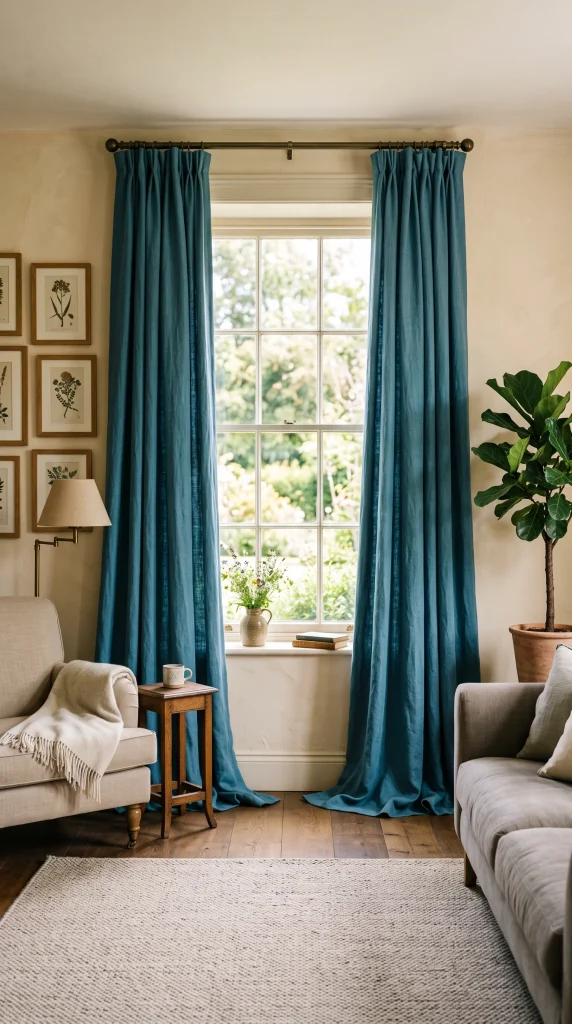
Long duck egg blue linen or velvet curtains, hung at ceiling height and allowed to pool slightly on the floor, against warm cream or warm white walls introduce the colour at its most architectural and dramatic without a drop of paint on the walls. This approach is particularly effective in rental homes where painting is not possible, and in rooms where the existing neutral walls are well-suited to the furniture but the space lacks colour and personality.
Reality Check: Curtains-only duck egg blue rooms need the curtains to be full, generous, and properly scaled to the windows to read as a design choice rather than a colour accident. Narrow curtain panels in duck egg that barely cover the window read as the wrong size. Wide panels that drape generously on each side of the window frame read as a deliberate, considered choice that the rest of the room can be built around.
20. Duck Egg Blue with Black Accents for a Graphic Contemporary Room
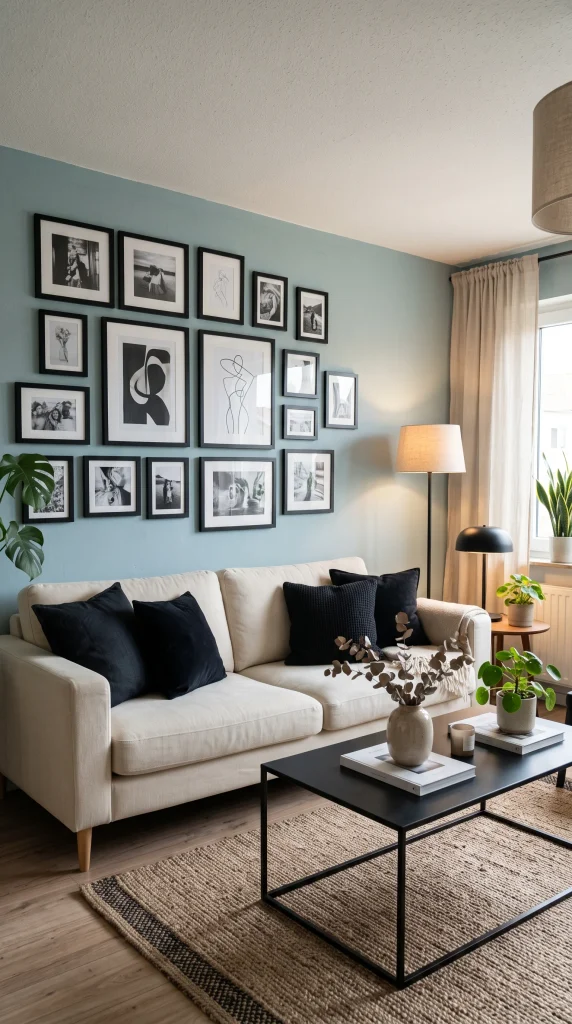
Duck egg blue walls, a cream or warm white sofa with black cushions, a matte black coffee table, black picture frames in a gallery arrangement, and black lamp bases create a living room where the gentle pale blue and the sharp black contrast in a way that feels contemporary and graphic without being cold. The duck egg prevents the black-and-white combination from feeling harsh, and the black gives the duck egg the definition and edge it needs to read as sophisticated rather than sweet.
Designer Advice: The black in a duck egg and black room should be matte, not glossy. Glossy black alongside duck egg creates a combination that reads as too high-contrast and graphic. Matte black, which absorbs light rather than reflecting it, sits more gently alongside the pale blue and keeps the scheme feeling designed rather than theatrical.
21. Duck Egg Blue Ceiling in a Neutral Room
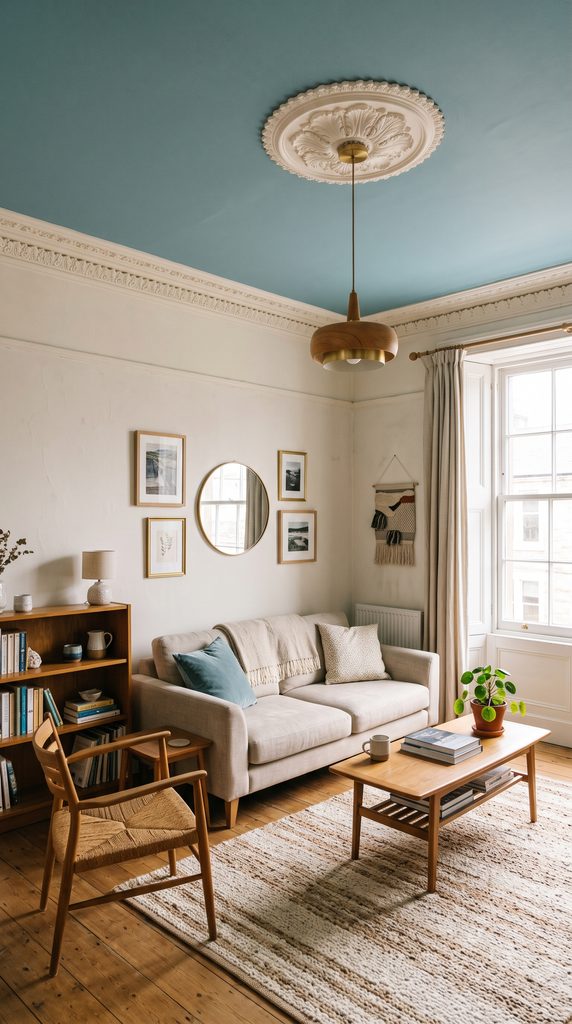
Painting only the ceiling in duck egg blue while keeping walls, sofa, and furniture in warm neutrals introduces the colour in the most unexpected and dramatically effective position possible. The duck egg ceiling envelops the room from above in the same way that a blue sky envelops the landscape below, creating a sense of outdoors brought inside that no wall treatment can replicate. This approach works in rooms with standard ceiling heights of 2.4 metres or higher and looks most intentional in rooms with ceiling roses, cornicing, or other architectural ceiling detail.
Quick Tip: A duck egg ceiling looks most intentional when the cornice or ceiling rose is painted in warm white rather than the same duck egg as the ceiling. The white border between the ceiling colour and the wall creates a clean visual frame that makes the ceiling colour look like a considered design decision. Without that white frame, the duck egg ceiling can read as an unfinished paint job.
22. Duck Egg Blue in a Traditional Period Living Room
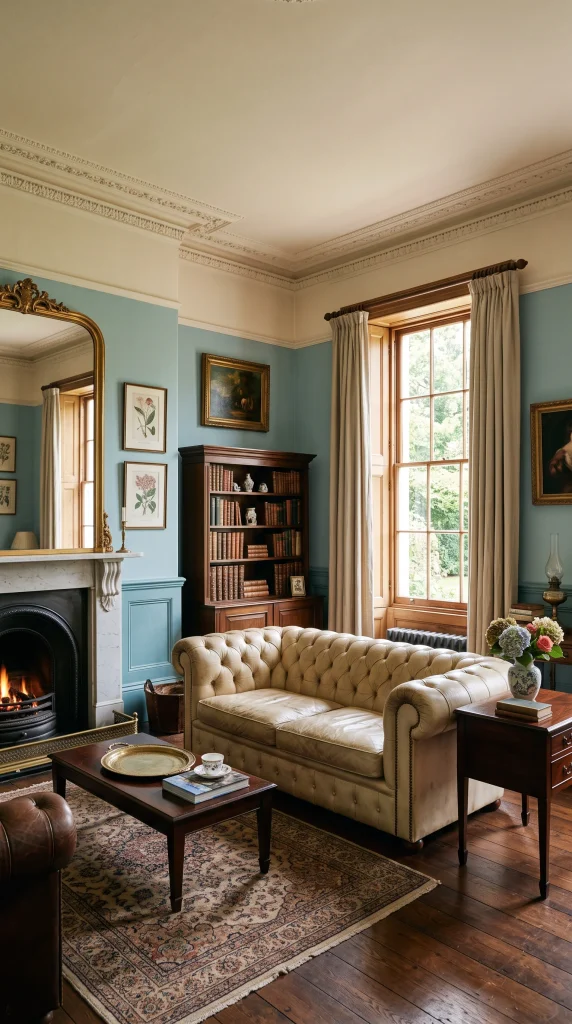
In a room with period features such as cornicing, ceiling roses, dado rails, sash windows, and picture rails, duck egg blue on the walls between the dado and the cornice, with warm white on the dado panel below and ceiling above, and dark wood furniture with a Chesterfield sofa in cream leather or aged fabric creates a living room that references British country house design without feeling dated or pastiche. Duck egg blue has been used in period homes for over a century and it belongs there.
Pro Move: In a period room with dado rails, paint the dado panel in a shade one to two tones darker than the duck egg on the main wall, rather than in white. This creates a traditional two-tone panel effect that is historically accurate and gives the lower portion of the wall the visual weight it needs to anchor the room. A white dado panel against duck egg walls can look like the white has not been painted over.
23. Duck Egg Blue with Reclaimed Wood and Industrial Touches
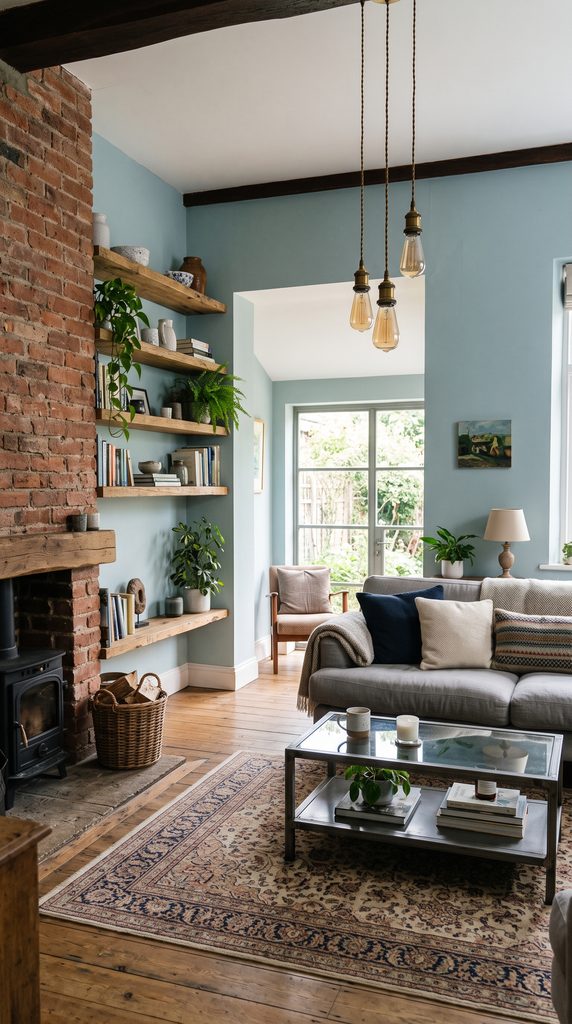
Duck egg blue walls with reclaimed wood shelving in rough-hewn oak or pine, a grey linen sofa, industrial-style steel and glass coffee table, Edison bulb pendant lights in aged brass, and exposed brick if the architecture permits creates a living room that balances the softness of the duck egg with the rawness of industrial materials. The blue-green of duck egg reads as natural and organic alongside weathered wood and aged metal in a way that more formal decorating schemes cannot.
Heads Up: This aesthetic requires genuine aged or reclaimed materials to read authentically. New wood stained to look reclaimed and reproduction industrial lighting sit uneasily alongside the genuine warmth and character of duck egg blue. If authentic materials are not available, lean toward the softer country or Scandi versions of this colour instead.
24. Monochromatic Duck Egg: Three Shades of the Same Colour
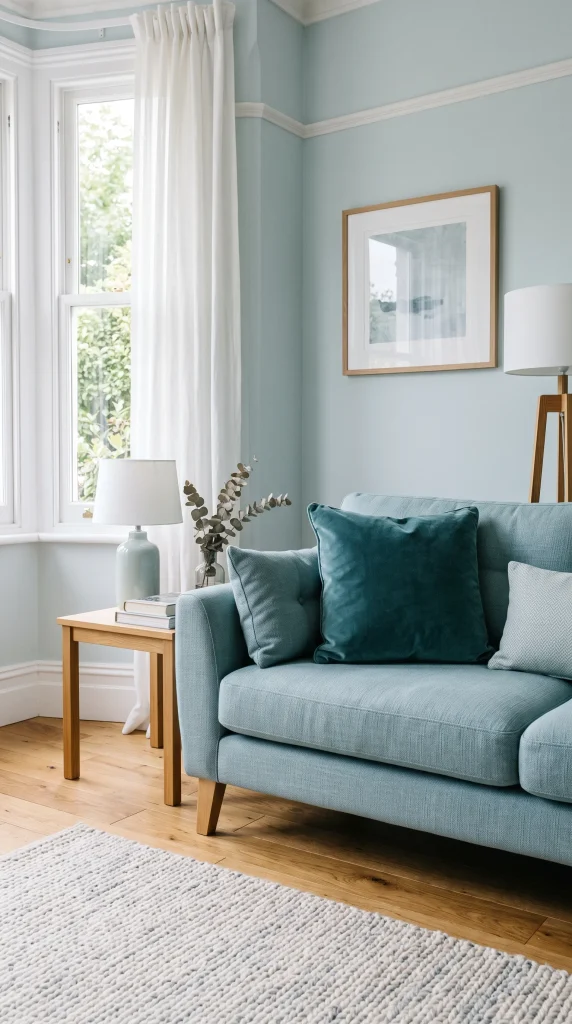
Using three distinct shades of duck egg blue throughout the room, a pale duck egg on the walls, a mid duck egg on the sofa or an accent chair, and the deepest version in a velvet cushion or throw creates a tonal monochromatic scheme that reads as deliberately cohesive and confident. The variation in depth across the same colour family creates visual movement and layering without the eye having to process multiple different colours.
Reality Check: A monochromatic duck egg room lives or dies by the variation in texture between the three tones. If the pale walls, mid sofa, and deep cushion are all in smooth flat surfaces, the room reads as one colour with insufficient contrast. The variation must happen through material texture as well as tone: matte painted walls, linen upholstery, and velvet cushions all in the duck egg family look genuinely considered.
25. Duck Egg Blue with Warm Brass and Botanical Green Plants
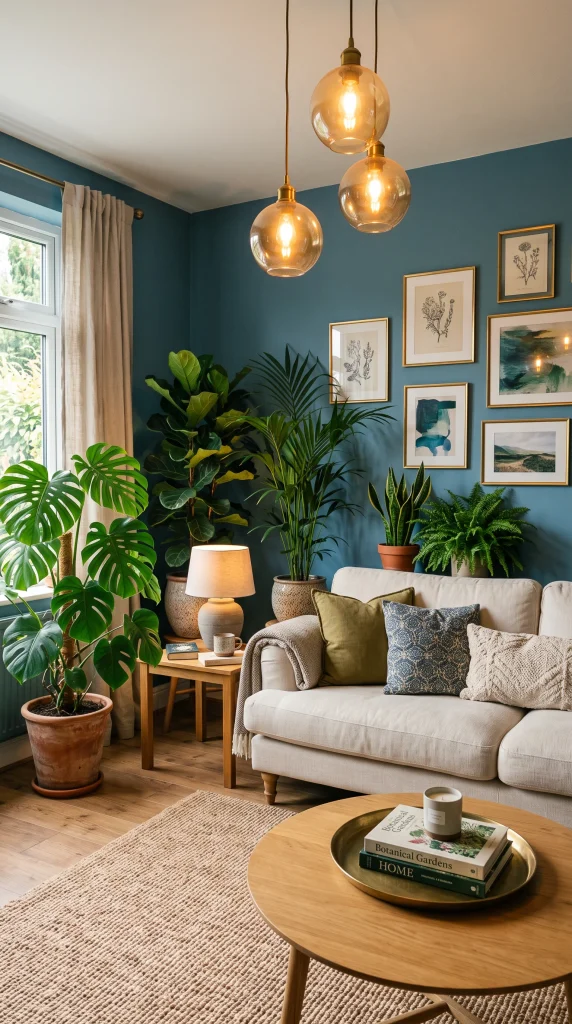
Duck egg blue on all four walls, warm brass in pendant lights, lamp bases, and picture frames, an abundance of large indoor plants in ceramic pots at varying floor heights, cream linen on the sofa, and a natural fibre rug creates one of the most reliably beautiful and genuinely popular duck egg living room combinations of the current decade. The warmth of the brass counteracts the cool tendency of the blue, and the green of the plants reinforces the green undertone that makes duck egg feel connected to the natural world.
Designer Advice: Warm brass is the correct metal for a duck egg living room. Silver, chrome, and nickel all read as cool metals that reinforce the coolness of the blue rather than counteracting it. Brass, copper, and bronze all read as warm metals that do the opposite, making the duck egg walls feel warmer and more inviting than they would appear on a paint chip alone.
26. Duck Egg Blue in an Open-Plan Living Room Using Colour to Define the Zone
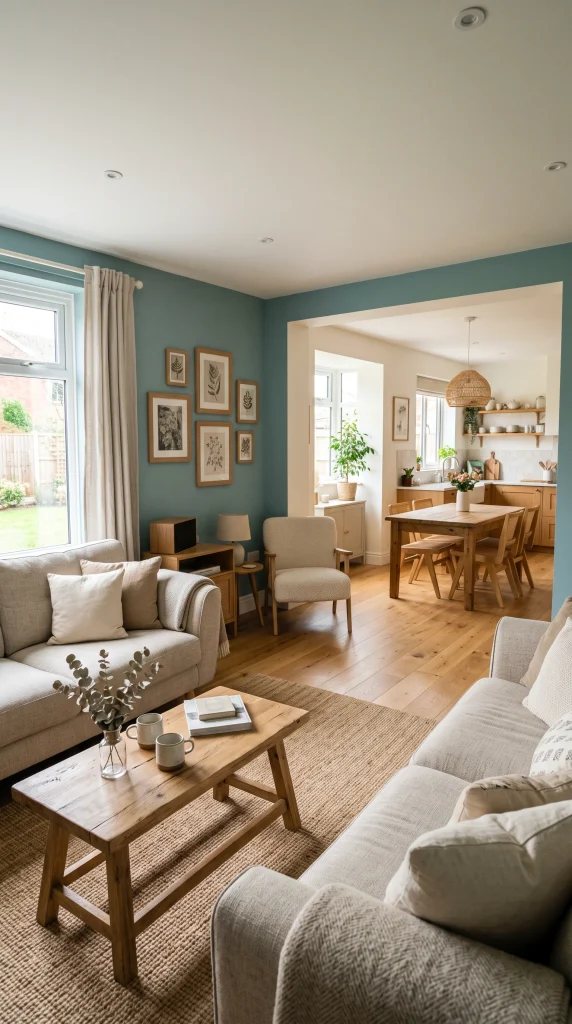
In an open-plan kitchen, dining, and living room, painting only the living area walls in duck egg blue while keeping the kitchen and dining areas in warm white or cream creates a clear colour-defined zone that gives the living area its own identity without any physical partition. The duck egg wraps the sofa and seating group in a visual boundary that tells the eye where one area ends and the next begins, which is the most effective and cost-free zoning technique available in an open-plan space.
Pro Move: In an open-plan colour-zoning scheme, the duck egg should appear on three walls of the living zone rather than two. Three walls creates the sense of a defined room; two walls reads as a painted corner. The fourth wall, which typically connects the living zone to the rest of the open plan, can be left in the neutral tone that unifies the whole space.