Black Kitchen Cabinets That Actually Work (and What to Pair Them With)
Most people fall in love with black kitchen cabinets in a showroom, then get home and freeze. What countertop? What hardware? What wall color? The pairing is everything, and that’s exactly what most articles skip. Here’s how each black cabinet look actually comes together in a real kitchen.
Matte Black Shaker Cabinets with Warm White Quartz
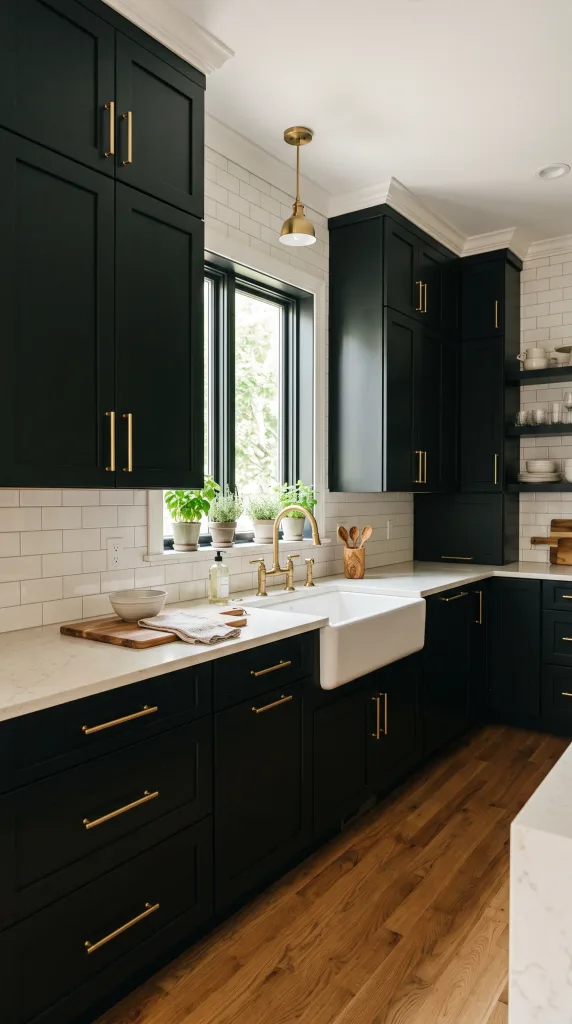
Shaker-style cabinets in a flat matte black finish are the most forgiving entry point into dark cabinetry. In practice, they read as sophisticated rather than heavy when paired with warm white quartz countertops, specifically something with a cream or ivory undertone rather than a stark cool white. The visual weight difference between the dark cabinets and the lighter counter keeps the kitchen feeling balanced. Brass or satin gold hardware ties the warmth together without feeling overdone. Works especially well in medium to large kitchens with at least one natural light source.
Pro Move: Choose quartz with a warm undertone, not a blue-cool white — it prevents the kitchen from feeling cold and clinical.
Glossy Black Upper Cabinets with Open Lower Shelving
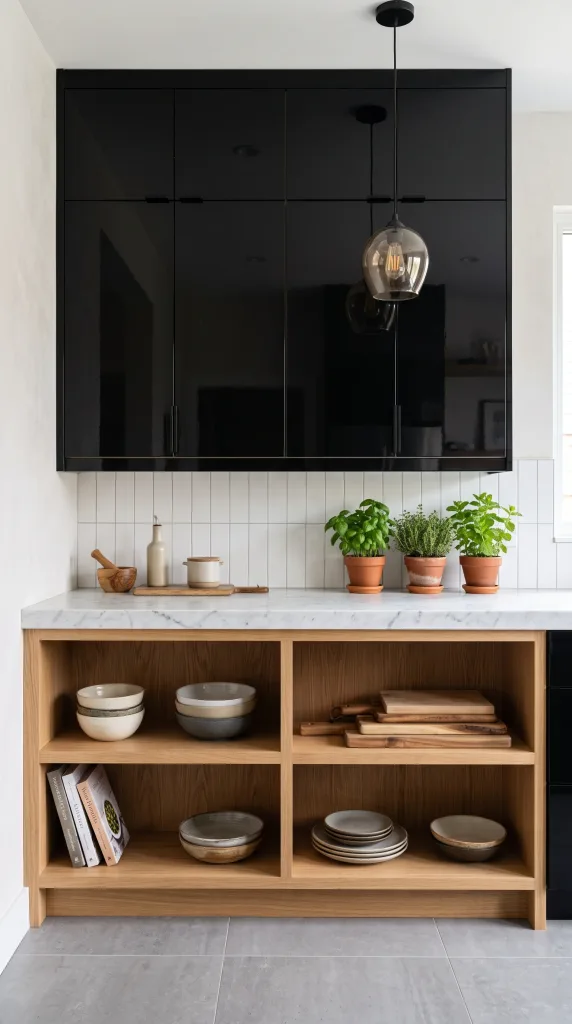
This combination plays with visual weight in a way that feels genuinely designed rather than accidental. Lacquered or high-gloss black upper cabinets reflect light and create a sense of depth, while open lower shelving in natural oak or walnut breaks the darkness and invites texture into the space. Designers use this approach in smaller kitchens where full black cabinetry on both levels would feel closed in. The open shelving also lowers the cost of the overall renovation, since you’re essentially removing cabinet doors from the lower run.
Reality Check: Glossy finishes show fingerprints more than matte — budget for regular wiping, especially near the handles.
| Finish | Fingerprint Visibility | Light Reflection | Maintenance Level |
| Matte Black | Low | Minimal | Easy |
| Satin Black | Medium | Moderate | Medium |
| High Gloss Black | High | Maximum | Higher |
Two-Tone Black Lowers with Sage Green Uppers
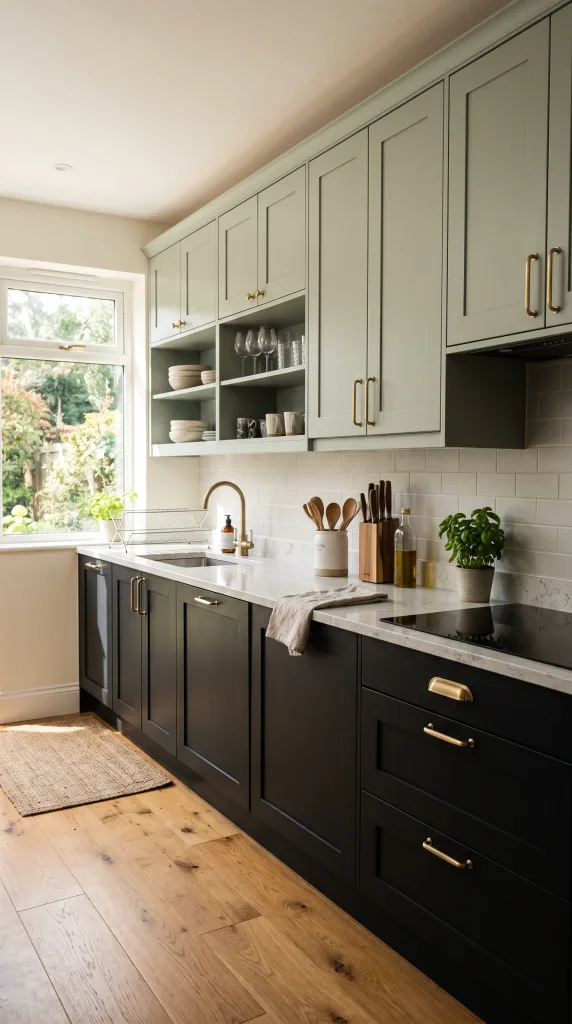
Two-tone kitchens are one of the strongest trends coming out of professional kitchen design right now, and the black lower, sage upper combination is a particularly good one. The black grounds the space, the sage adds softness and a connection to nature, and together they avoid the all-or-nothing commitment of a full black kitchen. Paint the lowers in Farrow & Ball Railings or Benjamin Moore Onyx, and the uppers in a muted sage like Sherwin-Williams Privilege Green. The contrast is striking without being jarring, and it photographs beautifully too.
Designer Advice: Keep the hardware consistent across both cabinet colors — brushed brass works on both and ties the palette together.
Black Flat-Front Cabinets with Concrete Countertops

If you want a kitchen that leans industrial without going full warehouse, flat-front (also called slab-door) black cabinets paired with honed concrete or concrete-look quartz is the move. The clean lines of the flat-front doors and the raw texture of concrete create a tension that feels intentional and considered. Integrated handles or recessed pulls keep the hardware minimal. This pairing works best with polished concrete floors or large-format matte porcelain tiles underfoot. It’s an investment-level look, but concrete-look quartz starts at a much more accessible price point than poured concrete.
Heads Up: Flat-front cabinetry shows every smudge and dent more than shaker profiles — it’s a high-maintenance aesthetic in busy households.
Black Cabinets with Unlacquered Brass Hardware

Hardware is where black cabinets go from looking like a design decision to looking like a design statement. Unlacquered brass is the pairing that most professional designers reach for because it warms up the darkness in a way that polished chrome or matte black hardware simply cannot. Unlacquered brass also develops a natural patina over time, which adds character rather than looking worn. Look for cup pulls, bin pulls, or simple bar handles rather than ornate knobs — cleaner lines complement the boldness of the cabinets without competing.
Pro Move: Buy a few sample pulls and live with them taped to your cabinets for a week before committing — brass tones vary widely between brands.
Black Cabinets with a Marble or Marble-Look Backsplash

A marble backsplash against black cabinetry is one of the most photographed combinations in professional kitchen design, and there’s a reason it keeps appearing. The veining in white or grey marble introduces movement and lightness that stops the kitchen from feeling like a dark box. Calacatta or Carrara marble (or a porcelain tile version for a much lower budget) works well. The key is to let the marble run floor to ceiling behind the range for maximum visual impact. Keep the grout lines tight and light-coloured to avoid breaking up the pattern.
Reality Check: Real marble requires sealing every 12 to 18 months and will etch if acid-based liquids like lemon juice or vinegar sit on it — porcelain marble-look tile is the low-maintenance alternative.
Black Cabinets with Natural Wood Island
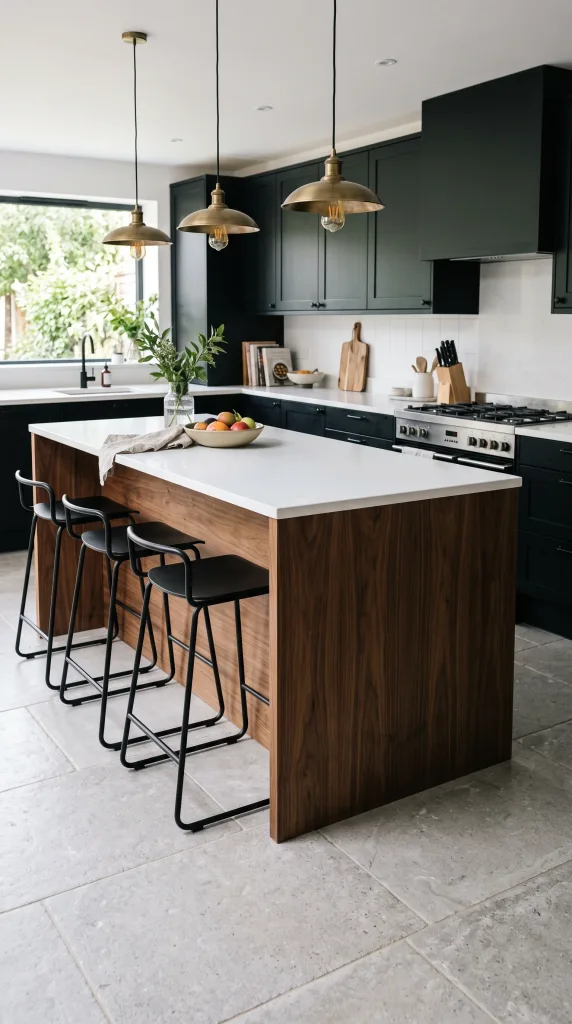
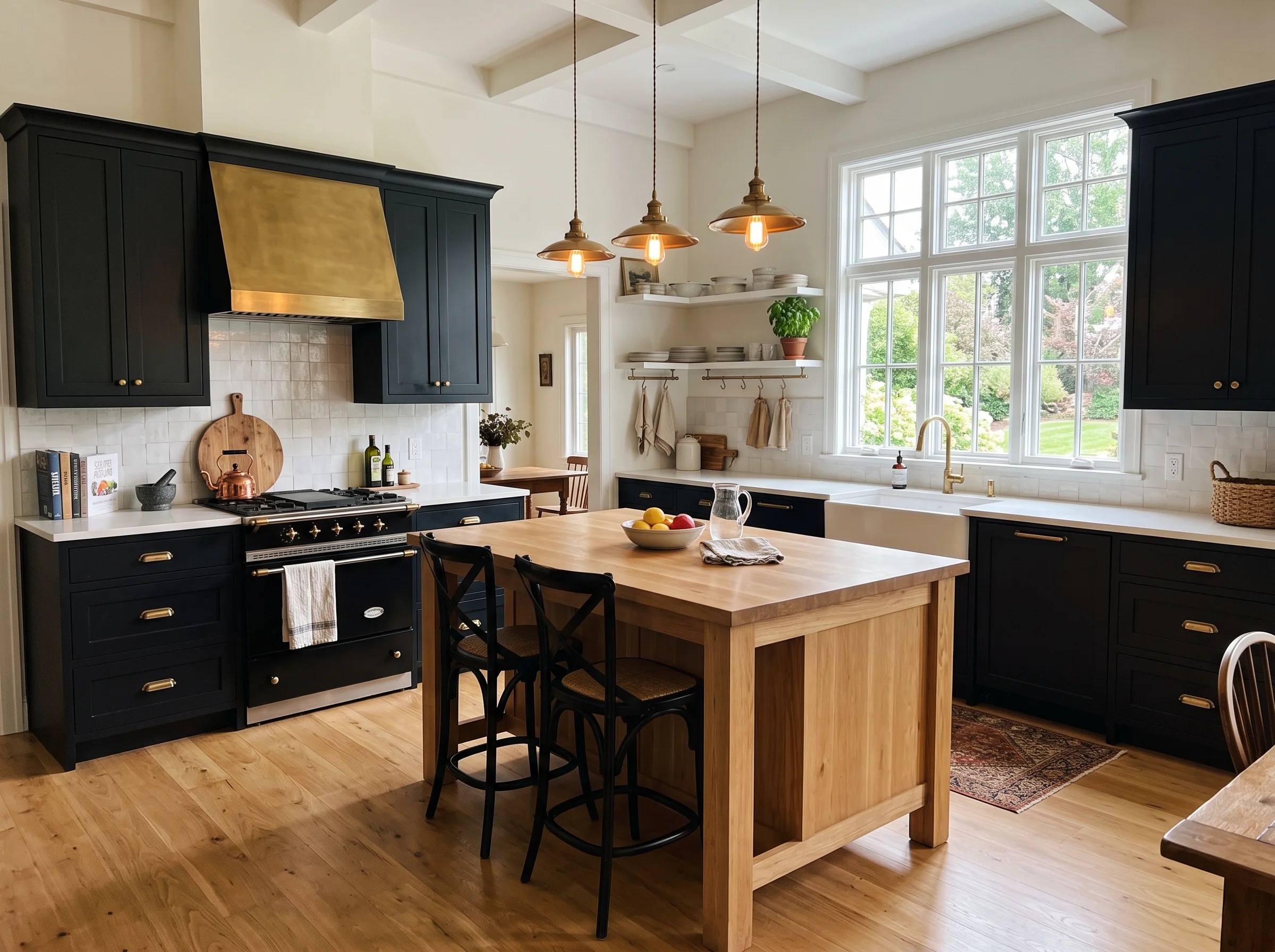
One of the most effective ways to stop a black kitchen from feeling one-dimensional is to introduce a contrasting island in natural wood. A butcher block, white oak, or walnut island breaks the heaviness and adds warmth that black cabinetry alone cannot generate. In practice, the wood island also functions as a visual anchor that draws the eye to the centre of the room. Keep the island’s profile simple — no ornate legs or turned posts — so the wood and black play off each other cleanly. This approach is popular in Japandi-influenced kitchen design for exactly that reason.
Designer Advice: Seal a butcher block island with food-safe mineral oil every few months — it will darken beautifully over time rather than looking dry and neglected.
| Island Material | Warmth Level | Maintenance | Cost Range |
| Butcher Block | High | Medium | $ Affordable |
| White Oak Veneer | High | Low | $$ Mid-range |
| Solid Walnut | Very High | Medium | $$$ Investment |
| White Quartz | Low contrast | Very Low | $$ Mid-range |
Black Cabinets in a Small Kitchen
The most common fear people have is putting black cabinets into a small kitchen. Done badly, it feels like cooking inside a wardrobe. Done well, it feels like a deliberate, cosy, design-led space. The trick is light: recessed ceiling lighting, under-cabinet LED strips, and a light-coloured backsplash (white subway tile, light marble, or pale zellige) are non-negotiable. Reflective surfaces — a glossy tile, a mirrored splashback, or even glass-front cabinet inserts — help bounce light around. Avoid dark floors in small black kitchens; go for light wood or pale stone underfoot to lift the whole room.
Quick Tip: Under-cabinet LED lighting is one of the cheapest upgrades in kitchen design and makes a dramatic difference in dark kitchens — install it before you decide the cabinets are too dark.
Black Shaker Cabinets with Terracotta Accents

Terracotta is having a genuine moment in interior design, and it pairs with black in a way that feels warm, grounded, and a little unexpected. Use terracotta through accessories rather than paint — a terracotta-coloured Roman blind, a collection of clay pots on open shelves, or terracotta floor tiles that run from the kitchen into an adjoining dining space. The warmth of terracotta prevents the black from reading as cold or corporate. This look fits especially well in Mediterranean, earthy, or eclectic interior styles.
Pro Move: Introduce terracotta in removable elements first (textiles, ceramics) before committing to floor tiles — it’s an easier edit if your taste changes.
Black Cabinets with Statement Pendant Lighting
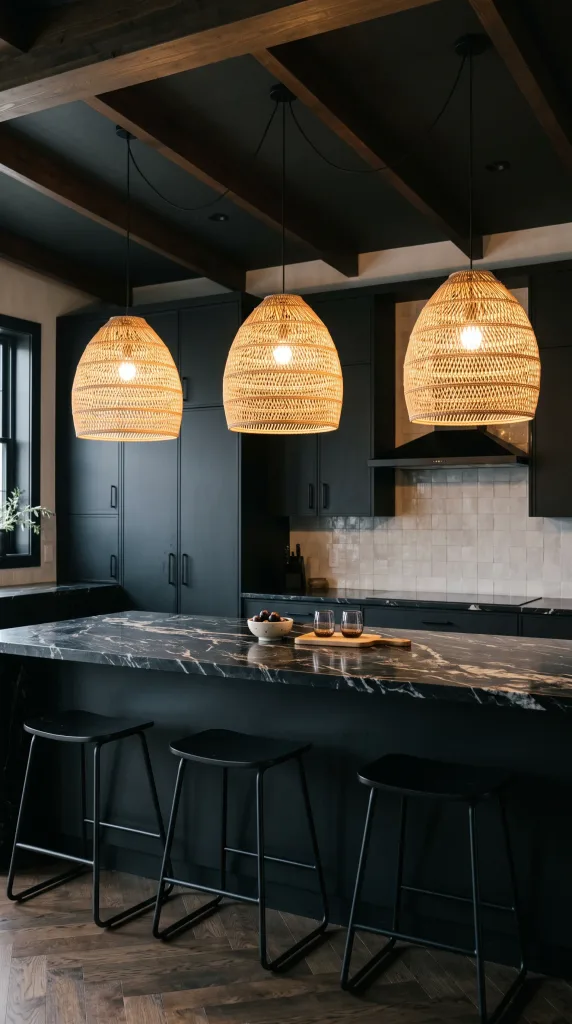
Lighting is the single most underestimated element in a black kitchen. The cabinetry absorbs light rather than reflecting it, which means the kitchen will feel dim and flat without deliberate layered lighting. Recessed downlights handle the base layer, but pendant lights above an island or peninsula are where personality enters the room. Rattan pendants, smoked glass globes, or aged brass cage lights all work well against black cabinetry. Choose pendants that bring warmth (warm white bulbs, 2700K to 3000K colour temperature) rather than harsh cool white light.
Heads Up: Avoid pendant lights with black shades over a black kitchen — they disappear visually and add no contrast or warmth to the space.
Black Cabinets with Zellige Tile Backsplash

Zellige tile, the handmade Moroccan ceramic with its slightly uneven, glossy surface, has become one of the most-requested backsplash choices in professional kitchen design. Against black cabinetry, zellige in white, cream, or sage introduces texture and organic imperfection that softens the hardness of dark cabinets. Each tile reflects light slightly differently due to the handmade surface variation, which keeps the backsplash feeling alive rather than flat. Budget tip: zellige is priced per square foot and varies widely — you only need it on the backsplash run, not the whole kitchen.
Designer Advice: Lay zellige in a straight stack bond pattern rather than herringbone — it lets the texture of the tile do the work without the pattern competing.
Black Cabinets with Stainless Steel Appliances
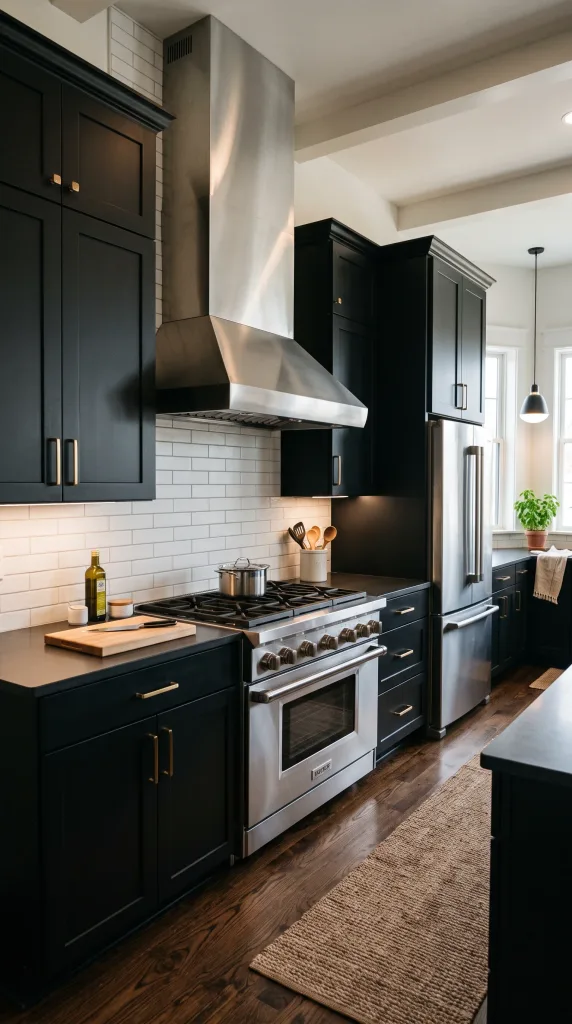
This is the pairing that never goes out of fashion in professional kitchens, and for good reason. Stainless steel appliances — a range hood, a French door fridge, a built-in oven — bring a clean, functional edge to black cabinetry without softening it. The combination reads as confident and deliberate. The key decision is the hood: an oversized stainless steel chimney hood above a black cabinet run anchors the whole kitchen and gives it a focal point. If budget is a consideration, prioritise stainless steel on the fridge and hood, and choose black or panel-ready for the dishwasher.
Quick Tip: Fingerprint-resistant stainless steel is worth the small price premium — it keeps the surface looking clean with very little effort in a busy kitchen.
Black Cabinets with Warm Grey Walls
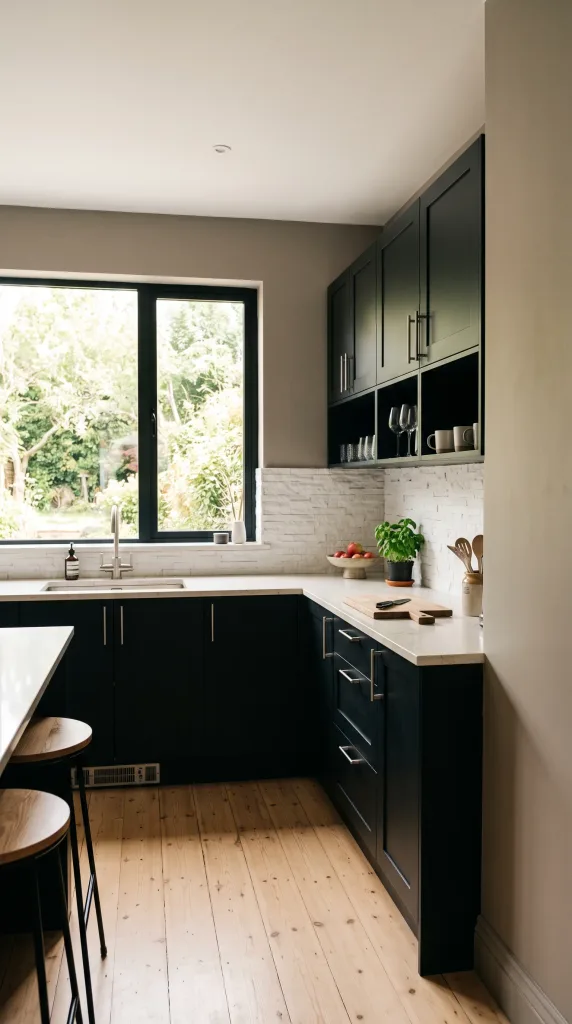
Wall colour is a question that trips up almost everyone choosing black cabinets. White walls create high contrast but can feel harsh. Dark walls can make the kitchen feel closed in. Warm grey is the answer that most designers land on — it provides enough contrast to let the cabinets read clearly while adding depth and warmth rather than competition. Look for greys with a taupe or greige undertone, like Farrow & Ball Elephant’s Breath or Sherwin-Williams Accessible Beige, rather than cool blue-grey tones, which can make the kitchen feel cold.
Reality Check: Always test wall paint in the actual kitchen under both natural and artificial light before committing — grey tones shift dramatically depending on the light.
Black Cabinets in a Farmhouse Kitchen
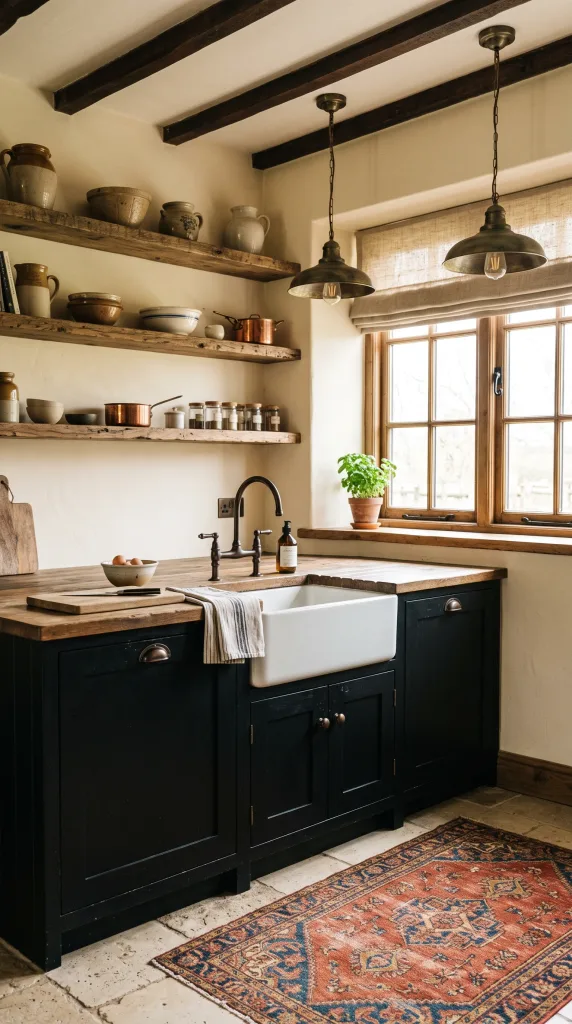
The farmhouse kitchen and black cabinetry might seem like opposites, but they combine beautifully when the right supporting elements are in place. Black painted Shaker cabinets, a Belfast or apron-front sink in white ceramic, exposed shelving in reclaimed wood, and vintage-style brass or oil-rubbed bronze fixtures build a look that feels both grounded and current. Avoid modern flat-front doors here — the panelled detail of a Shaker or beadboard cabinet door is what carries the farmhouse character. Linen Roman blinds and a worn Persian rug on a stone floor finish the picture.
Pro Move: An oil-rubbed bronze faucet against black Shaker cabinets looks like it cost twice what it did — it’s one of the best value-for-money upgrades in a farmhouse kitchen.
Black Glass-Front Cabinets

Glass-front cabinet inserts solve one of the biggest complaints about full black cabinetry: it can feel solid, heavy, and visually relentless. Swapping a run of upper cabinet doors for smoked or clear glass fronts immediately introduces visual breathing room. Smoked glass is the more forgiving choice — it hints at what’s inside without putting every mismatched mug on full display. Clear glass works if you have styled open shelving instincts and genuinely curated dishware. Either version reflects light back into the room and breaks the wall of black in a way that feels intentional.Heads Up: Glass-front cabinets require tidier shelving habits — if your shelves are usually a jumble, go smoked rather than clear glass