Beige Kitchen Cabinets That Actually Work in Real Homes
A friend of mine painted her cabinets beige last year after months of going back and forth between white and gray, and she still texts me photos of it in different light because she can’t believe how much it changes throughout the day. Beige isn’t flashy, but it’s forgiving. It hides everyday smudges better than white, and it doesn’t fight with wood floors, brass hardware, or whatever countertop you already own.
The tricky part is that beige isn’t just one color. There’s a big difference between a pink-toned beige from the 90s and a cooler greige like Sherwin-Williams Accessible Beige, and picking the wrong one is how people end up regretting the whole project. Below are twenty-one ways to use beige cabinets that hold up in a real, lived-in kitchen, each one leaning on a different island color, material, or lighting trick, so you can find the version that fits your space and your budget.
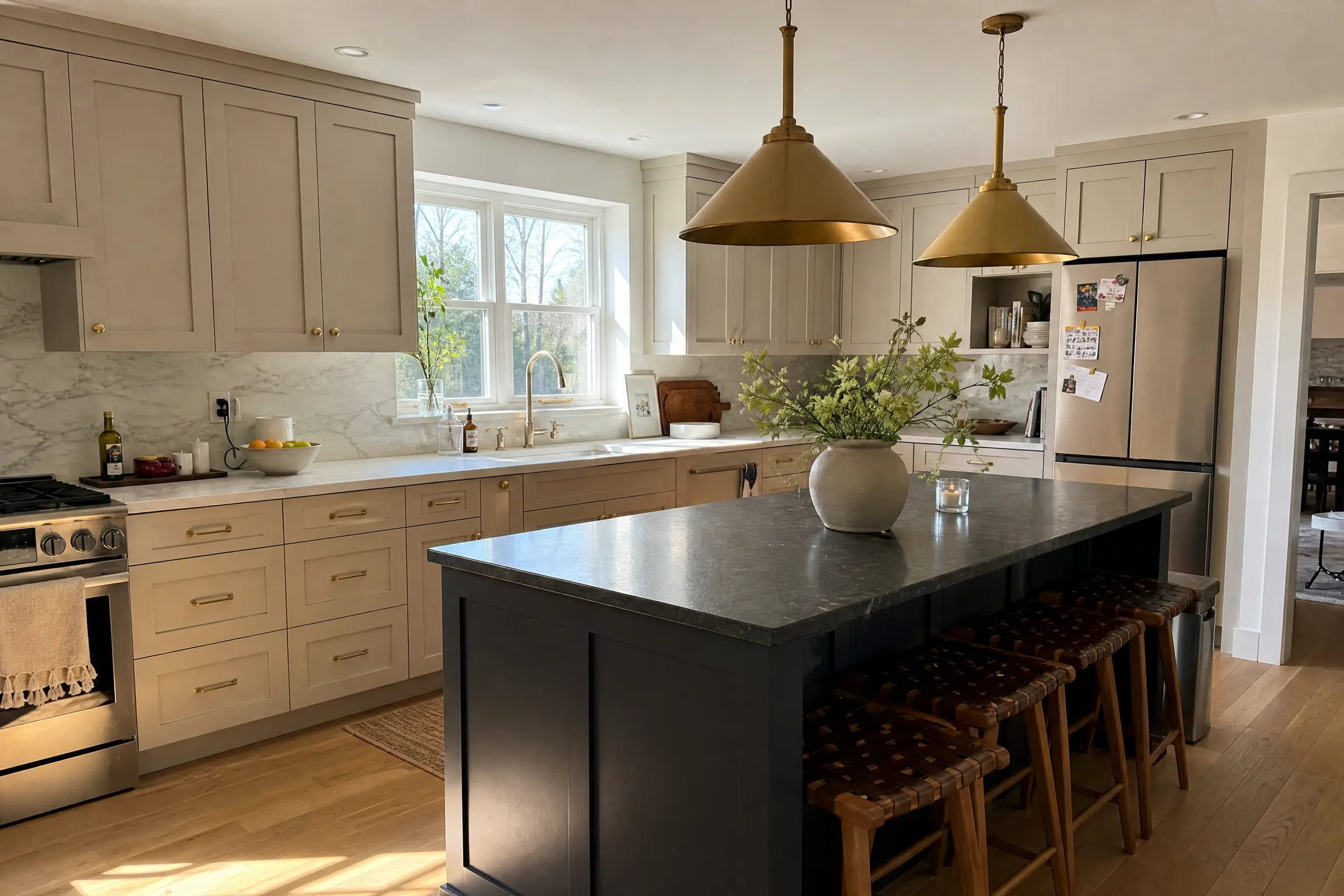
Warm Greige Perimeter with a Charcoal Island
I’ve walked into more than one kitchen that felt flat until the owner painted just the island a deep charcoal, and it’s usually the cheapest fix in the room. Keep the perimeter in a cool-leaning greige like Accessible Beige, and add brass pulls to bridge the two tones and give the eye one clear focal point. Budget note: repainting a single island costs far less than refinishing every cabinet.
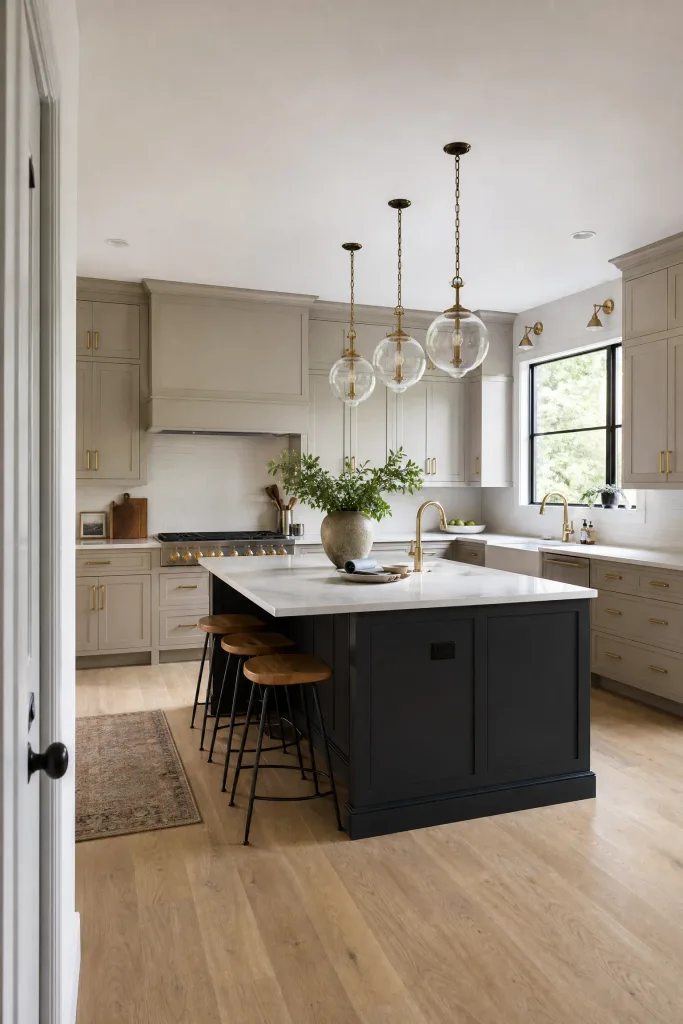
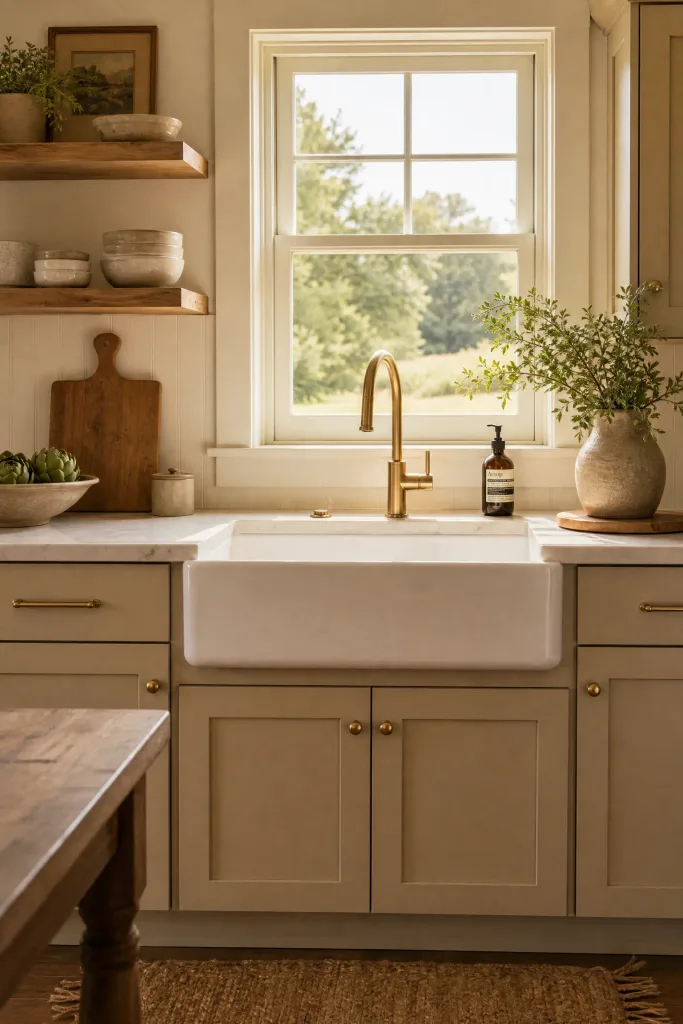
Classic Shaker Doors in a True Sandy Beige
There’s a reason shaker cabinets in a warm sandy beige, close to Kilim Beige, show up in so many farmhouse renovations. The recessed panel adds texture without extra detail, so the color does the work, especially paired with a farmhouse sink and brushed brass faucet.
Honest note: this shade leans warm and can look dated next to cool gray stone, so stick with warm quartz or butcher block.
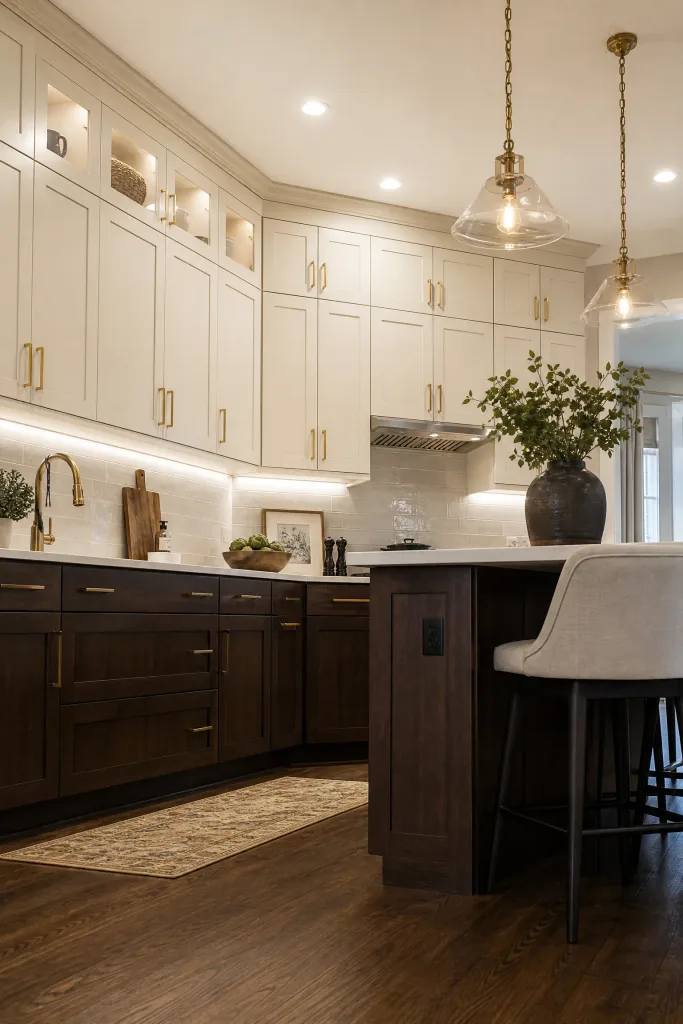
Two-Tone Beige Uppers with Espresso Lowers
A client once told me she wanted her kitchen to feel grounded, not floaty, and two-tone cabinetry usually solves that. Keep uppers in a light cream to bounce light around, then drop the lowers to a rich espresso for visual weight near the floor, tied together with warm-toned hardware. Mid-range investment, since you’re ordering two cabinet colors instead of one, but it reads far more custom.
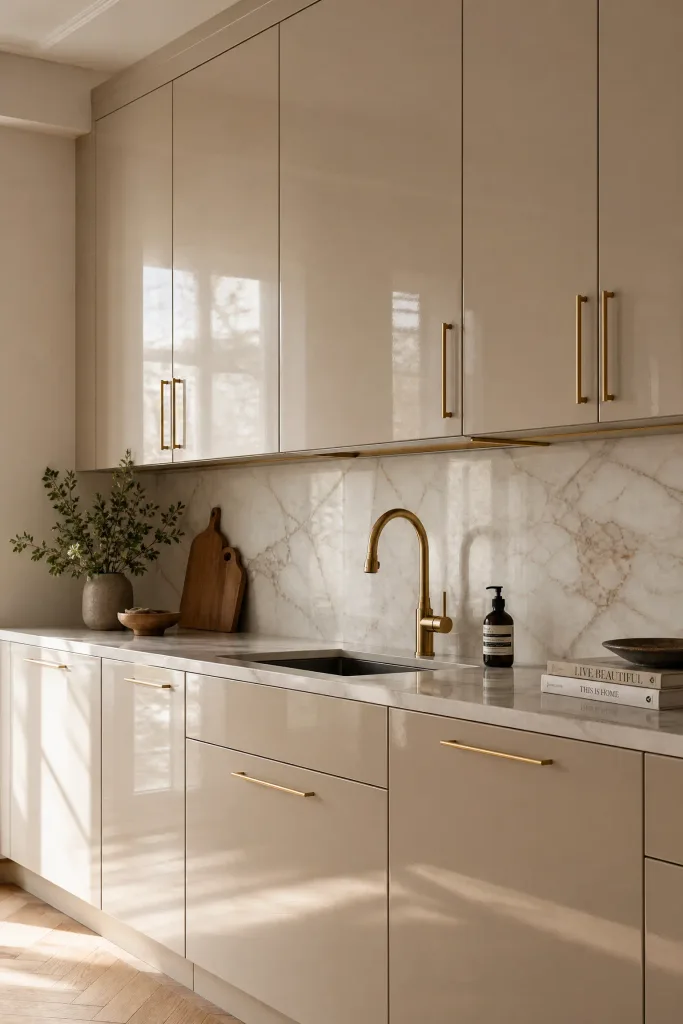
High-Gloss Beige for a Brighter, Livelier Room
Sunlight hits a glossy door differently than a matte one, which matters if your kitchen only gets morning light. A high-gloss beige finish bounces available light around a dim room, especially paired with a marble or marble-look backsplash so the shine feels intentional.
Quick tip: gloss shows fingerprints more than matte, so this works best in kitchens that get wiped down often.
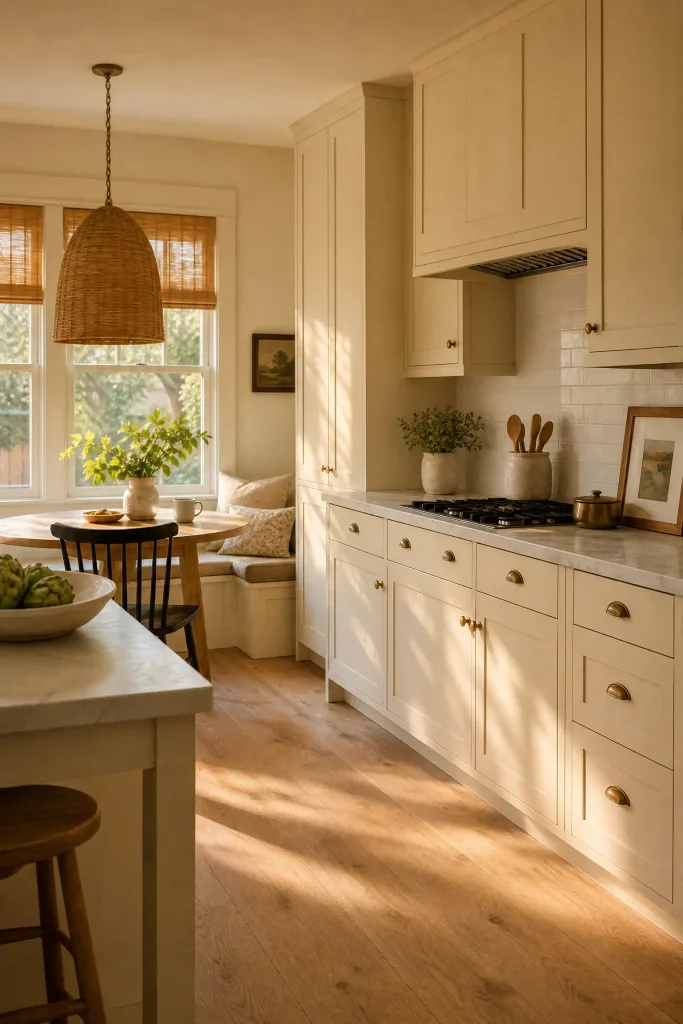
Cream Cabinets with Warm Brass Hardware
If you’ve stood in a kitchen that felt more like a hotel than a home, it’s often cold chrome hardware against cool white. Swap in a soft cream like Sherwin-Williams Creamy paired with unlacquered brass pulls and a woven pendant, and the whole room shifts warmer.
Budget tip: swapping hardware alone, before repainting anything, is the cheapest way to test if warm tones work for you.
Flat-Panel Handleless Cabinets in Sand Beige
A minimalist friend kept saying she wanted beige without it looking like her grandmother’s kitchen, and flat-panel handleless doors solved that instantly. Choose a supermatt sand or warm off-white laminate, skip visible hardware for push-to-open mechanisms, and let clean lines carry the modern look. This is a higher-end approach, since handleless systems cost more, but it suits open-plan homes well.
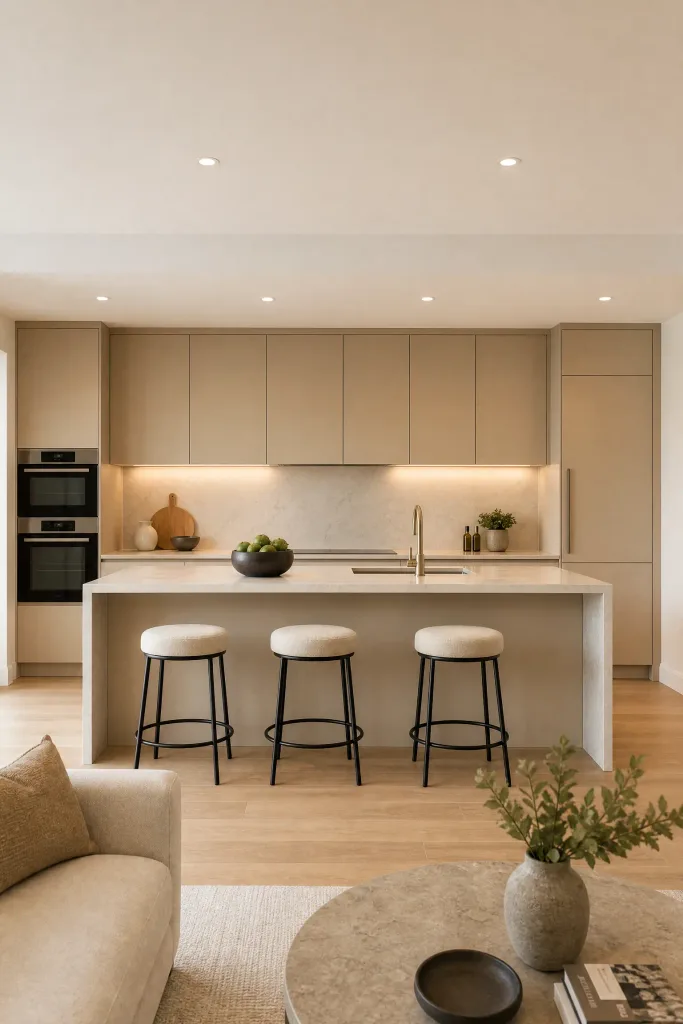
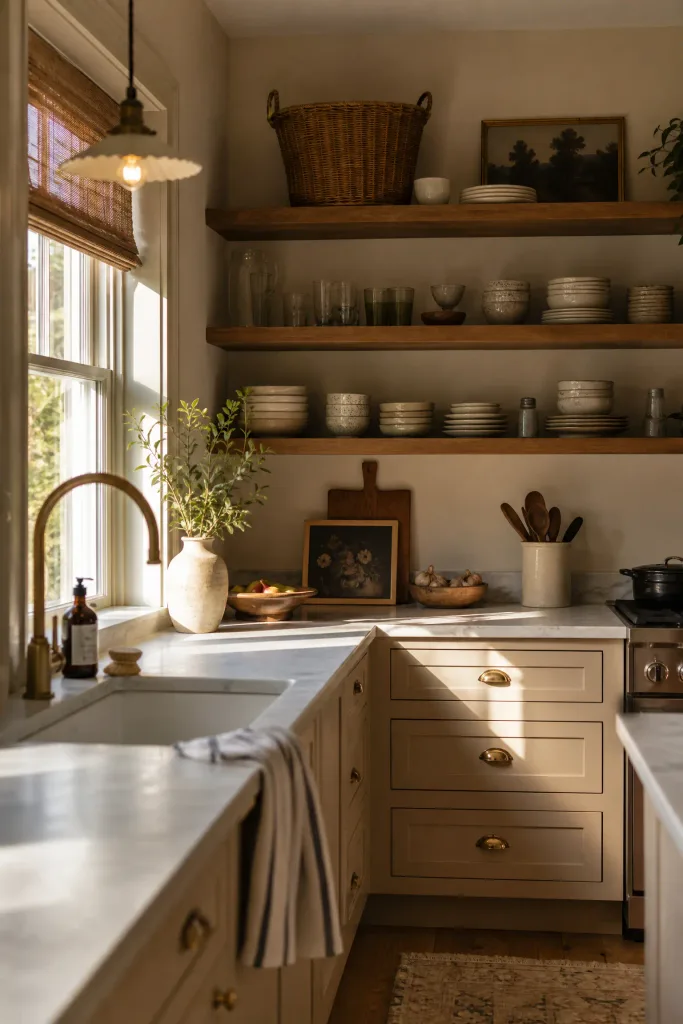
Beige Base Cabinets with Open Wood Shelving
Closed cabinets floor to ceiling can make even a decent kitchen feel boxed in, especially in smaller rooms. Try soft beige cabinets on the bottom paired with open wood shelving instead of upper cabinets, storing everyday dishes where they’re visible for that collected-over-time look. Honest limitation: open shelving means more visible dust, so it suits people who actually rotate what’s on display.
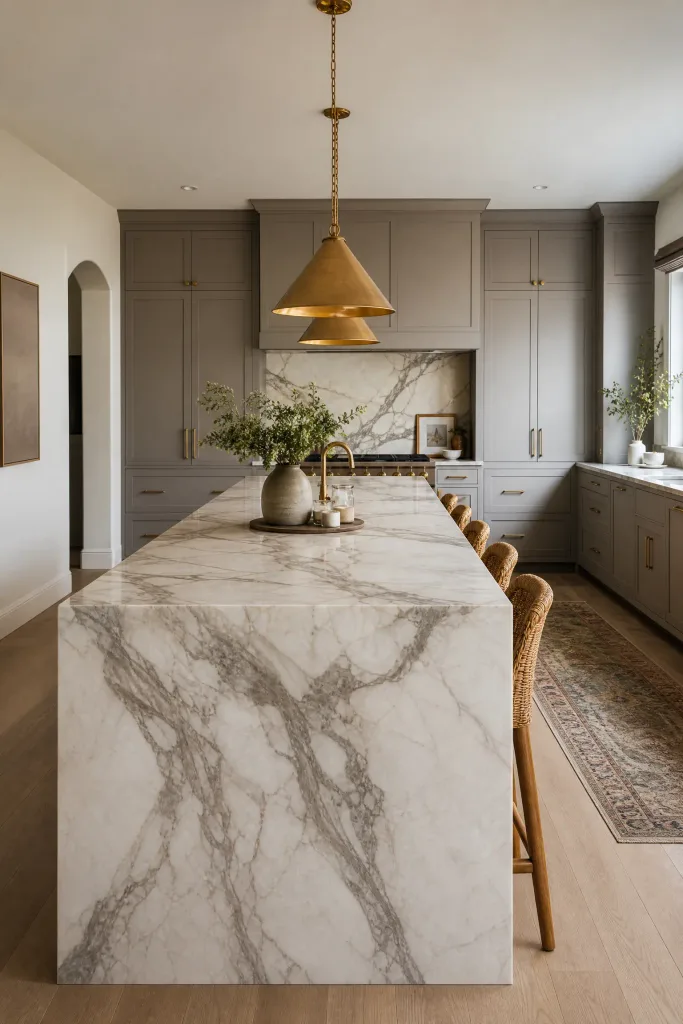
Taupe Cabinets with a Marble Waterfall Island
The first time I saw a waterfall island up close, I understood why people pay extra for it, the veining just keeps flowing down the side. Pair a cooler taupe cabinet with a stone-veined waterfall island and woven counter stools, and let the island carry the visual weight. Investment-level upgrade, since waterfall edges need more slab and more precise cutting, so budget accordingly.
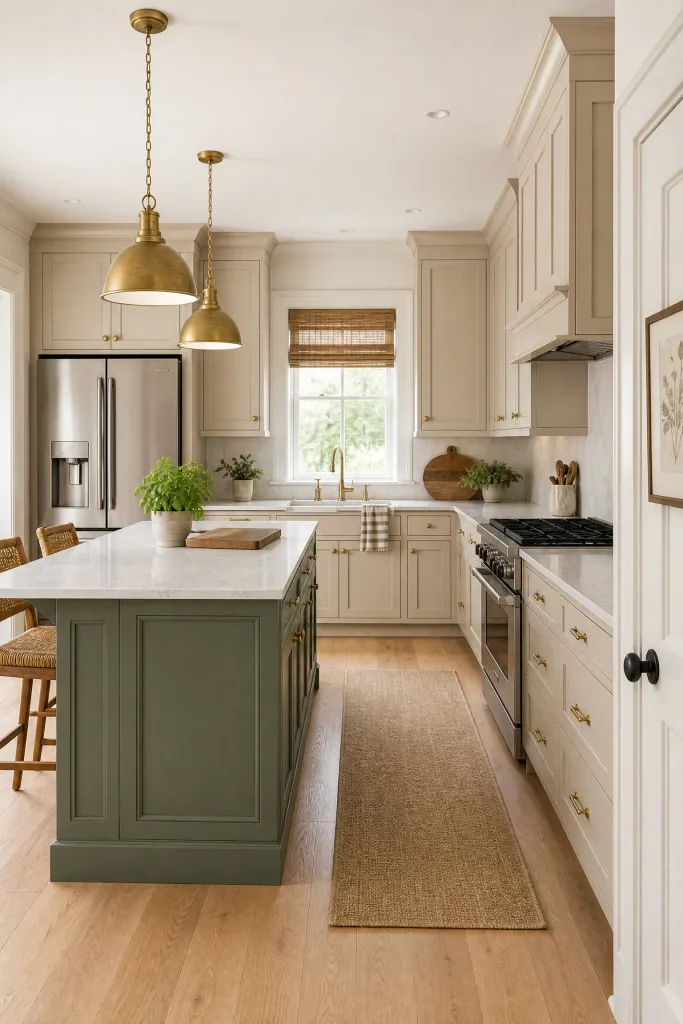
Beige Perimeter with a Sage Green Island
Sage has shown up in kitchens for a few years, and beige is one of the easier colors to pair it with since neither fights for attention. Keep the surrounding cabinets soft beige, order the island in a muted sage, and finish with brass pendants for warmth.
Quick tip: test both chips under your actual kitchen lighting first, since green shifts more across the day than beige does.
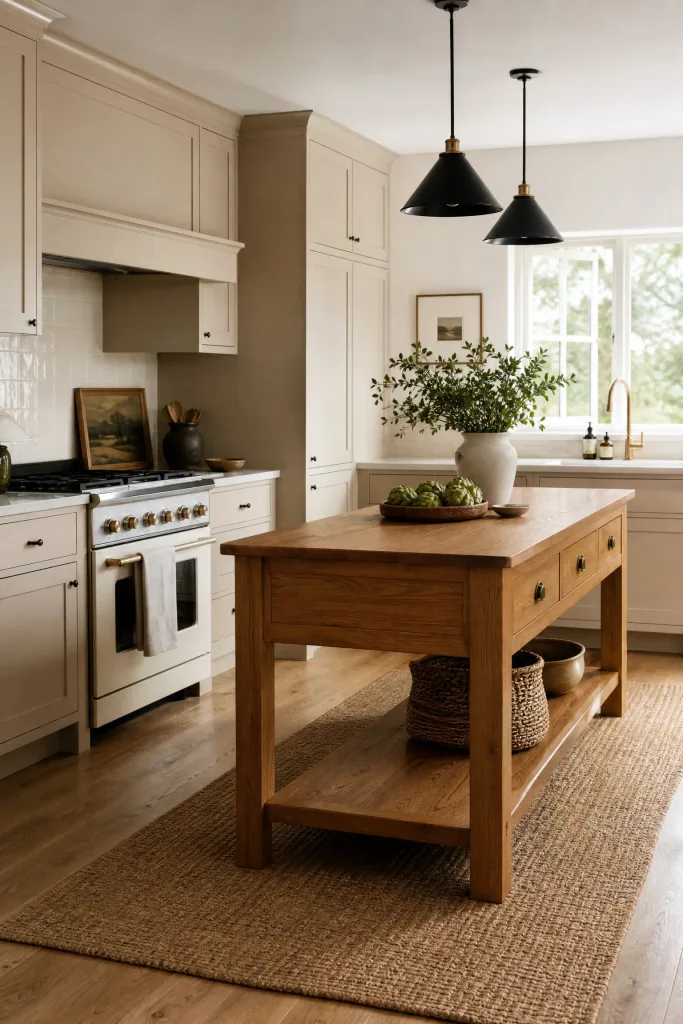
Beige Cabinets Paired with a Warm Oak Island
A wood island among painted cabinetry gives a kitchen a layered feel that a single-material kitchen doesn’t have. Keep the surrounding beige cabinets simple and let a warm oak island stand out almost like its own furniture piece, leaning into the wabi-sabi idea that not everything needs to match perfectly. Mid-range choice depending on wood species, and it photographs especially well in natural light.
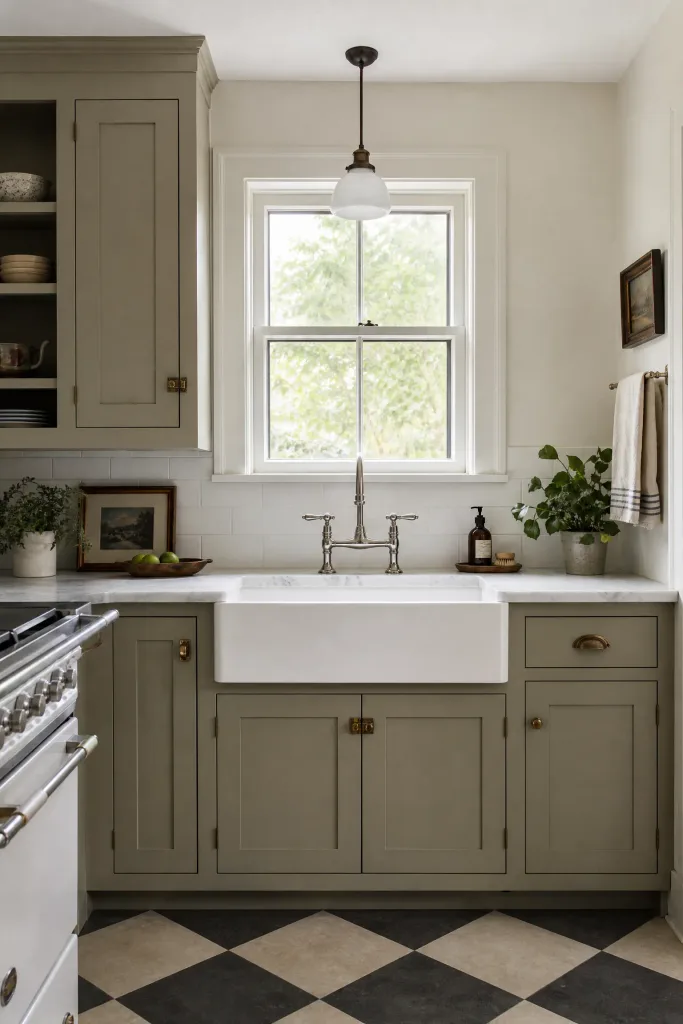
Shaker Beige with a Deep Farmhouse Sink
There’s a kind of older-home kitchen where a deep apron sink just makes sense with the rest of the room. Pair shaker cabinets in a cooler beige, close to Benjamin Moore’s Shaker Beige with its green-gray undertone, with a farmhouse sink and simple bridge faucet, which keeps things from turning golden under warm bulbs.
Honest limitation: this combination needs good daylight, it can look muddy in a windowless kitchen.
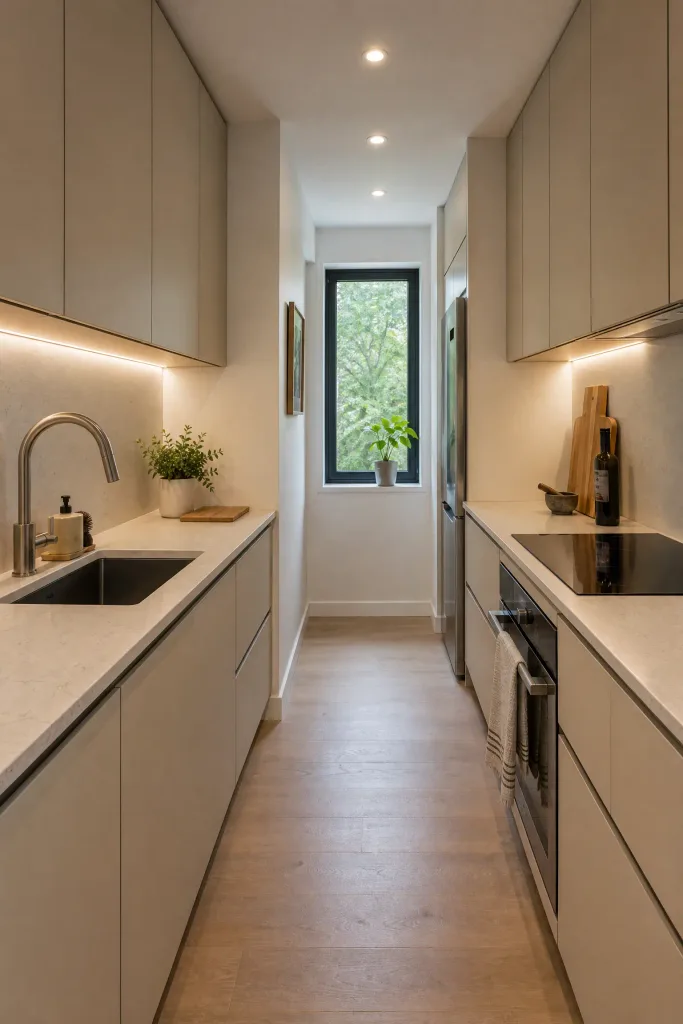
Light Beige Cabinets for a Small Galley Kitchen
Small kitchens get a hard time, but the real issue is usually color choice, not square footage. In a narrow galley, a light beige on flat-panel cabinets keeps walls looking further apart, especially paired with a light countertop instead of a dark one, and under-cabinet lighting helps since galley kitchens often get light from one direction only.
Budget note: this is one of the more affordable upgrades here.
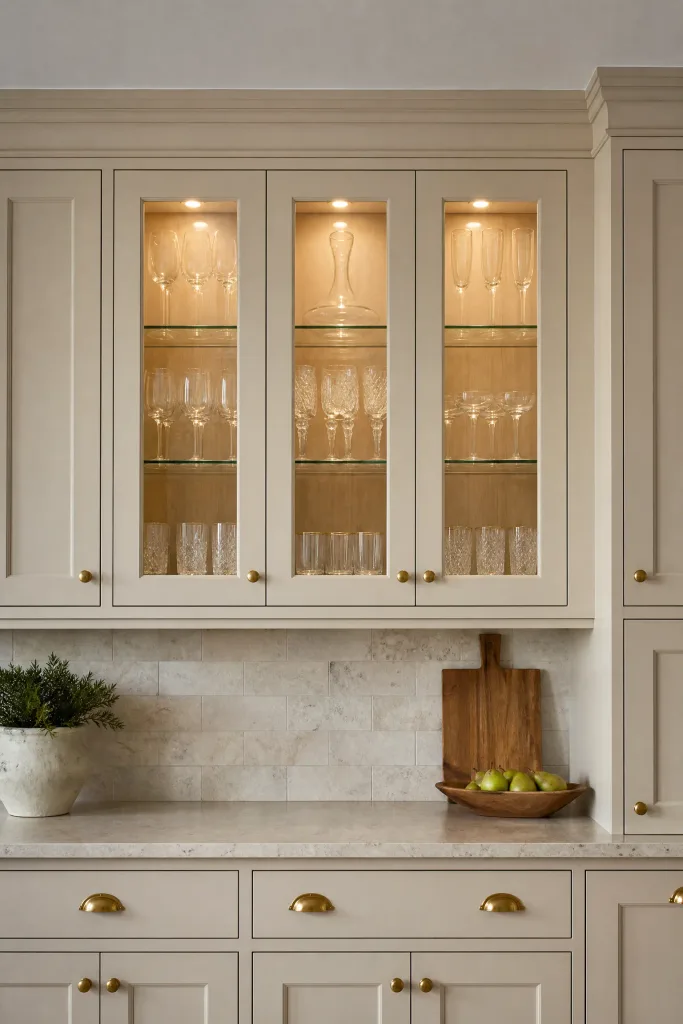
Beige Cabinets with Glass-Front Uppers
Solid doors all the way around can make even a good-sized kitchen feel boxed in. Swap a few upper beige cabinets for glass-front doors with interior lighting, and store your nicer glassware there instead of everyday plates, adding openness without committing to fully open shelving.
Designer advice: keep what’s behind the glass chosen with some intention, mismatched storage bins behind glass defeat the whole point.
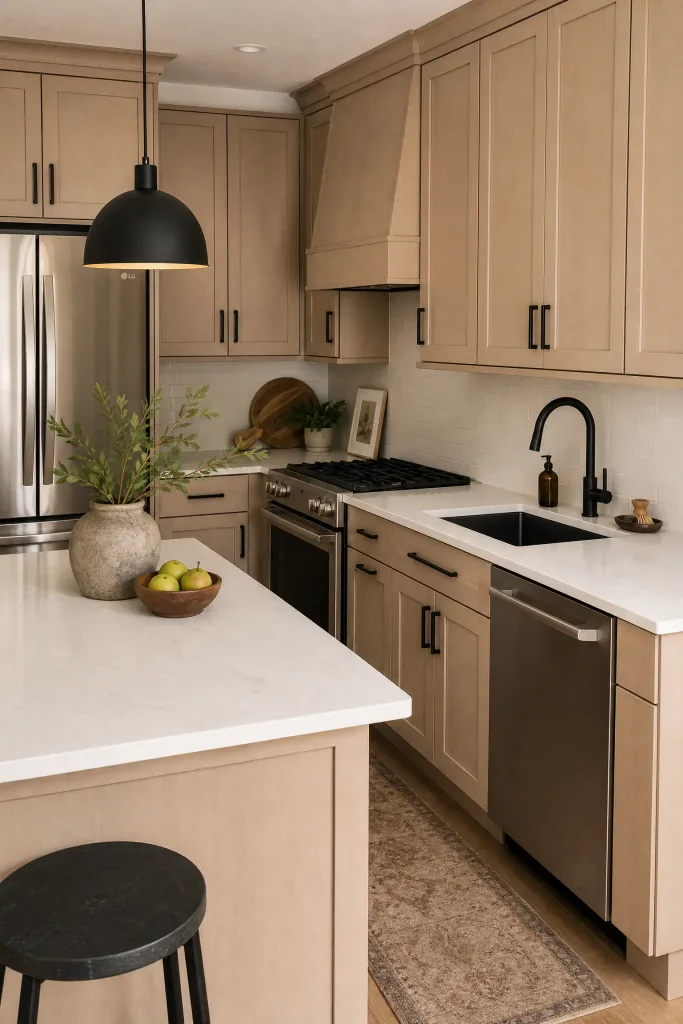
Beige Cabinets with Matte Black Fixtures
Matte black hardware against beige shouldn’t work as well as it does, but the contrast is exactly why it holds attention. Choose a warm-toned beige, then bring in a matte black faucet, cabinet pulls, and maybe one black pendant, keeping the black limited to two or three touchpoints so it stays intentional. This pairing suits almost any budget, since it’s mostly a hardware and fixture swap.
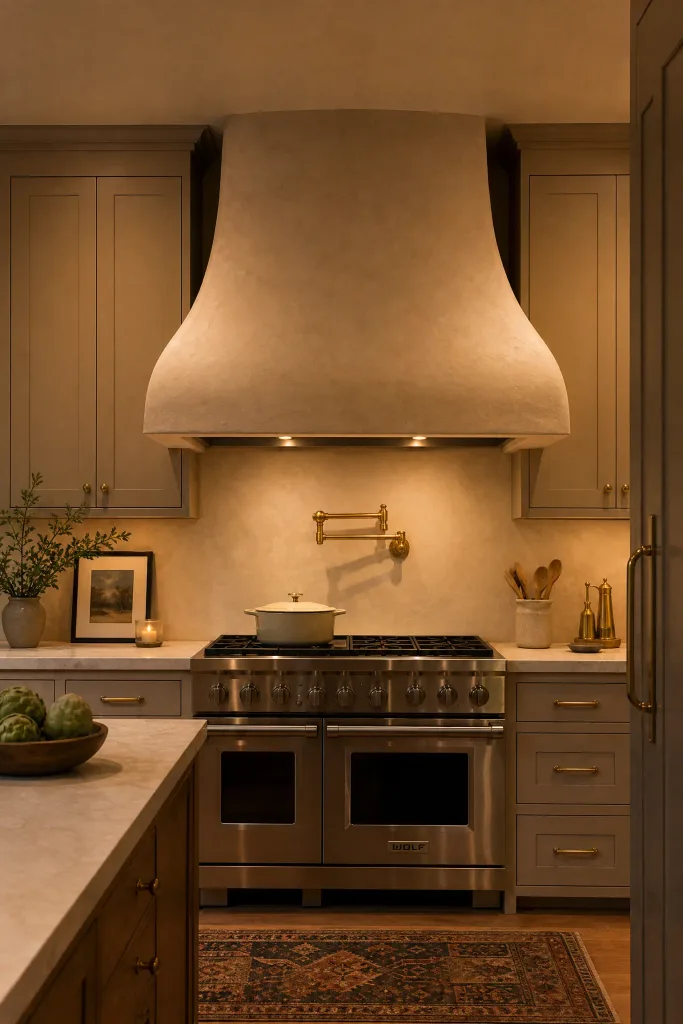
Beige Cabinets Under a Curved Range Hood
A plain rectangular hood does its job, but a curved plaster or wood hood turns that wall into the actual focal point. Pair it with high-gloss or matte beige cabinets and a gold or brass accent to tie the metals together, softening all the straight lines everywhere else in the room. Investment-level detail, custom hoods aren’t cheap, but it’s often the one thing guests actually comment on.
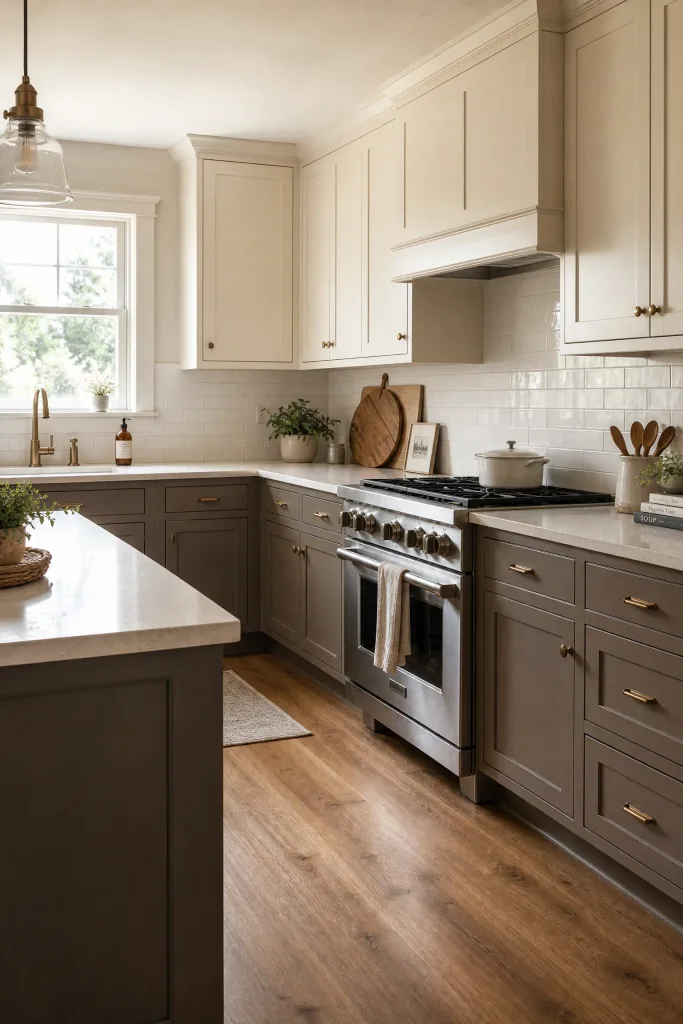
Mushroom Lowers with Cream Uppers
Mushroom, that deeper, grayish beige showing up in paint lines lately, works well as a lower cabinet color paired with a lighter cream up top. It gives the same grounded, two-tone effect as darker combinations while staying inside the neutral family, a gentler entry point if you’re nervous about contrast.
Quick tip: keep the backsplash simple, a busy tile pattern competes with this subtle effect more than expected.
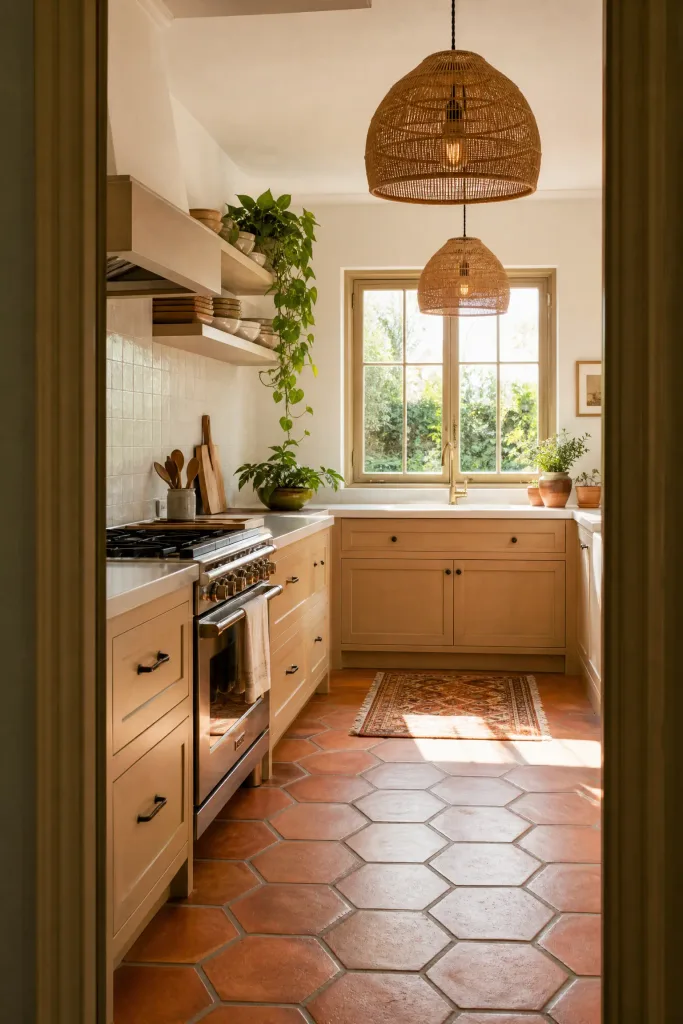
Beige Cabinetry with Terracotta Floors
I remodeled a kitchen once where the terracotta tile was original to the house, and beige cabinets ended up being the only color that didn’t fight with that warm undertone. If you’ve got existing terracotta or are considering it, a warm sandy beige reads as intentional, especially with woven or rattan accents layered in. One limitation, this combination can feel heavy in a small, dark room without enough windows.
Beige Cabinets with Woven Texture Throughout
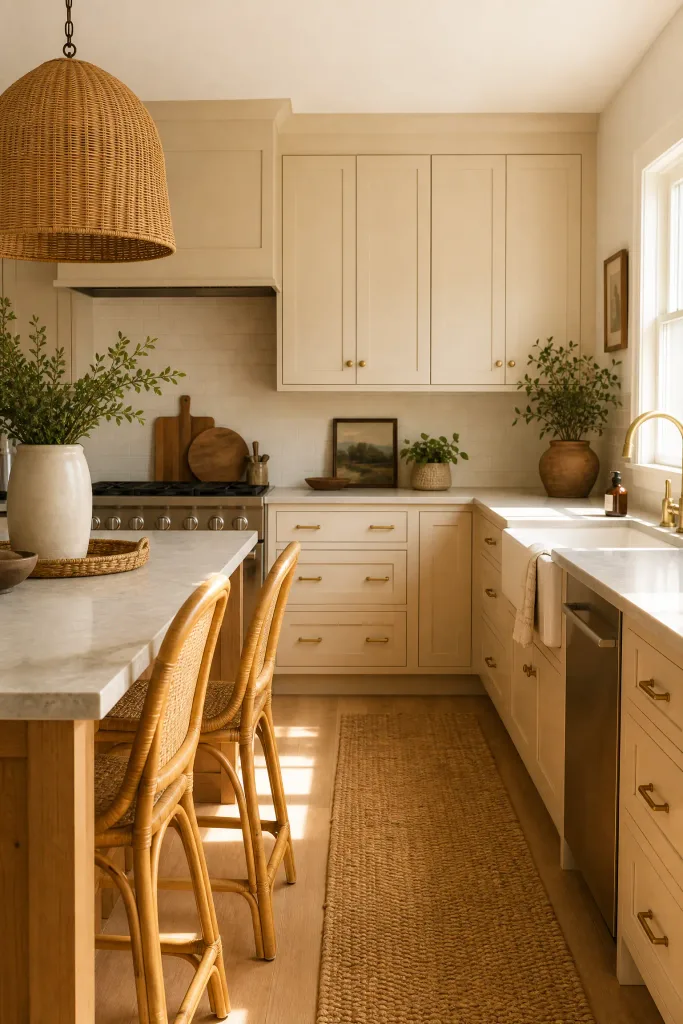
Flat paint needs something to break it up, and texture is usually the easier fix compared to adding more color. Bring in rattan counter stools, a woven pendant shade, and a jute runner against beige shaker or flat-panel cabinets, and the room stops feeling one-note, since the eye has texture to move across even without bold color.
Budget-friendly note: this is one of the cheapest ways to update a beige kitchen without touching the cabinets at all.
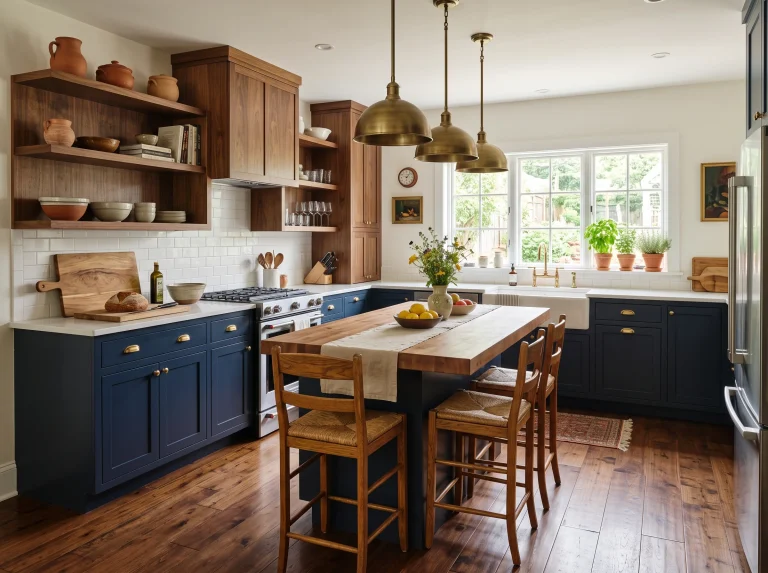
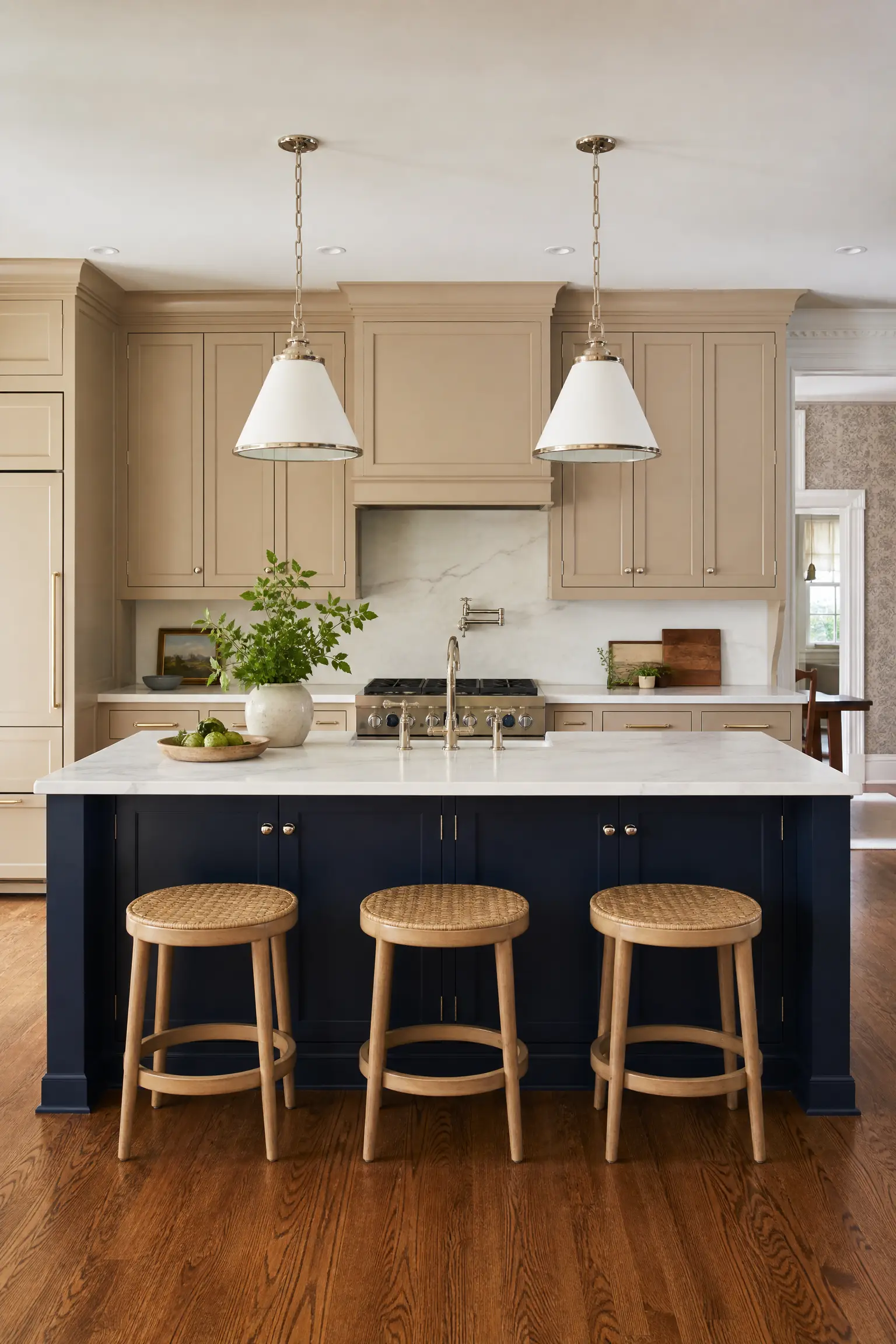
Beige Perimeter with a Navy Island
Navy and beige together give a kitchen a more traditional, coastal feel compared to a charcoal island, mostly because navy carries a cooler undertone. Keep the surrounding cabinets warm beige, paint the island deep navy, and use polished nickel or brass depending on whether you want classic or slightly modern. This combination photographs particularly well with white or light marble countertops, and it’s mid-range if you’re only repainting the island.
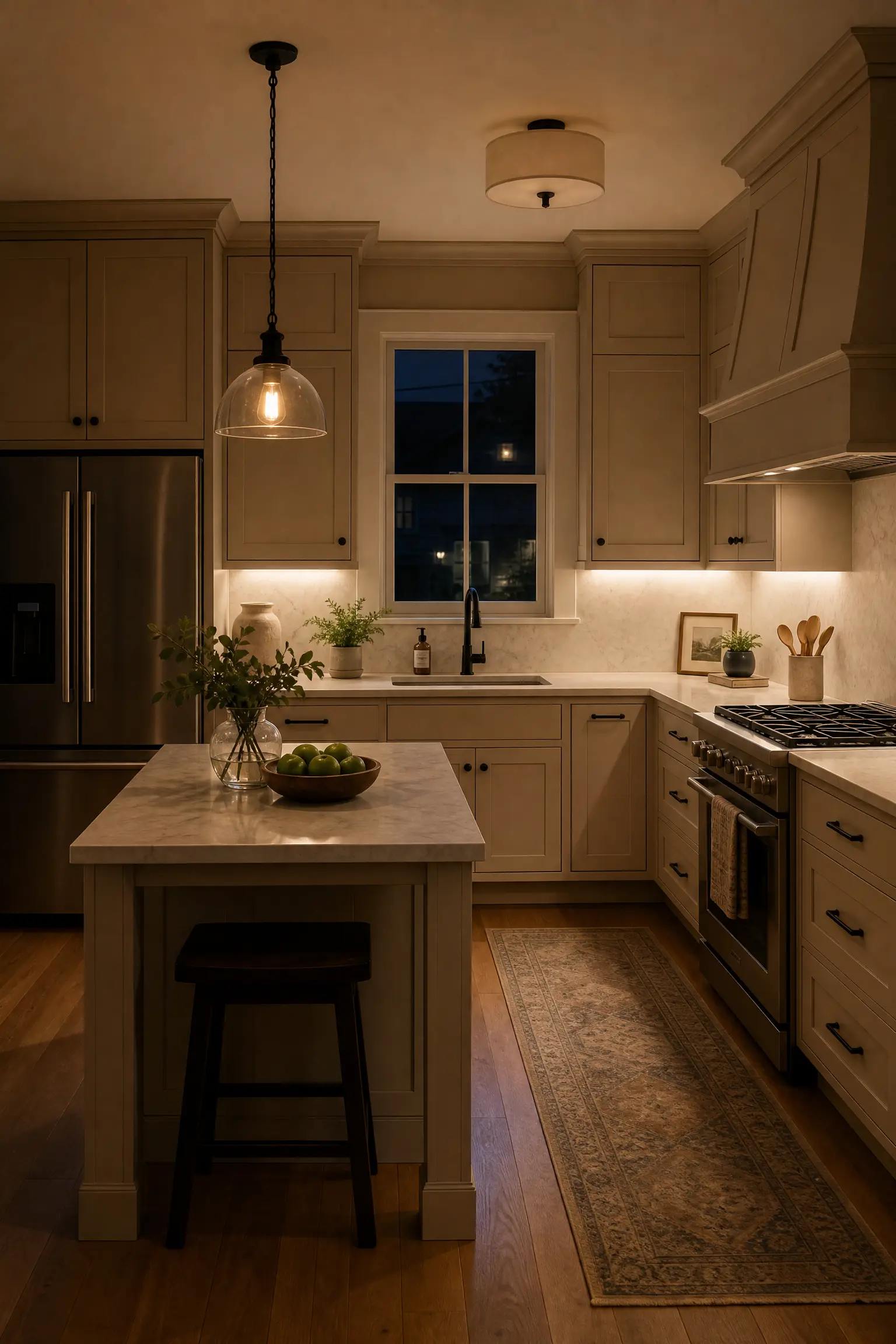
Beige Cabinets with Layered Lighting
Most beige kitchens that feel flat aren’t a color problem, they’re a lighting problem. Add under-cabinet lighting for the counters, a pendant or two over the island, and a dimmable overhead fixture, and the same cabinet color will look different depending on the time of day. This is what designers mean by layered lighting, and neutrals are the colors most affected by it. It’s a fairly affordable upgrade compared to changing the cabinets themselves.
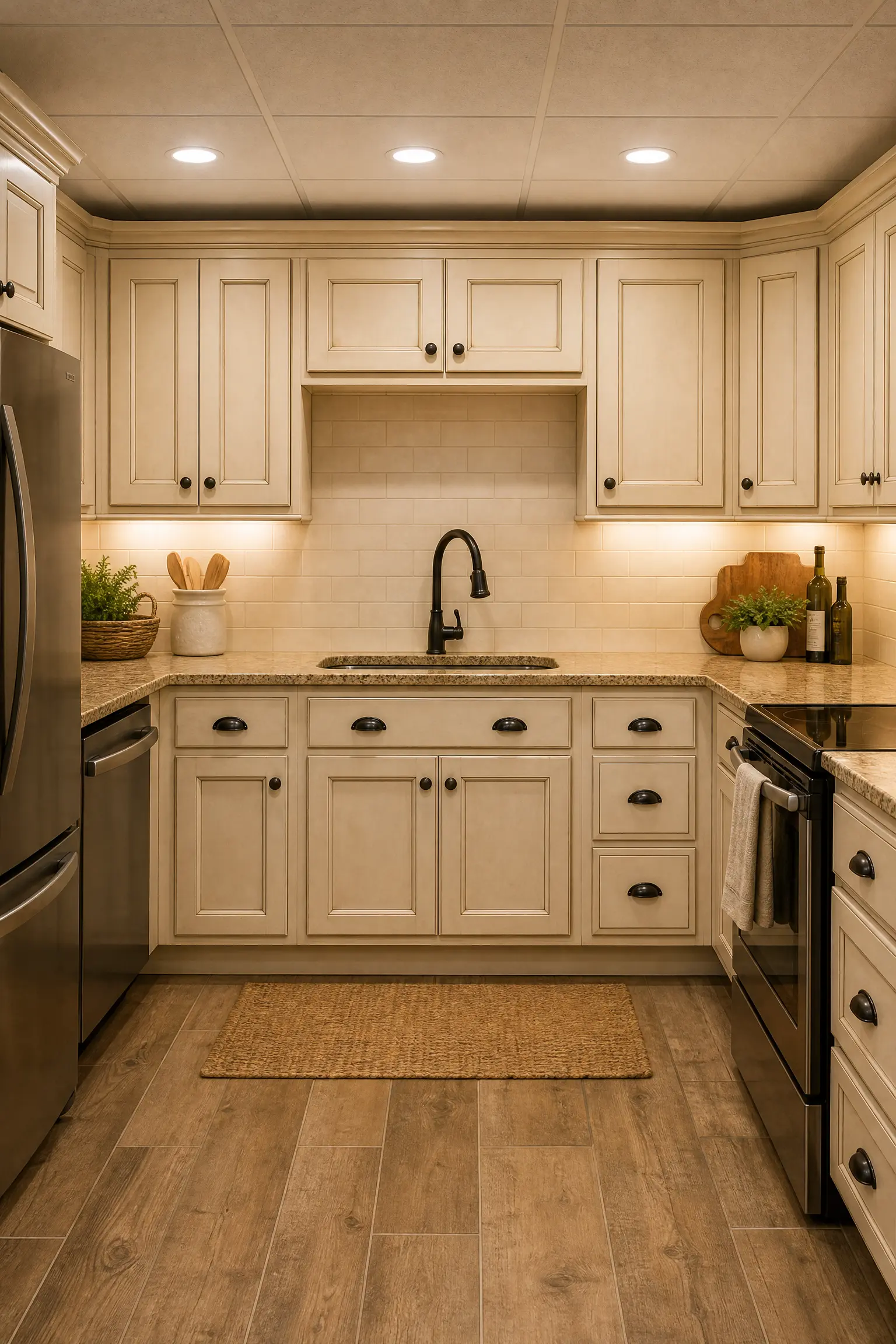
Antique White Blend for a Windowless Kitchen
A basement or interior kitchen with no natural light is exactly where a true deep beige tends to disappoint, since it can read flat without daylight to warm it up. In that situation, jump to an antique white with just a hint of beige instead, something that stays warm under artificial bulbs, paired with warm LED bulbs rather than cool white ones.
Honest limitation: if you want the deeper, richer beige look, this isn’t quite that, it’s the compromise that still works in low light.
Final Thoughts
Beige kitchen cabinets get dismissed as the safe choice, but the twenty-one directions above show how much range exists inside one neutral family. The undertone you pick, whether it leans warm and sandy or cooler and gray-toned, changes everything else in the room, from what countertop looks right to whether black or brass hardware makes more sense. The pairing matters just as much as the shade itself, since a charcoal island and a sage green island send the same beige cabinets in two completely different directions.
If you’re planning this kind of project, test your actual paint choice under your own kitchen lighting before committing to a full repaint or new cabinet order. A small sample on an actual door, checked in the morning and again at night, tells you more than any photo online. Beige rewards that kind of patience. It doesn’t photograph the same everywhere, but done right, it tends to hold up in a kitchen for years instead of falling out of style the way some bolder trends do.
Frequently Asked Questions
What’s the most popular beige for kitchen cabinets right now?
Sherwin-Williams Accessible Beige is one of the most requested shades because it’s a greige with enough gray in it to avoid feeling dated, while still reading warm next to wood floors and brass hardware.
Do beige cabinets make a kitchen look outdated?
Not if you pick the right undertone. Pink or yellow-heavy beiges from the 90s can feel dated, but a cooler greige or a true warm sand tone paired with current hardware and lighting looks current, not old.
What countertop colors work best with beige cabinets?
Warm-veined marble, honed travertine, and warm quartz all pair naturally with beige. Cool gray or blue-toned stone tends to fight with the warmth in beige and can make it look muddy instead of rich.
Should I choose gold or black hardware with beige cabinets?
Both work, it depends on the mood you want. Brass and gold tones lean traditional and warm, while matte black creates more contrast and reads a bit more modern. Polished chrome tends to cool the palette down more than most people expect.
Are beige cabinets a good choice for a small kitchen?
Yes, especially a lighter beige. Light, warm neutrals reflect more light than dark colors and can make a small or windowless kitchen feel less closed in, particularly when paired with a light countertop instead of a dark one.
How do I know if a beige will look too yellow in my kitchen?
Paint a sample directly on a cabinet door or a large board and check it in your kitchen at different times of day and under your actual bulbs. Fan deck chips are notoriously unreliable since they don’t show how a color shifts under real lighting.