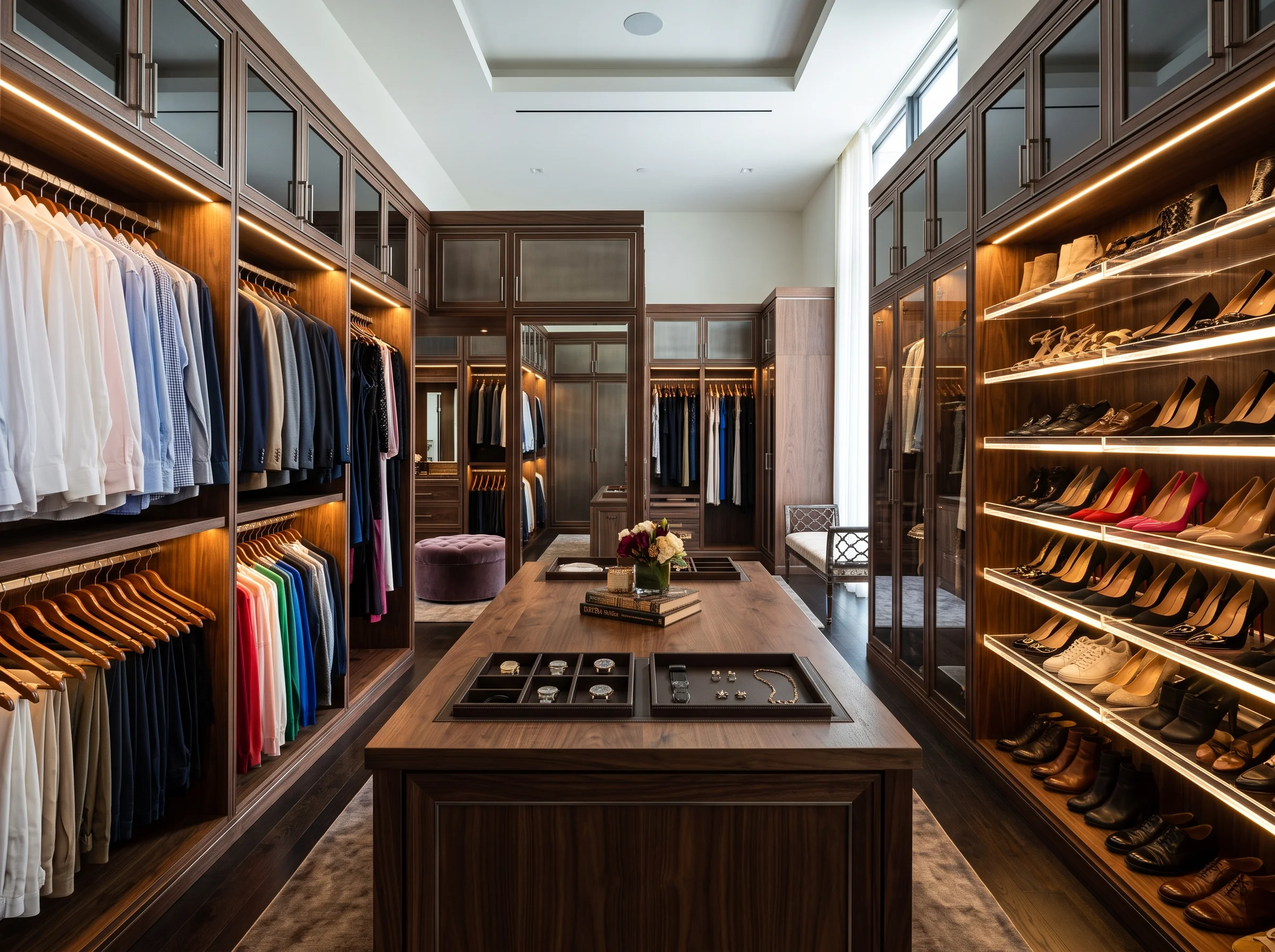
The Supply Chain Management System: 24 Bedroom Closet Organization Ideas
The absolute biggest mistake you can make is treating your closet like a bedroom. It is not a room; it is a highly volatile, massively complex logistics warehouse. Every single day, dozens of textile items are violently pulled out, worn, dirtied, washed, and carelessly thrown back in. If you do not have a rigid, highly engineered system to handle this massive physical volume of inventory, your closet will instantly violently collapse into a terrifying, stressful mountain of wrinkled chaos.
To help you conquer this disaster, we have completely thrown out the standard, boring listicle formats. Instead, we have structured these twenty-four brilliant organization ideas completely from scratch, utilizing a highly corporate, fiercely efficient framework: The Supply Chain Management System. We have broken the closet down into four rigorous logistical zones: The Intake and Triage Zone (handling the daily drop), The Active Inventory Floor (managing your daily uniform), The Cold Storage Archive (ruthlessly storing off-season gear), and The Visual Merchandising Display (elevating accessories to high-end boutique status). By treating your clothes like expensive corporate inventory, you will achieve flawless, unyielding organization.
Logistics Phase 1: The Intake and Triage Zone
The absolute second you walk into your bedroom, you are holding inventory (worn clothes, dry cleaning, jackets). If you do not have a fierce, immediate system to ‘intake’ these items, they will violently end up on the floor or the dreaded ‘chair’.
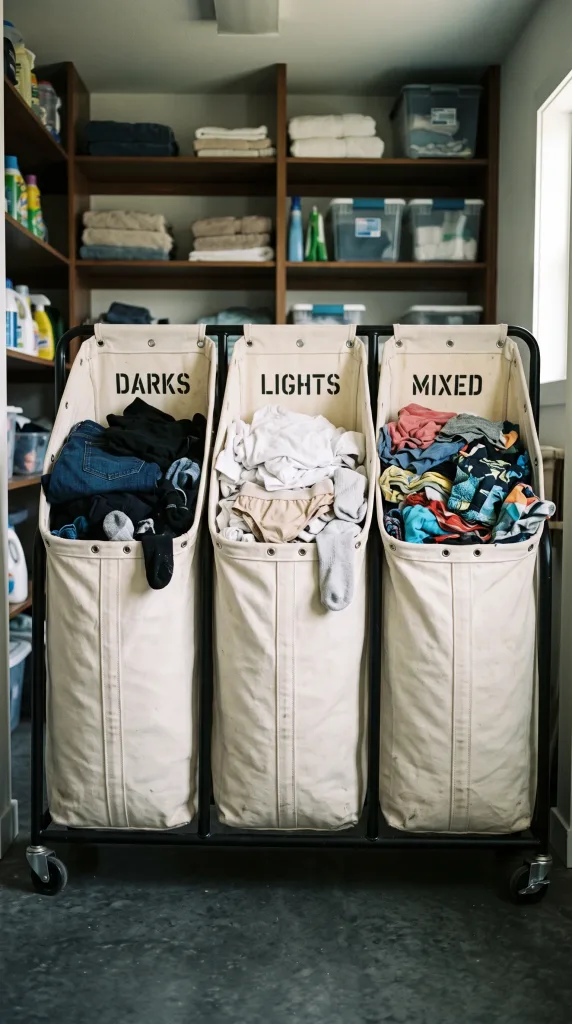
1. The Triple-Sorting Laundry Command Center
A single, tiny wicker basket is a massive logistical failure. You must aggressively upgrade to a heavy-duty, commercial-grade canvas laundry cart featuring three entirely separate, massive bins (Whites, Darks, Delicates). By forcing yourself to pre-sort the inventory the exact second you take it off your body, you violently eliminate the terrifying, time-consuming nightmare of digging through a massive mountain of filthy clothes on laundry day.
Ventilation Reality: You absolutely must buy a laundry sorter made of highly breathable cotton canvas or open metal mesh. If you throw sweaty gym clothes into a solid plastic bin and shut the closet door, the trapped moisture will violently breed terrifying mildew and ruin your expensive drywall.
2. The Immediate ‘Drop Zone’ Valet Hook
When you come home exhausted, the physical effort of putting a heavy coat perfectly onto a wooden hanger is wildly unrealistic. You must install a massive, heavy-duty unlacquered brass valet hook directly on the outside of the closet door or immediately inside the frame. This provides a fierce, frictionless ‘drop zone’ for the heavy jacket or the outfit you plan to wear tomorrow, successfully keeping the inventory completely off your bed.
Valet Hook Execution:
- You must rigorously bolt the heavy metal hook directly into the solid wooden door frame, not the hollow door panel, or a heavy winter coat will violently rip it out.
- Strictly limit the hook to a maximum of two items; if it becomes a massive pile of six jackets, the system has completely failed.

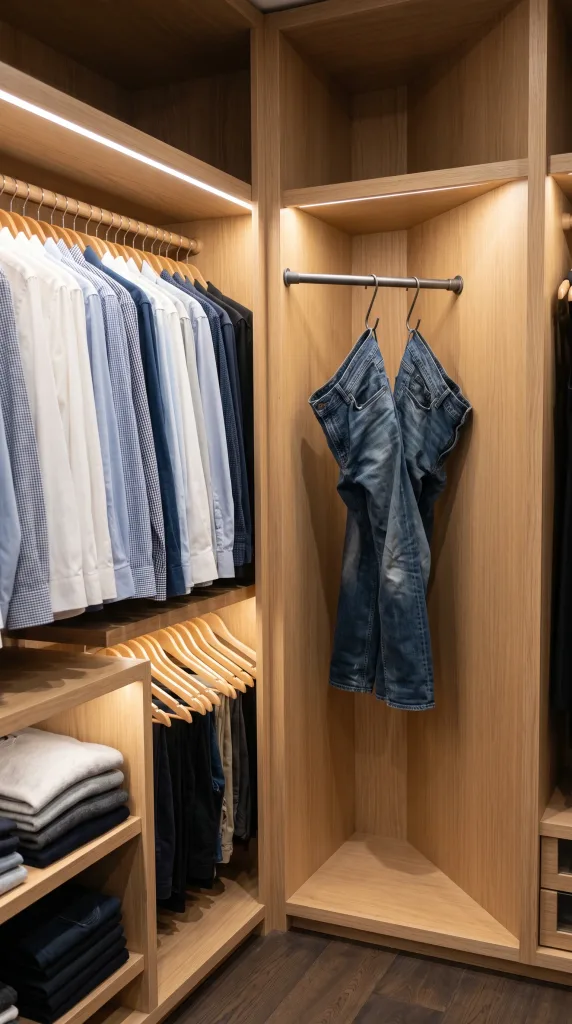
3. The ‘Wear Again’ Separation Bar
The absolute most terrifying limbo in a closet is a pair of jeans you wore for two hours. They are not dirty enough for the laundry, but you refuse to mix them with pristine, freshly washed inventory. You must aggressively dedicate a tiny, separate twelve-inch tension rod strictly for ‘limbo’ clothes. This fiercely isolates the lightly worn items, preventing them from violently contaminating the clean clothes while keeping them completely off the bedroom floor.
Triage Q&A: The Chair
Question: Can I just drape lightly worn clothes over a bedroom chair? Answer: Absolutely not. The bedroom chair is an architectural feature, not a massive garbage can. Allowing clothes to pile on a chair violently destroys the luxurious, relaxing aesthetic of the master bedroom.
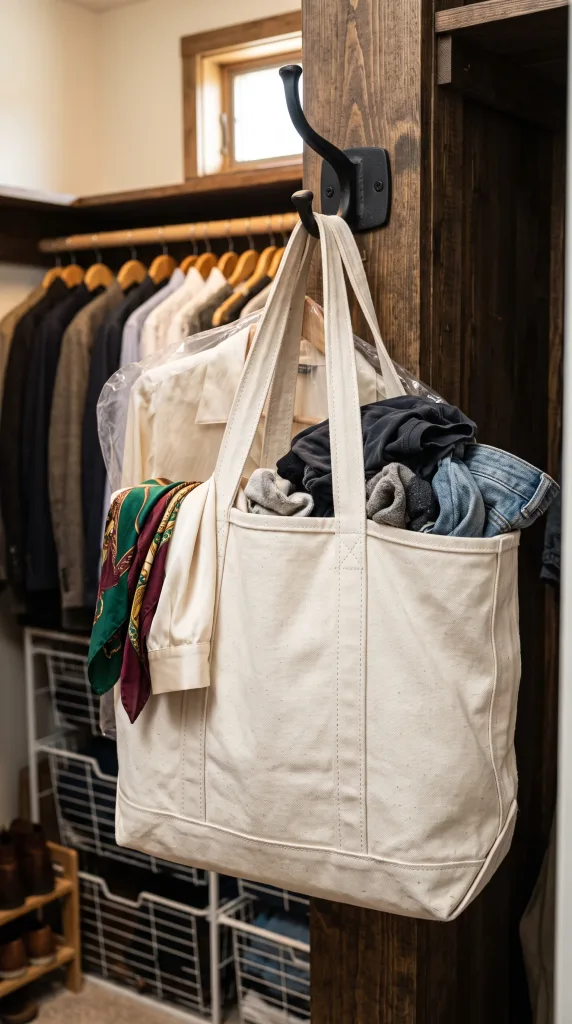
4. Dedicated Dry-Cleaning Canvas Bags
Mixing expensive silk blouses that require toxic dry cleaning with standard cotton t-shirts in the same hamper is a massive, costly mistake. You must install a highly visible, heavy-duty canvas tote bag hanging strictly from a dedicated hook. The exact second you take off a dry-clean-only item, it goes directly into the canvas bag. When the bag is full, you simply grab the heavy handles and violently march it straight to the cleaners.
Financial Warning: If a delicate silk or cashmere item accidentally makes it into your aggressive washing machine because you lacked a triage system, the massive agitation will violently destroy a five-hundred-dollar garment in exactly forty minutes.
5. The Donation Bin Mandate
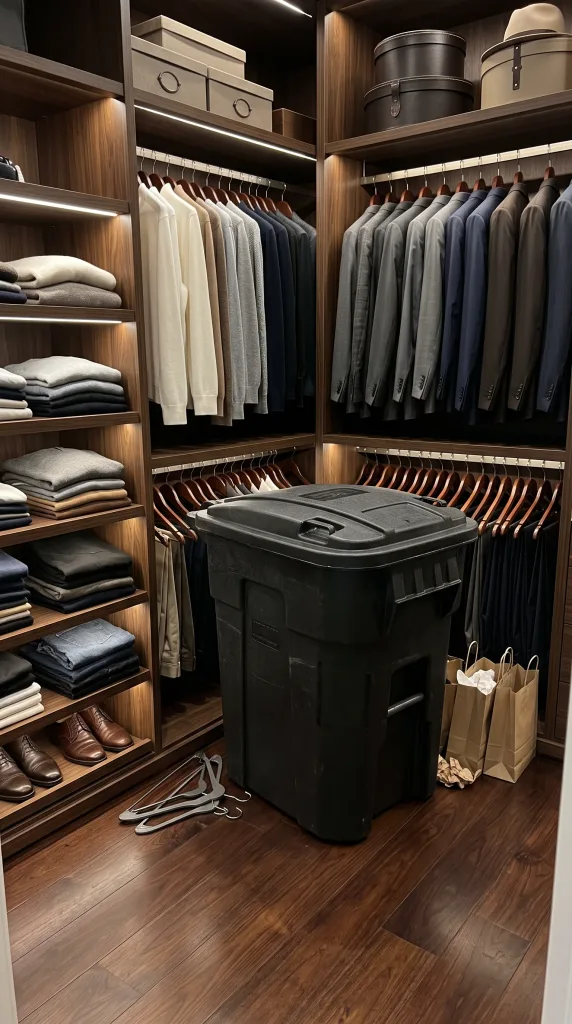
A highly efficient supply chain requires aggressively purging dead inventory. You must keep a massive, opaque black bin permanently stationed on the floor of the closet. The exact second you put on a shirt and realize it fits terribly or feels uncomfortable, you must violently rip it off and throw it directly into the donation bin. Never put it back on the hanger. This ruthless system ensures your active inventory is flawlessly curated.
The Purge Protocol:
- If you haven’t worn a specific item in three hundred and sixty-five days, the item is dead inventory and must be violently purged.
- If a garment requires you to buy three entirely new items just to make one outfit work, it is a massive logistical failure and must be donated.
6. The Tailoring Purgatory Box
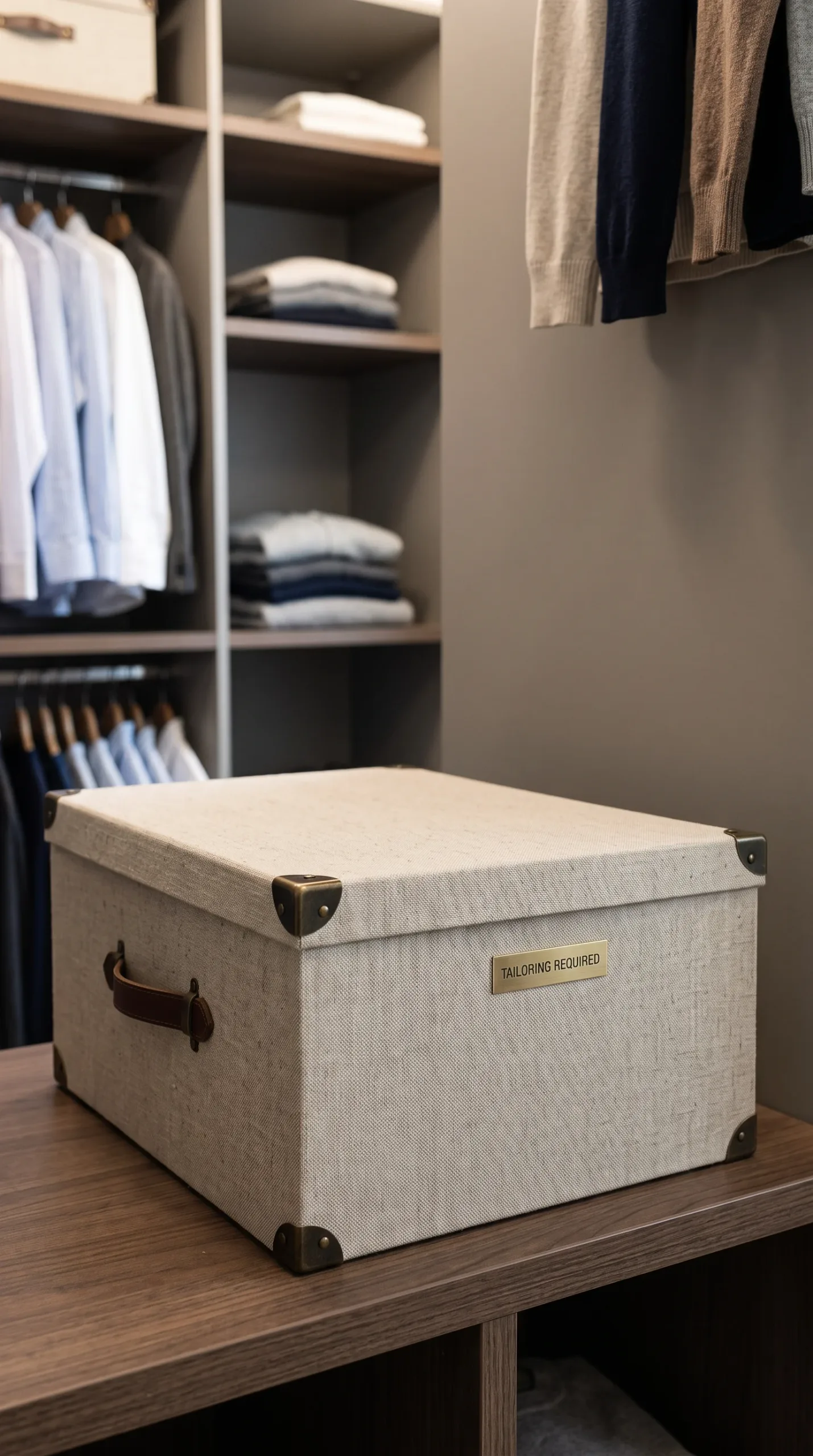
Pants that are two inches too long or jackets missing a button often sit in closets for years, taking up massive amounts of expensive physical real estate. You must create a ‘Tailoring Purgatory’ box. When you find an item that needs repair, it goes in the box. If the box sits completely untouched for six months, you clearly do not care about the clothes, and you must violently throw the entire box into the donation bin.
Logistics Phase 2: The Active Inventory Floor
This is the massive, high-traffic core of your closet. This zone contains the high-turnover inventory that you physically wear every single day. Uniformity and frictionless access are mandatory.
7. The Uniform Velvet Hanger Mandate
A chaotic mix of fat wooden hangers, cheap wire dry-cleaning hangers, and thick plastic tubes violently destroys the visual architecture of the closet and wastes massive amounts of horizontal space. You must aggressively throw every single hanger in the trash. Replace them entirely with incredibly slim, high-friction black velvet hangers. The ultra-thin profile violently compresses your wardrobe, magically freeing up thirty percent more rod space instantly.
Hanger Efficiency Matrix
| Hanger Material | Space Consumed | Garment Grip |
| Slim Black Velvet | Incredibly Minimal | Fierce, unyielding grip on silk |
| Thick Plastic Tube | Massively Bulky | Clothes violently slide off |
| Wire Dry-Cleaning | Minimal | Violently ruins the shoulders of suits |

8. The Double-Hung Vertical Strategy
If you are hanging short shirts and jackets on a rod installed perfectly at eye level, the massive four feet of empty air floating beneath them is a terrifying waste of expensive real estate. You must aggressively double your inventory space by installing a second, heavy-duty steel hanging rod exactly forty inches below the top rod. This brilliant, highly structural move violently doubles your closet capacity without requiring a single extra square foot of floor space.
Measurement Reality: You absolutely must measure the exact physical drop of your longest shirts before installing the second rod. If you install the bottom rod too high, the top shirts will violently crush into the bottom shirts, creating a terrifying, wrinkled disaster.

9. Acrylic Shelf Dividers for Sweaters
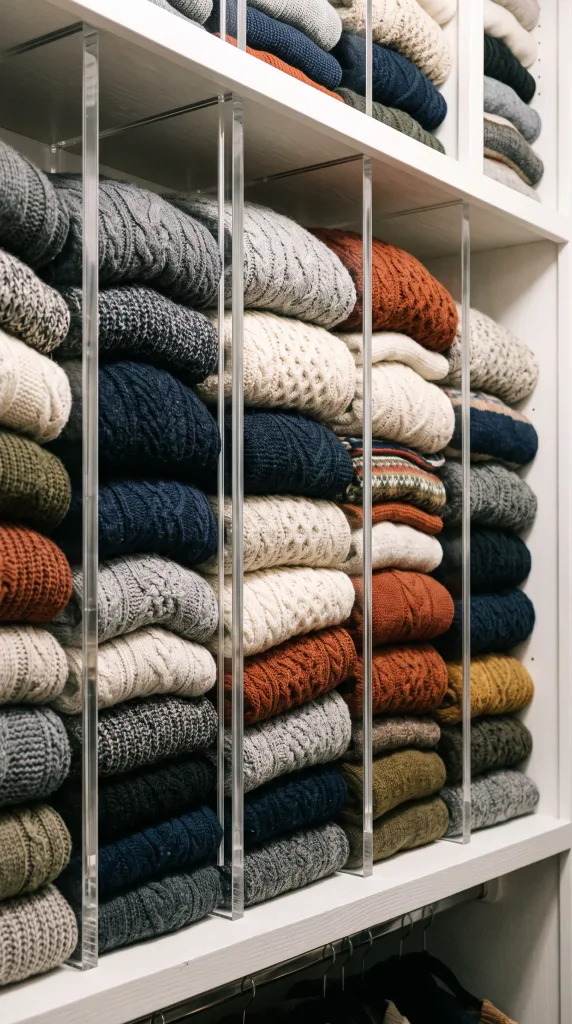
Stacking heavy wool sweaters on a flat wooden shelf is a massive logistical nightmare. The exact second you aggressively pull a sweater from the bottom of the pile, the entire massive tower violently collapses. You must install incredibly thick, crystal-clear acrylic shelf dividers perfectly every twelve inches. These rigid, invisible walls violently trap the stacks, forcing the soft, chaotic textiles into strict, highly disciplined architectural columns.
Sweater Preservation Rules:
- You absolutely must never hang a heavy wool or cashmere sweater on a hanger; gravity will violently stretch the shoulders and ruin the expensive garment forever.
- Limit each vertical stack to a maximum of four sweaters; anything higher will violently crush the bottom sweater and cause the pile to lean.
10. Color-Coded Gradient Sorting
Finding a specific black t-shirt in a massive sea of dark clothes is a frustrating, time-consuming failure. You must fiercely organize the entire hanging rod by a strict color gradient, moving perfectly from brilliant white to dark black, exactly like a wildly expensive luxury boutique. This highly visual system aggressively reduces the cognitive load required to get dressed at five in the morning, allowing your brain to flawlessly pinpoint exact inventory.
Categorization Hack: Before you sort by color, you must rigorously sort by garment type. All heavy jackets together, then long-sleeve shirts, then short-sleeve shirts. Within each strict category, execute the violent color gradient.

11. The Cascading Hanger Cascade
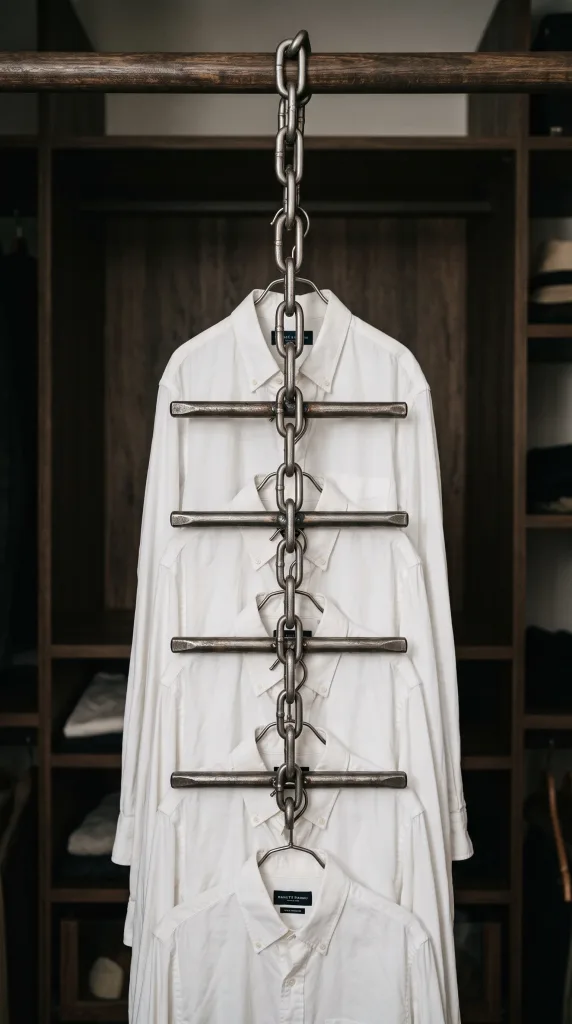
If you own thirty identical white button-down shirts, hanging them all side-by-side violently consumes the entire closet. You must utilize vertical space by purchasing heavy-duty steel cascading hanger chains. You hang six shirts perfectly vertically from a single hook on the main rod. This fiercely compacts highly repetitive inventory, dropping the massive bulk completely out of the prime horizontal eye-level space.
Hardware Q&A: Cascading Hooks
Question: Can I use cheap plastic cascading hooks? Answer: Absolutely not. The massive physical weight of six heavy cotton shirts will violently snap a cheap plastic hook in half within a week. You must rigorously utilize heavy-duty, solid stainless steel hardware.
12. The Denim S-Hook Suspension
Folding heavy, incredibly stiff denim jeans in a drawer takes up massive amounts of space, and folding them over a standard hanger leaves a terrifying, permanent crease in the knee. You must install a low, heavy-duty metal rod and aggressively hang the jeans by their physical belt loops using massive, industrial steel S-hooks. This highly rugged, intensely efficient system perfectly displays the back pockets so you can instantly identify the exact pair.

Logistics Phase 3: The Cold Storage Archive
You absolutely cannot mix heavy winter coats with tiny summer bathing suits. Off-season inventory is completely dead weight and must be violently exiled to ‘Cold Storage’ until the exact day the weather changes.
13. Vacuum-Sealed Atmospheric Compression
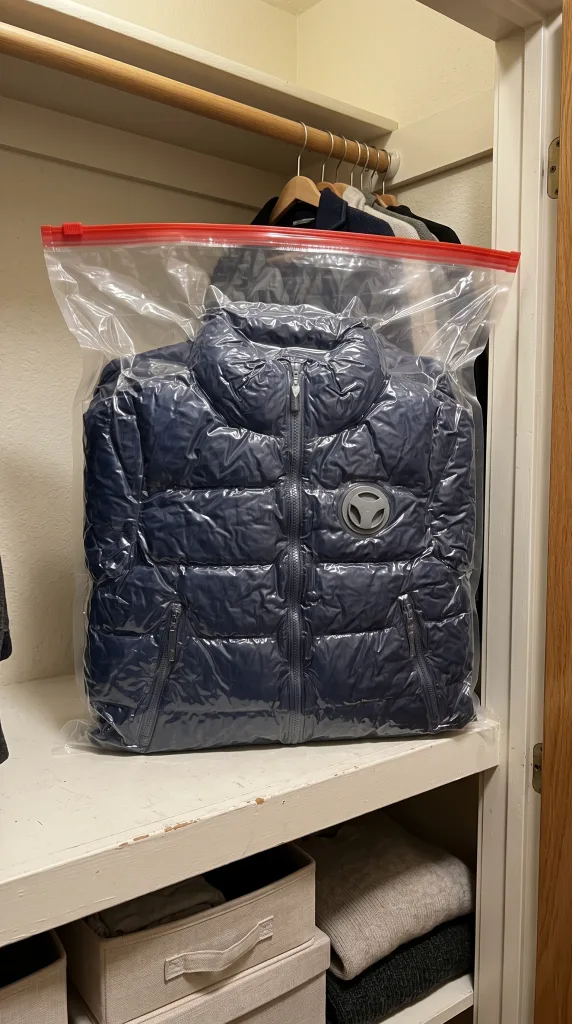
Massive, wildly puffy winter down jackets and thick wool duvets violently consume massive amounts of air and space. You must aggressively suck the air out of the inventory. Stuff the heavy winter gear into massive, high-grade plastic vacuum bags, attach your vacuum cleaner, and violently suck the air out until the massive pile is crushed into a fierce, hard, flat pancake. This fierce technological hack saves incredible amounts of space.
Textile Warning: You absolutely must never vacuum-seal expensive leather jackets, natural fur, or heavily structured bespoke suits. The massive, violent atmospheric pressure will permanently crush the fibers and deeply ruin the expensive architecture of the garment.
14. Opaque High-Altitude Bins
The massive, empty shelf located exactly twelve inches from the ceiling is utterly useless for daily access, but it is the perfect location for the cold storage archive. Purchase incredibly heavy-duty, highly structured opaque canvas or woven baskets perfectly sized to completely fill the gap. By completely hiding the off-season inventory inside matching, highly tailored bins, you violently eliminate visual clutter at the absolute top of the room.
High-Altitude Protocol:
- You absolutely must buy matching bins; a terrifying, chaotic mixture of random cardboard boxes and plastic tubs will violently ruin the aesthetic of the closet.
- Fiercely label the bottom corner of the bins so you do not have to violently pull down six heavy boxes just to find a specific scarf.

15. The Hidden Under-Bed Armory
If your closet is terrifyingly small, you must completely move the cold storage archive out of the room. Purchase heavy-duty, wildly smooth rolling wooden drawers that perfectly slide exactly under your massive bed frame. This incredibly vast, completely hidden square footage is perfect for fiercely hiding thick winter sweaters and heavy boots completely out of sight for six solid months.
Under-Bed Protection:
- You absolutely must use containers with tight-fitting lids; the massive amount of terrifying dust bunnies under a bed will violently ruin your soft wool sweaters.
- Aggressively throw thick cedar blocks or lavender sachets directly into the bins to fiercely repel destructive moths during the long hibernation.

16. The Luggage Nesting Strategy
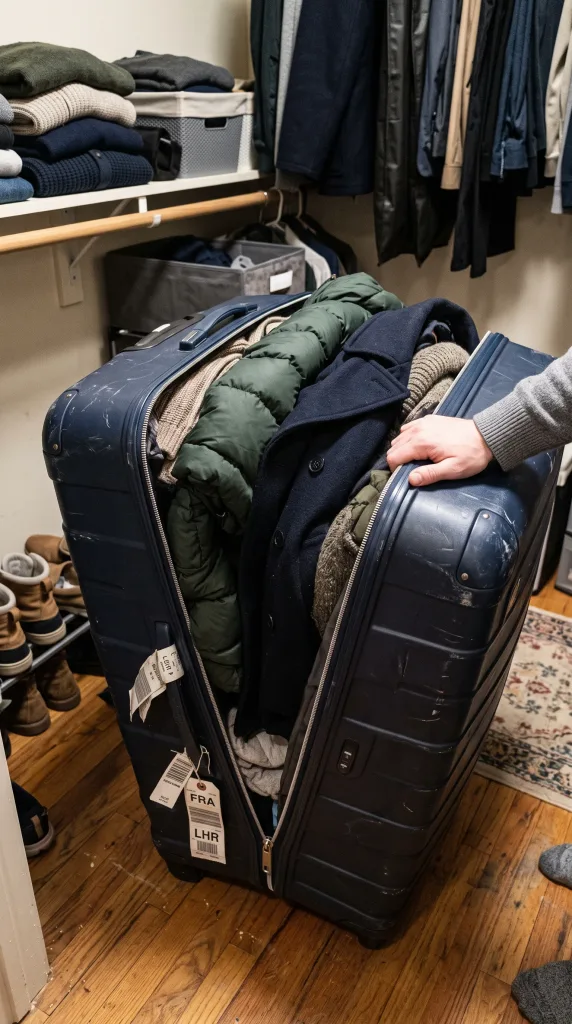
Storing massive, empty hard-shell suitcases in your closet is a terrifying waste of prime cubic volume. You must aggressively treat your luggage as active storage containers. Violently stuff your off-season heavy winter coats and thick sweaters directly inside the empty suitcases before you zip them up. You then fiercely ‘nest’ the smaller suitcases directly inside the larger ones, exactly like a set of wooden Russian dolls.
Storage Q&A: Smell Control
Question: Will clothes smell like plastic if stored inside a suitcase for six months? Answer: Yes, the trapped stale air will aggressively ruin the smell of the textiles. You must heavily layer the inside of the suitcase with scented dryer sheets or high-end charcoal odor absorbers before violently zipping it shut.
17. The Archival Garment Bag
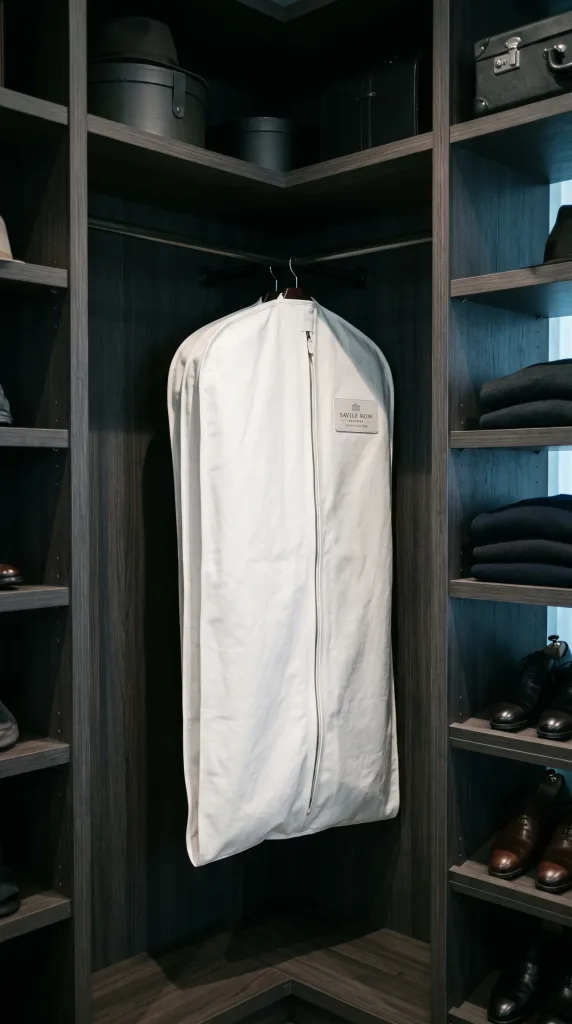
For incredibly expensive, highly tailored inventory like wedding dresses, bespoke tuxedos, or vintage silk, throwing them in a plastic bin is a massive insult. You must aggressively protect this high-value inventory by encasing it in massive, highly breathable, acid-free cotton garment bags. Hang these specific bags in the absolute darkest, coldest, lowest-traffic corner of the closet to fiercely protect the delicate textiles from harsh UV light damage and dust.
Material Warning: Never use cheap, clear plastic dry-cleaning bags for long-term archival storage. The plastic traps massive amounts of humidity and violently emits toxic chemical off-gassing that will deeply yellow and ruin expensive white silk over time.
18. Cedar-Lined Archive Chests
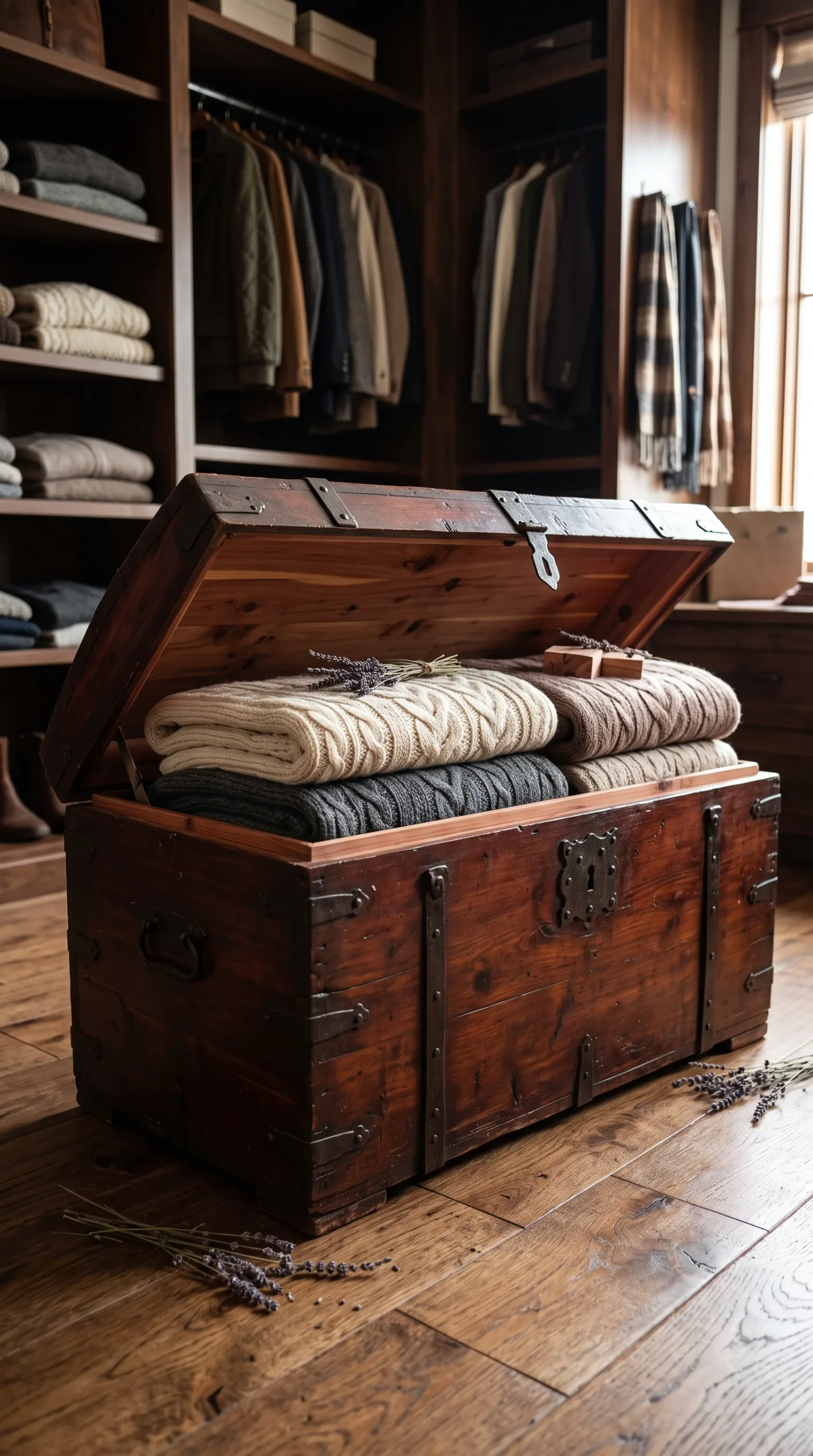
If you have a massive walk-in closet with vast amounts of floor space, invest heavily in a wildly expensive, solid cedar wood trunk. Cedar is a deeply historic, fiercely aromatic wood that naturally and violently repels terrifying moths and silverfish without using toxic chemical mothballs. Stacking your heavy winter wool blankets inside a cedar chest introduces massive architectural luxury and flawless historic preservation.
Logistics Phase 4: The Visual Merchandising Display
Once the massive bulk inventory is fiercely managed, you must address the high-value accessories. Shoes, watches, and jewelry must not be hidden in dark boxes; they must be aggressively displayed like a wildly expensive boutique.
19. The Floating Acrylic Shoe Gallery
Throwing expensive leather shoes into a terrifying, chaotic pile on the dark floor of a closet violently destroys the leather and wastes your investment. You must treat your shoes like high-end art. Install completely invisible, perfectly clear acrylic floating shelves directly onto a blank wall. When you place your pristine sneakers or high heels on the clear shelves, they magically and violently appear to be hovering exactly in mid-air, creating a fiercely modern display.
Shoe Display Storage Matrix
| Shoe Type | Storage Method | Space Efficiency |
| High-End Heels/Sneakers | Floating Acrylic Shelves | Low (Display Only) |
| Heavy Winter Boots | Floor-Level Wooden Cubbies | High |
| Flat Sandals/Flip Flops | Over-The-Door Canvas Pockets | Maximum Efficiency |

20. Velvet-Lined Jewelry Trays
A massive, chaotic tangle of gold necklaces violently shoved into a wooden drawer is a stressful nightmare. You must aggressively upgrade the architecture of your drawers. Purchase highly specific, perfectly measured, incredibly soft velvet jewelry tray inserts. The fierce, deeply colored velvet (like emerald or black) violently cushions the expensive metal, while the tiny, perfectly rigid compartments fiercely force every single ring and watch into strict, unyielding architectural discipline.
Friction Reality: The soft velvet is not just for luxury; it provides massive physical friction. If you place a heavy Rolex on a bare, slick wooden drawer, the exact second you aggressively pull the drawer open, the expensive watch will violently slam into the back wall and shatter.

21. Slanted Boot Shelving
Heavy, knee-high leather winter boots will violently flop over, severely creasing and ruining the expensive leather ankle support. To forcefully maintain the rigid architecture of the boot, you must install perfectly slanted, heavy-duty wooden shelving with a tiny raised lip at the bottom. The fierce angle perfectly displays the top of the boot while forcefully utilizing gravity to keep the heavy leather standing perfectly upright.
Boot Preservation Rules:
- You absolutely must aggressively insert rigid plastic boot shapers or rolled-up heavy magazines inside the calf of the boot to violently prevent the leather from collapsing.
- Ensure the slanted shelf has a fiercely strong front lip, or the heavy boots will violently slide off the angle and crash to the floor.

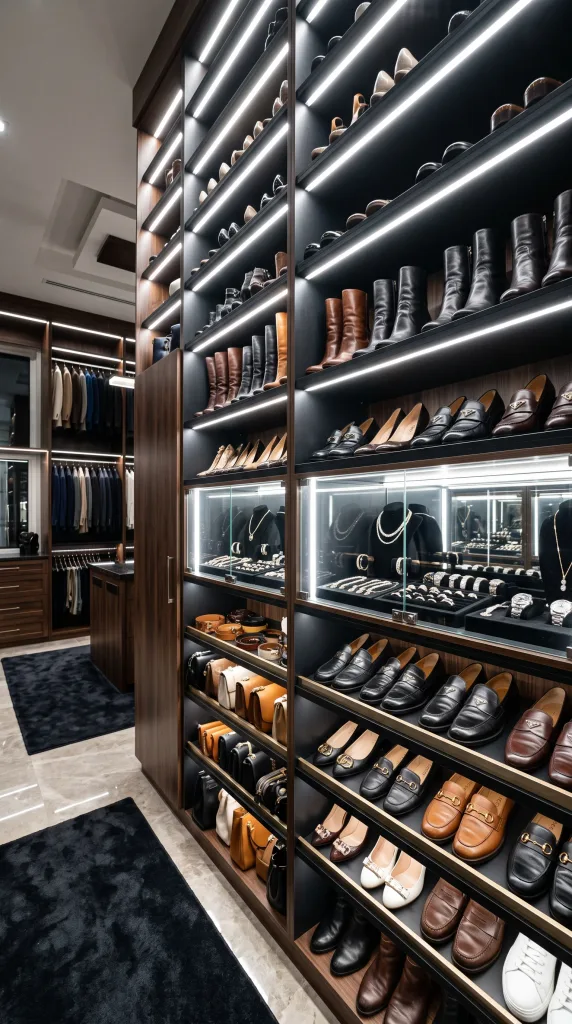
22. Brilliant Ambient LED Backlighting
A dark closet makes wildly expensive clothes look like cheap, terrifying rags. You must violently flood the visual merchandising zone with light. Install incredibly thin, high-powered LED strip lights directly completely behind every single floating shelf and completely inside every dark cubby. The brilliant, hidden light violently washes over the leather shoes and jewelry, completely eliminating deep, terrifying shadows and perfectly mimicking a fiercely expensive Prada storefront.
Lighting Execution:
- You absolutely must hide the actual LED diodes behind a physical wooden lip; looking directly at raw, blinding LED dots violently destroys the luxury aesthetic.
- Install a tiny, hidden motion sensor on the ceiling so the brilliant boutique lighting violently explodes to life the exact second you open the closet door.
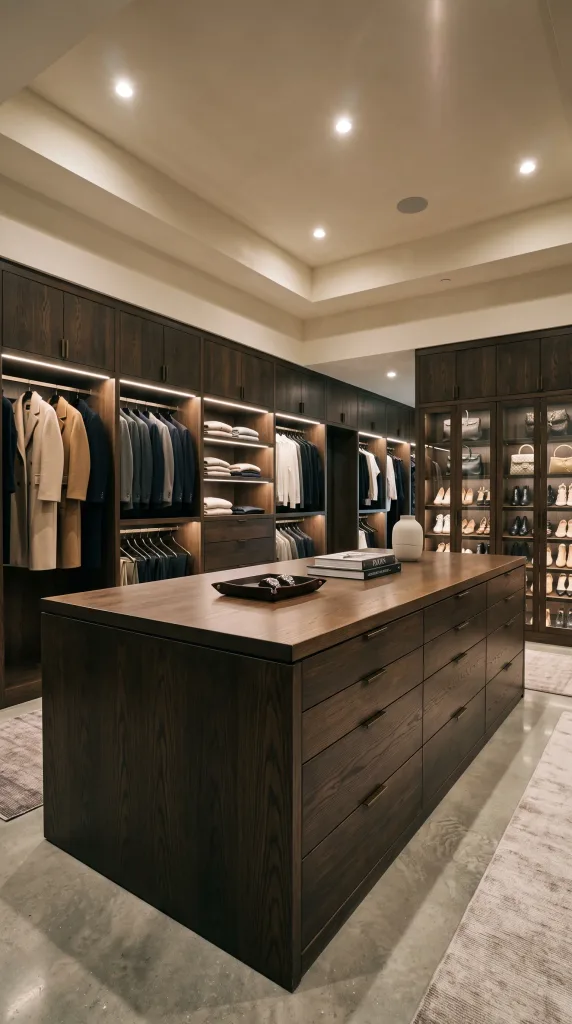
23. The Central Island Accessory Command
If you have a massive, echoing walk-in closet, the giant empty space in the center is a massive architectural void. You must aggressively ground the room by installing a massive, heavy wooden central island. This fiercely expensive feature provides massive amounts of flat surface area to perfectly lay out tomorrow’s outfit, while the deep, heavy drawers underneath provide incredibly dense storage for belts, watches, and folded luxury cashmere.
Island Q&A: Space Requirements
Question: How much space do I need to walk around a central island? Answer: You absolutely must maintain exactly thirty-six inches of perfectly clear walking space completely surrounding the island. If you squeeze an island into a tiny closet, you will violently crash your hips into the heavy wood every single morning.
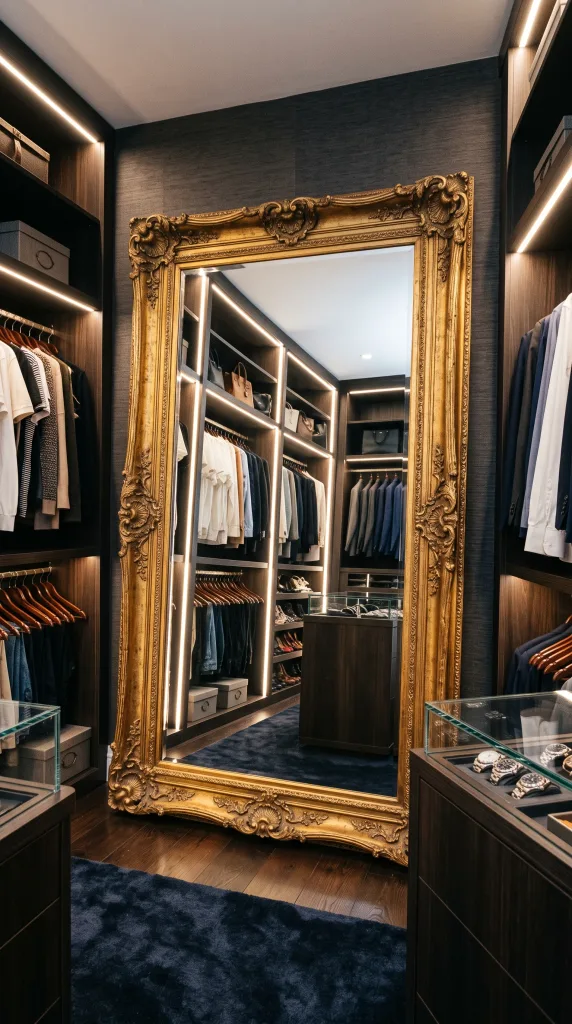
24. The Framed Mirror Vault
Hanging a cheap, terrifyingly flimsy twenty-dollar plastic mirror on the back of a closet door violently ruins the entire high-end boutique aesthetic. You must aggressively source a massive, incredibly heavy, deeply historic, highly ornate gold-framed floor mirror. Lean this massive architectural beast violently against the back wall of the closet. The incredibly heavy frame introduces fierce luxury, while the massive glass aggressively bounces the LED lighting, violently doubling the perceived size of the entire room.
Conclusion
A bedroom closet is absolutely never just a place to hang clothes; it is a highly rigorous, intensely complex Supply Chain Management System. If you approach it without strict, unyielding architectural discipline, the sheer massive volume of textiles will violently crush your bedroom into a terrifying, chaotic nightmare. By aggressively establishing a fierce Intake Triage Zone to handle daily dirty clothes, heavily optimizing the Active Inventory Floor with slim velvet hangers, violently exiling off-season gear into the Cold Storage Archive, and fiercely displaying expensive accessories in a Visual Merchandising zone, you conquer the chaos. When you treat your wardrobe with the exact same massive, ruthless efficiency as a wildly successful corporate logistics warehouse, getting dressed transforms from a highly stressful nightmare into a fiercely calm, deeply luxurious, perfectly engineered daily ritual.
Frequently Asked Questions
Why should I completely replace all my mismatched plastic and wooden hangers with velvet ones?
Because mismatched hangers violently destroy the horizontal visual architecture of the closet and waste massive amounts of critical cubic space. Ultra-thin, fiercely grippy black velvet hangers violently compress the clothing, magically freeing up thirty percent more rod space while strictly holding slippery silk shirts perfectly in place.
Is it okay to store my heavy winter sweaters on a hanger?
Absolutely not. Gravity is a violently destructive force. The massive physical weight of a heavy wool or luxury cashmere sweater will aggressively pull down on the thin hanger, violently stretching the shoulder fibers and deeply ruining the expensive architecture of the garment forever. You must strictly fold them into rigid acrylic shelf dividers.
How do I stop my closet from smelling terrifyingly stale or musty?
You must aggressively manage the moisture. Throwing sweaty, damp clothes into a dark, closed closet violently breeds terrifying mildew. You must install highly breathable canvas laundry hampers and aggressively place fierce, aromatic cedar blocks or deep charcoal moisture absorbers directly onto the shelves to violently kill the stale air.
What is the absolute best way to store off-season winter coats?
You must aggressively exile them to the Cold Storage Archive. Violently suck the air out of the massive puffy coats using high-grade vacuum-sealed plastic bags to completely crush their footprint, and heavily stuff them into opaque canvas bins exactly at the highest, most unreachable shelf in the room.
Should I organize my clothes by color or by type?
You must rigorously and aggressively do both. You absolutely must sort strictly by category first (heavy jackets, long sleeves, short sleeves). Then, inside each strict category, you must violently organize the inventory in a flawless color gradient from stark white to pitch black. This highly visual system aggressively reduces the massive cognitive load of finding clothes in the morning.
Can I use clear plastic bins for storing things on high shelves?
If you want the closet to look like a wildly expensive luxury boutique, you absolutely must use matching, highly tailored opaque bins. Clear plastic violently exposes the chaotic, messy, terrifying jumble of items inside, aggressively ruining the clean, strict architectural lines of the closet.


