The Best Bedroom Accent Wall Ideas Worth Stealing Right Now
Your bedroom is arguably the most personal space in your entire home, yet it is often the last room to receive any real design attention. We tend to focus our decorating efforts and budgets on public spaces like living rooms and kitchens, leaving the bedroom feeling like an afterthought. Adding a properly designed accent wall completely changes the energy of the room, grounding your furniture and creating a highly intentional focal point. I have noticed that people often assume an accent wall requires expensive materials or a massive renovation budget, but that is simply not true. You can achieve incredible results using paint, basic trim, or even temporary peel-and-stick wallpaper. In my experience, a thoughtful focal wall is the single fastest way to make a basic builder-grade bedroom feel like a custom boutique hotel suite.
The secret to a successful bedroom feature wall is ensuring it actually promotes relaxation rather than creating visual chaos. You must carefully consider the texture, the depth of color, and how the materials will interact with your existing bed frame and nightstands. The wall directly behind the headboard is almost always the correct choice for an accent, as it naturally anchors the heaviest piece of furniture in the room. The ideas below cover a massive variety of styles, budgets, and commitment levels to help you find the exact right fit for your home. Whether you want to add organic warmth with natural wood slats or create a moody retreat with deep plaster, there is a highly specific solution here for you. We will look at what actually works in real homes, complete with practical tips on furniture pairings, lighting, and honest advice about maintenance.
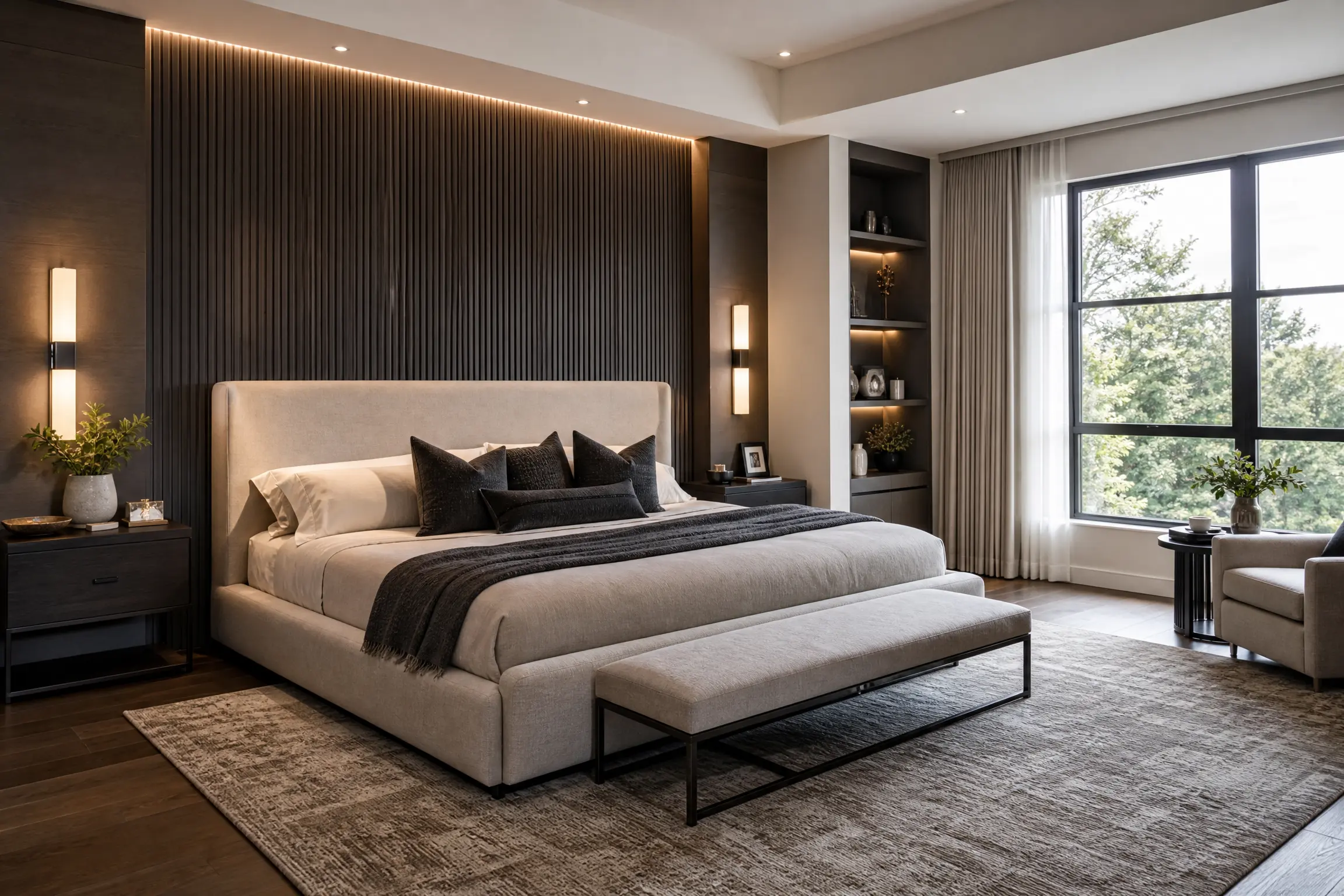
Floor-to-Ceiling Wood Slats
Installing vertical wooden slats across the entire wall behind your bed brings an incredible amount of warmth and texture to the room. I find this approach works exceptionally well in modern or mid-century homes where flat drywall can sometimes feel a bit cold and sterile. You should choose a light white oak or ash finish for the wood to keep the room feeling airy, pairing it with a low-profile upholstered bed to balance the hard architectural lines. This project falls into the mid-range budget category if you purchase pre-made acoustic slat panels, which also have the added benefit of dampening echoes in the room. Keeping your bedside lighting sleek and minimal, such as using matte black wall sconces, ensures the vertical lines of the wood remain the undisputed star of the room.
Pro Move: Run an LED light strip horizontally behind the headboard to wash the wooden slats in a warm glow during the evening.
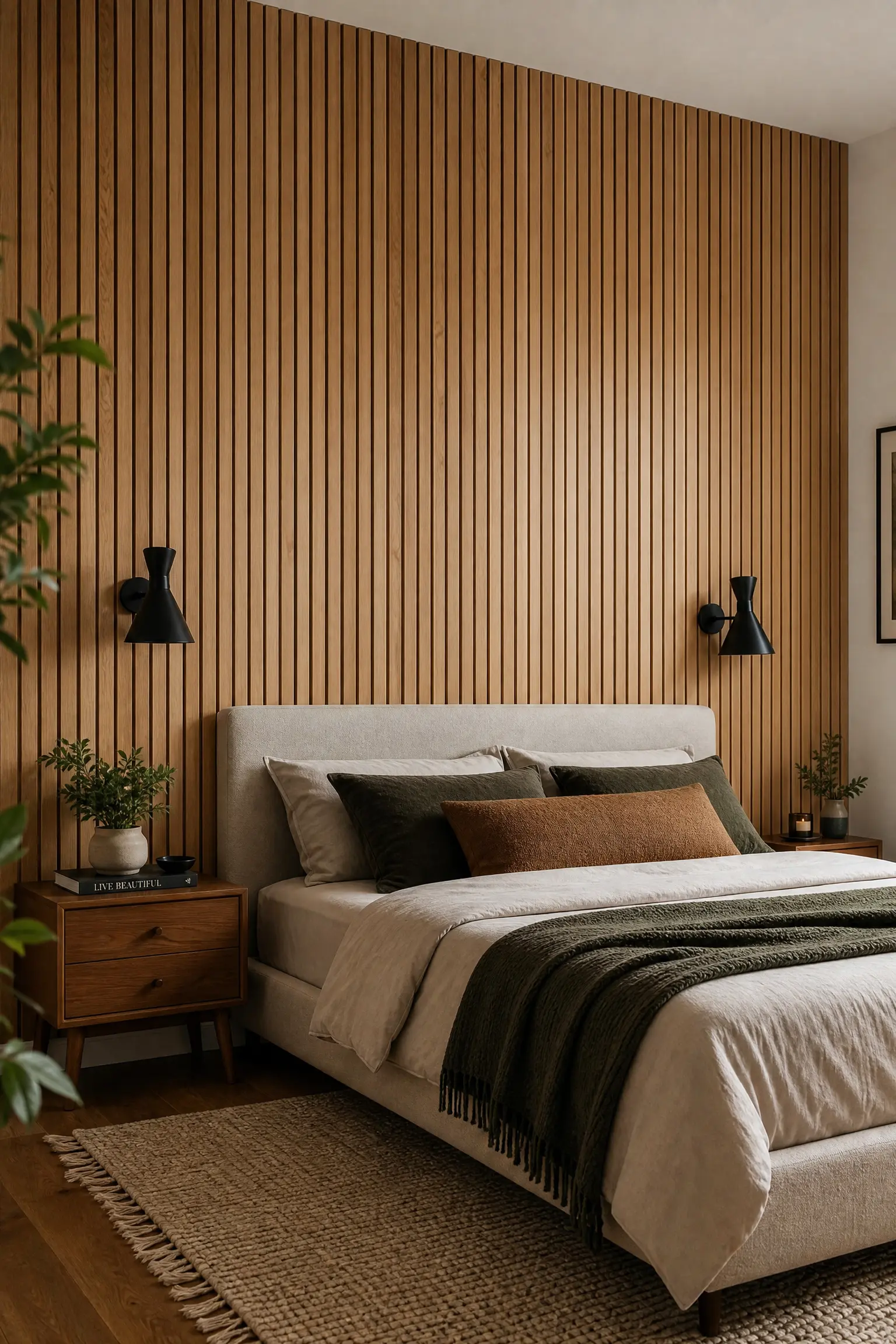
Moody Charcoal Limewash
Applying a dark charcoal limewash finish gives your accent wall a mottled, suede-like texture that feels incredibly sophisticated and highly intimate. When working with this dark, moody finish, you must ensure the bedroom receives plenty of natural daylight to prevent the space from feeling like a cave. You can pair this heavily textured wall with a natural linen bed frame and warm brass reading lamps to introduce necessary brightness and contrast. This is a very affordable DIY project, but achieving the proper cloudy effect requires a specific cross-hatch brushing technique that takes some practice to master. Adding a large, light-colored textured rug under the bed will help bounce light back up onto the dark plaster surface.
Designer Advice: Always buy a specialized primer designed specifically for limewash to ensure the plaster adheres properly and dries with an even texture.
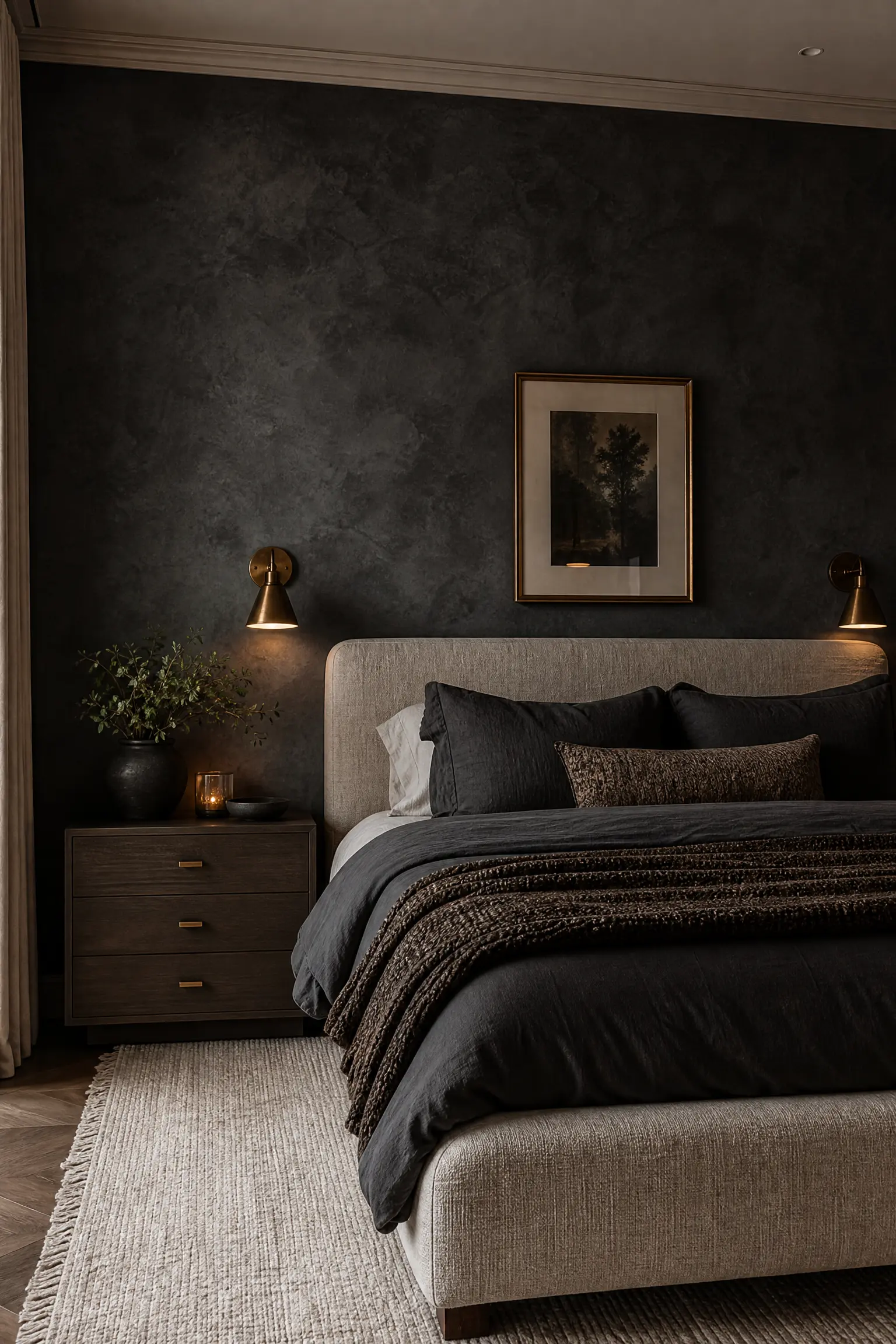
Classic Board and Batten
A classic board and batten treatment applied two-thirds up the wall creates a beautiful traditional base that pairs perfectly with an oversized farmhouse bed. In practice, painting both the woodwork and the wall above it in a soft beige or warm white provides a calm backdrop that lets colorful bedding or patterned rugs take center stage. I always recommend using a satin paint finish for the lower portion because it resists scuffs from nightstands much better than flat paint. This is an extremely affordable DIY project that requires only basic tools and MDF boards, making it ideal for anyone on a tight budget. You can finish the look by hanging a large landscape painting directly above the wainscoting to draw the eye upward.
Quick Tip: Calculate the spacing of your vertical battens carefully so that they do not awkwardly intersect with your wall outlets or light switches.
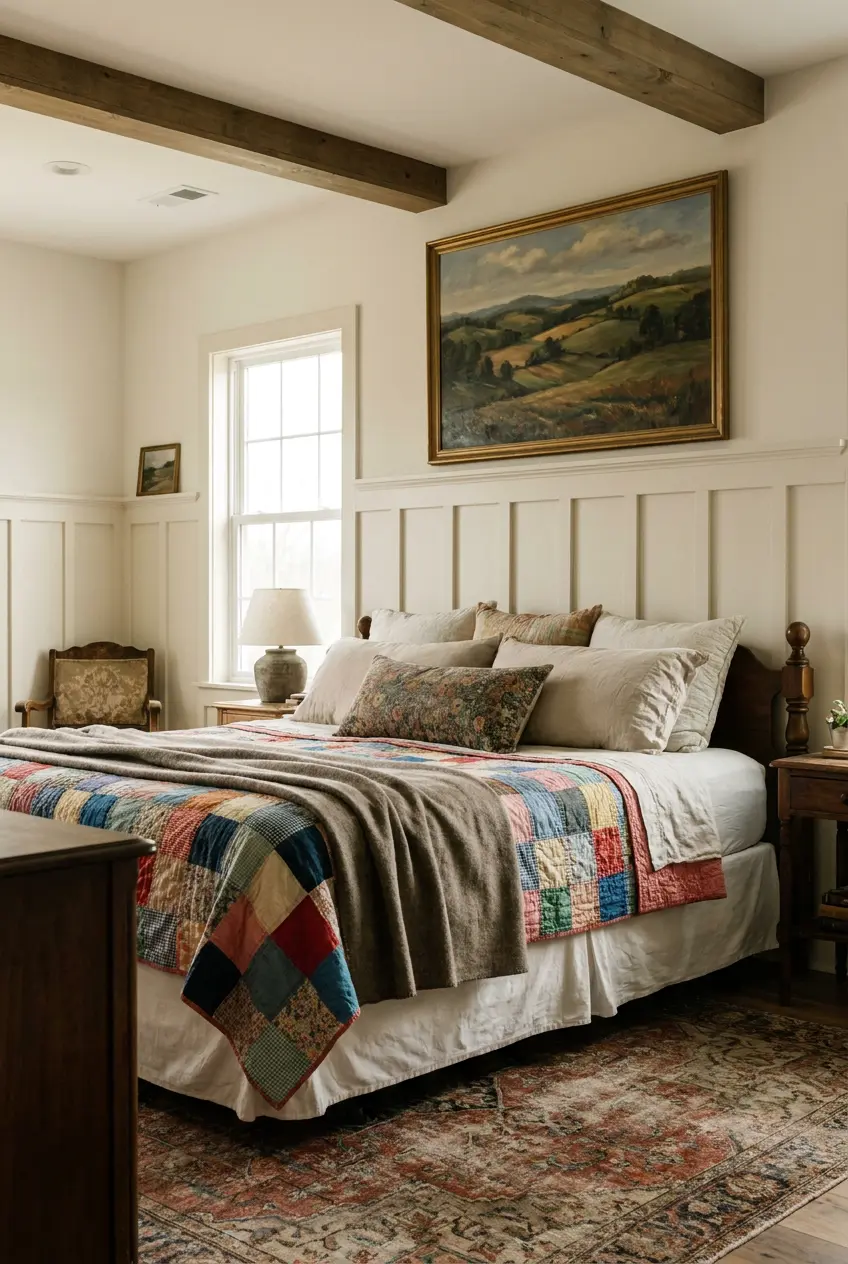
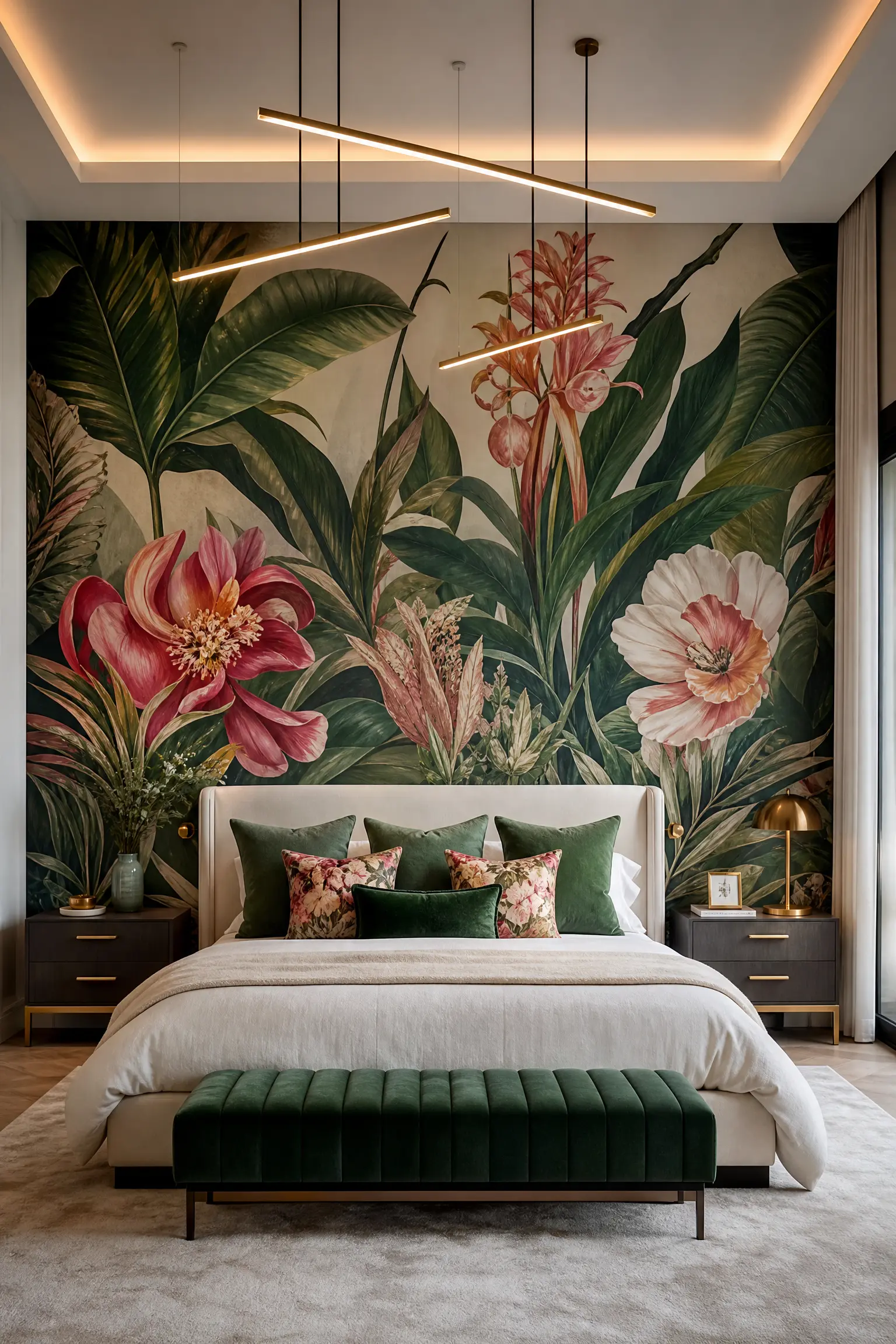
Large Scale Botanical Mural
A large-scale, oversized botanical mural transforms the wall behind your bed into an immersive piece of art that instantly sparks joy every morning. I have seen this work beautifully when the colors in the mural are pulled directly into the throw pillows, creating a cohesive look that feels entirely deliberate. You need to keep the bed frame and surrounding accessories relatively understated so they do not compete with the busy pattern of the mural. This is typically an investment-level choice, as custom-sized murals require precise measurements and careful professional installation to look their best. Hanging simple, linear modern light fixtures ensures the artwork remains fully visible without any visual obstruction from bulky lampshades.
Reality Check: Order the mural slightly larger than your actual wall dimensions to allow for a healthy margin of error when trimming the edges.
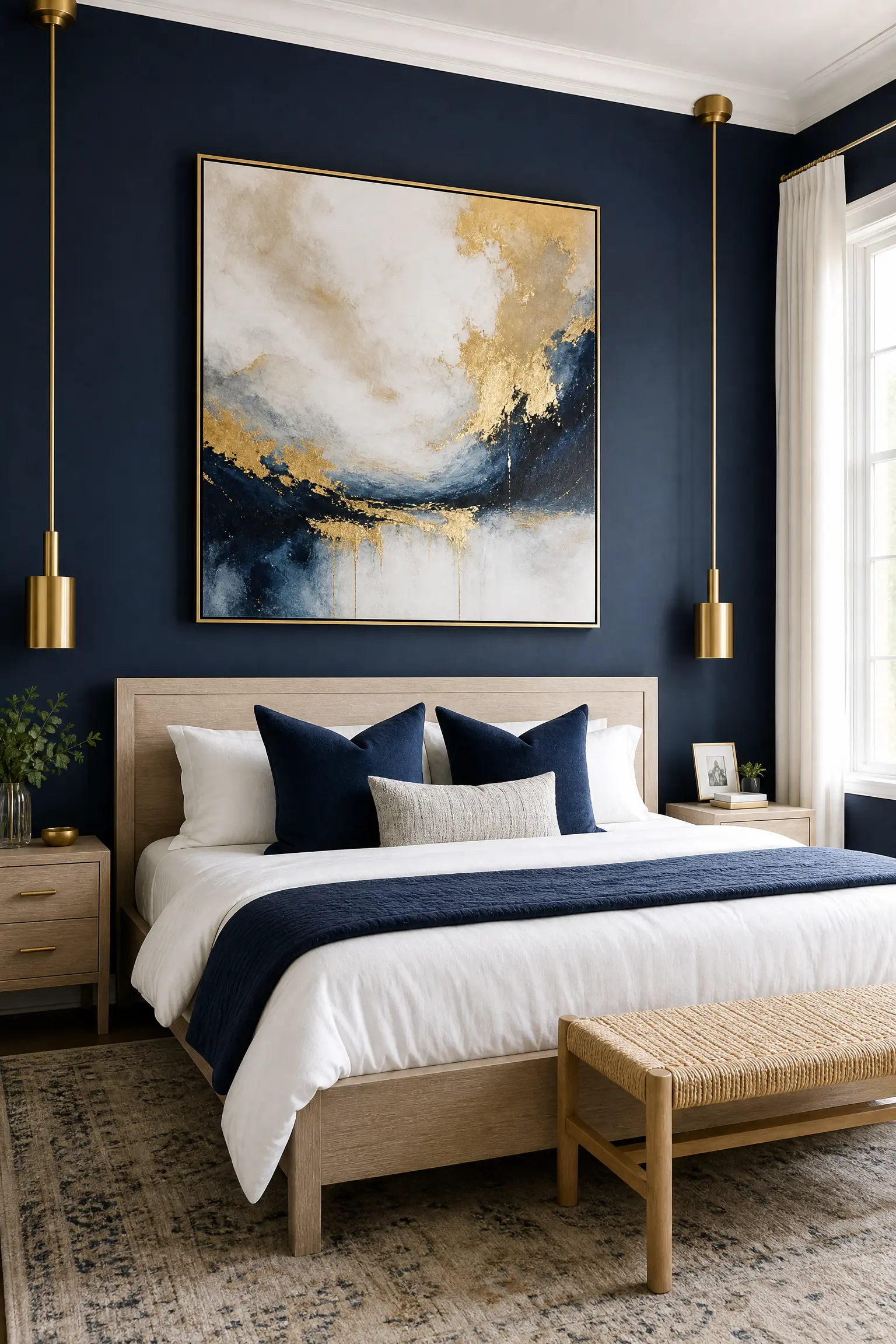
Color Drenched Navy Blue
Painting the entire accent wall in a deeply saturated navy blue provides a dramatic backdrop that makes metallic light fixtures pop brilliantly. In practice, a flat or matte finish absorbs light rather than reflecting it, which hides minor drywall imperfections and creates a very smooth, velvet-like appearance. You must balance this heavy, dark color with a light-colored rug and perhaps a white oak dresser to maintain a sense of airiness in the room. Painting is always an affordable update, but applying dark colors often requires a tinted primer and at least two full coats for proper coverage. Hanging a large abstract painting with vibrant white and gold tones above the bed will create a striking focal point.
Heads Up: Matte paint shows fingerprints very easily, so keep extra paint on hand for quick touch-ups throughout the year.
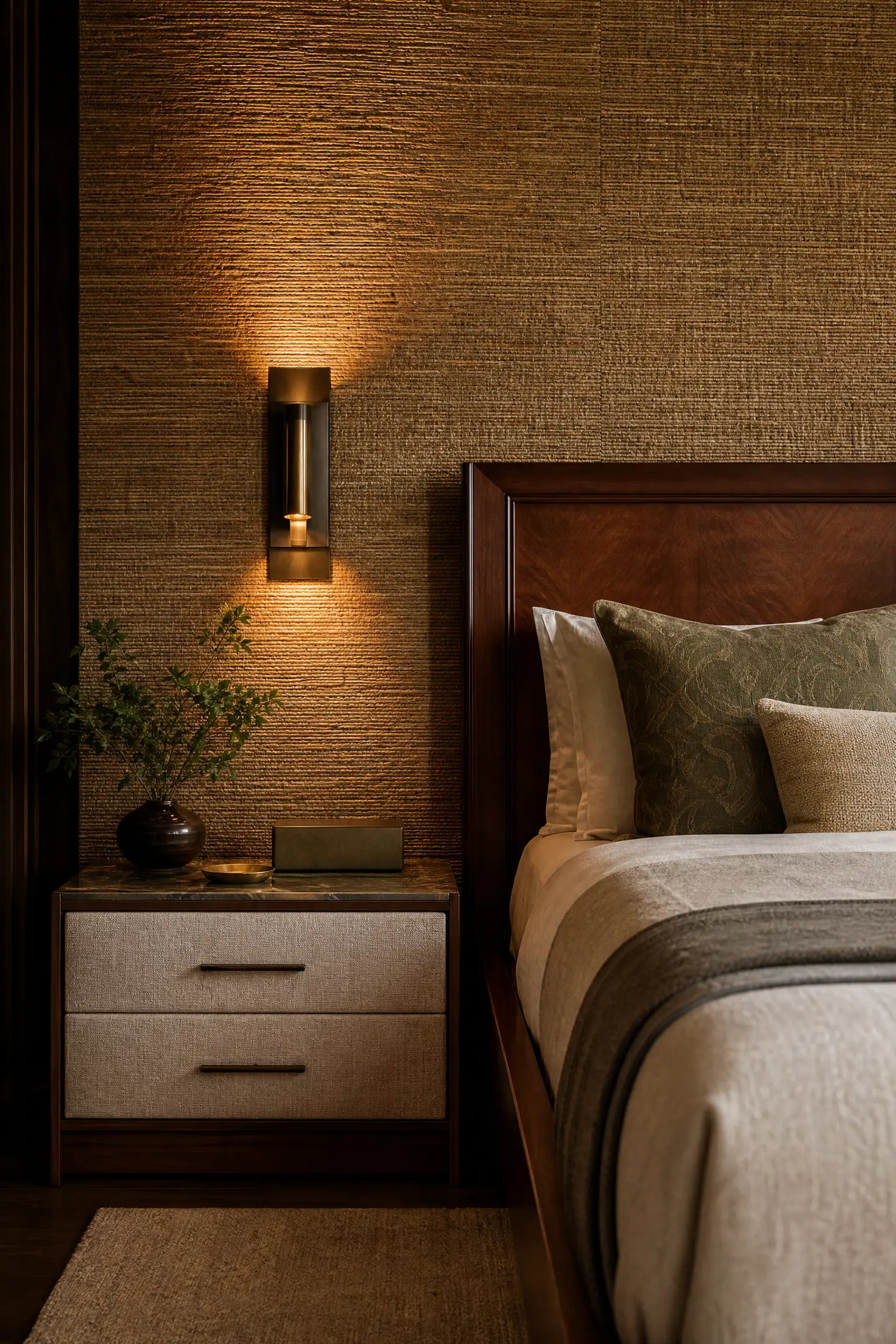
Textured Natural Grasscloth
Installing natural grasscloth wallpaper provides a subtle, sophisticated texture that brings incredible warmth and a high-end feel to the bedroom. In my experience, grasscloth is the perfect solution for rooms that feel a bit cold, as the woven natural fibers soften echoes and add significant visual depth. You should pair this textured wall with a sleek mahogany bed and upholstered nightstands to balance the organic material with polished, formal elements. Keep in mind that authentic grasscloth is a delicate, investment-level material that cannot be washed with water, making it strictly for adult bedrooms. Adding brass or bronze wall sconces directly on top of the grasscloth creates beautiful shadows that highlight the woven texture.
Pro Move: Accept that the seams of real grasscloth wallpaper will always be visible, as this is a natural characteristic of the handmade material.
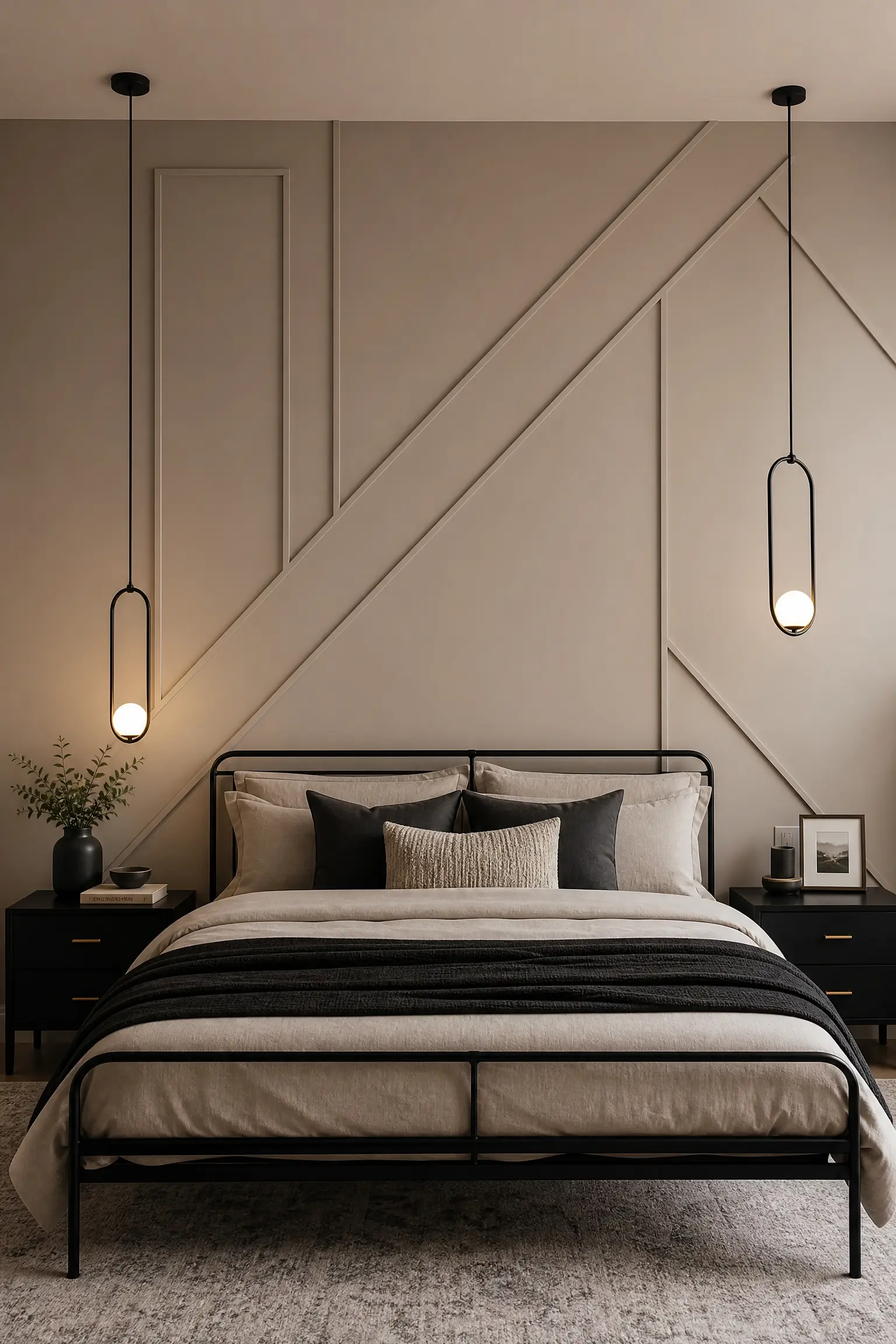
Geometric MDF Paneling
Creating custom geometric shapes using thin MDF strips allows you to add a sculptural, modern touch that completely redefines a boring square room. When testing this in smaller bedrooms, painting the paneling the exact same color as the surrounding walls keeps the texture subtle and prevents the space from feeling chaotic. You should pair this textured backdrop with a sleek glass or metal-framed bed to contrast the matte, painted wood surfaces. While this is an affordable project, measuring the angles accurately requires immense patience and a good miter saw, which means it might take a full weekend. Adding a cluster of asymmetrical pendant lights above the nightstands will complement the modern lines of the wall perfectly.
Designer Advice: Sketch your geometric design on the wall with painter tape before cutting any wood to ensure the proportions look right.
Reclaimed Barn Wood Planks
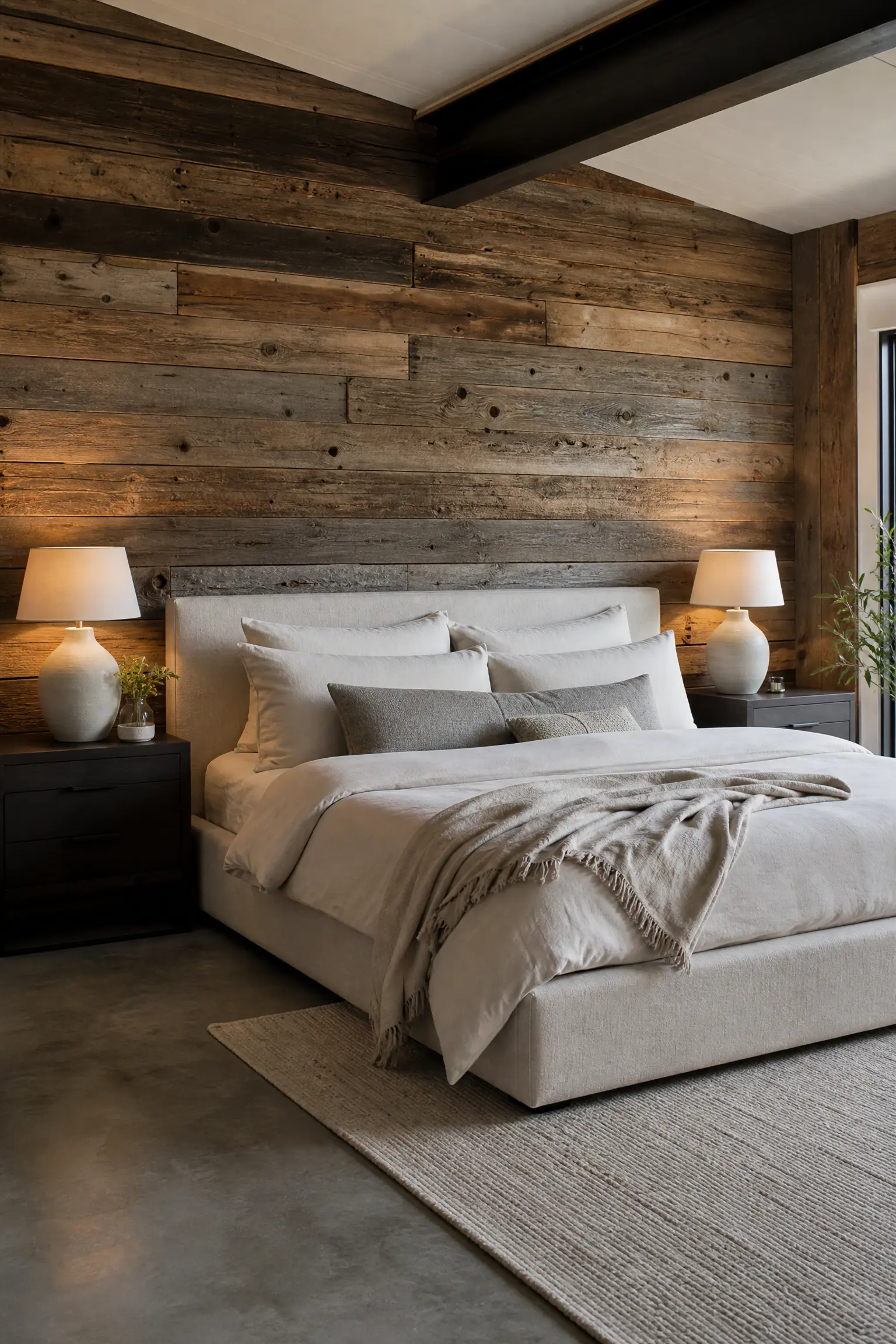
Installing reclaimed barn wood horizontally across the main wall brings incredible texture and history to a bedroom that might otherwise feel too sterile. I have seen this work best in homes with industrial elements, where the rough-hewn texture of the wood contrasts nicely with smooth concrete floors or metal nightstands. You should ensure the wood is properly cleaned and sealed to prevent splinters or dust from interfering with your sleeping environment. This can be an investment-level project if you source authentic antique lumber, but the resulting durability is unmatched. To prevent the room from feeling like a remote cabin, pair the rustic wood wall with a sleek, contemporary bed and minimalist ceramic table lamps.
Quick Tip: Authentic reclaimed wood varies wildly in thickness, so you may need to shim the boards during installation for an even finish.
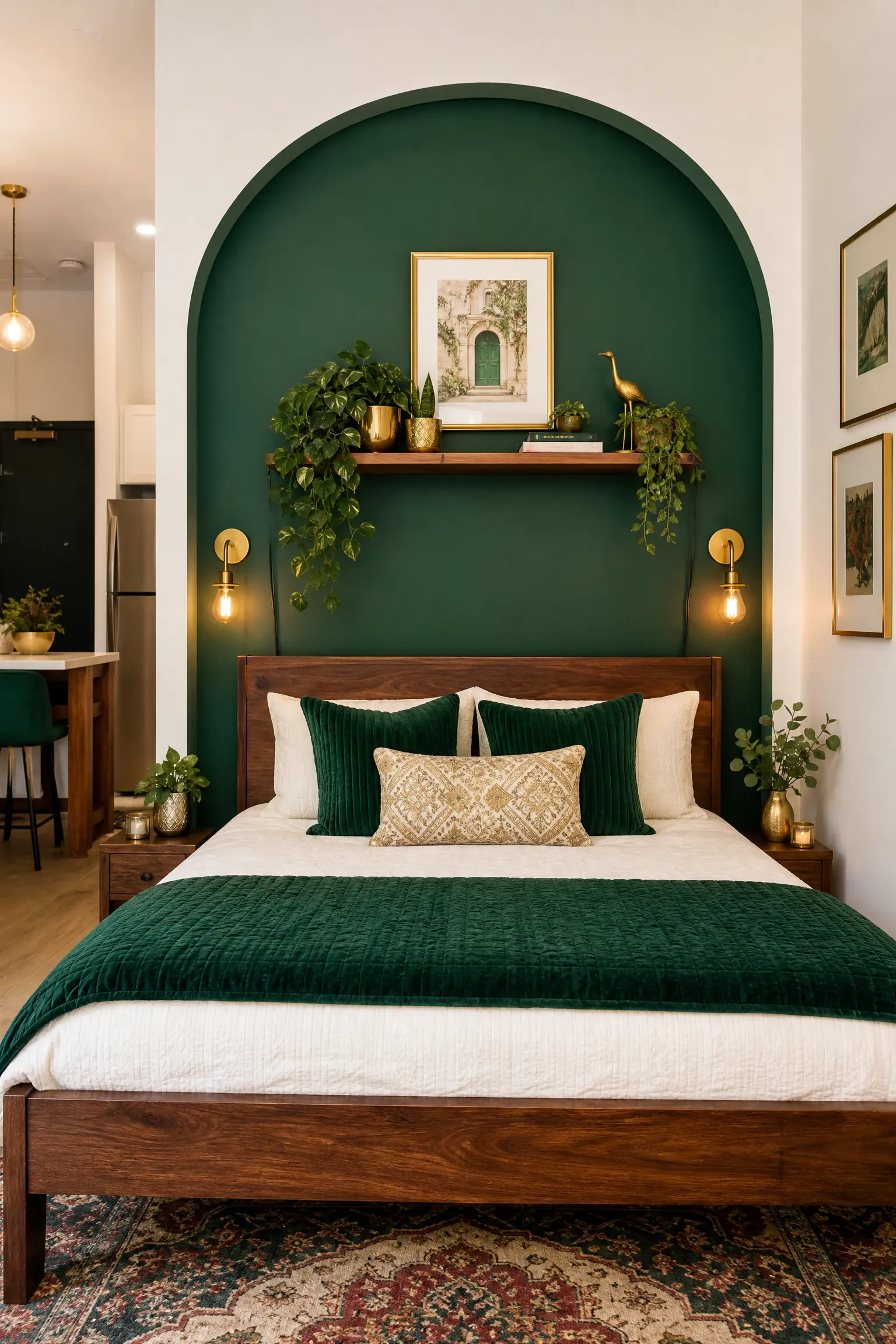
Emerald Green Color Block Arch
Painting a large emerald green arch directly behind your bed frame creates a designated sleeping zone without needing any actual architectural separation. When testing this approach, I found it works perfectly in large studio apartments where you need to anchor the bed but cannot paint an entire massive wall. You should pair the deep green paint with warm walnut furniture and gold-toned accessories to maximize the rich, jewel-box effect. This is one of the most budget-friendly ideas on the list, requiring only a quart of paint, a piece of string, and a simple pencil. Adding a floating shelf horizontally across the painted arch gives you a practical spot to display small trailing plants.
Reality Check: Ensure the width of the painted arch extends at least six inches past the edges of your nightstands to maintain proper visual scale.
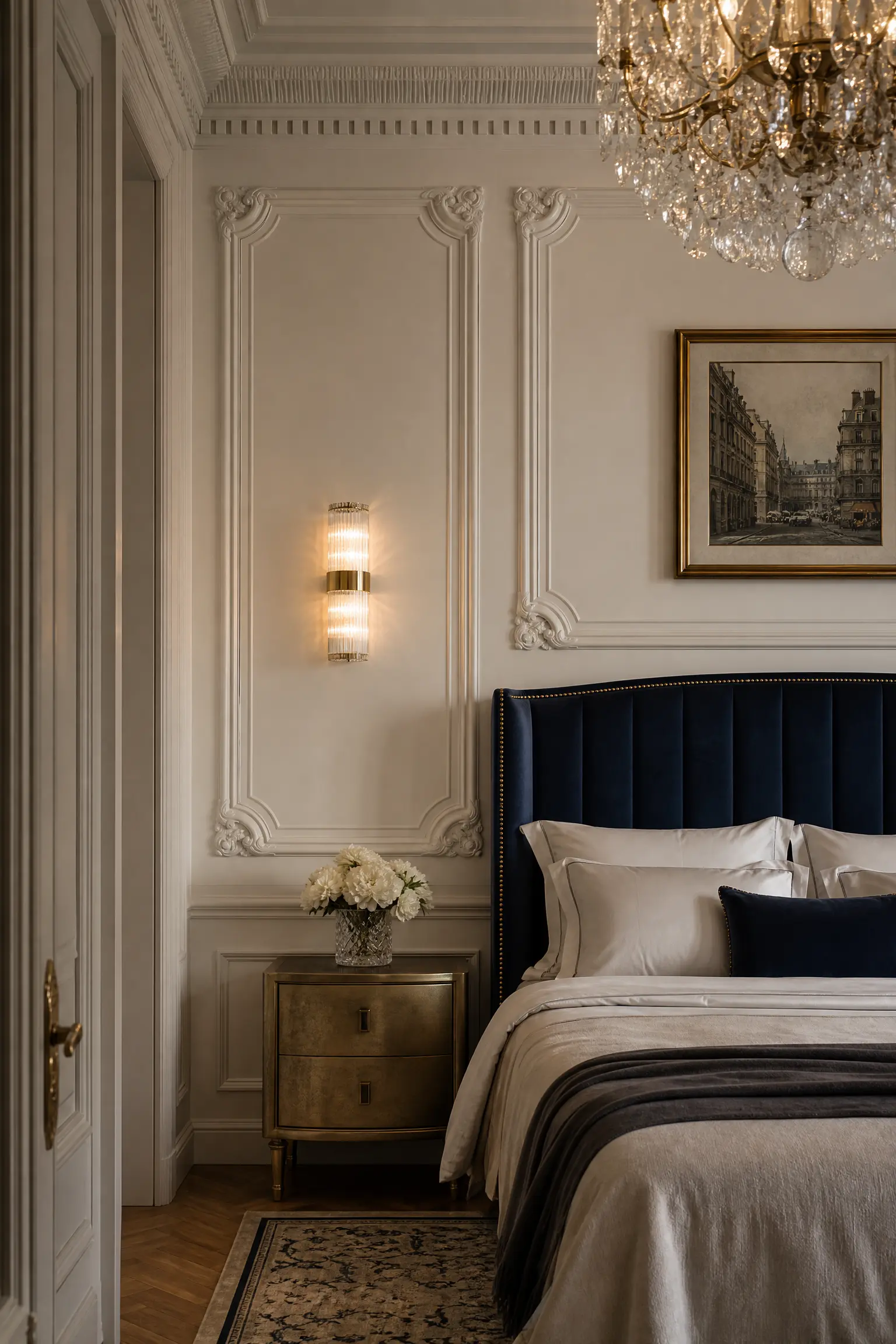
Picture Frame Molding
Applying picture frame molding provides an elegant Parisian apartment vibe that works wonders in formal primary bedrooms with high ceilings. In my experience, pairing this sophisticated wall treatment with a velvet upholstered headboard and a brass bedside table creates a highly luxurious atmosphere. The symmetry of the boxes naturally frames whatever artwork or wall sconces you choose to place inside them, making decorating incredibly straightforward. This is a relatively low-cost addition, though calculating the perfect box dimensions requires some careful math before you begin nailing anything to the wall. A crystal chandelier hung directly in the center of the room will reflect beautifully against the structured shadows created by the molding.
Heads Up: Use the golden ratio to determine the size of your molding boxes so they feel perfectly proportioned to the overall wall height.
Terracotta Stucco Finish
Applying a terracotta-tinted stucco finish brings a warm, earthy Mediterranean energy to the bedroom that feels very organic and heavily grounded. When working with this style, I always suggest using natural materials like a rough-hewn wooden bed and woven rattan nightstands to complete the relaxed wabi-sabi aesthetic. You should incorporate plenty of ambient lighting, such as paper lanterns or ceramic pendant lights, to enhance the cozy, textured atmosphere at night. While you can hire a professional for this investment-level finish, there are many DIY plaster kits available that make it accessible for a mid-range budget. Keeping the surrounding decor minimal allows the rich texture and color of the stucco wall to remain the undisputed star.
Pro Move: Plaster finishes are permanent and very difficult to remove, so test the color on a large sample board before committing to the full wall.

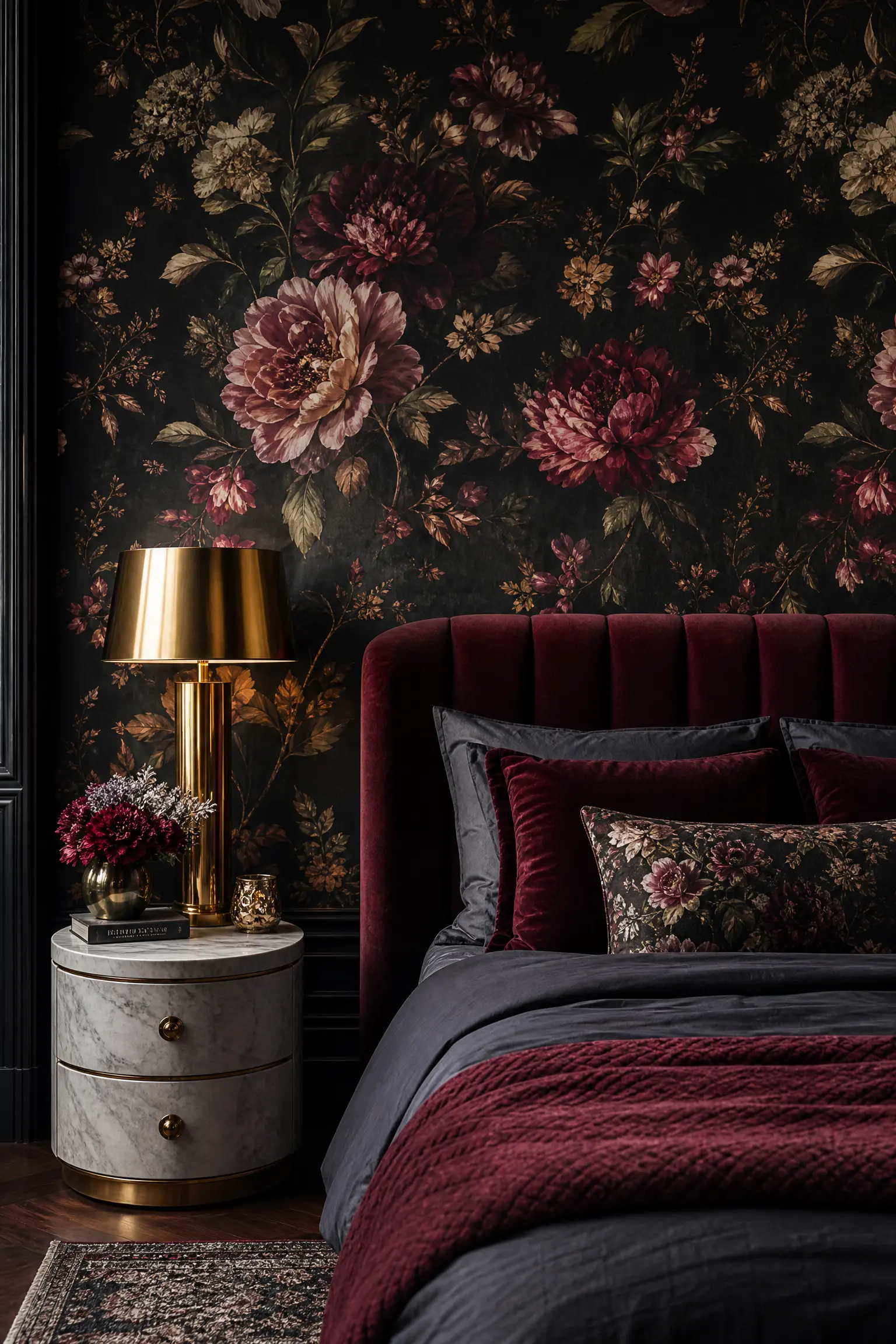
Moody Floral Peel-and-Stick
A dark, moody floral wallpaper with an oversized repeating pattern creates a highly romantic and dramatic setting perfect for a master bedroom. When testing this in homes, using a peel-and-stick option provides a fantastic way to experiment with bold patterns without making a permanent commitment. You will want to pair this dark wallpaper with a round marble nightstand and a velvet bed in a jewel tone that matches one of the flowers in the pattern. This approach is very budget-friendly and completely renter-friendly, allowing anyone to upgrade their sleeping space over a single weekend. Incorporating a few tall metallic table lamps will add necessary brightness to balance the dark background.
Designer Advice: Peel-and-stick wallpaper adheres best to perfectly smooth drywall, so avoid using it if your walls have heavy knockdown textures.
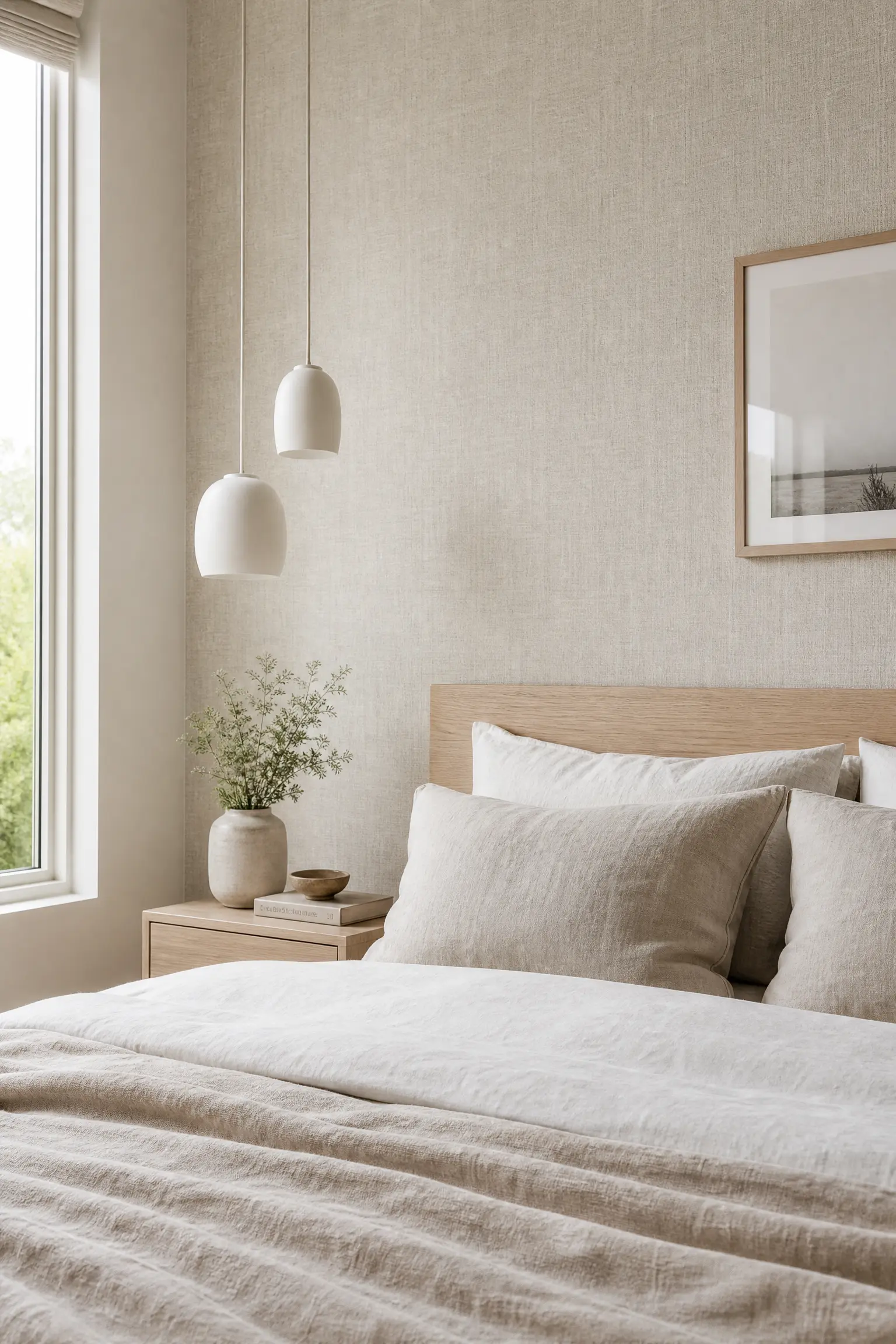
Whitewashed Brick Veneer
Applying a whitewash over a brick veneer wall softens the industrial edge and creates a bright, airy backdrop perfect for a modern farmhouse aesthetic. When working with clients who want texture without the heaviness of red brick, this technique provides the perfect compromise for a serene bedroom. You can pair this light, textured wall with a simple pine bed and woven wicker baskets to enhance the casual, welcoming vibe. The cost is similar to standard brick veneer, but you will need to spend extra time mixing and applying the watery paint solution to achieve the desired distressed look. Adding a large, natural jute rug underneath the bed will complement the relaxed, organic feel.
Quick Tip: Brush the whitewash mixture on lightly and wipe it away immediately with a rag to ensure the brick texture remains fully visible.
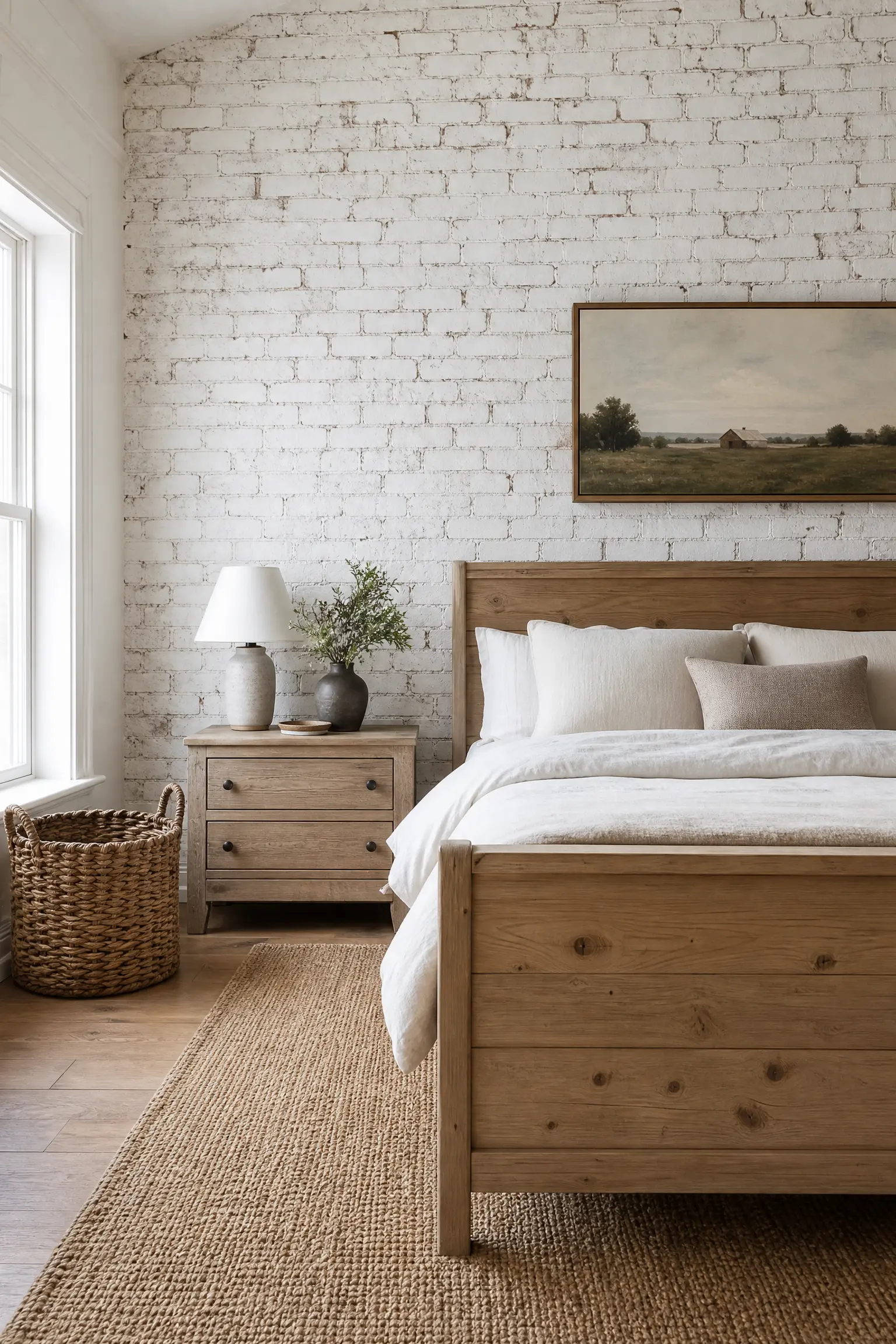
Metallic Art Deco Geometric
A wallpaper featuring metallic Art Deco geometric lines brings a touch of glamorous 1920s elegance to a modern bedroom setting. I find this style works incredibly well in rooms that lack abundant natural light, as the metallic foil accents catch and reflect whatever artificial bedside light is available. You should lean into the aesthetic by pairing the wallpaper with a glass-topped nightstand, a velvet channeled headboard, and brass hardware. While high-quality metallic papers sit in the mid-range budget category, the luxurious impact they deliver makes them entirely worth the cost. Keep the rest of the room relatively simple and avoid competing patterns in your rugs or curtains.
Reality Check: Use warm white LED bulbs in your light fixtures to make the gold or brass accents in the wallpaper glow beautifully rather than looking sterile.
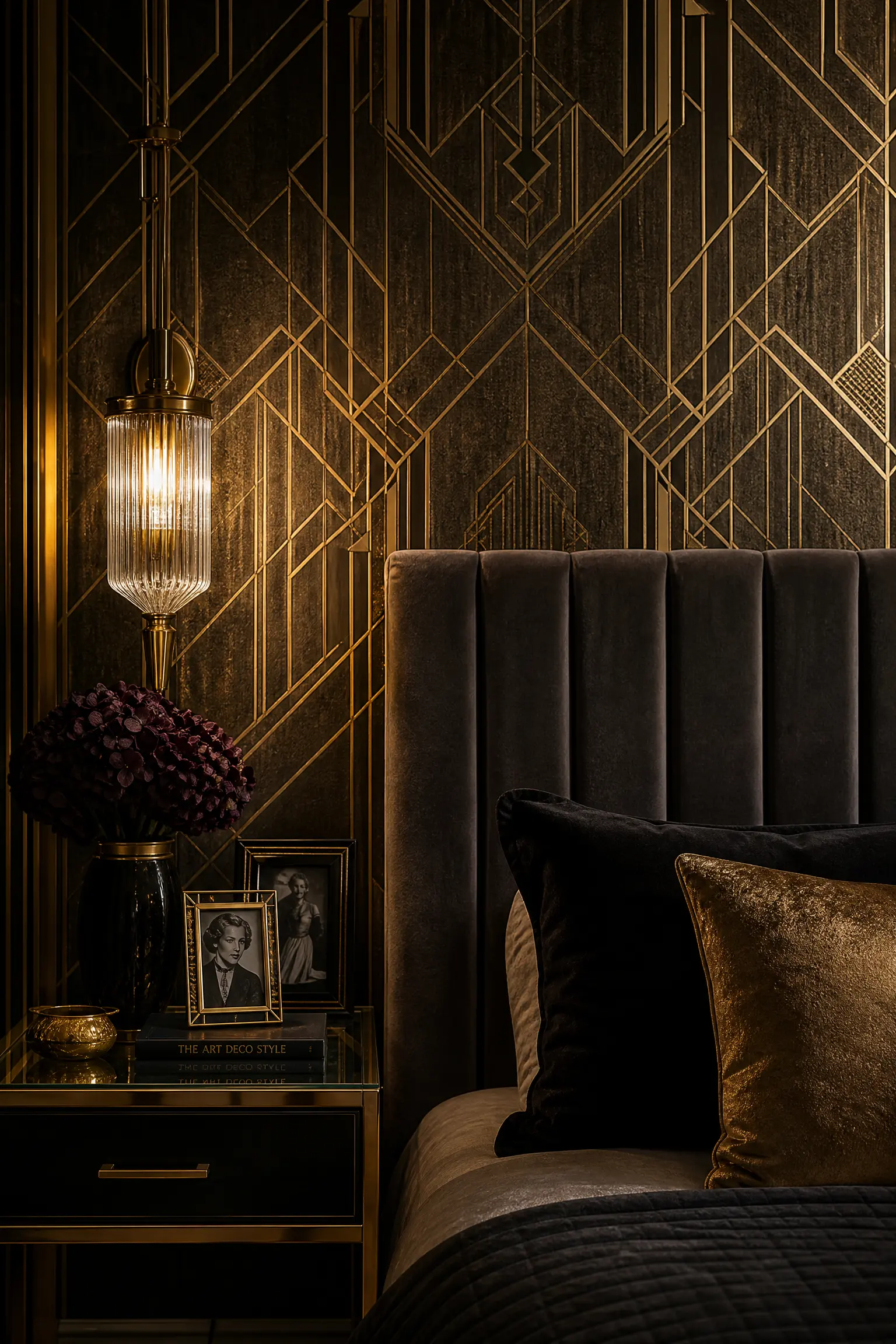
Floor-to-Ceiling Built-In Bookshelves
Constructing floor-to-ceiling bookshelves along the wall behind the bed serves dual purposes by providing massive storage space while acting as a beautiful architectural feature. I always recommend painting the shelves the exact same color as the surrounding walls to create a custom, built-in look that feels original to the house. You can pair this practical wall with a low platform bed that slides seamlessly into a designated open nook in the center of the shelving unit. This is a high-budget investment if custom-built, but using pre-made modular shelving units can bring it down to a manageable mid-range cost. Styling the shelves with a mix of novels, framed photos, and decorative objects adds immense personality.
Heads Up: Leave the bottom third of the shelving unit as closed cabinet storage to hide extra bed linens and less attractive clutter.
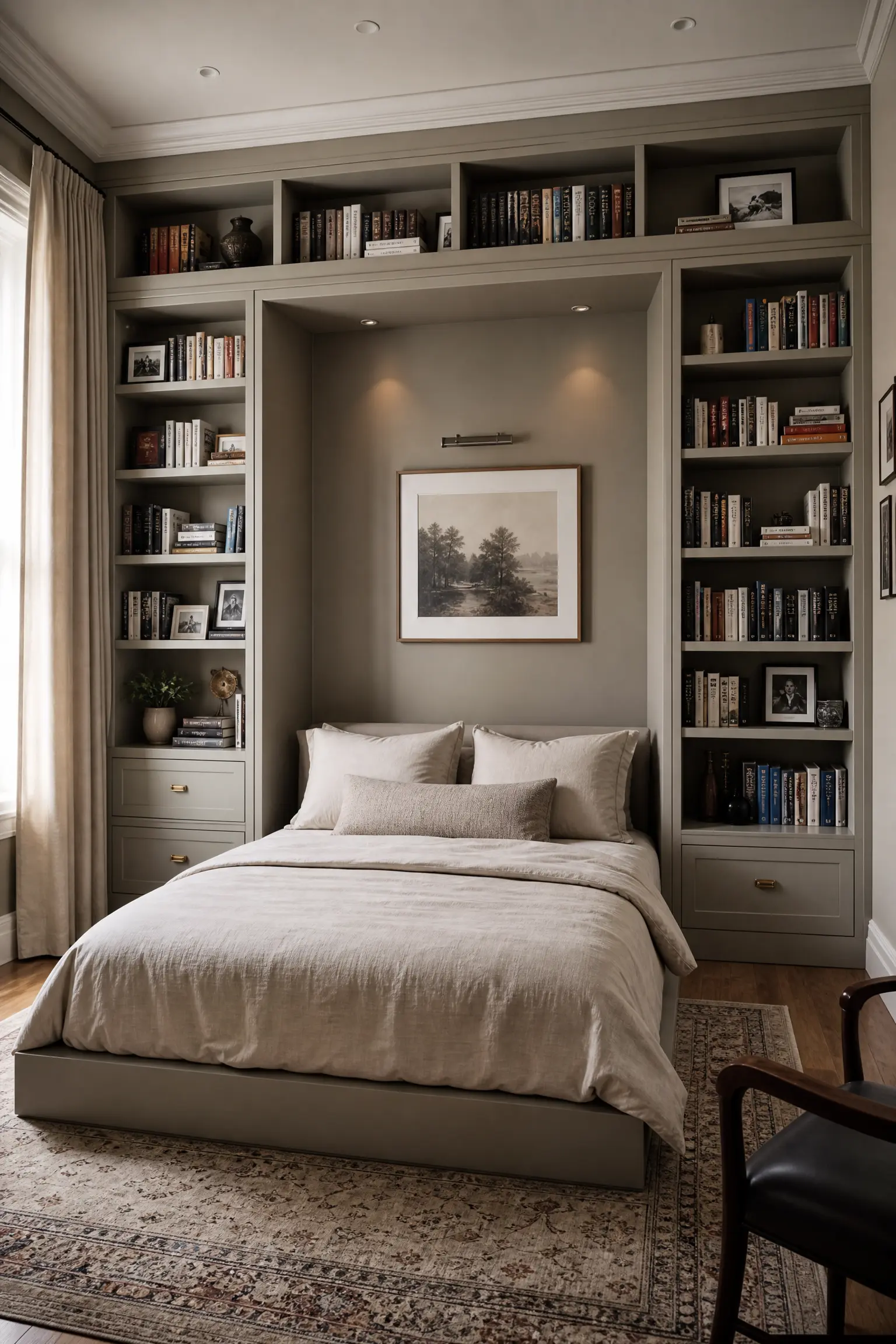
Subtle Linen Effect Paper
Applying a wallpaper that mimics the look of woven linen offers a tailored, refined backdrop that feels much warmer than standard flat bedroom paint. In practice, this understated texture is perfect for people who prefer a minimalist or Scandinavian aesthetic but still want the room to feel completely finished. You can pair this soft, neutral wall with a light ash wood bed, white ceramic pendant lights, and simple linen bedding. This mid-range option is highly durable and often features a vinyl coating that makes it incredibly easy to wipe clean after accidental spills. The subtle texture is incredibly forgiving and does an excellent job of hiding minor bumps or imperfections on older walls.
Pro Move: Always order a physical sample to view in your bedroom first, as the subtle texture can look completely different depending on your lighting.
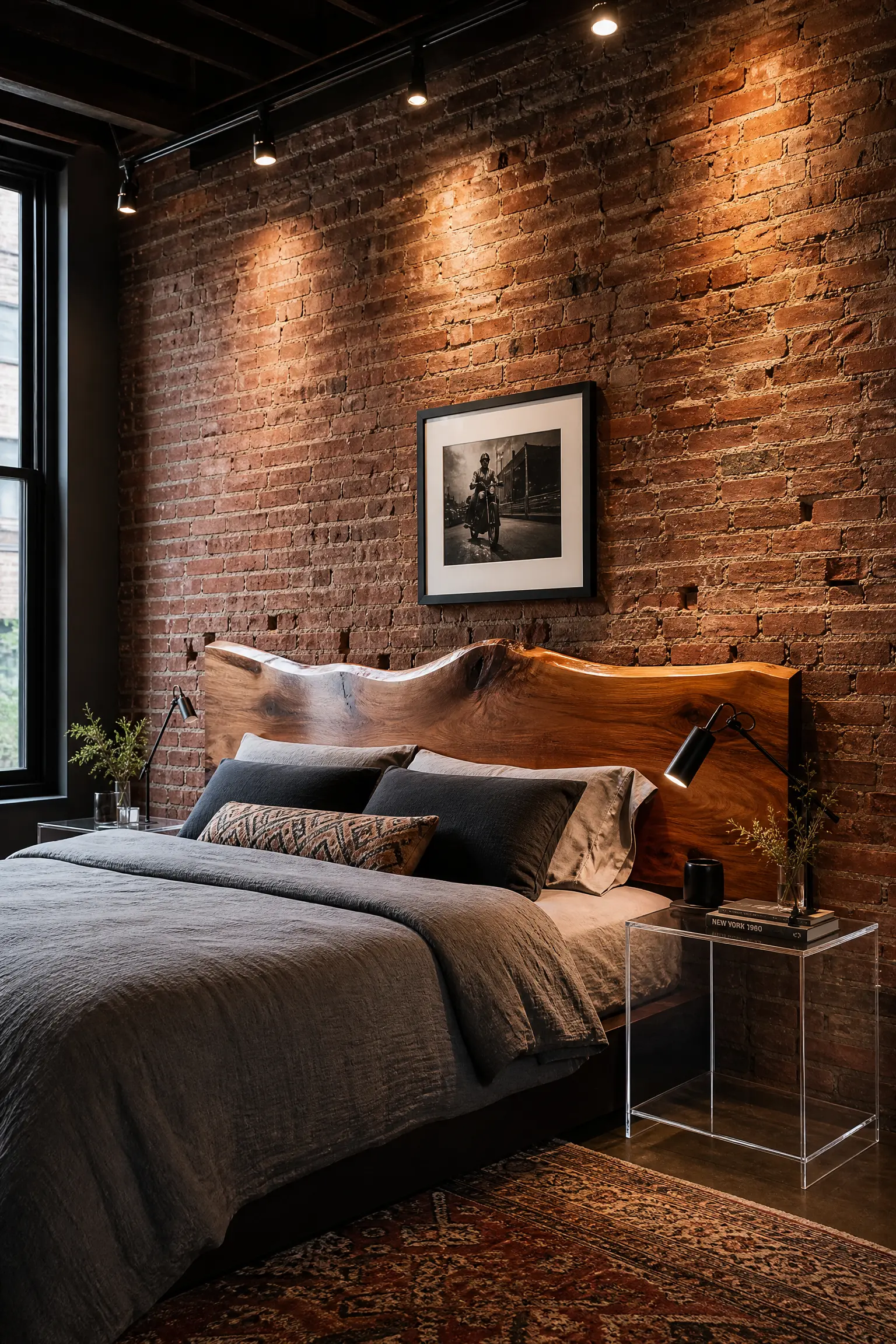
Exposed Red Brick
Leaving a wall of authentic red brick exposed, or adding thin brick veneers, brings a rugged, urban loft feeling to the primary bedroom. I love using brick because it provides incredible visual weight and a timeless quality that pairs well with almost any design style. You should contrast the rough masonry with a highly polished live-edge wood headboard and sleek, modern acrylic nightstands for a balanced, eclectic look. Brick veneers fall into a mid-range budget, but installing them requires mortar and grout work, which can be quite messy for a bedroom project. Pointing some track lighting directly at the wall highlights the uneven texture of the bricks and adds a cool, dramatic ambiance.
Designer Advice: Apply a clear matte sealant over the brick to stop it from shedding dust onto your pillows and bedding over time.
Oversized Grid Gallery Wall
Creating an oversized gallery wall using identical frames arranged in a perfect grid offers a highly structured, graphic impact that feels very intentional behind a bed. In practice, filling the frames with black-and-white photography or simple botanical sketches keeps the look uniform and prevents the display from feeling cluttered. You should pair this organized wall with a clean-lined modern bed frame and classic bentwood nightstands to maintain the sophisticated, orderly aesthetic. This is a very budget-friendly approach, requiring only a collection of affordable frames, a measuring tape, and a laser level. The uniform grid acts like a window, adding massive visual depth to the room while showcasing your personal taste and style.
Quick Tip: Keep exactly two inches of spacing between every frame to maintain the crisp, modern look of a perfectly aligned gallery grid.

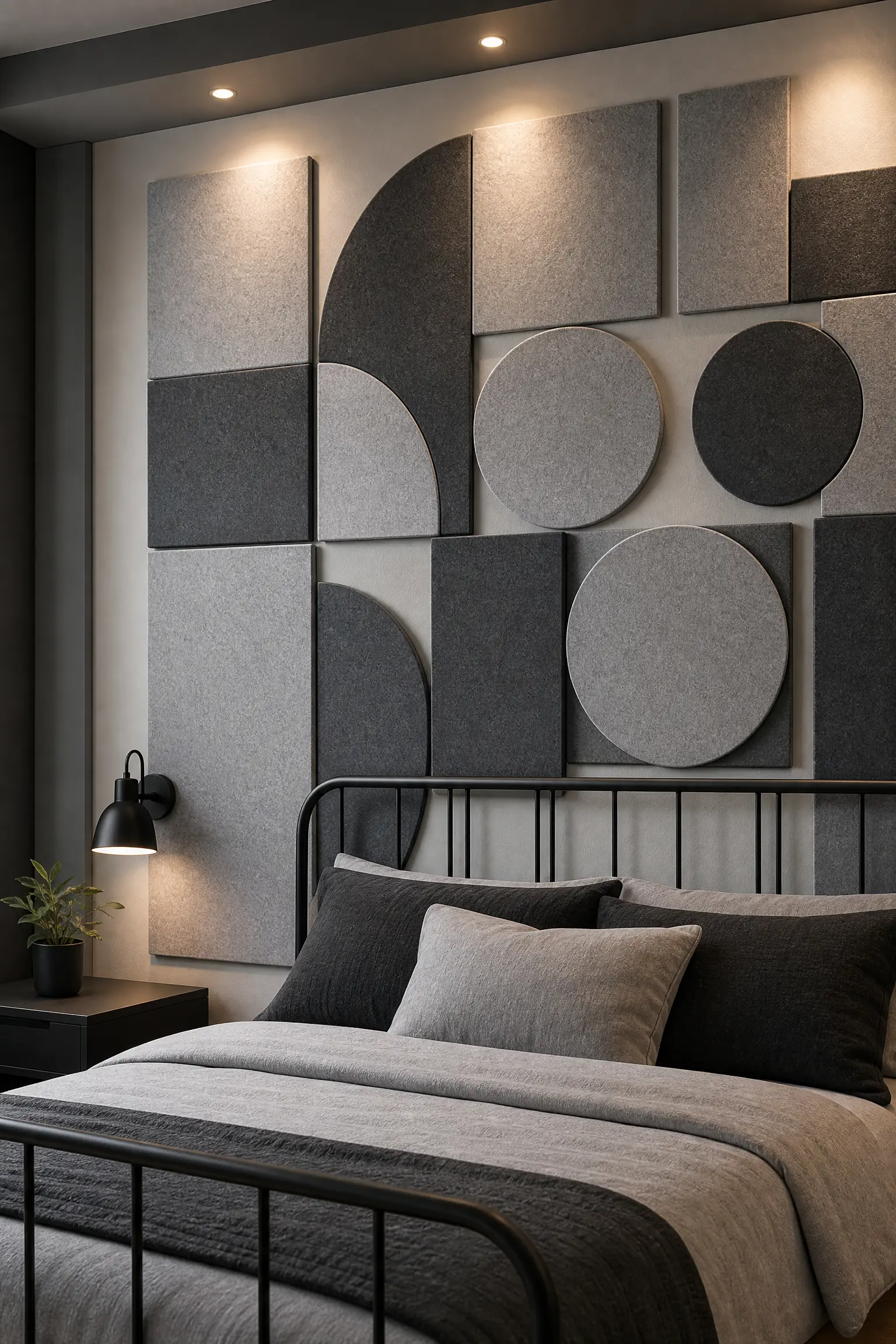
Acoustic Felt Panels
Mounting decorative acoustic felt panels on the wall introduces a soft, tactile element while effectively solving the problem of a noisy, echoing bedroom. When working in modern homes with hard floors and minimal curtains, these panels drastically improve sleep quality by absorbing street noise and household sounds. You can pair this functional wall treatment with a glass or metal bed frame, knowing the felt will absorb the harsh reflections typically created by those hard materials. This is a mid-range investment, and the panels come in various geometric shapes and colors, allowing you to create custom, modern art layouts. The soft texture contrasts beautifully with the sharp angles of modern furniture, creating a balanced environment.
Reality Check: Mix two different shades of felt panels in a random pattern to create a subtle, modern mosaic effect on the bedroom wall.
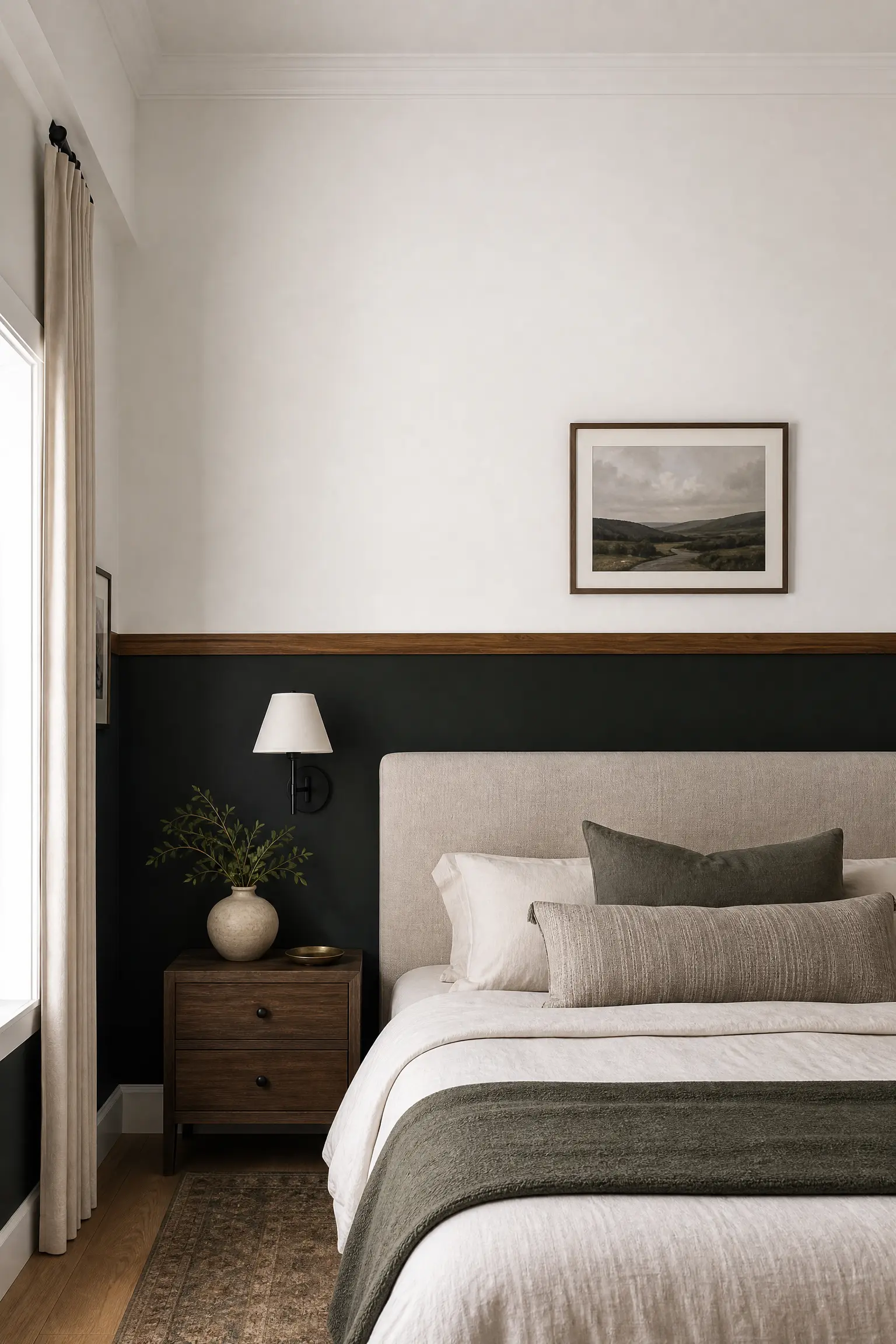
Two-Tone Horizontal Split
Painting the lower half of your wall a dark color and the upper half a bright white visually widens the room and grounds the heavy bed frame. I find this technique highly effective in bedrooms with low ceilings, as the crisp horizontal line tricks the eye into perceiving more vertical space above. You can easily pair this painted treatment with a simple upholstered headboard that stops just below the color division line for a highly satisfying visual break. This approach costs very little and allows you to introduce a bold color below the chair line without darkening the entire room. Installing a simple wooden trim piece where the two colors meet adds a nice architectural transition.
Heads Up: Install the horizontal trim slightly higher than the top of your mattress to ensure the color division is fully visible when the bed is made.
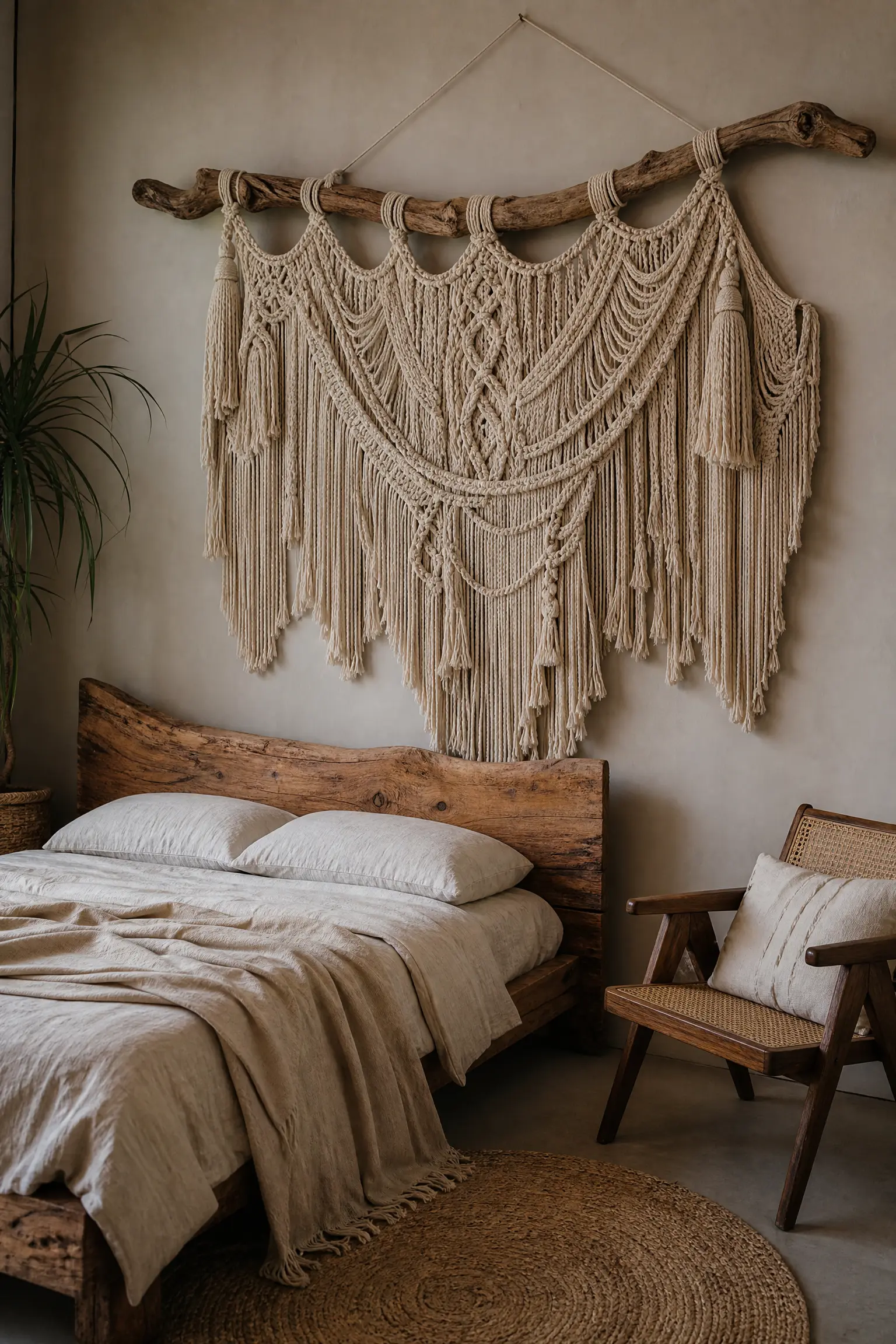
Oversized Woven Wall Hanging
Suspending a massive macrame or woven textile piece on the wall behind the bed introduces a huge amount of soft texture and a relaxed, bohemian energy. I love using this approach in rental properties because it provides the massive visual impact of a custom wallpaper or mural with only a single nail. You should pair this soft, organic piece with a raw-edge wooden bed and cane-backed accent chairs to maintain the natural, earthy aesthetic. This is a very affordable option if you support independent fiber artists, and it brings a unique, handmade quality to the sleeping space. The thick yarn and woven patterns also act as excellent sound absorbers, making the room feel cozier.
Pro Move: Hang the textile from a piece of found driftwood or a polished brass rod to add an extra layer of material interest to the wall.
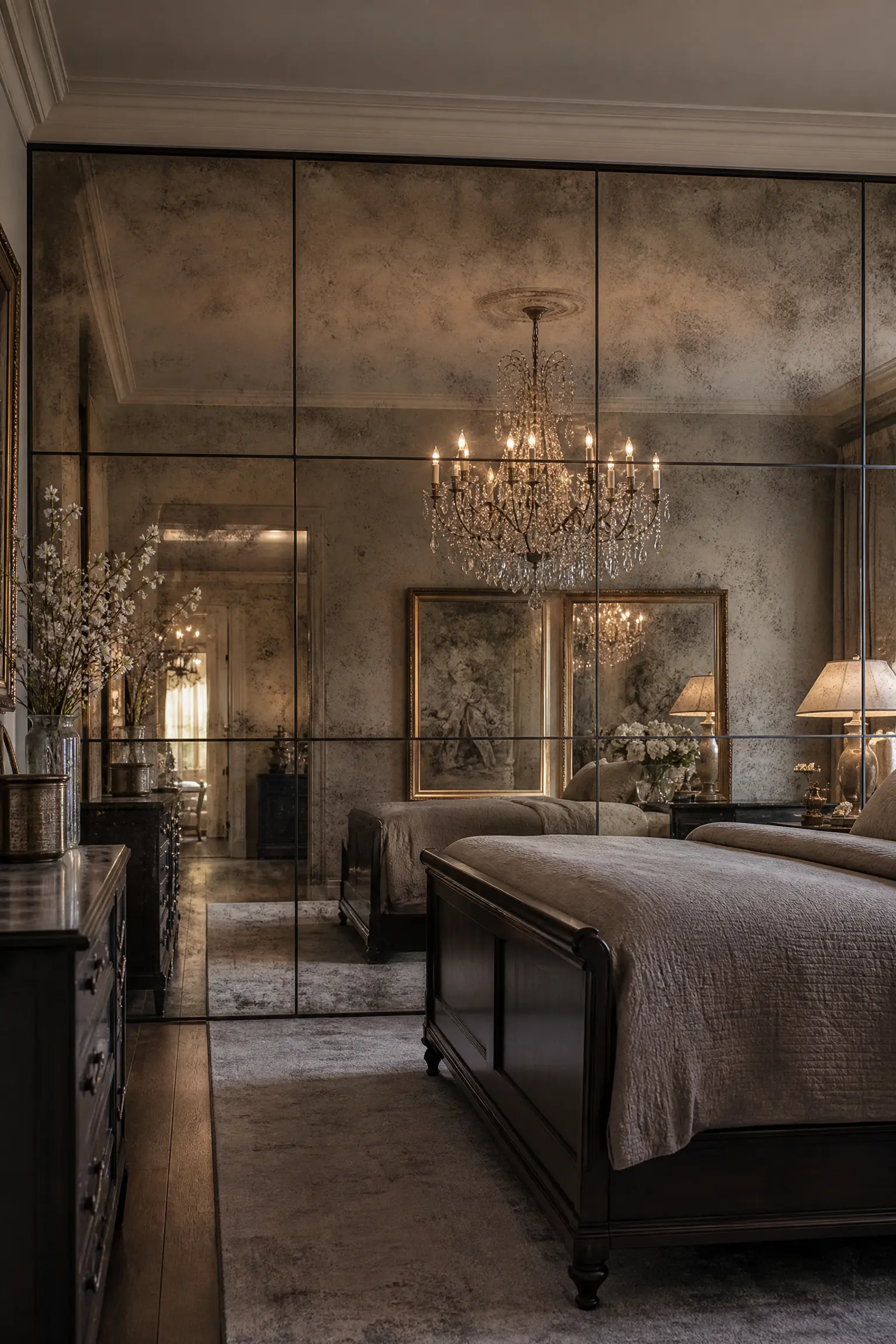
Mirrored Antiqued Glass Panels
Installing large panels of antiqued, foxed glass across the accent wall is a brilliant trick for doubling the visual size of a cramped primary bedroom. I find this works much better than standard clear mirrors because the smoky, aged finish adds massive character and feels significantly more romantic and muted. You should pair this reflective wall with a dark wood bed and a statement chandelier, as the mirror will duplicate the light fixture and amplify its glow. This sits in the mid-range to high-budget category depending on the size of the custom glass panels, but the space-expanding results are worth it. The distressed finish of the glass requires far less frequent cleaning than a traditional mirror.
Designer Advice: Ensure the mirrored wall is reflecting something beautiful, like a window or a piece of art, rather than a messy open closet door.
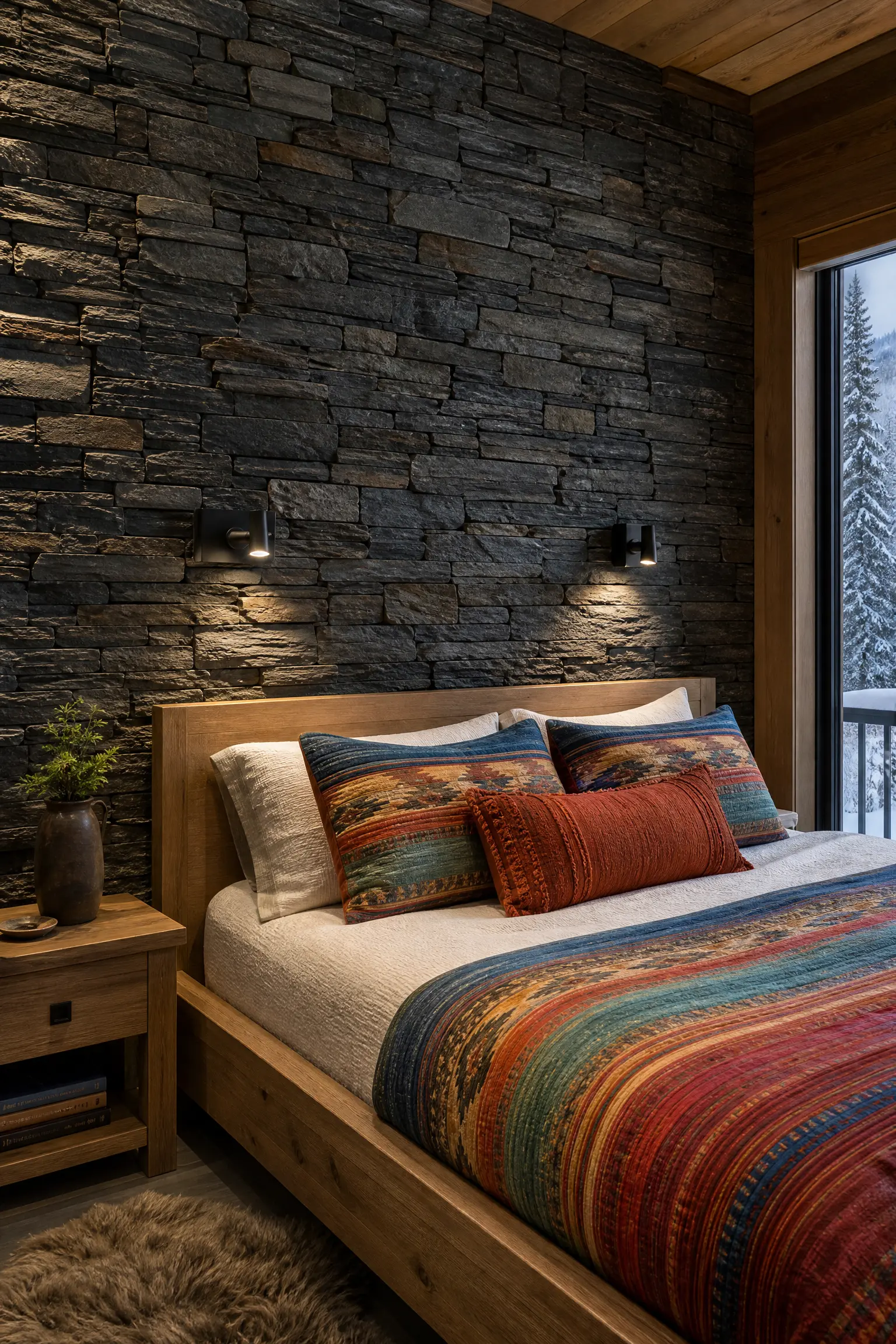
Stacked Slate Stone
Installing dry-stacked slate stone across the accent wall introduces a rugged, organic texture that works beautifully in rustic or contemporary homes. I have noticed that this heavy material creates a very grounded, cozy atmosphere that makes the bedroom feel exactly like a luxurious mountain lodge retreat. You should balance the dark, heavy stone by using a lighter wood bed frame and brightly colored, comfortable bedding. This is a higher-cost project due to the sheer weight of the materials, and you must ensure your wall is structurally reinforced to handle the heavy load safely. Placing small, directional reading lights on either side of the bed will help highlight the deep shadows within the stone.
Quick Tip: Use a specialized stone enhancer sealer to bring out the rich, natural colors and subtle variations hidden within the slate pieces.
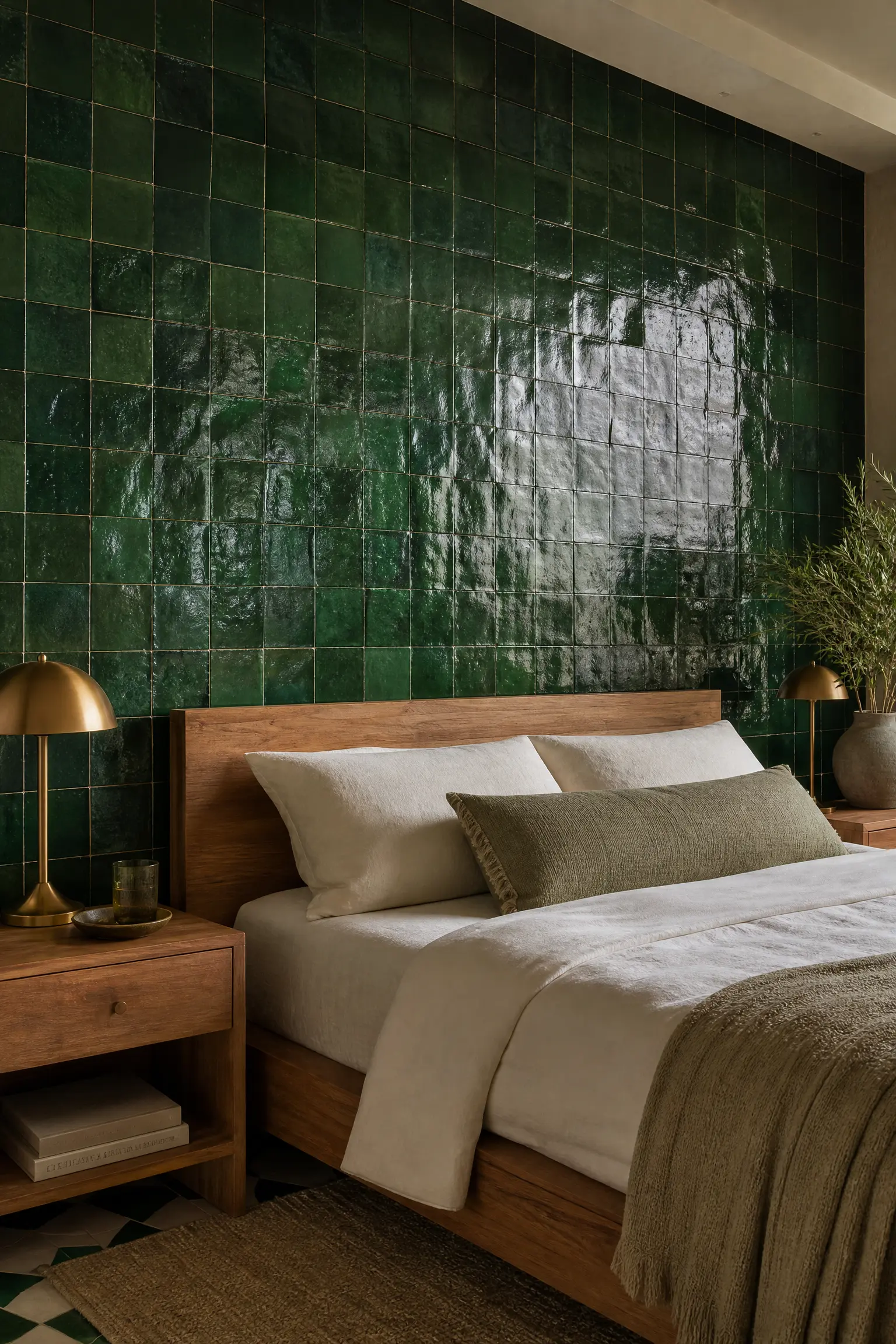
Handmade Zellige Tile
Tiling the bedroom wall with glossy, handmade Moroccan Zellige tiles brings an incredible, shimmering texture that reflects light beautifully across the entire room. When testing this material, the natural imperfections and varied thicknesses of the tiles create a highly organic, artisanal appearance that standard ceramic completely lacks. You should pair these highly textured tiles with a simple, solid wood bed and streamlined nightstands so the wall remains the primary focus. While Zellige tiles are a major investment, the luxurious, wet-look finish they provide is absolutely unparalleled in interior design. Ensure you use a grout color that closely matches the tile so the individual squares blend together into a cohesive, rippling surface.
Reality Check: Zellige tiles have very sharp, uneven edges, so they must be installed with extremely tight grout lines by an experienced professional.
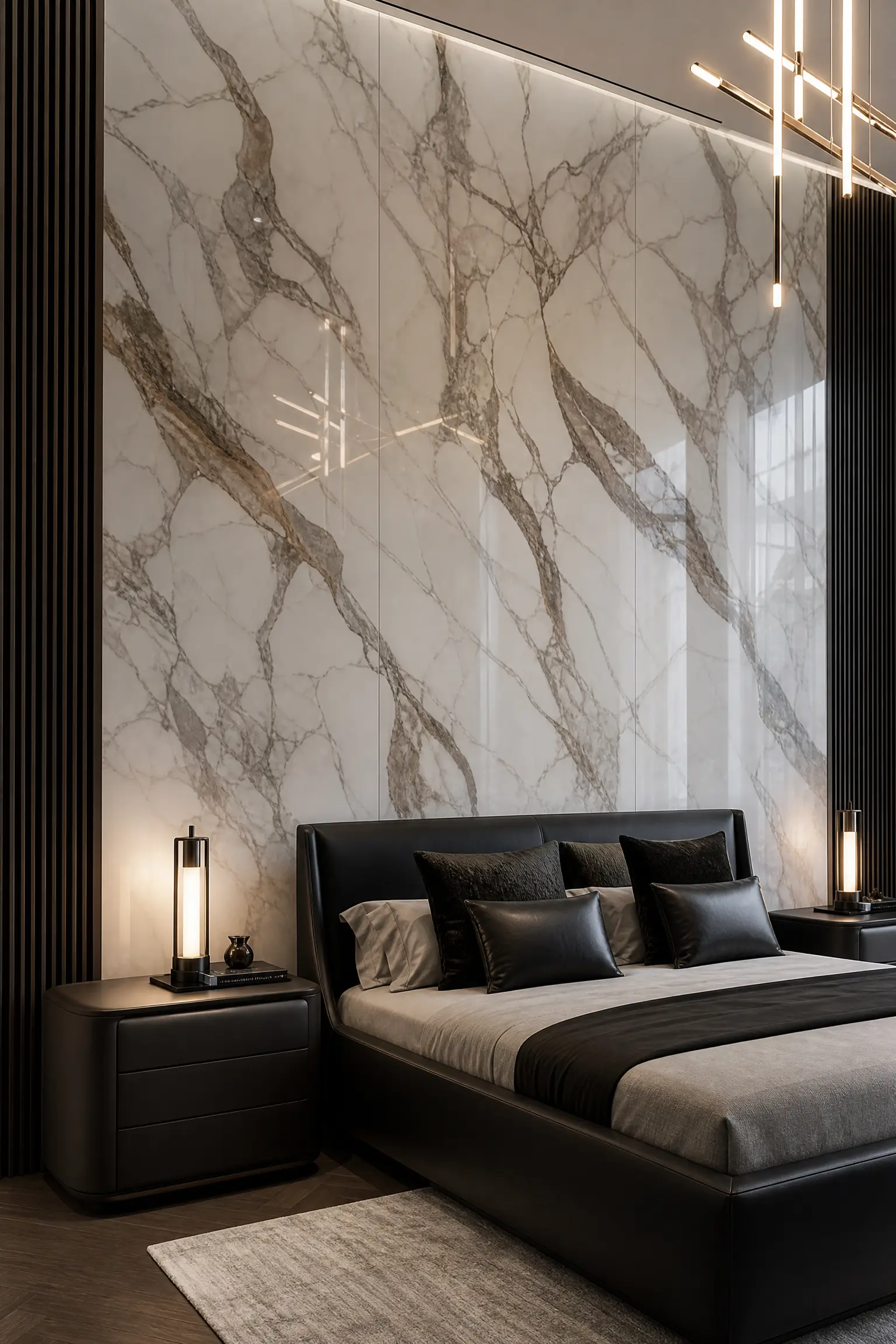
Large Format Marble Slabs
Covering the wall behind the bed in large format porcelain slabs that mimic marble creates an ultra-luxurious, show-stopping environment that feels incredibly expensive. In my experience, using porcelain instead of natural stone significantly reduces the weight and cost while still delivering the stunning visual impact of continuous veining. You should pair this sleek wall with a minimalist black bed frame and fully upholstered leather nightstands to match the high-end architectural vibe. This is definitely an investment-level project that requires professional tile setters to ensure the massive slabs are perfectly level and securely anchored. Installing a linear, modern chandelier parallel to the wall will reflect beautifully off the glossy surface of the tile.
Heads Up: Large glossy surfaces can bounce sound around the room, so be sure to include thick curtains and a plush rug to absorb the noise.
Conclusion
Creating a standout bedroom accent wall is ultimately about choosing a design that reflects your personal style while respecting the architecture of your home. A successful feature wall will naturally draw people into the space, making the room feel highly intentional, cohesive, and ready for relaxation. Whether you decide to invest in large-format stone, build custom molding, or simply grab a gallon of moody paint, the key is to balance your chosen wall treatment with the right furniture and lighting. Always remember to test your materials, view paint swatches at different times of the day, and consider the functional needs of your room before making a final decision. By taking the time to plan carefully and applying these practical ideas, you can build a bedroom that feels genuinely welcoming and highly personalized.
Frequently Asked Questions
Which wall should be the accent wall in a bedroom?
The best accent wall in a bedroom is almost always the solid wall directly behind the headboard. This placement naturally anchors the bed, which is the largest and most important piece of furniture, ensuring the design feature takes center stage without looking cluttered.
Should an accent wall be lighter or darker than the other walls?
It can be either, depending entirely on your specific goals. A darker wall creates a moody, intimate atmosphere and makes the space feel cozier, while a lighter or heavily textured wall can brighten the room and make it feel significantly more expansive. The contrast is what matters most.
Can you have an accent wall in a very small bedroom?
Yes, absolutely. In a small bedroom, an accent wall can actually create the grand illusion of more space. Using vertical wood slats draws the eye directly upward, while a large mirror or reflective wallpaper bounces light around, making the cramped area feel much larger.
Is wallpaper or paint better for a bedroom?
Both work incredibly well, but they serve different aesthetic purposes. Paint is more affordable, easy to change, and great for bold color blocking. Wallpaper provides essential texture, pattern, and a high-end feel that paint cannot replicate, but it requires a larger budget and more commitment.
Does the accent wall color need to match the rest of the house?
It does not need to match exactly, but it should closely coordinate with your home’s overall color palette. You can achieve this by choosing a bolder, darker shade of a color already used in an adjacent hallway or by picking a complementary hue that flows naturally.
What is the best way to light a bedroom accent wall?
Layered lighting always works best. A central chandelier provides general illumination, but adding wall sconces, picture lights, or recessed directional spotlights focused directly on the accent wall will highlight its texture and draw attention to the feature during the evening.