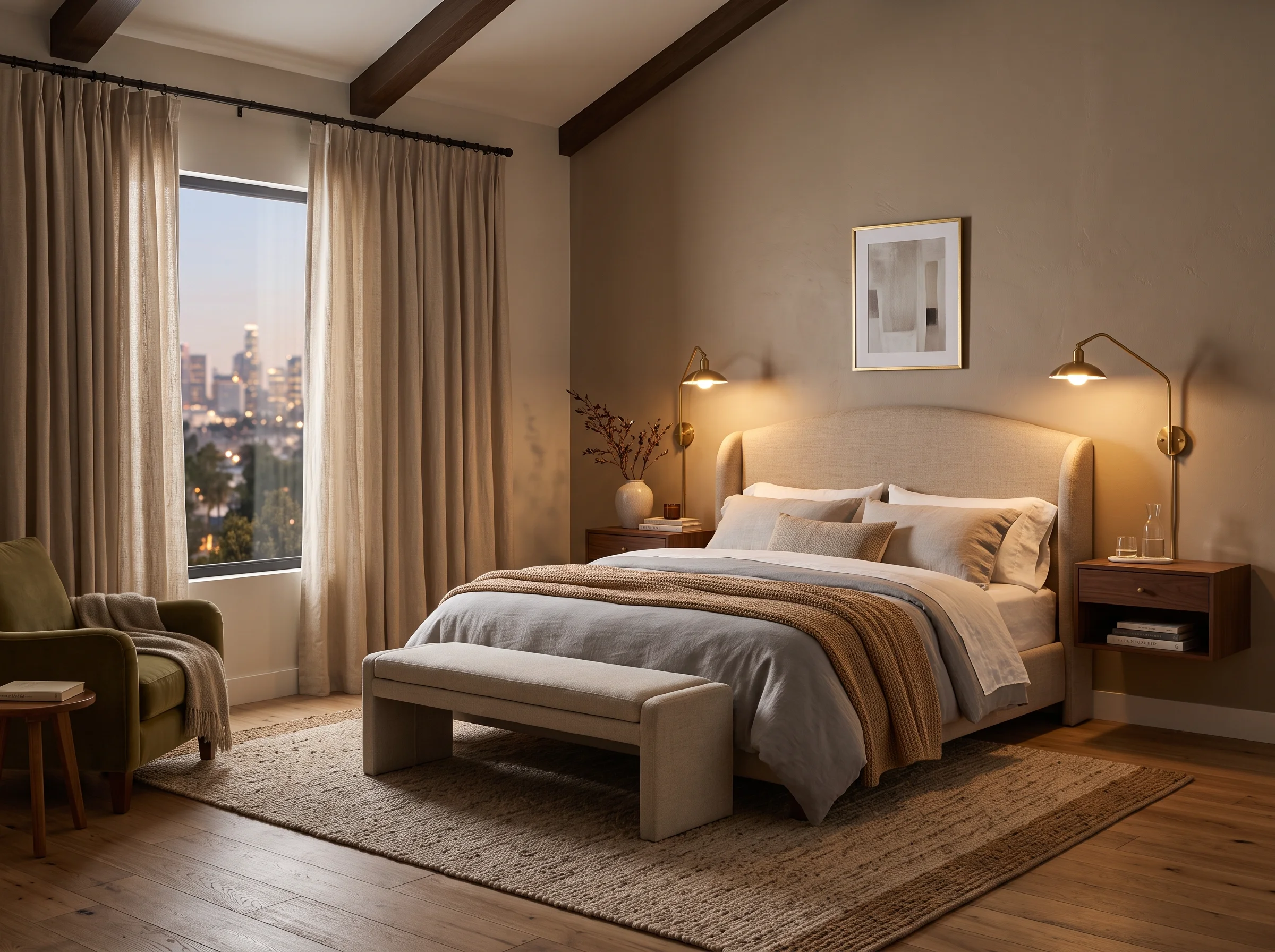
Apartment Bedroom Ideas That Maximize Space and Style
Decorating an apartment bedroom often feels like an impossible puzzle. You are usually dealing with severely limited square footage, strict rental agreements that prohibit major renovations, and a desperate need for massive amounts of storage. Consequently, many apartment dwellers simply shove a bed into the corner, throw down a cheap rug, and accept that their bedroom will merely serve as a functional closet rather than a relaxing sanctuary. However, transforming a cramped apartment bedroom into a deeply restorative, high-end retreat is entirely possible if you understand how to manipulate visual weight and properly layer your lighting. I have noticed that the most successful apartment bedrooms rely heavily on strategic furniture placement and optical illusions to trick the eye into perceiving the room as significantly larger and taller than it actually is.
The secret to a stunning small bedroom is completely abandoning the traditional ‘matching bedroom set’ mentality and evaluating every single item based on its functional footprint. You must decide whether a bulky wooden dresser is actually necessary or if a tall, vertical wardrobe would better utilize the ceiling height. To help you navigate these tricky design decisions, the twenty-five ideas below are presented as direct comparisons between two common decorating strategies. By weighing the pros and cons of different approaches, you can clearly see why one method usually creates a much more elevated, spacious aesthetic in a real-world apartment setting. Whether you are choosing between different types of nightstands or deciding how to hang your window treatments, these practical insights will help you build a cozy, deeply personal sanctuary.
Wall-Mounted Sconces vs. Bulky Table Lamps
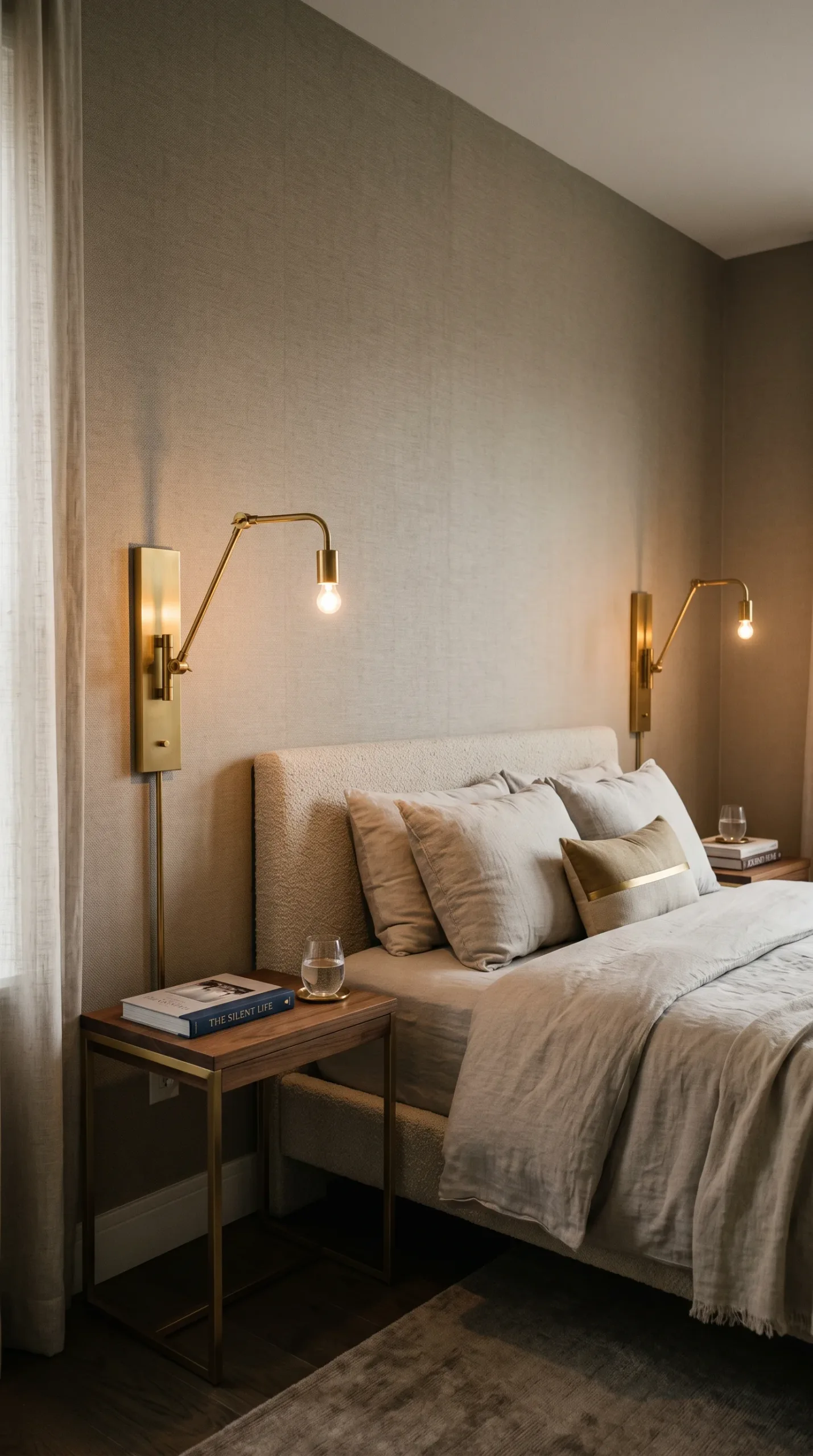
When deciding how to light your bedside, installing wall-mounted sconces is a vastly superior choice compared to using bulky table lamps. Standard table lamps require massive, wide lampshades and heavy bases that consume almost the entire surface area of a small apartment nightstand, leaving zero room for your phone, a book, or a glass of water. Wall-mounted sconces instantly free up that crucial tabletop real estate while drawing the eye upward, making the bedroom feel much more tailored and architecturally designed. I highly recommend using swing-arm sconces so you can easily pull the light directly over your shoulder for reading in bed. This simple swap instantly upgrades the room to a luxury hotel aesthetic.
Pro Move: If your landlord prohibits hardwiring new fixtures, purchase plug-in wall sconces with beautiful, fabric-wrapped cords that look intentional rather than messy.
Floor-to-Ceiling Curtains vs. Short Window Blinds
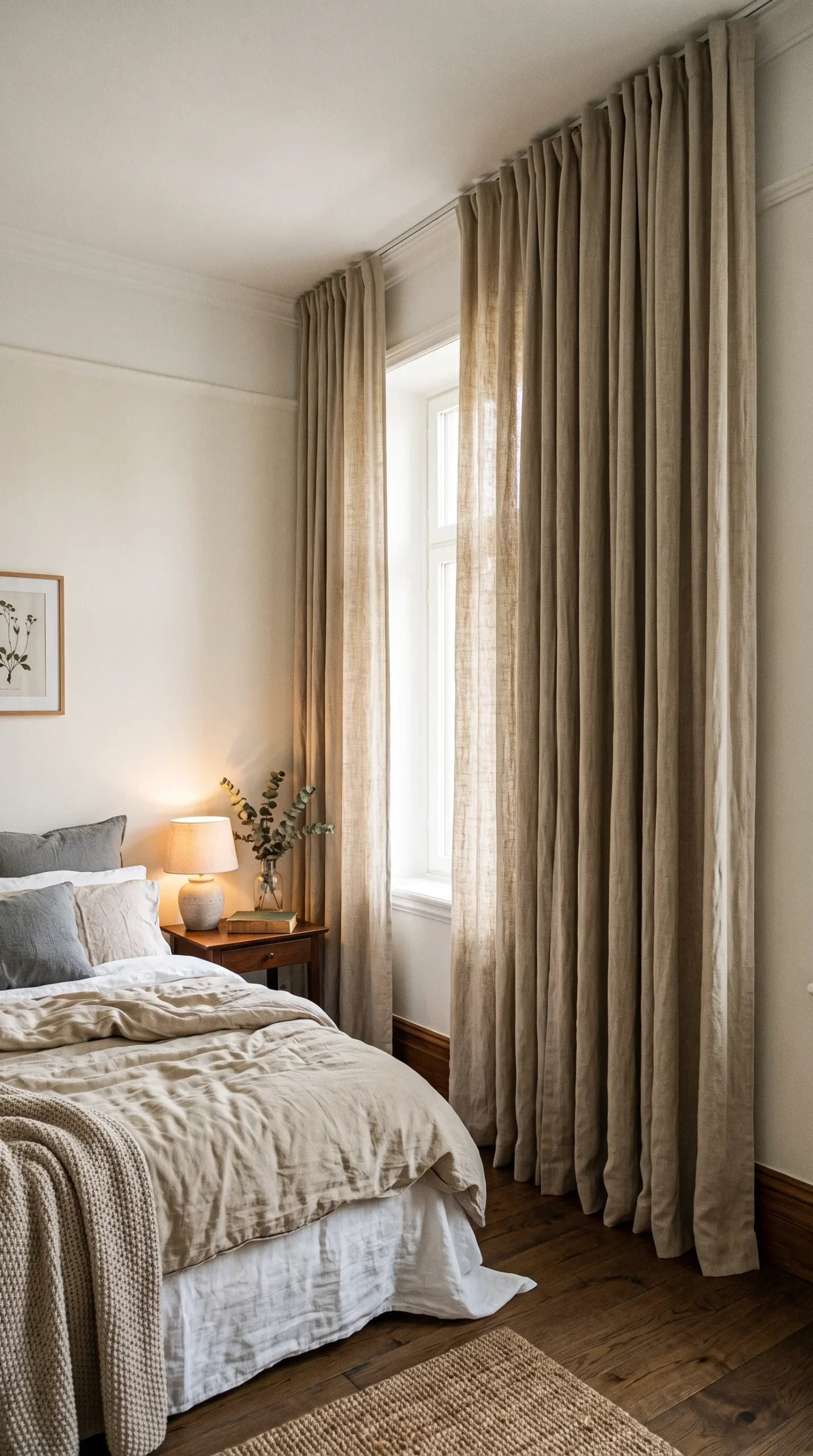
If you want to make your apartment bedroom feel instantly taller, hanging heavy, floor-to-ceiling curtains is far more effective than sticking with standard, cheap window blinds. Short blinds visually chop the wall in half, creating a harsh horizontal line that aggressively highlights the low ceiling height of a typical rental unit. Installing curtain panels that hang from the very top of the ceiling all the way down to the baseboards creates a massive, continuous vertical line that completely tricks the eye into perceiving the room as much grander. You should choose a heavy, lined linen fabric to add vital acoustic dampening and physical warmth to the bedroom. This relatively affordable textile upgrade completely transforms the architectural proportions of the space.
Designer Advice: Always mount your curtain rod at least four to six inches wider than the actual window frame to make the window appear much larger than reality.
Floating Nightstands vs. Traditional Heavy Cabinets
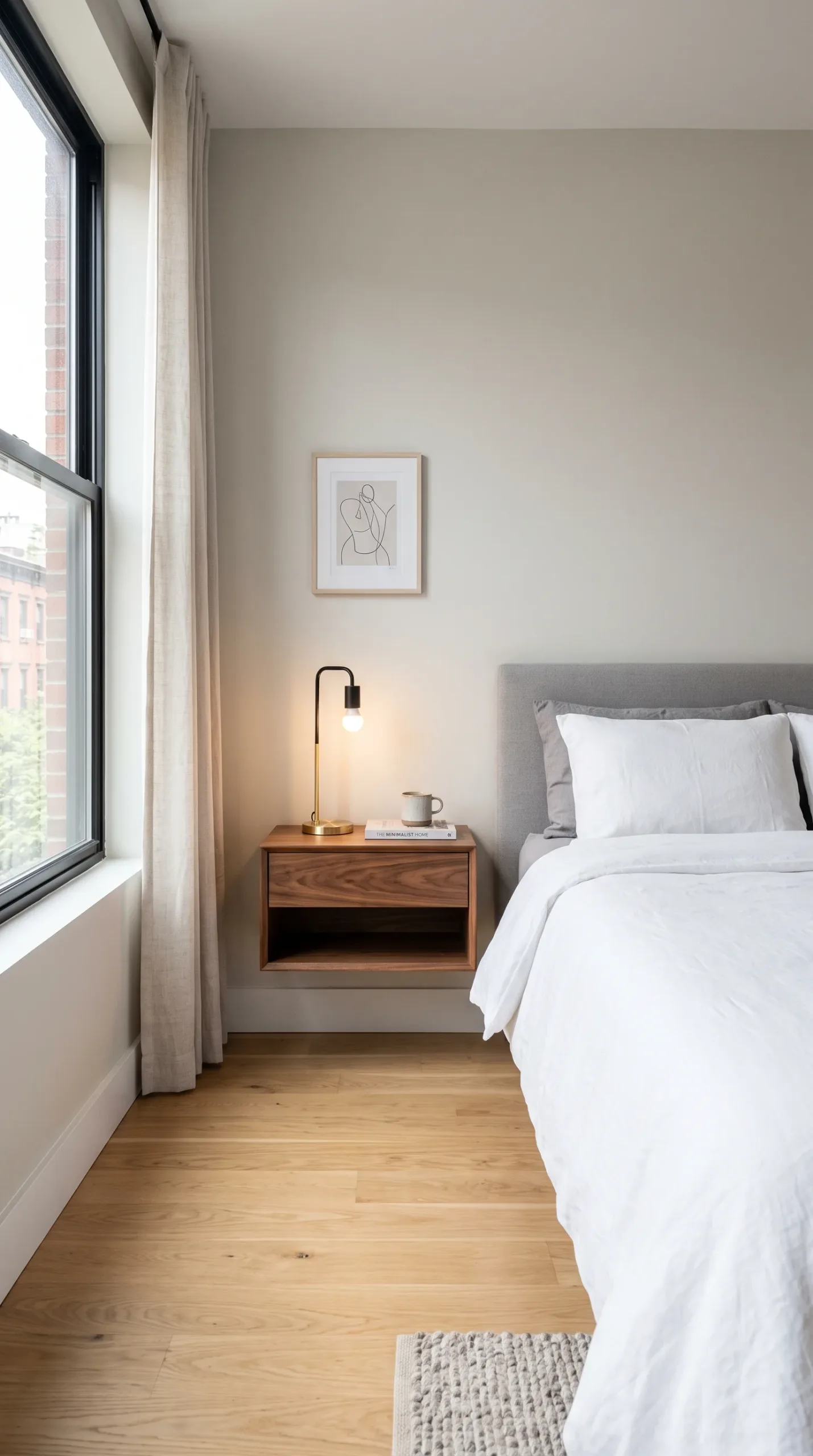
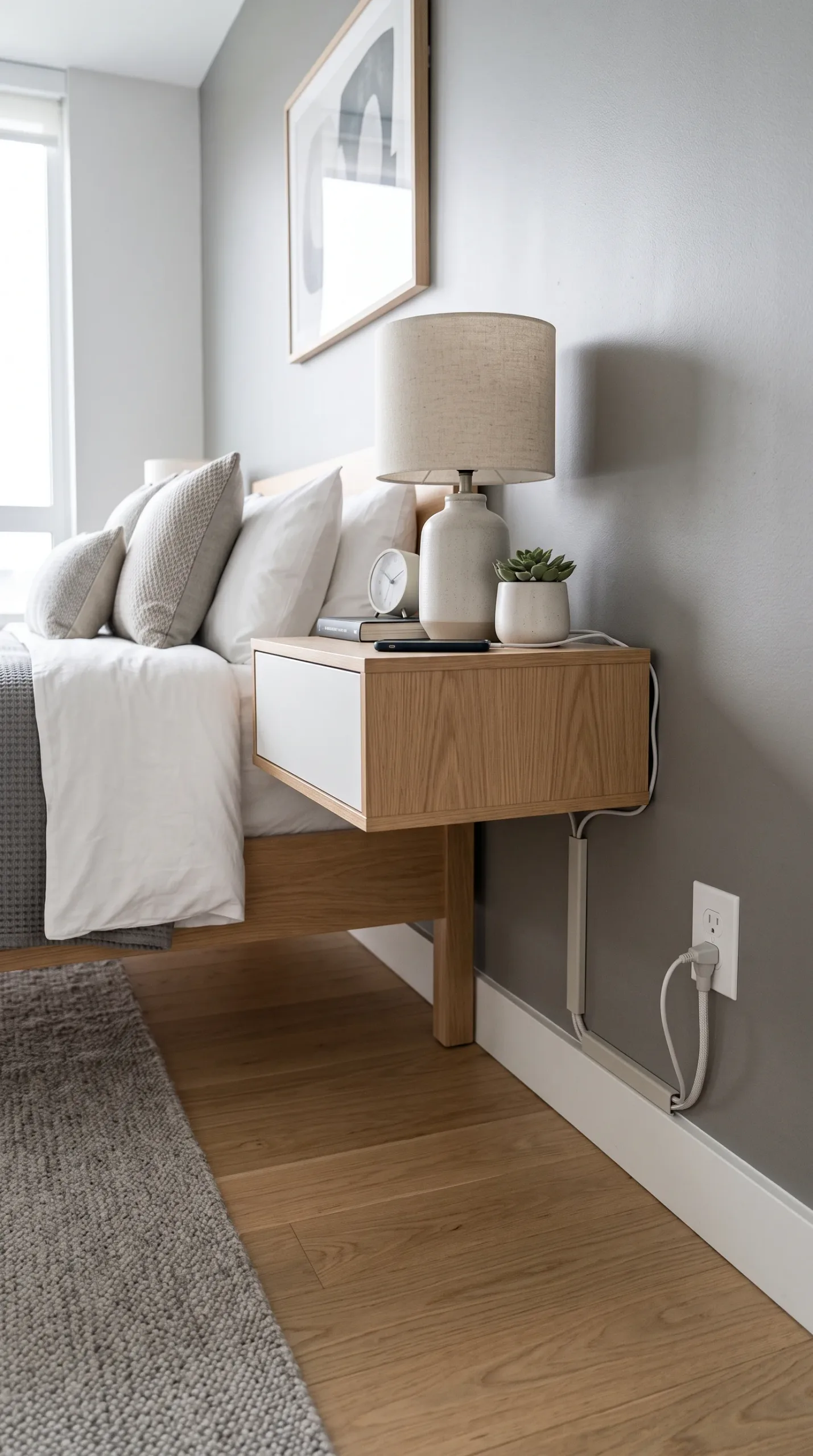
For incredibly cramped apartment bedrooms, utilizing sleek, wall-mounted floating nightstands is a much smarter design choice than buying heavy, solid wooden bedside cabinets. Solid cabinets sit heavily on the floor, adding massive visual bulk to the room and making the narrow pathways around the bed feel completely choked off and claustrophobic. Floating nightstands attach directly to the wall, leaving the floor underneath completely exposed, which creates a highly effective optical illusion that the room is much wider and airier. I find that choosing a floating drawer in a warm walnut or ash wood finish provides necessary organic texture without sacrificing the modern, minimalist silhouette. This approach makes vacuuming the tight corners of the bedroom incredibly easy.
Quick Tip: Ensure you drill the mounting brackets for floating nightstands directly into wooden wall studs, as drywall anchors will easily rip out if you lean on the shelf.
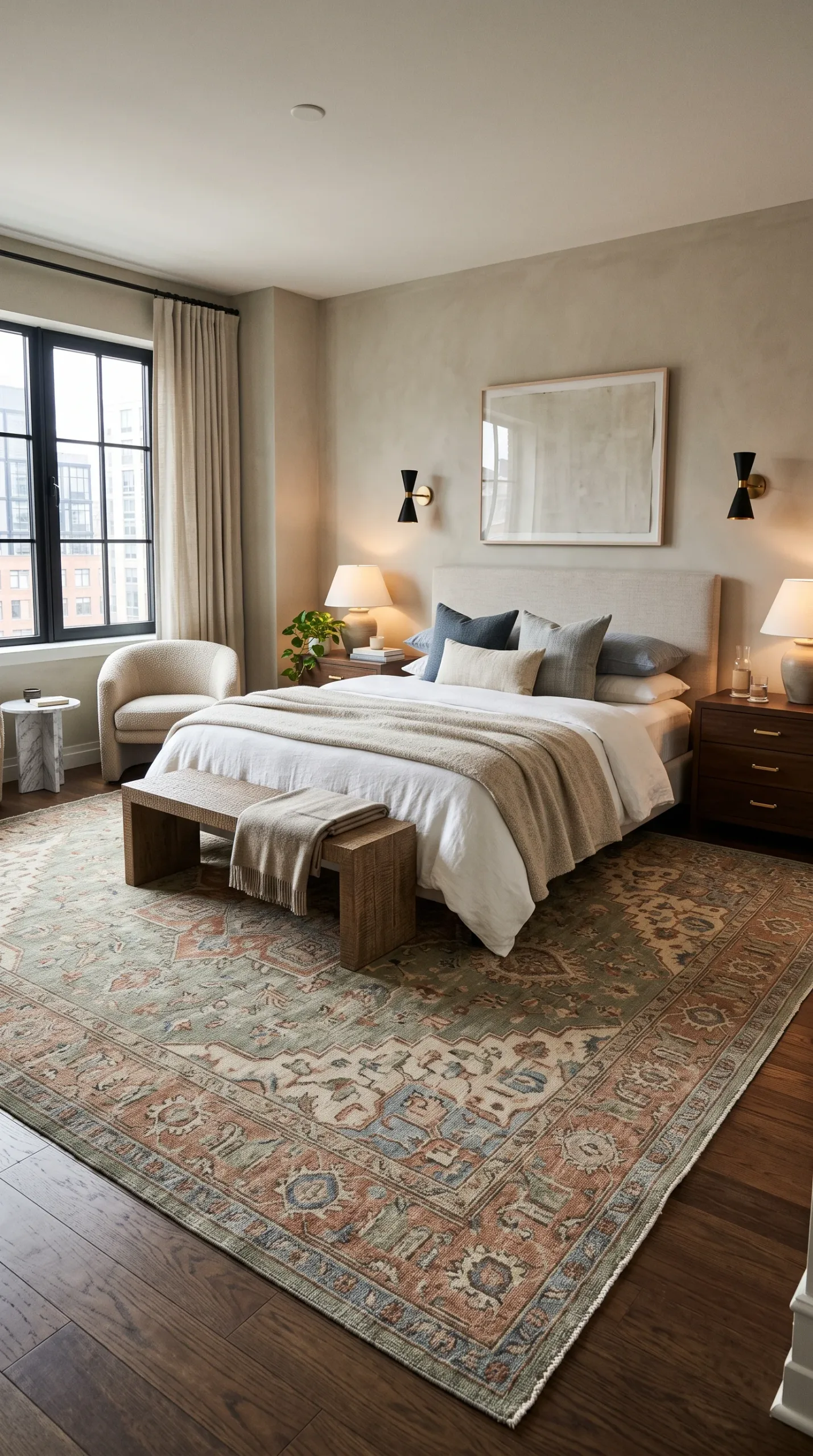
Oversized Area Rugs vs. Small Accent Rugs
When choosing a rug to soften your apartment floors, anchoring the bed with one massive area rug is vastly superior to tossing a couple of small accent rugs on either side of the mattress. Small rugs visually chop up the limited floor space, making the bedroom look highly fragmented, cluttered, and much smaller than it actually is. A massive area rug that extends generously beyond the sides and foot of the bed firmly grounds the furniture, creating a single, cohesive sleeping zone that feels incredibly intentional and luxurious. You should choose a rug with a subtle, muted pattern to introduce necessary texture without overwhelming the tight space. This massive textile layer heavily absorbs the annoying echoes common in empty rental units.
Reality Check: The area rug must be large enough that your feet land squarely on the soft fabric when you step out of bed, otherwise, it is completely useless.
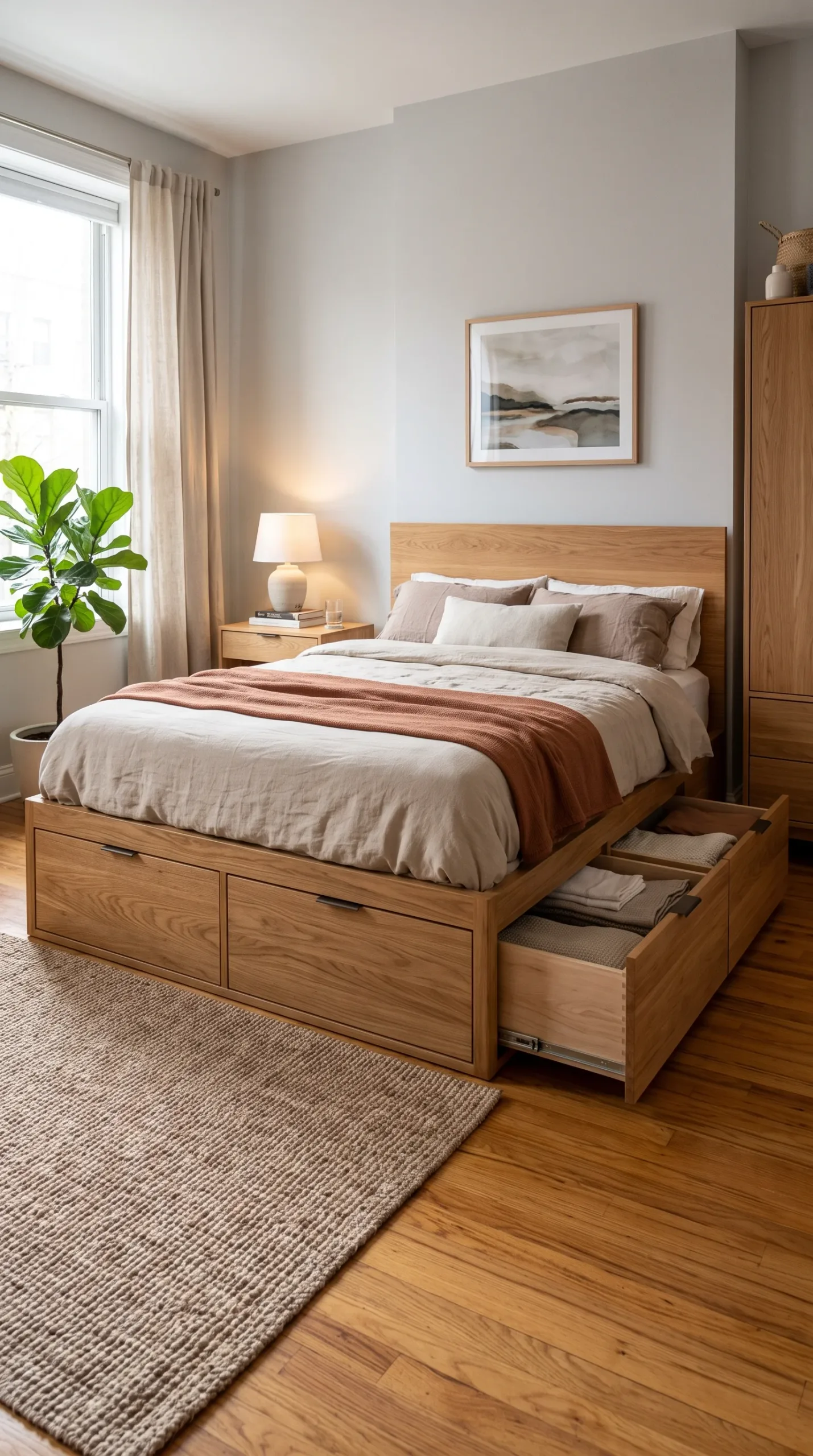
Storage Bed Frames vs. Under-Bed Plastic Bins
If you are desperate for extra storage in a small apartment, investing in a high-quality bed frame with built-in wooden drawers is a much better strategy than shoving cheap plastic storage bins underneath a standard metal frame. Plastic bins inevitably peek out from under the mattress, creating massive visual clutter and constantly reminding you that you live in a cramped, disorganized space. A dedicated storage bed provides deep, smoothly rolling drawers that completely hide your winter sweaters and extra blankets within a sleek, seamless wooden architectural footprint. I always recommend choosing a platform storage bed without a massive footboard to keep the end of the bed visually open. This single piece of furniture completely eliminates the need to buy a bulky dresser.
Heads Up: You must measure the clearance around your bed carefully before purchasing, ensuring you actually have enough room to pull the long storage drawers fully open.
Warm Earthy Palettes vs. Stark White Minimalism
When deciding on a color scheme for your bedroom sanctuary, leaning into a warm, earthy palette of muted sage, taupe, and terracotta is far more inviting than defaulting to stark, clinical white minimalism. While an all-white room looks great in heavily edited magazine photos, in a real-world apartment lacking massive windows, white walls often look flat, sterile, and painfully cold. Earthy, muted tones naturally absorb harsh light and provide a deeply relaxing, grounding atmosphere that practically begs you to unwind after a long day. You can easily introduce these warm colors through linen duvet covers, textured throw pillows, and natural wood furniture. This approach feels significantly more mature, cozy, and sophisticated than an uninspired white box.
Pro Move: Paint the ceiling the exact same muted, earthy color as the walls to blur the architectural corners of the room, creating a highly immersive, cozy cocoon.
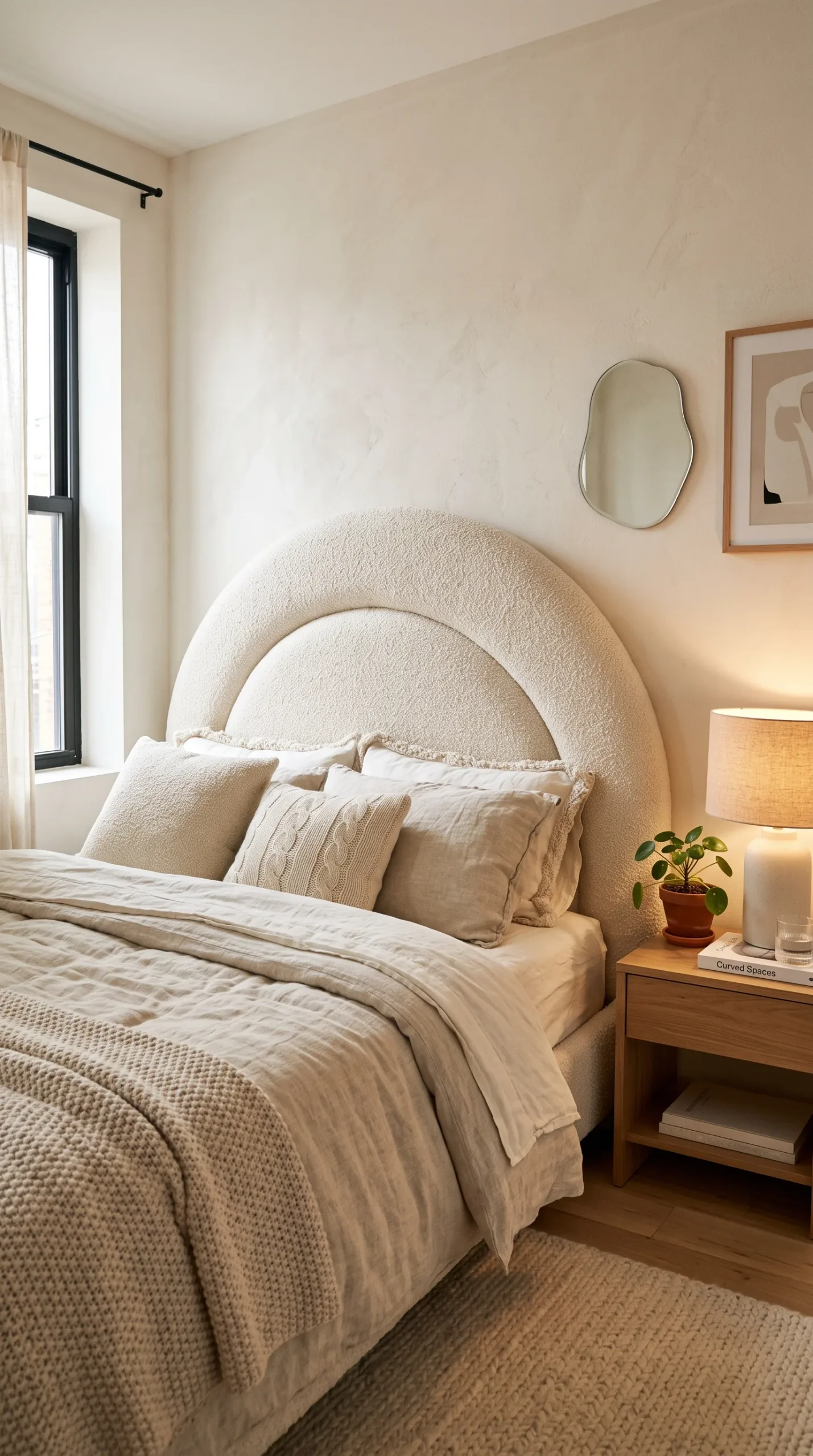
Curved Headboards vs. Rigid Boxy Frames
To instantly soften the harsh, straight lines of a typical apartment bedroom, choosing a softly curved, upholstered headboard is a much stronger design move than buying a rigid, rectangular wooden frame. Small bedrooms are usually perfectly square boxes filled with perfectly square windows and doors; adding a boxy bed frame simply compounds the rigid, inflexible geometry of the room. A headboard featuring a gentle arch or sweeping, organic curves introduces a beautiful, relaxing softness that completely alters the visual energy of the space. I find that pairing a curved silhouette with a highly tactile fabric like cream boucle or soft velvet maximizes the inviting, cloud-like aesthetic. This choice ensures the bed actually looks like a comfortable place to rest.
Designer Advice: If you are renting and cannot buy new furniture, you can easily paint a massive, solid pink or terracotta arch directly onto the drywall behind your mattress.
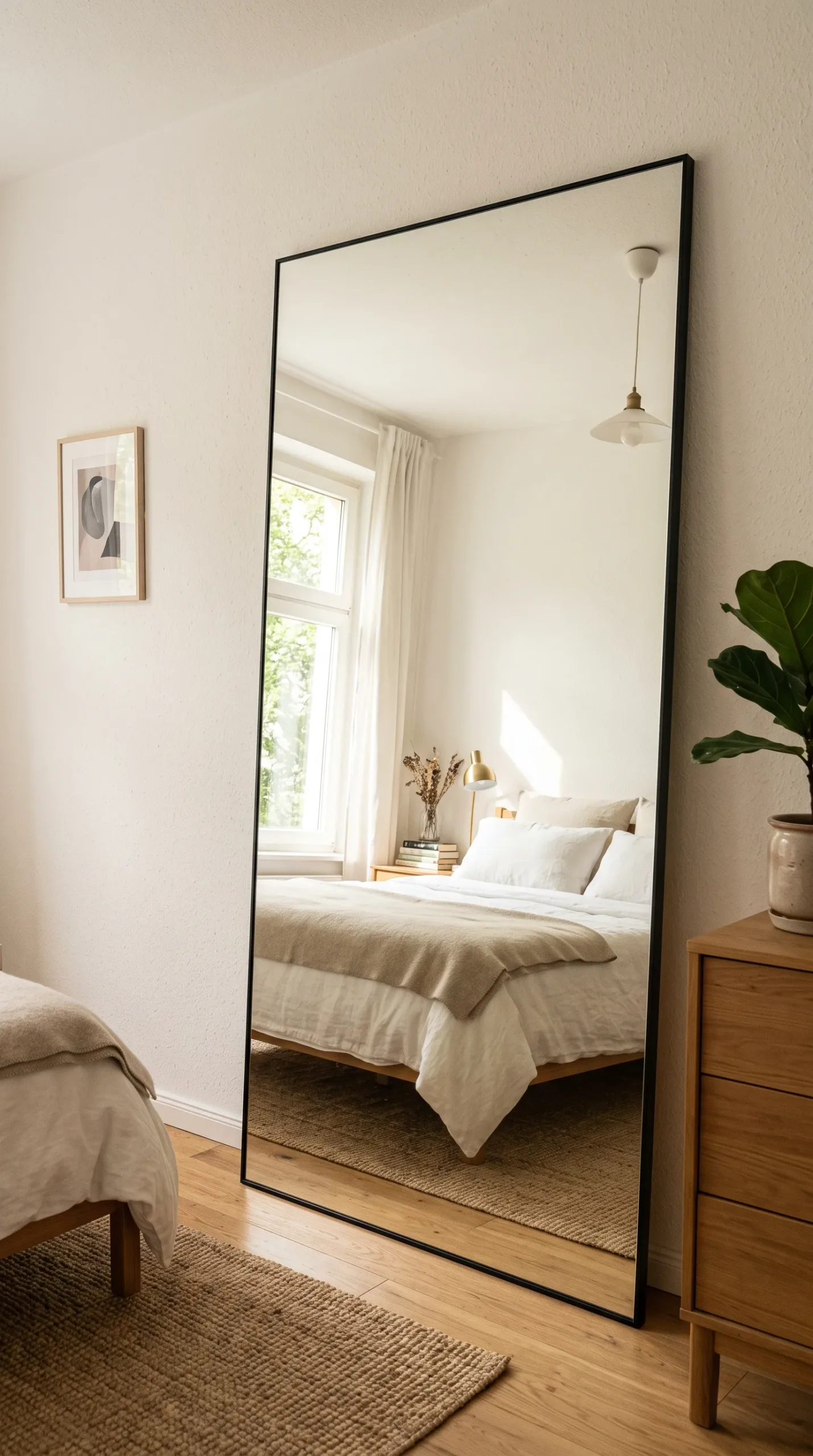
Oversized Floor Mirrors vs. Small Wall Mirrors
When trying to make a cramped apartment bedroom feel larger, leaning a massive, heavy floor mirror against the wall is vastly more effective than hanging a small, cheap mirror over a dresser. A small mirror simply acts as a functional tool for checking your face, doing absolutely nothing to expand the perceived size of the room. A massive floor mirror, however, acts as a towering secondary window, bouncing ambient light deep into the darkest corners of the bedroom and literally doubling the visual depth of the space. You should choose a mirror with a very thin, minimalist brass or matte black frame so the reflection remains the primary focus. This single accessory fundamentally changes how bright the room feels.
Quick Tip: Position the massive floor mirror so it reflects a clean, organized corner of the room or a bright window; reflecting a messy closet will only double your stress.
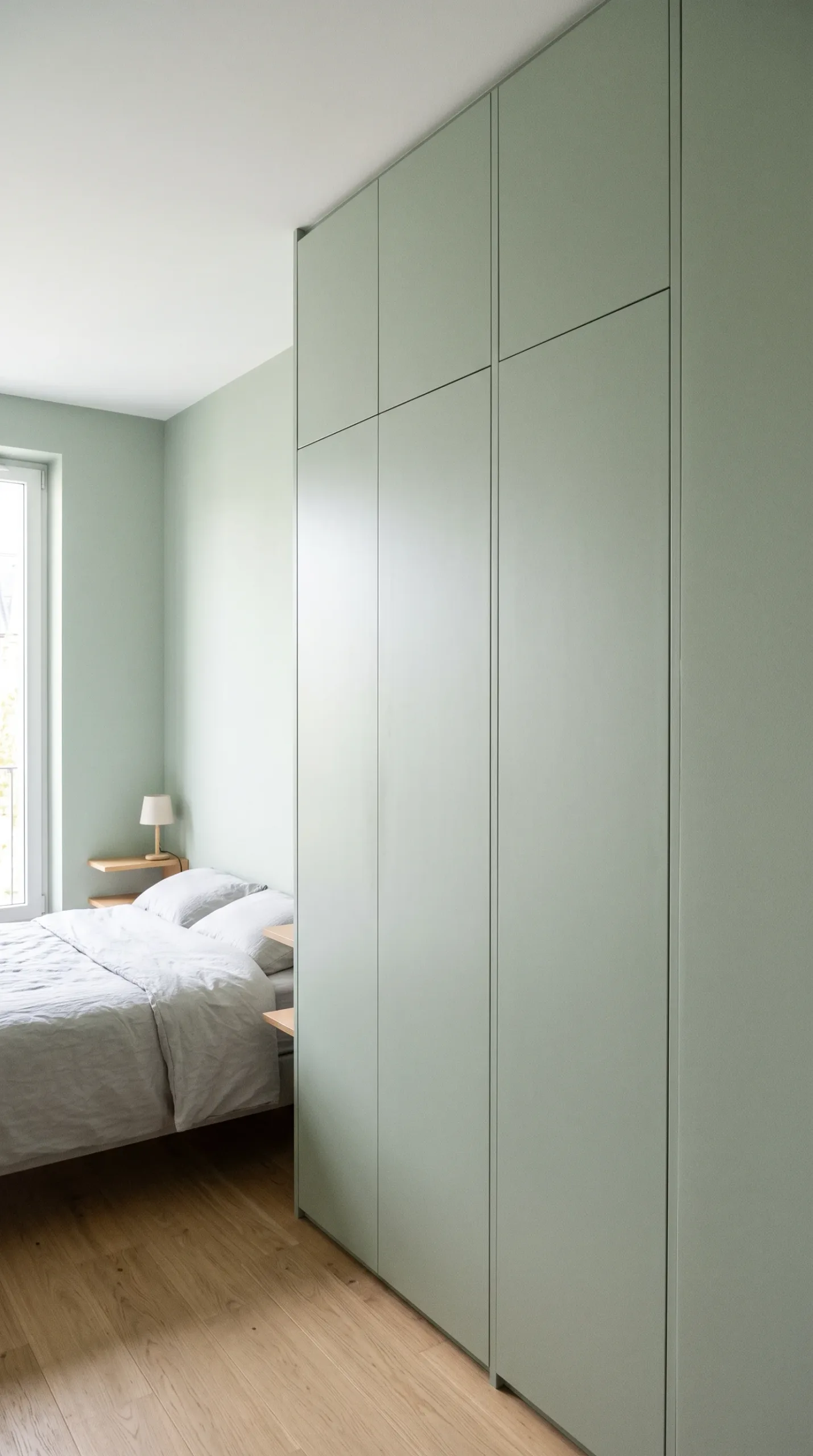
Tall Vertical Wardrobes vs. Wide Horizontal Dressers
If your apartment lacks adequate closet space, installing a tall, vertical wardrobe is a much smarter storage solution than buying a wide, horizontal wooden dresser. Wide dressers consume massive amounts of precious floor space, aggressively intruding into the walking paths around your bed and making the room feel incredibly crowded. A tall wardrobe utilizes the vertical height of the room, drawing the eye upward while providing significantly more cubic storage space within a much tighter, narrower footprint. I always suggest choosing a wardrobe with completely smooth, flat-front doors in a color that matches your walls, allowing the massive piece of furniture to practically disappear into the background. This highly engineered approach maximizes function without sacrificing the room’s airy aesthetic.
Reality Check: Tall wardrobes are incredibly top-heavy; you must permanently secure the top edge to the wall with a heavy-duty safety strap to prevent catastrophic tipping accidents.
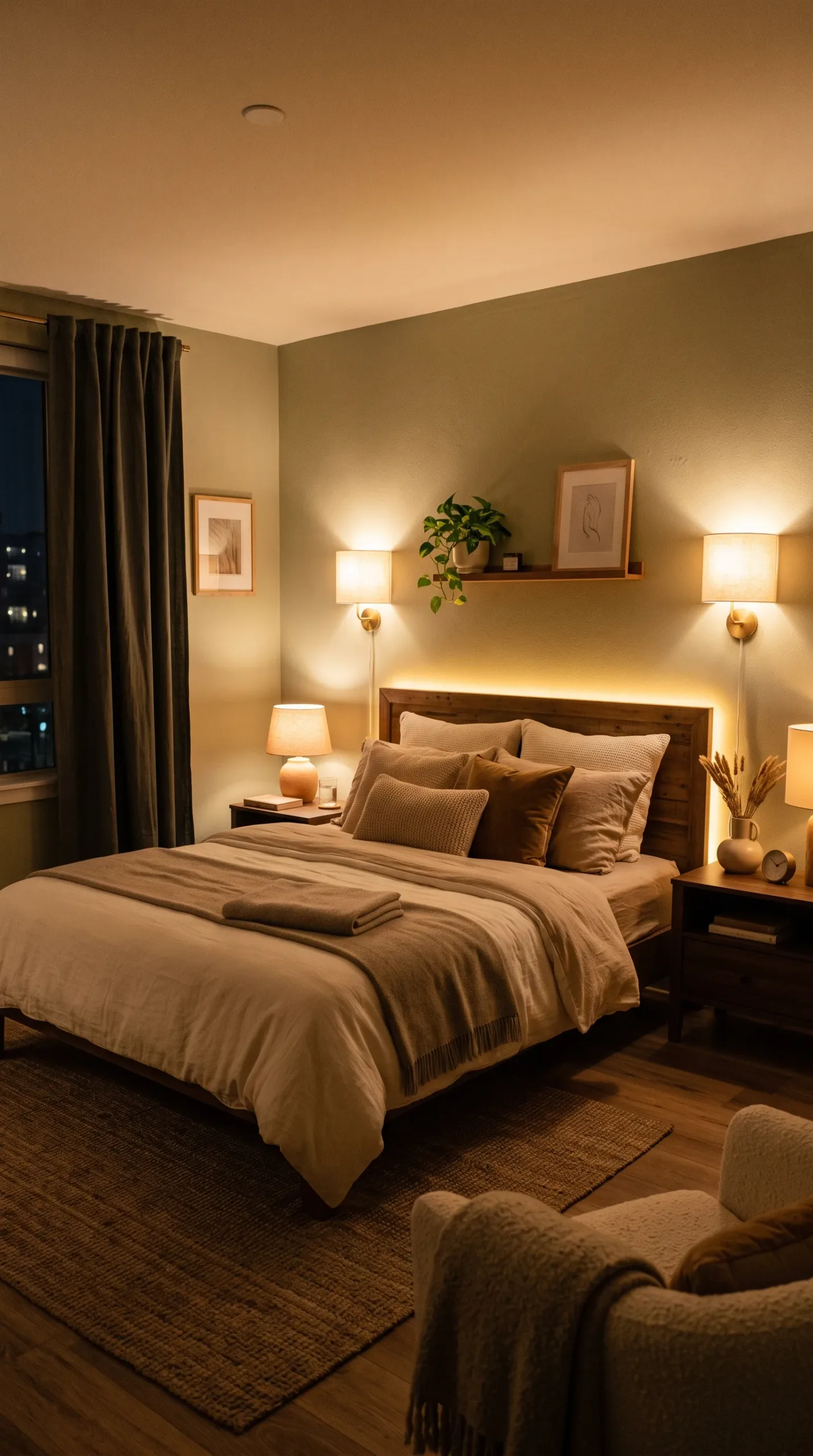
Layered Ambient Lighting vs. Harsh Overhead Fixtures
For creating a truly relaxing evening routine, relying on a layered scheme of warm ambient lighting is infinitely better than using the single, harsh overhead dome fixture provided by your landlord. Landlord-special overhead lights cast deeply unflattering, interrogation-style shadows that instantly destroy any cozy atmosphere in the bedroom. By utilizing small table lamps, plug-in wall sconces, and hidden LED strip lights behind the headboard, you create a soft, glowing, deeply relaxing environment that mimics a high-end luxury hotel. You should strictly use warm-toned bulbs in the 2700K range to ensure the light feels exactly like a glowing sunset or a crackling fire. This is the single most important change you can make to improve your sleep hygiene.
Heads Up: Never mix warm-toned table lamps with cool, blue-toned LED reading lights in the same bedroom, as the clashing color temperatures will make the room look highly chaotic.
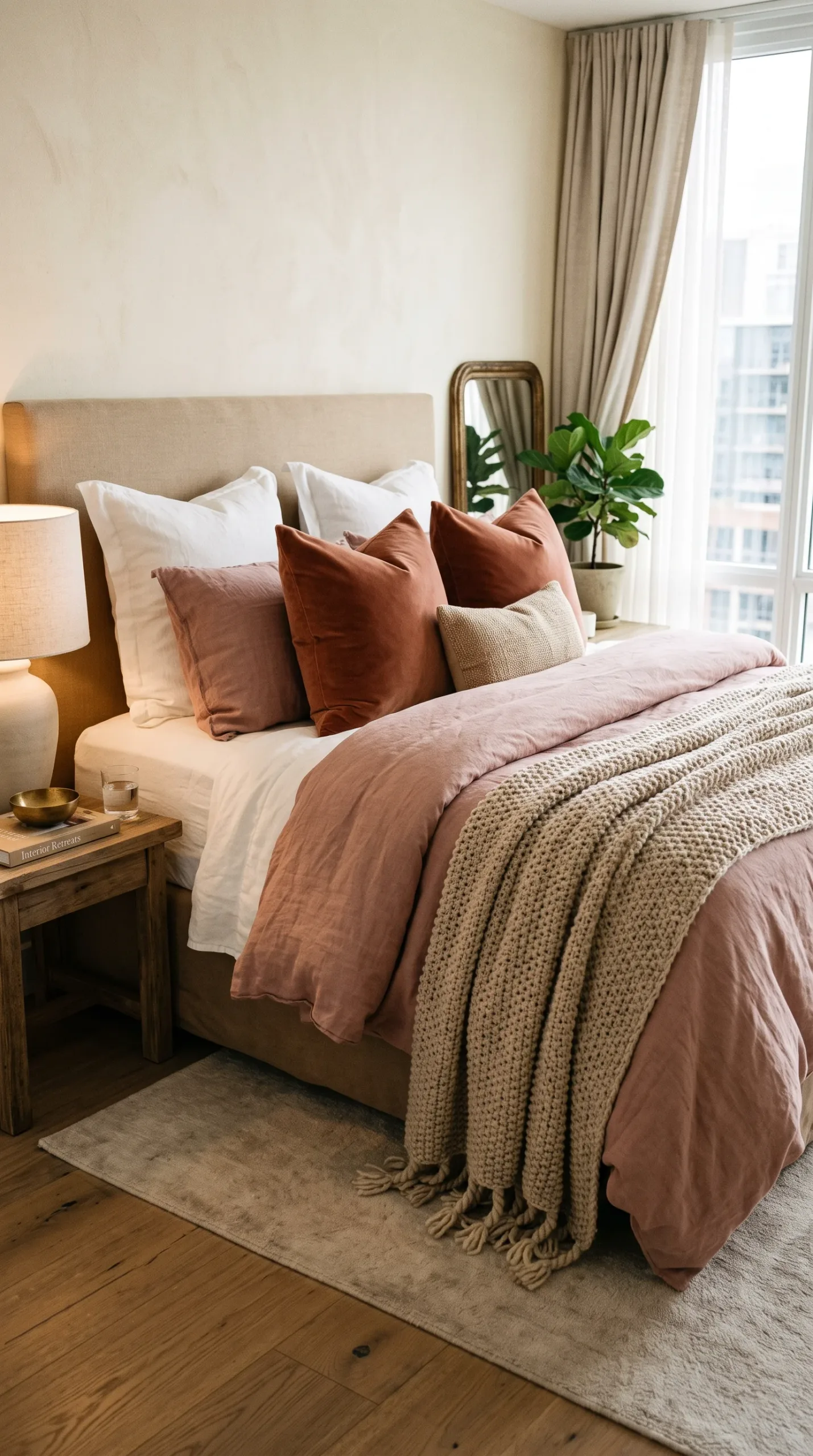
Textured Bedding Layers vs. A Single Stiff Comforter
When styling your bed, layering multiple highly textured blankets is a much more sophisticated approach than simply throwing a single, stiff polyester comforter over the mattress. A single comforter often looks incredibly flat, uninspired, and deeply reminiscent of a cheap college dorm room. Layering a soft linen duvet cover, a chunky knit throw blanket at the foot of the bed, and several velvet accent pillows introduces massive tactile richness and incredible visual depth to the room. I love mixing muted, complementary tones like dusty rose, oatmeal beige, and warm terracotta to create a highly inviting, deeply customized sleeping setup. This styling technique guarantees your bed acts as the undisputed, luxurious focal point of the apartment.
Pro Move: Buy a duvet insert that is one size larger than your actual duvet cover to achieve an incredibly plump, overstuffed, luxurious hotel-bed appearance.
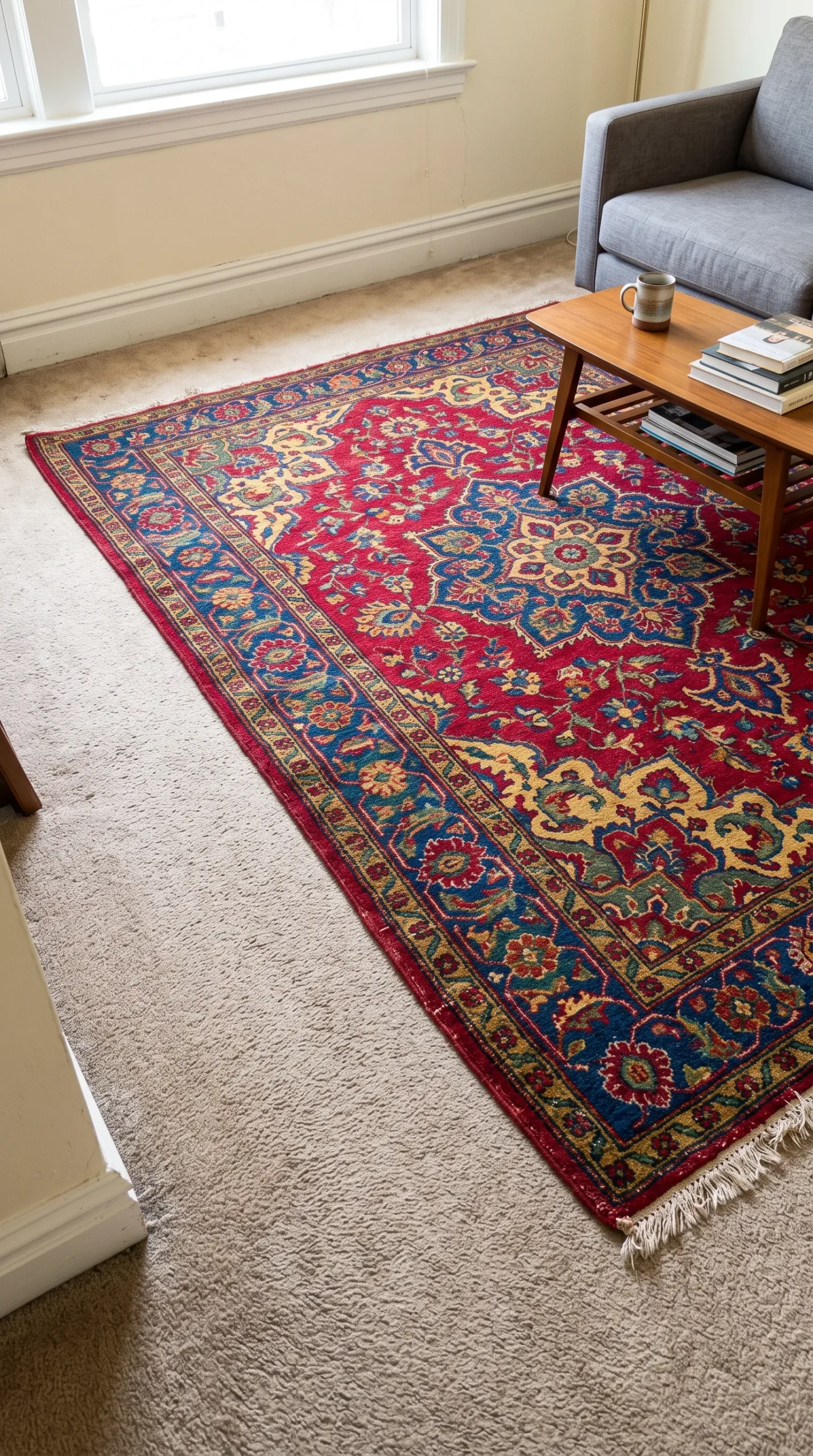
Dedicated Zone Rugs vs. Wall-to-Wall Apartment Carpet
If you are stuck with incredibly ugly, cheap wall-to-wall beige apartment carpeting, laying a highly patterned, colorful area rug directly over it is a much better strategy than ignoring the ugly floor. Landlord carpeting is notoriously flat, highly sterile, and instantly drains all the personality out of your bedroom design. Adding a thick, vintage-style Persian rug or a highly textured wool rug introduces a massive anchor of customized color and heavy pattern that completely distracts the eye from the ugly flooring underneath. You should ensure the top rug is large enough to heavily anchor the entire bed frame, creating a deeply intentional ‘room within a room’ aesthetic. This completely covers the landlord’s cheap choices with your own high-end taste.
Designer Advice: Use highly specialized double-sided carpet tape on all four corners of the top rug to ensure it lays perfectly flat over the plush carpeting below.
Minimalist Floating Desks vs. Bulky Office Tables
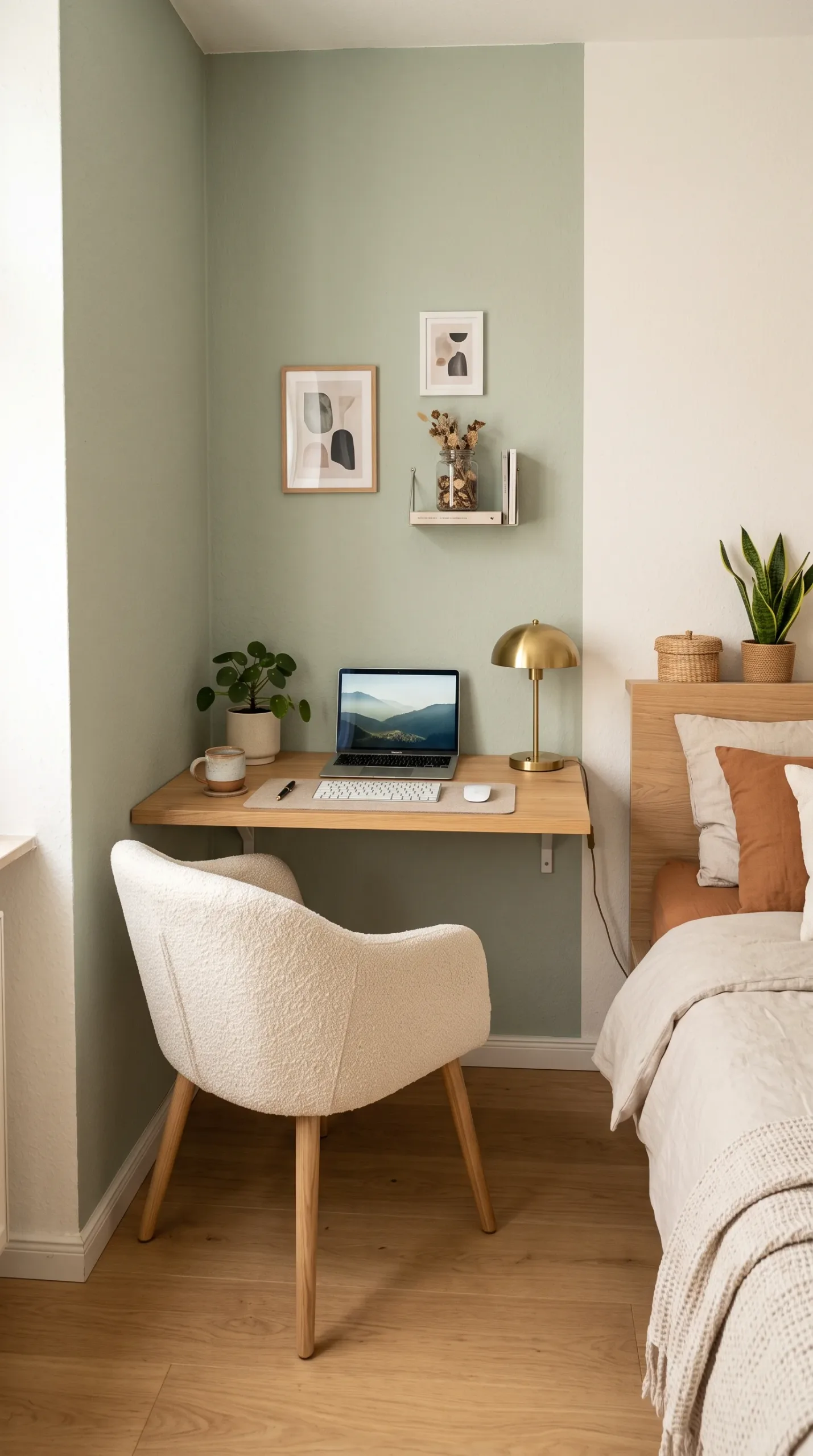
If you absolutely must work from your apartment bedroom, installing a sleek, minimalist floating desk is vastly superior to cramming a bulky, four-legged office table into the corner. Traditional office desks consume massive amounts of visual and physical space, constantly reminding you of your stressful job when you are trying to sleep. A narrow, wall-mounted floating desk practically disappears into the wall when not in use, keeping the floor completely clear and maintaining the deeply relaxing, airy atmosphere of the sanctuary. I highly recommend pairing the floating desk with a beautiful, fully upholstered dining chair rather than an ugly, ergonomic office chair on wheels. This ensures the workspace feels like an intentional part of the bedroom decor.
Quick Tip: Route all of your messy computer and laptop charging cables through a painted plastic cord cover attached directly to the wall to maintain the clean, floating illusion.
Hidden Cord Management vs. Tangled Power Strips
Taking thirty minutes to properly hide all of your electrical cords is a much stronger design decision than allowing tangled power strips to sit openly on the bedroom floor. A messy rat’s nest of black charging cables completely ruins the pristine, relaxing aesthetic of a curated bedroom, making the space feel incredibly chaotic and permanently unfinished. By using simple zip ties, adhesive cable clips, and decorative storage boxes to neatly conceal your power strips, you instantly elevate the perceived cleanliness and maturity of the entire apartment. You should attach the power strips directly to the underside of your nightstands or desk using heavy-duty mounting tape so they are completely hidden from normal viewing angles. This requires almost zero budget but delivers massive peace of mind.
Reality Check: Do not cram massive, heat-generating laptop chargers into tightly sealed, unventilated plastic storage boxes, as they can quickly overheat and create a severe fire hazard.
Potted Tall Greenery vs. Tiny Window Sill Plants
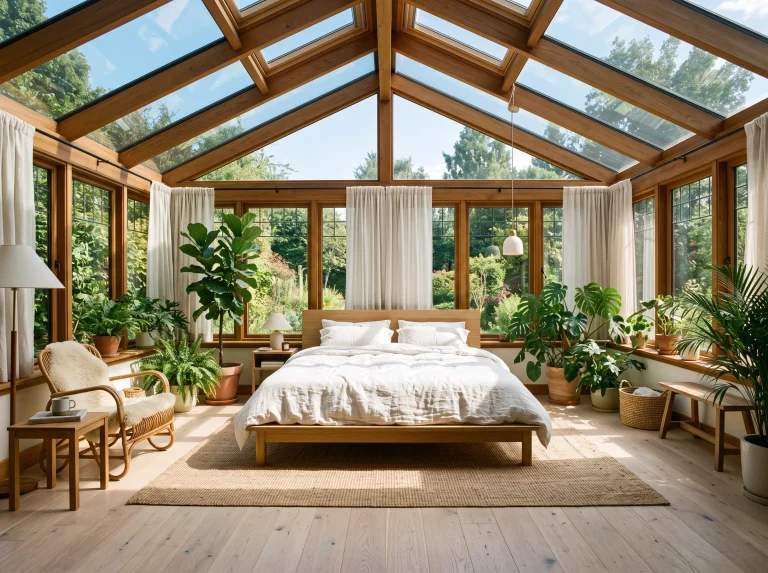
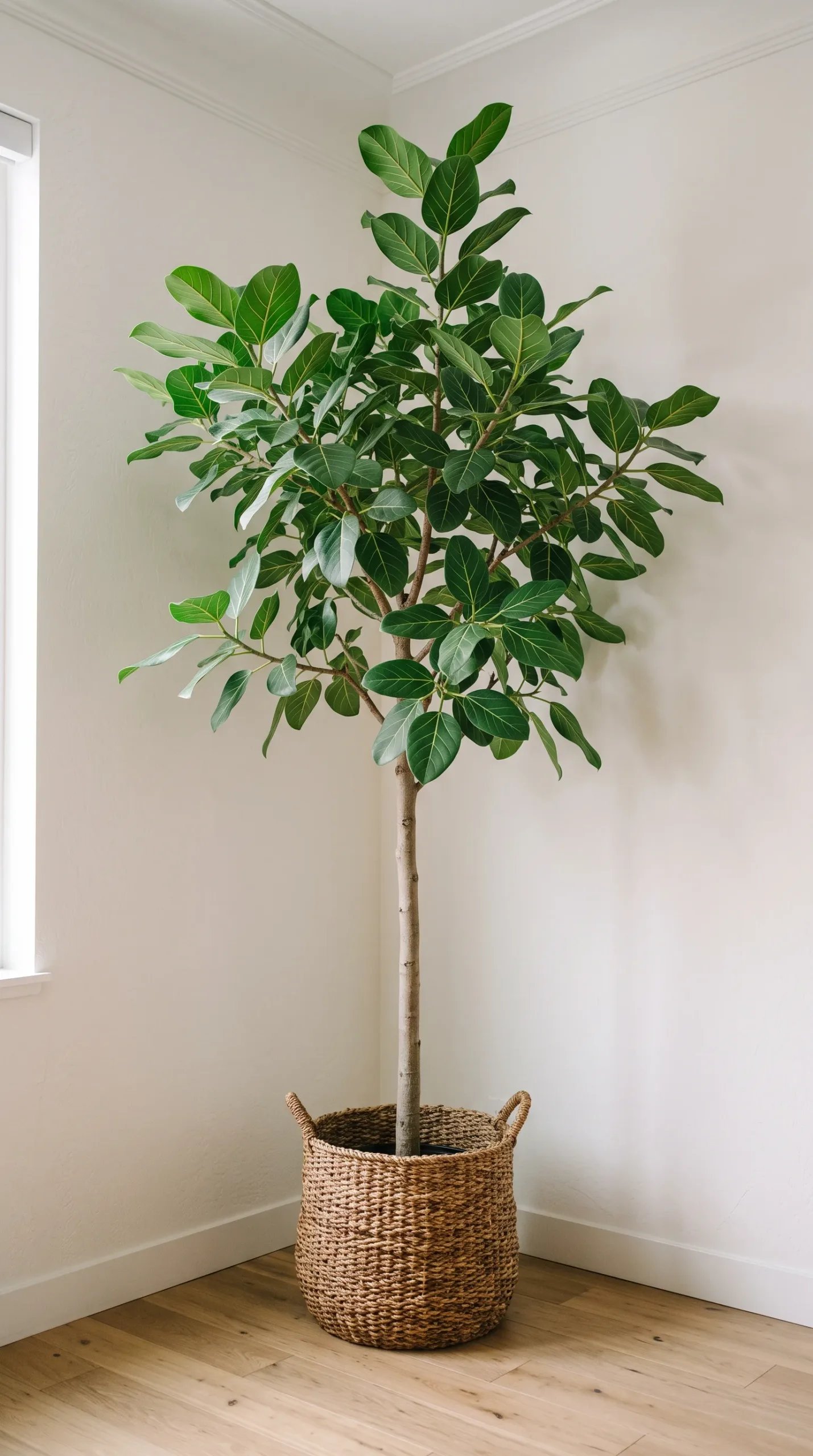
When introducing biophilic elements to the bedroom, placing one massive, tall potted tree in an empty corner is far more effective than cluttering your window sill with dozens of tiny succulents. A massive collection of tiny plants creates serious visual noise and makes cleaning the window area incredibly frustrating and time-consuming. A single, towering plant like a Ficus Audrey or a large Snake Plant introduces massive vertical height, beautiful organic movement, and a huge burst of vibrant color without taking up any precious surface area. I always suggest placing the large nursery pot inside a heavily textured woven seagrass basket to add an extra layer of earthy, grounding warmth to the floor. This single bold statement plant feels incredibly architectural.
Heads Up: If your bedroom lacks adequate natural sunlight, do not waste money killing a real tree; a high-quality, expensive faux olive tree provides the exact same visual benefits.
Dark Moody Paint vs. Builder-Grade Beige
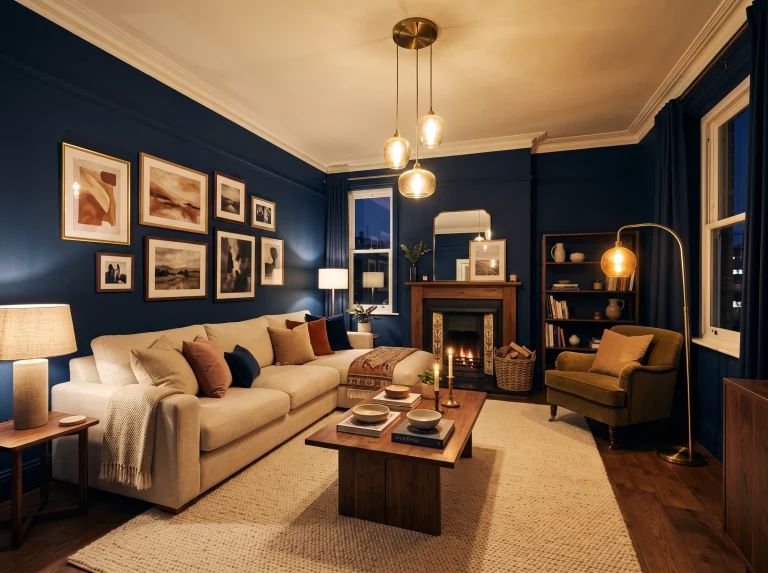
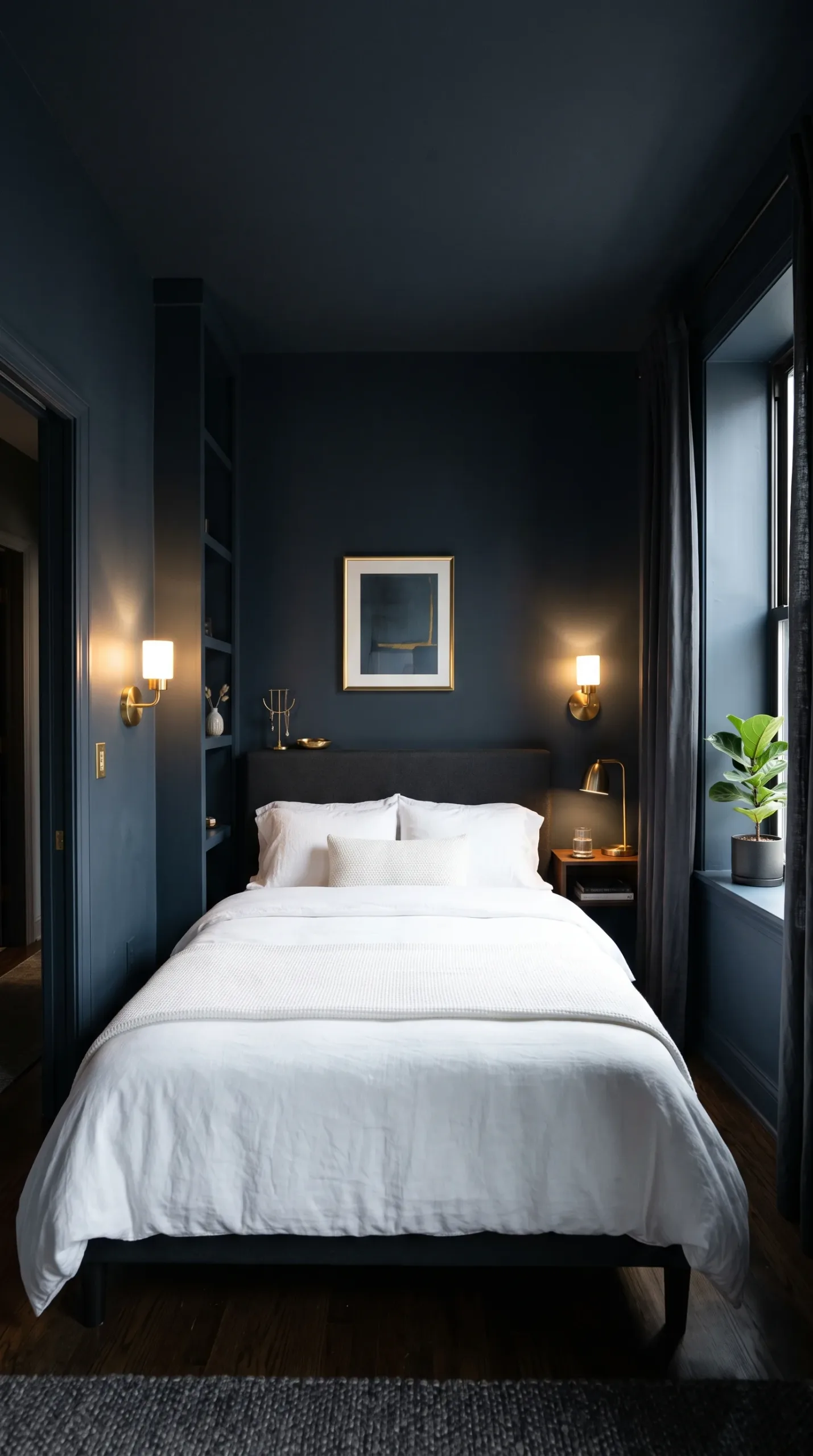
If your landlord allows painting, coating your small bedroom in a deeply saturated, dark moody color like charcoal blue or forest green is vastly superior to keeping the generic builder-grade beige. Many people fear that dark colors will make a small room feel like a tiny cave, but dark paint actually makes the walls physically recede away from the eye, creating an incredible optical illusion of infinite depth. A dark, moody room naturally absorbs harsh light, turning the cramped bedroom into a deeply intimate, highly immersive, romantic cocoon that is absolutely perfect for sleeping. You must heavily contrast the dark walls with crisp white bedding and bright brass lighting fixtures to ensure the room remains highly sophisticated. This bold choice screams custom luxury.
Pro Move: Paint the baseboards, the window trim, and the bedroom door the exact same dark color as the walls to completely blur the architectural boundaries of the room.
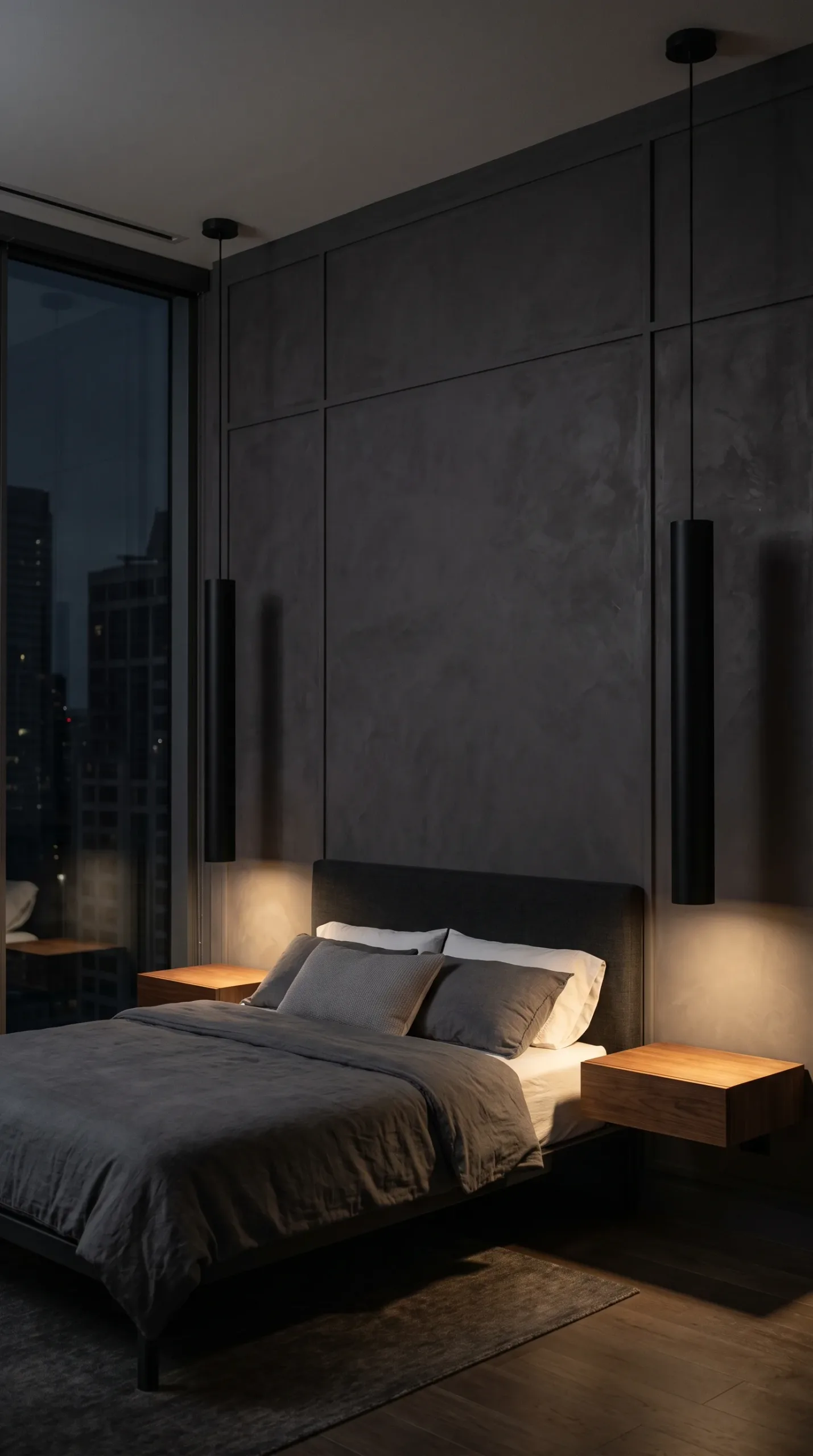
Hanging Pendant Lights vs. Cluttered Bedside Tables
Replacing your bedside table lamps with long, dramatic hanging pendant lights suspended directly from the ceiling is an incredible way to maximize space and add massive vertical interest. Dropping sleek pendants down from the ceiling frees up the entire surface of your nightstands while drawing the eye straight upward, making the ceiling feel significantly taller than it actually is. You can choose fixtures with opaque brass or matte black shades that direct the light straight down onto your book, completely eliminating annoying glare in the rest of the dark room. I find this approach works brilliantly in tiny apartments where you barely have enough room for a six-inch wide bedside shelf. It looks highly engineered and totally custom.
Designer Advice: If you cannot hardwire pendants into the rental ceiling, buy plug-in pendants and use simple white cup hooks to swag the cord elegantly across the ceiling.
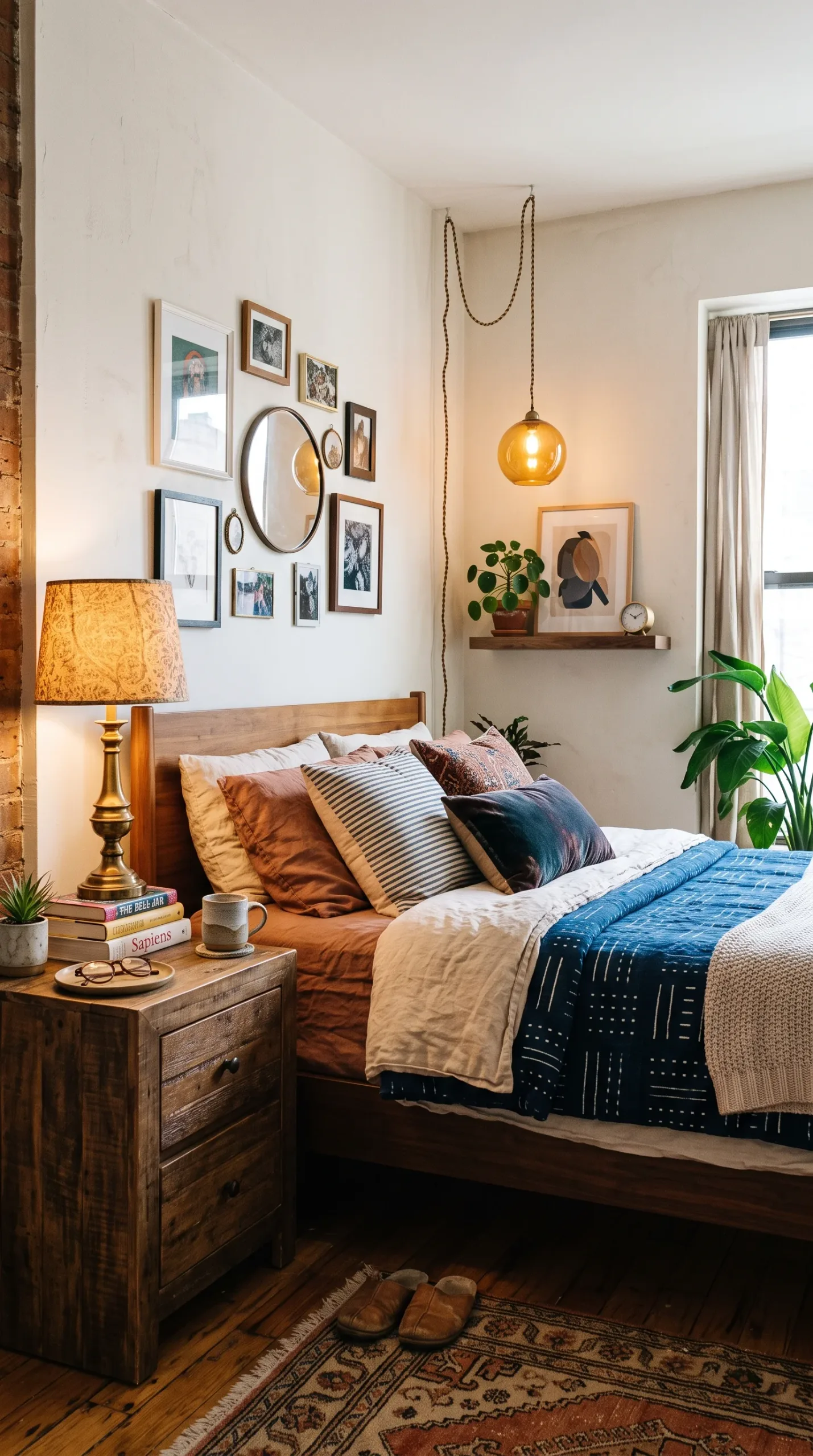
Asymmetrical Styling vs. Strict Mirror Symmetry
When decorating the sides of your bed, embracing an asymmetrical styling approach is far more interesting and modern than strictly matching identical nightstands and identical lamps. Perfect symmetry often looks incredibly rigid, highly formal, and slightly outdated, resembling a cheap hotel room rather than a curated home. By placing a heavy wooden nightstand with a table lamp on one side, and a simple floating shelf with a hanging pendant light on the other, you create a highly dynamic, eclectic aesthetic that forces the eye to explore the room. You should ensure the overall visual weight on both sides of the bed feels balanced, even if the actual objects are entirely different. This relaxed approach perfectly matches the modern shift toward casual, comfortable living.
Quick Tip: Keep the color palette of the mismatched furniture and lighting completely cohesive to ensure the asymmetrical layout looks highly intentional rather than entirely accidental.
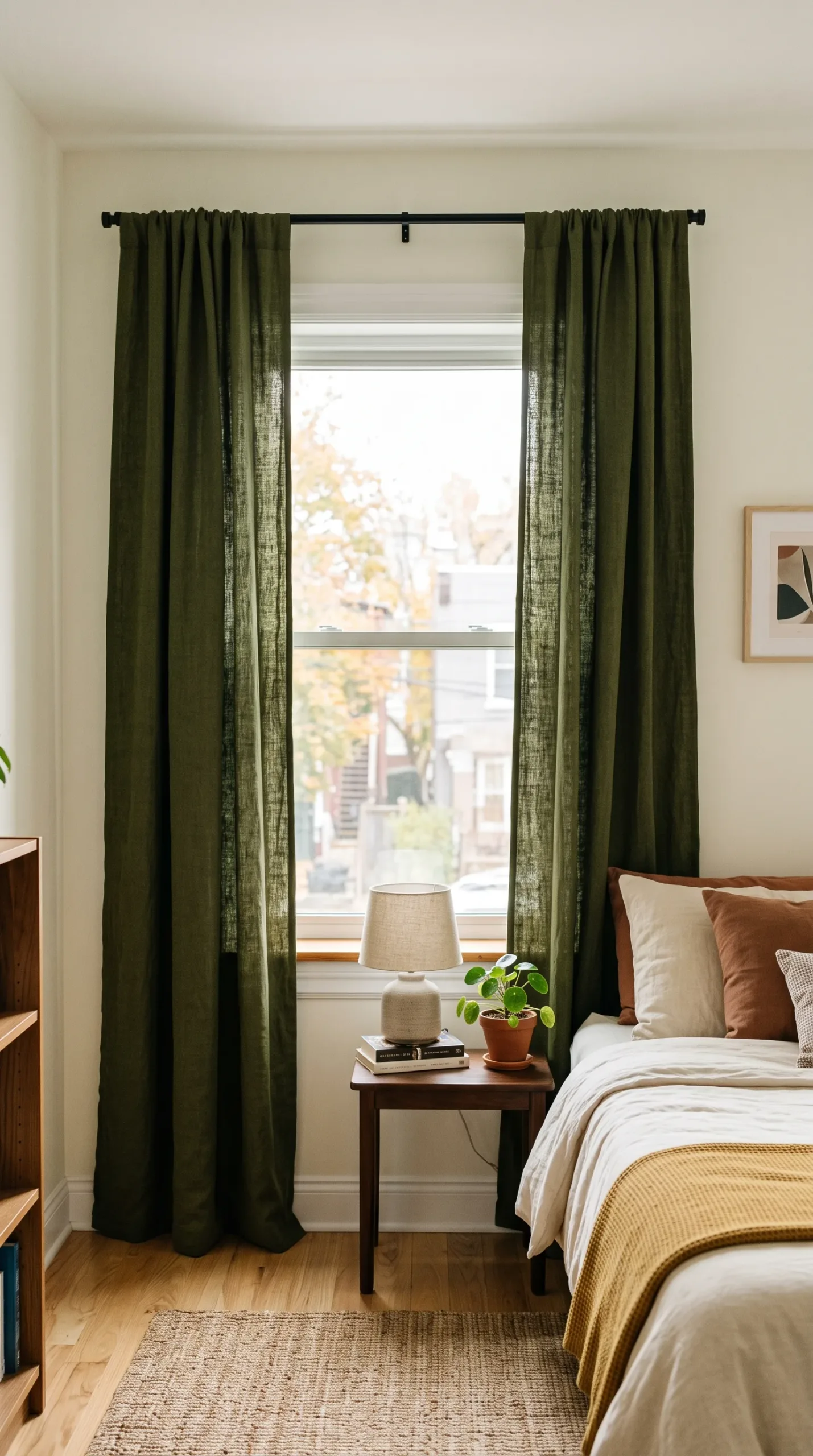
Solid Color Block Curtains vs. Busy Floral Prints
To make a small apartment bedroom feel calm and grounded, utilizing solid color block curtains is a vastly superior choice to hanging curtains featuring loud, busy floral or geometric prints. Busy patterns on massive swaths of fabric create intense visual chaos, completely overwhelming a small room and actively fighting against the relaxing, sanctuary atmosphere you are trying to build. Solid curtains in a heavy, textured linen, such as deep olive green or warm terracotta, provide a massive anchor of grounding color that perfectly frames the window without demanding constant attention. I love pairing solid, dark curtains with light, airy walls to create a striking, highly sophisticated contrast that looks incredibly mature and highly tailored.
Reality Check: Always iron or steam your new solid curtain panels thoroughly before hanging them, as deep, chaotic fold creases will make the expensive fabric look incredibly cheap.
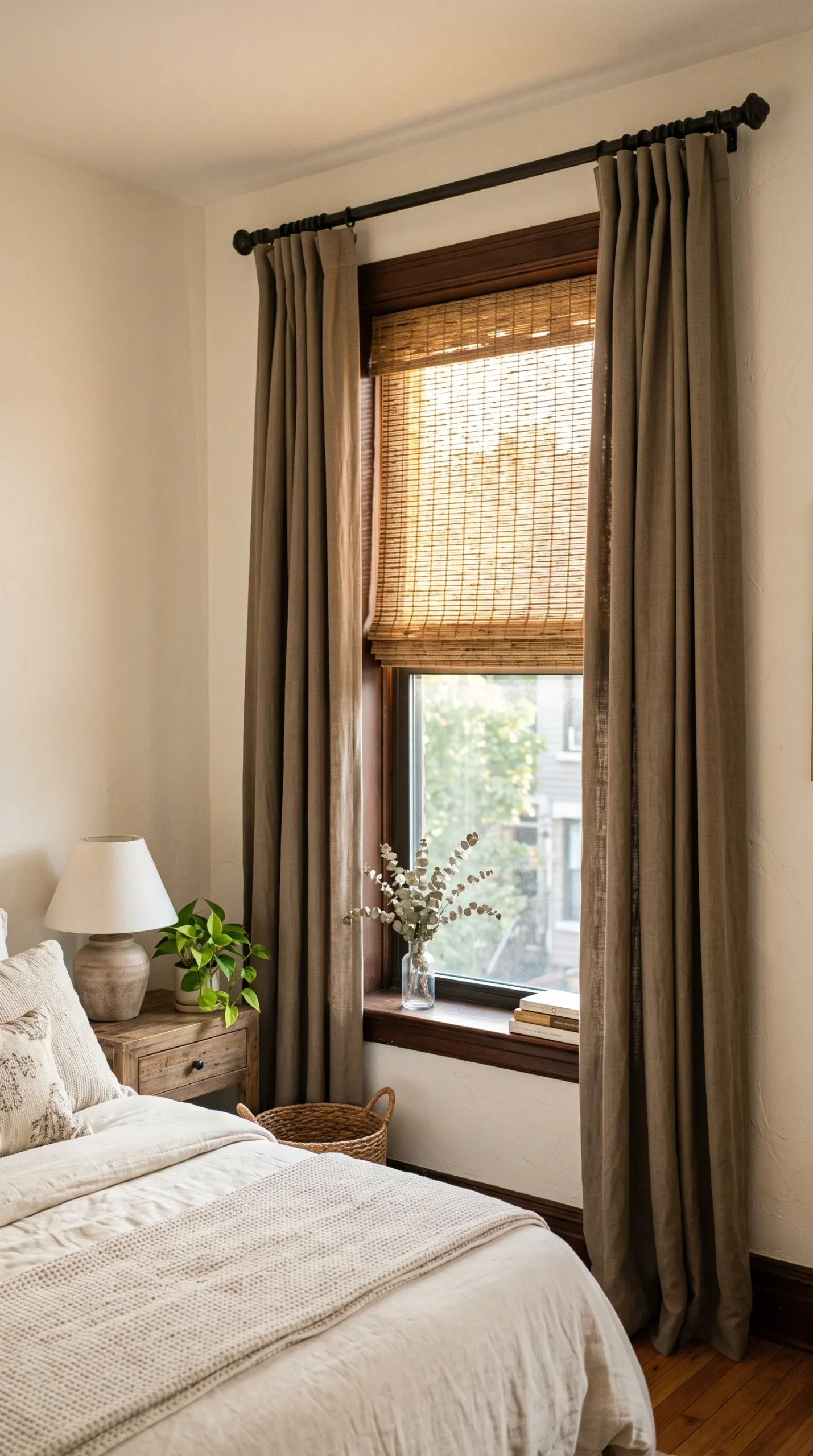
Woven Wood Shades vs. Plastic Vertical Blinds
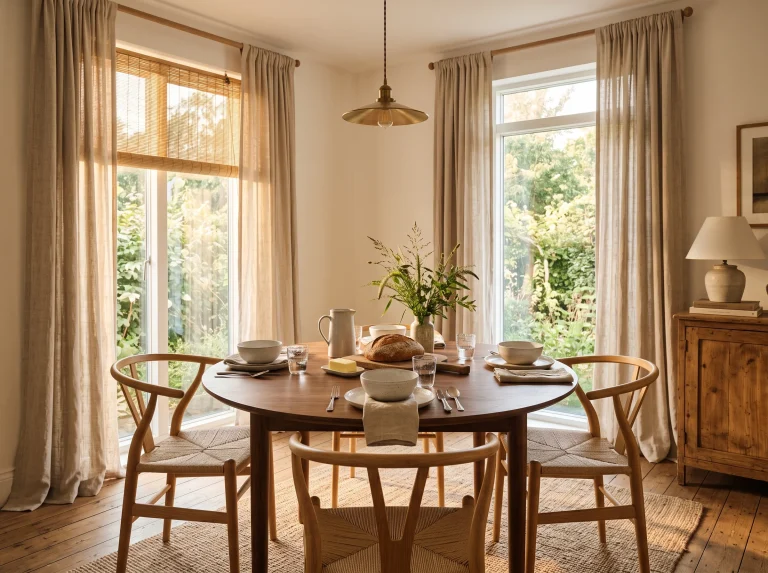
Replacing the ugly, cheap plastic vertical blinds provided by your landlord with natural woven wood roman shades is the most effective way to instantly upgrade the architectural quality of your apartment windows. Plastic blinds rattle loudly in the breeze, look incredibly institutional, and block out the sun in a highly aggressive, unattractive manner. Woven bamboo or grass shades introduce vital, earthy organic texture right at eye level, acting as a piece of natural art that filters harsh afternoon sunlight into a beautiful, warm, flattering glow. You can easily layer these wood shades directly underneath heavy cotton drapes to provide the ultimate custom, highly textured window treatment. You simply store the landlord’s cheap blinds under your bed until you move out.
Heads Up: Order your woven wood shades with a built-in heavy privacy liner attached to the back, otherwise, your neighbors will be able to see straight through the gaps at night.
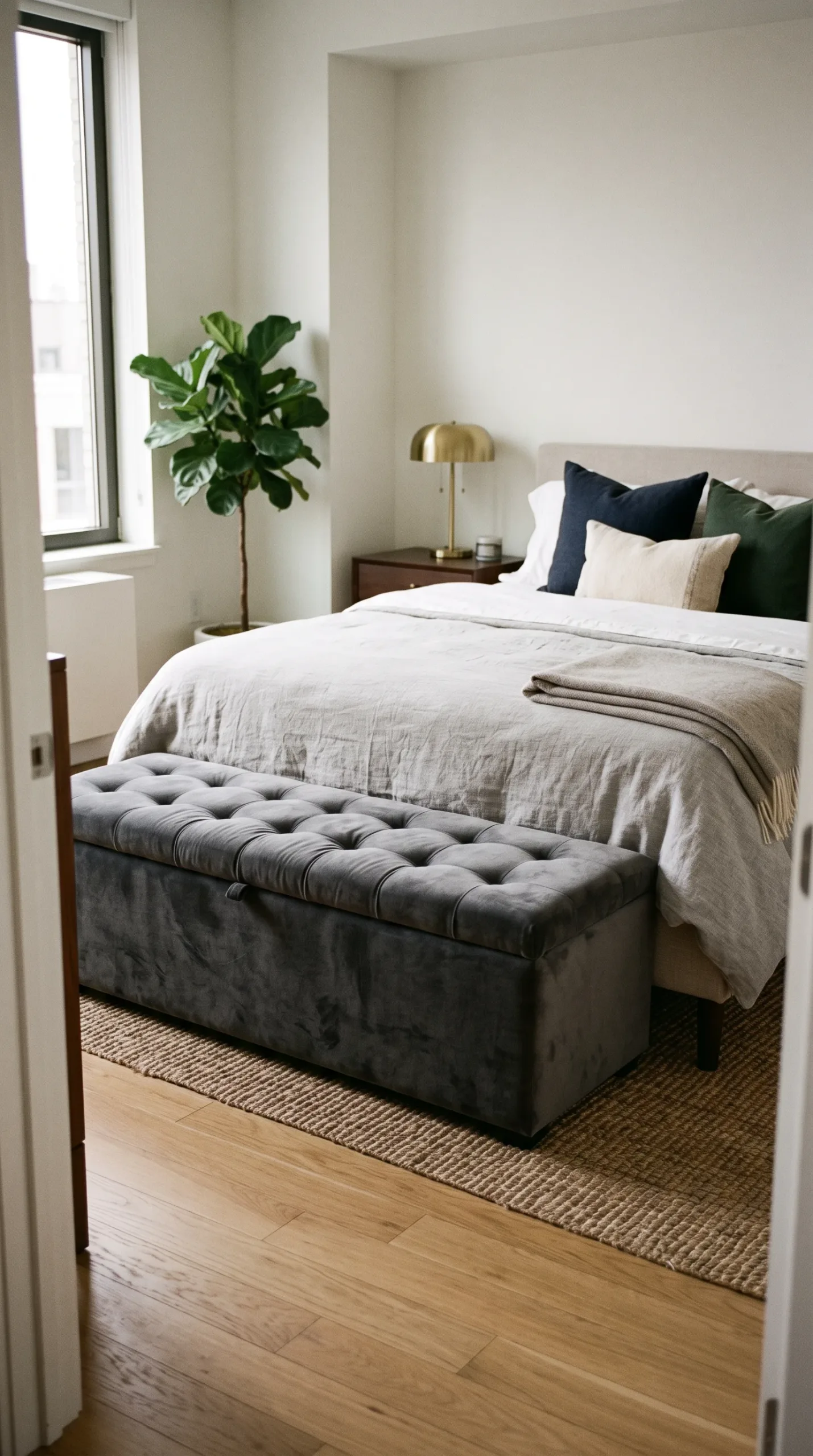
Upholstered Storage Ottomans vs. A Bare Footboard
If you have an extra three feet of space at the foot of your bed, placing a long, fully upholstered storage ottoman there is a much smarter choice than leaving the area completely bare. A bare footboard often feels slightly unfinished, whereas a heavy ottoman visually anchors the end of the bed, making the entire sleeping zone feel significantly more substantial and deeply luxurious. The soft, upholstered top provides the perfect, highly comfortable spot to sit down while putting on your shoes every morning, drastically improving the daily functionality of the room. I always recommend buying an ottoman with a hidden hinge top, providing a massive, secret cavity to completely hide your extra bulky winter bedding. It is a highly practical, stylish upgrade.
Pro Move: Choose an ottoman upholstered in a highly durable, wipeable performance velvet or faux leather, as you will constantly be placing dirty bags and clothes on top of it.
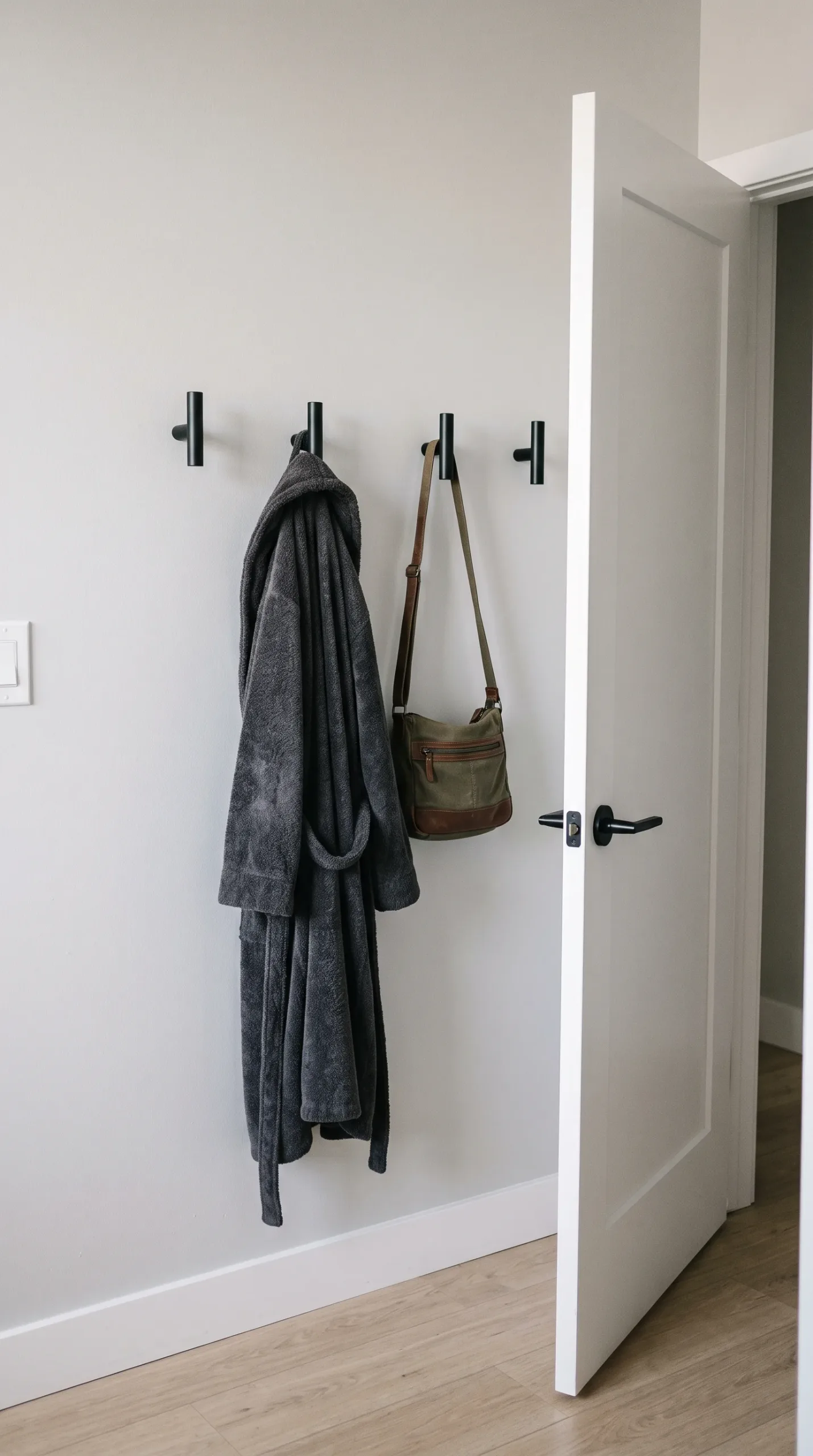
Minimalist Wall Hooks vs. A Bulky Coat Rack
For keeping your daily clothes off the floor, installing a row of sleek, minimalist wall hooks behind the bedroom door is far superior to using a bulky, freestanding wooden coat rack. A freestanding coat rack consumes an entire corner of the room, looking incredibly messy and visually chaotic the second you hang more than two jackets on it. Minimalist wooden or matte black metal wall pegs completely disappear against the drywall when not in use, taking up absolutely zero floor space while remaining highly functional. You can use these sturdy hooks to hang tomorrow’s outfit, your heavy winter robe, or your daily handbag, keeping the bedroom surfaces completely clear of messy clutter. This requires ten minutes of installation for a massive daily payoff.
Designer Advice: Install the row of wall hooks at varying, asymmetric heights to create a highly modern, playful architectural detail rather than a boring, perfectly straight line.
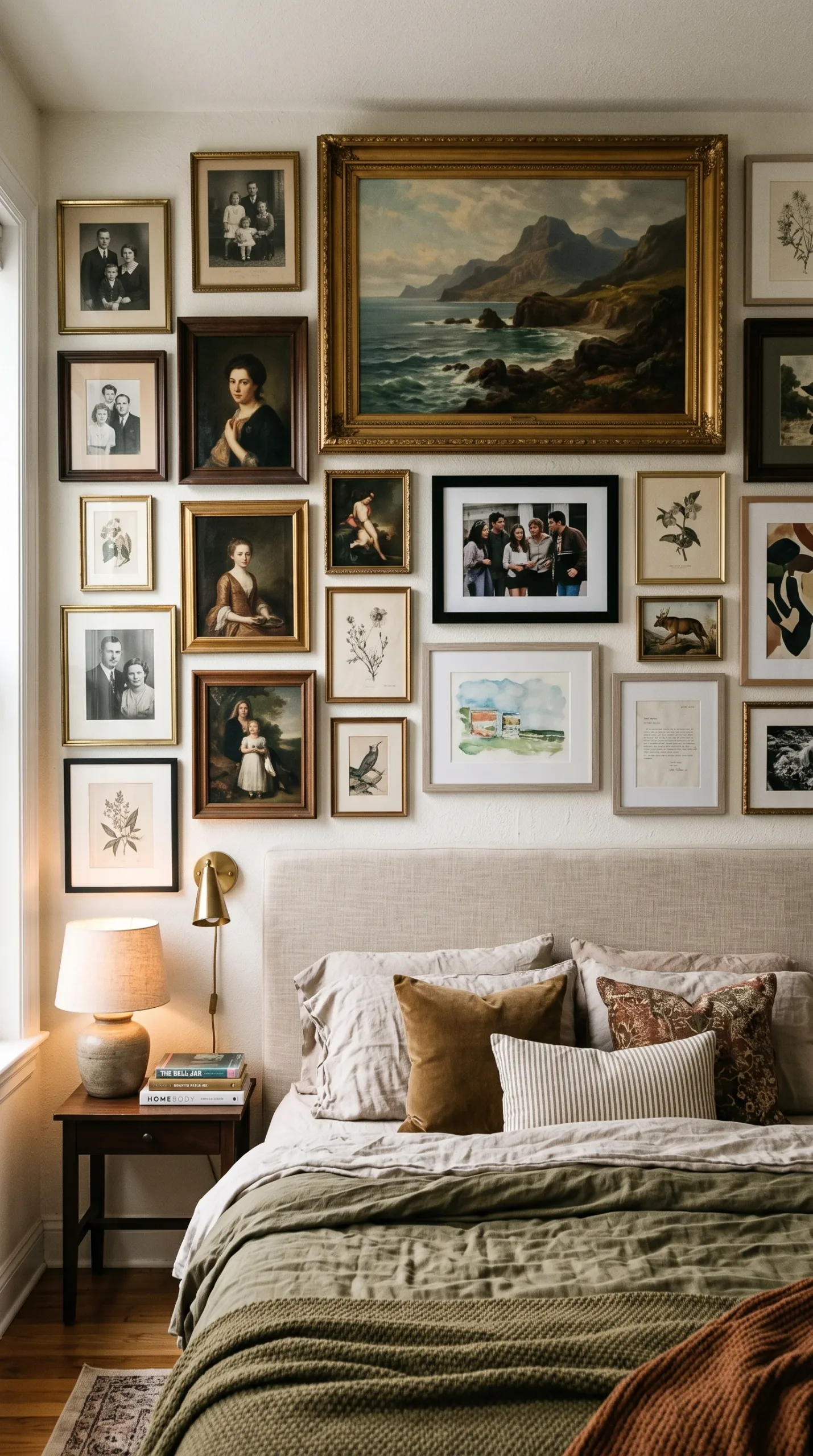
Gallery Wall Above the Bed vs. One Tiny Frame
When decorating the massive, empty wall space directly above your headboard, building a tight, cohesive gallery wall is vastly superior to hanging a single, tiny, improperly scaled picture frame. A tiny frame floating alone in the middle of a massive wall looks completely accidental, highlighting the vast emptiness of the drywall and making the bed feel completely unanchored. A highly curated gallery wall featuring a mix of vintage oil paintings, abstract sketches, and personal photography creates a stunning, massive focal point that perfectly matches the wide visual weight of the mattress below. I suggest using mismatched frames in brass, black wood, and light ash to give the collection a highly personal, collected-over-time aesthetic. This turns the bed into a true centerpiece.
Quick Tip: Use heavy-duty command strips rather than nails to hang the frames above your bed, ensuring a heavy picture frame never accidentally falls on your head while you sleep.
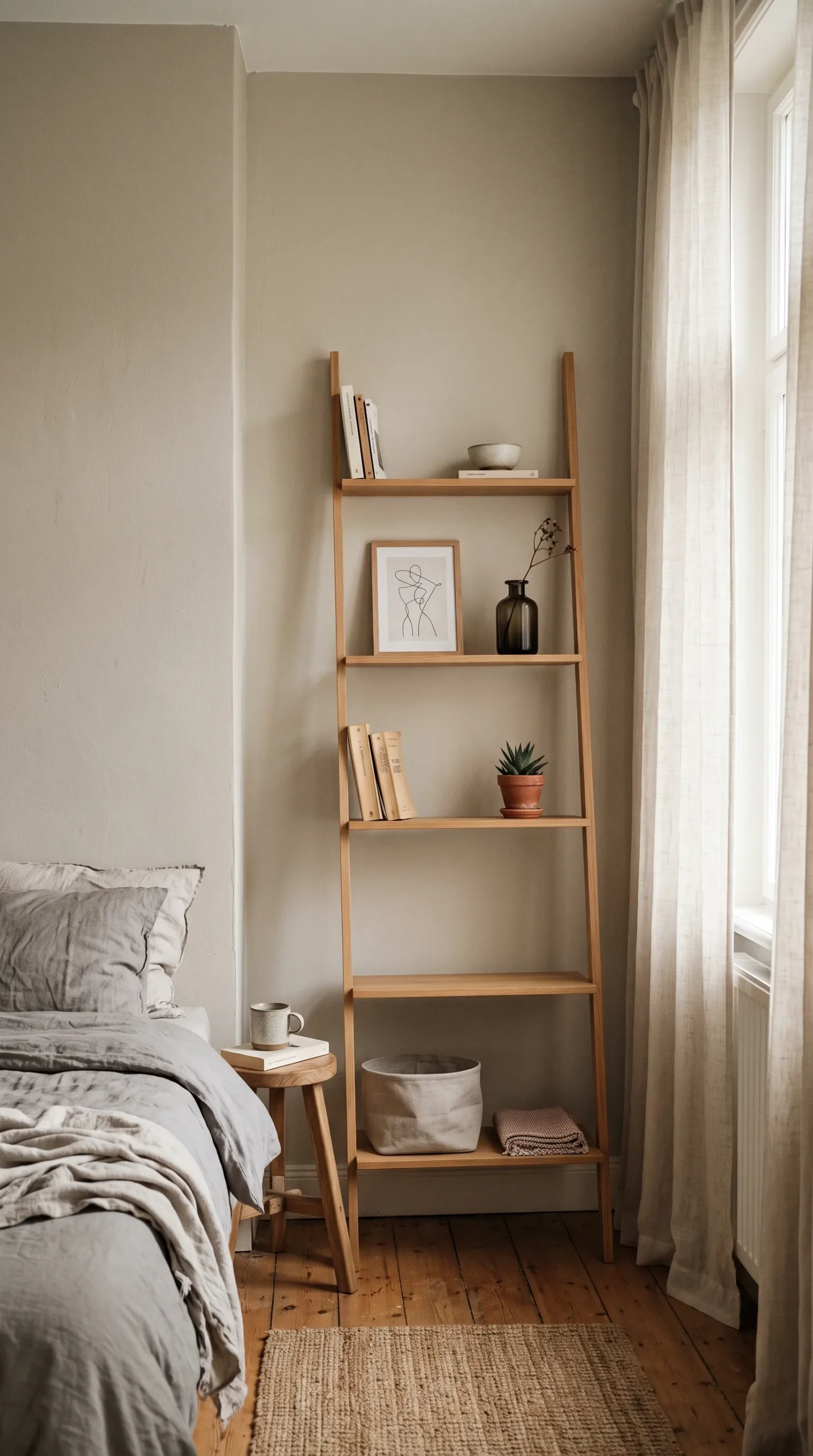
The Solid Wood Leaner Shelf vs. Heavy Bookcases
If you need a place to display books and small decor in a cramped bedroom, utilizing a minimalist, angled leaning ladder shelf is much better than buying a massive, heavy, solid wooden bookcase. A solid bookcase blocks the light, creates massive, heavy shadows, and visually consumes a huge chunk of the limited square footage. A leaning ladder shelf features an open back and thin wooden side rails, allowing the wall color to remain fully visible through the furniture, which keeps the room feeling incredibly open and entirely unobstructed. You should style these airy shelves very sparsely, leaving plenty of negative space to ensure the display looks highly curated and sophisticated rather than like a cluttered college dorm room.
Reality Check: Leaning shelves rely entirely on gravity to stay in place; you must securely anchor the very top shelf directly to the wall to prevent it from sliding out and crashing.
Acrylic Accent Chairs vs. Bulky Armchairs
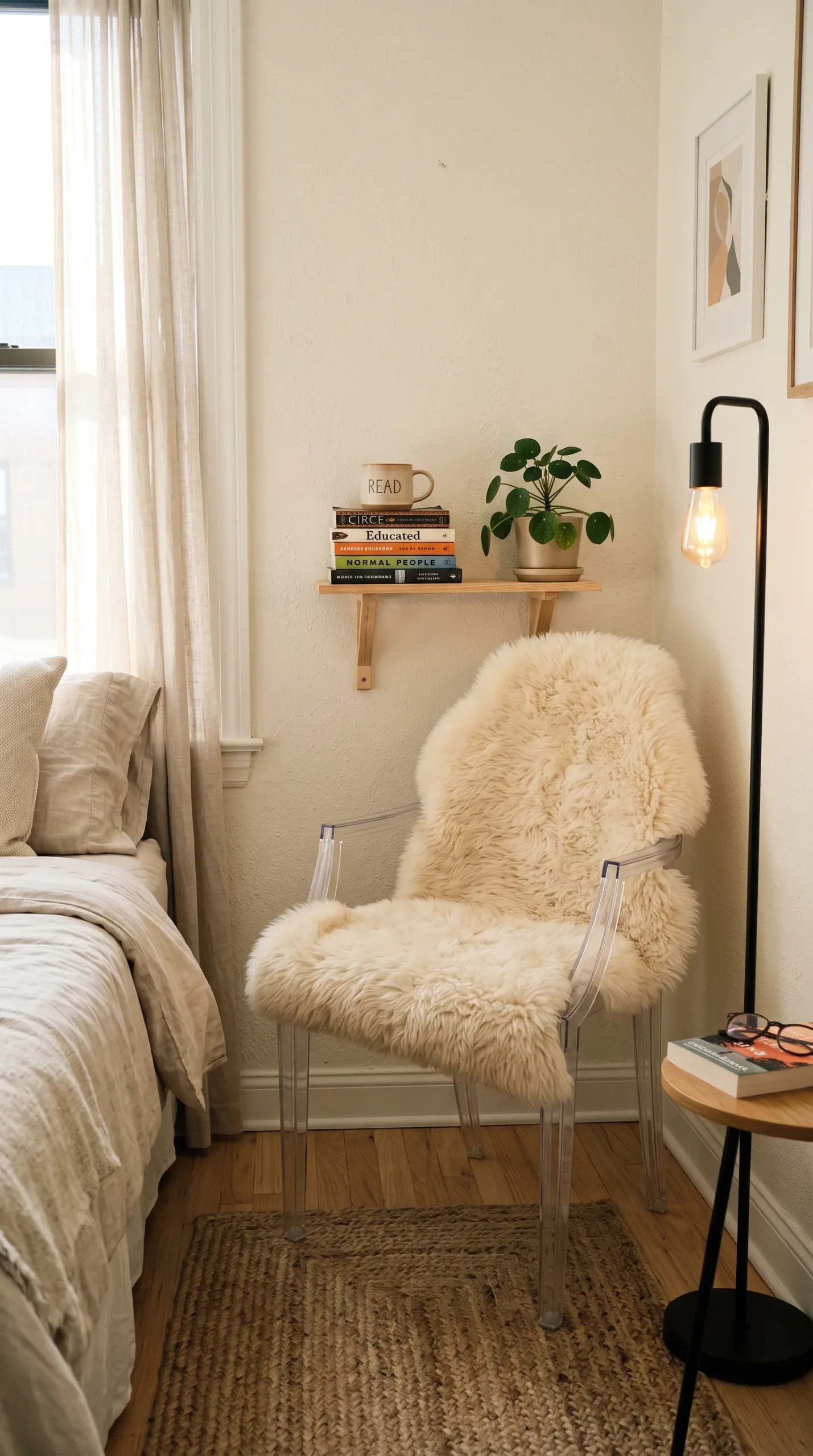
If you desperately want a small reading chair in your bedroom corner but have almost no space, opting for a transparent acrylic ghost chair is a vastly superior strategy to cramming in a bulky, upholstered armchair. A bulky armchair will completely choke off the walking path to your closet and make the corner feel incredibly heavy and claustrophobic. An acrylic chair practically disappears into the background, providing a highly functional seat while taking up literally zero visual weight, keeping the room feeling incredibly open, airy, and thoroughly modern. I always suggest draping a thick, plush faux sheepskin throw over the back of the clear plastic chair to introduce necessary physical warmth and make the rigid seat significantly more comfortable.
Heads Up: Acrylic chairs scratch incredibly easily; you must never wear jeans with sharp metal rivets or heavy belts when sitting down to read in this delicate chair.
Conclusion
Designing a beautiful, highly functional apartment bedroom is an exercise in mastering visual weight and eliminating unnecessary bulk. As these twenty-five comparisons highlight, the most successful rental spaces completely reject heavy, outdated furniture in favor of sleek, wall-mounted alternatives and clever optical illusions. By heavily prioritizing massive, continuous vertical lines—such as floor-to-ceiling curtains and tall wardrobes—you instantly trick the eye into perceiving the cramped room as grand and airy. Remember that a small bedroom requires intense editing; every single wall sconce, storage ottoman, and area rug must earn its place by serving a highly specific, functional purpose without cluttering the floor. By abandoning stark, clinical minimalism and embracing warm, earthy palettes layered with rich, tactile fabrics, you can easily transform your generic apartment bedroom into a deeply personal, incredibly cozy sanctuary.
Frequently Asked Questions
How can I maximize storage in a small apartment bedroom?
You must utilize the vertical space and the hidden space under your furniture. Invest in a dedicated storage bed frame with built-in wooden drawers to hide your bulky seasonal clothing, and swap wide, horizontal dressers for tall, floor-to-ceiling wardrobes that draw the eye upward.
What color makes a small bedroom look bigger?
While stark white can make a room look larger if you have massive windows, it often looks flat and sterile in a normal apartment. A deeply saturated, dark moody color (like navy or forest green) actually makes the walls physically recede away from the eye, creating an illusion of infinite depth.
How do you light a bedroom without overhead lights?
You should completely ignore the harsh overhead dome light anyway. Rely entirely on a layered scheme of warm ambient lighting: install plug-in wall sconces for reading, place a small table lamp on a dresser, and run hidden LED strips behind your headboard for a soft, glowing hotel aesthetic.
Is it okay to put the bed against a wall in a small apartment?
Yes, pushing one side of the bed directly against the wall is often the only way to create a usable walking path in a tiny studio. To make it look intentional, build a massive, cozy mountain of textured pillows against the wall to act as a soft, secondary headboard.
How do I make my rental bedroom feel less cheap?
You must hide the cheap, builder-grade finishes. Swap the plastic window blinds for heavy linen curtains, cover the flat wall-to-wall carpeting with a massive, highly textured vintage area rug, and replace the ugly ceiling fixture with a plug-in hanging pendant light.
Are floating nightstands sturdy enough for daily use?
Yes, but only if they are installed correctly. You absolutely cannot use standard drywall anchors to hang a floating nightstand, as the weight of a heavy book or leaning on it will rip it out. You must drill the heavy-duty mounting brackets directly into the wooden wall studs.