Stunning Dining Room Accent Wall Ideas That Solve Real Design Problems
Most homeowners eventually hit a wall, both literally and figuratively, when decorating their dining room. You purchase a beautiful dining table, arrange comfortable chairs around it, and hang a nice chandelier, yet the room still feels incredibly flat, sterile, and painfully unfinished. This usually happens because dining rooms are inherently furniture-heavy spaces that lack soft, organic textures, leaving the eye with nothing interesting to look at beyond the table itself. An accent wall is the absolute perfect solution to this massive design problem, but simply slapping a coat of bright blue paint on one wall and calling it a day is no longer enough. Modern dining rooms require high-end texture, architectural depth, and highly intentional design to feel like a curated, sophisticated sanctuary rather than a hastily decorated box.
The secret to building a truly stunning accent wall lies in identifying the specific architectural problem you are trying to solve. Does your dining room feel too dark? Are the ceilings painfully low? Do you lack any sort of traditional character? The twenty-four ideas below are designed to address these highly specific, real-world scenarios. Each idea starts by describing a common, relatable dining room layout issue, followed immediately by a designer-approved solution that relies heavily on texture, rich color palettes, and bold materials rather than just flat paint. By matching your specific spatial problem with the appropriate architectural wall treatment, you can completely transform your dining room from a boring, under-utilized space into the most dramatic, inviting focal point in your entire home.
Vertical Wood Slats for Low Ceilings
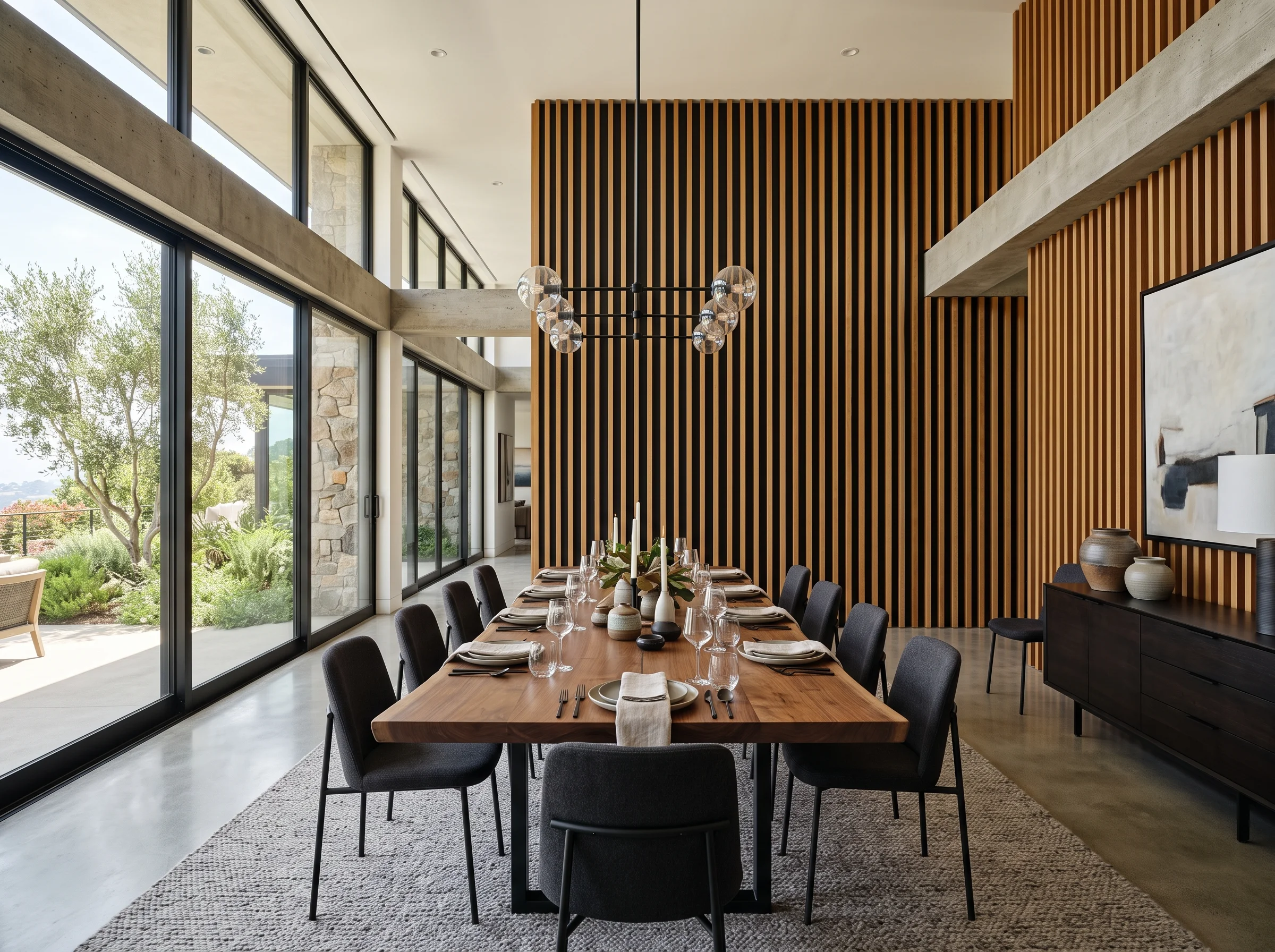
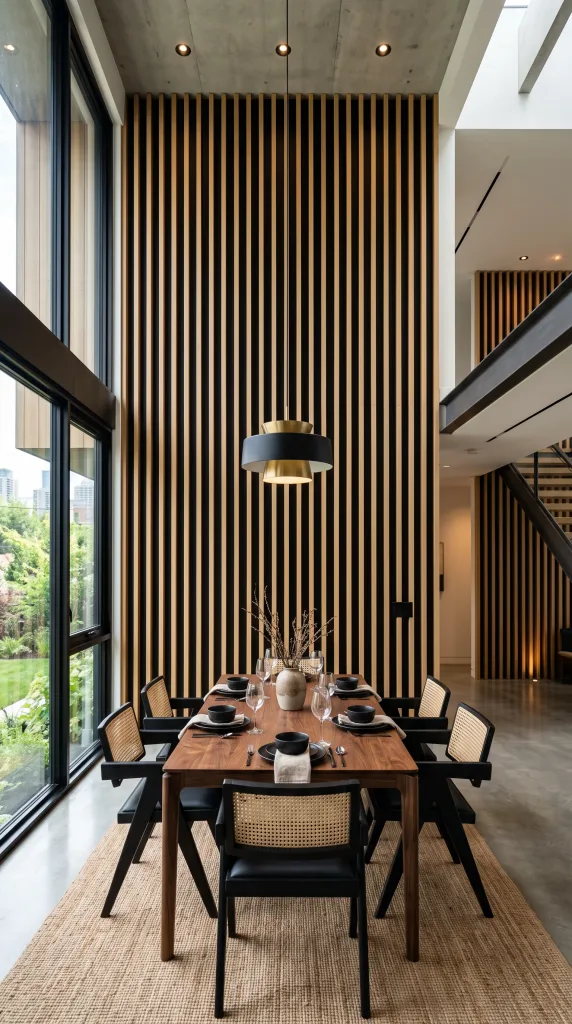
You live in a mid-century home where the dining room ceilings are a claustrophobic eight feet tall, making the entire space feel like a cramped, dark basement whenever you sit down for dinner. Installing a floor-to-ceiling accent wall made entirely of vertical oak wood slats instantly solves this crushing spatial issue. The repetitive, unbroken vertical lines draw the eye straight from the baseboards to the ceiling, creating a highly effective optical illusion that the room is significantly taller than it actually is. The warm wood tone naturally softens the harsh angles of the room, while the gaps between the slats provide incredible acoustic dampening, which is essential for loud family dinners. This architectural treatment makes the room feel airy, highly engineered, and infinitely taller.
Pro Move: Paint the drywall directly behind the wooden slats completely black before installation to make the wood grain pop brilliantly and create deep, dramatic shadows.
Limewash Plaster for Sterile Rooms
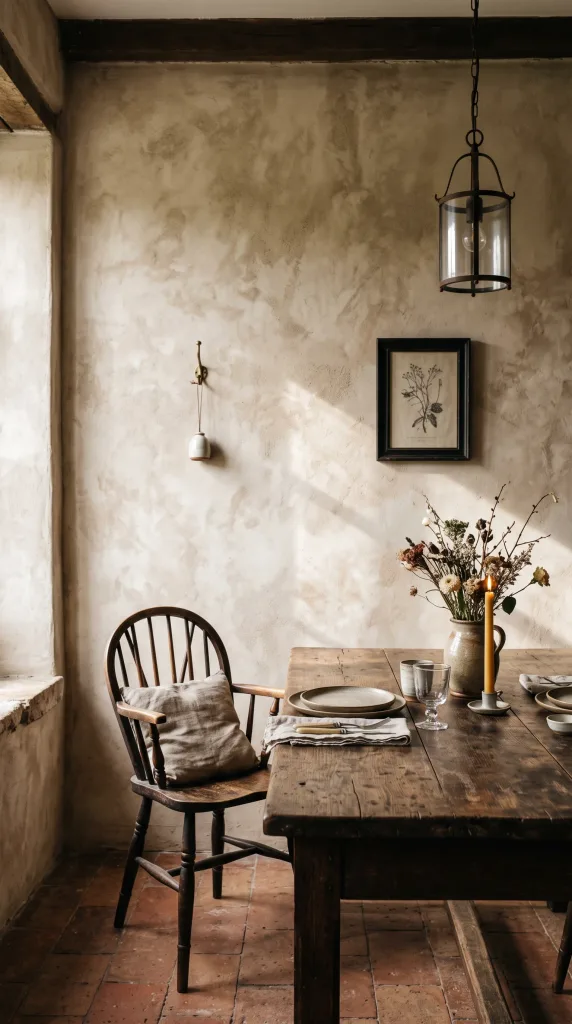
Your dining room sits in a brand-new, builder-grade home, and the perfectly smooth, stark white drywall feels so cold and sterile that you feel like you are eating dinner inside an operating room. Applying a cloudy, heavily textured beige limewash to the main dining wall introduces massive amounts of ancient, European charm that new construction completely lacks. Limewash is a natural plaster that dries with a beautiful, suede-like mottled finish, providing essential physical warmth and a soft, organic backdrop that catches the afternoon sunlight perfectly. I always suggest pairing this highly artisanal plaster wall with a massive, dark wood dining table to create a deeply romantic, wabi-sabi aesthetic that feels collected over centuries rather than built last week.
Designer Advice: Apply the limewash paint using a wide masonry brush in a chaotic, overlapping criss-cross pattern to ensure the texture looks authentically aged and beautifully imperfect.
Oversized Mirrors for Cramped Layouts
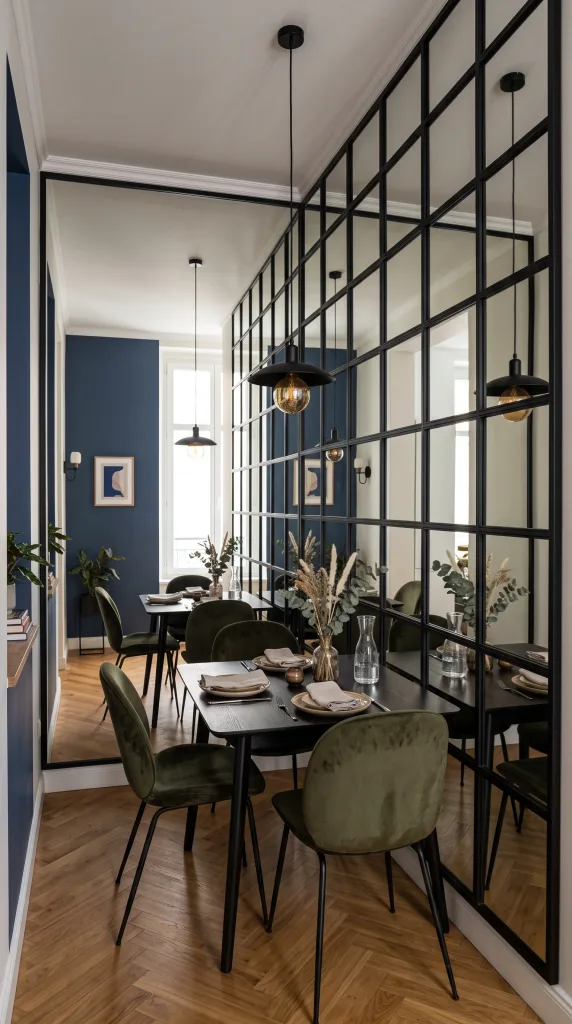
Your dining room is frustratingly small, barely fitting a four-person table, and having guests over feels incredibly claustrophobic because the walls feel like they are actively closing in on you. Covering the entire accent wall with a massive, grid-paneled mirror is the oldest and most effective designer trick for instantly doubling the perceived square footage of a cramped room. The massive reflective surface acts as a secondary window, bouncing ambient light deep into the dark corners and creating the optical illusion that the dining room continues on into another space. You should choose a mirror with a thin, matte black metal frame to keep the look highly modern and sophisticated rather than looking like an outdated 1980s dance studio.
Reality Check: If your mirrored accent wall reflects a messy, cluttered kitchen counter or a chaotic hallway, it will literally double the visual anxiety in your dining room.
Deep Burgundy for Intimate Dining
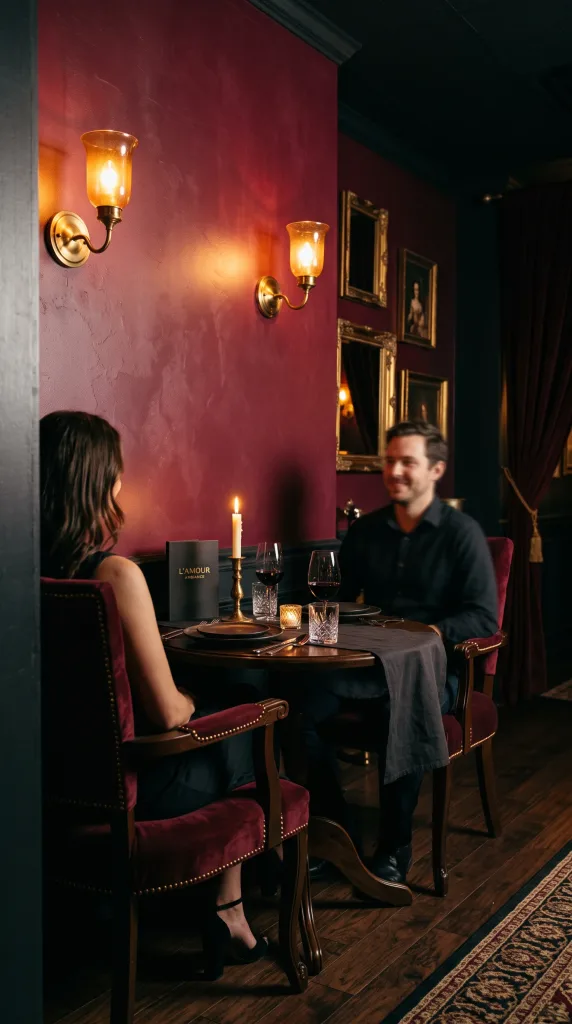
You only use your dining room for hosting elegant, late-night dinner parties, but the bright white walls completely ruin the intimate, moody, restaurant-like atmosphere you are desperately trying to achieve. Painting the wall directly behind your dining table a rich, saturated burgundy immediately absorbs the harsh overhead lighting, transforming the room into a deeply romantic, cocoon-like sanctuary. Dark colors physically recede away from the eye, which paradoxically makes the dining room feel deeper and much more luxurious. I find that pairing this dramatic, wine-colored wall with glowing brass wall sconces and heavy velvet dining chairs creates the ultimate sophisticated lounge vibe, encouraging your guests to stay seated and drink wine for hours after the meal.
Heads Up: Dark paint colors highlight drywall imperfections instantly, so you must carefully patch and sand the entire wall perfectly smooth before applying any burgundy paint.
Large-Scale Botanical Wallpaper
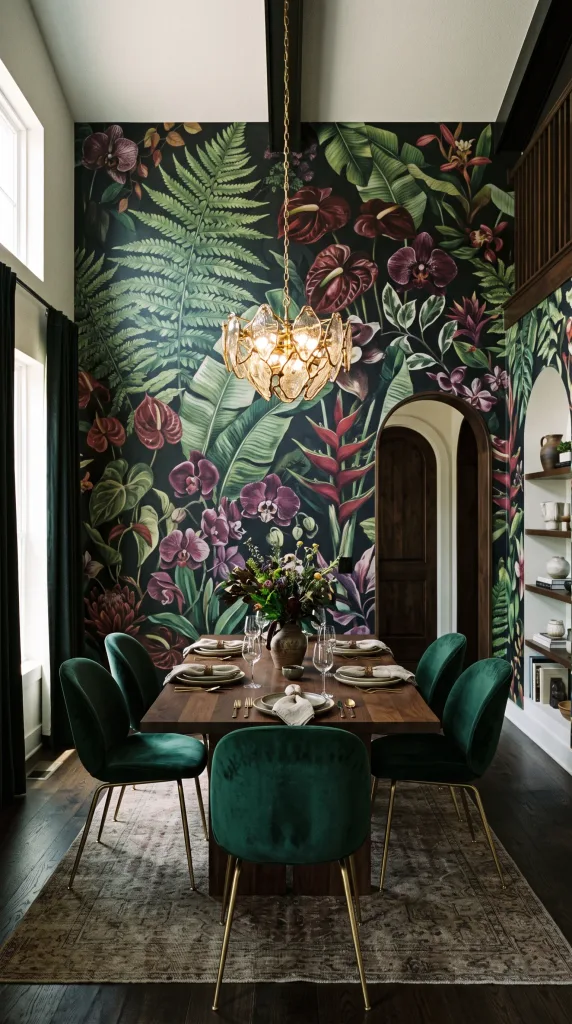
Your dining room feels incredibly flat and entirely devoid of personality because all of your furniture consists of rigid, boxy, straight wooden lines with absolutely no soft patterns or organic movement. Applying a massive, large-scale botanical wallpaper featuring oversized fern leaves and dark tropical flowers instantly introduces explosive life, color, and crucial organic architecture into the stiff room. The oversized print provides a stunning, immersive piece of art that completely dominates the space, replacing the need to buy dozens of small, cluttered picture frames. You must pair this wildly patterned wall with completely solid, neutral dining chairs, such as dark green velvet or solid beige linen, to ensure the room does not feel chaotic or visually exhausting.
Quick Tip: Order a physical sample of the wallpaper and tape it to the wall for three days to ensure the complex colors do not completely clash with your dining room lighting.
Picture-Frame Molding for Traditional Elegance
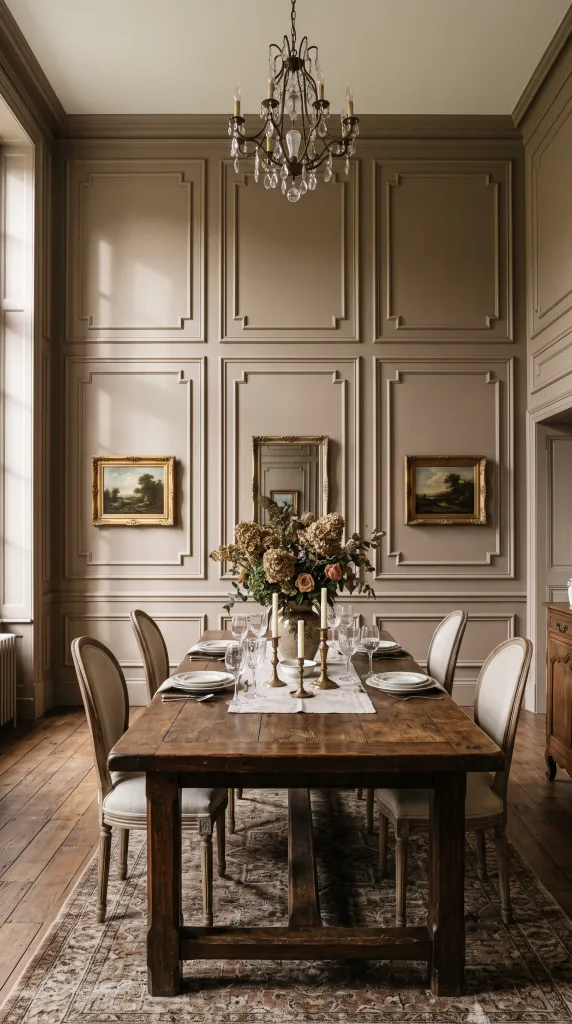
You inherited a massive, beautiful antique dining table, but placing it against plain, flat drywall makes the expensive heirloom furniture look completely out of place and severely disconnected from the modern architecture. Installing traditional picture-frame molding across the entire accent wall instantly bridges the gap, providing the necessary historic architectural detail that makes your antique table look perfectly at home. The raised wooden trim creates highly sophisticated, symmetrical boxes that cast subtle, elegant shadows across the wall without requiring a massive renovation budget. I love painting both the wall and the new molding in a cohesive, warm taupe color to create a deeply luxurious, tone-on-tone French chateau aesthetic that looks incredibly expensive.
Pro Move: Plan the exact size of your molding boxes so that your dining room wall sconces sit perfectly centered inside the top third of the wooden frames.
Natural Stone Cladding for Earthy Texture
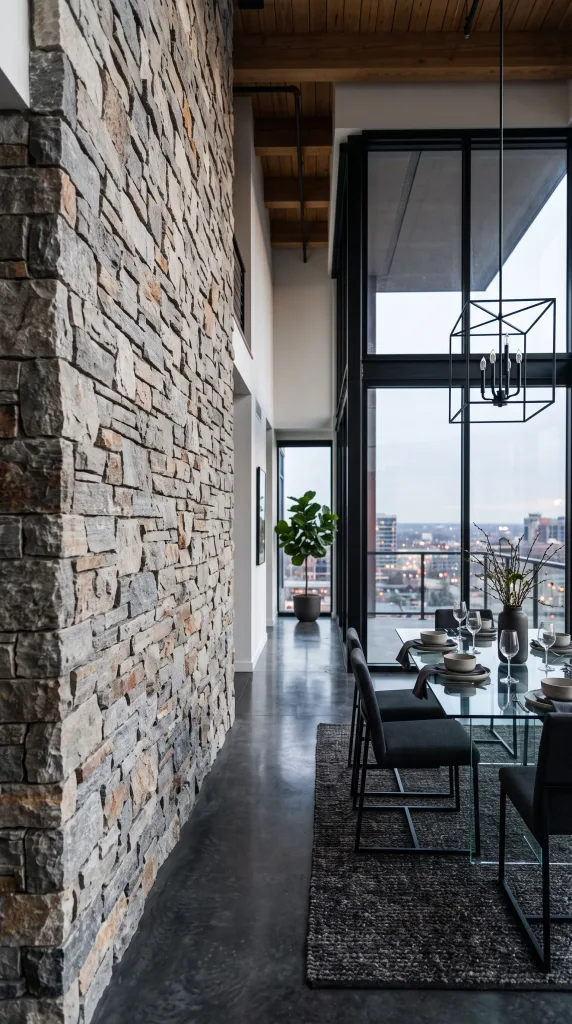
Your dining room is located in a stark, ultra-modern glass and steel condo, and the entire apartment feels incredibly cold, echoing, and completely devoid of any comforting, earthy natural elements. Installing a floor-to-ceiling accent wall using heavily textured, stacked natural ledger stone introduces a massive anchor of raw, organic weight that completely warms up the sterile architecture. The rough, rugged surface of the stone provides incredible acoustic dampening for a loud room and acts as a stunning textural contrast to a sleek glass or metal dining table. This permanent, premium architectural feature completely transforms the room from a basic drywall box into a stunning, highly tactile focal point that feels like a high-end luxury resort.
Reality Check: Natural stone cladding is exceptionally heavy and requires professional installation to ensure your floor joists and wall studs can safely support the massive weight.
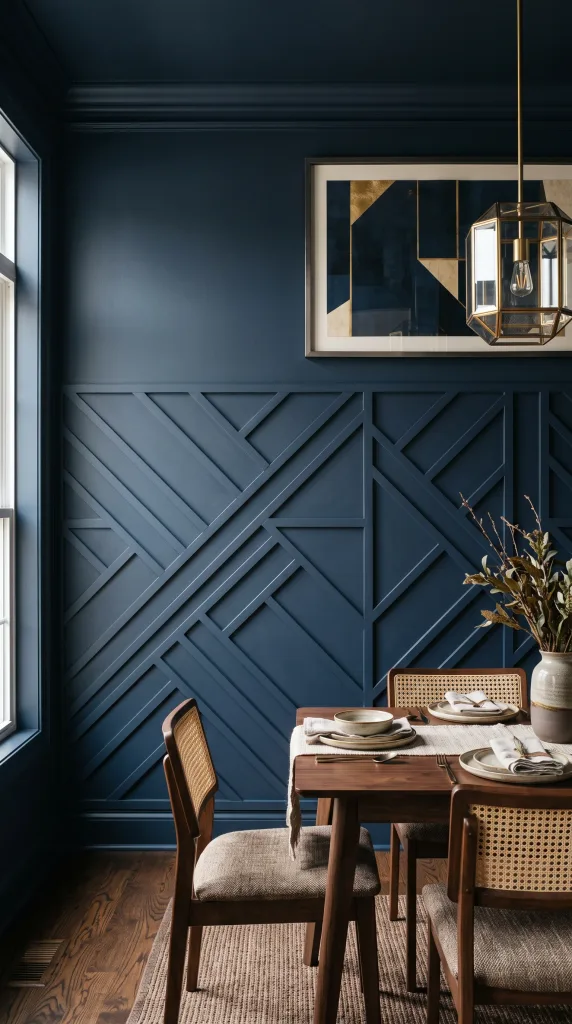
The Tone-on-Tone Board and Batten
Your dining room lacks any distinct architectural features, and simply painting the wall a new color feels too cheap and lazy, but you do not have the budget for custom stone or expensive wallpaper. Installing a simple, geometric board and batten treatment halfway up the wall using inexpensive MDF boards provides massive architectural structure and custom detailing for less than two hundred dollars. Painting both the lower board and batten section and the upper drywall the exact same moody shade, like dark navy blue, creates a highly sophisticated, tone-on-tone texture that feels incredibly modern. This DIY-friendly project heavily elevates the perceived value of the room, grounding your dining chairs against a strong, sturdy architectural line.
Designer Advice: Always caulk every single seam where the MDF boards meet the drywall before painting to ensure the final accent wall looks completely seamless and professional.
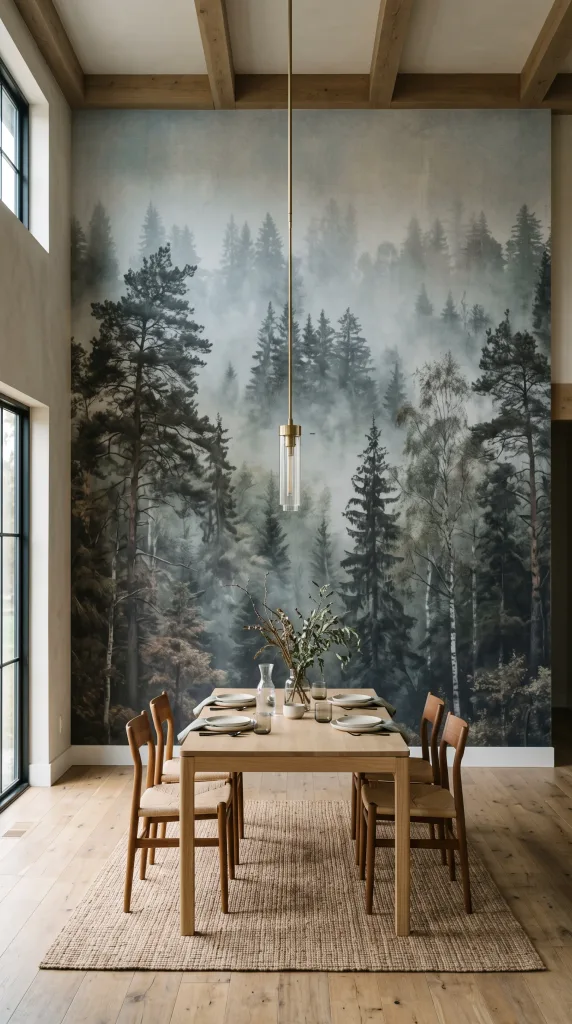
Panoramic Landscape Murals
You have a massive, completely blank wall in your dining room that is far too large to fill with standard framed art, leaving the space feeling empty, echoing, and overwhelmingly intimidating. Installing a full-wall panoramic landscape mural featuring a foggy forest or a vintage pastoral scene instantly transforms the massive void into a breathtaking, immersive window to another world. Unlike repeating wallpaper, a mural acts as a single, cohesive piece of art that completely dominates the visual field, distracting guests from any other imperfections in the room. I highly recommend pairing this dramatic mural with a very simple, minimalist dining table to allow the intricate, beautiful artwork to remain the undisputed star of the room.
Heads Up: Panoramic murals are printed in highly specific, sequential panels; you must hire a professional installer, as making a single mistake ruins the entire continuous image.
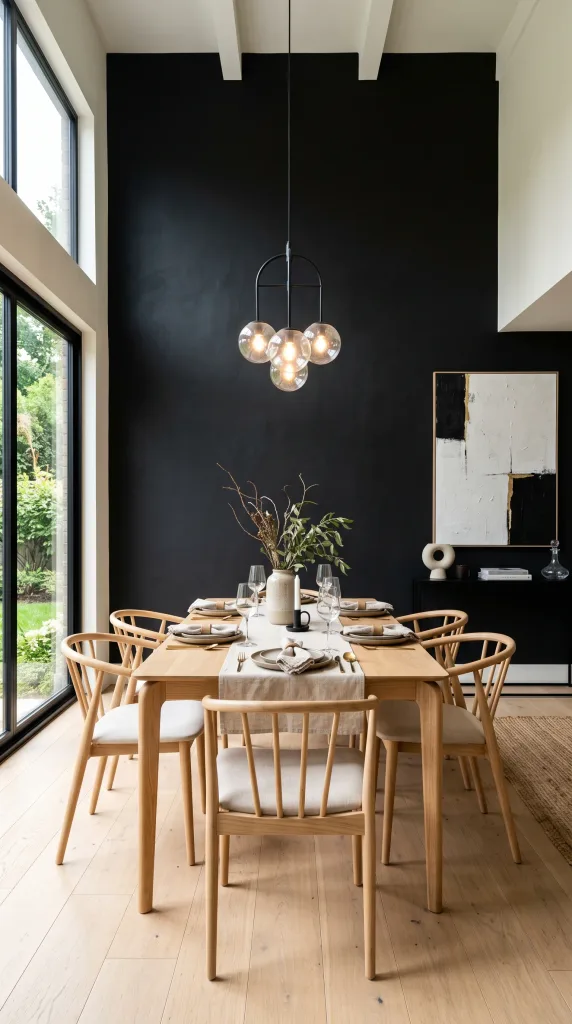
Charcoal Black for High Contrast
Your dining room is filled with beautiful, light oak wooden furniture, but placing it against light beige walls makes everything blend together into a muddy, blurry, incredibly boring sea of tan. Painting the main accent wall a stark, dead-flat charcoal black provides the ultimate high-contrast backdrop, making the light wood grain of your dining table and chairs pop brilliantly. The massive black void absorbs all the light behind the furniture, forcing the eye to focus entirely on the beautiful silhouette of your seating arrangement. This highly dramatic, slightly masculine approach completely modernizes the room, providing a sharp, sophisticated edge that makes simple, affordable wooden furniture look like it belongs in a high-end design showroom.
Quick Tip: Use a completely matte or dead-flat black paint finish, as any glossy sheen will reflect harsh ceiling lights and completely ruin the moody, absorbing void effect.
Warm Terracotta for a Cozy Glow
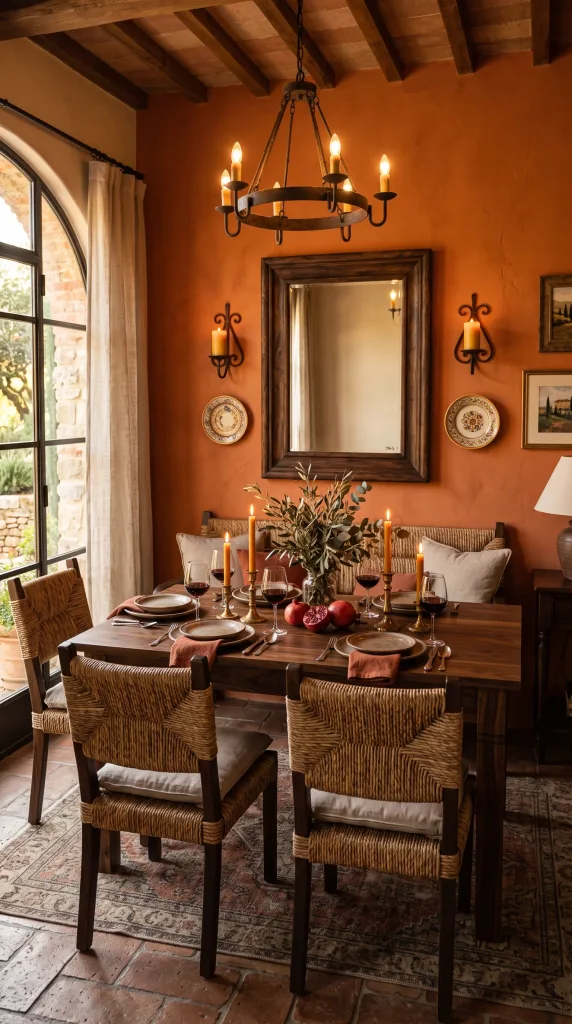
Your dining room faces north and receives almost zero direct sunlight, leaving the space feeling perpetually chilly, grey, and completely unwelcoming during morning breakfasts. Painting the accent wall a deeply saturated, earthy terracotta orange physically warms up the visual temperature of the room, making the space feel like it is constantly bathed in a soft, Tuscan sunset. The rich, clay-like color introduces a massive amount of historical, Mediterranean warmth that perfectly complements dark walnut furniture and heavy brass lighting fixtures. I find that this specific earthy shade naturally stimulates the appetite and encourages lively, energetic conversation, making it the absolute perfect color psychology choice for a dedicated dining space.
Pro Move: Pair your new terracotta accent wall with heavily textured woven rattan dining chairs to fully embrace the warm, earthy, relaxed coastal aesthetic.
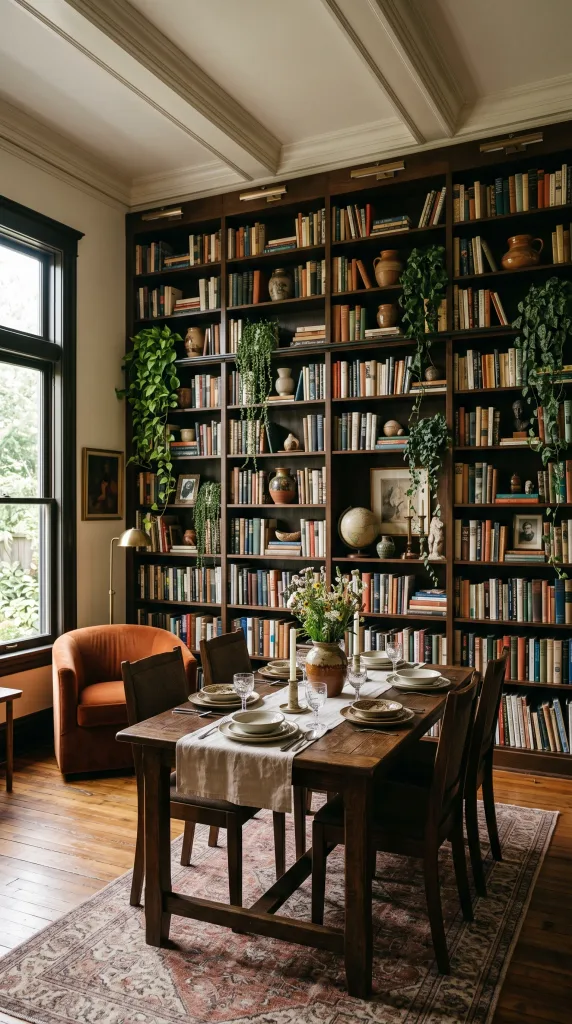
The Built-In Library Wall
You rarely use your formal dining room for eating, and the massive, empty space feels like a complete waste of precious square footage in your home. Building floor-to-ceiling bookshelves across the entire accent wall instantly transforms the underutilized dining room into a highly functional, deeply intellectual library and reading space. You can fill the shelves with your entire collection of hardcover books, beautiful ceramic vases, and trailing plants, creating an incredibly rich, textured backdrop for the dining table. When you do host a dinner party, the towering library wall provides a stunning, sophisticated conversation starter that makes the room feel cozy, intimate, and highly personal. It gives the room a legitimate daily purpose.
Reality Check: Styling massive built-in bookshelves requires dozens of expensive hardcover books and curated objects; do not build this wall if you hate dusting small items.
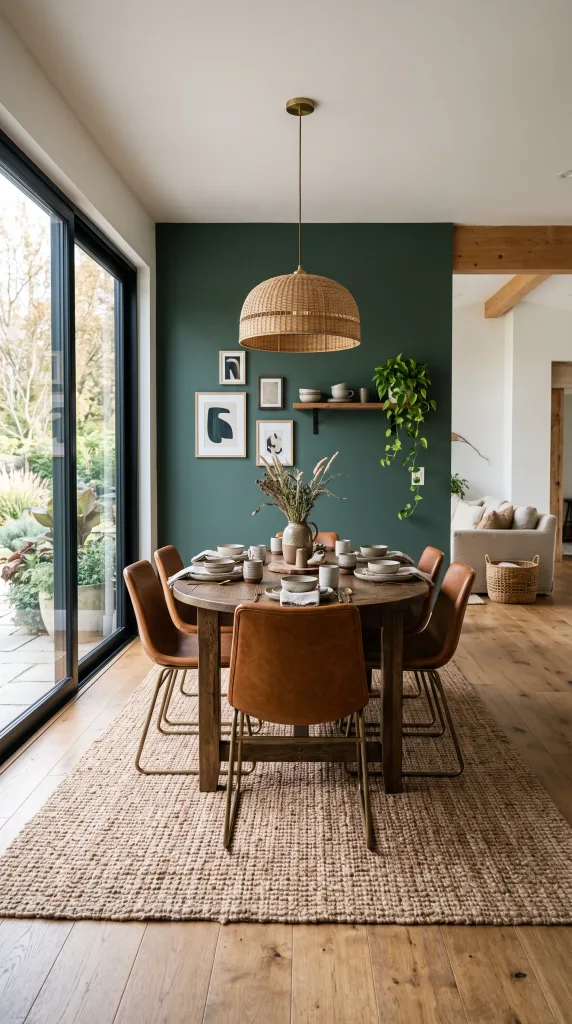
Smoky Jade Green for Calm Elegance
Your open-concept living and dining area feels far too chaotic and visually overwhelming because the spaces bleed together without any clear boundaries or defined zones. Painting the specific wall behind your dining table a calming, smoky jade green instantly creates a strong visual boundary, firmly anchoring the dining zone without needing to build any actual walls. The muted, earthy green hue acts as a highly sophisticated, grounding neutral that perfectly bridges the gap between indoor architecture and outdoor nature. You should pair this elegant green wall with warm leather dining chairs and a heavily textured jute rug to create a deeply relaxing, grounded sanctuary that feels intentionally separated from the loud television area nearby.
Designer Advice: Always choose a green paint that has heavy grey undertones rather than bright primary green to ensure the wall looks mature, historic, and sophisticated.
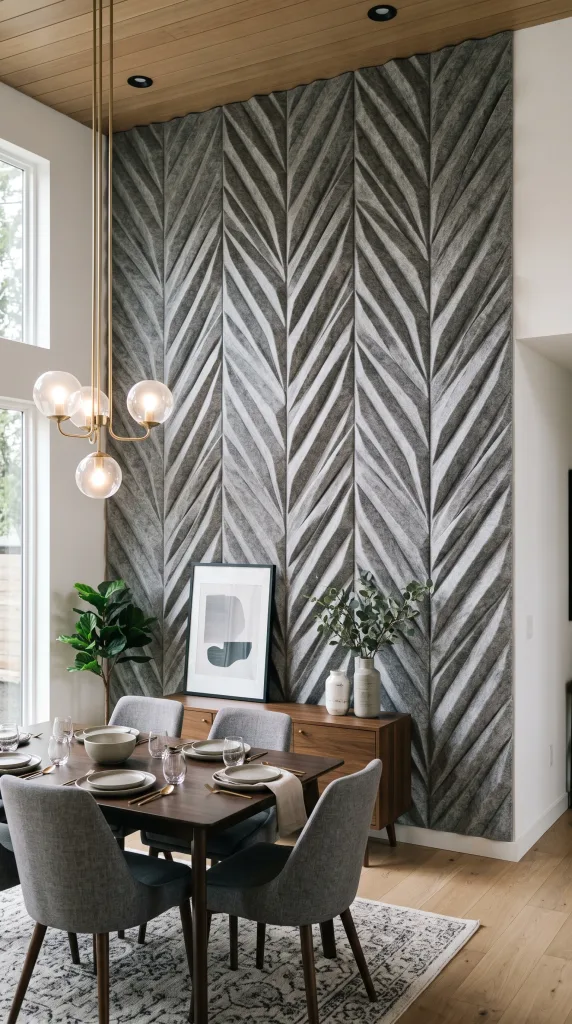
Acoustic Felt Paneling for Echo Reduction
Your dining room features gorgeous hardwood floors and massive glass windows, but the complete lack of soft surfaces causes dinner conversations to echo painfully loudly off the hard architecture. Installing a highly modern, three-dimensional acoustic felt panel accent wall directly solves this massive auditory nightmare while introducing cutting-edge, tactile design. The thick, recycled felt material literally absorbs sound waves, significantly dampening the harsh echoes and making dinner parties feel infinitely more intimate and physically comfortable. These panels often come in beautiful, geometric ribbed patterns and subtle heather-grey tones, adding incredible depth and soft, wool-like texture to the cold room. It is the perfect marriage of high-tech functionality and sleek modern aesthetics.
Heads Up: Acoustic felt panels absorb cooking odors easily, so you must avoid this installation if your dining room is directly adjacent to an unventilated, heavy-cooking kitchen.
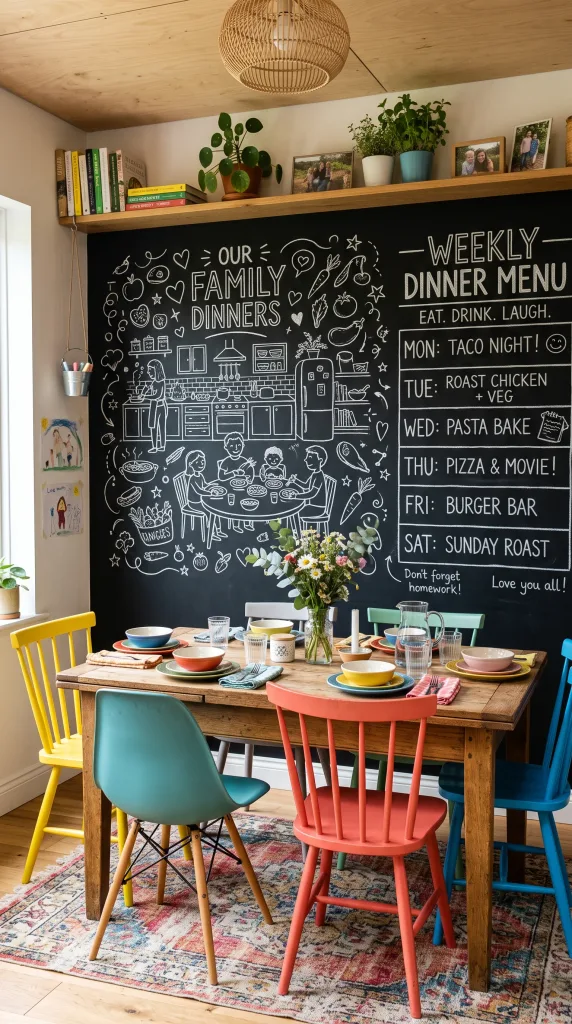
The Functional Chalkboard Wall
You have young children, and your casual, daily dining room constantly feels overly precious, formal, and completely unsuited for messy family life. Painting the entire accent wall with high-quality, black chalkboard paint instantly turns a boring drywall surface into a massive, highly interactive canvas that completely embraces the chaos of family living. You can use the dark wall to write out the weekly dinner menu, let the kids draw murals while you cook, or leave fun messages for guests during casual weekend brunches. When wiped clean, the matte black surface still provides a striking, high-contrast modern backdrop that looks surprisingly chic when paired with a simple wooden dining table and bright, colorful chairs.
Quick Tip: You must physically ‘season’ a brand-new chalkboard wall by rubbing the side of a piece of chalk over the entire surface and erasing it before writing anything.
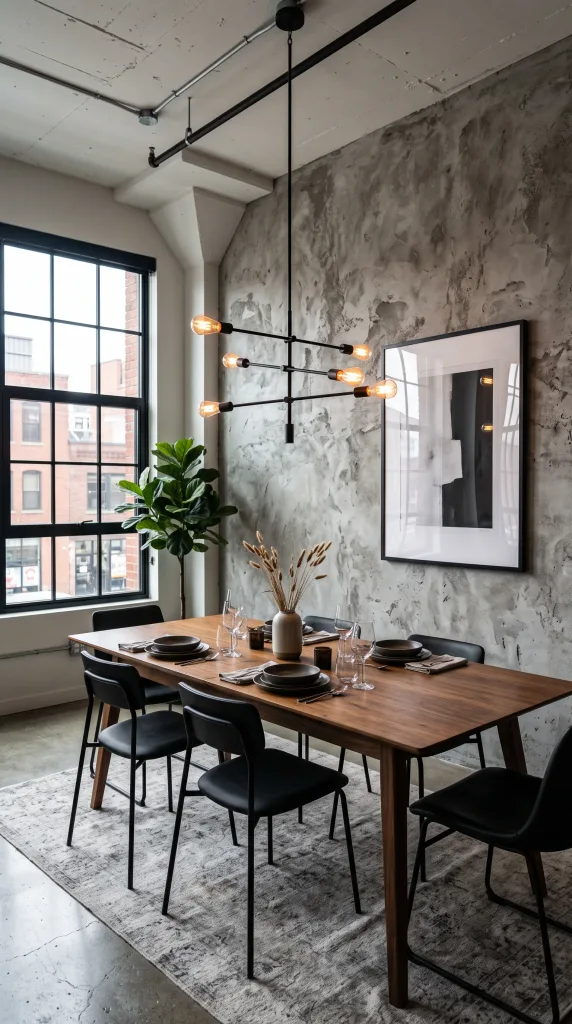
Faux Concrete Finish for Industrial Lofts
You love the gritty, urban look of downtown loft apartments, but your suburban dining room looks painfully generic, featuring standard beige drywall and basic white trim. Applying a specialized faux-concrete plaster finish to the accent wall introduces a massive, heavy, industrial texture that completely changes the architectural DNA of the entire house. The mottled, grey, cement-like finish provides an incredibly cool, slightly masculine edge that perfectly balances the softness of upholstered dining chairs. I highly recommend pairing this raw, industrial wall with a sleek, warm walnut dining table to create a beautiful tension between cold urban architecture and warm, highly refined wood furniture. It is a bold, highly customized focal point.
Pro Move: Install a heavy, matte black metal linear chandelier directly above the table to perfectly complement the raw, industrial aesthetic of the concrete wall.
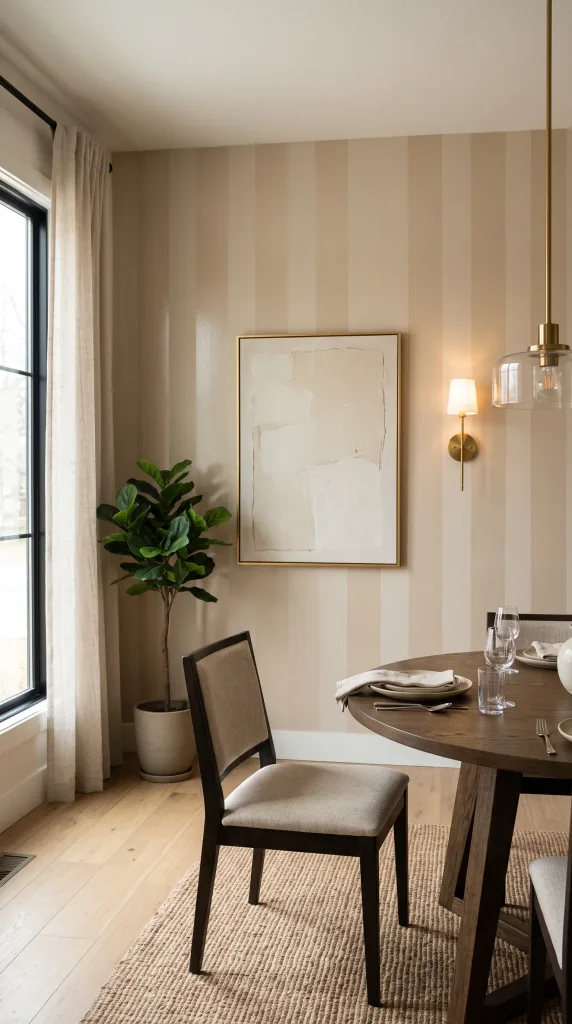
Subtle Tone-on-Tone Stripes
You want to add visual interest to your dining room walls without committing to loud wallpaper, but a single solid paint color feels too basic and uninspired. Painting thick, vertical tone-on-tone stripes using the exact same paint color but alternating between flat and high-gloss finishes creates a stunning, highly subtle optical illusion. As you walk past the dining room, the high-gloss stripes catch the ambient light and shimmer, while the flat stripes absorb the light, providing incredible, shifting texture that never overwhelms the eye. This highly sophisticated technique looks incredibly expensive and adds necessary vertical height to the room, but it requires nothing more than a roll of painter’s tape and two cans of paint.
Reality Check: Painting perfect stripes requires absolute precision; you must use a laser level and high-quality edge-sealing painter’s tape to ensure the vertical lines are perfectly straight.
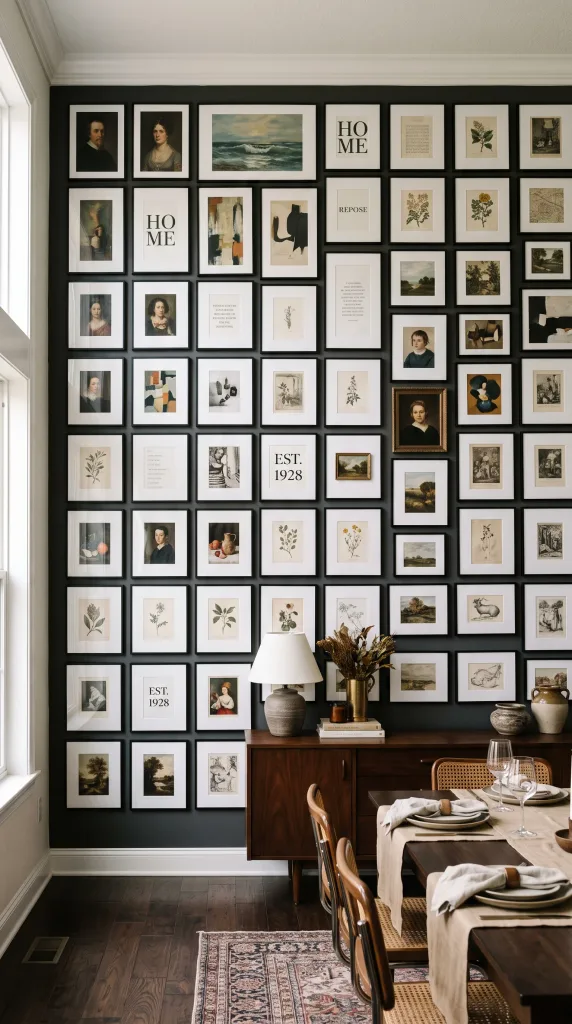
The Oversized Gallery Wall
Your dining room feels incredibly cold and completely devoid of any personal history, making it look like a staged furniture showroom rather than a real family home. Building a floor-to-ceiling, oversized gallery wall completely covers the blank accent wall with a deeply personal collection of family photography, vintage oil paintings, and framed typography. To keep the massive collection looking intentional rather than cluttered, you should use identical thin black frames with massive white matting for every single piece of art, uniting the chaotic subjects into a cohesive, highly curated display. This creates a stunning, immersive focal point that acts as an incredible conversation starter during awkward lulls in dinner parties.
Designer Advice: Cut out paper templates of every single frame and tape them to the wall to perfect your gallery layout before hammering a single nail into the drywall.
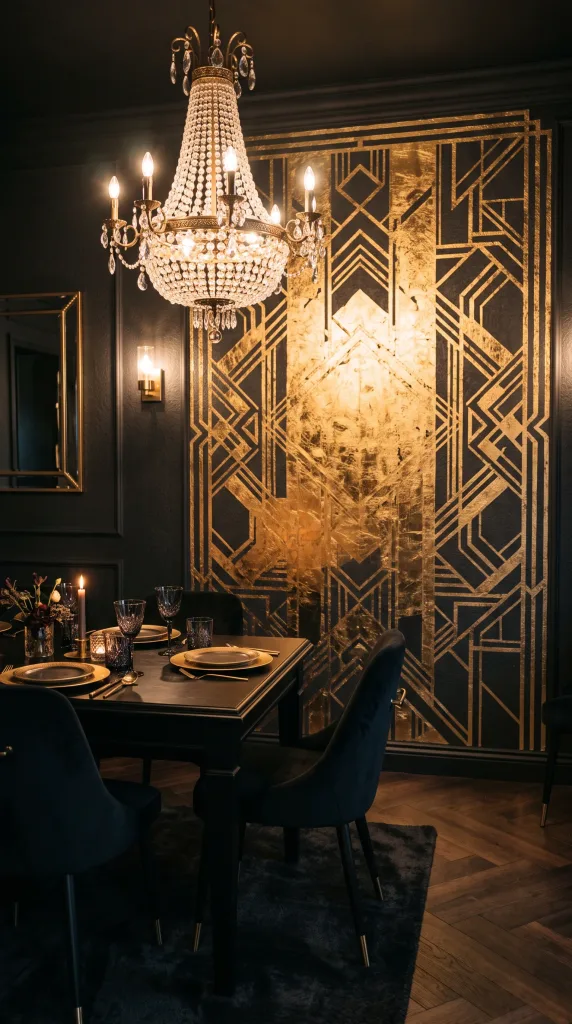
Warm Gold Leaf Detailing
You are trying to create a highly glamorous, Art Deco-inspired dining room, but standard yellow paint looks far too cheap and muddy to achieve the luxurious aesthetic you desire. Applying subtle, metallic gold leaf detailing or utilizing a high-end wallpaper featuring actual metallic gold threads introduces a massive amount of opulent, reflective texture. The warm gold catches the soft, romantic glow of your dining room chandelier, bouncing warm, fiery light around the room and making the entire space feel like an exclusive, high-end speakeasy. You should aggressively ground this highly reflective, glamorous wall by pairing it with dark, matte black furniture or deep navy velvet chairs to prevent the room from looking gaudy.
Heads Up: Applying real gold leaf is an incredibly frustrating, delicate process that requires specialized adhesive and a perfectly still room without any moving air.
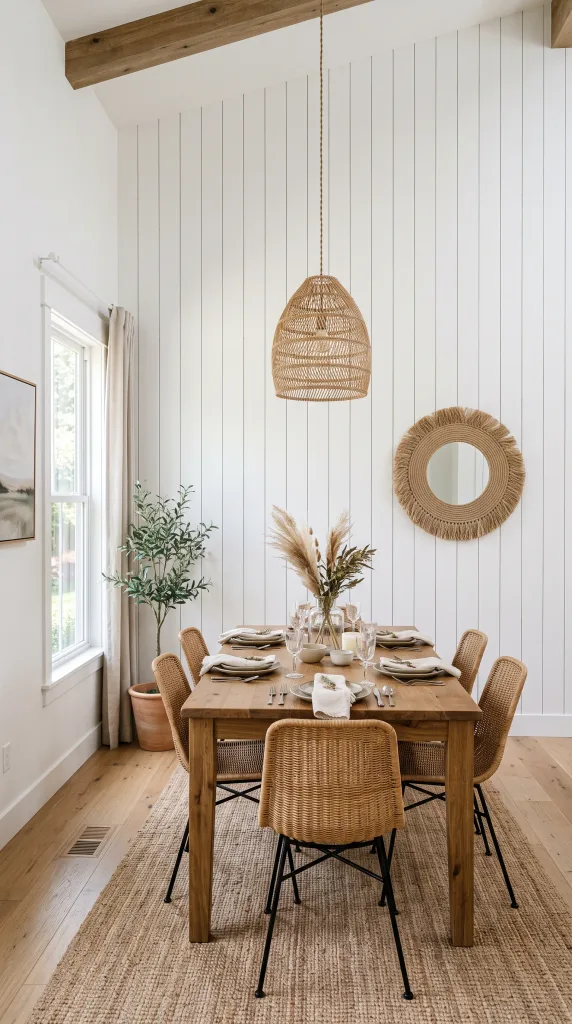
Shiplap Installed Vertically
You love the relaxed, coastal farmhouse aesthetic of shiplap, but installing the wooden boards horizontally makes your dining room ceiling look painfully low and incredibly squat. Installing those exact same shiplap boards vertically instead completely changes the architectural geometry, drawing the eye straight up and instantly making the ceilings feel significantly taller. Painting the vertical shiplap a crisp, bright white introduces crucial architectural texture and shadow lines without darkening the room or overwhelming the space with a heavy wood tone. I always pair this bright, linear wall treatment with a warm, natural wood dining table and woven rattan chairs to complete the relaxed, airy, coastal-inspired sanctuary vibe.
Quick Tip: Use nickels as perfectly sized spacers between the wooden shiplap boards during installation to ensure the shadow-casting gaps are entirely uniform across the wall.
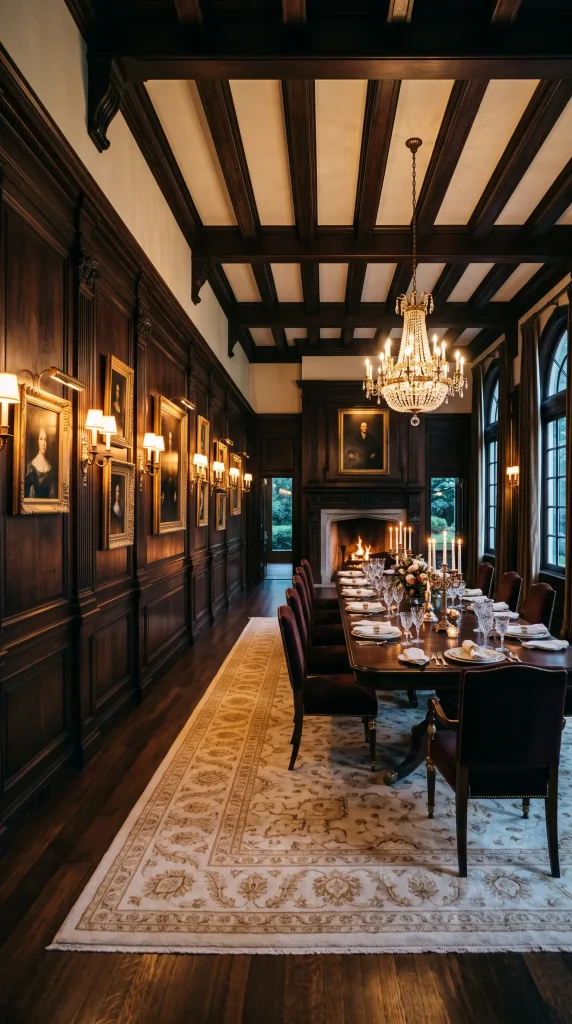
Dark Espresso Wood Paneling
Your dining room is massively oversized, and no matter how much furniture you put in it, the echoing room constantly feels cold, empty, and severely uninviting. Installing dark espresso wood paneling across the main accent wall physically darkens the space and introduces a massive, heavy visual anchor that instantly shrinks the perceived size of the room. The dark, rich wood tones provide incredible historical warmth, making the massive room finally feel intimate, grounded, and deeply luxurious. You must balance this incredibly heavy, dark architectural feature by keeping the ceiling bright white and utilizing a massive, light-colored area rug directly underneath the dining table.
Pro Move: Install glowing brass picture lights directly onto the dark espresso wood paneling to highlight the beautiful wood grain and add necessary warm ambient lighting.
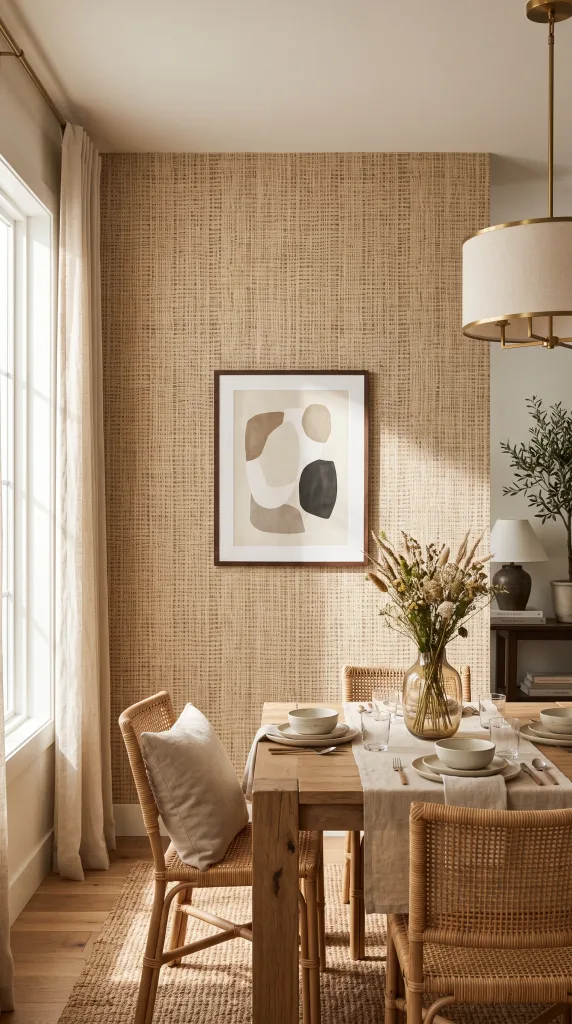
Textured Grasscloth Wallpaper
You are terrified of bold patterns and dark paint colors, but leaving your dining room walls perfectly smooth and beige makes the entire apartment feel incredibly flat and lifeless. Installing a high-quality, natural woven grasscloth wallpaper provides massive amounts of subtle, earthy texture without requiring you to commit to a loud, aggressive design. The tight, woven fibers of the grasscloth introduce a beautiful, organic grid pattern that softens the hard edges of your wooden dining table and catches the afternoon sunlight perfectly. This highly sophisticated, classic design choice is the absolute best way to add quiet luxury and physical warmth to a completely neutral dining room.
Reality Check: Grasscloth is made of highly absorbent natural fibers and cannot be cleaned with water; you must absolutely never install it near a messy, splattering kitchen zone.
The Fully Mirrored Alcove
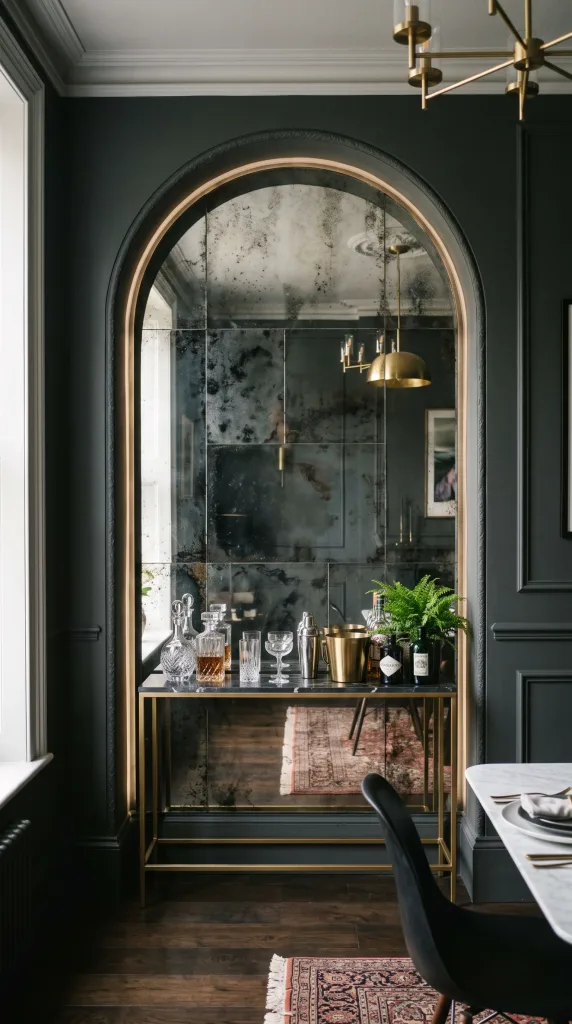
Your dining room features a weird, shallow architectural alcove or a strange recessed niche that looks incredibly awkward and completely useless for storing furniture. Installing a custom-cut, floor-to-ceiling mirror directly inside that awkward alcove instantly turns a massive architectural flaw into a stunning, intentional focal point. The mirrored recess creates a fascinating optical illusion of a hidden doorway or an infinite hallway, bouncing massive amounts of light back into the dining room. I love placing a sleek, narrow console table directly in front of the mirrored alcove, turning the strange space into a highly functional, glamorous bar area that makes the room feel much larger.
Designer Advice: Use an antiqued or smoked mirror finish inside the alcove to soften the harsh reflection and provide a moody, romantic vintage aesthetic rather than a stark modern one.
Bold Ceiling Continuity
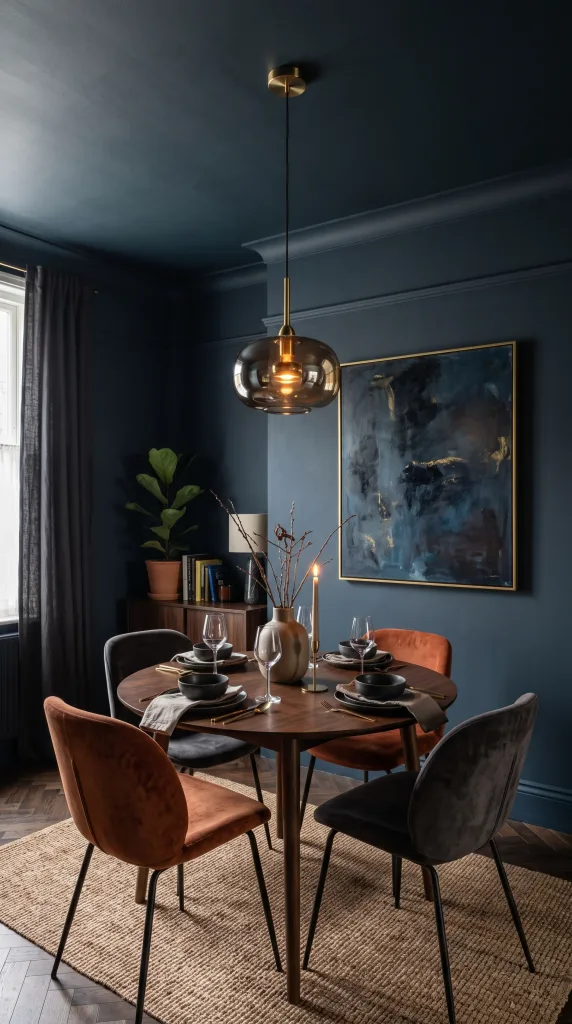
Your dining room is incredibly small, and painting just one accent wall makes the room feel chopped up, visually disjointed, and even smaller than before. Instead of stopping at the top of the wall, continue your bold accent paint color or wallpaper straight up and entirely across the ceiling directly above the dining table. This massive, continuous block of color creates a highly immersive, canopy-like effect that completely blurs the sharp architectural corners of the room, wrapping the seating area in a cozy, dramatic cocoon. This bold ‘color drenching’ technique is highly favored by modern designers because it provides unparalleled intimacy and high-end drama without taking up zero floor space.
Heads Up: Painting a ceiling a dark color heavily absorbs ambient light; you must ensure your dining room chandelier is incredibly bright to compensate for the lost reflectivity.
Conclusion
An accent wall in a dining room should never be an afterthought or a random splash of leftover paint; it must be a highly intentional architectural solution to a specific spatial problem. As these twenty-four scenarios demonstrate, the most stunning dining rooms rely heavily on introducing massive organic texture, manipulating optical illusions, and boldly embracing rich, saturated colors. Whether you are installing vertical wood slats to make a low ceiling feel taller, or utilizing a massive mirrored wall to double the perceived size of a cramped apartment, the accent wall must serve a distinct functional purpose. By moving away from flat drywall and fully embracing highly tactile materials like acoustic felt, natural stone, and dark wood paneling, you can completely transform your dining room into a deeply inviting, sophisticated sanctuary that your guests will never want to leave.
Frequently Asked Questions
Which wall in a dining room should be the accent wall?
The accent wall should always be the very first wall you see when entering the room, or the wall that naturally anchors the longest side of the dining table. Never choose a wall that is heavily broken up by multiple doors or large windows, as the architectural interruptions will completely ruin the dramatic impact.
Are painted accent walls going out of style?
A single wall painted a bright, random color is definitely out of style. However, highly textured painted walls—such as tone-on-tone stripes, dark moody color drenching, or mottled limewash plaster—are incredibly trendy and widely used by high-end interior designers.
How can I make a dark accent wall work in a small dining room?
Dark walls physically recede away from the eye, which can actually make a small room feel deeper. To prevent it from feeling like a cave, you must heavily contrast the dark wall with a large, light-colored rug, crisp white ceiling paint, and highly reflective metallic lighting fixtures.
Is wallpaper a good idea for a dining room accent wall?
Yes, wallpaper is fantastic for dining rooms because it introduces crucial soft patterns into a room that is normally dominated by hard, rigid wooden furniture. Choose large-scale botanical prints or textured grasscloth to add massive visual interest without taking up any floor space.
What is the best accent wall for a loud, echoing dining room?
If your room echoes terribly due to hard floors and glass windows, you must install an accent wall that physically absorbs sound waves. Acoustic felt paneling, vertical wood slats with acoustic backing, or heavily textured woven tapestries are the absolute best functional choices.
Can I have an accent wall in an open-concept living space?
Absolutely. In an open-concept home, an accent wall is actually the best way to visually anchor and define the specific dining zone without needing to build any physical walls. It provides a strong, sophisticated boundary that separates the eating area from the television area.