Incredible Dining Room Banquette Ideas to Maximize Your Space
Incorporating a banquette into your dining room is one of the smartest, most transformative design decisions you can make for your home. Standard dining chairs require massive amounts of clearance space to be pulled out and pushed in, which often leaves small dining rooms feeling incredibly cramped and functionally useless. A built-in or freestanding banquette completely eliminates this necessary clearance zone, allowing you to push your dining table straight into an unused corner or directly against a blank wall. This simple architectural shift instantly frees up massive amounts of square footage for walkways, completely opening up the entire floor plan. Beyond mere space-saving mechanics, banquettes introduce a level of plush, restaurant-style comfort that hard wooden chairs simply cannot provide, encouraging your family and guests to linger around the table for hours.
The secret to designing a truly functional banquette lies in understanding the specific physics of dining comfort and the absolute necessity of hidden storage. You must carefully engineer the depth of the seat, the angle of the backrest, and the exact type of table base you pair with it to avoid creating a frustrating, cramped seating trap. The twenty-four ideas below are detailed mini-guides designed to walk you through exactly how to build, style, and utilize a banquette in your own home. Each idea covers specific fabric choices, crucial dimensions, and lighting strategies to ensure your new dining nook looks completely custom and highly professional. Whether you want to build a massive U-shaped booth in a bay window or simply slide a freestanding velvet bench against a wall, these practical insights will guarantee success.
The Classic L-Shaped Corner Built-In
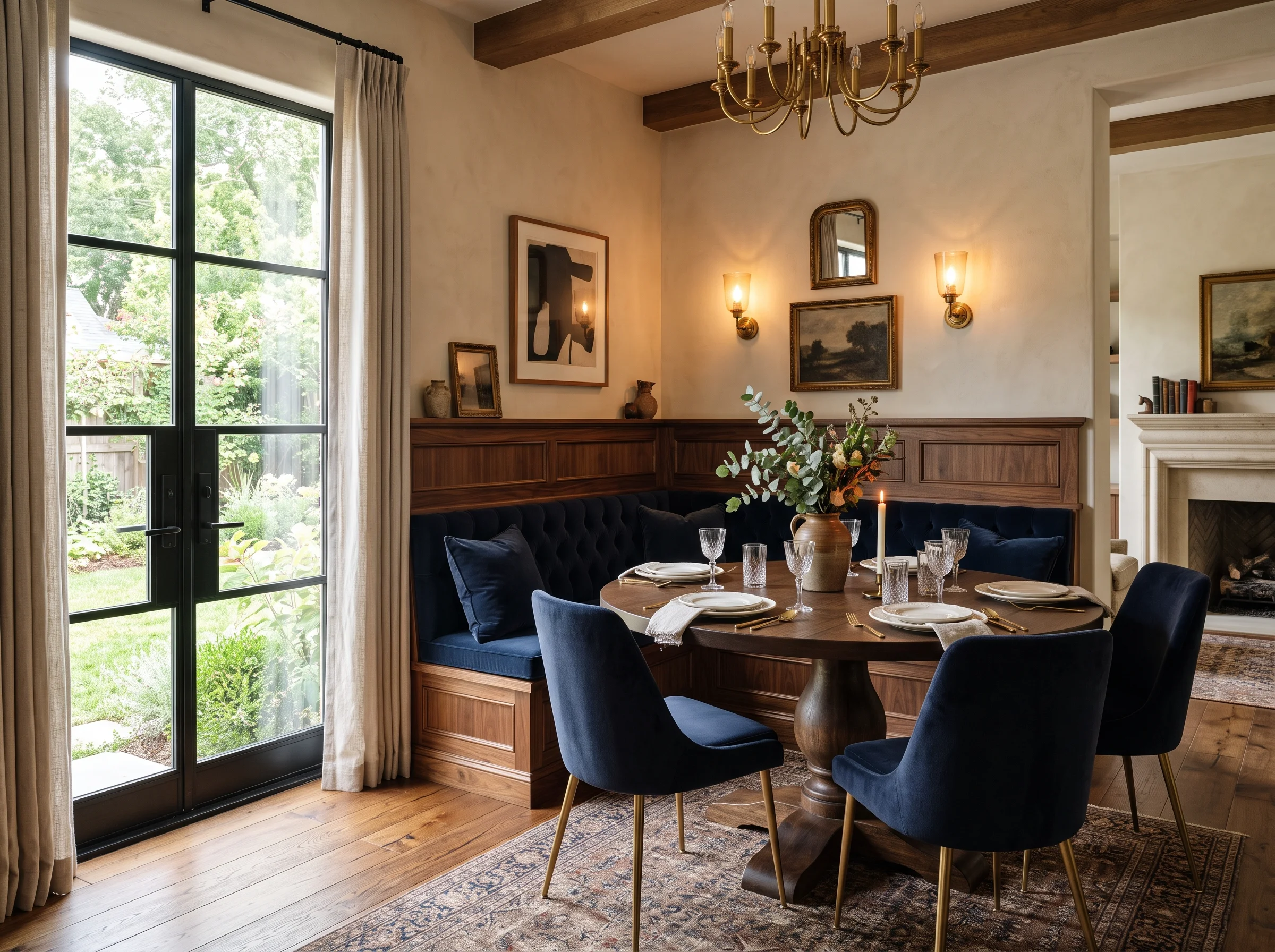
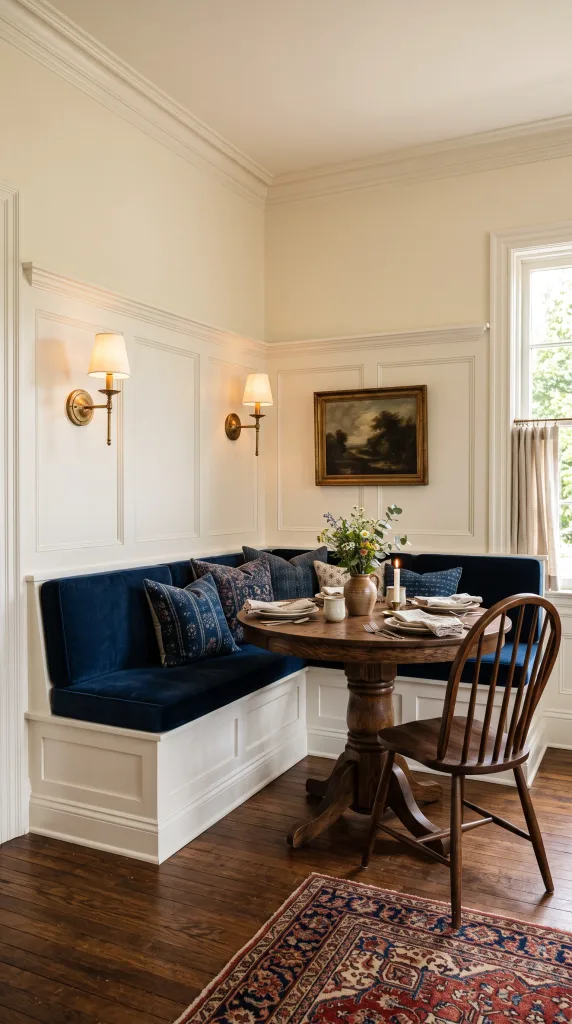
Installing a permanent, L-shaped wooden built-in banquette into an unused corner of your dining room is the most efficient way to maximize seating capacity in a cramped floor plan. By hugging the corner tightly, the bench provides continuous seating for at least four adults without protruding awkwardly into the main traffic pathways of the home. You should construct the base of the banquette out of heavy, solid wood painted the exact same color as your baseboards to ensure the new seating looks like original, historical architecture rather than a temporary afterthought. Pairing this rigid wooden base with incredibly thick, custom-sewn seat cushions covered in dark navy or forest green fabric provides essential comfort while hiding inevitable food stains. To ensure the space feels highly illuminated, install a pair of matching brass wall sconces directly above each side of the L-shape.
Designer Advice: Always angle the wooden backrest of the built-in slightly backward by at least five degrees; a perfectly straight ninety-degree backrest will feel agonizingly stiff during a long dinner.
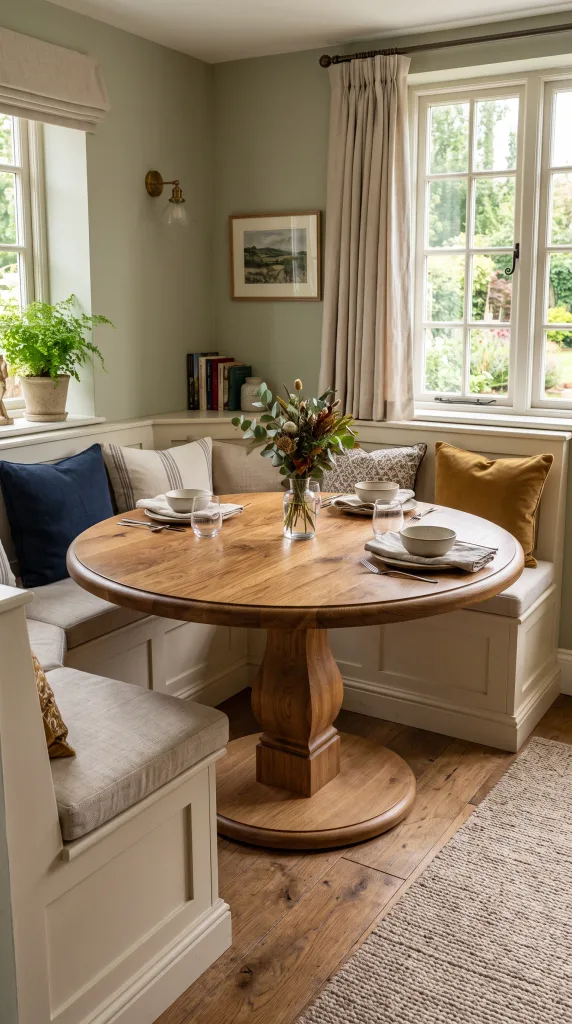
Pedestal Tables for Easy Access
Pairing your banquette seating with a heavy, solid pedestal dining table is absolutely critical for maintaining easy, graceful access in and out of the booth. Standard dining tables feature four thick legs at the outer corners, which create a massive physical barrier that forces guests to awkwardly shimmy and squeeze their way across the banquette seat to get out. A pedestal table features a single, central supporting column, leaving the entire outer perimeter of the table completely free of any wooden obstacles, allowing guests to slide in effortlessly. I always recommend choosing a round or oval pedestal table, as the curved edges further soften the rigid, geometric lines of a built-in corner banquette. This specific furniture combination ensures the dining nook feels incredibly welcoming rather than feeling like a frustrating physical trap.
Pro Move: Ensure the heavy base of the pedestal table is wide enough to prevent the table from tipping over when someone heavily leans on the outer curved edge.
Hidden Deep Drawer Storage
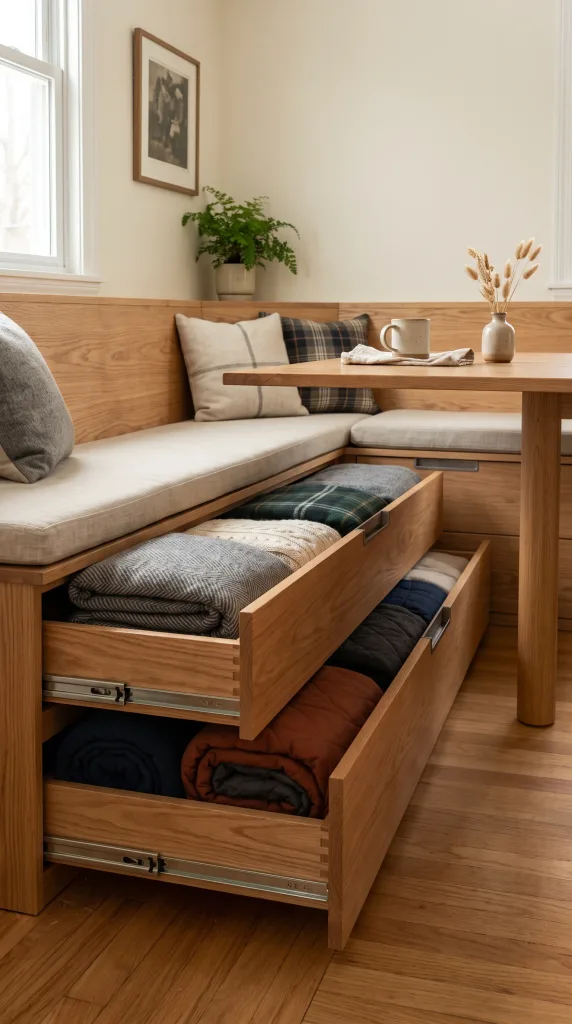
Building massive, smooth-gliding storage drawers directly into the base of your banquette completely changes the functional storage capacity of a small home or apartment. Unlike lift-top banquette seats that force you to awkwardly remove all the cushions and ask guests to stand up just to access the storage compartment, front-facing drawers allow you to easily pull out items while people are still sitting at the table. You can use these deep, cavernous drawers to completely hide bulky winter blankets, rarely used holiday table linens, or heavy kitchen appliances that clutter up your countertops. I highly recommend outfitting the drawers with heavy-duty, soft-close metal glides to ensure they operate smoothly even when packed with fifty pounds of heavy ceramic plates. This dual-purpose architecture is the ultimate small-space hack.
Reality Check: You must measure the clearance between the front of the banquette and the dining table leg perfectly; if the drawer hits the table base, it is completely useless.
Channel-Tufted Leather Backrests
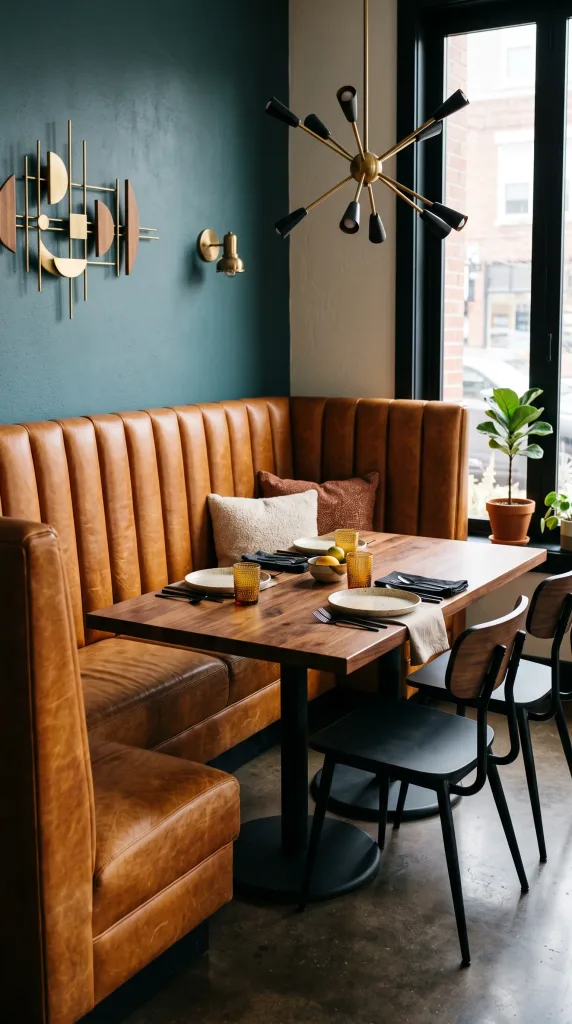
Upholstering the backrest of your banquette in rich, warm caramel leather featuring vertical channel tufting introduces an incredibly luxurious, vintage diner aesthetic to the room. The vertical stitching of the channel tufting provides beautiful architectural rhythm that naturally draws the eye upward, making the dining room ceiling feel significantly taller. Genuine leather is the absolute perfect material for dining banquettes because it is incredibly durable, entirely wipeable, and actually looks much better as it develops a worn, scratched patina over years of heavy use. You should pair this heavy leather backrest with a dark walnut wood table and matte black metal chairs to complete the moody, sophisticated, mid-century modern lounge atmosphere. This heavy texture heavily anchors a large, empty dining room.
Quick Tip: Condition the leather backrest every six months with a high-quality wax to keep the material supple and prevent it from drying out and cracking near the stitched seams.
Floating Banquette Benches
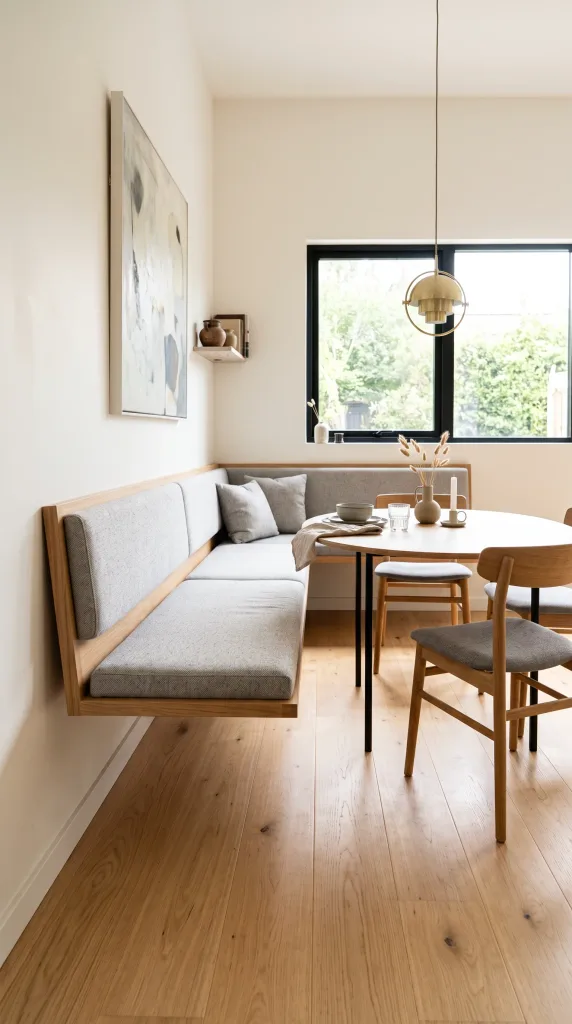
If you want the space-saving benefits of a banquette without the heavy, bulky visual weight of a solid wooden box, installing a floating banquette bench is a brilliant contemporary alternative. By heavily mounting a thick, upholstered wooden seat directly into the wall studs, you leave the entire floor underneath the bench completely exposed, making the small dining room feel incredibly airy, open, and undeniably modern. This floating architecture allows natural sunlight to hit the floor uninterrupted, creating the highly effective optical illusion that the room is significantly wider than it actually is. I find this approach works beautifully in minimalist, sleek apartments where heavy, traditional wainscoting or solid cabinetry would look completely out of place. It also makes vacuuming the dining room floor an absolute breeze.
Heads Up: A floating bench holding three adults requires massive structural support; you must use heavy-duty steel L-brackets bolted directly into the wooden wall studs to prevent sudden collapse.
Curved U-Shaped Bay Window Booths
Transforming an awkward, unused bay window into a massive, curved U-shaped banquette booth provides the ultimate cozy, restaurant-style seating experience right in your own home. The U-shape naturally pushes your guests close together, creating a highly intimate, conversational environment that is absolutely perfect for long Sunday brunches or late-night board games. By following the natural curve of the bay window, the custom banquette seamlessly fills the dead architectural space without sticking out awkwardly into the main room. You should pair this massive seating arrangement with a custom-cut oval table that perfectly mirrors the curve of the booth, ensuring every single guest has equal access to the tabletop. Adding plenty of loose, highly textured throw pillows completes the deeply inviting, lounge-like atmosphere.
Designer Advice: Ensure the height of the banquette backrest does not block the bottom of the window panes, allowing maximum natural sunlight to flood over the shoulders of your guests.
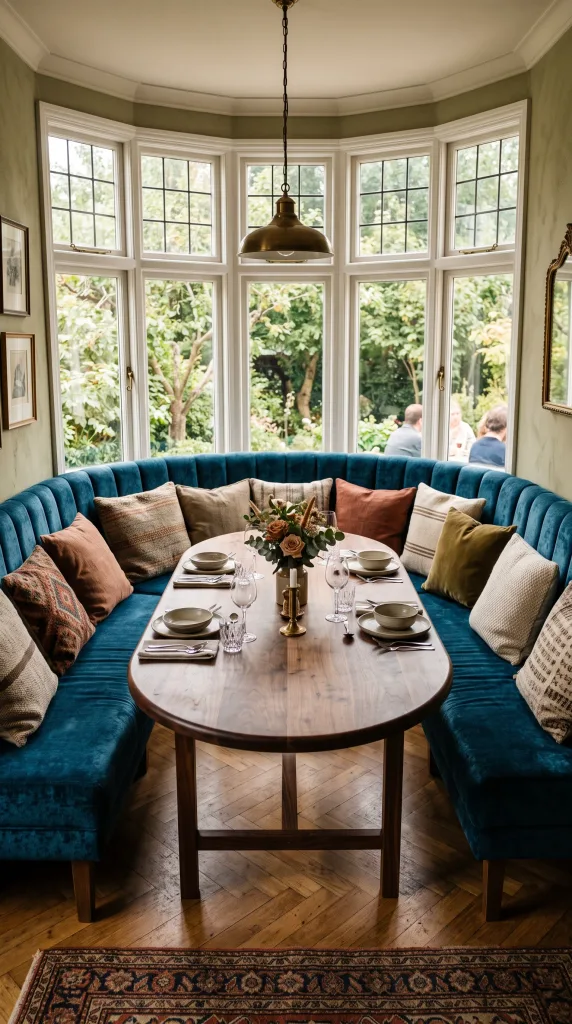
Performance Velvet Upholstery
Choosing a high-quality, commercial-grade performance velvet for your banquette cushions is the smartest way to introduce massive luxury without sacrificing practical durability in a high-spill zone. Standard cotton or linen fabrics will absorb red wine and spaghetti sauce instantly, permanently ruining your expensive custom cushions after a single dinner party. Performance velvet is specifically manufactured to repel liquids, allowing spills to bead up on the surface long enough for you to quickly wipe them away with a damp cloth. Beyond its stain resistance, the crushed texture of the velvet absorbs ambient light beautifully, making colors like dark emerald green or deep navy blue look incredibly rich and expensive. This fabric provides the perfect combination of tactile softness and rugged family-friendly armor.
Reality Check: Velvet inherently shows ‘crush marks’ where people sit frequently; you must lightly steam the fabric once a month to lift the fibers and keep it looking brand new.
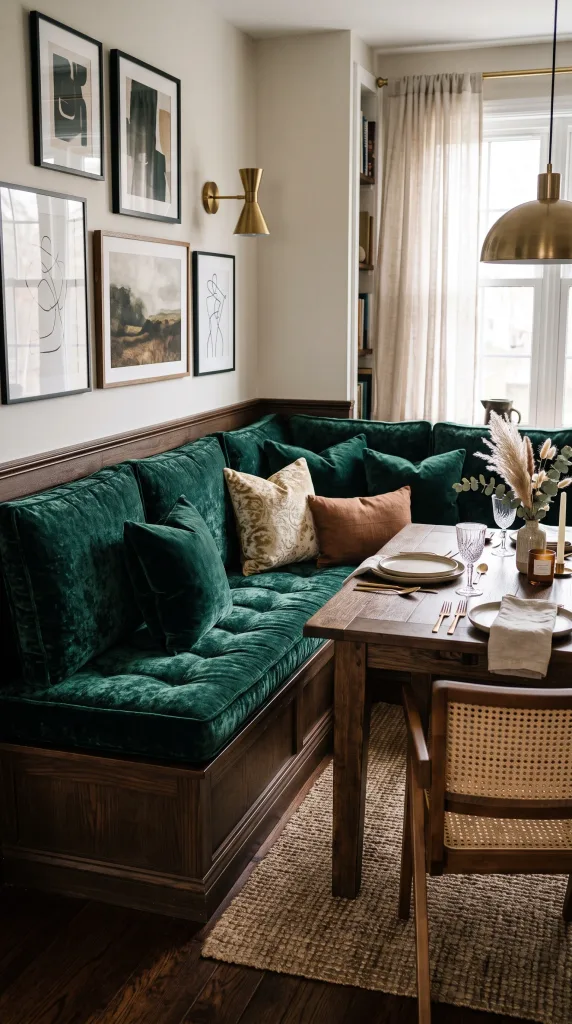
Freestanding Upholstered Benches
If you are currently renting an apartment and cannot build a permanent wooden structure, buying a heavy, freestanding fully upholstered high-back bench is a fantastic, damage-free alternative. You simply push the long, heavy bench directly against the dining room wall and pull your table up to it, instantly creating the exact same cozy, space-saving banquette effect without requiring a single power tool. The tall, upholstered backrest acts as a massive block of soft color and texture, serving as a beautiful architectural focal point that heavily grounds the seating arrangement. Because it is completely freestanding, you can easily pull the bench away from the wall to retrieve dropped items, and simply pack it up and take it with you when your lease ends.
Quick Tip: Apply heavy-duty, non-slip rubber grips to the bottom of the freestanding bench legs so the seating does not frustratingly slide backward every time a guest sits down.

The Wall-to-Wall Straight Run
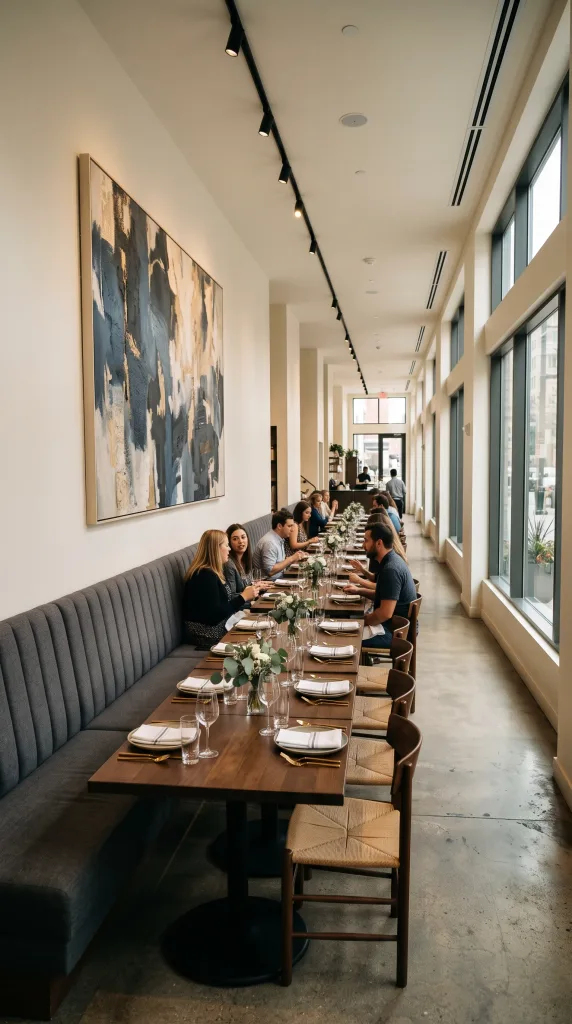
Installing a single, continuous straight banquette bench across the entire length of a long dining room wall is a brilliant strategy for incredibly narrow, galley-style homes. By eliminating chairs on one side of the table entirely, you streamline the traffic flow perfectly, allowing a clear, unobstructed walking path on the opposite side of the room. This long, continuous horizontal line naturally draws the eye outward, creating the highly effective optical illusion that the narrow room is actually much longer than reality. You should break up the massive block of seating by utilizing three separate, identical dining tables pushed together, allowing you to easily separate them into smaller, intimate cafe-style tables when hosting multiple different groups. This provides incredible functional flexibility.
Pro Move: Hang a massive, oversized piece of abstract canvas art perfectly centered above the long banquette backrest to provide a stunning, grounding focal point for the entire room.
Contrasting Loose Throw Pillows
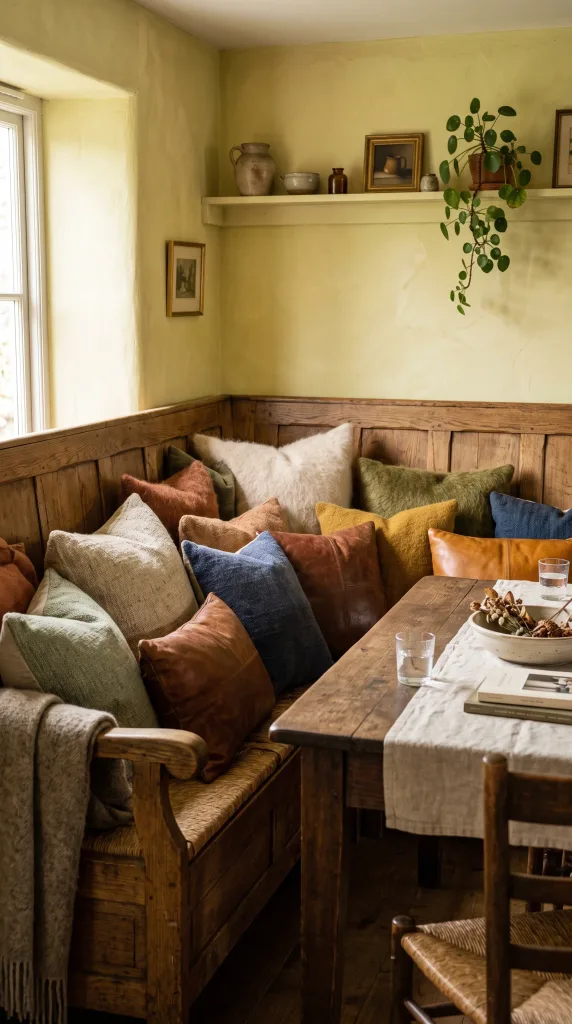
Layering an abundance of loose, highly textured throw pillows along the back of a rigid wooden banquette is the easiest way to add crucial comfort and seasonal color to the dining area. If you do not have the budget for custom, fully upholstered backrests, throwing five plush pillows against the wall provides the exact same soft support for a fraction of the cost. You should heavily mix different fabrics, such as pairing rough linen pillows with smooth leather and fuzzy mohair, to ensure the seating area looks highly curated and intentionally styled. This approach allows you to easily swap out the pillow covers whenever you want to change the color palette of the dining room without needing to buy entirely new furniture.
Heads Up: Ensure your throw pillows are stuffed with dense, heavy feather-down inserts rather than cheap poly-fill, as poly-fill will flatten completely when guests lean heavily against the wall.
Bold Patterned Wallpaper Backdrops
Applying a bold, highly patterned wallpaper strictly to the wall directly above your built-in banquette turns the seating area into a stunning, clearly defined architectural jewel box. Because banquettes are often tucked into corners or small alcoves, using a loud, dramatic wallpaper like a large-scale botanical print or a geometric Art Deco design helps intentionally separate the dining zone from the rest of the open-concept home. The busy pattern completely distracts the eye from the small footprint of the room, making the tight space feel highly designed rather than cramped and forgotten. I always suggest keeping the actual banquette seat cushions a completely solid, neutral color, like deep navy or forest green, to perfectly ground the loud wallpaper above.
Designer Advice: Install a piece of clear, subtle acrylic paneling directly over the wallpaper right where people’s heads rest to prevent greasy hair products from permanently staining the expensive paper.

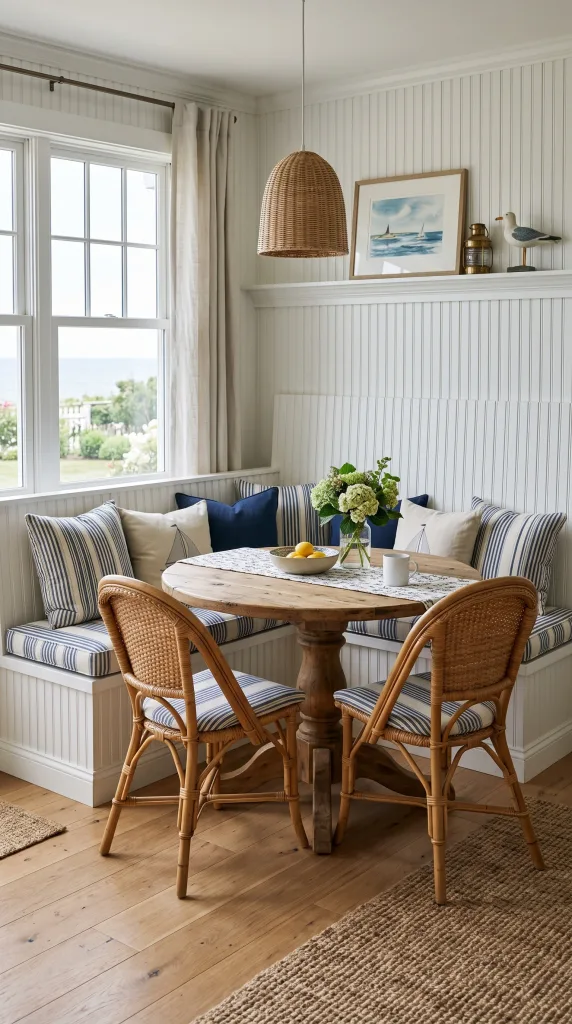
Beadboard Paneling for Coastal Charm
Wrapping the entire base and backrest of your banquette in classic, vertically grooved beadboard paneling introduces massive amounts of relaxed, coastal-farmhouse charm into a basic dining room. The thin vertical lines of the beadboard provide highly subtle architectural texture that looks beautiful when painted in a crisp, clean white or a soft, muted sage green. You should pair this charming wooden base with striped blue-and-white linen seat cushions and warm rattan dining chairs to complete the breezy, nautical-inspired breakfast nook aesthetic. I find that this specific style works exceptionally well in older homes or cottages where highly modern, sleek floating benches would look completely out of place. It feels deeply historic and highly inviting.
Reality Check: The tiny, deep grooves of traditional beadboard collect dust and crumbs incredibly quickly; you must aggressively vacuum the vertical paneling with a brush attachment every single week.
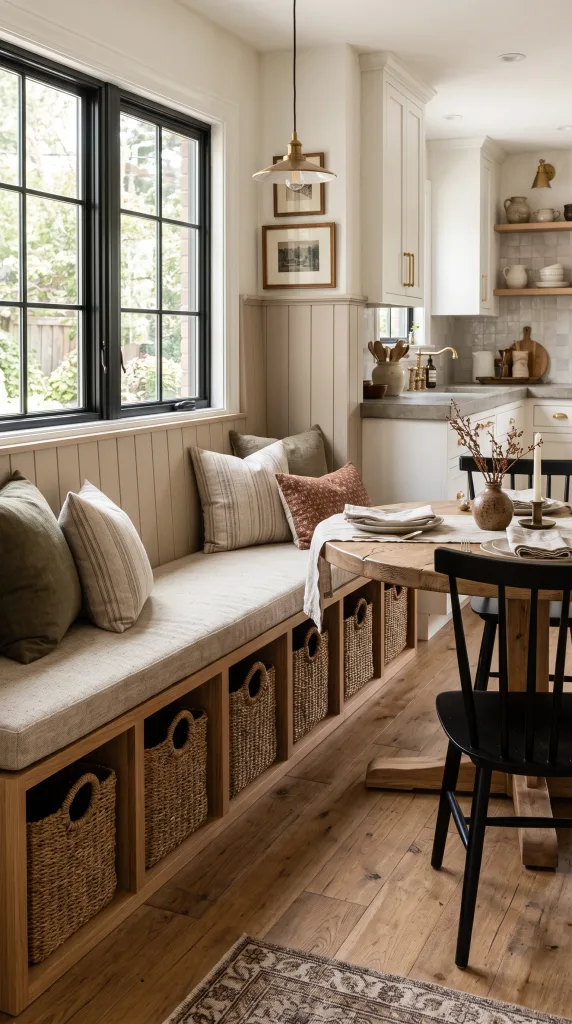
Open Cubby Storage Bases
Leaving the base of your banquette completely open as a series of square wooden cubbies provides a highly functional, visible storage solution that is perfect for displaying curated items. Unlike closed drawers that hide everything away, open cubbies allow you to beautifully display large woven baskets, stacks of colorful cookbooks, or beautiful ceramic serving bowls right at the base of your seating area. This highly architectural approach breaks up the massive, heavy visual weight of a solid wooden bench, making the furniture feel much lighter and more integrated into a casual kitchen environment. You must commit to keeping these open cubbies perfectly organized at all times, otherwise, the banquette will simply look like a chaotic, messy dumping ground for household junk.
Quick Tip: Buy identical, heavy-duty seagrass baskets that perfectly fit the exact dimensions of the open cubbies to completely hide ugly, purely functional items like dog toys or paper towels.
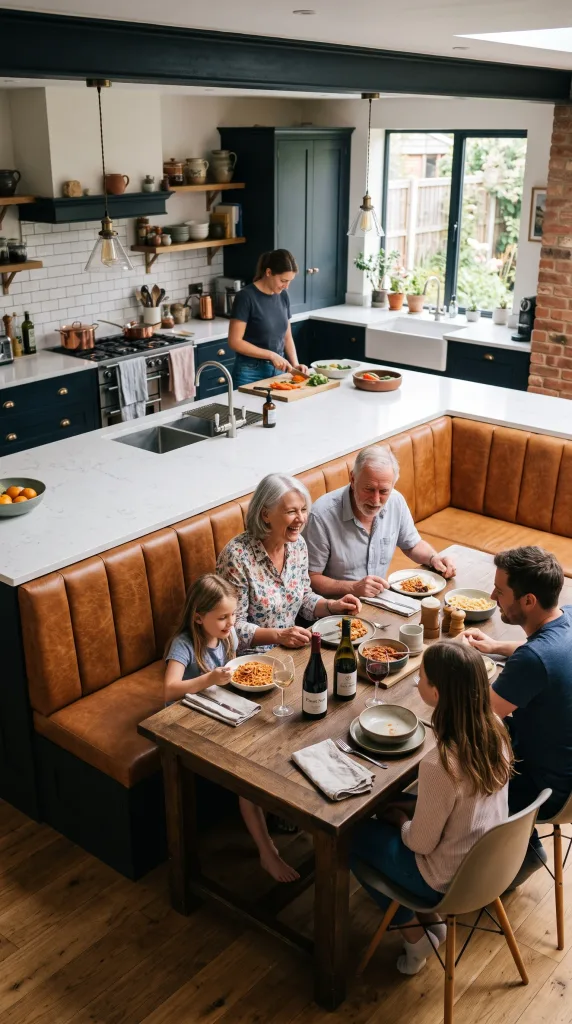
The Double-Sided Island Banquette
Building a banquette directly onto the back of a massive kitchen island completely bridges the gap between cooking and dining, creating the ultimate multifunctional social hub. One side of the massive architectural unit serves as your highly functional kitchen prep zone, while the reverse side drops down into a comfortable, upholstered dining bench facing the dining room. This brilliant configuration completely eliminates the need for an empty walkway between the kitchen and the dining table, saving massive amounts of precious square footage in an open-concept home. I highly recommend outfitting the island banquette with thick, wipeable faux-leather cushions, as cooking splatters and kitchen messes will inevitably make their way over the counter onto the dining seats.
Pro Move: Install a row of sleek, hidden electrical outlets directly into the base of the banquette so guests can comfortably plug in their laptops while working at the dining table.
Dark Monochromatic Color Drenching
Painting the built-in wooden banquette base, the surrounding walls, the window trim, and the ceiling in the exact same dark, moody color creates an incredibly dramatic, deeply immersive dining cocoon. Color drenching the entire nook in a shade like dark espresso or charcoal grey completely blurs the architectural corners of the tight space, making the small dining area feel significantly larger and infinitely cozier. You must aggressively contrast this massive, dark architectural void by placing a bright, light oak dining table and stark white upholstered chairs directly in the center of the dark room. This highly striking visual tension makes the simple wooden table look like an expensive piece of modern art glowing in the center of a dark gallery.
Heads Up: Dark paint heavily absorbs ambient light; you must install a massive, oversized hanging pendant light directly above the table to ensure your guests can actually see their food.

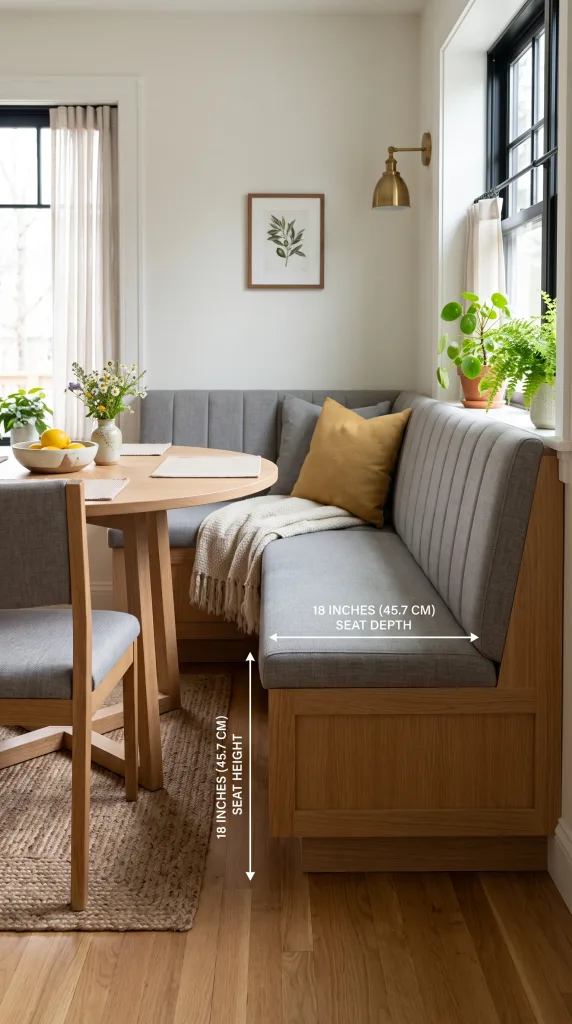
Proper Seat Depth and Angles
The absolute most critical factor in designing a successful banquette is perfectly engineering the physical dimensions; if the seat is wrong, nobody will ever want to sit there. A comfortable dining banquette seat must be exactly eighteen inches deep from the front edge to the backrest, allowing a normal adult to sit comfortably upright without their knees hitting their chest or their feet dangling. You must ensure the finished height of the seat cushion sits exactly eighteen inches off the floor to perfectly match the height of standard dining chairs pulled up to the opposite side of the table. If you build a seat that is too deep, twenty-four inches for example, your guests will awkwardly slouch backward, completely unable to comfortably reach their dinner plates.
Designer Advice: Always account for ‘cushion compression’; if you use highly squishy foam, build the wooden base slightly higher so the guest does not sink four inches below the table height.
Strategic Wall Sconce Lighting
Installing heavy brass wall sconces directly above the backrest of your banquette is vastly superior to relying entirely on a single, massive chandelier hanging over the center of the table. Because a banquette pushes guests tightly against the wall, a central chandelier often casts harsh, dark shadows directly over their dinner plates, making it difficult to see. Wall sconces provide critical, warm ambient lighting that washes straight down the wall, illuminating the perimeter of the table perfectly while highlighting the beautiful fabric texture of your upholstered backrest. I highly recommend putting these wall sconces on a completely separate dimmer switch from the main room lighting, allowing you to instantly dial down the brightness and create a deeply romantic, moody restaurant vibe.
Reality Check: You must install the wall sconces high enough on the wall that tall guests do not accidentally hit their heads against the hot metal fixtures when leaning backward.

The Low-Profile Modern Backrest
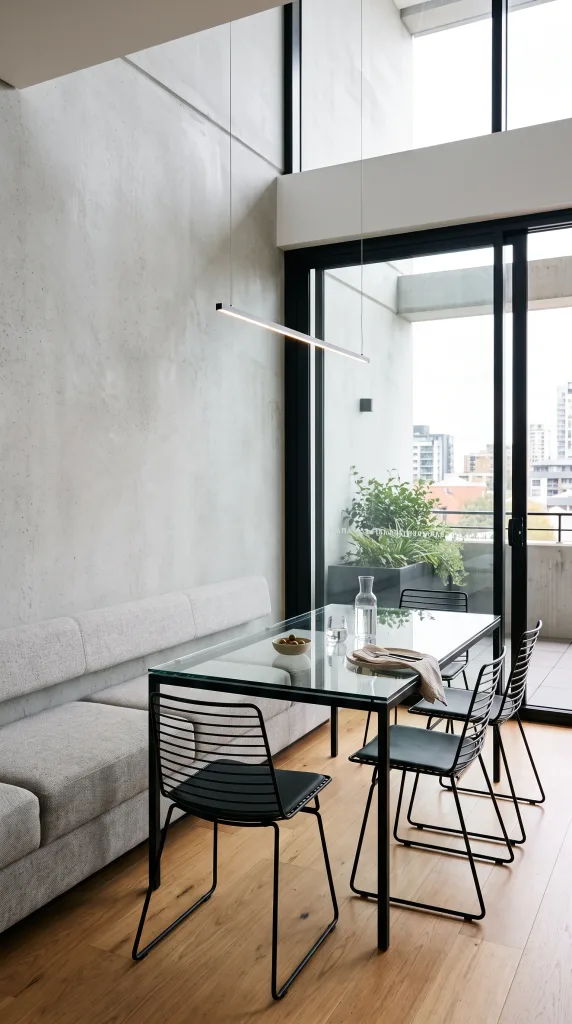
Designing a banquette with an incredibly low-profile backrest that sits only a few inches above the tabletop creates a stunning, highly minimalist horizontal line across the dining room. Traditional, towering backrests can often feel incredibly heavy and visually block the sightlines in an open-concept home, creating a claustrophobic box in the corner of the room. A sleek, low-profile backrest provides just enough lumbar support for the lower back while leaving the upper half of the wall completely open for massive, oversized artwork or bright, unobstructed windows. You should pair this sharp, low seating with a minimalist glass dining table and thin metal chairs to complete the stark, highly engineered contemporary aesthetic. It completely maximizes visual flow.
Quick Tip: Because a low backrest provides zero upper back support, you must use highly dense, rigid foam so the lumbar support does not immediately crush under a guest’s weight.
Vintage Rugs Underneath Pedestals
Anchoring your entire banquette seating arrangement with a massive, highly patterned vintage Persian rug is the smartest way to introduce crucial texture and hide inevitable dining room messes. Banquette areas are incredibly high-traffic zones prone to dropped food, scuff marks, and scraped chair legs on the exposed side of the table. The intricate, deeply faded colors of a vintage wool rug completely disguise minor stains while heavily defining the specific boundaries of the dining zone within an open floor plan. You must ensure the rug is large enough that the freestanding dining chairs on the opposite side of the table remain completely on the rug even when pushed backward. This soft textile layer severely dampens the loud, echoing acoustics of the dining room.
Pro Move: If you install a built-in wooden banquette, run the area rug slightly under the wooden base molding so it looks like the heavy architecture was built directly over the carpet.

Radiator Cover Banquettes
If you live in an older home with massive, ugly metal radiators sitting awkwardly beneath your dining room windows, building a custom banquette entirely over the radiator is a brilliant architectural camouflage. The wooden banquette base completely hides the ugly, flaking metal piping while simultaneously turning the massive, wasted floor space into highly functional seating. You absolutely must build large, decorative metal grill vents directly into the front baseboard of the banquette and leave a gap behind the backrest to allow the intense heat to safely escape into the room. I love topping this specific window seat with thick, plush velvet cushions, creating the ultimate cozy, naturally heated reading nook during freezing winter months. It completely neutralizes a massive architectural flaw.
Heads Up: You cannot store any flammable items like paper napkins or cardboard boxes inside a banquette built over a radiator, as the intense trapped heat will create a massive fire hazard.

Mixing Velvet and Rattan Textures
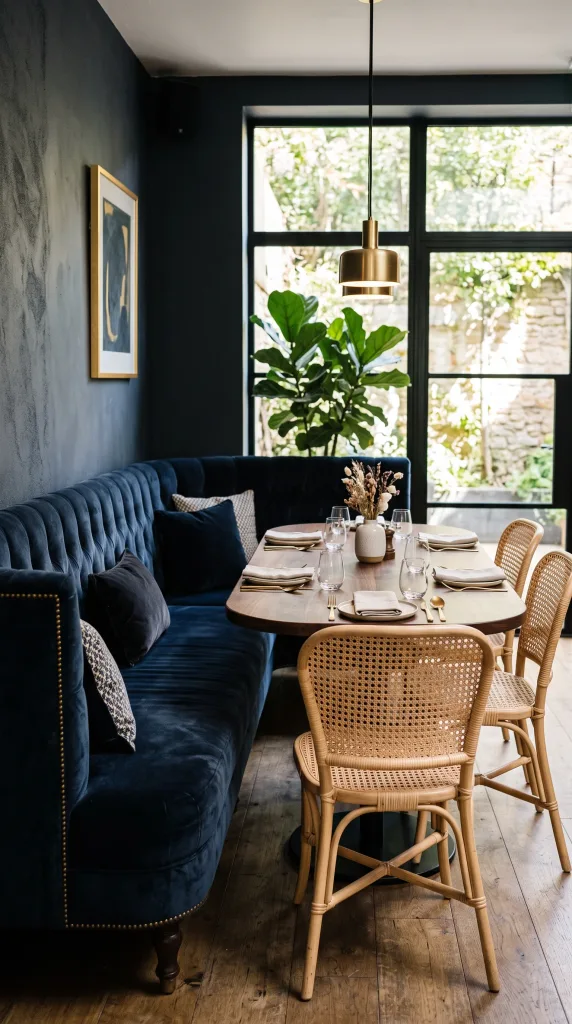
Pairing a heavy, luxurious velvet banquette seat with lightweight, airy woven rattan dining chairs on the opposite side of the table creates a perfectly balanced, highly sophisticated textural contrast. If you use heavy, fully upholstered chairs opposite a massive upholstered banquette, the entire dining room will feel incredibly weighed down, stuffy, and overwhelmingly dense. The open, breezy weave of the natural rattan chairs allows light to pass directly through the furniture, providing a crucial visual break that keeps the heavy velvet bench from dominating the room. I always suggest keeping the color palette cohesive, such as pairing dark blue velvet with dark stained rattan, to ensure the vastly different textures feel highly intentional rather than randomly thrown together.
Designer Advice: Always ensure the seat height of your lightweight rattan chairs exactly matches the compressed seat height of your plush velvet banquette so guests are not sitting at awkward, mismatched heights.
The Slipcovered Banquette Cushion
Opting for a completely removable, washable linen slipcover for your main banquette seat cushion is the most practical, stress-free design decision you can make for a messy family home. Tight, fully stapled upholstery looks incredibly tailored and professional, but it is a massive nightmare to clean when a child inevitably spills grape juice directly into the center of the seat. A relaxed, slightly wrinkled linen slipcover introduces a beautiful, casual, European-farmhouse aesthetic that feels highly inviting and intentionally laid-back. When the cushion gets dirty, you simply unzip the cover, throw it directly into the washing machine, and put it back on perfectly clean. This completely eliminates the anxiety of hosting large dinner parties with small children.
Reality Check: You must pre-wash the raw linen fabric twice in hot water before sewing the custom slipcover, otherwise, it will massively shrink in the laundry and never fit the foam cushion again.

Wainscoting and Picture Ledges
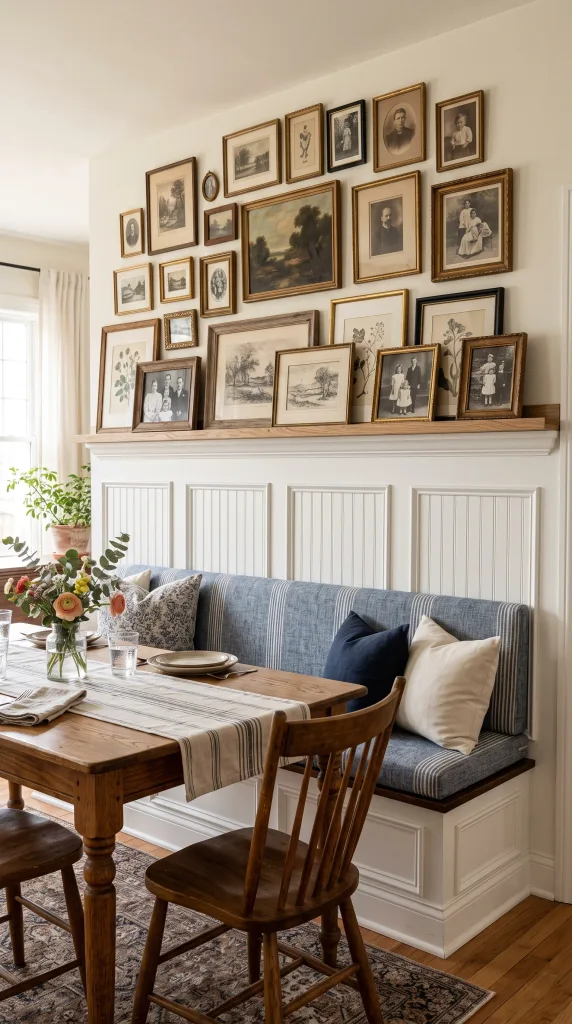
Installing traditional wainscoting directly above your banquette backrest and topping it with a shallow wooden picture ledge creates a stunning, highly functional gallery wall without taking up floor space. The wainscoting provides strong architectural structure and protects the drywall from getting scuffed by leaning heads, while the shallow ledge acts as the perfect flexible display shelf for your favorite artwork. Unlike hammering dozens of nails into the wall for a permanent gallery, the wooden ledge allows you to casually lean framed photos and easily swap out artwork whenever you want to change the mood of the room. You should paint the banquette base, the wainscoting, and the picture ledge the exact same crisp white color to create a deeply cohesive, custom-built architectural unit.
Quick Tip: Install a raised wooden lip on the front edge of the picture ledge to ensure heavy glass frames do not accidentally slide off and crash down onto your dining guests.
Trestle Tables for Rustic Charm
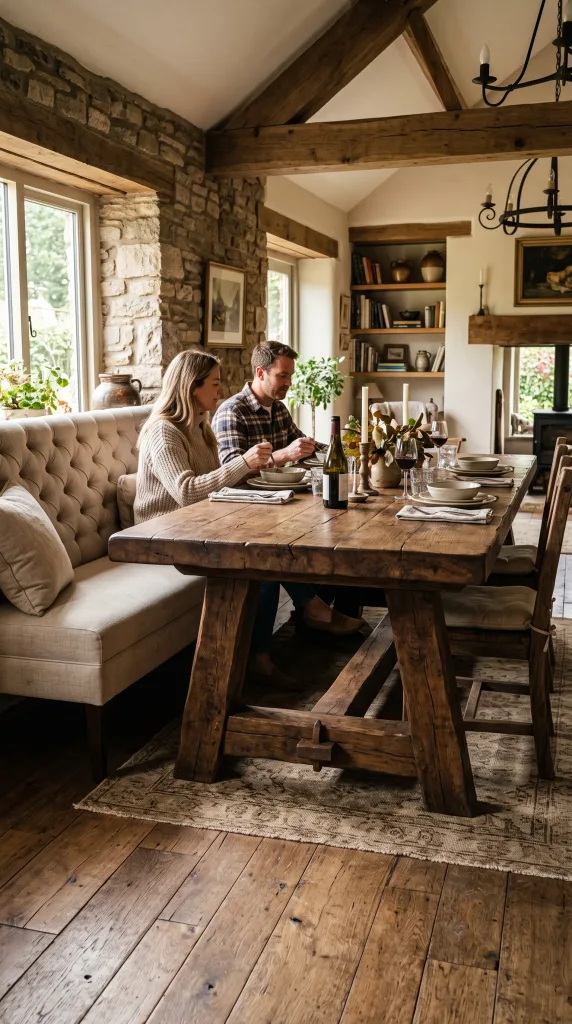
If you do not like the sleek look of a modern pedestal table, pairing your banquette with a heavy, solid wood trestle table provides incredible rustic charm while still allowing easy seating access. A trestle table features massive legs set deeply inward from the ends of the table, connected by a heavy horizontal wooden beam running down the center underneath. Because the bulky legs are set far inward, your guests can still easily slide onto the banquette bench without banging their knees against sharp wooden corners at the outer edges of the table. You should pair this heavy, medieval-inspired wooden table with a soft, plush tufted banquette seat to perfectly balance the rigid, masculine architecture with massive amounts of tactile comfort.
Pro Move: Ensure the horizontal connecting beam under the trestle table is positioned high enough off the floor that your guests can comfortably rest their feet flat without kicking the heavy wood.
Conclusion
A well-designed dining room banquette is far more than just a clever space-saving hack; it is a permanent architectural upgrade that completely redefines how your family interacts with the home. As these twenty-four ideas illustrate, the most successful banquettes combine rigid, functional engineering with massive amounts of plush, textural comfort. Whether you are building a massive L-shaped corner booth to maximize seating or simply sliding a freestanding velvet bench against the wall, you must meticulously plan the seat depth, the table pairing, and the lighting layout to avoid creating a frustratingly cramped trap. By leaning into highly durable materials like performance velvet and leveraging clever storage solutions like deep, hidden drawers, you can build a stunning, highly customized dining sanctuary that your guests will truly never want to leave.
Frequently Asked Questions
How deep should a banquette seat be?
The physical seat of the banquette (the part you sit on) should be exactly eighteen inches deep, and the top of the cushion should sit exactly eighteen inches off the floor. If you make the seat any deeper, your guests will awkwardly slouch backward and struggle to reach their food.
What kind of table is best for banquette seating?
A pedestal table is absolutely mandatory for a banquette. Standard tables have four legs at the corners, which create a massive physical barrier that guests have to awkwardly squeeze past. A pedestal table has a single center column, allowing you to slide in completely unobstructed.
Is a built-in banquette cheaper than buying a dining table set?
It depends entirely on the finish. A simple DIY wooden banquette box can be built for a few hundred dollars. However, hiring a carpenter for a custom build with deep storage drawers and hiring an upholsterer for custom tufted velvet backrests can quickly cost thousands of dollars.
Do banquettes actually save space?
Yes, they save massive amounts of space. Standard dining chairs require at least three feet of clearance behind them so people can pull them out and walk past. A banquette pushes the seating directly against the wall, completely eliminating that three-foot clearance requirement on that side of the room.
What is the best fabric for a banquette cushion?
You must use a highly durable, easily cleanable material because the dining area is a massive spill zone. Genuine leather, faux leather, and commercial-grade performance velvet are the absolute best choices because you can simply wipe spilled wine or food directly off the surface.
How do you make a banquette comfortable?
You must slightly angle the backrest backward by at least five degrees; a perfectly straight ninety-degree backrest will feel agonizingly stiff. Additionally, you must use highly dense, high-quality foam for the seat cushion so you do not sink down to the hard wooden base.