Designing Multifunctional Studio Apartments Combining Living Rooms and Bedrooms
Combining a small living room with a bedroom requires smart layout zoning, multifunctional furniture, and thoughtful color schemes to create an organized sanctuary. Whether you install a wall-mounted Murphy bed behind a compact sofa, divide sleeping zones with sheer linen curtains, or use open bookcase room dividers, maximizing floor space ensures dual functionality. Discover these research-backed design strategies to style living rooms with bedrooms.
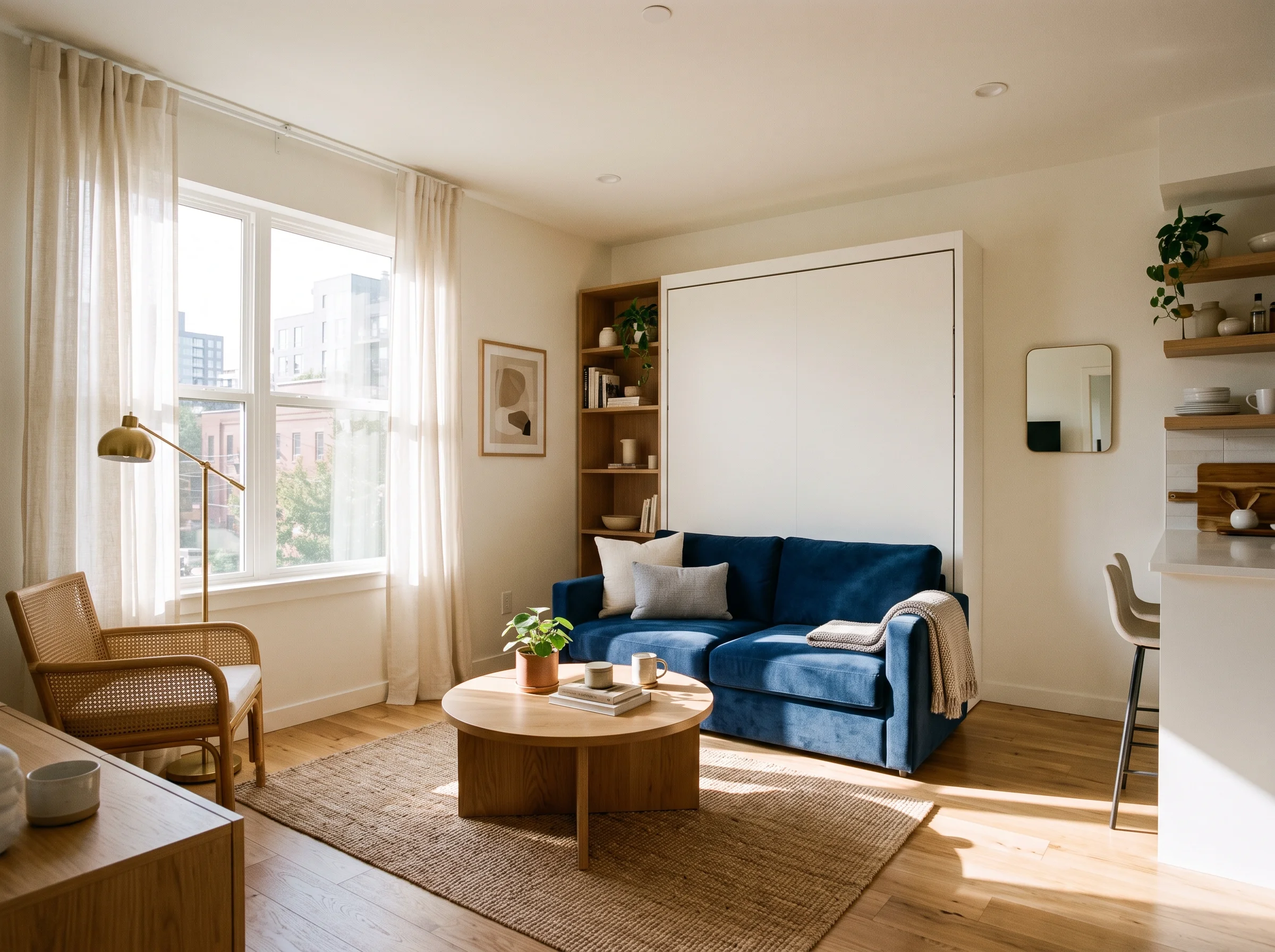
Install a Custom Built-In Murphy Wall Bed Behind a Compact Velvet Sofa

Installing a wall-mounted Murphy bed hidden inside custom cabinetry directly behind a compact velvet sofa allows a small room to function as a living room by day and bedroom by night. Folding the mattress up clears open floor space for entertaining, while built-in side shelving stores books and lighting. Choose light wood finishes.
DESIGNER ADVICE: Select sofa models with fold-down backrests designed to clear Murphy bed frames without moving furniture.
Divide Sleeping and Living Zones with Ceiling-Mounted Sheer Linen Curtains

Suspending ceiling-mounted curtain tracks outfitted with floor-length sheer off-white linen drapes establishes a flexible room partition between beds and sofas. Drawing the sheer curtains closed provides privacy for sleeping areas without blocking natural sunlight from flowing into the living room zone. The fabric drapes softly.
QUICK TIP: Use ceiling-recessed curtain tracks so drapes glide smoothly from wall to wall without visible hardware.
Place a Low-Profile Platform Bed Behind an L-Shaped Sectional Sofa Corner

Arranging an L-shaped sectional sofa with its high back turned toward a low-profile platform bed creates a natural, furniture-defined room barrier. The sofa back acts as a low room divider, separating social seating areas from sleeping zones while keeping open sightlines across the room intact. Add a floor lamp.
STYLE SECRET: Select low-profile bed frames that stay hidden behind sofa backrests to maintain open room proportions.
Build a Raised Wooden Platform Bed with Storage Drawers Facing the Living Area
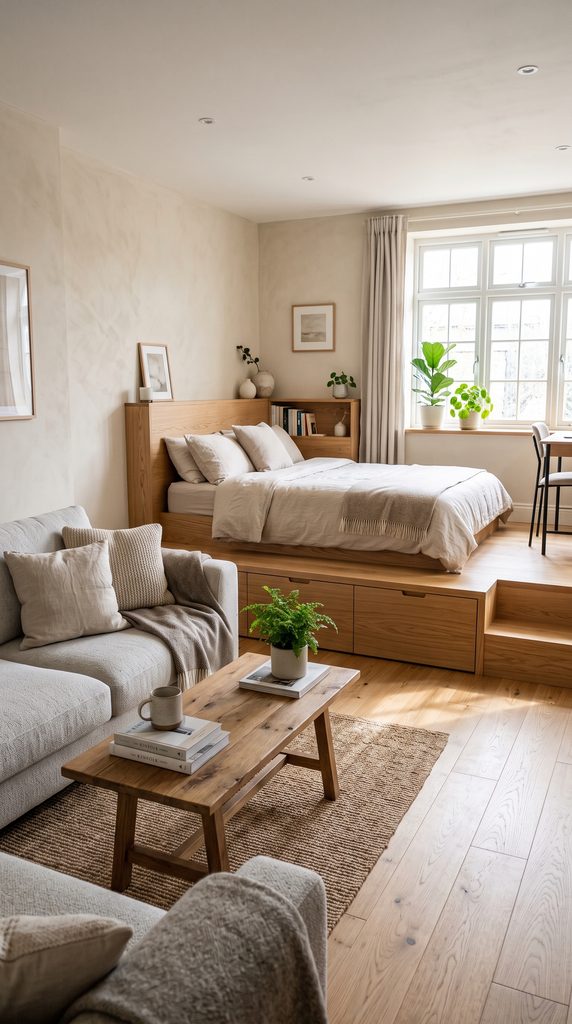
Building a raised wooden platform to elevate the bed mattress creates a dedicated sleeping nook while housing deep storage drawers underneath. The elevated platform visually separates the bed from living room seating, while built-in drawers store extra bedding and clothing out of view. Top with a plush mattress.
DESIGNER ADVICE: Incorporate shallow steps with built-in LED lighting along platform edges for safe nighttime access.
Frame the Bedroom Corner with Black Metal Industrial Glass Partition Walls

Installing black metal industrial glass partition walls around a sleeping corner creates a modern architectural bedroom enclosure inside small studio apartments. Clear or reeded glass panels contain bed spaces acoustically while allowing natural sunlight to pass through into adjacent living room zones.
STYLE SECRET: Use reeded or fluted glass in metal partition frames for privacy without blocking window daylight.
Anchor the Living Area with a Large Area Rug to Separate Room Functions
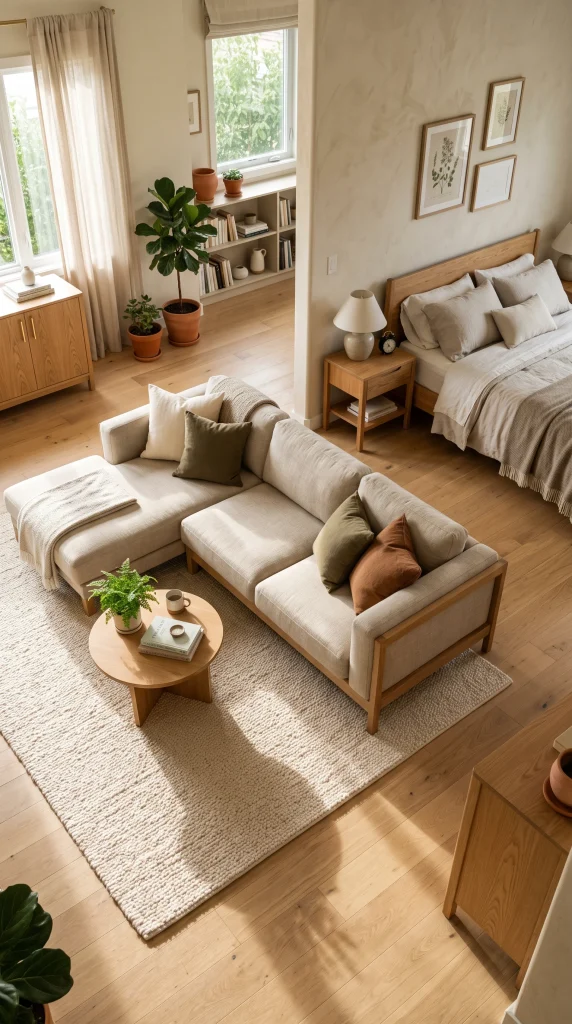
Laying down a large textured wool area rug beneath living room sofas and coffee tables visually anchors the conversation zone away from adjacent beds. The rug boundaries define functional living room edges on open hardwood floors, creating clear psychological separation between living and sleeping areas.
MAINTENANCE RULE: Place non-slip rug pads beneath living room area rugs to keep floor coverings anchored securely on hardwood.
Use Double-Sided Open Bookcase Shelving Units as Room Dividers
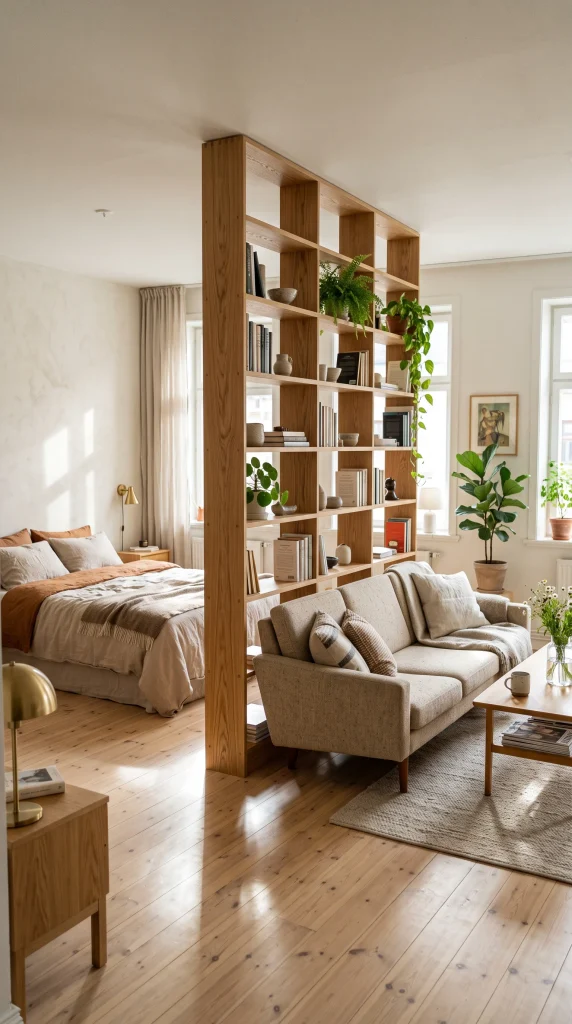
Positioning a tall double-sided open bookcase perpendicular to walls creates a functional room divider between living room sofas and beds. Open shelving allows light to pass through while displaying books, art objects, and potted plants visible from both living and sleeping sides of the studio.
QUICK TIP: Anchor tall open bookcase dividers to floor studs or ceiling joists for stability in open rooms.
Pair a Daybed Sofa with Velvet Throw Pillows for Sleeping and Lounging

Using a twin or full-sized daybed styled with deep velvet accent pillows along walls serves as a plush sofa by day and a comfortable bed by night. Backing the daybed against walls with supportive cushions creates deep lounge seating for daytime guests without requiring dedicated bed space.
BUDGET HACK: Use twin-sized mattresses with fitted linen covers and bolster pillows to create custom daybed sofas affordably.
Mount Floor-to-Ceiling Vertical Wooden Slat Room Partition Walls

Installing vertical wooden slat partition screens from floor to ceiling defines sleeping zones with modern Scandinavian architectural warmth. The rhythmic spacing between natural oak slats filters window light and views, creating partial privacy for beds while maintaining an airy living room feel.
DESIGNER ADVICE: Space vertical wood slats two inches apart to strike a balance between privacy and light transmission.
Install Wall-Mounted Drop-Leaf Tables That Double as Desks and Dining Hubs
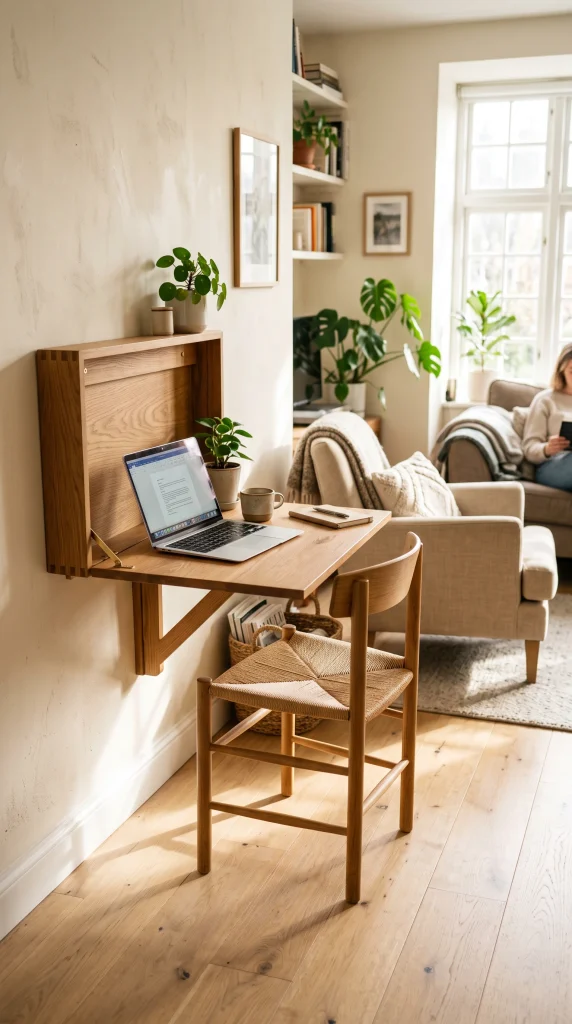
Mounting a wooden drop-leaf table to walls near living room seating creates a versatile work desk and dining space that folds flat when not in use. Folding down tabletop leaves frees up valuable floor walkway space between beds and sofas in compact studio apartment layouts.
BUDGET HACK: Mount drop-leaf tables near power outlets to create accessible laptop workstations in small living rooms.
Keep Wall Surfaces Uniform in Soft Off-White Paint to Expand Small Spaces
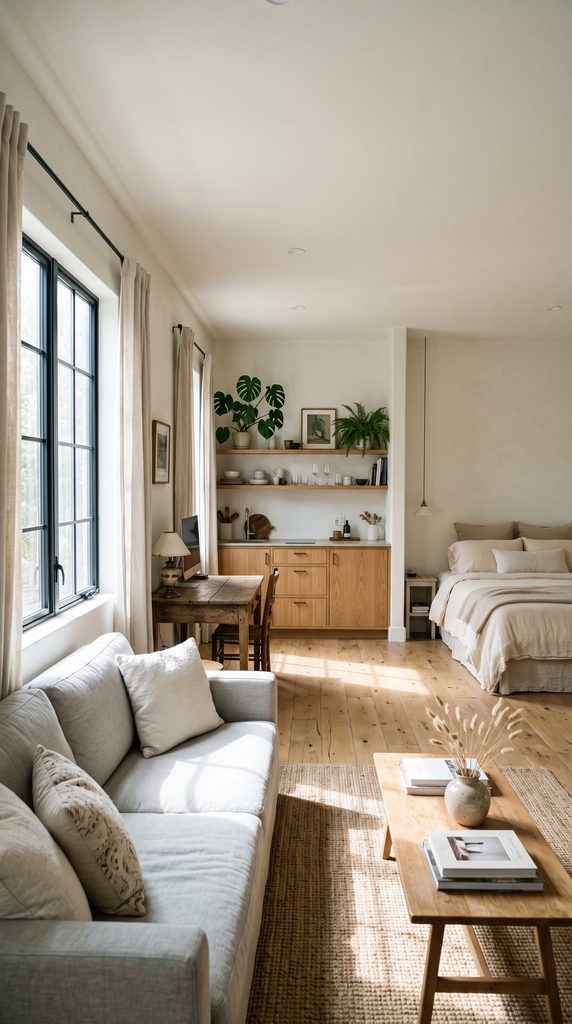
Coating all walls and trim throughout combined living and bedroom spaces in soft off-white paint reflects natural light and visually blurs room corners. The continuous light paint treatment eliminates harsh visual breaks, making compact multi-zone rooms feel larger and unified.
DESIGNER ADVICE: Use warm off-white shades rather than cold blue-whites to create cozy, inviting living spaces.
Place the Bed Inside an Alcove Recess Framed with Archway Wall Paneling

Tucking a bed mattress inside an architectural alcove recess creates an cozy sleeping sanctuary separated from main living room spaces. Framing the alcove opening with a curved drywall arch or wooden trim visually demarcates the bed zone while keeping living room layouts open.
STYLE SECRET: Paint alcove interiors one shade darker than living room walls to deepen the sense of sleeping nook cozy privacy.
Add Under-Bed Storage Bins to Hide Extra Linens in Studio Apartments
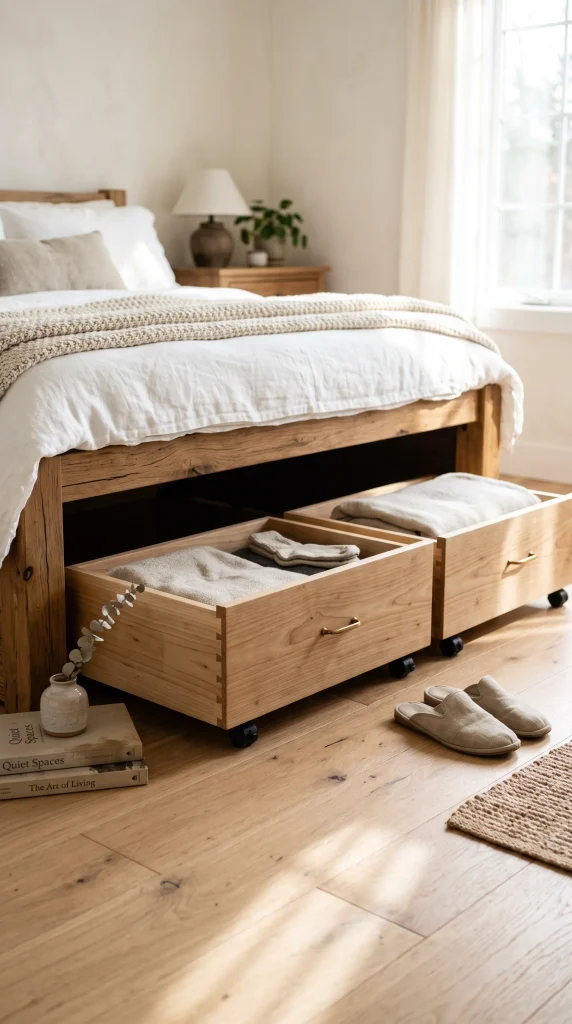
Utilizing rolling under-bed storage bins fitted with dust covers turns empty bed frame cavity space into essential linen and clothing storage. Keeping extra bedding and off-season wardrobes hidden beneath the bed eliminates bedroom clutter, maintaining clean living room presentation.
MAINTENANCE RULE: Select rolling storage bins with fitted lids to keep stored linens clean from floor dust.
Hang Mirrors Opposite Windows to Bounce Sunlight Across Bedroom and Living Zones

Positioning a large floor-length or wall-mounted mirror directly opposite natural windows reflects daylight across both bedroom and living room areas. The reflective glass surface doubles ambient room light and creates the illusion of extended floor space in compact studio layouts.
QUICK TIP: Hang mirrors where they reflect outdoor views or artwork to double visual interest in small rooms.
Pair Low-Profile Armless Sofas with Round Nesting Coffee Tables
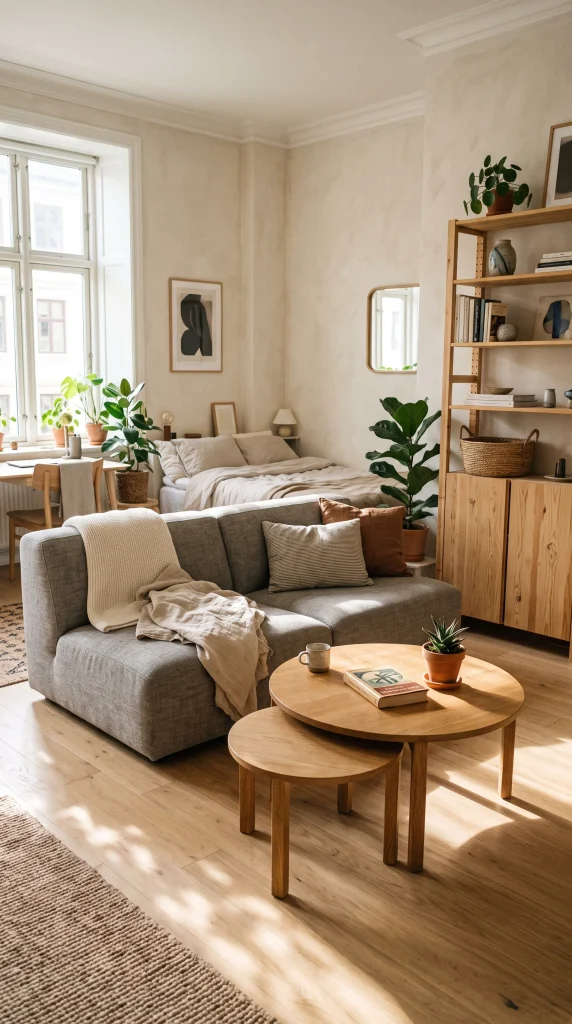
Selecting a low-profile armless sofa paired with round nesting coffee tables preserves open sightlines across combined living and sleeping zones. The armless sofa design offers maximum seating width without bulky arms, while nesting tables tuck away to clear floor space as needed.
DESIGNER ADVICE: Choose nesting coffee tables with light wire or thin wood bases to keep living room floor space looking open.
Use a Folding Rattan Woven Room Divider Screen for Portable Privacy
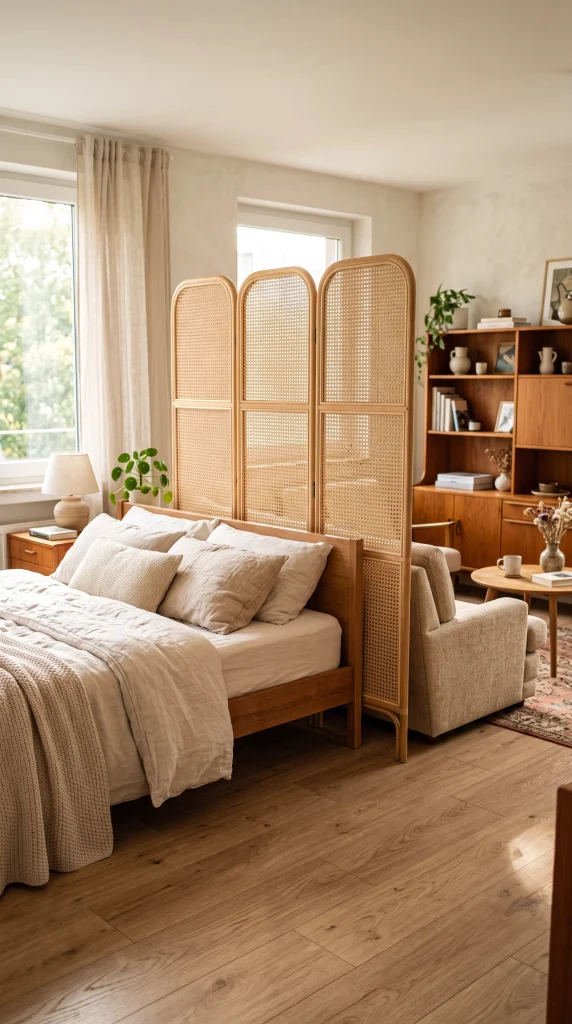
Placing a lightweight three-panel folding rattan woven screen beside beds introduces portable natural plant-fiber privacy between room zones. The screen can be unfolded to hide unmade beds during daytime visits and folded flat against walls when open space is needed.
BUDGET HACK: Use freestanding folding screens to create instant bedroom privacy without structural wall modifications.
Install Track Lighting Over the Living Space with Sconces Over the Bed

Designing a zoned lighting layout with adjustable ceiling track lights over living room seating and dimmable sconces over the bed provides functional ambiance. Independent light switches allow living areas to stay illuminated for reading while sleeping zones remain dim and restful.
QUICK TIP: Install separate dimmer switches for living and sleeping light zones to control evening room mood easily.
Paint the Sleeping Alcove in Dark Navy Blue for Visual Room Division
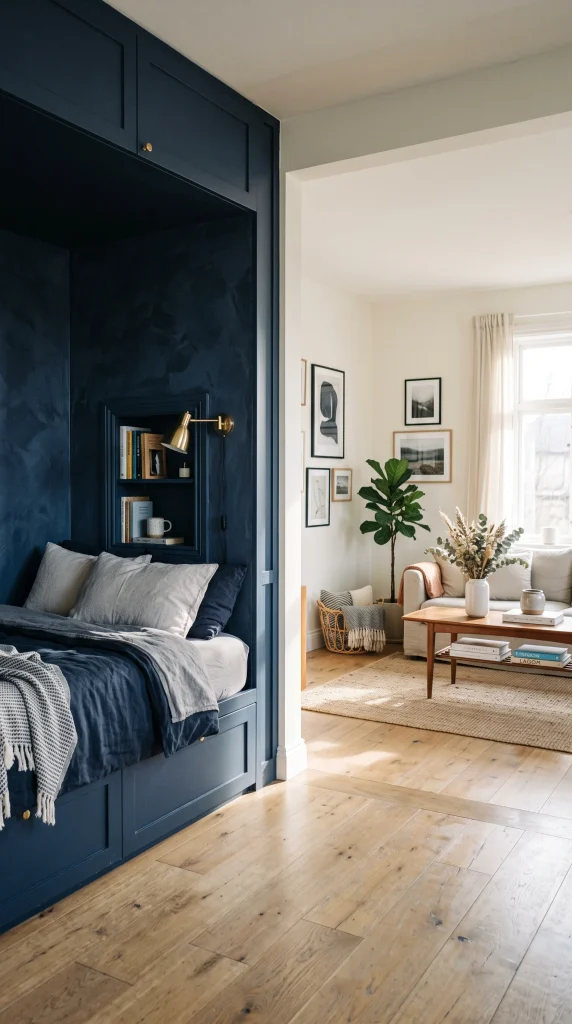
Coating walls inside a sleeping alcove in deep navy blue paint while keeping surrounding living room walls off-white creates bold visual room division. The dark blue wall color absorbs light to wrap beds in a cozy evening atmosphere, making sleeping nooks feel distinct.
STYLE SECRET: Use matte dark paint in sleeping nooks to minimize light reflections and promote restful sleep environments.
Pair a Small Velvet Sofa with Light Oak Hardwood Floor Planks
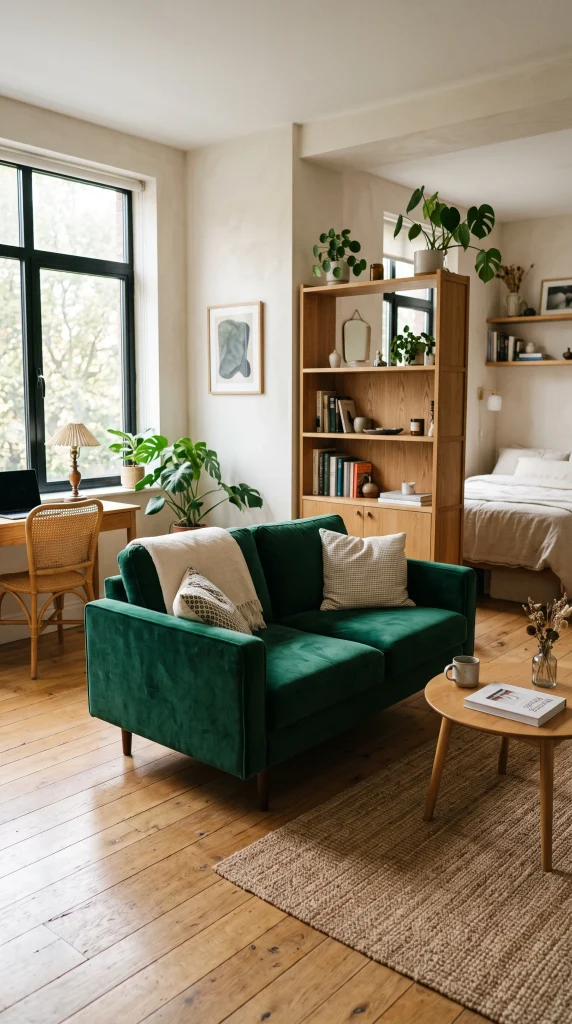
Setting a rich jewel-toned velvet sofa over wide-plank light oak hardwood floors brings plush tactile luxury to compact living room zones. The light blonde ash-oak floorboards reflect window light upward, balancing heavy velvet upholstery and keeping small studio spaces feeling bright.
MAINTENANCE RULE: Brush velvet upholstery regularly with soft velvet brushes to maintain plush fabric pile near high-traffic walkways.
Install Swing-Arm Brass Wall Sconces Over Beds to Clear Nightstand Surfaces

Mounting adjustable swing-arm brass sconces on walls beside beds replaces bulky table lamps, freeing up compact nightstand tabletop space. The golden brass fixtures direct reading light precisely where needed over bed pillows while keeping bedside tables uncluttered for books.
QUICK TIP: Mount sconces thirty inches above mattress height for optimal reading light angle without head interference.
Place a Slim Console Table Behind the Living Room Sofa Facing the Bed
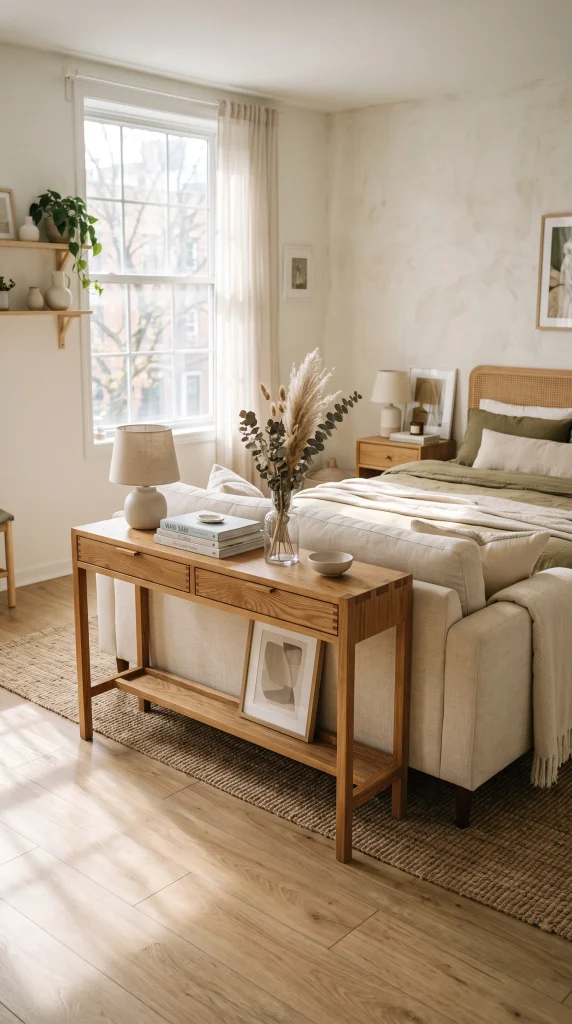
Positioning a narrow wood console table directly behind a living room sofa turned toward the bed creates a functional divider ledge. The slim console table holds table lamps, books, and decorative ceramics, forming a clean structural buffer between living room seating and sleeping areas.
DESIGNER ADVICE: Select console tables that match sofa backrest height exactly for a tailored, integrated appearance.
Combine a Trundle Bed Unit for Guests Below a Custom Built-In Bench Sofa
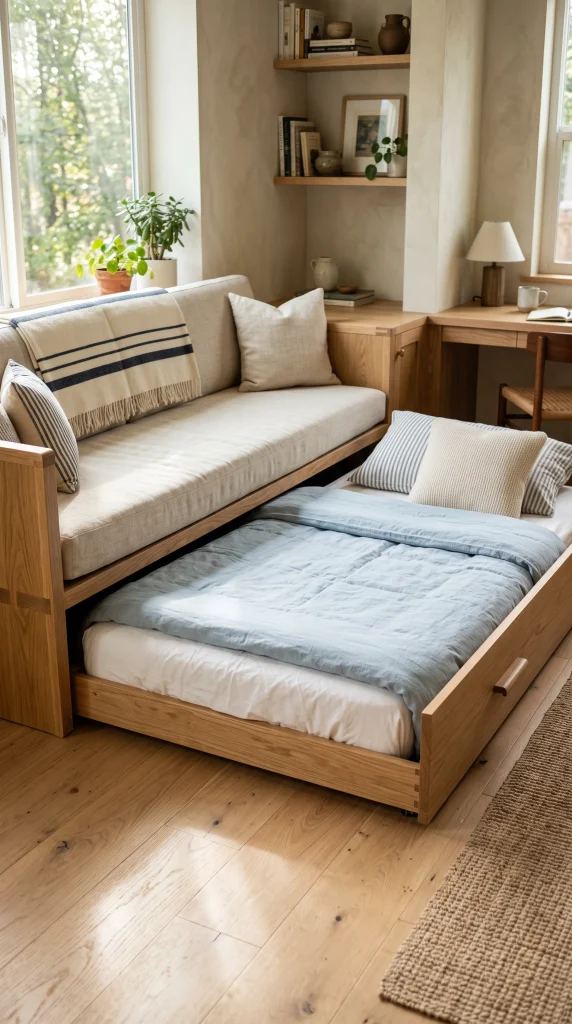
Designing a custom built-in living room bench sofa with a pull-out trundle bed mattress underneath maximizes guest sleeping capacity in small apartments. The lower trundle mattress slides out smoothly on hidden casters when needed and tucks completely away beneath bench seating when unused.
BUDGET HACK: Equip trundle beds with low-profile memory foam mattresses for comfortable sleeping that slides under benches easily.
Hang Ceiling-Suspended Plant Pots to Soften Vertical Room Separators

Suspending trailing house plants in macrame or ceramic pots from ceilings along room divider boundaries creates a vibrant, organic screen between zones. Green foliage filters light and adds natural movement, softening hard furniture lines while providing visual division between bed and sofa.
QUICK TIP: Choose low-maintenance trailing plants like pothos or heartleaf philodendron for easy ceiling-hung greenery.
Use Matching Neutral Fabrics Across Bed Bedding and Living Room Sofa Cushions

Coordinating fabric color palettes across bed duvets and living room sofa cushions creates a cohesive, harmonious flow throughout open studio rooms. Using complementary oatmeal linen, soft grey wool, and cream cotton textures unifies dual-purpose spaces into one calm, designed environment.
DESIGNER ADVICE: Stick to three complementary neutral tones across all room textiles to maintain visual serenity.
Install Sliding Pocket Doors to Hide Sleeping Nooks When Entertaining
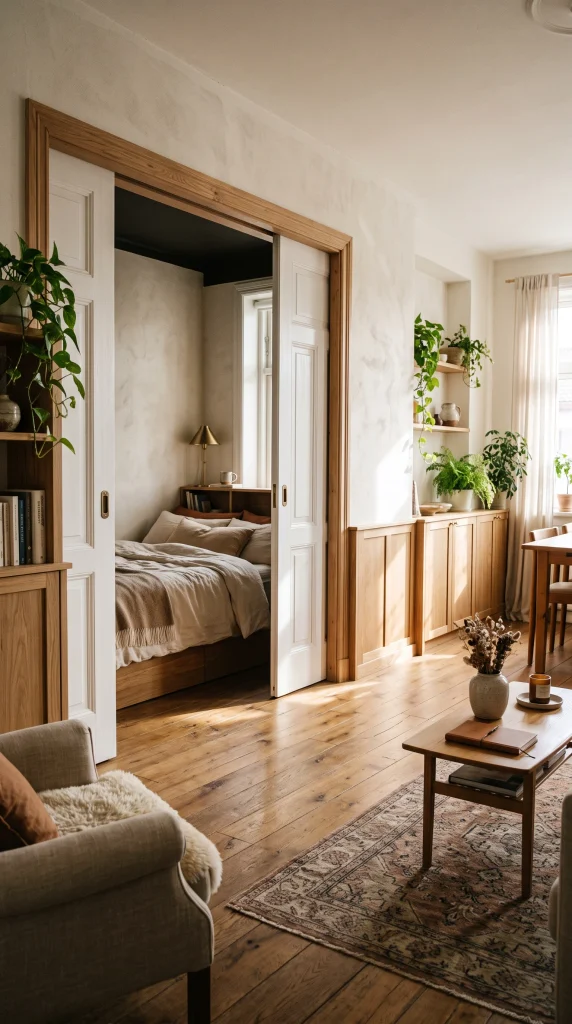
Installing ceiling-hung sliding pocket or barn doors allows sleeping nooks to be completely closed off from living rooms during social gatherings. Sliding doors glide smoothly along hidden top tracks, transforming open studio apartments into private one-bedroom layouts in seconds.
DESIGNER ADVICE: Paint sliding doors the same color as adjacent walls to make closed sleeping nooks disappear seamlessly.
Pair Compact Accent Armchairs with Round Tufted Leather Ottoman Footrests

Pairing a compact living room accent chair with a round tufted leather ottoman provides flexible seating and footrest comfort in tight layouts. The cognac leather ottoman serves as an extra seat for guests, a coffee table surface when topped with trays, or a footrest.
BUDGET HACK: Use storage ottomans with removable tops to gain extra hidden storage for living room blankets.
Build a Lofted Sleeping Platform Above a Ground-Level Living Room Lounge

Building a sturdy timber loft platform elevates bed mattresses overhead, opening up full ground-level floor area for a complete living room lounge. Placing sofas, TVs, and desks beneath high loft beds doubles usable square footage in apartments with high ceilings.
SAFETY WARNING: Ensure lofted sleeping platforms feature sturdy safety guardrails and are anchored securely to load-bearing wall studs.
Add Under-Sofa LED Strip Lights to Illuminate Living Room Floor Boards

Mounting concealed warm 2700K LED light strips underneath living room sofa bases casts a gentle glow across floorboards. The low-level accent light highlights hardwood floor grains while providing ambient living room illumination that avoids disturbing sleeping partners in open studios.
QUICK TIP: Connect under-sofa lighting to smart plugs for voice-controlled evening illumination adjustments.
Position the Living Room TV on a Swivel Wall Mount Visible from Bed and Sofa
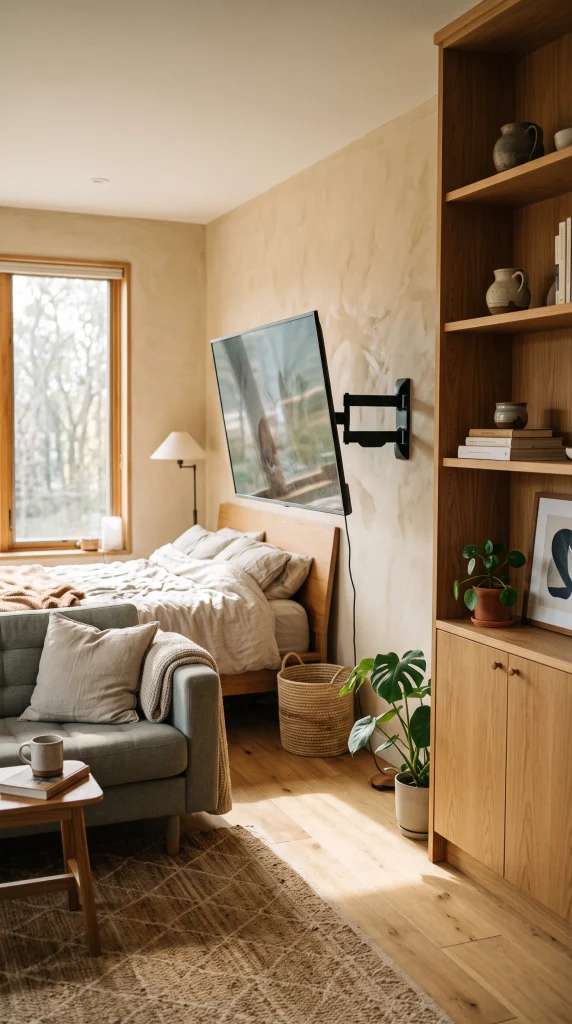
Mounting a flat-screen television on an adjustable full-motion swivel wall arm allows the TV screen to pivot toward either living room sofas or beds. The rotating wall mount eliminates the need for multiple screens, offering comfortable entertainment viewing from anywhere in compact studios.
QUICK TIP: Route TV cables through in-wall conduit channels to eliminate messy hanging cords between living and bed zones.
Conclusion
Combining a small living room with a bedroom allows you to create a highly functional, stylish studio sanctuary that maximizes every square foot of floor space. Whether installing Murphy wall beds, hanging sheer linen room dividers, or building storage platforms, thoughtful spatial planning ensures your layout remains organized. These practical ideas ensure your dual-purpose room delivers lasting comfort and versatile living for years to come.